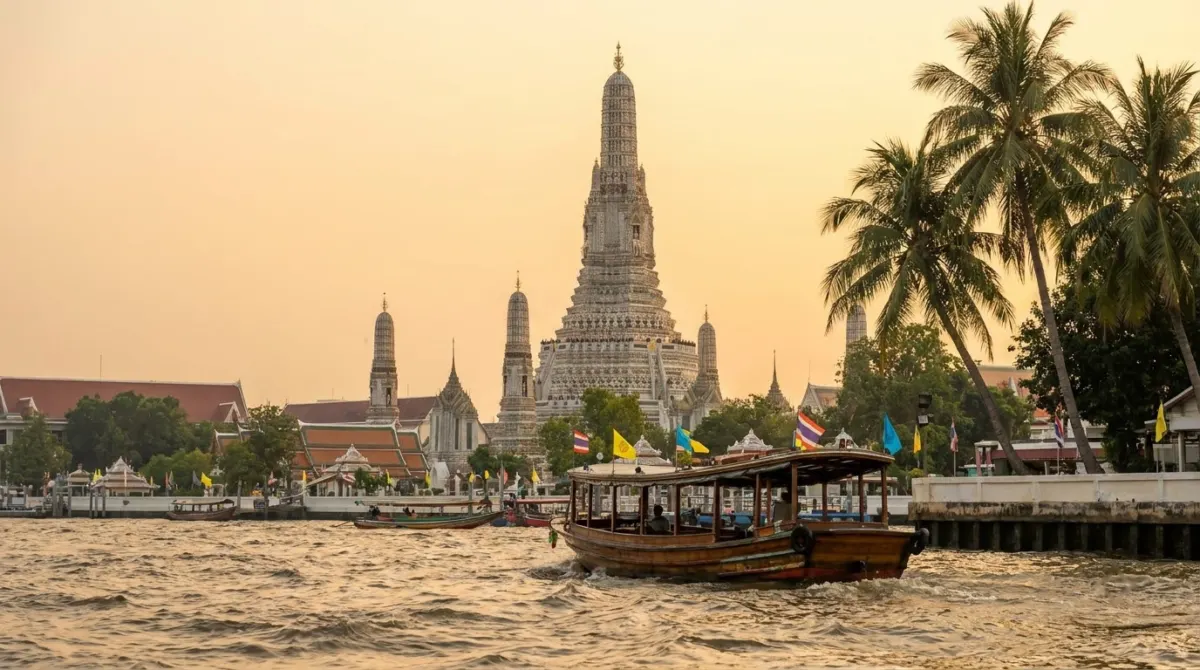
Quick answer where to stay
Split the week between Bangkok, three nights near the river or the Skytrain, and Chiang Mai, three nights inside or near the Old City. Swap Chiang Mai for Krabi if you want a beach finish.
On this page
- Thailand itinerary 7 days at a glance
- Before you go: entry rules, money and what to book
- Where to stay in Bangkok and Chiang Mai
- Day 1: Arrive in Bangkok, the river and Chinatown
- Day 2: Grand Palace, Wat Pho and Wat Arun
- Day 3: Ayutthaya day trip from Bangkok
- Day 4: Fly to Chiang Mai and explore the Old City
- Day 5: Doi Suthep, Nimman and a cooking class
- Day 6: Elephant sanctuary or Doi Inthanon
- Day 7: Morning market and departure
- Getting around Thailand in one week
- Best time to visit Thailand for this itinerary
- If you only have 5 days in Thailand
- Swap Chiang Mai for the beach
- Adding more days: extending your Thailand trip itinerary
- The short version
- Frequently asked questions
This Thailand itinerary for 7 days is built for a first trip: three nights in Bangkok for the Grand Palace, the temples along the river and a day trip to the old capital of Ayutthaya, then three nights in Chiang Mai for mountain temples, night markets and an ethical elephant sanctuary. It uses one short domestic flight, two bases and no rushed one-night stops, and it works best between November and February, when the weather is driest and coolest.
Some links below are affiliate links. We may earn a commission if you book through them, at no extra cost to you. We do not rank hotels, and any prices on the map come live from the booking sites.
If you are searching for a simple Thailand travel itinerary that covers the big city and the north without spending half the week in transit, this is it. Beaches are not in the core plan on purpose: the islands deserve their own nights, and squeezing them into one week usually means losing a full day to flights and ferries. Further down you will find a version that swaps Chiang Mai for the coast, a five-day version, and ideas if you can stretch your Thailand trip itinerary to ten days or more.
Thailand itinerary 7 days at a glance
| Day | Base | Main stops | Getting around |
|---|---|---|---|
| Day 1 | Bangkok | Arrive, Chao Phraya River, Chinatown at night | Airport rail link or taxi, river boat |
| Day 2 | Bangkok | Grand Palace, Wat Pho, Wat Arun | Walk, cross-river ferry |
| Day 3 | Bangkok | Ayutthaya day trip | Train or private driver, about 1 to 2 hours each way |
| Day 4 | Chiang Mai | Fly north, Old City temples, Night Bazaar | Flight of about 1 hour 15 minutes |
| Day 5 | Chiang Mai | Doi Suthep, Nimman, cooking class | Red truck (songthaew) or Grab |
| Day 6 | Chiang Mai | Elephant sanctuary or Doi Inthanon | Tour pickup or hired driver |
| Day 7 | Chiang Mai | Morning market, fly out via Bangkok | Flight |
The one-week split is three nights in each city. You can flip the order if flights work better that way, for example landing in Bangkok and going straight to Chiang Mai, then finishing in Bangkok so you are close to your international departure. That version also makes sense if you want to end with a final shopping day at Chatuchak, which runs on weekends.
Where to sleep on this route
Before you go: entry rules, money and what to book
Entry for US travelers: US passport holders can visit Thailand for tourism without a visa. Under rules published in the Royal Gazette in August 2026 and applied from mid-September 2026, the visa-free stay for US citizens and other eligible nationalities was cut from 60 to 30 days. Rules like this change often, so confirm the current length on the Thai embassy or immigration website before you go. Either way, a one-week trip fits comfortably. Your passport should have at least six months of validity left, and you should be able to show an onward or return ticket.
Thailand Digital Arrival Card (TDAC): every foreign visitor must fill in this free online form within three days before arrival. Use the official site, tdac.immigration.go.th. Many lookalike sites charge a fee for the same form; you do not need them.
Money: the currency is the Thai baht. Cards work in malls, larger restaurants and many hotels, but markets, street food stalls, red trucks and small temples are cash only. Thai ATMs add a flat fee to every withdrawal on a foreign card, so take out larger amounts less often.
Phone and apps: an eSIM or a tourist SIM bought at the airport is the easiest way to stay online. Grab and Bolt work in both Bangkok and Chiang Mai for cars and motorbike taxis.
Book ahead: the Bangkok to Chiang Mai flight, your elephant sanctuary visit (good ones limit numbers) and, in November, anything that falls on the Loy Krathong and Yi Peng festival dates in Chiang Mai.
Where to stay in Bangkok and Chiang Mai
Bangkok: for this itinerary, stay either near the river or near the BTS Skytrain. The riverside area around Charoen Krung and Sathorn puts you close to the Chao Phraya Express Boat, which is the easiest way to reach the Grand Palace and Wat Arun without sitting in traffic. Sukhumvit, especially around the Asok, Phrom Phong and Thong Lo stations, has more restaurants and nightlife and connects easily to the Skytrain and the MRT subway, but it is farther from the old town. The Banglamphu area near Khao San Road is the closest to the Grand Palace and the cheapest, but it is louder and has no rail station on the doorstep.
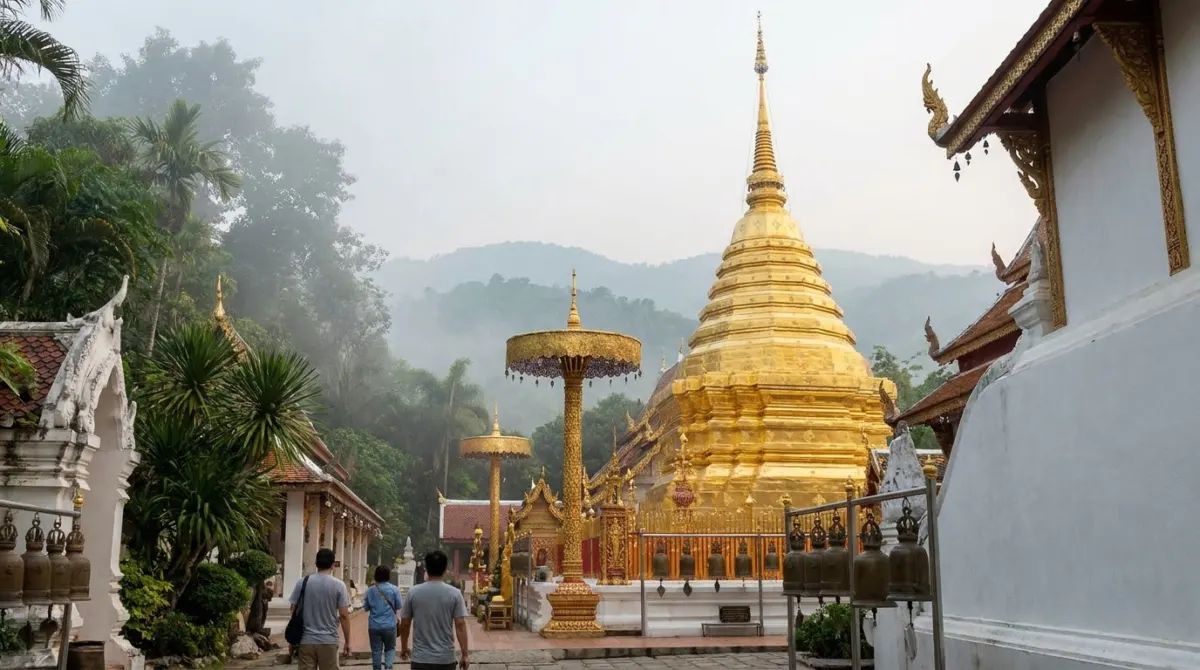
Chiang Mai: the Old City, the square of streets inside the moat, is the best base for a first visit. You can walk to the main temples, the Sunday Walking Street runs through the middle of it, and red trucks pass constantly. Stay near Tha Phae Gate if you want to be close to the Night Bazaar as well. Nimmanhaemin, usually called Nimman, sits just west of the Old City near the university and has a café and design-shop feel; it is a good choice if you prefer newer buildings and quieter evenings, and it is closer to the road up to Doi Suthep.
In both cities, a room with air conditioning and a pool is worth the small extra cost in the hot months from March to May.
Day 1: Arrive in Bangkok, the river and Chinatown
Arrival: most international flights land at Suvarnabhumi Airport (BKK). The Airport Rail Link train runs into the city and connects with the BTS Skytrain at Phaya Thai, which is the fastest option at rush hour. Taxis from the official public taxi queue use the meter, plus an airport surcharge and expressway tolls. Some low-cost flights use Don Mueang (DMK), farther north, which has a rail connection on the SRT Red Line.
Afternoon: after checking in and resting, take the Chao Phraya Express Boat along the river. It is a cheap, practical commuter service, and the stretch between Sathorn and the old town gives you your first look at the temples, the warehouses and the wooden houses on stilts on the Thonburi bank. The boats run until early evening, so do this in daylight.
Evening: head to Chinatown, centered on Yaowarat Road. After dark, the street fills with food stalls selling grilled seafood, noodles, fried oyster omelets and mango sticky rice. It is busy and loud, and that is the point. The MRT Blue Line stops at Wat Mangkon station, a short walk from the main street. Take it easy on the first night; jet lag from the US is usually strongest on the second and third day, so an early night now pays off tomorrow, when you want to be at the palace gates when they open.
Day 2: Grand Palace, Wat Pho and Wat Arun
This is Bangkok’s classic temple day, and the three sites sit close enough together to visit on foot plus one short ferry ride.
Morning: the Grand Palace and Wat Phra Kaew. The palace opens at 8:30 a.m., and arriving at opening time is the single best thing you can do here: by late morning the courtyards are crowded and very hot. Inside the complex is Wat Phra Kaew, home of the Emerald Buddha, the most sacred image in the country. There is a strict dress code: shoulders and knees covered, no see-through clothing, and long pants or a long skirt rather than shorts. Ignore anyone outside who says the palace is closed today and offers a tour instead; it is a long-running scam.
Late morning: Wat Pho. A ten-minute walk south, Wat Pho houses the huge gilded Reclining Buddha, around 46 meters long, and is quieter and shadier than the palace. It is also known as a historic center of traditional Thai massage, and you can book a massage on site.
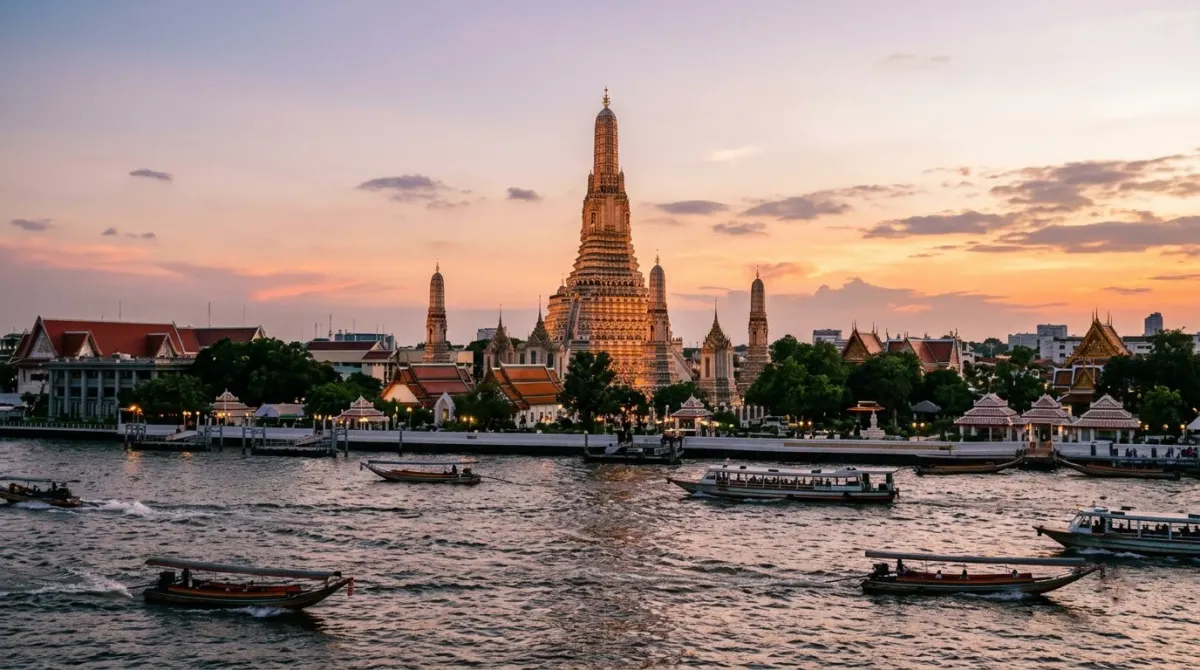
Afternoon: Wat Arun. From Tha Tien pier, next to Wat Pho, a small cross-river ferry takes a few minutes to reach Wat Arun, the Temple of Dawn, decorated with pieces of colored porcelain. Climb partway up the central tower, then rest. In the evening, the view of Wat Arun lit up from the Tha Tien side of the river is one of the best free sights in Bangkok, and several riverside rooftops face it directly.
Day 3: Ayutthaya day trip from Bangkok
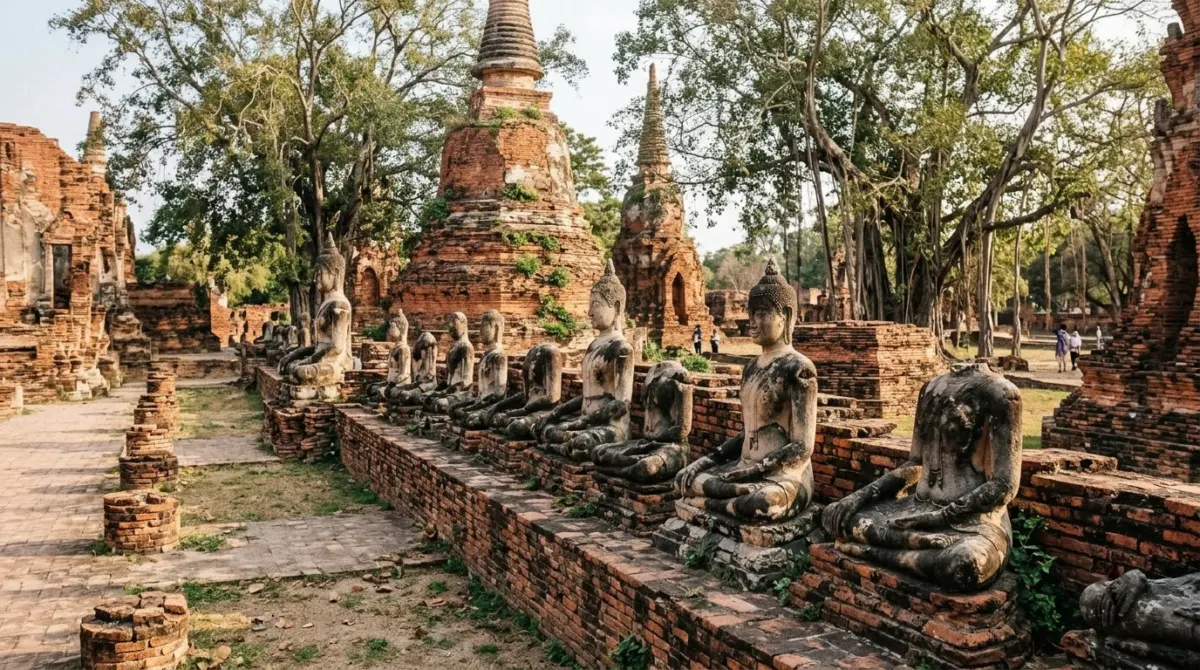
Ayutthaya, about 80 kilometers north of Bangkok, was the capital of the Siamese kingdom for roughly four centuries until it was sacked in 1767. Its ruined temples are now a UNESCO World Heritage Site, and they make the best day trip on a Bangkok itinerary.
Getting there: trains from Bangkok take roughly 1 to 2 hours, depending on the service and the station (faster trains leave from Krung Thep Aphiwat Central Terminal), and they are cheap and easy. A private driver or a minivan takes around 1.5 hours and lets you move between the temples without arranging tuk-tuks. Many organized tours combine Ayutthaya with a return by river boat.
What to see: the ruins are spread across an island formed by three rivers, so hire a tuk-tuk for a few hours or rent a bicycle if it is not too hot. The highlights are:
- Wat Mahathat, where a sandstone Buddha head is wrapped in the roots of a fig tree. Do not stand higher than the head for photos.
- Wat Phra Si Sanphet, with three tall bell-shaped chedis in a row, once the royal temple.
- Wat Ratchaburana, with a well-preserved central tower you can partly climb.
- Wat Chaiwatthanaram, on the riverbank west of the island, best in the late afternoon light.
Plan on about five to six hours on site, then return to Bangkok for dinner. If you would rather stay in the city, swap this day for Chatuchak Weekend Market (Saturday and Sunday), the Jim Thompson House and a sunset rooftop.
Day 4: Fly to Chiang Mai and explore the Old City
Morning: the flight from Bangkok to Chiang Mai takes about 1 hour 15 minutes, with many departures a day from both Suvarnabhumi and Don Mueang. Chiang Mai’s airport is only a short drive from the Old City, so a morning flight puts you in your room before lunch. The overnight train is the scenic alternative, but it takes roughly 11 to 13 hours, which costs you most of a day on a one-week trip.
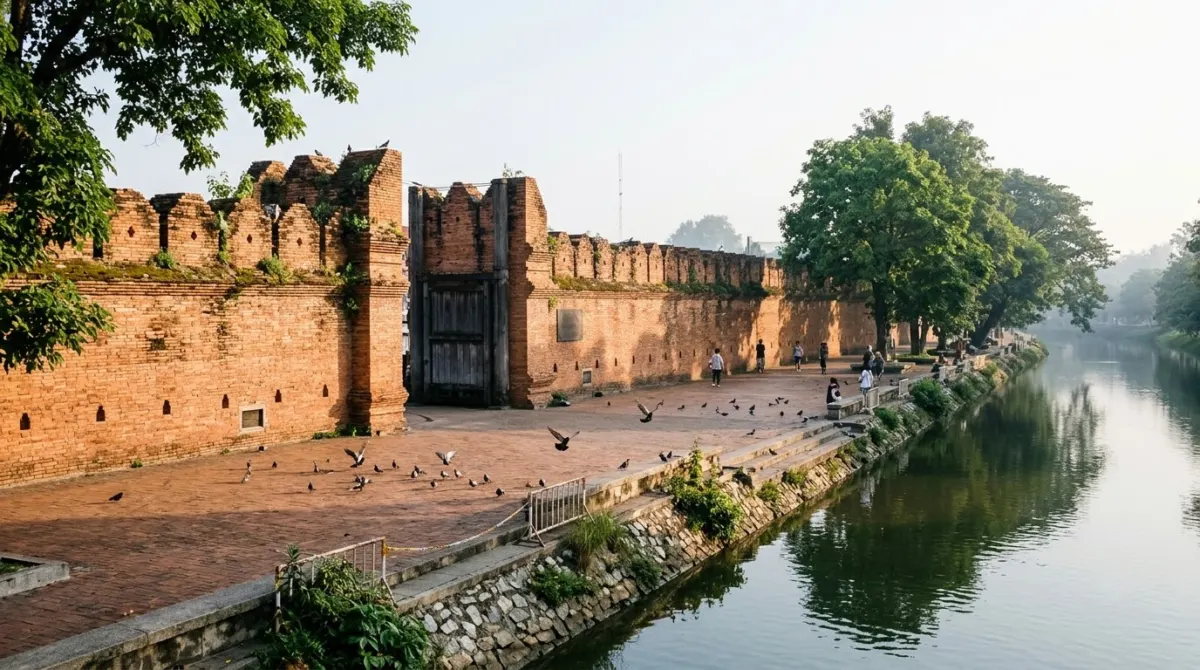
Afternoon: walk the Old City. The moat and the remains of the brick walls frame a grid of small streets with more than thirty temples. Start at Wat Phra Singh, the most important temple inside the walls, with a classic Lanna-style chapel. Walk on to Wat Chedi Luang, whose massive brick chedi was partly destroyed centuries ago and still dominates the skyline. Many Chiang Mai temples run informal “monk chats,” where you can sit with a novice monk and ask questions; look for a sign in the temple grounds.
Evening: if it is Sunday, the Sunday Walking Street fills Ratchadamnoen Road from Tha Phae Gate with handicraft and food stalls. On Saturday, the Wua Lai Road market south of the Old City does the same. On other nights, head to the Night Bazaar on Chang Klan Road, east of the moat. For dinner, try khao soi, the curry noodle soup that is the signature dish of northern Thailand.
Day 5: Doi Suthep, Nimman and a cooking class
Morning: Wat Phra That Doi Suthep. This gilded temple sits on the mountain that rises directly west of Chiang Mai, and on a clear day it looks down over the whole city. The drive up the winding road takes around 30 to 40 minutes. Shared red trucks leave from near Chiang Mai University, or you can take a Grab car. At the top, climb the long staircase lined with serpent (naga) balustrades, roughly 300 steps, or use the small funicular. Go early, before the tour groups and the midday heat, and dress as you would for the Grand Palace.
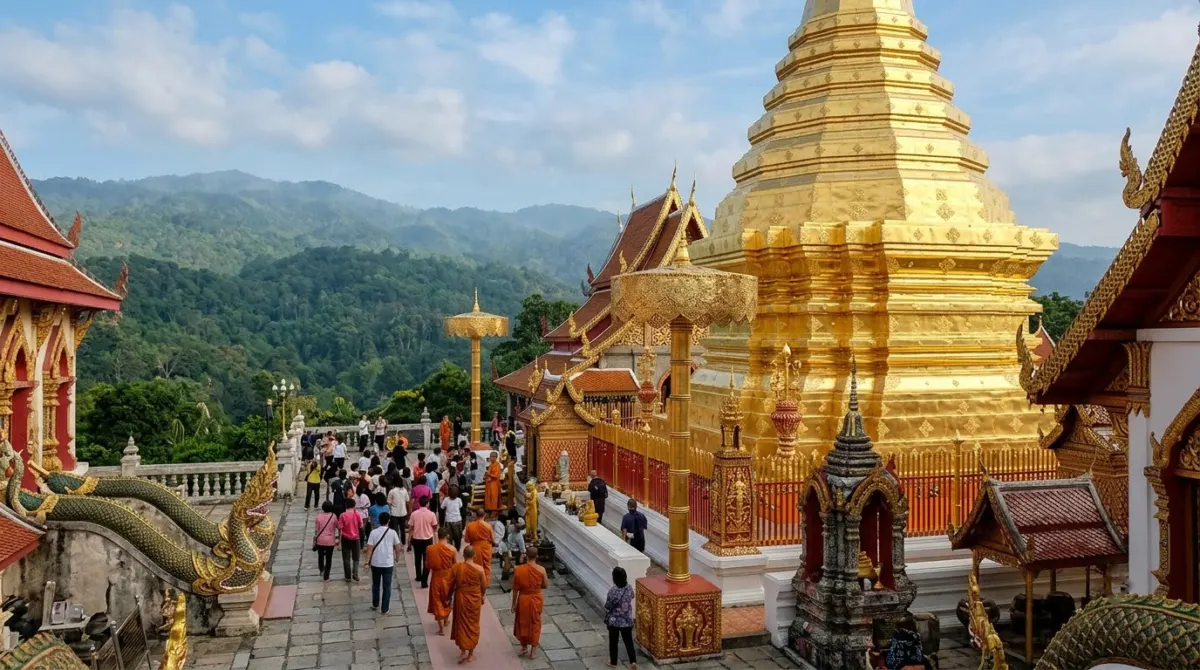
If you have energy, the forested Monk’s Trail starts near the university and climbs to the small temple of Wat Pha Lat, a quiet spot with a stream and views. Walk it only in dry conditions and with water.
Afternoon: Nimman. Back down the mountain, spend the afternoon in Nimmanhaemin, a grid of side streets (called soi) with coffee shops, small galleries and design stores. It is a pleasant contrast to the temples and a good place to sit out the hottest hours.
Evening: cooking class. Chiang Mai is the most popular place in Thailand to take a cooking class. Most start with a visit to a local market to learn the ingredients, then you cook four or five dishes such as green curry, tom yum and pad thai. Many schools are on small farms outside the city and include transport. It is a good way to spend an evening and gives you recipes to take home.
Day 6: Elephant sanctuary or Doi Inthanon
Choose one of two full-day options, both outside the city.
Option 1: an ethical elephant sanctuary. Elephants are a big reason many Americans book a Thailand trip, and the choice of camp matters. Look for places where you watch elephants from a distance as they forage, bathe and socialize on their own, with no riding, no bathing with tourists, no hand-feeding or touching, no performances and no use of hooks. Well-run sanctuaries limit group sizes and explain where their elephants came from, often rescued from logging or tourism work. Most visits are half-day or full-day with hotel pickup, and the drive into the hills can take an hour or more. Read recent reviews carefully and be wary of any camp that calls itself a sanctuary but still lets visitors ride, bathe, feed or touch the elephants.
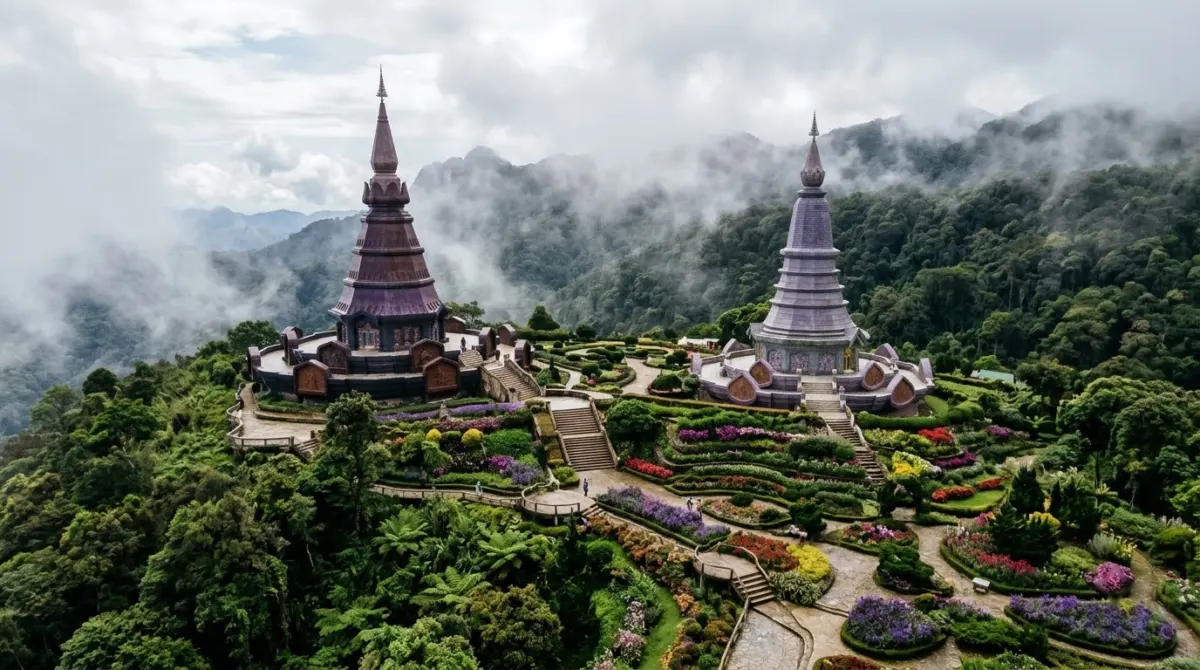
Option 2: Doi Inthanon National Park. Thailand’s highest mountain, at about 2,565 meters, is roughly a two-hour drive southwest of Chiang Mai. A day trip usually includes the summit area with its cool cloud forest boardwalk, the twin royal chedis built to honor King Bhumibol and Queen Sirikit, set in flower gardens with views across the ridges, and one or two waterfalls such as Wachirathan. Some tours add a Hmong or Karen village market. Bring a warm layer; the summit can be cold, especially between December and February.
Evening: whichever you choose, finish with a relaxed final dinner in the Old City or along the Ping River, east of the center.
Day 7: Morning market and departure
Morning: if your flight leaves after lunch, visit Warorot Market, the large local market near the river, sometimes called Kad Luang. Downstairs and in the surrounding streets you will find northern Thai snacks, dried fruit, coffee from the hill farms and Chiang Mai sausage (sai ua), plus fabric and household goods. It is a working market, not a tourist bazaar, and it is busiest in the morning.
Getting out: some international routes fly directly from Chiang Mai, but most travelers from the US connect through Bangkok. If you do, keep an eye on which Bangkok airport your connection uses. Changing from Don Mueang to Suvarnabhumi means a separate transfer across the city that can take more than an hour in traffic, so book through to Suvarnabhumi when you can and leave a generous connection time. On separate tickets, plan for at least three hours.
If your international flight leaves late at night, the easiest way to use the day is to fly back to Bangkok in the morning and spend the afternoon at Chatuchak (on a weekend) or at one of the big malls near the BTS before heading to the airport.
Getting around Thailand in one week
Domestic flights: on a one-week Thailand itinerary, flying between Bangkok and Chiang Mai is the obvious choice. Several airlines, both full-service and low-cost, fly the route many times a day. Low-cost fares often exclude checked luggage, so add a bag when you book rather than at the airport.
Trains: the State Railway of Thailand runs the overnight sleeper between Bangkok and Chiang Mai. It is slow but comfortable, and second-class sleeper berths are a memorable experience if you have a few extra days. Long-distance trains now use Krung Thep Aphiwat Central Terminal in Bangkok; check the departure station on your ticket.
In Bangkok: the BTS Skytrain and MRT subway are fast and air-conditioned, and the Chao Phraya Express Boat links the river sights. Use Grab or Bolt, or a metered taxi, for anything else. Tuk-tuks are fun once, but agree on the price before you get in.
In Chiang Mai: red trucks called songthaew work like shared taxis. Flag one down, tell the driver where you are going and agree on the fare. Grab is also widely used. For day trips to the mountains, a hired car with driver is simple to arrange through your accommodation.
Driving: renting a car or scooter is not necessary for this route, and traffic in Bangkok is heavy. If you plan to ride a scooter anywhere, make sure you carry the right license and that your travel insurance covers it.
Best time to visit Thailand for this itinerary
November to February: cool and dry. This is the best time for both Bangkok and Chiang Mai. Days are warm, humidity is lower, and mornings in the northern hills can be cool enough for a jacket. It is also the busiest and most expensive period, especially over Christmas and New Year. In November, Chiang Mai celebrates Loy Krathong and Yi Peng, when floating offerings and paper lanterns fill the river and the sky. The dates follow the lunar calendar, so check them for your year, and book rooms early.
March to May: hot. Temperatures climb steeply and April is usually the hottest month. Thai New Year, Songkran, falls in mid-April and turns streets in both cities into a giant water fight for several days. In the north, roughly February to April is also the smoky or burning season, when agricultural fires can bring heavy haze to Chiang Mai. Check air quality forecasts before you lock in dates.
June to October: rainy season. Rain usually comes in heavy afternoon or evening downpours rather than all-day storms, and the countryside is green. It is a perfectly good time for this city-and-north route, with fewer visitors and lower prices. September and October are often the wettest months, and some trails become slippery.
If you only have 5 days in Thailand
A 5-day Thailand itinerary can still cover both cities, but you will need to drop something. The simplest cut is to skip Ayutthaya and the second day in the mountains:
- Day 1: arrive in Bangkok, river boat, Chinatown in the evening.
- Day 2: Grand Palace, Wat Pho and Wat Arun.
- Day 3: morning flight to Chiang Mai, Old City temples, a walking street or the Night Bazaar.
- Day 4: Doi Suthep in the morning, then an afternoon elephant sanctuary visit or a cooking class.
- Day 5: fly back to Bangkok and connect home.
If you would rather stay put, a Bangkok-only five days is relaxed and rewarding: two days on the temples and river, one day at Ayutthaya, one at Chatuchak or the floating markets outside the city, and one on food and rooftops. That avoids the domestic flight entirely and suits travelers on a short stopover. Anything shorter than four full days in Chiang Mai and Bangkok combined feels rushed, so if you have under five days, pick one city.
Swap Chiang Mai for the beach
Many people want sand and sea on a first Thailand trip, and that is a reasonable trade. Keep Days 1 to 3 in Bangkok, then fly south instead of north and spend three nights on the Andaman coast.
Krabi (Ao Nang or Railay): the limestone cliffs, longtail boats and island-hopping tours make Krabi the most photogenic short beach stop. Flights from Bangkok take roughly an hour and twenty minutes. Ao Nang is the practical base with the most choice; Railay is reached only by boat and feels more remote.
Phuket: the biggest island, with the most flights from Bangkok and a wide range of beaches, from busy Patong to calmer Kata and Kamala. Good if you want an easy base with day trips by boat to Phang Nga Bay.
Keep the weather in mind: the Andaman coast is at its best from roughly November to April. During the southwest monsoon, from around May to October, seas can be rough and some boat trips are canceled. In those months, the Gulf islands such as Koh Samui are often a drier choice.
Adding more days: extending your Thailand trip itinerary
8 to 10 days: the best upgrade is to do both the north and the beach: three nights in Bangkok, three in Chiang Mai, then fly to Krabi or Phuket for three or four nights. Flights between Chiang Mai and the south are available on some routes, otherwise connect through Bangkok.
Chiang Rai: about three hours by road north of Chiang Mai, Chiang Rai is famous for the White Temple (Wat Rong Khun) and the Blue Temple. It can be done as a very long day trip, but it is more comfortable as an overnight stop.
Pai: a laid-back mountain town reached by a winding road with hundreds of curves, around three hours from Chiang Mai by minivan. Popular with backpackers who want to slow down for a few days.
Kanchanaburi: west of Bangkok, home to the Bridge over the River Kwai, the Death Railway history and Erawan National Park. Two nights there fit neatly before or after Bangkok.
Sukhothai: an earlier royal capital, quieter than Ayutthaya, with temple ruins set among lotus ponds. It sits roughly between Bangkok and Chiang Mai and makes a good overland stop if you travel north by road.
Map shows live availability and prices. We may earn a commission on bookings made through it, at no extra cost to you.
Pairing Thailand with a neighbor? Siem Reap and Angkor are a short flight from Bangkok in our Cambodia itinerary, and Kuala Lumpur and Penang are covered in our Malaysia itinerary.
The short version
For a first Thailand itinerary of 7 days, split the week between two bases: three nights in Bangkok for the Grand Palace, Wat Pho, Wat Arun, Chinatown and a day trip to Ayutthaya, then fly about 1 hour 15 minutes north for three nights in Chiang Mai, with the Old City temples, Doi Suthep, a cooking class and either an ethical elephant sanctuary or Doi Inthanon. Go between November and February if you can, fill in the free TDAC arrival card within three days of landing, and check the current visa-free stay, now 30 days for US citizens, before you fly. If the beach matters more than the mountains, swap Chiang Mai for Krabi or Phuket in the dry season.
Frequently asked questions
Is 7 days enough for Thailand?
Seven days is enough for two regions, usually Bangkok plus either Chiang Mai or one beach area such as Krabi or Phuket. Trying to add a third base means losing most of a day to flights and transfers, so save the full Bangkok, north and islands loop for ten days or more.
Do US citizens need a visa for Thailand?
Not for a short tourist trip. US passport holders can enter visa-free, and since mid-September 2026 the permitted stay has been 30 days instead of 60. Rules can change, so confirm the current length on an official Thai government site before you fly. All visitors must also complete the free Thailand Digital Arrival Card online within three days before arrival.
Should I fly or take the train from Bangkok to Chiang Mai?
Fly if you have one week: the flight takes about 1 hour 15 minutes and there are many departures daily. The overnight sleeper train takes roughly 11 to 13 hours and is a fun experience, but it suits a longer trip better.
What is the best month to visit Thailand?
November to February is the best period for Bangkok and Chiang Mai, with cooler and drier weather. Chiang Mai can be hazy from smoke between roughly February and April, and the rainy season runs from about June to October.
Is Chiang Mai or Phuket better for a first trip?
Chiang Mai is better for culture, temples, food and mountains, and it is good all year outside the smoky season. Phuket or Krabi is better if beaches and boat trips are the priority, ideally between November and April, when the Andaman Sea is calm.
Can I use US dollars or credit cards in Thailand?
Prices are in Thai baht, and US dollars are not accepted for everyday purchases. Cards work in hotels, malls and larger restaurants, but street food, markets and local transport are cash only, and Thai ATMs charge a fixed fee per foreign withdrawal.
Do I need an eSIM in Thailand?
It is not required, but it makes the trip much easier for maps, Grab and translations. You can buy a tourist eSIM before you fly or a SIM card at the airport on arrival.
Written and checked by
Triplarks Editorial
An editorial desk, not an invented persona: research, drafting and fact-checking are done by the same small team. Every number here carries the date it was read.