
Quick answer where to stay
Spend four nights in Ubud for rice terraces, temples and day trips into the highlands, then two nights in Seminyak or Canggu for Tanah Lot, Uluwatu and an easy run to the airport.
On this page
- Bali itinerary 7 days at a glance
- Day 1: Arrive in Bali and transfer to Ubud
- Day 2: Ubud rice terraces and water temples
- Day 3: Ubud on foot: Campuhan Ridge, Monkey Forest and a dance show
- Day 4: Jatiluwih rice terraces and Ulun Danu Beratan in the highlands
- Day 5: To the south coast via Taman Ayun and sunset at Tanah Lot
- Day 6: Uluwatu, the Bukit Peninsula and the Kecak dance
- Day 7: A final morning on the beach and departure
- Where to stay in Bali: Ubud and the south coast
- Getting around Bali: drivers, ride-hailing and traffic
- Best time to visit Bali and the weather to expect
- Bali itinerary 5 days: the shorter version
- If you have more than a week in Bali and Indonesia
- The short version
- Frequently asked questions
This Bali itinerary for 7 days is for a first trip to the island: four nights in Ubud, the cultural heart of Bali, for rice terraces, water temples and the central highlands, then two nights on the south coast for the sea temples of Tanah Lot and Uluwatu, a sunset Kecak dance and some beach time before you fly out. It is a Bali, Indonesia travel itinerary that works year-round, though it is easiest in the dry season from about April to October.
Some links below are affiliate links. We may earn a commission if you book through them, at no extra cost to you. We do not rank hotels, and any prices on the map come live from the booking sites.
Bali looks small on a map, but traffic is slow and the roads are narrow, so a short drive can take more than an hour. The best one-week Bali trip itinerary avoids changing hotels every night. Two bases, Ubud and the south, and a driver for the longer days give you time to actually enjoy the place. If you only have five days, there is a shorter version below, and ideas for adding other parts of Indonesia at the end.
Bali itinerary 7 days at a glance
| Day | Base | Main stops | Getting there |
|---|---|---|---|
| Day 1 | Ubud | Arrive, transfer to Ubud, evening in town | Car from the airport, about 1 to 1.5 hours |
| Day 2 | Ubud | Tegallalang, Tirta Empul, Gunung Kawi | Driver, 20 to 40 minutes between stops |
| Day 3 | Ubud | Campuhan Ridge, Monkey Forest, Ubud Palace, dance show | On foot |
| Day 4 | Ubud | Jatiluwih rice terraces, Ulun Danu Beratan | Driver, about 1.5 to 2 hours each way |
| Day 5 | Seminyak | Move south via Taman Ayun, sunset at Tanah Lot | Driver, with stops |
| Day 6 | Seminyak | Uluwatu beaches, Uluwatu Temple, Kecak dance | Driver, about 1 to 1.5 hours each way |
| Day 7 | – | Beach morning, fly out | Car to the airport, about 30 to 60 minutes |
That is one week, six nights: four in Ubud and two in Seminyak. Canggu works just as well as Seminyak for the southern base, and Uluwatu suits travelers who prefer clifftop views to a busy town.
Where to sleep on this route
Day 1: Arrive in Bali and transfer to Ubud
International flights land at I Gusti Ngurah Rai International Airport (DPS) in the south of the island. After immigration and customs, head to Ubud, roughly 35 kilometers north. The drive usually takes an hour to an hour and a half, more at rush hour or on holidays. Arrange a pickup through your hotel or a reputable driver in advance; it is easier than negotiating at the arrivals hall after a long flight.
Before you land, sort out the paperwork. US citizens need a visa on arrival, which can be bought online in advance as an e-VOA through the official Indonesian immigration site, and Bali charges a separate tourism levy paid through the provincial government’s Love Bali site. Indonesia also uses an online arrival card, the All Indonesia card, that you complete in the days before arrival. Rules and fees change, so check the official sites shortly before you fly.
Once in Ubud, keep the evening easy. Walk along Jalan Monkey Forest and Jalan Hanoman, have dinner at a local warung, and try Balinese dishes such as nasi campur, a plate of rice with small portions of several dishes, or babi guling, roast suckling pig. Get to bed early; Bali is best in the mornings.
Day 2: Ubud rice terraces and water temples
Hire a driver for the day and head north. Start at the Tegallalang Rice Terraces, about 30 minutes from central Ubud. Arrive soon after sunrise, when the light is soft and the paths are quiet. Walk down through the terraces; local farmers collect small donations at a few points on the trail, so carry small notes. The swings and photo platforms are optional extras.
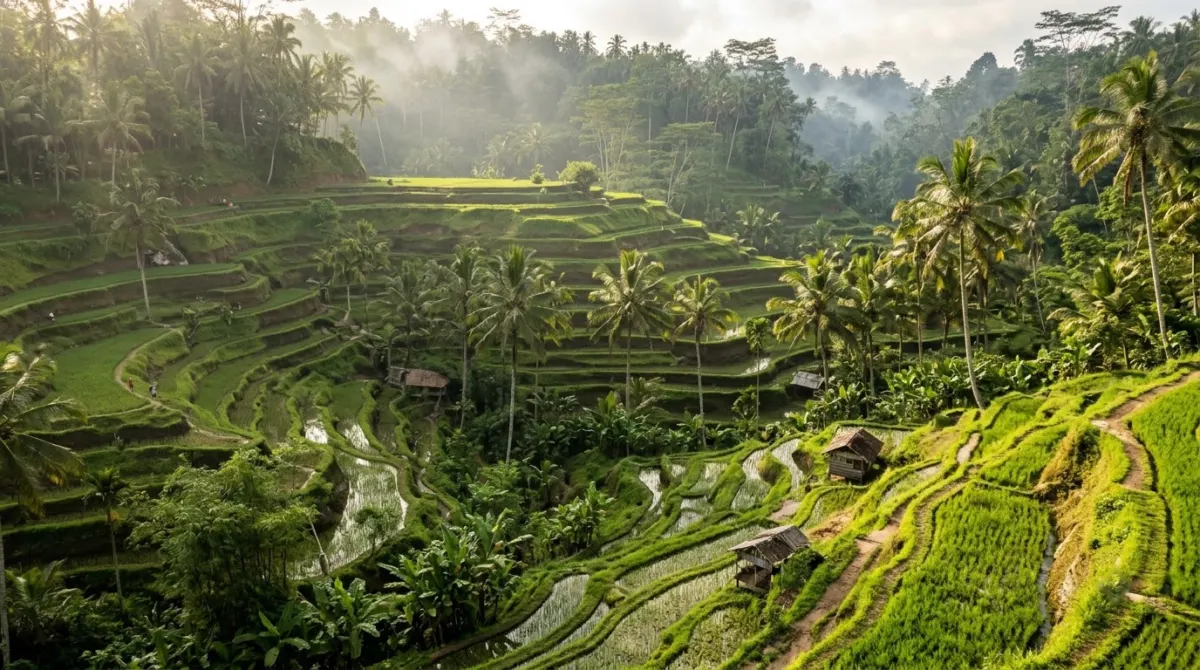
Continue north to Tirta Empul, a water temple built around a holy spring in the tenth century. Balinese Hindus come here to bathe in the purification pools. Visitors may watch, and many join the ritual, but it is a religious practice, so follow the instructions of temple staff and wear the sarong provided. Shoulders and knees should be covered at all temples in Bali.
A few minutes away, Gunung Kawi has rock-cut shrines carved into the cliffs of a river valley, reached by a long staircase through rice fields. On the way back, stop at a coffee plantation if you are curious, or at Goa Gajah, the “Elephant Cave,” an 11th-century sanctuary with a carved entrance just outside Ubud.
Day 3: Ubud on foot: Campuhan Ridge, Monkey Forest and a dance show
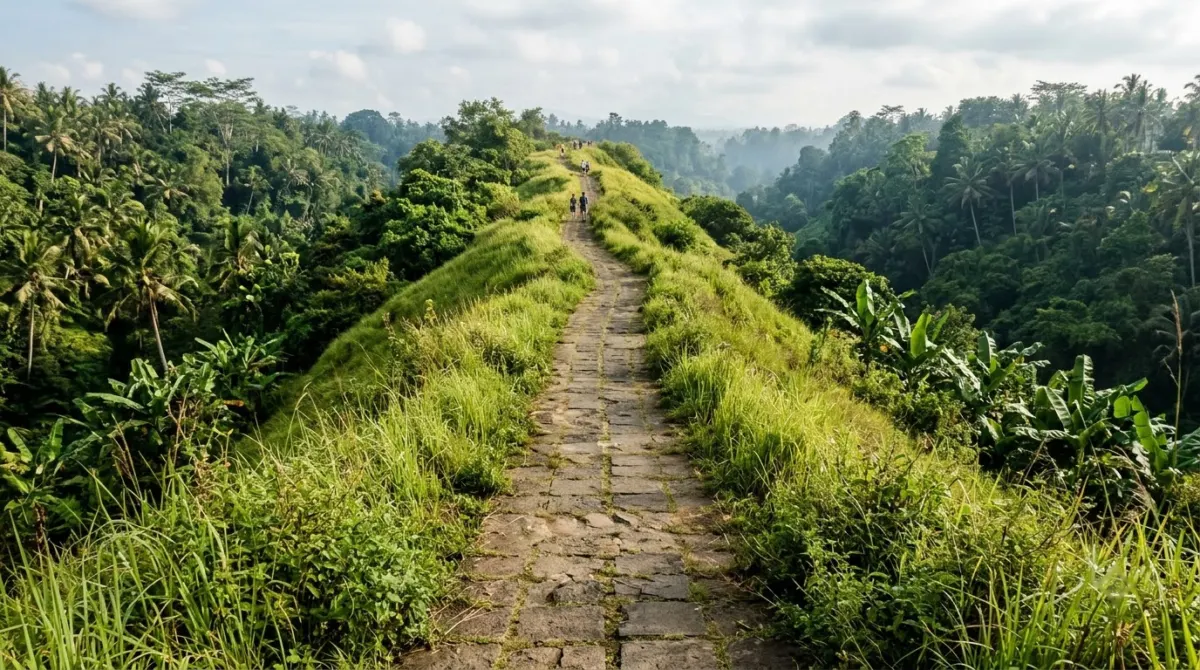
Today you stay in town and walk. Start early on the Campuhan Ridge Walk, a paved path along a grassy ridge between two river valleys. It takes about an hour there and back, and the morning is cool and clear. Continue to the villages beyond the ridge for breakfast with a view over rice fields.
Mid-morning, visit the Sacred Monkey Forest Sanctuary, a forest of temples and huge trees home to more than 1,000 long-tailed macaques. The monkeys grab sunglasses, hats and anything that looks like food, so put things away in a zipped bag and do not feed or touch them.
After lunch, visit Ubud Palace in the center of town and the Ubud Art Market opposite, which sells sarongs, baskets and woodcarvings; bargaining is expected. Walk to Pura Taman Saraswati, a temple fronted by a pond of lotus flowers. Use the afternoon for a Balinese cooking class or a spa treatment, both widely available in Ubud.
In the evening, see a traditional dance performance. Legong, Barong and Kecak shows are held almost every night at the palace and at temples around town, with a gamelan orchestra; tickets are sold at the door or in town during the day.
Day 4: Jatiluwih rice terraces and Ulun Danu Beratan in the highlands
Take a full-day trip into the central highlands, about one and a half to two hours from Ubud by car. The road climbs through fruit stalls and clove plantations into cooler air.
Start at Jatiluwih, a huge sweep of rice terraces on the slopes of Mount Batukaru. It is part of a UNESCO World Heritage landscape that recognizes Bali’s subak irrigation system, a cooperative way of sharing water between farms that dates back over a thousand years. Jatiluwih is much larger and quieter than Tegallalang, with several marked walking routes through the fields of different lengths.
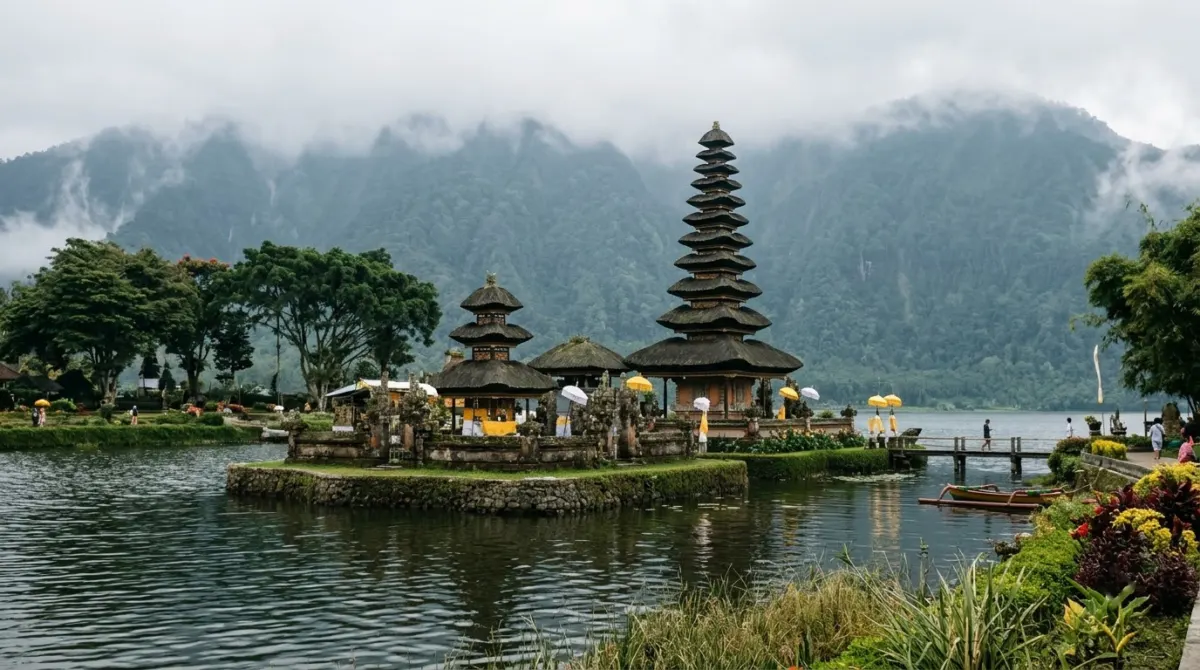
Continue to Pura Ulun Danu Beratan, a temple on the shore of Lake Beratan whose tiered shrines seem to float on the water when the lake is high. The highlands are often misty after midday, so bring a light jacket. If you have time, stop at the Bedugul market for strawberries, or at one of the waterfalls in the area.
Alternative: if you want a sunrise hike, replace this day with Mount Batur. Guided treks start in the early hours to reach the rim of the active volcano for sunrise, with views of the lake and Mount Agung. It is a steep walk on loose volcanic ground, so go with a licensed local guide and check conditions the day before.
Day 5: To the south coast via Taman Ayun and sunset at Tanah Lot
Check out of Ubud and have your driver take you south and west with stops on the way. First visit Taman Ayun in Mengwi, a royal temple from the 17th century surrounded by a moat and lawns, with tall tiered shrines called meru. It is also part of the subak UNESCO listing and is far less crowded than the coastal temples.
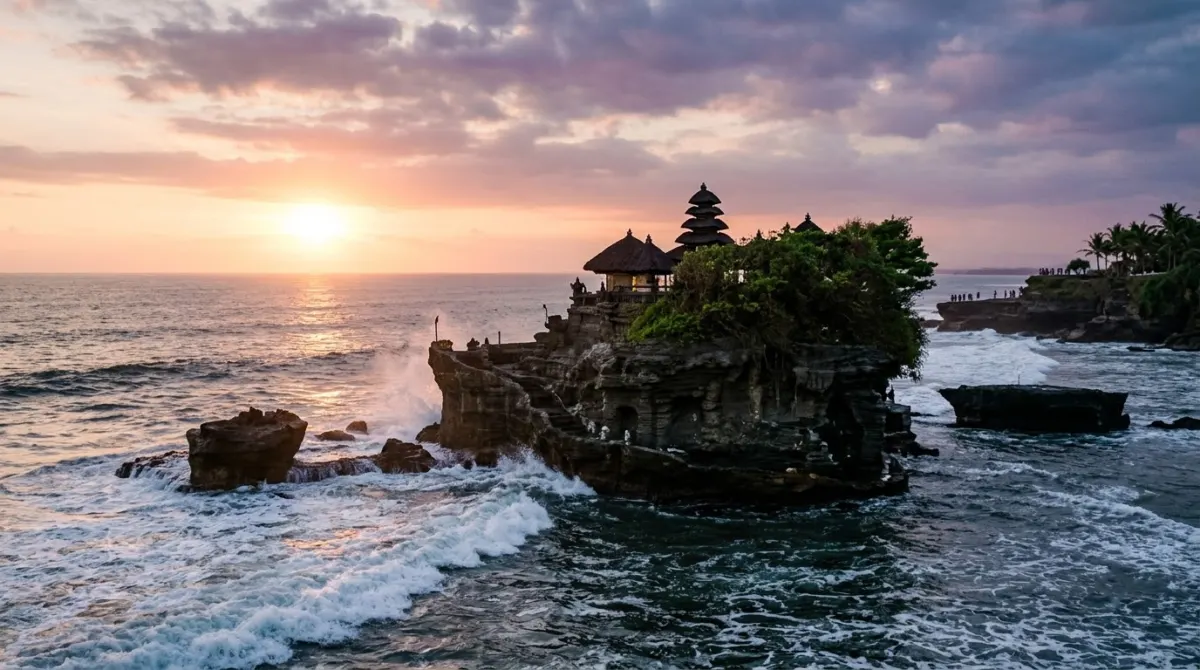
Drop your bags at your hotel in Seminyak or Canggu, and rest by the pool or walk the beach in the heat of the afternoon. Then head to Tanah Lot, about 30 to 45 minutes away. The temple sits on a rock just offshore, and at low tide you can walk across to the base of the rock, though only worshippers may go up to the temple itself. Arrive an hour before sunset to walk the cliff paths and find a viewpoint, since the sunset crowds are large.
Return to Seminyak for dinner. The area is full of restaurants of every kind, from simple warungs to stylish dining rooms, and the beach bars along the sand are lively at sunset.
Day 6: Uluwatu, the Bukit Peninsula and the Kecak dance
Spend the day on the Bukit Peninsula, the limestone headland at Bali’s southern tip, about an hour to an hour and a half from Seminyak, depending on traffic. The coastline here is a series of white-sand beaches tucked between high cliffs.
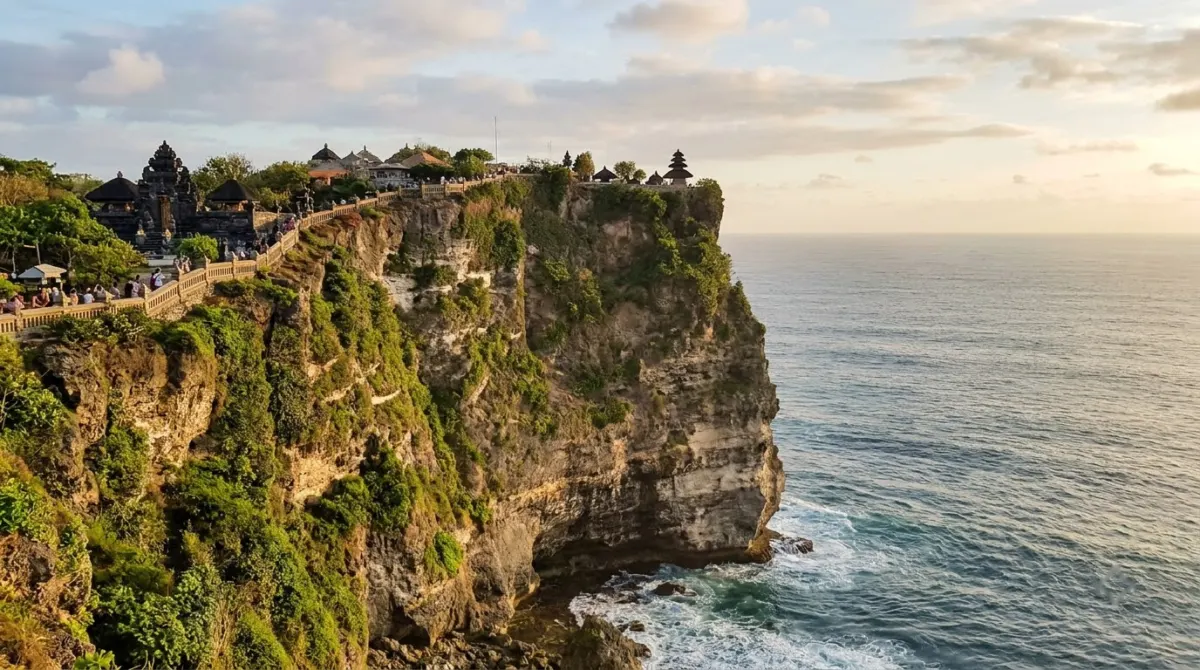
In the morning, visit one of the beaches, such as Melasti, reached by a road cut through the cliffs, or Padang Padang, a small cove down a stairway through the rocks. The sea here can have strong currents and big waves, so enjoy the sand and only go in where lifeguards mark a safe area. Have lunch at one of the clifftop cafes overlooking the surf.
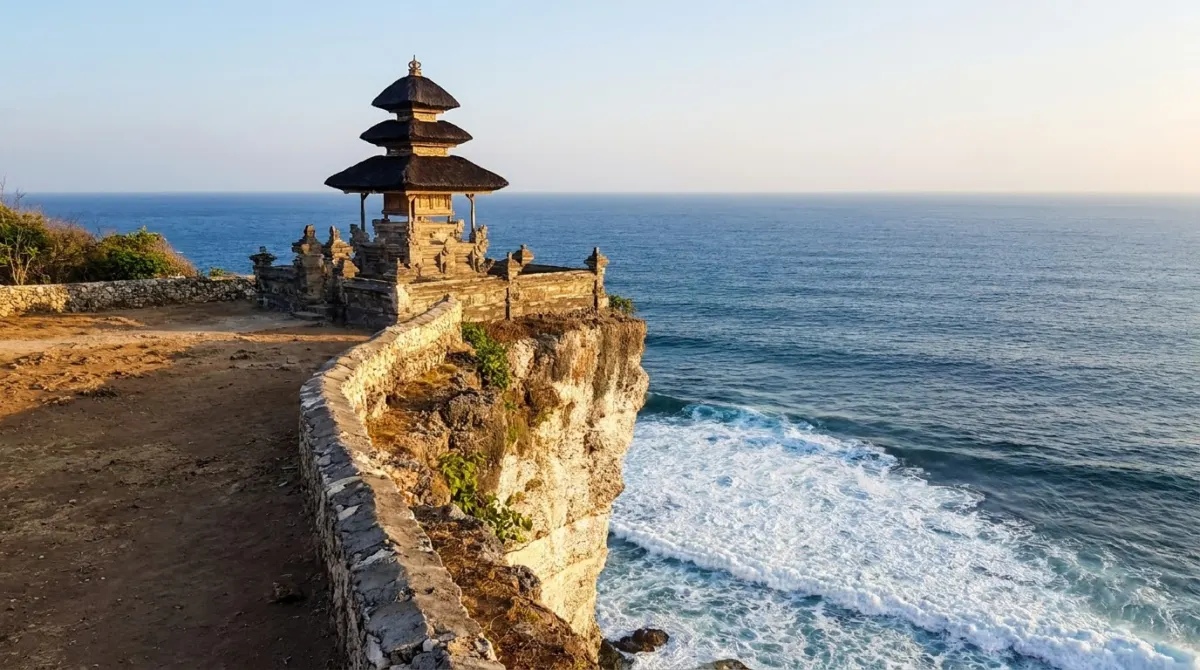
Late in the afternoon, head to Pura Luhur Uluwatu, a temple perched on a cliff about 70 meters above the Indian Ocean. Walk the clifftop path for the views, but watch your belongings: the temple’s monkeys are famous for snatching glasses and phones. At sunset, the Kecak fire dance is performed in an open-air amphitheater on the cliff, with dozens of men chanting in a circle. Tickets are sold separately from temple entry and the show is popular, so arrive early or buy tickets in advance.
Day 7: A final morning on the beach and departure
Enjoy your last morning without a schedule. Walk the beach in Seminyak or Canggu before it gets hot, have a long breakfast, or book a Balinese massage. If you want one more sight, Pura Petitenget, a temple near the beach in Seminyak, is a short walk from many hotels.
The airport is around 30 minutes from Seminyak and 45 minutes or more from Canggu, but traffic around Kuta and the airport junction can be heavy, especially in the late afternoon. Leave plenty of time and plan to arrive at least three hours before an international flight. Many hotels let you leave your bags after checkout, and some offer day rooms if your flight leaves late at night.
If your flight is late in the evening, you could also use the day for shopping in Seminyak’s boutiques or a final sunset on the beach. Avoid booking anything far from the airport on your last day.
Where to stay in Bali: Ubud and the south coast
Ubud (four nights): staying in or near central Ubud means you can walk to restaurants, the palace and the Monkey Forest. Lodgings range from family homestays in traditional compounds to villas with private pools. If you prefer quiet and rice-field views, look at the villages just outside town, such as Penestanan or Sayan, but expect to rely on a driver or scooter taxi to get into town.
The south (two nights): Seminyak is the most convenient choice for a first trip, with restaurants, shops and beach clubs, and it is close to the airport. Canggu is more relaxed and popular with surfers and digital nomads, with lots of cafes, though its roads are notoriously congested. Uluwatu suits travelers who want dramatic cliffs and quieter beaches but do not mind longer drives. Sanur on the east coast is a calm, family-friendly alternative with a long beachfront path.
For the best value, book well ahead for July, August and the Christmas and New Year period.
Getting around Bali: drivers, ride-hailing and traffic
Private driver: there are no trains on Bali, and public buses do not reach most sights. For a one-week trip, hiring a car with a driver for full days, typically eight to ten hours, is the most practical approach. Agree on the route and what is included, such as fuel and parking, beforehand.
Ride-hailing: Grab and Gojek both operate in Bali and are useful for short trips in the south and in Ubud. In some villages and around some popular sights, local transportation cooperatives restrict app pickups, so you may need to walk a little or use a local taxi.
Scooters: many visitors rent scooters, but traffic is chaotic and accidents involving tourists are common. You need a valid motorcycle license and an International Driving Permit, and travel insurance often will not cover you without them. For a first trip, a driver is the safer choice.
Etiquette: wear a sarong and sash at temples; most temples lend them. Do not climb on shrines or sacred trees, and dress modestly away from the beach.
Best time to visit Bali and the weather to expect
Dry season (about April to October): the most popular time, with sunny days, lower humidity and the best conditions for the beaches, highlands and sunrise treks. July and August, along with the Christmas and New Year holidays, are the busiest and most expensive periods, so book early.
Wet season (about November to March): expect heavy downpours, usually in the afternoon or evening, with sunny mornings in between. The rice fields are at their greenest, and there are fewer visitors outside the holidays. The sea on the west coast can be rougher, and some paths in the highlands become slippery.
Nyepi: the Balinese Day of Silence, usually in March, brings the island to a halt for 24 hours. The airport closes, no one is allowed on the streets, and hotels ask guests to stay indoors with low lights. The date changes every year, so check it before you book. The days around it, with the ogoh-ogoh parades of giant effigies the night before, are fascinating to see.
Temperatures are warm year-round, roughly in the high 70s to the high 80s Fahrenheit on the coast and cooler in the highlands.
Bali itinerary 5 days: the shorter version
If you only have 5 days in Bali, keep both bases but drop the longest day trip:
- Day 1: arrive and transfer to Ubud.
- Day 2: Tegallalang, Tirta Empul and Gunung Kawi with a driver.
- Day 3: Campuhan Ridge, the Monkey Forest and Ubud Palace, then a dance show in the evening.
- Day 4: move south via Taman Ayun, with sunset at Tanah Lot.
- Day 5: Uluwatu beaches in the morning and the airport in the afternoon, or stay for the Kecak dance if your flight leaves late at night.
This version cuts the highlands day at Jatiluwih and Lake Beratan and the slow last morning on the beach. For 5 days with 4 nights, three nights in Ubud and one in the south is the right split. If you would rather relax than sightsee, spend all five nights in Ubud, or swap to three in Ubud and two on the coast and do fewer day trips.
If you have more than a week in Bali and Indonesia
Extra days let you explore quieter parts of Bali or build a wider Indonesia itinerary:
- Nusa Penida or Nusa Lembongan (1 to 2 days): islands off Bali’s southeast coast known for dramatic cliffs and viewpoints such as Kelingking. Fast boats leave from Sanur, but the crossing can be rough, and the roads on Nusa Penida are rugged, so an overnight is more comfortable than a day trip.
- Sidemen and East Bali (1 to 2 days): a peaceful valley of rice fields near Mount Agung, with the temple of Lempuyang and the water palaces of Tirta Gangga nearby.
- Munduk (1 to 2 days): a cool mountain village in the north with waterfalls, coffee farms and forest walks, which pairs well with the Jatiluwih day.
- Lombok and the Gili Islands (3 or more days): the next island east, reached by fast boat or a short flight, for quieter beaches.
- Labuan Bajo and Komodo National Park (2 to 3 days): a flight from Bali takes you to the home of the Komodo dragon and a park of islands and bays, the classic add-on for a two-week Indonesia trip.
Map shows live availability and prices. We may earn a commission on bookings made through it, at no extra cost to you.
If you have time for a second country, our Malaysia itinerary and our Philippines itinerary follow the same one-week format.
The short version
For a 7-day Bali itinerary, spend four nights in Ubud and two on the south coast. In Ubud, see the Tegallalang rice terraces and the water temple of Tirta Empul with a driver, walk Campuhan Ridge and the Monkey Forest, watch an evening dance show, and take a day trip to the Jatiluwih terraces and the lake temple of Ulun Danu Beratan. Then move to Seminyak or Canggu via Taman Ayun, with sunset at Tanah Lot, spend a day on the Bukit Peninsula for beaches, Uluwatu Temple and the Kecak dance, and keep the last morning for the beach. Hire a driver, start early to beat the traffic, and check the visa, levy and arrival card rules on official Indonesian sites before you fly.
Frequently asked questions
Is 7 days enough for Bali?
A week is enough for a good first visit if you limit yourself to two bases: Ubud for culture and rice terraces, and the south coast for beaches and sunsets. It is not enough to also add the Gili Islands, Lombok or Nusa Penida without spending much of the trip in transit.
Do US citizens need a visa for Bali?
Yes. US passport holders are not visa-exempt for Indonesia, but they can get a visa on arrival, either online in advance as an e-VOA or at the airport. Fees and rules have been under review, so check the official Indonesian immigration site before you travel.
What is the Bali tourist levy?
Bali charges international visitors a one-time tourism levy per person per trip, separate from the visa. It has been IDR 150,000 since 2024. Pay it only through the official Love Bali website or app run by the provincial government, whose address ends in baliprov.go.id; copycat sites charge more.
What is the best area to stay in Bali for a week?
Split the week between Ubud and one beach area. Ubud is best for rice terraces, temples and day trips into the highlands. For the coast, choose Seminyak for restaurants and shopping, Canggu for a younger cafe scene, or Uluwatu for clifftop views and quieter beaches.
When is the rainy season in Bali?
The wet season usually runs from November to March, with heavy afternoon or evening downpours rather than all-day rain. The dry season, from about April to October, is the most popular time, and July and August are the busiest months.
Do I need a driver in Bali?
For a short trip, hiring a private driver by the day is the most practical way to see the island, since there are no trains and public transportation is limited. Ride-hailing apps work in many areas, but some villages and tourist spots restrict app pickups.
Can I use credit cards in Bali?
Cards are widely accepted in hotels, larger restaurants and shops in Ubud, Seminyak and Uluwatu. Carry Indonesian rupiah in cash for small warungs, temple entrance fees, parking and markets. Use ATMs attached to banks or inside shops rather than standalone machines on the street.
Written and checked by
Triplarks Editorial
An editorial desk, not an invented persona: research, drafting and fact-checking are done by the same small team. Every number here carries the date it was read.