Quick answer where to stay in Croatia
Fly into Split and out of Dubrovnik. In Split, stay in or right next to Diocletian’s Palace, for two nights at least and three if you can. In Dubrovnik, inside the walls or in Ploče just east of them.
On this page
- How many days should you spend in Croatia? Time in Croatia at a glance
- The Croatia itinerary: a 10 day route, day by day
- Plitvice and Krka: the two national parks
- Two week Croatia trips: adding Istria, Zagreb or Slovenia
- Travelling to Croatia and getting around: do you need a car in Croatia?
- A day in Croatia: how the pace actually works
- Practical notes for coastal Croatia
- When to go, and what it costs
- Croatia or Greece?
- Frequently asked questions
Croatia is not a line down a coast. It is a crescent wrapped around Bosnia and Herzegovina, and two facts about that shape decide how a Croatia itinerary should work.
Some links below are affiliate links. We may earn a commission if you book through them, at no extra cost to you. We do not rank hotels, and any prices on the map come live from the booking sites.
First: Dubrovnik is detached from the rest of the country. A nine-kilometre strip of Bosnian coastline at Neum cuts it off. Until 2022, driving from Split to Dubrovnik meant crossing an international border twice. The Pelješac Bridge opened in July of that year and bypasses it entirely, which is a genuine change that older guide book advice has not caught up with.
Second: the ferries radiate from Split, not Dubrovnik. Hvar, Brač, Korčula and Vis are all served from there. That makes Split the hub of any island trip and Dubrovnik the end point — not the other way round, however the photographs rank.
The itinerary below is built on that, and it works in reverse just as well if your flights suit. Plan your trip to Croatia around the boats, and a perfect Croatia route falls out of the timetable. Ferry routes, driving times and border arrangements checked 8 September 2026.
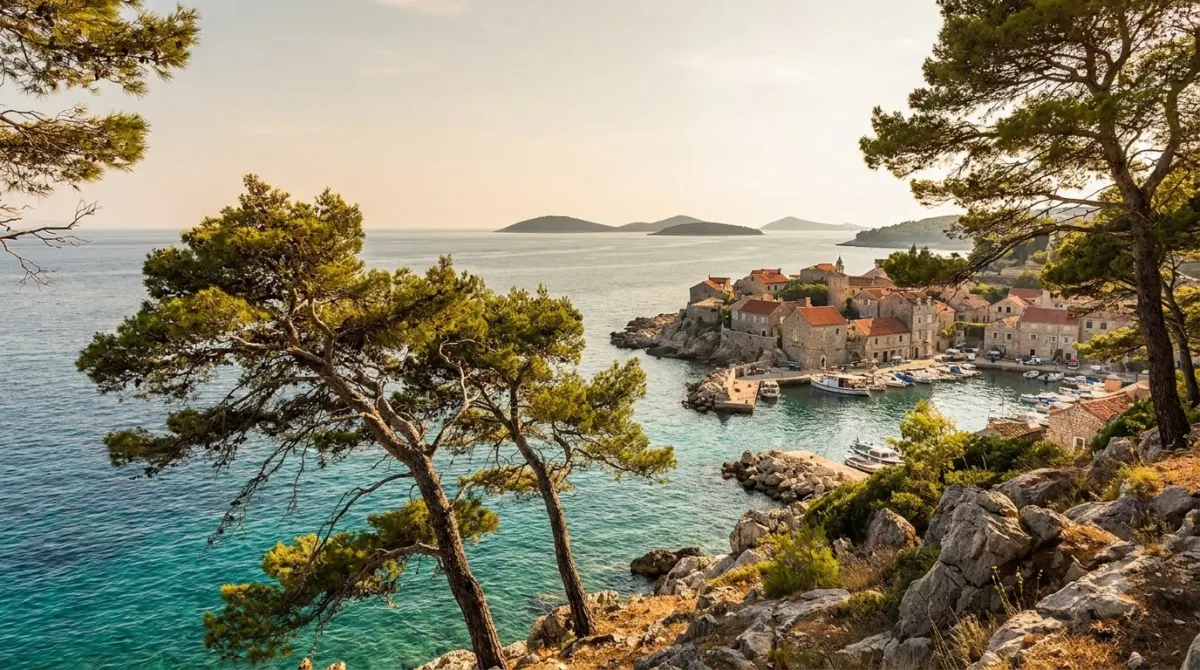
How many days should you spend in Croatia? Time in Croatia at a glance
| Length | Covers | Car? |
|---|---|---|
| 5 days | Split and one island, or Dubrovnik alone | No |
| One week in Croatia | Split, two islands, Dubrovnik | Optional |
| 10 days | Adds Plitvice, Zadar and a third island | Yes, part of it |
| 2 weeks | Adds Istria and Zagreb, or Slovenia | Yes |
A week in Croatia is the sensible minimum for a first trip that includes islands. Ten is where Plitvice Lakes and the northern coast fit without rushing, and extra days beyond that go to Istria rather than to more of Dalmatia.
Where to sleep on this route
The Croatia itinerary: a 10 day route, day by day
Fly into Split, Croatia and out of Dubrovnik. Running the itinerary in reverse works equally well — what matters is not doubling back. An open-jaw ticket saves a full day and is the single best decision in planning a trip here.
Days 1–2: Split
Split is built inside a Roman palace. Diocletian’s Palace is not a monument you visit — it is the old town, with cafés, apartments and shops occupying the fourth-century walls.
- The Peristyle, the colonnaded courtyard at the centre, and the bell tower of the cathedral above it, which was Diocletian’s mausoleum.
- The Riva, the palm-lined waterfront promenade, for the evening.
- Marjan Hill for panoramic views over the terracotta roofs, the harbour and the islands.
- Trogir, a walled UNESCO world heritage town 30 minutes west, as a half day.
- Bačvice beach, a rare sandy bay, ten minutes from the centre.
Two nights in Split is the minimum and three is better. One full day in Split covers the palace and the Riva; the second buys Trogir or a swim. A night in Split at the end of the trip also works if you fly home from there.
Days 3–4: Hvar
An hour from Split by catamaran. The island of Hvar is the busiest and best known, and Hvar Town is where the yachts and the nightlife are.
- The Spanish Fortress above the town, for the view over the Pakleni islands.
- Stari Grad on the other side of the island, older and much quieter, with a UNESCO-listed field system laid out by the Greeks.
- The Pakleni islands by taxi boat for swimming in the Adriatic Sea, which is what most people actually come for.
- Lavender fields inland in June and July.
If Hvar Town sounds too busy, swap it for Brač — twenty minutes closer, with Zlatni Rat, the shifting shingle spit that appears on most beaches in Croatia lists.
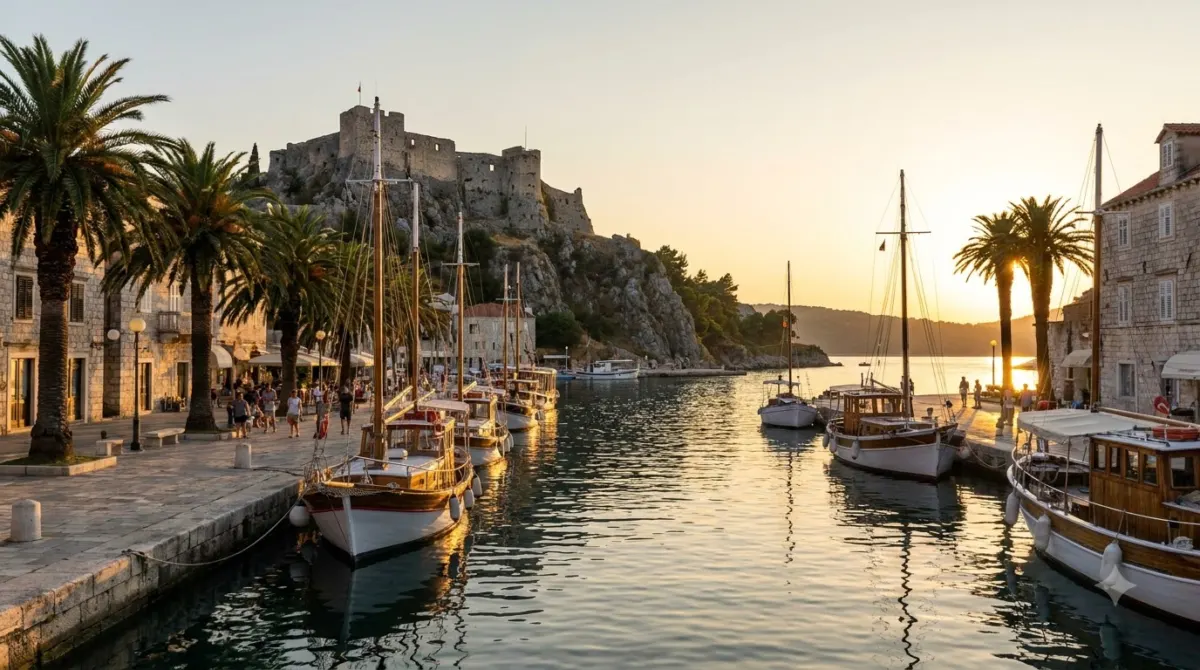
Day 5: Korčula, or straight down the coast
Korčula is a walled town on its own island that looks like a small Dubrovnik and has none of the crowds. It sits neatly between Dubrovnik and Hvar, and the ferry connects all three. This is the most picturesque stop on the route and the one people wish they had given longer.
Claiming Marco Polo was born there is a local tradition rather than settled history, and the town is worth the stop regardless.
Days 6–8: Dubrovnik
3 nights. That is more than most guides suggest and it is the right number once you account for the day trips — 2 days in Dubrovnik covers the walls and the old town, and the third buys Mostar or Kotor. One full day in Dubrovnik is enough only if you skip everything outside the city.
- The city walls — two kilometres of rampart circling the old town, and the best of the country in one walk. Go at opening or in the last two hours; there is no shade and it is exposed cliff-top for much of the way.
- Fort Lovrijenac on its rock outside the walls, included in the same ticket.
- The Dubrovnik cable car up Mount Srđ for the panoramic view over the old town and Lokrum island.
- Lokrum island, fifteen minutes by boat, for swimming, peacocks and a botanical garden.
- Game of Thrones locations if that interests you — the old town was King’s Landing and the walking tours are everywhere.
Check the cruise ship schedule before you plan your days. Dubrovnik’s old town is small and two or three ships in port changes it completely. The port authority publishes arrivals, and mornings with no ships are a different city.
Day 9: a day trip from Dubrovnik
- Mostar, in Bosnia and Herzegovina, with its rebuilt Ottoman bridge. Around three hours each way and worth the long day. Sarajevo is further and needs an overnight.
- Montenegro and the Bay of Kotor, a fjord-like inlet with a walled town at the end. Two hours each way.
- The Elafiti islands by boat, for a slower option.
- Ston, with the longest defensive wall in Europe after the Great Wall, and the best oysters in Croatia.
All of these need your passport, and the Mostar and Montenegro trips cross a non-Schengen border.
Day 10: Plitvice on the way out, or fly home
If you are looping back to Zagreb rather than flying from Dubrovnik, Plitvice Lakes National Park is the stop to build in.
Map shows live availability and prices. We may earn a commission on bookings made through it, at no extra cost to you.
Plitvice and Krka: the two national parks
These are the reason to have a rental car, and the choice between them catches people out.
- Plitvice Lakes — sixteen terraced turquoise lakes linked by waterfalls, crossed on wooden boardwalks. UNESCO listed, spectacular, and two hours from Zagreb or three from Split. A day trip to Plitvice from Split is long but doable; from Zagreb it is easy. You cannot swim.
- Krka National Park — smaller, an hour from Split, and much easier as a day trip. Swimming near the main falls has been banned since 2021, so check the current rules before going for that reason.
- Do Plitvice if you have the day and Krka if you do not. They are similar enough that most people only need one.
- Book timed entry in summer, ideally several days in advance. Plitvice caps daily numbers and there is an extra cost for the boat and shuttle inside the park, though it is usually included in the ticket.
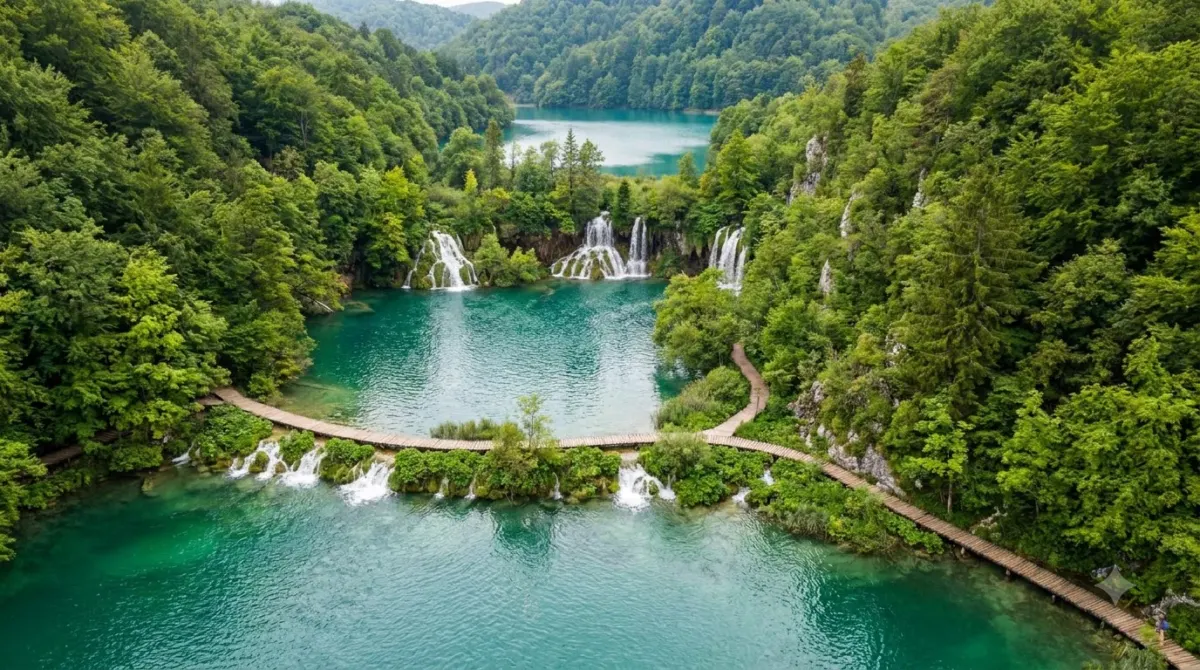
Two week Croatia trips: adding Istria, Zagreb or Slovenia
With two weeks, the north opens up, and it is a different country from Dalmatia.
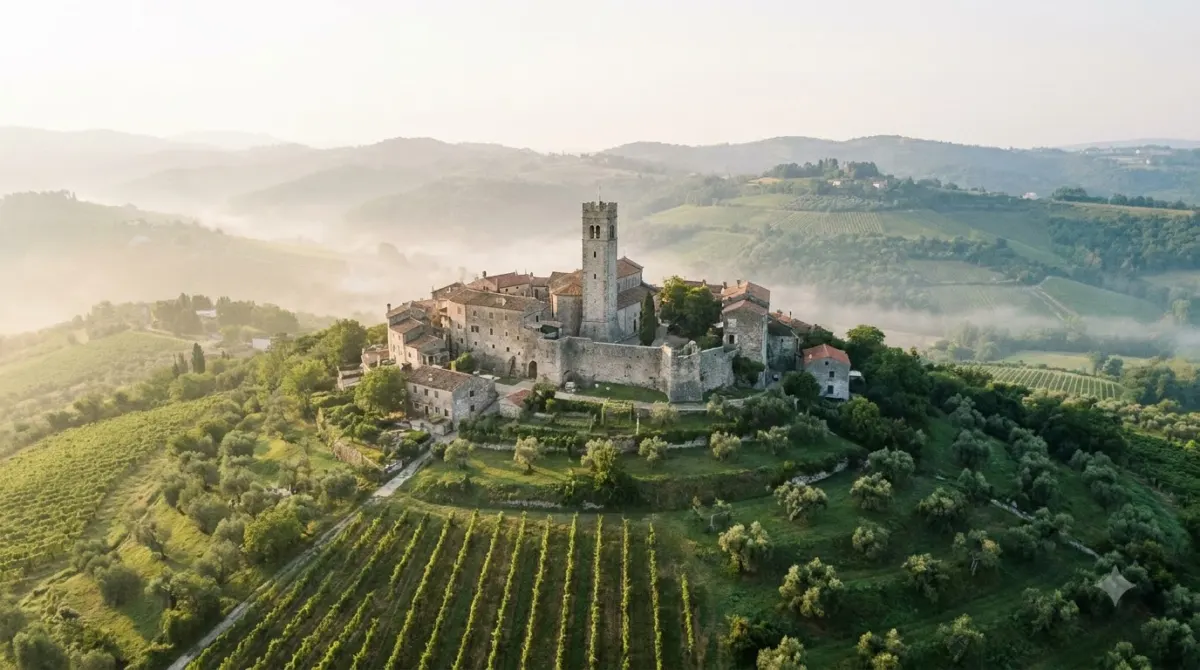
- Istria — the peninsula in the northwest, closer to Venice than to Dubrovnik. It is worth taking a day trip in even on a short visit, and it is the part guide writers from Rick Steves onward have long rated above the southern coast. Rovinj is its best town, and the interior is hill villages, truffles and wine. It feels Italian because it was.
- Zagreb — the capital, inland, and almost entirely skipped by coastal itineraries. Two days is plenty and it is the cheapest city in the country.
- Slovenia — Ljubljana and Lake Bled are a natural pairing, two hours from Zagreb, and the Julian Alps beyond them. A Croatia and Slovenia itinerary of two weeks is one of the best trips in Europe.
- Zadar and Šibenik — on the coast between Split and the north, both worth a night, both usually driven past.
Travelling to Croatia and getting around: do you need a car in Croatia?
This is where a Croatia trip is won or lost, because the coast and the islands work differently.
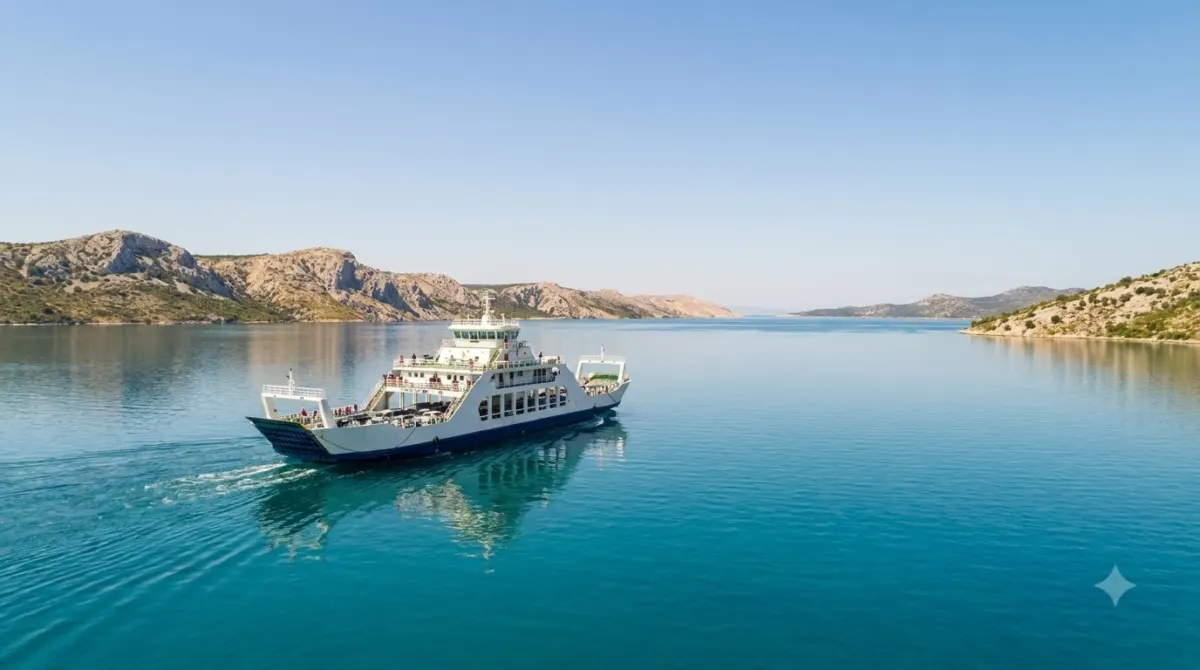
- Catamarans and ferries run from Split to Hvar, Brač, Vis and Korčula, and along the coast toward Dubrovnik in summer. Jadrolinija and Krilo are the main operators. The timetable thins dramatically outside June to September, which is the single biggest planning trap.
- Buses are excellent and cheap along the whole coast, including Dubrovnik to Split in about four and a half hours.
- Rent a car for the national parks, Istria and the interior, and treat the rest of coastal Croatia as car-free. You do not want a car rental on the islands or in the walled towns, where parking is scarce and expensive. A Croatia road trip makes sense in the north and almost nowhere else.
- The Pelješac Bridge means driving Split to Dubrovnik no longer crosses Bosnia. If you are using a car rental, confirm cross-border cover anyway for Mostar or Kotor.
- Dubrovnik Airport is 20 minutes south of the city; Split airport is near Trogir.
- Trains are irrelevant on the coast. There is no line south of Split.
A day in Croatia: how the pace actually works
Two things shape a coastal Croatia trip more than the route does, and neither appears on most day-by-day lists.
- The ferry decides the morning. Catamarans leave early and the good ones sell out days in advance in summer. Book seats rather than turning up.
- Midday is dead. Between noon and four the old towns bake and empty, and the sensible plan is to swim or sit in the shade with a coffee.
- Evening is the point. Explore the old town after six, when the cruise passengers have re-boarded and the stone cools. A glass of wine on a square at nine is most of what people remember.
- Dinner runs late but not Spanish-late — eight is normal.
- Spend at least one day doing nothing. On a coast this good, a beach day is not a wasted day.
Budget an extra day of slack on any itinerary that involves three islands. Weather cancels catamarans, and a bora wind in shoulder season can strand you for a day.
Practical notes for coastal Croatia
- Getting from Dubrovnik Airport to the old town: the Dubrovnik Airport Shuttle Bus meets flights and takes about 30 minutes; a taxi or private transfer costs several times more.
- Public transport within the cities is buses only, and in Dubrovnik and Split you can walk almost everywhere anyway.
- Beaches are pebble or rock almost everywhere. Water shoes are worth the space in the bag.
- Cliff bars in Dubrovnik — there are a couple built into the sea wall outside the city walls, reached through a gap in the stone. Lady Pi-Pi, up in the old town, is the other much-photographed spot.
- Food is grilled fish, black risotto, pršut and cheese from Pag, and gelato on every corner. Fruit and vegetables at the Split green market are excellent and cheap.
- Croats are direct and helpful, and English is very widely spoken along the coast.
- It is a safe country with low crime, including for solo travellers and for US citizens; the usual small-scale pickpocketing applies in crowded old towns.
- Hiking on Marjan Hill, Mount Srđ and in the national parks is free and good, and a hotel with air conditioning is worth paying for in July.
When to go, and what it costs
- June and September are the best months: warm sea, full ferry timetable, and manageable crowds.
- July and August are peak. Hvar and Dubrovnik are extremely busy and prices roughly double.
- May and October are pleasant and cheaper, but the island ferry service is reduced and some places have not opened or have closed.
- Croatia is no longer cheap. It joined the euro in 2023 and the coast now costs roughly what Italy does. You can still do Croatia without spending Italian money, but only outside the city walls — Zagreb and the interior are much better value.
- Dubrovnik is the most expensive place in the country by a wide margin, for both rooms and restaurants.
Croatia or Greece?
A fair question, and they suit different trips.
- Croatia for walled towns, clear water, easy driving and a compact coast. The sea is cleaner and the islands are closer together.
- Greece for ancient sites, better food for the money, and a wider spread of island character.
- Croatia is easier logistically, especially without flying between islands.
Our Greece itinerary covers the other side of that comparison.
Booking the Dubrovnik leg? See where to stay in Dubrovnik for why the old town suits short trips and Lapad suits long ones.
Basing yourself in the hub? See where to stay in Split for the areas compared, and what sleeping inside a Roman palace is actually like.
Fixing the dates? See how many days in Dubrovnik before you book.
Adding an island? See where to stay in Hvar — the port your ferry docks at is not the town you booked.
To choose a base for each leg, see where to stay in Croatia.
Frequently asked questions
How many days should I spend in Croatia?
Seven days covers Split, two islands and Dubrovnik. Ten adds Plitvice Lakes, Zadar and a third island without rushing. Five days is enough for Split and one island, or Dubrovnik on its own. Two weeks lets you add Istria and Zagreb, or continue into Slovenia.
What are the best places to visit in Croatia?
Dubrovnik’s walled old town and its city walls, Split’s Diocletian’s Palace, the islands of Hvar and Korčula, and Plitvice Lakes National Park. Istria in the north — Rovinj and the hill towns — is the best part that most itineraries skip entirely.
How do I get around Croatia?
Catamarans and ferries from Split for the islands, buses along the coast, and a rental car for the national parks and Istria. The ferry timetable thins dramatically outside June to September, which is the most common planning mistake. There is no railway south of Split.
Do I need to rent a car in Croatia?
Only for part of a trip. The islands, Split and Dubrovnik are all easier without one, and parking in the walled towns is scarce and expensive. A car earns its cost for Plitvice and Krka national parks, for Istria, and for the interior. Buses cover the coast well and cheaply.
Which country can I combine with Croatia?
Slovenia is the natural pairing — Ljubljana and Lake Bled are about two hours from Zagreb, and the Julian Alps beyond. Bosnia and Herzegovina works as a day trip to Mostar from Dubrovnik or Split, and Montenegro’s Bay of Kotor is two hours south of Dubrovnik. All three need your passport at the border.
What is the best time to visit Croatia?
June and September. The sea is warm, the ferries run a full timetable and the crowds are manageable. July and August are peak, with Hvar and Dubrovnik very busy and prices roughly doubling. May and October are cheaper and pleasant, but island ferry services are reduced.
Is Croatia an expensive country to visit?
Not cheap any more. Croatia adopted the euro in 2023 and the Dalmatian coast now costs roughly what Italy does, with Dubrovnik the most expensive place in the country for both rooms and restaurants. Zagreb, Istria’s interior and the mainland away from the coast remain much better value.
Keep planning Croatia
Written and checked by
Triplarks Editorial
An editorial desk, not an invented persona: research, drafting and fact-checking are done by the same small team. Every number here carries the date it was read.