Where to stay
Best Hotels in Dubrovnik: Inside the Walls, or Looking at Them
By Nora Castell Checked
Hotel links open Stay22 (Booking.com and Agoda) and tour links open GetYourGuide. We may earn a commission at no extra cost to you.
Pick by trip
- Atmosphere inside the walls
- The Pucic Palace
- Views back to the walls, quieter nights
- Hotel Excelsior
- Families and beaches
- Grand Hotel Park
- Catching an early ferry
- Hotel Lapad
- Lowest rate near a beach
- Hotel Vis
The 8 hotels
- 1Check price
The Pucic Palace
Old Town · Luxury
- Best for
- Evenings inside the walls
- Standout
- 18th-century baroque palace steps from the Stradun
- 2Check price
Hotel Excelsior
Ploče · Luxury
- Best for
- Quieter nights with a beach
- Standout
- Beachfront, five minutes' walk from the Old Town, with an indoor pool and spa
- 3Check price
Boutique Hotel Stari Grad
Old Town · Mid-range
- Best for
- Couples on a short stay
- Standout
- One of two hotels inside the walls, 14 rooms and suites
- Trade-off
- Old Town lanes are stepped and car-free
- 4Check price
Grand Hotel Park
Lapad · Mid-range
- Best for
- Families wanting pools
- Standout
- Outdoor and indoor pools, 100 metres from the beach on Lapad
- Trade-off
- Bus ride to the Old Town
- 5Check price
Valamar Argosy Hotel
Babin Kuk · Mid-range
- Best for
- A resort-style stay
- Standout
- Indoor and outdoor pools, most rooms with balconies
- Trade-off
- 5.7 km from the Old Town
- 6Check price
Hotel Lapad
Lapad (Gruž harbour) · Mid-range
- Best for
- Early ferries from Gruž
- Standout
- Historic building with a pool, overlooking Gruž harbour
- Trade-off
- 3 km from the Old Town by bus
- 7Check price
Hotel Komodor
Lapad · Budget
- Best for
- Beach days on a budget
- Standout
- Pool terrace 50 metres from the beach
- Trade-off
- Bus ride to the Old Town
- 8Check price
Hotel Vis
Lapad · Budget
- Best for
- Swimming straight from the hotel
- Standout
- On the pebble beach, every room with a balcony
- Trade-off
- 15-minute bus ride to the Old Town
| Hotel | Area | Tier | Best for | Book |
|---|---|---|---|---|
| The Pucic Palace | Old Town | Luxury | Evenings inside the walls | Check rates |
| Hotel Excelsior | Ploče | Luxury | Quieter nights with a beach | Check rates |
| Boutique Hotel Stari Grad | Old Town | Mid-range | Couples on a short stay | Check rates |
| Grand Hotel Park | Lapad | Mid-range | Families wanting pools | Check rates |
| Valamar Argosy Hotel | Babin Kuk | Mid-range | A resort-style stay | Check rates |
| Hotel Lapad | Lapad (Gruž harbour) | Mid-range | Early ferries from Gruž | Check rates |
| Hotel Komodor | Lapad | Budget | Beach days on a budget | Check rates |
| Hotel Vis | Lapad | Budget | Swimming straight from the hotel | Check rates |
Shortlisted by location and recent guest reviews on Booking.com; we have not stayed in these hotels. Prices show live on Booking.com. Affiliate links.
On this page
- Best hotels in Dubrovnik: the areas
- The Old Town
- Ploče
- Lapad and Babin Kuk
- Gruž
- The cruise problem, and how to work around it
- Sea views, spas and villas on the Adriatic
- What to check before booking
- When Dubrovnik is busiest
- How many nights
- What the accommodation is actually like
- Getting around
- Beaches, and where they are
- Day trips
- How Dubrovnik fits a Croatian trip
- What the old town costs, and what it buys
- Dubrovnik with children, and with limited mobility
- Where not to stay
- The short version
- Frequently asked questions
Quick answer
Stay in the Old Town if the walls and the evening are the point, Ploče for the same walk with a quieter night, Lapad or Babin Kuk for beaches and lower rates, and Gruž if you are catching an early ferry.
Dubrovnik’s old town is a walled medieval city with no cars, polished limestone streets and a great many steps. It is also, for several hours a day in season, one of the most crowded places in Europe.
Some links below are affiliate links. We may earn a commission if you book through them, at no extra cost to you. Where we name hotels, we shortlist them by location and recent guest reviews, and we have not stayed in them. Any prices on the map come live from the booking sites.
Those two facts decide almost everything about where to stay here, which is why this guide compares areas and formats rather than ranking individual hotels. For the area question first, see where to stay in Dubrovnik.
Best hotels in Dubrovnik: the areas
| Area | Character | Suits |
|---|---|---|
| Old Town | Inside the walls, no cars, steps | Short stays, atmosphere |
| Ploče | East of the walls, views back | Views and quiet, five minutes out |
| Lapad and Babin Kuk | Peninsula west, beaches | Families, longer stays, value |
| Gruž | Port and market | Budget, ferries, local life |
One answer with no caveats: Ploče, just east of the old town. You are five minutes’ walk from the walls, above the crowds, with the view back at the city that people inside it cannot see.
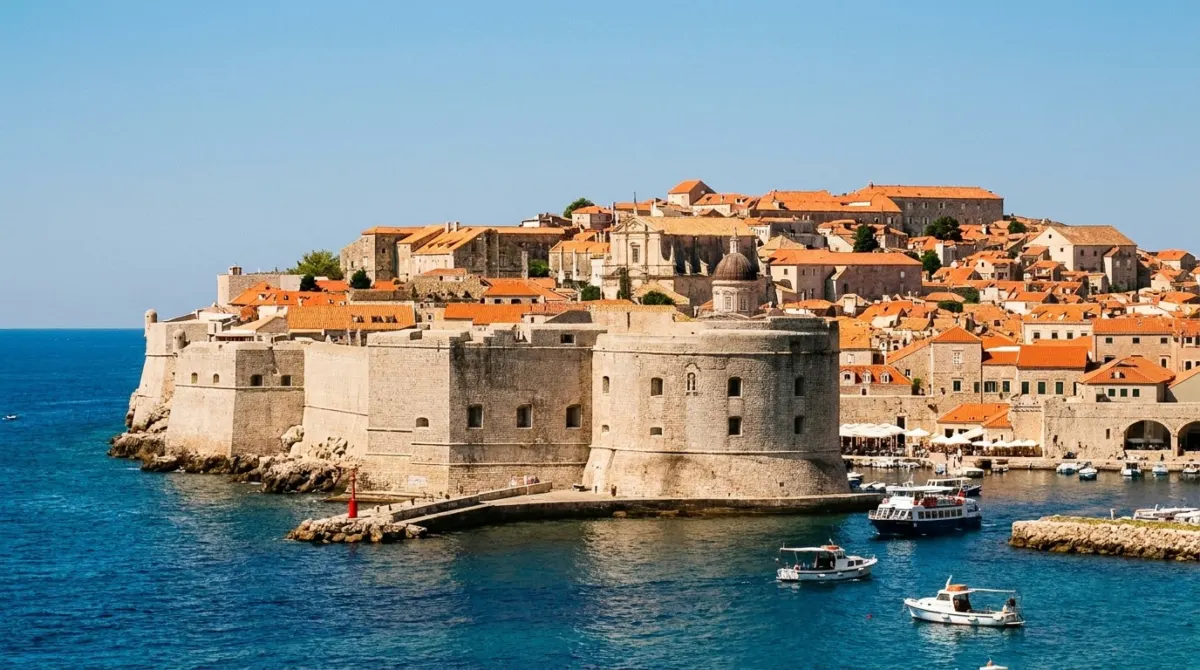
The Old Town
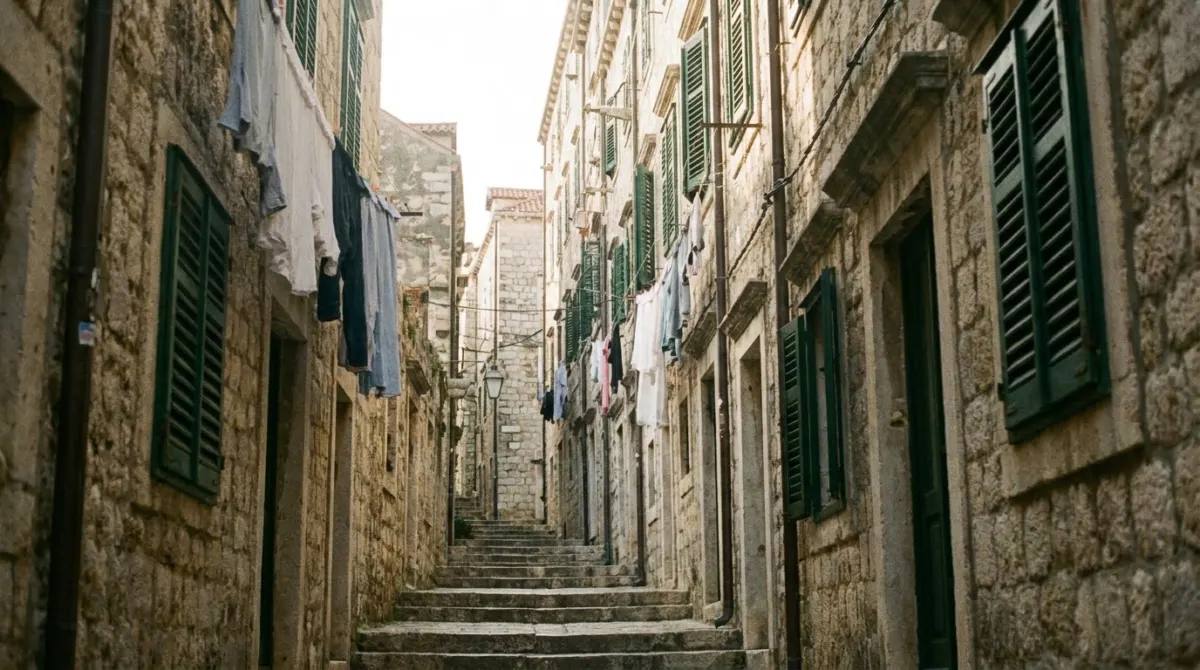
Inside the walls there are no vehicles at all. Luggage is carried, wheeled or dragged over limestone, and many properties are up flights of stone steps off the main street.
Staying here gives you the city early in the morning and late at night, which is when it is genuinely extraordinary. It also gives you noise — the main street carries sound — and prices that reflect the address.
Check before booking: how many steps from the nearest gate, whether anyone will help with bags, and whether the room faces the street.
Ploče
The hillside immediately east, outside the Ploče Gate. Hotels here look back across the walls to the old town and down to Banje beach.
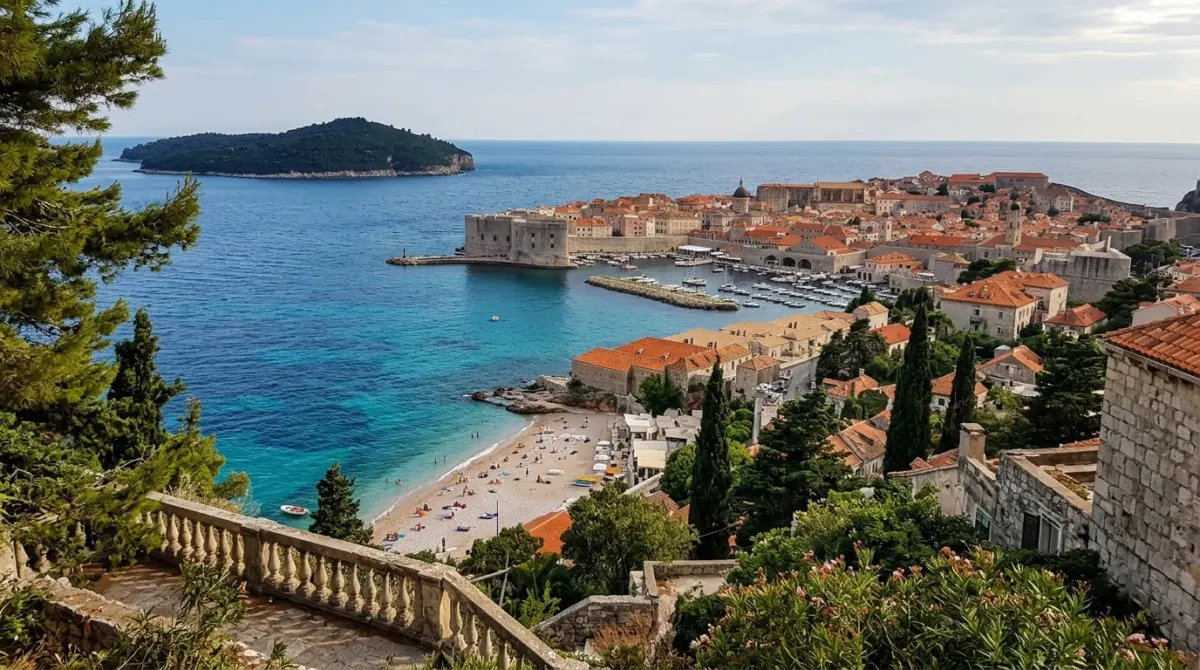
It is five to ten minutes’ walk to the gate, the ground is steep but roads reach the doors, and the evening is quiet.
This is where Dubrovnik’s better-known hotels are, and the view is the product.
Lapad and Babin Kuk
The peninsula west of the port, about fifteen minutes by bus or thirty on foot from the old town.
It has beaches, a pedestrian promenade, pine woods and the largest concentration of family hotels and apartments on the coast. Prices are noticeably lower than inside or beside the walls.
For a week, with children, or on a budget, this is the sensible choice. For two nights of atmosphere, it is too far out.
Gruž
The working port, where the ferries and most cruise ships dock and where the city’s main market is.
It is the cheapest central area, it is where people live, and it is a bus ride or a long walk from the old town.
Useful if you are catching a ferry to the islands or arriving late.
The cruise problem, and how to work around it
Dubrovnik receives a very large number of cruise passengers, and in season the old town is close to impassable between roughly nine and four.
Two consequences for a stay. Sleeping inside the walls gives you the city before nine and after six, which is the single best reason to pay for it. And the walls walk — the circuit around the top, which is the main thing to do here — should be done at opening or in the last two hours of the day, both for the crowds and for the heat.
Map shows live availability and prices. We may earn a commission on bookings made through it, at no extra cost to you.
Sea views, spas and villas on the Adriatic
Three things Dubrovnik listings promise, and what each is worth checking.
Sea view. Outside the city centre almost everything faces the Adriatic, so the phrase does very little work here. What varies is whether you look at open water, at the walls, or at the island of Lokrum — and whether the view is from a balcony or through a window above a car park. Ask which, because all three are sold the same way.
Spa. The larger properties on the Ploče side and out at Babin Kuk have them, usually with an indoor pool, which matters more than it sounds in April and October when the sea is still cold.
Villa. In Dubrovnik the word covers two different things: a genuine stand-alone house, often up the hill with its own terrace and a long walk down; and a converted stone building divided into apartments. Both are common and the listing rarely distinguishes them, so check the number of units in the building.
One geographical note that saves confusion: the city centre most listings mean is Gruž and the modern town, not the walled Old Town. If you want to be inside the walls, the listing has to say so.
What to check before booking
Steps. The old town is built on a slope and many entrances are up stairways.
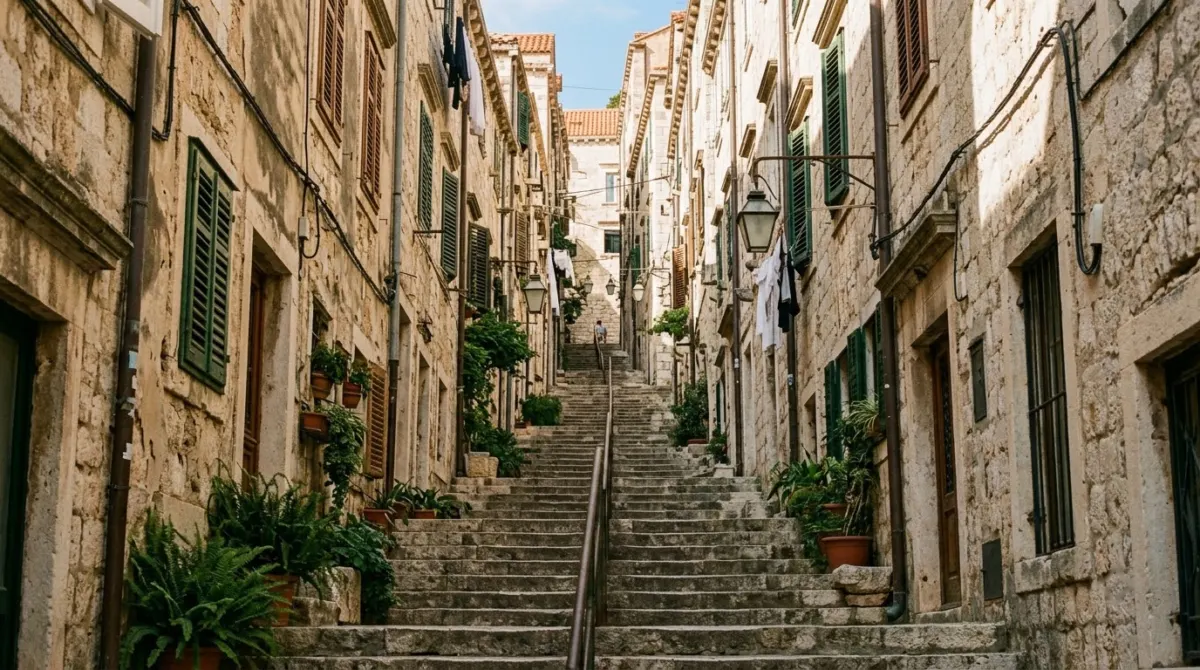
Vehicle access. There is none inside the walls; find out where a taxi can stop.
Air conditioning, which is essential from June to September.
Noise, particularly on and around Stradun and the bar streets.
When Dubrovnik is busiest
June to September is peak, hot and expensive, with the old town crowded through the day.
May and October are the best months: warm enough to swim, far fewer people, and everything open.
November to March is quiet and mild, with some hotels and restaurants closed and the island ferries reduced.
How many nights
Two nights covers the walls, the old town and the cable car. Three adds a boat to Lokrum or the Elafiti islands, or a day trip to Montenegro or Mostar.
More than four and most people are ready to move on to the islands or up the coast to Split.
What the accommodation is actually like
Dubrovnik’s stock splits sharply by area.
Inside the walls there are almost no hotels and a great many apartments and small guesthouses in historic buildings: stone stairs, no lifts, small rooms, and no vehicle access at all.
Ploče has the city’s best-known hotels, built into the hillside with terraces facing the old town.
Lapad and Babin Kuk have the large resort hotels and the family apartments.
Gruž is mostly apartments in ordinary residential buildings.
Air conditioning is standard in hotels and less certain in older apartments, and it matters from June to September.
Getting around
The old town is pedestrian only and small enough to cross in ten minutes.
Buses link Lapad, Gruž and Ploče with the old town gates frequently and cheaply.
The cable car climbs from just outside the northern walls to Mount Srð for the view down over the city and the islands.
The airport is about thirty minutes south, with a shuttle bus timed to flights.
Boats run from the old port to Lokrum and from Gruž to the Elafiti islands and further afield.
Beaches, and where they are
Dubrovnik is a cliff city rather than a beach resort, which surprises some visitors.
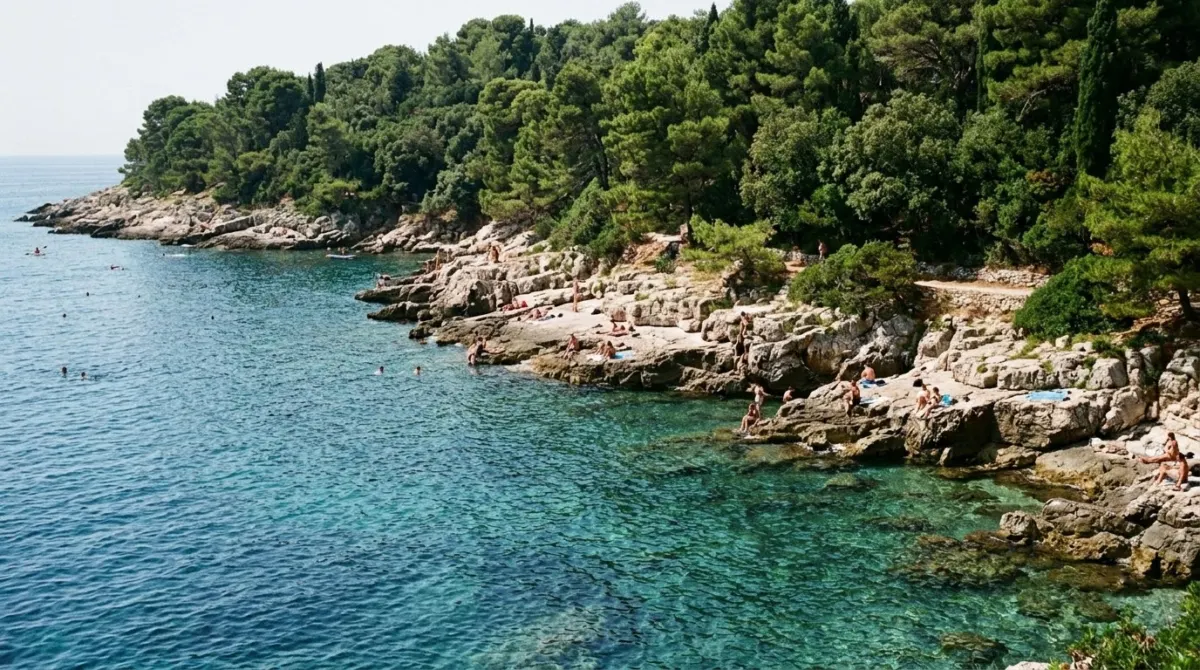
Banje, just east of the old town below Ploče, is the famous one: pebble, busy, with the walls as a backdrop.
Lapad bay has the best swimming close to the city, with a shallow pebble beach and a promenade behind it.
Lokrum, fifteen minutes by boat, has rocky swimming, peacocks and no hotels at all.
If swimming matters, Lapad is the area to stay in; if it is a bonus, anywhere will do.
Day trips
Dubrovnik is a good base for three excursions, all of which need most of a day.
The Elafiti islands — a short boat ride, with a car-free island at the end.
Montenegro, the Bay of Kotor, about two hours each way with a border crossing.
Mostar, in Bosnia and Herzegovina, about three hours each way.
Both international trips need your passport and, if you are driving a hire car, the right paperwork.
How Dubrovnik fits a Croatian trip
Dubrovnik sits at the southern end of the country, separated from the rest of Croatia by a short stretch of Bosnian coast at Neum; since the Pelješac Bridge opened in 2022, drivers can stay in Croatia the whole way.
Most trips pair it with Split and the islands, three to four hours north by road or a short flight. The coastal road is slow and spectacular; the motorway inland is fast and dull.
Two nights in Dubrovnik and three or four in Split with the islands is the standard shape, and it is the right one: Dubrovnik is a set piece, Split is a base.
What the old town costs, and what it buys
Inside the walls is the most expensive address in Croatia, and the premium is for the hours when nobody else is there.
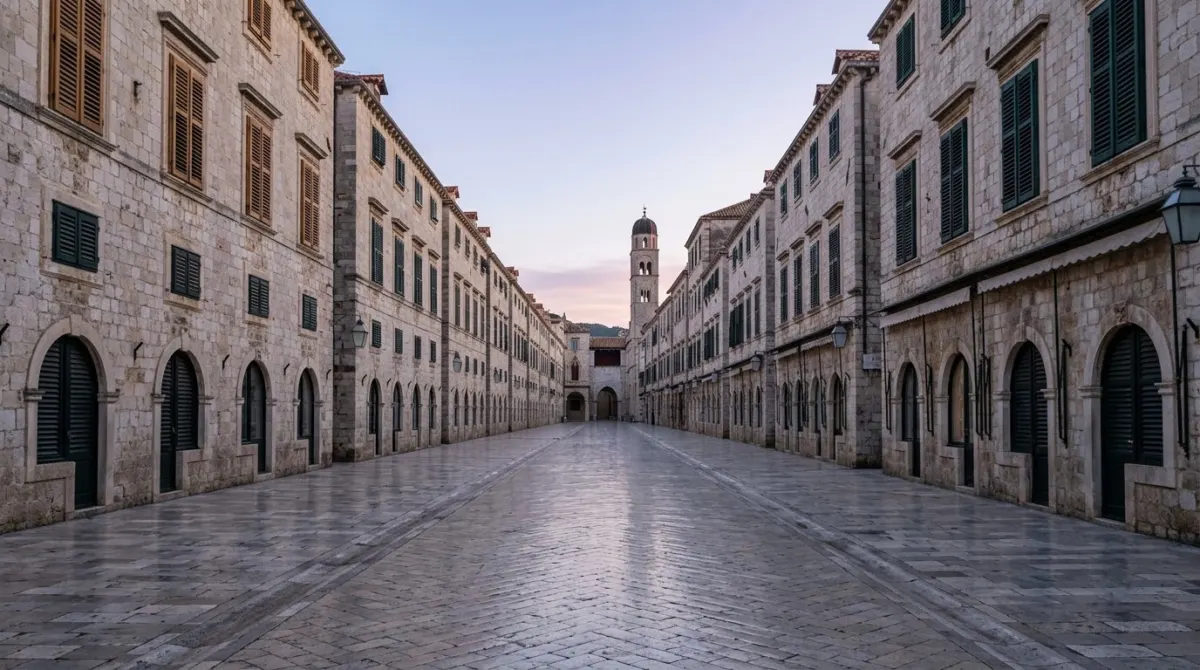
From about six in the evening until nine the next morning, the old town belongs to the people staying in it: the Stradun is empty, the side lanes are quiet, and the city looks like the one in the photographs taken at dawn.
That is a real product and for two nights it can be worth the money. For a week it rarely is, because you will spend the days out of the walls anyway and the evenings are the only part you are paying for.
Dubrovnik with children, and with limited mobility
Both point away from the old town.
Inside the walls there are steps everywhere, no vehicles and polished limestone that is slippery in rain. With a pushchair it is hard work; with limited mobility much of it is impractical.
Lapad is the answer in both cases: flat promenades, a shallow beach, modern buildings with lifts, and a bus into town when you want it.
The city walls walk involves a great many steps and has no step-free alternative, which is worth knowing before planning a trip around it.
Where not to stay
Directly on Stradun or the bar lanes, unless you intend to be out until they close.
Far up the coast road, which looks close on a map and means a bus for every meal.
Anywhere at all in August without checking the cruise schedule, which decides how the old town feels on your particular days.
The short version
Ploče for the view and a five-minute walk to the gate, inside the walls for the early mornings if you accept steps and noise, Lapad for families and value, Gruž for the ferries and the lowest prices. Check vehicle access and air conditioning before booking, walk the walls at opening, and come in May or October rather than July.
Check Dubrovnik availability →
Frequently asked questions
Should I stay inside Dubrovnik's old town?
If you want the city before nine and after six, which is when it is genuinely extraordinary, and you accept steps, noise and high prices. There are no vehicles inside the walls, so check how far a taxi can get and whether anyone will carry bags.
What is the best area to stay in Dubrovnik?
Ploče, just east of the walls: five minutes' walk to the old town, above the crowds, with the view back at the city. Lapad for families and value, Gruž for the cheapest rooms and the ferries.
Is Lapad a good place to stay in Dubrovnik?
For a week, with children or on a budget, yes — beaches, a promenade, pine woods and much lower prices, about fifteen minutes by bus from the old town. For two nights of atmosphere it is too far out.
When is Dubrovnik old town least crowded?
Before about nine in the morning and after six in the evening, once the cruise passengers have returned to their ships. Do the city walls walk at opening or in the last two hours of the day.
How many nights do you need in Dubrovnik?
Two for the walls, the old town and the cable car. Three if you want a boat to Lokrum or the Elafiti islands, or a day trip to Montenegro or Mostar.
When is the best time to visit Dubrovnik?
May and October: warm enough to swim, everything open and far fewer people than the June to September peak, when the old town is crowded through the middle of the day.
Keep planning Croatia
- Best Hotels in Split: A City Inside a Roman Palace
- Where to Stay in Hvar: The Port You Land At Is Not the Town
- Where to Stay in Split: You Are Booking a Room Inside a Roman Palace
- Where to Stay in Dubrovnik: The Old Town Is a Trap for Longer Trips
- How Many Days in Dubrovnik? Two, Then Cross a Border
- Croatia Itinerary: Split Is the Hub, Not Dubrovnik

Written and checked by
Nora Castell is the pen name of the Triplarks editorial desk and the editor of its Costa Rica and Central America guides. Each guide is built from national park, transport and tourism sources, operator rate cards and recent traveller reports, then fact-checked, with every figure dated to the day it was read. Triplarks uses AI tools to help draft; nothing goes live until it has been edited and checked. Where we have not been somewhere, we do not write as though we have.