
Route 1, the Ring Road, runs about 1,330 kilometers around the edge of Iceland and touches almost everything worth seeing. Driving the Ring Road is the classic Iceland road trip and it is genuinely one of the best drives in the world.
It is also the trip people most often get wrong, because the distance is deceptive. The loop looks like a week on a map. It is a week only if you accept three to four hours of driving most days and do not stop for everything.
This is the route itself, day by day, with the driving between each stop. If you are still deciding how long to spend in the country at all, our Iceland itinerary compares 3, 5, 7 and 10 day versions first. Road conditions and seasonal access checked 7 September 2026 against road.is and vedur.is.
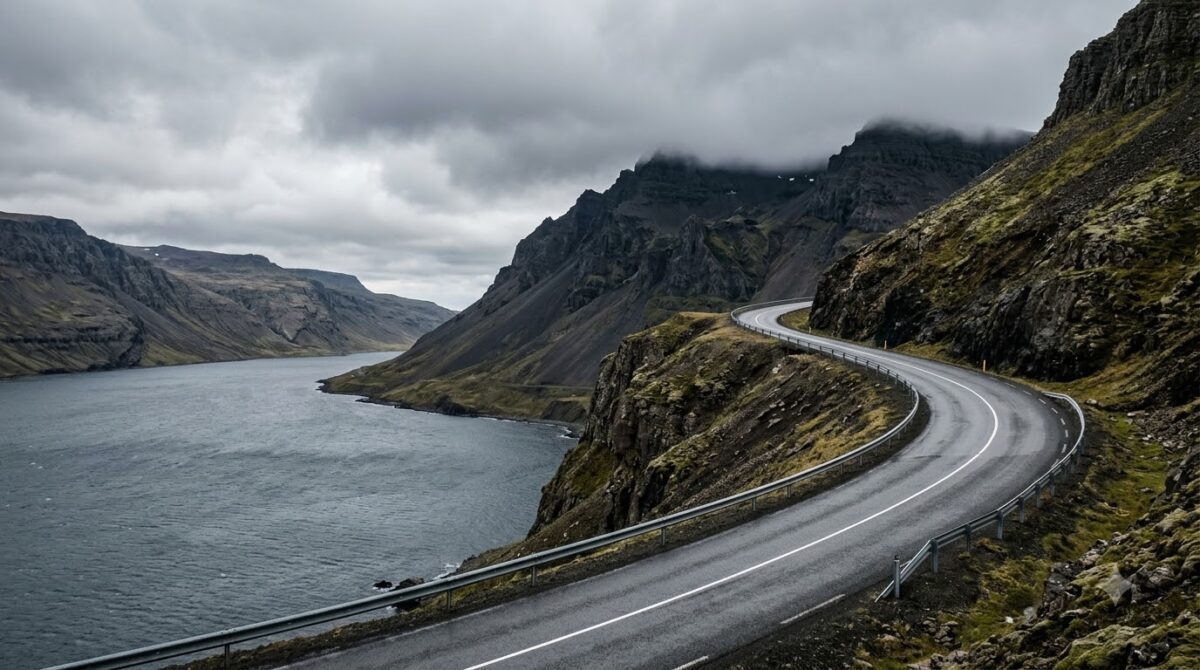
The loop at a glance
| Day | Leg | Driving | Sleep |
|---|---|---|---|
| 1 | Keflavik to Reykjavik, or straight to the south | 1 hr | Reykjavik |
| 2 | Golden Circle to the south coast | 3 hrs | Hella or Vik |
| 3 | South coast waterfalls and black sand | 2 hrs | Vik |
| 4 | Vik to the glacier lagoon | 3 hrs | Hofn |
| 5 | East fjords | 4 hrs | Egilsstadir or Seydisfjordur |
| 6 | East to Lake Myvatn | 3 hrs | Myvatn |
| 7 | Myvatn to Akureyri and the north | 2 hrs | Akureyri |
| 8 | North back to Reykjavik, or via Snaefellsnes | 5 hrs | Reykjavik |
Seven days is the minimum and eight is the honest number. A 7 day Iceland Ring Road trip works if you cut day 7 and drive the north to Reykjavik leg in one long push. A 10 day Iceland Ring Road adds Snaefellsnes, two nights somewhere, and room for weather.
Which direction to drive the Ring Road
Anticlockwise, heading east along the south coast first. Almost every Iceland guide agrees on this and the reasons are practical.
- The south coast has the highest density of sights. You see them while you are fresh, not on day six when you are tired of waterfalls.
- The long empty legs come in the middle, when you have settled into the driving.
- If the weather turns and you have to cut the trip short, you have already seen the best part.
- Accommodation on the south coast books out first, so having it at the start makes the rest easier to arrange around.
Day 1: arrive and go
Keflavik to Reykjavik is about 50 minutes. Collect the rental car at the airport, not in the city, and take the extra insurance for gravel and for sand and ash.
If you land early enough, skip Reykjavik entirely and drive straight to Hella or Hvolsvollur on the south coast. That buys you an extra half day of the ring road, and Reykjavik is better as an end-of-trip stop when you want a restaurant and a bed that is not in a village.
Day 2: Golden Circle and onto the south coast
The Golden Circle is a loop off the Ring Road rather than part of it, and it fits neatly into the drive east.
- Thingvellir — the rift valley between the North American and Eurasian plates.
- Geysir — Strokkur erupts every few minutes.
- Gullfoss — a two-tier waterfall into a canyon.
Rejoin Route 1 at Selfoss and continue east. Do not go back to Reykjavik — that is the single most common wasted hour on this trip.
Day 3: the south coast
The most photographed day of any ring road drive, and the shortest driving day.
- Seljalandsfoss — the waterfall in Iceland you can walk behind. You will get soaked.
- Gljufrabui — hidden in a cleft 500 meters on, and most people miss it.
- Skogafoss — 60 meters, with a staircase to a platform above.
- Solheimasandur plane wreck — a 45 minute walk each way over flat gravel. Skip it in wind.
- Dyrholaey — a rock arch and puffins between May and August.
- Reynisfjara black sand beach — basalt columns and sea stacks. Sneaker waves have killed people here. Stay well up the beach and never turn your back on the water.
Sleep in Vik, which is the only real settlement for a long way in either direction.
Day 4: Vik to the glacier lagoon
- Fjadrargljufur — a mossy canyon half an hour past Vik.
- Skaftafell, in Vatnajokull national park — glacier walks and ice caves, guided only, book ahead.
- Jokulsarlon glacier lagoon — icebergs drifting to the sea.
- Diamond Beach — the same ice washed back onto black sand.
Push on to Hofn for the night. It is an hour further and it shortens day 5, which is the longest of the trip.
Day 5: the east fjords
This is the day nobody photographs and plenty of people describe as their favourite.
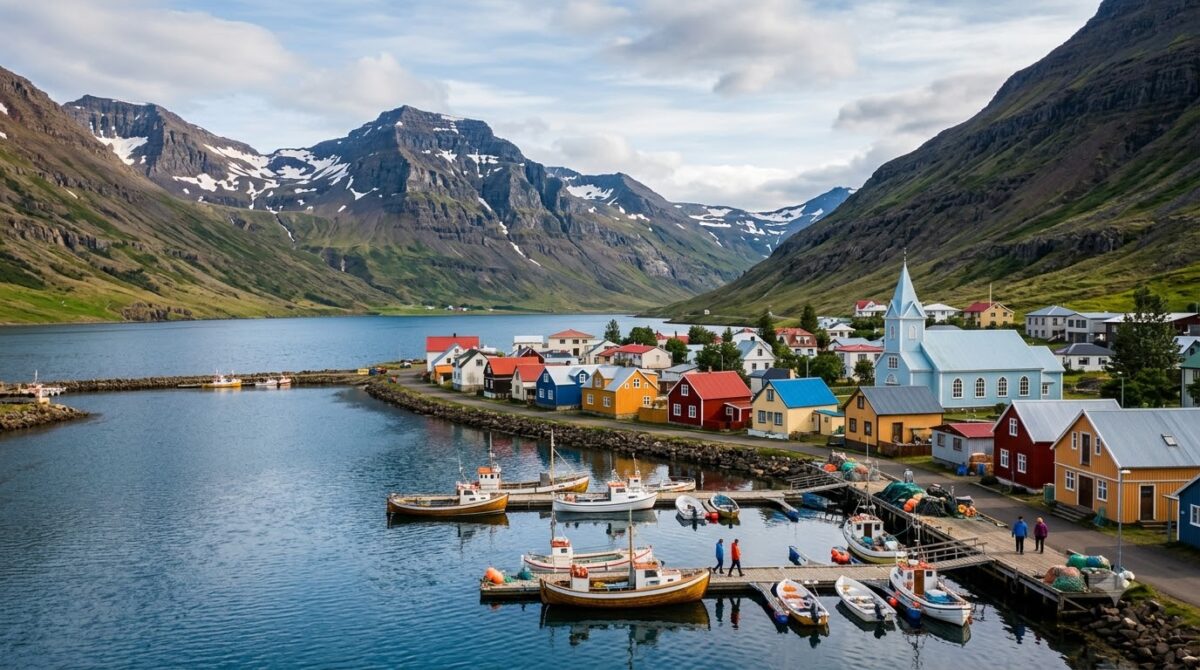
The road threads in and out of one fjord after another, past tiny fishing villages, with reindeer on the hillsides and almost no traffic. There is no single famous stop, which is the point.
- Djupivogur and Faskrudsfjordur — small harbours worth pulling into.
- Seydisfjordur — a detour over a mountain pass to a village with a rainbow street and a blue church. The prettiest place in east Iceland and worth the 27 kilometers each way.
- Egilsstadir — the practical base, with a supermarket and fuel.
Fuel up before this leg. Stations thin out badly through the east.
Day 6: east to Lake Myvatn
The drive west from Egilsstadir crosses high, bare moorland and is the emptiest stretch of Route 1. Then the north opens up.
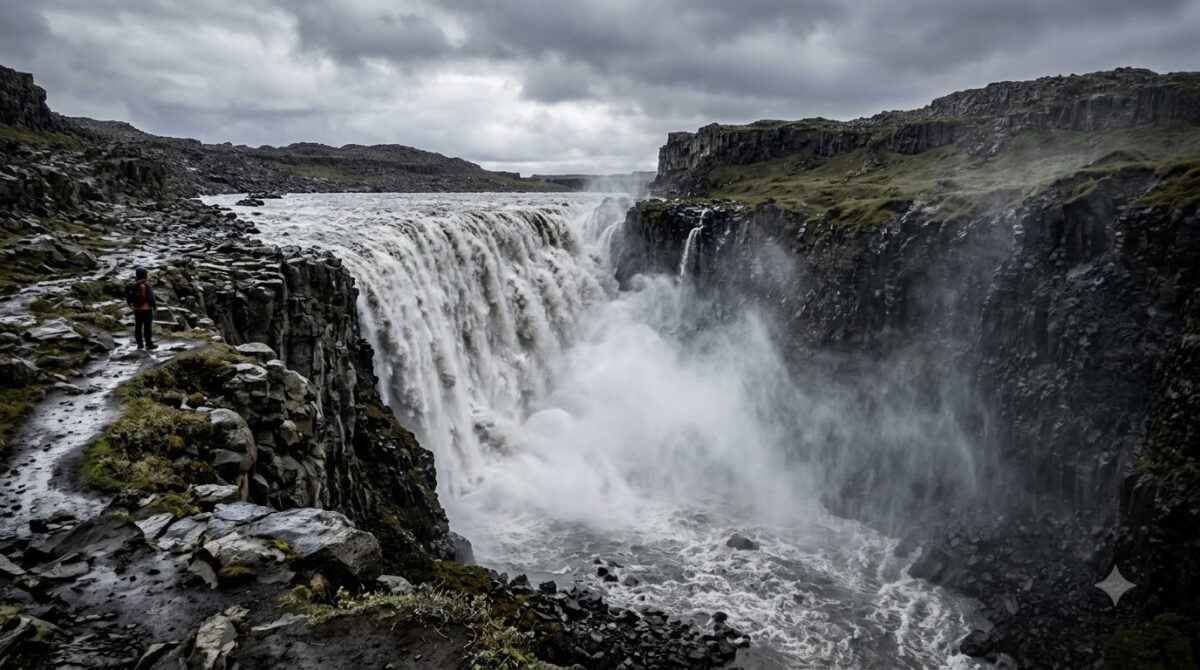
- Dettifoss — the most powerful waterfall in Europe by volume. The east bank is paved and the west is gravel. Check which side your route uses before turning off; people regularly take the wrong one.
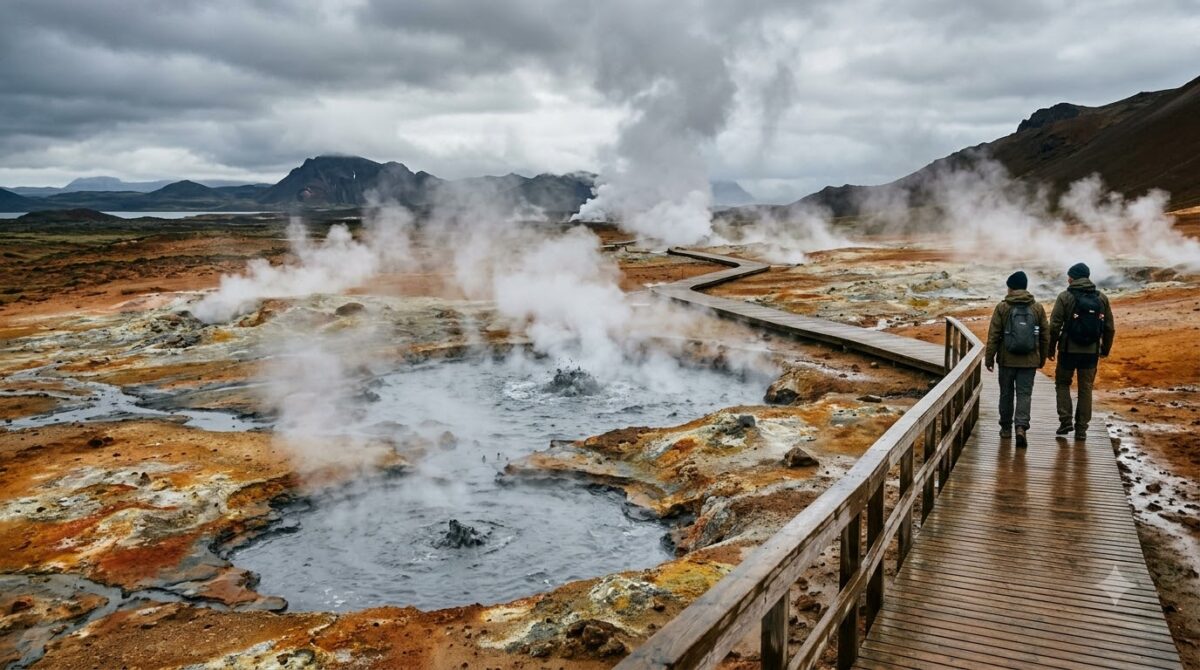
- Namafjall Hverir — a field of bubbling mud pots and steam vents in orange and grey. It smells of sulphur and looks like another planet.
- Dimmuborgir — twisted lava formations.
- Myvatn Nature Baths — the north’s answer to the Blue Lagoon, cheaper and far quieter.
Day 7: Myvatn to Akureyri and the north coast
- Godafoss — a wide curved waterfall right beside the road, half an hour from Myvatn.
- Husavik — the whale watching capital of Iceland, roughly April to October. An hour north of the ring road and the best detour in the north.
- Akureyri — the second city, and the only place outside the capital area with a proper choice of restaurants.
Day 8: north back to Reykjavik
Akureyri to Reykjavik is around five hours direct on Route 1, through Varmahlid and over the Holtavorduheidi pass.
If you have a spare day, take Snaefellsnes instead. The peninsula is often called Iceland in miniature — a glacier, black beaches, lava fields and the Kirkjufell mountain — and it turns a dull transit day into one of the best of the trip. It adds roughly half a day.
Driving the Ring Road: what the guides underplay
The route is simple. The driving has specific quirks that catch people out.
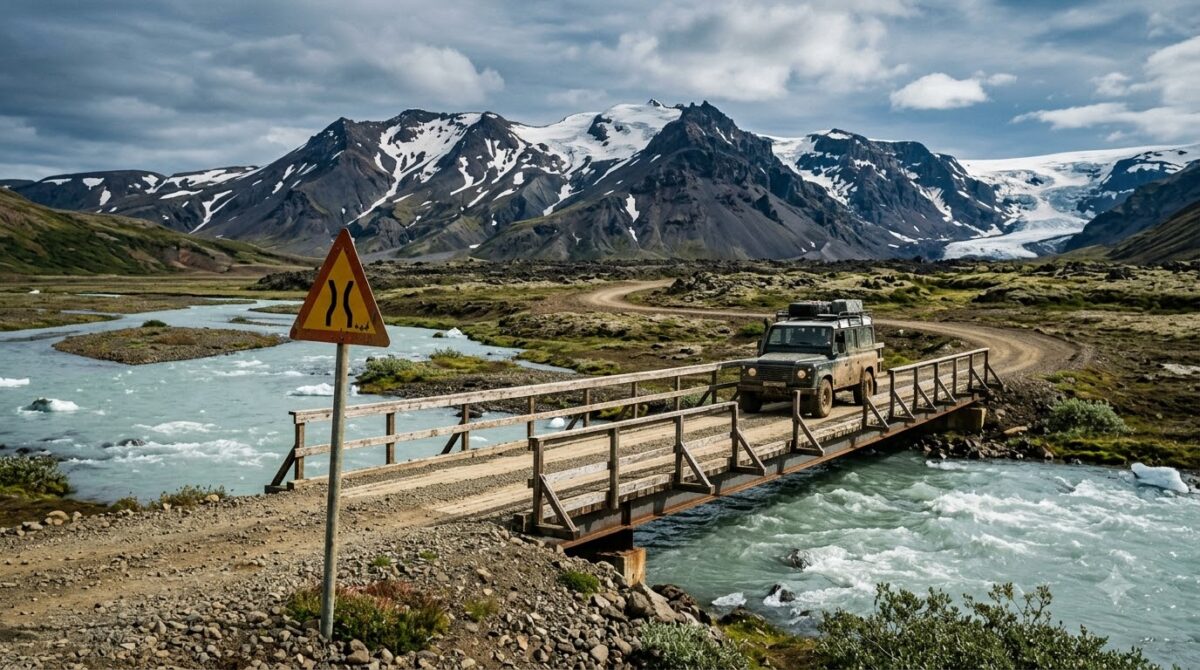
- Single lane bridges are normal. Marked einbreid bru. The car closer to the bridge goes first, and you should slow well before it.
- Gravel road sections still exist on parts of the loop and on most side roads. Slow down before the transition from asphalt to gravel; that changeover is where rental cars get damaged.
- Wind is the real hazard. Doors ripped off by gusts are among the most common rental claims, and standard insurance usually excludes it. Hold the door with both hands, and park facing into the wind.
- Sheep on the road from spring to autumn. They move unpredictably and one will often cross back to a lamb.
- Speed limits are 90 km/h paved and 80 gravel, camera enforced, and the fines are large.
- Fuel with a card that has a PIN. Many pumps are unmanned and need a chip-and-PIN card, not a signature card.
- Check road.is every morning. Sections close and reopen through the day, and driving a closed road voids your insurance.
The Iceland Ring Road in winter
Do not attempt the full loop between November and March. This is the clearest advice on this page.
- Daylight is four to five hours in midwinter, so a large part of the driving would be in the dark on unlit roads.
- Sections close regularly, particularly the east and the mountain passes, and they close at short notice.
- Storms can strand you for a day or more, which a fixed itinerary cannot absorb.
The winter version is the south coast out and back: Reykjavik, Golden Circle, Vik, and the glacier lagoon if conditions allow. That covers most of the best of the loop, with ice caves and northern lights on top, and you are never far from a way back.
Where to sleep on the loop
Accommodation is the constraint that shapes the schedule, because outside Reykjavik and Akureyri there is very little of it.
- Book the whole loop before you go in summer. Villages like Vik and Hofn have a handful of properties and they sell out months ahead.
- Guesthouses and farm stays are the norm rather than hotels, and many include breakfast, which matters when the next shop is an hour away.
- Two nights at Myvatn or in the east is the best upgrade if you have a spare day, because it removes a packing morning.
- Campervans are popular and they solve the accommodation problem, but note that wild camping is restricted and you must use designated sites.
The 7 day Iceland Ring Road version
If you only have a week, the loop still works, but something has to give. Here is how to compress the 8 day itinerary above into a 7 day Iceland Ring Road trip without ruining it.
- Skip Reykjavik at the start. Drive straight from Keflavik to the south coast on arrival day. You gain half a day immediately.
- Merge the Golden Circle into day 1 if you land early, or drop Thingvellir and keep Geysir and Gullfoss.
- Sleep at Hofn on day 3 rather than the glacier lagoon, which shortens the east fjords day.
- Combine Myvatn and Akureyri into one day. It is a long day but the driving between them is only two hours.
- Drive north to Reykjavik in one push on the final day, about five hours, and skip Snaefellsnes.
What you lose: Seydisfjordur, Husavik whale watching, and any slack for weather. That last one is the real cost, because a single closed road on a 7 day ring road drive has nowhere to absorb.
The 10 day Iceland Ring Road version
Ten days is where the loop stops being a schedule and starts being a holiday. The extra days go in three places.
- Two nights on the south coast instead of one, so Skaftafell gets a proper glacier hike rather than a photo stop.
- Two nights at Myvatn, which is the most underrated part of Iceland and where most 8 day trips spend one rushed afternoon.
- Snaefellsnes on the way back, one or two nights. Kirkjufell, the black church at Budir, Djupalonssandur beach and the Snaefellsjokull glacier.
A 10 day Iceland Ring Road itinerary also means you can wait out a storm rather than driving through it, which in this country is worth more than any extra sight.
Detours off the Ring Road worth taking
Route 1 does not pass everything. These are the side trips that repay the extra driving.
| Detour | From | Extra time | Worth it? |
|---|---|---|---|
| Snaefellsnes peninsula | West, near the end | Half to 1 day | Yes, the best detour |
| Seydisfjordur | Egilsstadir | 1 hour return | Yes |
| Husavik whale watching | North of Myvatn | Half day | Yes, April to October |
| Dettifoss | Between east and Myvatn | 1 to 2 hours | Yes |
| Westfjords | Northwest | 2 to 3 days | Only on 12 days plus |
| Highlands and F-roads | Interior | 1 day plus | Only with a 4×4, summer |
The Westfjords are the big one people ask about. They are genuinely remote, partly gravel, and stunning. They are also a separate trip. Adding them to a standard ring road trip without adding three days is the classic overreach.
How much you will actually be driving
People underestimate this more than any other part of an Iceland road trip, so here it is plainly.
- 1,330 kilometers is the loop itself, before any detours.
- Realistically you will drive 1,800 to 2,200 kilometers once side roads, waterfalls and wrong turns are counted.
- Three to four hours a day on average across eight days, but it is not evenly spread — two hours on the south coast, five on the final leg.
- Speed limits are low and traffic is not the problem. Weather, sheep, gravel transitions and stopping for the view are what slow you down.
- Add 30 percent to any map estimate in your first two days until you learn how often you will stop.
That is the honest arithmetic of driving the Iceland Ring Road, and it is why seven days is a minimum rather than a comfortable target.
Ring Road guide: the practical checklist
Things to sort before you set off around the ring road, in the order they matter.
- Book the car first. Supply is limited in summer and it is the largest cost of the trip. Add gravel protection and sand and ash cover.
- Book every night of accommodation. The loop has villages, not towns, and they sell out.
- Book guided things. Glacier walks, ice caves and whale watching are all small group and all seasonal.
- Download offline maps. Coverage is good on Route 1 and patchy on side roads.
- Bookmark road.is and vedur.is. Check both every morning without exception.
- Get a chip-and-PIN card. Unmanned fuel pumps need one.
- Pack a swimsuit and towel in the car, not the suitcase. Every village has a geothermal pool.
What the Ring Road does not include
Being clear about this saves disappointment, because part of Iceland is simply not on the loop.
- The highlands — Landmannalaugar and Thorsmork sit in the interior, need a 4×4 on F-roads, and open roughly late June to early September.
- The Westfjords — a large northwestern peninsula the Ring Road bypasses entirely.
- The Blue Lagoon — on the Reykjanes peninsula near the airport, not on the loop, which is why it works as an arrival or departure stop.
- Most of the puffin colonies — the biggest are on Vestmannaeyjar and at Latrabjarg in the Westfjords, both off the route.
None of that is a flaw in the route. It is the reason people go back to Iceland a second time and do something completely different.
Iceland’s Ring Road in summer and winter
The same route is two different trips depending on the season, and the difference is larger here than almost anywhere else.
The Ring Road in summer
- All sections of the Ring Road are open, along with most side roads and, from late June, the F-roads into the interior.
- Near-midnight sun means you can drive until eleven at night, which effectively lengthens each day.
- Everything is busy and expensive. This is peak season for a ring road self-drive and accommodation books out months ahead.
- Puffins are on the cliffs from May to mid-August, and whale watching from Husavik runs through the season.
Iceland in winter
- Do not drive the whole ring. Road closures are frequent and the east side of Iceland and the mountain passes are the first to go.
- Four to five hours of daylight in midwinter, so much of the driving would be dark.
- Ice caves and northern lights are the compensation, and neither is available in summer.
- Check road and weather conditions every single morning on road.is and vedur.is. In winter that is not advice, it is the plan.
Traveling to Iceland between November and March is genuinely worth doing. Just do the south coast out and back rather than the entire ring road.
Eastern Iceland and north Iceland: the half nobody sees
Most visitors to Iceland see the southwest and go home. The east and north are the half of the country the Ring Road exists to reach, and they are quieter, cheaper and in places stranger.
- Eastern Iceland is fjords, fishing villages and reindeer. There is no famous landmark, and the long stretches of ring road through it are the ones people remember for the emptiness.
- North Iceland has the geology: Myvatn’s mud pots and craters, Dettifoss, Godafoss, and the geothermal baths without the queue.
- Akureyri is the practical hub, and the one place across Iceland outside the capital with a real choice of restaurants.
- Both are two to three degrees colder than the south and get less rain, which in Iceland is a meaningful trade.
If you are planning a trip to Iceland and wondering whether the full loop is worth it over the south coast alone, this is the answer: the loop exists to show you these two regions, and they are the best of Iceland that most people never reach.
What sits right off the Ring Road
Some of the best places in Iceland are within a few minutes of Route 1 and still get missed because they are not signposted from a distance.
- Gljufrabui, 500 meters past Seljalandsfoss, hidden inside a cleft in the rock.
- Fjadrargljufur canyon, a short gravel spur east of Kirkjubaejarklaustur.
- Godafoss, essentially a lay-by on the main ring road between Myvatn and Akureyri.
- Hverir, the mud field, directly beside the road at Namafjall.
- Vestrahorn, the black sand and mountain view near Hofn, on a short private road with a small fee.
The following itinerary points are the ones worth building an extra thirty minutes around, because each is a genuine detour off the Ring Road rather than a roadside stop.
Costs specific to the drive
An Iceland trip is expensive and a ring road self-drive concentrates the cost in a few places.
- The rental car and the fuel together are usually the largest share, larger than accommodation.
- Insurance excesses matter more here. Gravel, sand and ash, and wind damage are all commonly excluded from basic cover and all are realistic on this route.
- Some sites now charge parking, including several on the south coast. These are small amounts collected by app or barrier.
- There is no road tax or toll on the ring road itself, with one exception: the tunnel under the fjord near Akureyri, which is tolled and pays automatically by plate.
- Food from the grocery store is the single biggest saving across a week of driving.
Deciding whether the loop fits your trip at all? See how many days in Iceland you need before you commit to the full circuit.
Frequently asked questions
How many days do you need to drive the Ring Road in Iceland?
Seven is the minimum and eight is comfortable. Route 1 is about 1,330 kilometers, so seven days means three to four hours of driving most days with limited stopping. Ten days lets you add Snaefellsnes, spend two nights in one or two places, and absorb a weather delay.
Which direction should you drive the Iceland Ring Road?
Anticlockwise, taking the south coast first. The south has the highest concentration of major sights, so you see them while you are fresh, and the long empty legs through the east and north come once you have settled into the driving. It also means the best part is done if weather forces you to cut the trip short.
Can you drive the Ring Road in 5 days?
Only as a driving holiday. Five days means roughly five hours behind the wheel daily with almost no time at any stop. A better use of five days is the south coast out and back to the glacier lagoon, which shows you more of the best scenery for far less time in the car.
Do you need a 4×4 for the Ring Road?
No. Route 1 is paved for almost its entire length and a two-wheel drive car is fine in summer. You need a 4×4 by law only for F-roads into the highlands, which are open roughly late June to early September. In winter, take a car with studded tyres regardless of drive type.
Can you drive the Ring Road in winter?
Not sensibly. Midwinter daylight is four to five hours, sections close at short notice, and storms can strand you for a day. Between November and March, drive the south coast out and back instead, which covers the best waterfalls and beaches and always leaves you a route home.
What is the longest driving day on the Ring Road?
Either the east fjords leg, around four hours of winding coastal road with few stops, or the final run from Akureyri back to Reykjavik at about five hours. Sleeping at Hofn rather than the glacier lagoon shortens the east fjords day noticeably.
Should I book accommodation on the Ring Road in advance?
Yes, the whole loop, especially in summer. Villages such as Vik, Hofn and Egilsstadir have very few properties and they sell out months ahead. Guesthouses and farm stays are the norm outside Reykjavik and Akureyri, and many include breakfast, which matters when the nearest shop is an hour away.
What are single lane bridges in Iceland?
Bridges wide enough for one car, marked einbreid bru, and they are common on Route 1. The car closer to the bridge has priority, so slow down well before it and be ready to stop. They are a frequent cause of near misses among visitors who do not know the convention.