Quick answer where to stay
On a short trip, stay in Reykjavík and take day tours: they reach the Golden Circle and the south coast as far as Vík. At about four days the sums flip, and a car with hotels along the route wins.
On this page
- How many days do you need in Iceland? The short answer
- The daylight budget: the best time to visit Iceland sets your day count
- Getting to Iceland: the flight day tax and the Blue Lagoon trick
- 3 days in Iceland: a taste of Iceland, and is it enough time to see anything?
- 4 days in Iceland: the most common first trip to Iceland
- 5 days in Iceland, or 6: south Iceland and the south coast of Iceland properly
- A week in Iceland: does a 7 day Iceland trip fit the Ring Road?
- 8 days: driving around Iceland without hating it
- 9 days, 10 days and 12 days: north Iceland, west Iceland and the Westfjords
- How many days do you need to see the northern lights?
- Iceland in the summer and Iceland in the winter: the same days buy different trips
- Stay in Reykjavík and take a day trip? The Iceland tour question
- Driving days: how far you can get, and how to explore Iceland by car
- Attractions in Iceland: the things to do in Iceland and what each costs in time
- Iceland travel notes that quietly change the arithmetic
- What you spend in Iceland per day: the cost of travel in Iceland
- Deciding how many days to plan a trip to Iceland: the checklist
- Turning your number into an Iceland itinerary
- Frequently asked questions
Almost every answer to this question is a list of attractions in Iceland with a number attached. That is the wrong way round.
Some links below are affiliate links. We may earn a commission if you book through them, at no extra cost to you. We do not rank hotels, and any prices on the map come live from the booking sites.
Days in Iceland are not spent on sights. They are spent on the road between them, and the road is only usable while it is light. In late June you get about twenty-one hours of usable daylight. In late December you get about four. The same route, the same car, the same driver: in summer you finish it, in winter you see half of it and drive the rest in the dark.
So the honest way to decide how many days in Iceland you need is to work out how many daylight hours your trip contains, subtract what the flights take off the ends, and see what is left. Everything below is built on that arithmetic.
Daylight figures, driving distances and road information read 10 September 2026. Roads and opening seasons change, so check current conditions before you drive.
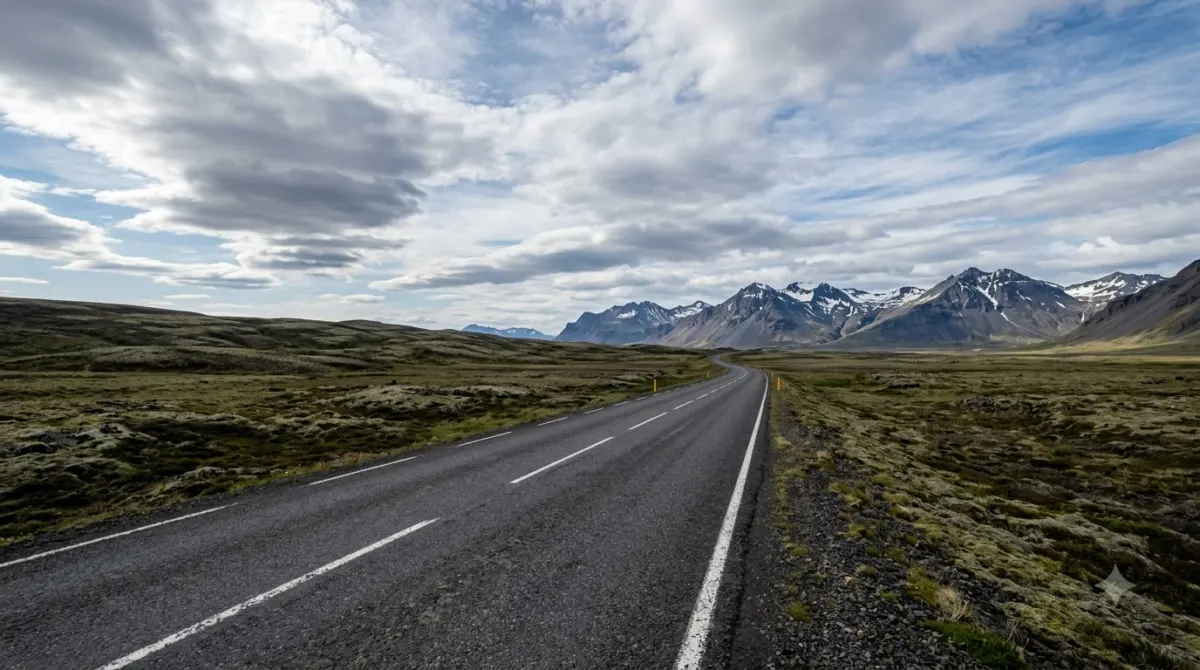
How many days do you need in Iceland? The short answer
If you want the number without the reasoning, here it is by season.
| Nights | Summer gets you | Winter gets you |
|---|---|---|
| 2 to 3 | Reykjavík, the Golden Circle, the Blue Lagoon | Reykjavík and one day trip |
| 4 | The above plus the south coast to Vík | Golden Circle and a short south coast day |
| 5 to 6 | South coast of Iceland to the glacier lagoon and back | South coast to Vík, comfortably |
| 7 to 8 | The Ring Road, moving most days | South coast to the glacier lagoon |
| 9 to 10 | The Ring Road with room to stop | The Ring Road, tight and weather-dependent |
| 12 or more | Ring Road plus Snæfellsnes or the Westfjords | Ring Road with a real weather buffer |
The one-line version: most travellers should plan a trip to Iceland of six to eight nights in summer, and treat anything under five nights in winter as a Reykjavík trip with excursions rather than a road trip. That is how long to stay in Iceland for a first visit. A full tour of Iceland including the Westfjords is a different trip again.
Where to sleep on this route
The daylight budget: the best time to visit Iceland sets your day count
Iceland sits just below the Arctic Circle, which makes the swing between summer and winter far larger than anywhere most visitors have driven before.
| Month | Rough usable daylight | What that means |
|---|---|---|
| June and July | 20 to 21 hours | Two full days of driving inside one calendar day |
| May and August | 15 to 18 hours | Long days, no night driving needed |
| April and September | 12 to 14 hours | Normal. Dark evenings, aurora possible |
| March and October | 10 to 11 hours | One long drive or two stops, not both |
| November and February | 5 to 7 hours | Half a working day of light |
| December and January | 4 to 5 hours | Light from about 11am to 3.30pm |
- Multiply, do not add. Six nights in December contains roughly the same usable light as two nights in June.
- Twilight is longer than the numbers suggest, and it is beautiful, but it is not driving light on a road with no lighting and no shoulder.
- Winter is the reason a winter trip needs more nights for less ground, not the snow. The snow is manageable. The dark is not negotiable.
- The flip side is real: in June you can leave Reykjavík at 6pm and still arrive somewhere in full light.
Getting to Iceland: the flight day tax and the Blue Lagoon trick
This is the part almost no Iceland travel guide subtracts, and it costs you more than any single attraction.
- Keflavík International Airport is 50 minutes from Reykjavík, on the Reykjanes peninsula, and most transatlantic flights land in the morning while most European flights land in the afternoon.
- Your arrival day is half a day at best. By the time you clear the airport, collect a car and buy food, the useful part of it is gone.
- Your departure day is zero. You have to be back within reach of Keflavík the night before, which also means the last night is not a night of exploring.
- So a five-night trip in Iceland is about three and a half usable days. Count nights, then subtract one and a half. That number, not the number on your ticket, is what you are planning with.
- Icelandair stopovers let you break a transatlantic flight here for several nights at no extra airfare, which is how a lot of people end up with an awkward two or three night trip in the first place.
- A trick worth knowing: the Blue Lagoon sits between the airport and the city, so it fits into the dead arrival or departure day better than into a real one.
3 days in Iceland: a taste of Iceland, and is it enough time to see anything?
Three nights is the shortest trip to Iceland that is worth the airfare, and it is a Reykjavík trip.
- What fits: the Golden Circle as a loop, the Blue Lagoon or one of the newer geothermal baths, and a day in Reykjavík itself.
- What does not fit: the glacier lagoon, the north, and any real driving around Iceland.
- Rent a car or take tours from Reykjavík? At this length, tours in Iceland often win. You are not covering enough ground to justify the rental, and a guided day trip removes the parking and the weather calls.
- In winter, three nights gives you roughly twelve to fifteen hours of light in total. Plan one thing per day and nothing else.
- Three nights is not enough time to see the country, and it is honest to say so. It is enough to decide whether you want to come back, which is a real reason to go.
- Best for a long weekend, a stopover, or a second visit where you already know what you want.
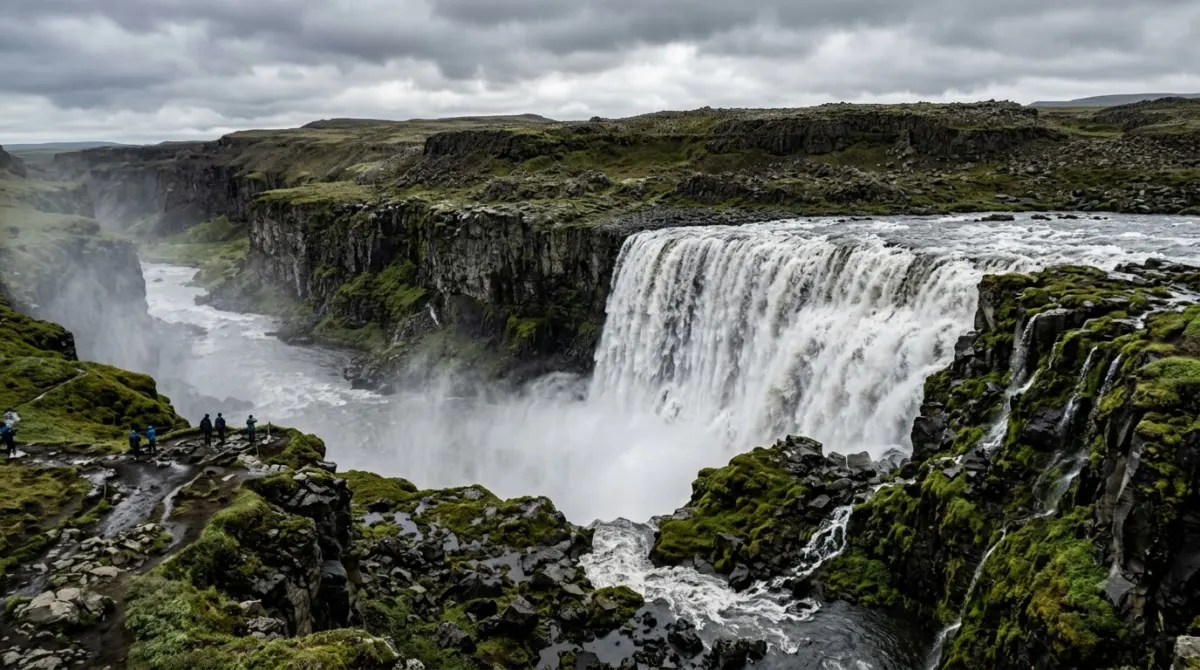
4 days in Iceland: the most common first trip to Iceland
Four days in Iceland is where most first-timers land, partly because of flight schedules and partly because it is the shortest trip that reaches the south coast. Between the stopover fares and the long weekend, 3-4 days is what many visitors end up booking without ever deciding to.
- A 4-day Iceland itinerary usually runs: arrive and see Reykjavík, the Golden Circle, the south coast to Skógafoss and Vík, then back.
- Spending 4 days in Iceland in summer genuinely covers that. The light does the work.
- Four days in Iceland in winter covers about half of it, and you should drop either the Golden Circle or the south coast rather than rushing both.
- The glacier lagoon is the line. Jökulsárlón is roughly five hours from Reykjavík each way. At four days you either give it a brutal single day or you leave it out. Leave it out.
- Many travellers opt to base in Reykjavík the whole time at this length, which costs an hour of backtracking each day but saves repacking.
- Best for a first trip to Iceland where the goal is to see whether you want to come back.
5 days in Iceland, or 6: south Iceland and the south coast of Iceland properly
This is the sweet spot for value, and it is where a trip stops feeling like a sampler.
- Five or 6 days lets you sleep east of Vík, which is the single change that transforms a south Iceland trip. You stop driving the same road twice.
- Skaftafell and Vatnajökull come into range: glacier walks, ice caves in season, and the approach to the ice.
- Jökulsárlón and the black sand beside it fit without a five-hour dash, and this is the point at which most people stop taking photographs and start staring.
- A week in Iceland minus a night is also the length at which a hire car clearly beats excursions. You are moving every day and you want to stop where you want to stop.
- In winter, 5 or 6 days is what 4 days is in summer. Same route, more nights, because of the light.
- This is the best Iceland trip for the money, and the one most people would choose again. You get the whole Iceland experience of the south without ever driving more than four hours in a day.
- Best for the traveller who wants one region seen properly rather than a lap of the island.
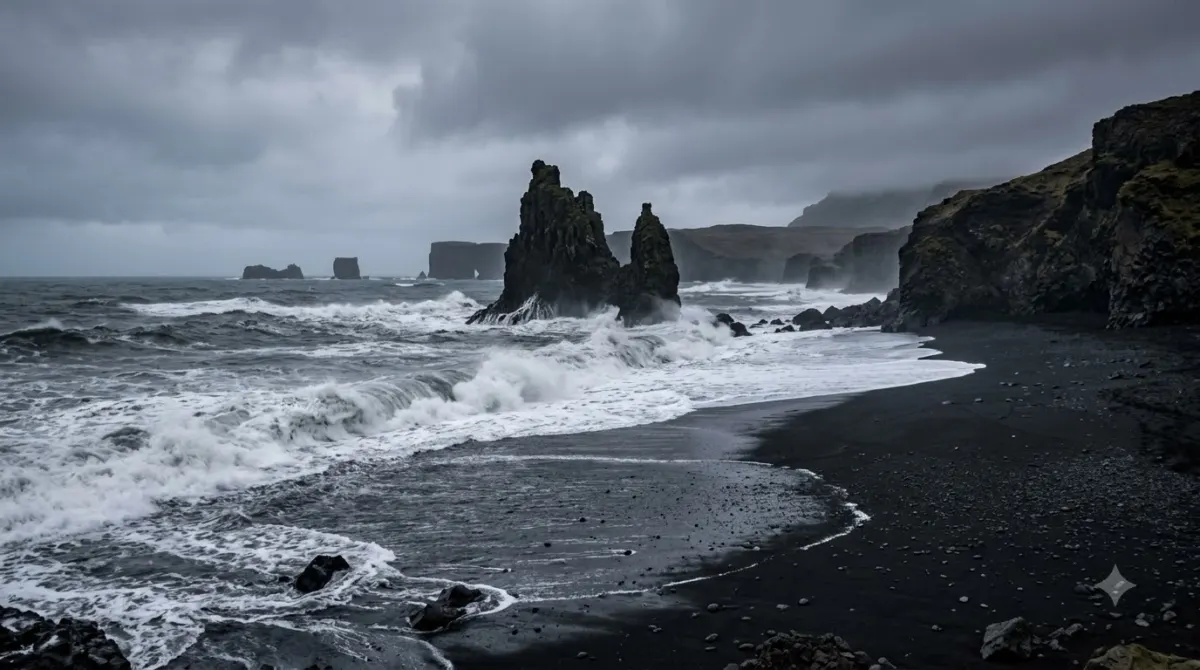
A week in Iceland: does a 7 day Iceland trip fit the Ring Road?
Seven nights is where the big decision appears: go around Iceland, or go deep into one part of it.
- Route 1, the Ring Road, is about 1,332 kilometres of paved road around the island. Seven days makes that roughly 190 kilometres a day before any detours.
- That is doable in summer and unpleasant in winter. A 7-day loop in June leaves time to stop. The same loop in January is a driving holiday with sightseeing attached.
- The alternative use of a week is the south coast plus Snæfellsnes, which gives you glaciers, black sand, a peninsula that looks like the whole country in miniature, and half the driving.
- If you spend 7 days on the loop, budget the east fjords as the day you will want back. It is the longest, emptiest stretch.
- Best for travellers who want to see the north as well as the south and accept moving hotel most nights.
If you decide on the loop, our Iceland Ring Road itinerary breaks the drive down day by day.
8 days: driving around Iceland without hating it
- Eight days is the first honest Ring Road length. It gives you two nights somewhere instead of one, which matters more than any extra stop.
- Akureyri and the north become a place you sleep rather than pass through, and Mývatn gets a full day instead of a rushed morning.
- Whale watching from the north coast fits without sacrificing anything, and it is better there than from the city.
- One buffer day is built in, which in Iceland is not a luxury. Weather closes roads with little notice.
- Best for a first lap of the island by someone who does not want to be exhausted by it.
9 days, 10 days and 12 days: north Iceland, west Iceland and the Westfjords
- Nine days is the loop plus Snæfellsnes on the west, which is the best value detour in the country and only two hours from Reykjavík.
- 10 days lets you slow the whole thing down: two nights in the south, two in the east, two in the north. Nobody regrets this shape.
- 12 days opens the Westfjords in the far north-west, the part of Iceland that most resembles what people imagine before they arrive: no crowds, hairpin gravel, cliffs full of puffins. Western Iceland and the Westfjords are two different places, and only the second one needs twelve days.
- The Westfjords are a summer proposition only, and they need three days of their own. Do not bolt them onto a tight loop.
- The highlands and the interior need a modified vehicle and open only from roughly late June to early September. That is a separate trip, not an extension.
- Best for repeat visitors, photographers, and anyone whose flights are expensive enough that a long stay makes sense.
How many days do you need to see the northern lights?
The northern lights are the one thing on this list you cannot buy with planning. You buy them with nights.
- The season runs roughly from September to April, when it gets dark enough. There is no aurora in June, whatever the photograph on the tour page shows.
- Three clear conditions have to line up: darkness, solar activity, and a gap in the cloud. The third is the one that fails.
- Give it five nights minimum if seeing the aurora matters to you, and more like seven. Two nights is a lottery ticket.
- Get out of Reykjavík. The city glow is enough to wash out a weak display, and the south coast or the north are both darker.
- A northern lights tour is worth it once, mainly because the guides chase the cloud gaps and you do not have to drive at midnight.
- The honest note: plenty of people spend a week in Iceland in winter and see nothing. Build the trip so it is worth it either way.
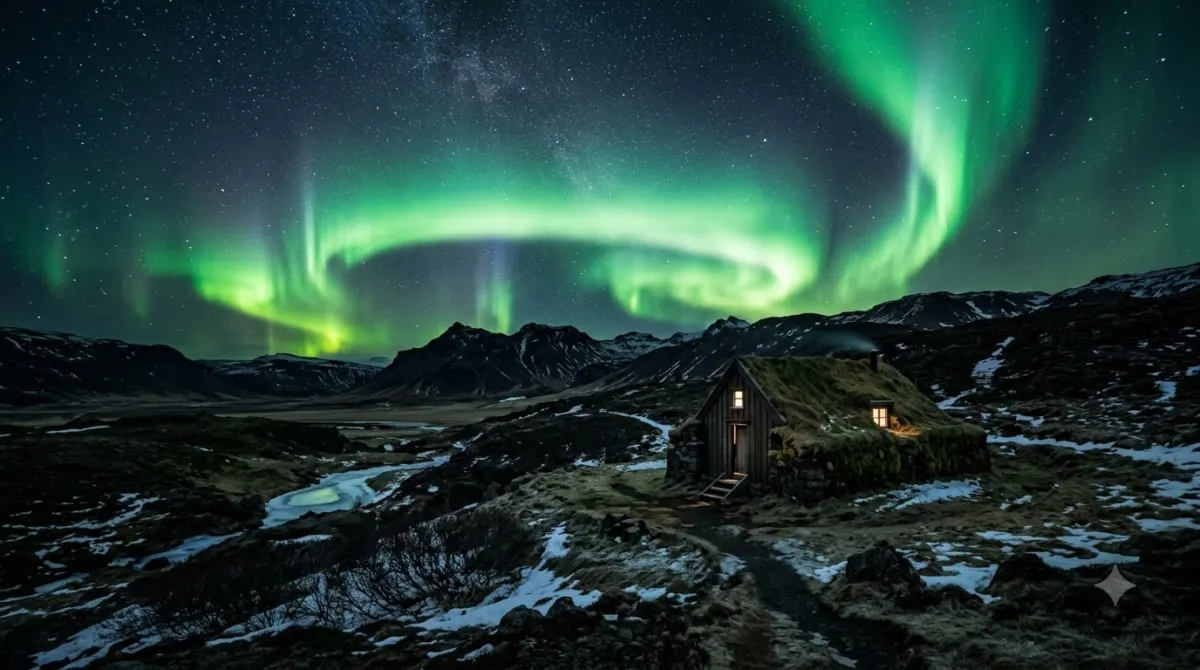
Iceland in the summer and Iceland in the winter: the same days buy different trips
It is worth being blunt about how different these two countries are.
- Iceland in the summer: every road open, endless light, puffins from May to August, highland access, and the highest prices and crowds of the year.
- Iceland in the winter: ice caves, the aurora, empty landscapes, low prices outside Christmas, and four hours of light.
- A winter road trip is a real thing, but it should be short and southern. The south coast in winter is spectacular and the road is maintained.
- Shoulder seasons are underrated. September has aurora and open roads at once. Late April and May have long days and low prices.
- The best time to visit Iceland depends entirely on which of those two lists you just read with more interest.
- Weather is the constant, not the variable. Wind and rain arrive in every month, and a day lost to weather is normal rather than unlucky.
Stay in Reykjavík and take a day trip? The Iceland tour question
For short trips this is often the better answer, and it is dismissed too quickly.
- A tour from Reykjavík reaches the Golden Circle, the south coast as far as Vík, Snæfellsnes at a push, and the Reykjanes peninsula easily on a single day trip.
- What it cannot reach is the glacier lagoon, the east and the north. Those need you to move.
- Costs flip at about four days. Below that, tours are usually cheaper than a rental plus fuel plus one-way hotel changes. Above it, the car wins clearly.
- In winter the argument for tours is stronger, because the operators know which roads are open and you do not lose a day guessing.
- Most tours in Iceland operate outside of Reykjavík but leave from it, so a city base costs you nothing in access for the first four days.
- Things to do in Reykjavík fill one day comfortably: the harbour, the concert hall, the swimming pools, and a long, expensive dinner.
- For a first trip, the best way to experience Iceland is a mix: excursions for the two days you would rather not drive, and a car for the rest.
Map shows live availability and prices. We may earn a commission on bookings made through it, at no extra cost to you.
Driving days: how far you can get, and how to explore Iceland by car
Every plan fails at the same place, which is assuming Icelandic distances behave like European ones.
- The speed limit is 90 km/h on paved rural roads and 80 on gravel, and it is enforced by cameras.
- Assume 70 km/h average including stops, weather and the fact that you will pull over constantly.
- Four hours of driving is a comfortable day. Six is a long one. Anything more and you are seeing the country through glass.
- Single lane bridges, blind rises and sheep are ordinary hazards, and none of them are signposted the way you expect.
- A 4×4 is not needed on the Ring Road in summer. It is needed for F-roads, and F-roads are the highlands.
- Wind is the danger, not ice. Car doors are torn off every year, and some rental insurance specifically excludes it.
Attractions in Iceland: the things to do in Iceland and what each costs in time
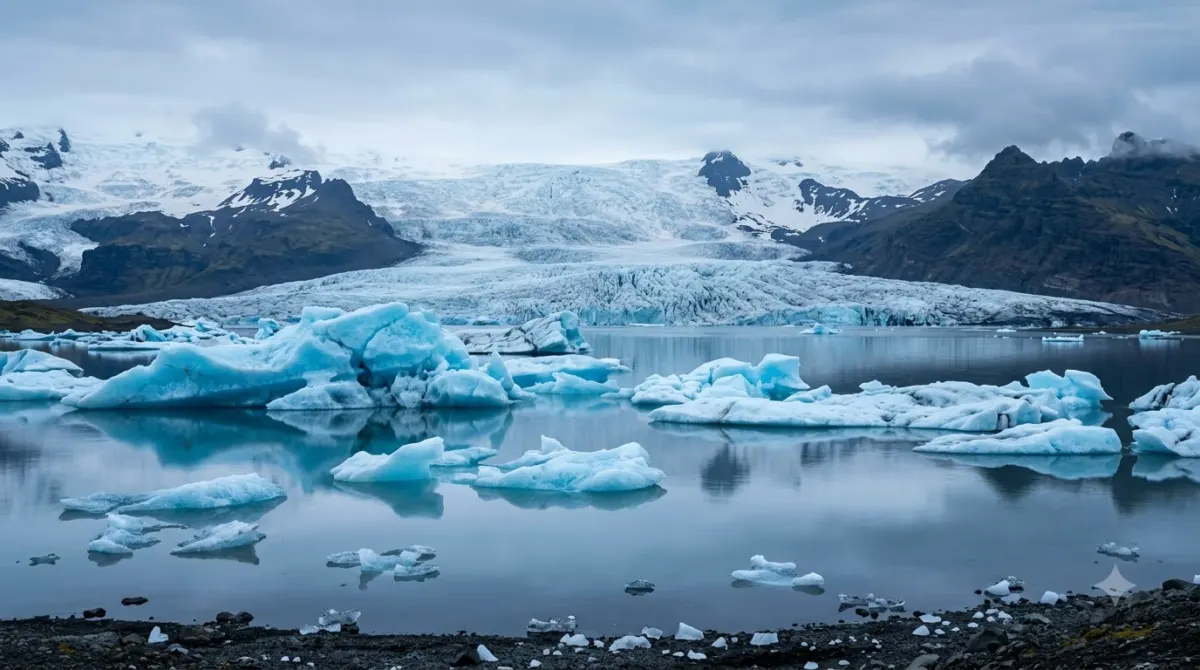
Rather than a list, here is what each of the natural wonders actually costs you in time. The attractions in Iceland are not the constraint. The gaps between them are.
| Site | From Reykjavík | Time to see it |
|---|---|---|
| Blue Lagoon, the most visited paid site in Iceland | 45 min | Half a day including travel |
| Golden Circle | Loop from the city | A full day |
| Seljalandsfoss and Skógafoss | 2 hours | Half a day |
| Vík and the black sand | 2.5 hours | A full day from the city |
| Skaftafell | 4 hours | Half a day, plus a glacier walk |
| Jökulsárlón | 5 hours | A full day, two if you sleep nearby |
| Snæfellsnes | 2 hours | A long day, better as two |
| Mývatn and the north | 6 hours or a flight | Needs a Ring Road trip |
| Westfjords | 6 hours | Three days minimum |
Read that column and the answer to how many days you need becomes arithmetic rather than opinion.
Iceland travel notes that quietly change the arithmetic
A few practical facts move the day count more than any list of sights does.
- Flight time is short from Europe and moderate from North America. Icelandair and the low-cost carriers reach Keflavík from across the United Kingdom, from a long list of continental cities including Munich and Prague, and from many airports in the United States. A short hop from the UK makes a three-night trip defensible in a way it is not from Los Angeles.
- Domestic flights exist and are underused. Reykjavík to Akureyri takes about 45 minutes and turns north Iceland into a weekend rather than a Ring Road commitment.
- There is a ferry to the Westman Islands. Vestmannaeyjar is about 35 minutes by ferry from the south coast, and in summer it is one of the easiest places in the country to stand near an Atlantic puffin. Give it a full day, not an afternoon.
- Vík í Mýrdal is the practical turning point of a short trip. It is the last town with a full range of services before the long empty run east.
- The Eastern Region is the part people cut when a loop runs late, and it is also the quietest. If you are cutting it, cut it deliberately rather than by accident at 8pm.
- Hiking changes the arithmetic completely. A waterfall seen from the car park is fifteen minutes. The same waterfall with the trail above it is half a day, and the trails are what most people remember.
- Iceland or Norway is a fair question if you want fjords and hiking. Norway gives you more forest and more towns. Iceland gives you emptiness and a much smaller country to cross, which is exactly why a week goes further here.
What you spend in Iceland per day: the cost of travel in Iceland
- Iceland is one of the most expensive countries in Europe, and cost is a real reason people shorten trips.
- The big three are accommodation, the rental car and food, in that order, and none of them have a cheap version outside camping.
- Fuel is the hidden line. A Ring Road lap burns a serious amount of it, and prices are highest in the remote stretches where you have no choice.
- Cooking your own breakfast and lunch is the single biggest saving available and is completely normal here.
- Iceland is ideal for a shorter, better trip rather than a long thin one. Five good nights beat nine anxious ones.
- Tap water is excellent and free, the swimming pools are cheap, and the landscape costs nothing. The expensive parts are optional.
- Camping is the cheapest way to see Iceland by a wide margin, and in summer it is genuinely pleasant. In winter it is not an option.
Deciding how many days to plan a trip to Iceland: the checklist
- Pick your month first, then look up the daylight. That number is your real budget.
- Subtract a day and a half for arrival and departure. Do this before anything else.
- Decide loop or region. Under seven usable days, choose a region. The loop is not a compromise that works.
- Cap yourself at four hours of driving a day and see how far that reaches.
- Add one buffer day if your trip is longer than a week. Weather will use it.
- If the northern lights matter, add nights rather than destinations.
- Protect your time in Iceland by booking the first and last nights near Keflavík, so the flight days cost you travel rather than sleep.
Turning your number into an Iceland itinerary
Once the number is settled, the route follows from it rather than the other way round. A four-night trip has one shape and a nine-night trip has another, and trying to run the nine-night route in four nights is the most common way an Iceland vacation goes wrong.
Our Iceland itinerary lays out where to go for 3, 5, 7 and 10 days, so settle your number here and take the plan from there.
Before you go, read up on Icelandic food and what to try on the road.
Frequently asked questions
How many days in Iceland is enough?
Six to eight nights in summer is enough for most first trips, and it is the length at which you stop rushing. In winter, add two nights for the same ground because you only get four to seven hours of daylight. Fewer than four nights makes it a Reykjavík trip with day trips attached, which is fine but is a different holiday.
Is 4 days in Iceland enough?
In summer, yes, for Reykjavík, the Golden Circle and the south coast as far as Vík. In winter it is tight and you should drop one of those rather than rush all three. Remember that four nights is really about two and a half usable days once the flights take their share, so do not plan the glacier lagoon into it.
How many days do you need to drive around Iceland?
Eight is the comfortable minimum for the Ring Road and ten is better. Seven is possible in summer but leaves you moving hotel every night with roughly 190 kilometres to drive a day before detours. In winter, treat the full loop as a ten-day trip at least, and be ready for road closures.
Why does a winter trip to Iceland need more days?
Daylight. Late December gives about four to five hours of usable light against twenty-one in late June, so the same route takes two to three times as many days to cover. Snow and ice matter less than people expect on the main roads. The dark is the constraint that cannot be worked around.
How many nights do you need to see the northern lights?
Five at an absolute minimum, and seven if it is the main reason you are going. The aurora needs darkness, solar activity and clear sky at the same time, and cloud is what usually fails. The season runs from about September to April. Plan a trip you will enjoy even if you never see them.
Should I rent a car or take tours in Iceland?
Under four days, tours from Reykjavík usually cost less and remove the weather decisions. Over four days, a rental car wins clearly because you are covering ground that no day trip reaches. In winter the balance shifts towards tours at every length, since operators know which roads are open that morning.
How much of Iceland can you see in a week?
Either the full Ring Road at a steady pace in summer, or the south coast plus Snæfellsnes with time to stop. The second is the better week for most people. A week in winter realistically covers Reykjavík, the Golden Circle and the south coast to the glacier lagoon.
What is the best time of year to visit Iceland?
June to August for long days, open highland roads and puffins, at the highest prices. September and late April are the best compromises: open roads, reasonable light, lower prices, and in September the aurora season has already started. December and January are for the northern lights and ice caves, not for covering distance.
Does the arrival day count as a day in Iceland?
Half of one at best. Keflavík is fifty minutes from Reykjavík, and clearing the airport, collecting a car and buying food removes most of the morning or afternoon. The departure day counts as nothing, since you have to be near the airport the night before. Count nights, then subtract about a day and a half.
Keep planning Iceland
Written and checked by
Triplarks Editorial
An editorial desk, not an invented persona: research, drafting and fact-checking are done by the same small team. Every number here carries the date it was read.