
Every other country on this site, the question is which area suits you. In China there is a question that comes before that one, and getting it wrong costs you a night.
Hotels in China need a licence to register foreign guests with the local police, and a great many perfectly good domestic hotels do not have one. They are clean, cheap, well located, and they will turn you away at the desk. Politely, at eleven at night, after your card has been charged. It happens constantly and almost nobody warns you.
So this guide is ordered the way the problem actually arrives. The licence question first, then how to book so it never comes up, then the areas worth staying in city by city.
How this page pays for itself: the booking links below are affiliate links, so we may earn a commission if you book through them, at no extra cost to you. They open a normal search so you can compare for yourself. We do not print prices, we do not rank hotels, and nobody on this team has been to China. Licensing rules, district positions and metro lines read 13 September 2026.
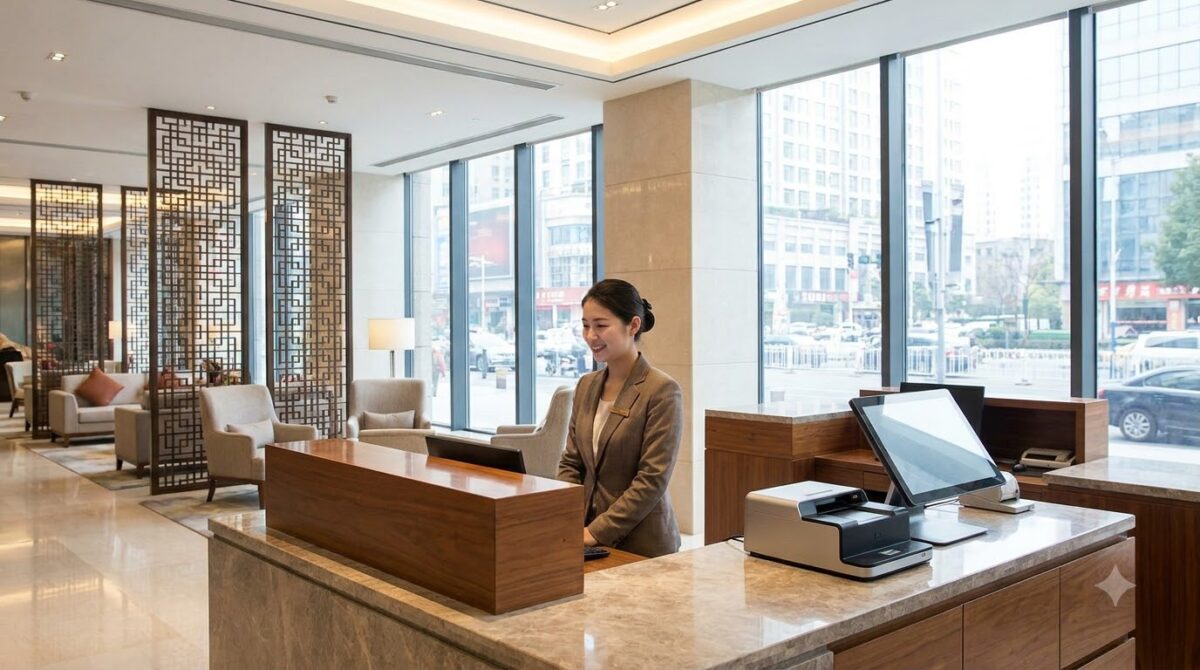
The foreign guest licence, explained properly
- Every hotel in China must register its guests with the local public security bureau. For Chinese nationals this is routine. For foreign passports it requires the property to be separately approved and equipped to file that registration.
- Approval is not universal. Small hotels, family guesthouses, budget chains in second-tier cities and a lot of apartment rentals simply do not have it.
- Enforcement varies by city and by year. The same chain can accept you in Shanghai and refuse you in a provincial town, and rules tighten around major political events.
- The refusal is not personal and not negotiable. Staff who take an unregistered foreign guest risk a fine, so no amount of goodwill changes the answer.
- You will often get your money back, eventually, through the platform. What you will not get back is the evening.
- This is the single most useful thing to know about accommodation in China, and it is why the rest of this page is structured the way it is.
How to book so the licence never becomes your problem
- Book through an international platform. Listings that reach foreign markets are overwhelmingly the ones already set up to register foreign passports. This is the simplest protection available and it costs nothing.
- Be careful with domestic apps. They have far more inventory and better prices, and a lot of that inventory cannot check you in. The listing will not tell you.
- Message the property before paying if you are unsure. Ask directly whether they accept foreign guests. Keep the reply.
- International chains are the safe default: Marriott, Hilton, Hyatt, InterContinental, Accor and Shangri-La all operate widely and all handle foreign registration as a matter of course.
- Among domestic chains, the upper-mid brands in large cities are usually fine, and the cheapest tiers in small cities usually are not.
- Apartment and homestay rentals are the highest risk of all, because private hosts rarely hold the licence even in big cities.
- Bring the physical passport to check-in. A photo or a copy is not accepted. This is a legal filing, not a formality.
Search accommodation across China — opens a search, not a recommendation.
Types of accommodation in China, and who each suits
- International five-star hotels are genuinely excellent and cost noticeably less than the same brand in Europe. In the big cities this is where the value is at the top end.
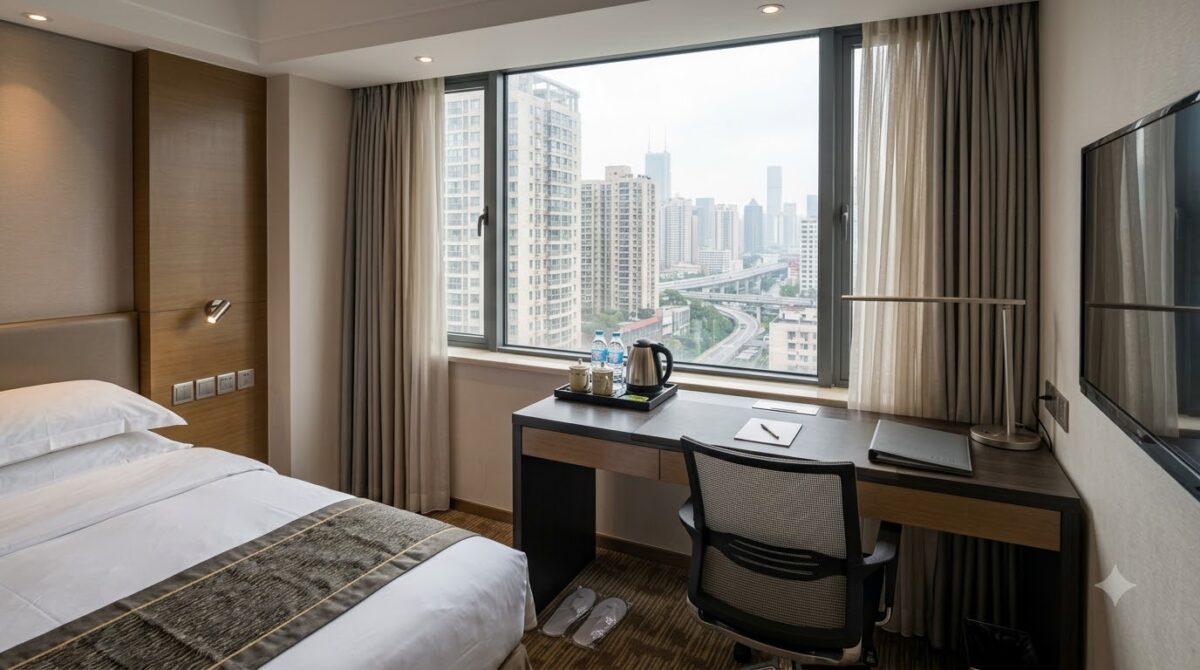
- Domestic mid-range chains are the backbone of Chinese travel: compact, spotless, predictable, with a kettle and slippers and a hard bed. Atour, Ji Hotel, Hanting and Jinjiang Inn are the names you will see everywhere.
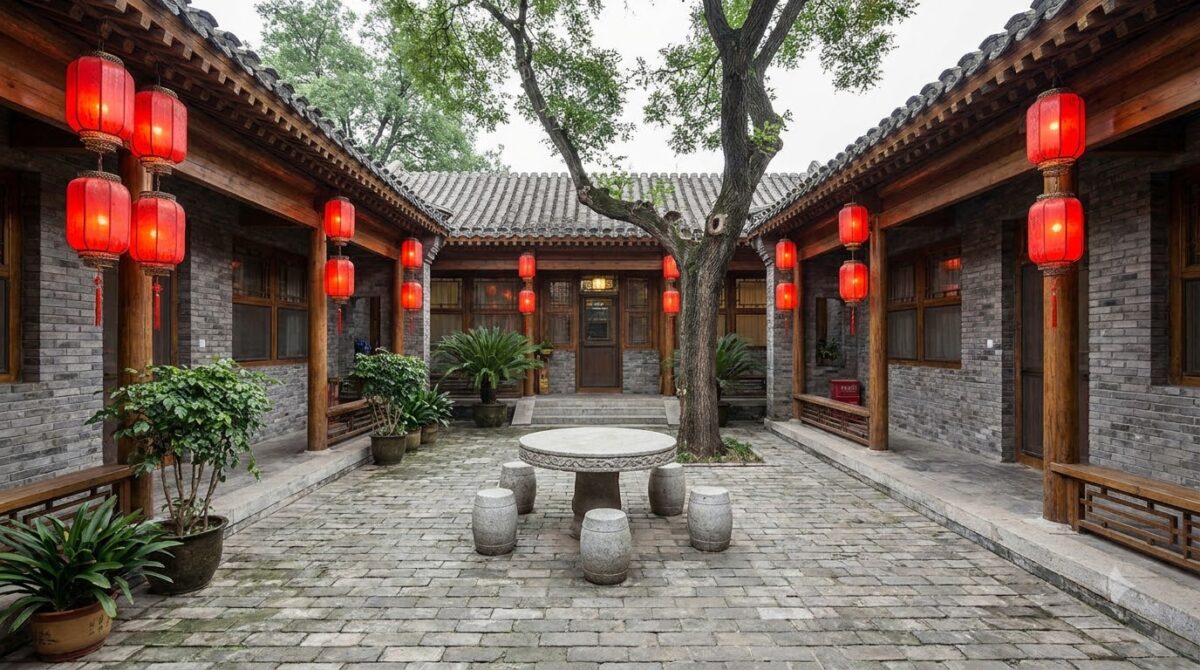
- Courtyard hotels in Beijing and boutique lane houses in Shanghai are the atmospheric choice, and they are the reason to not just book a chain.
- Hostels in China are unusually good and are where the English-speaking staff often are, which makes them useful even if you take a private room.
- Serviced apartments work for a week or more in Shanghai and Beijing, if you confirm the licence first.
- The star rating system is domestic and does not map onto international expectations. A four-star Chinese hotel is not a four-star European one, in either direction.
The luxury end, and where it is actually worth it
- China is one of the best value luxury hotel markets in the world. A top international brand here costs substantially less than the same brand in London, Paris or Tokyo.
- Shanghai has the strongest collection, split between the historic Bund buildings and the newest Pudong towers, several of which occupy the top floors above the clouds.
- Beijing luxury clusters in Chaoyang, plus a handful of very high-end courtyard conversions inside the hutongs that are a completely different proposition.
- Hangzhou and Suzhou have garden resorts built around water and rockeries, and they are the most distinctively Chinese luxury in the country.
- What you get for the money is space, service and a spa. What you do not always get is character, which is why a good courtyard or lane house can beat a five-star.
- These are categories, not recommendations. Nobody here has stayed in any of them and we do not print rates.
Beijing: stay inside the second ring road
Beijing is enormous and flat and the interesting part is small. This is the city where your choice of district changes the trip most.
- Qianmen and Dashilan sit immediately south of Tiananmen and put you within walking distance of the Forbidden City, which on a first visit is worth a great deal.
- Gulou and the Drum Tower area is the hutong district: grey brick lanes, courtyard hotels, small bars, and the best evenings in the city.
- Wangfujing is the central shopping street with the largest concentration of international hotels and the least character.
- Sanlitun and Chaoyang are the modern embassy and nightlife districts, further east, and the right answer for a longer or business stay.
- A siheyuan courtyard hotel is the one distinctive thing Beijing offers. Rooms are small, walls are thin, bathrooms are compromises, and it is still the choice most people are glad they made.
- Avoid staying near the airport or outside the third ring. The metro is excellent but the distances are continental.
See what is available in central Beijing — opens a search, not a recommendation.
Shanghai: the Bund, the Concession, or Pudong
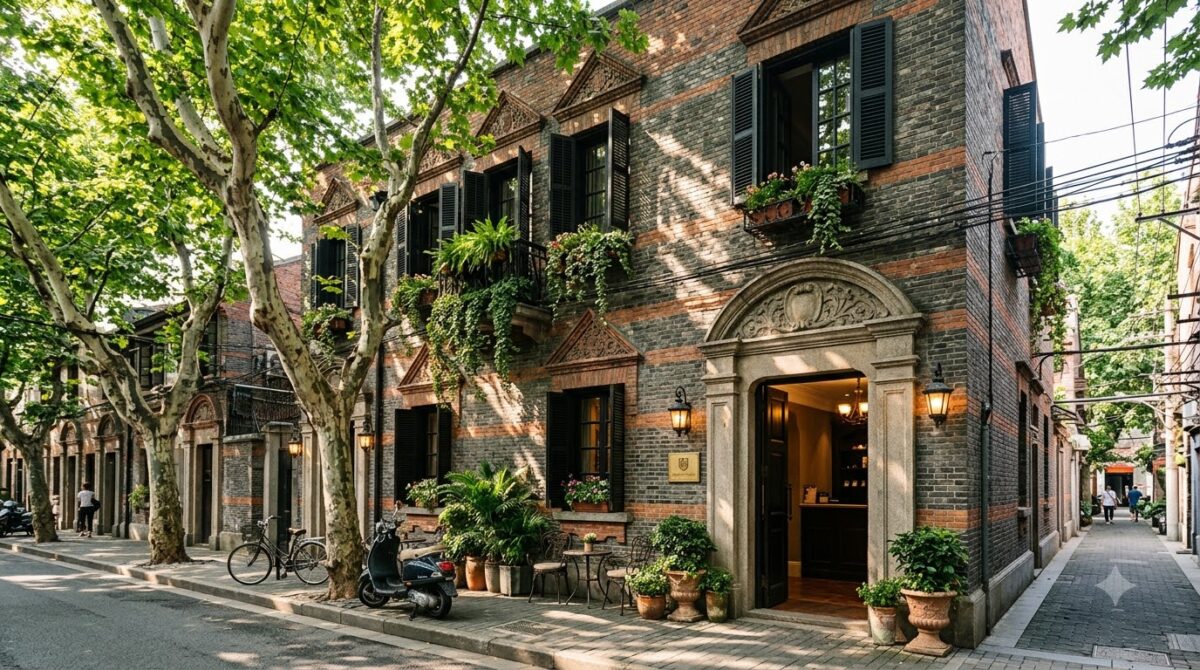
- The former French Concession is where most people should stay: plane trees, lane houses, small restaurants, and the only part of the city that rewards aimless walking.
- The Bund gives you the river and the historic banking buildings, several of which are now hotels. You pay for the view and you are surrounded by other visitors.
- Pudong across the water has the towers, the observation decks and the newest five-stars. It is impressive and it is not somewhere to spend an evening.
- Jing’an is the practical middle: central, well connected, lots of mid-range options, less atmosphere than the Concession.
- A restored lane house is Shanghai’s equivalent of the Beijing courtyard, and there are enough of them now to have a real choice.
- The metro is excellent, so anything on line 1, 2 or 10 inside the inner ring works.
See what is available in Shanghai — opens a search, not a recommendation.
Xi’an, Chengdu and Guilin
- Xian: stay inside the city walls, near the Bell Tower. The walled centre is compact, everything is walkable, and the Muslim Quarter is a ten-minute walk for dinner.
- Chengdu: Jinli, Kuanzhai Alley or Chunxi Road. The first two are restored old-street areas, the third is the modern downtown. All three are near a metro line to the panda base.
- Guilin is the transport hub, Yangshuo is the destination. Sleep in Yangshuo, or in a guesthouse along the river outside it, and treat Guilin as a station.
- In Yangshuo the view is the product. A simple room facing karst peaks beats a better room facing a wall, and that is not true in the cities.
- Second-tier cities are where the licence problem bites hardest. Fewer properties hold it, and the ones that do are easier to find on international platforms.
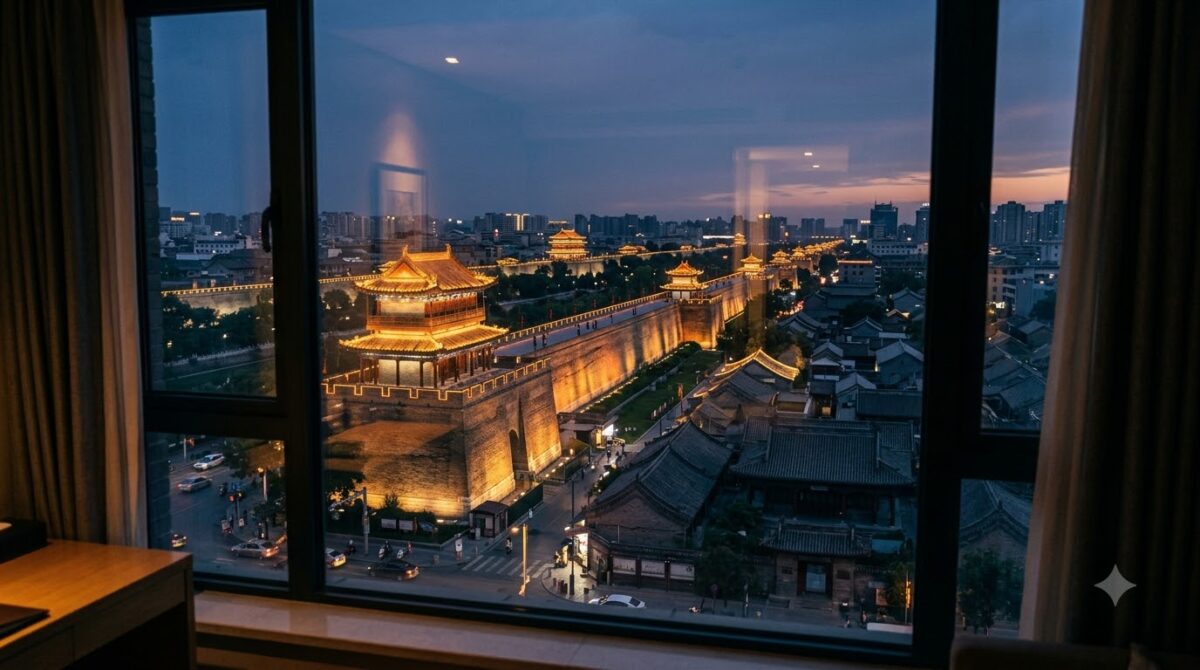
See what is available inside the Xi’an walls — opens a search, not a recommendation.
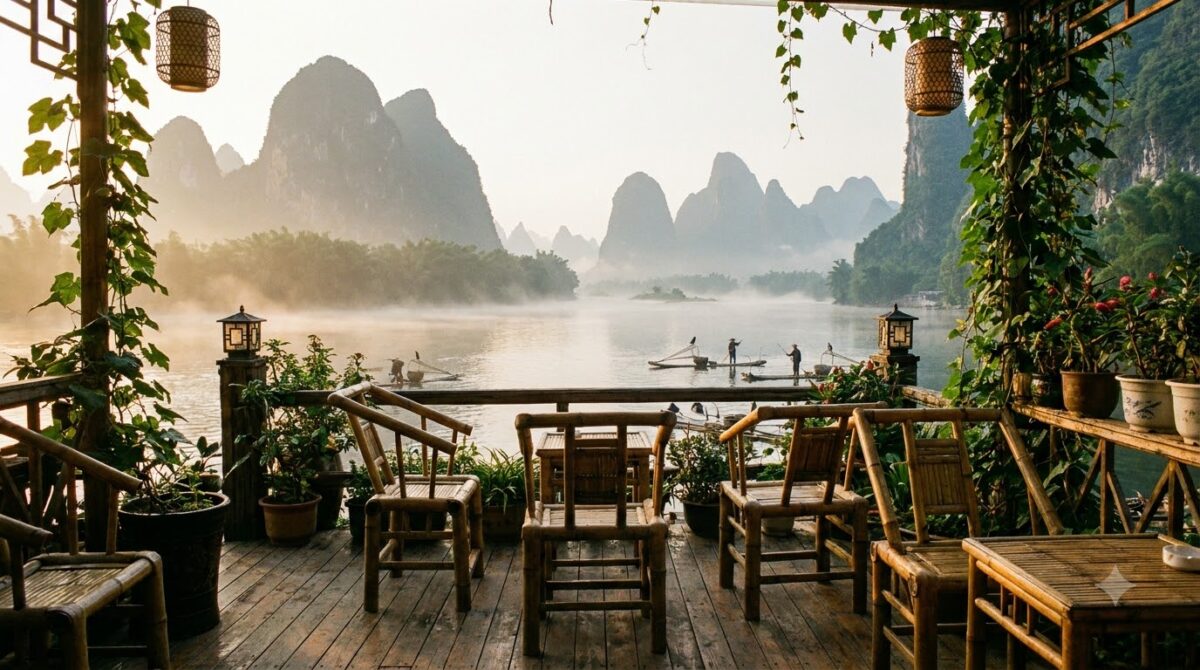
See what is available in Yangshuo — opens a search, not a recommendation.
Hangzhou, Suzhou, Hong Kong and Yunnan
- Hangzhou: stay near West Lake. The whole city organises itself around that lake, and being able to walk out onto it at dawn is the entire point of coming.
- Suzhou: stay in the Pingjiang Road area, the canal district in the old town. It is an hour from Shanghai by train and makes a better overnight than a day trip.
- Hong Kong is a separate system with no foreign guest licensing problem at all, and rooms are small and expensive. Causeway Bay and Tsim Sha Tsui are the practical bases.
- Lijiang in Yunnan has an old town of guesthouses inside a UNESCO-listed grid of canals and cobbles. It is the prettiest place to sleep in China and it is a long way from everything else.
- Chongqing is where a Yangtze cruise starts, and the city itself is worth a night for the scale of it.
- In all of these, the licence question still applies except in Hong Kong. Smaller cities have proportionally fewer licensed properties.
See what is available near West Lake in Hangzhou — opens a search, not a recommendation.
See what is available in Suzhou old town — opens a search, not a recommendation.
See what is available in Hong Kong — opens a search, not a recommendation.
See what is available in Lijiang old town — opens a search, not a recommendation.
Sleeping on a Yangtze cruise, which counts as accommodation here
This is the one form of lodging in China with no equivalent anywhere else on this site, and it is genuinely a place to stay rather than a day trip.
- A Three Gorges cruise runs three to four nights between Chongqing and Yichang, and the ship is your hotel for the whole stretch. You unpack once.
- Downstream from Chongqing is the shorter direction and the more common one. Upstream takes an extra night and costs less.
- The international-standard ships have balconies on every cabin and are aimed squarely at foreign visitors, which also means the foreign registration question is handled as a matter of course.
- Domestic ships are much cheaper and much more basic, with announcements in Chinese only and no English at all.
- Book a cabin on the upper decks facing the direction of travel if you can choose. The gorges arrive quickly and you want to be looking forward.
- It replaces three or four hotel nights, which is worth building into the budget rather than treating as an extra.
- Spring and autumn are the seasons. Summer is hazy and the water is high, winter is cold and the light is flat.
See what is available in Chongqing before boarding — opens a search, not a recommendation.
What a Chinese hotel room is actually like
- Beds are firm. Noticeably firmer than western hotels, including at the top end. If that matters to you, ask.
- A kettle, slippers and tea are standard in every category. Bottled water is provided daily and you should not drink from the tap.
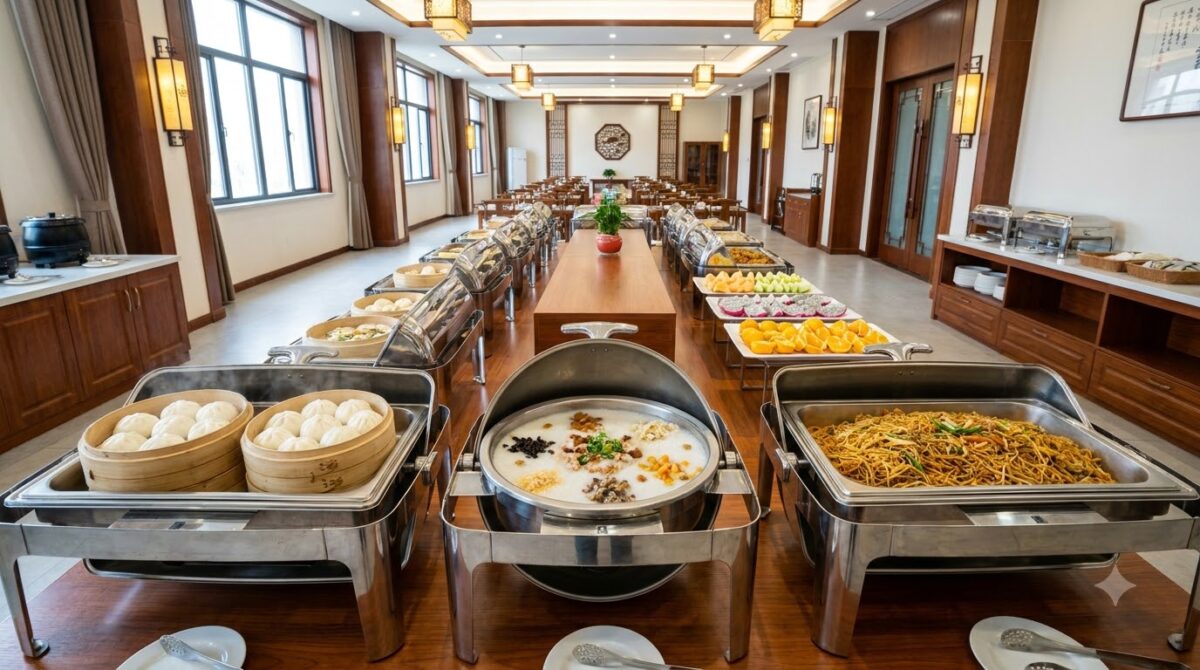
- Breakfast is congee, steamed buns, noodles and pickles, with a western corner in international hotels. It is included more often than not and it is a real meal.
- Smoking rules are looser than you may expect. Request a non-smoking floor rather than assuming it.
- Air conditioning is central in many older buildings, which means it is heating or cooling by season and not by your preference.
- The room will be smaller than the equivalent price in Europe, and cleaner.
Practical things that affect where you book
- Save the hotel name and address in Chinese characters. A taxi driver cannot read the Latin spelling, and this single screenshot saves more trouble than anything else on this list.
- Stay near a metro station in Beijing, Shanghai, Xi’an and Chengdu. All four have excellent systems and appalling traffic.
- Alipay and WeChat Pay run the country and now accept foreign cards. International hotels take cards; small guesthouses often do not.
- Ask whether the hotel can book train tickets. Many can, and it removes the hardest piece of logistics in the country.
- Book ahead for the first week of October and Chinese New Year. Everything fills, everywhere, at once.
- Check what is blocked. Hotel wifi is subject to the same restrictions as everything else, so have a VPN installed before you arrive.
Travel tips for staying in China
Small things that change a stay, collected from the practical end rather than the inspirational one.
- Ask for a high floor away from the lift. Chinese hotels are large and the corridors carry sound.
- Check the room has a window. Windowless interior rooms exist at the cheaper end and are not always disclosed clearly.
- The deposit is normal. Most hotels hold a deposit at check-in and release it when you leave; in cash-only places that means real notes.
- Laundry is cheap and fast almost everywhere, which changes how much you need to pack for a two-week trip.
- Take the hotel business card when you go out. It has the address in Chinese and it is the fastest way home in a taxi.
- Ask about train tickets at the desk. Many hotels will book or collect them, which removes the single hardest piece of logistics in the country.
- Tipping is not expected in hotels or restaurants, and pressing it on staff can be awkward rather than welcome.
- Book a licensed property for your arrival night specifically. A refusal is bad on any night and worst on the one where you have just got off a long flight.
Where to stay in China by traveller
- First visit, two cities — a courtyard hotel in Beijing and a lane house in Shanghai.
- On a budget — a hostel private room or a licensed domestic chain, booked internationally.
- Families — international chains, for the space, the registration certainty and the breakfast.
- Business — Chaoyang in Beijing, Jing’an or Pudong in Shanghai.
- For the view — Yangshuo, and nowhere else on this list comes close.
- Nervous about the language — a hostel or an international chain. Both have English at the desk.
Ready to book?
Choose the district, then the room, then confirm the property accepts foreign guests. That last step takes one message and it is the only one on this page you cannot skip.
Start with Beijing, the usual first stop — opens a search, not a recommendation.
These are affiliate links. We may earn a commission if you book, at no extra cost to you, and it does not change what we wrote above.
Planning the route as well? See our China itinerary, and where to stay in Switzerland.
Frequently asked questions
Can any hotel in China accept foreign guests?
No. Hotels must be licensed to register foreign guests with the local public security bureau, and many domestic hotels, budget chains and private rentals are not. They will turn you away at the desk even with a paid booking. Book through an international platform, or message the property and ask directly before paying.
Where should you stay in Beijing?
Inside the second ring road. Qianmen puts you walking distance from the Forbidden City, and the Gulou hutong district has the courtyard hotels and the best evenings. Wangfujing has the most international hotels and the least character. Sanlitun and Chaoyang suit longer or business stays.
Where should you stay in Shanghai?
The former French Concession for most people: plane trees, lane houses and the only part of the city that rewards walking without a plan. The Bund for the river view and the historic buildings, Pudong for the newest towers, and Jing’an as the practical central compromise.
Are hotels in China expensive?
Less than you would expect. International five-star hotels cost noticeably less than the same brand in Europe, and domestic mid-range chains are very cheap for what they are. The room will be smaller than an equivalent European price and cleaner. We do not print rates because they move constantly.
Do you need to show your passport at Chinese hotels?
Yes, the physical passport, at every check-in. A photo or photocopy is not accepted. The hotel files a registration with the local police, which is a legal requirement rather than a formality, and it is exactly why unlicensed properties cannot take you.
Should you book Chinese hotels on a local app or an international site?
International, unless you are confident about the licence. Domestic apps have far more inventory and better prices, and a lot of that inventory cannot legally check in a foreign passport. Listings that reach foreign markets are almost always the ones already approved to register foreign guests.
What are Chinese hotel rooms like?
Compact, very clean, and with firm beds even at the top end. A kettle, tea, slippers and daily bottled water are standard. Breakfast is usually included and is congee, steamed buns and noodles rather than pastries. Air conditioning in older buildings is often central, so it heats or cools by season.
Is Airbnb a good option in China?
It is the riskiest option. Private hosts rarely hold the licence to register foreign guests, even in large cities, so a booking can be cancelled on arrival or simply refused. If you want an apartment, use a serviced apartment building and confirm in writing that it accepts foreign passports.
Which part of China is best for tourists?
The eastern corridor, for a first trip. Beijing for the imperial sites and the Great Wall, Shanghai for the modern city, and Xian between them for the Terracotta Army. Add Guilin and Yangshuo in the south for landscape, or Chengdu in the west for pandas and Sichuan food. Those five cover what almost everyone means by China, and all of them have plenty of licensed accommodation.
How far ahead should you book hotels in China?
A few weeks is enough most of the year, because supply is enormous. The exceptions are absolute: the first week of October, which is the national holiday, and Chinese New Year in late January or February. During both, the entire country travels at once and everything fills.