
China has the fastest trains on earth and it is still roughly 5,000 kilometers wide. Those two facts fight each other, and almost every first itinerary loses.
The country is not one trip. It is three rail lines radiating out, and you pick one. The classic line runs Beijing to Xi’an to Shanghai. The western line runs to Chengdu and the mountains behind it. The southern line runs down to Guilin and out to Hong Kong. Each one is a complete holiday. Trying to combine two means spending your days in a seat at 350 km/h rather than in the places you flew for.
There is a second thing nobody tells you, and it will ruin a night if you learn it at a reception desk. Hotels in China need a licence to accept foreign guests, and plenty of perfectly good domestic hotels do not have one. The section on that below is the most useful part of this page.
How this page pays for itself: the booking links below are affiliate links, so we may earn a commission if you book through them, at no extra cost to you. They open a normal search so you can compare for yourself. We do not print prices, we do not rank hotels, and nobody on this team has been to China. Train times, park rules and station names read 13 September 2026.
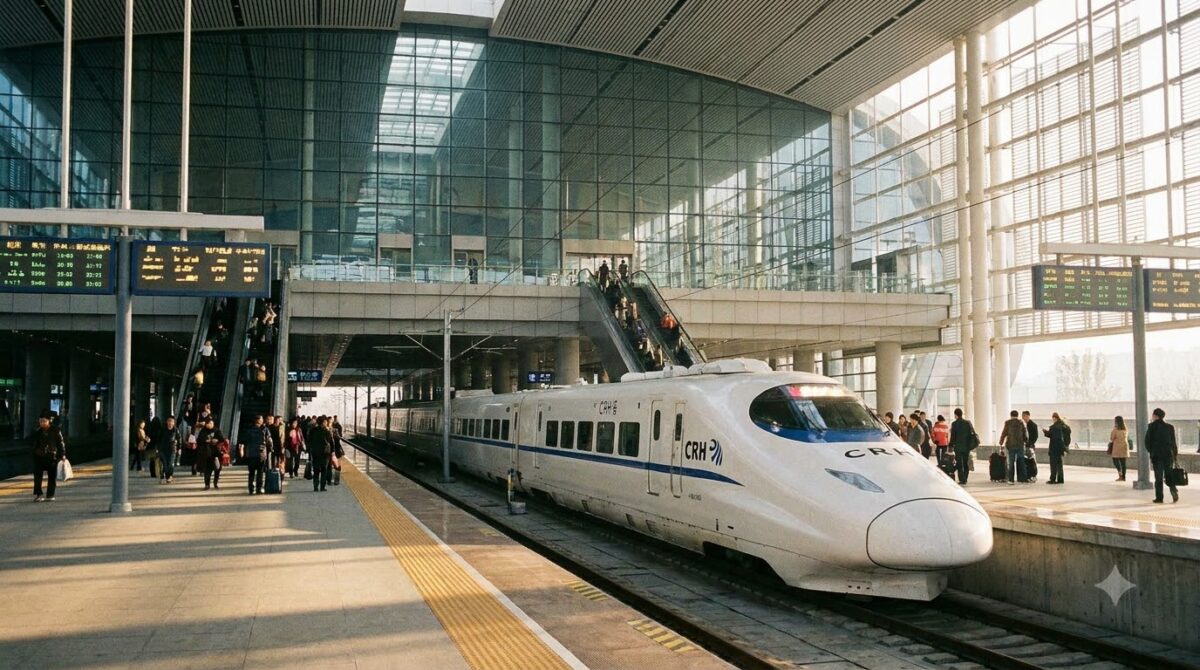
The three routes at a glance
| Route | Days | What it gives you |
|---|---|---|
| Classic: Beijing, Xi’an, Shanghai | 8 to 10 | Great Wall, Terracotta Army, the modern city |
| Western: Beijing, Xi’an, Chengdu | 10 to 12 | Pandas, Sichuan food, Tibetan edge |
| Southern: Shanghai, Guilin, Hong Kong | 10 to 12 | Karst rivers, rice terraces, two systems |
| Add Zhangjiajie to any of them | +3 | The sandstone pillars, and a long detour |
If you want one answer: the classic line over ten days. Three nights in Beijing, two in Xi’an, three in Shanghai, and the rest absorbed by trains and arrival days. It is the route that exists because it works.
Why one line and not two
- Beijing to Shanghai is about four and a half hours on the fastest train, which sounds like nothing until you realise it is the equivalent of London to Milan.
- Beijing to Chengdu is seven to eight hours. Shanghai to Guilin is about nine. Those are days, not journeys.
- Every city needs three nights to be worth the arrival. Two nights gives you one full day, and one full day in Beijing is a joke.
- Flights exist and are cheap, but airports here are enormous and far out, so a two-hour flight is a five-hour day. The train usually wins under six hours.
- The arithmetic: ten days minus two travel days at the ends leaves eight. Eight divided by three nights is two cities and a bit. Three cities is the honest maximum.
The classic route, day by day
This is the ten-day version. Compress to eight by cutting a Shanghai day, stretch to twelve by adding Suzhou or Hangzhou.
Days 1 to 3: Beijing
- Day 1 is the arrival day and you will not do much. Get to the hotel, walk a hutong, eat somewhere within ten minutes.
- Day 2: the Forbidden City and Tiananmen. Book the Palace Museum online in advance with your passport number. Entry is capped daily and turning up does not work.
- Day 3: the Great Wall. Mutianyu is the section most visitors should pick: restored, dramatic, about ninety minutes out, with a cable car up and a toboggan down.
- Badaling is closer and much busier. Jinshanling is wilder and needs a longer day and a driver.
- The Temple of Heaven and the Summer Palace are the two things people cut and then regret cutting.
- Stay inside the second ring road, ideally in or beside a hutong near Qianmen or Gulou. The subway is excellent but the atmosphere is the point.
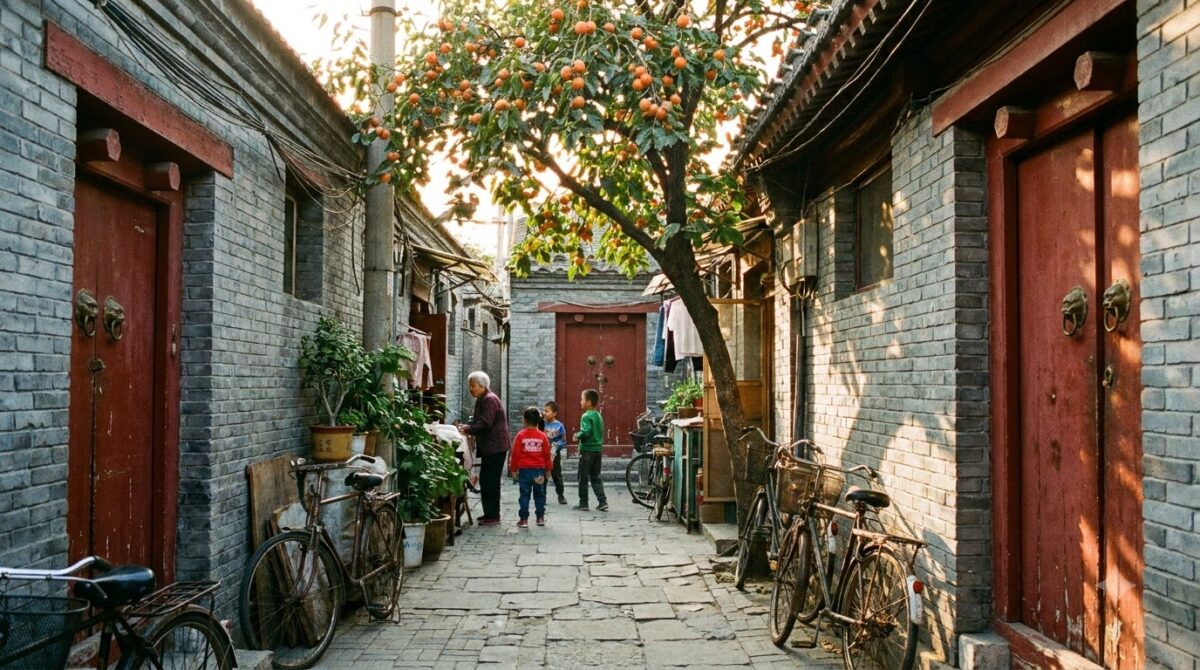
See what is available in central Beijing — opens a search, not a recommendation.

Days 4 and 5: Xi’an
- The train from Beijing takes four and a half to six hours. Take a morning one and you have the afternoon.
- The Terracotta Army is an hour out of the city and needs about three hours including the drive. It is the reason Xi’an is on this route.
- The city wall is intact and you can cycle the full fourteen kilometres around it, which is the single best hour in the city.
- The Muslim Quarter after dark is where Xi’an actually happens: hand-pulled noodles, roujiamo, spiced lamb.
- Two nights is right. Three only if you want the Han tombs or a day trip to Mount Hua.
- Stay inside the walls, near the Bell Tower. Everything is walkable from there.

See what is available inside the Xi’an city walls — opens a search, not a recommendation.
Days 6 to 8: Shanghai
- The train from Xi’an takes six to seven hours. This is the longest leg of the classic route and the one to book a morning seat for.
- The Bund at dusk is the cliché and it is genuinely worth standing there. Walk the west bank, look at the east bank.
- The French Concession is where you will want to spend a whole day doing very little: plane trees, lane houses, small shops.
- Yu Garden and the Old City take a morning and are the busiest thing in the city. Go early.
- The Shanghai Museum is free, excellent, and the best rainy-day plan in China.
- Suzhou or Hangzhou are both under an hour by train and both make a better day trip than anything left inside Shanghai on day three.
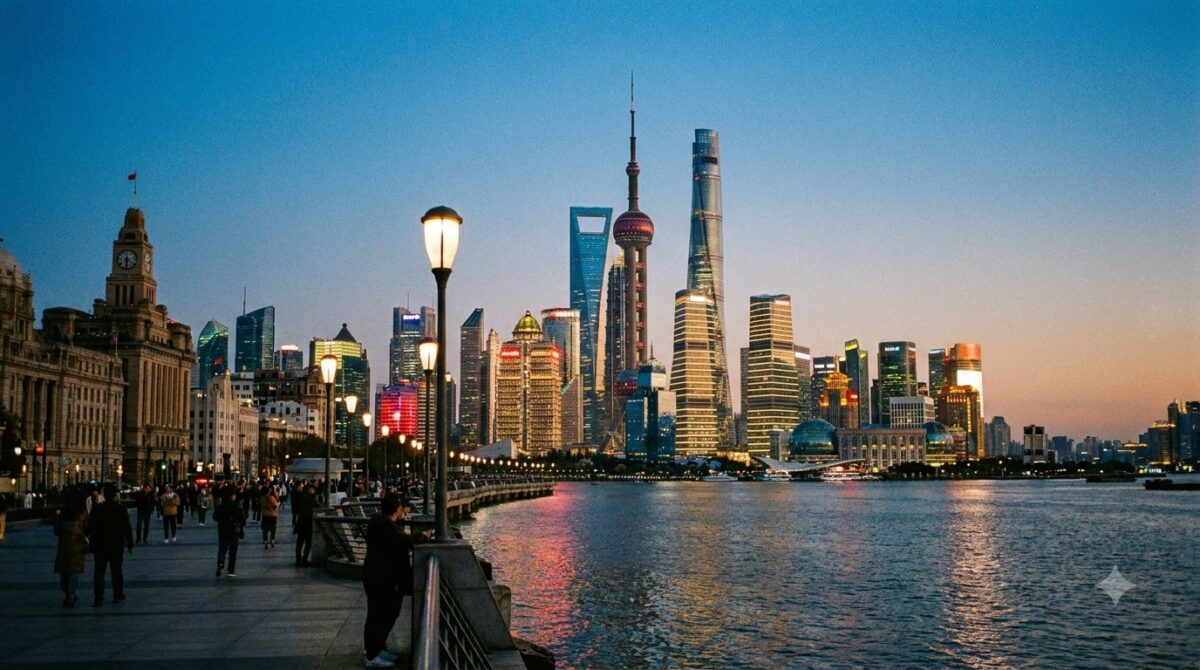
See what is available in Shanghai — opens a search, not a recommendation.
See what is available in Suzhou for a side trip — opens a search, not a recommendation.
The western route: Chengdu and Sichuan
- Swap Shanghai for Chengdu and the trip changes character completely. Slower, greener, spicier, and much less international.
- The Chengdu Research Base of Giant Panda Breeding is the reason people come. Go at opening for feeding time; by midday they are sleeping lumps.
- Sichuan food is the point almost as much as the pandas. Mapo tofu, hotpot, and the numbing pepper that nothing outside China gets right.
- Leshan Giant Buddha is a day trip and is larger than photographs manage to convey.
- Jiuzhaigou, the valley of turquoise lakes, is eight hours north or a short flight, and needs two nights of its own.
- This is the route to pick if you have twelve days rather than ten, and if food matters more than skylines.

See what is available in Chengdu — opens a search, not a recommendation.
The southern route: Guilin, Yangshuo and Hong Kong
- Guilin and Yangshuo are the karst landscape on the back of the old twenty yuan note, and they look exactly like that in person.
- The Li River cruise from Guilin to Yangshuo takes about four hours and is the one boat trip in China worth the money.
- Stay in Yangshuo, not Guilin. Guilin is the transport hub; Yangshuo is the reason you came, and a bicycle there is better than any tour.
- The Longji rice terraces are two hours from Guilin and need an overnight to see properly at dawn.
- Hong Kong is three and a half hours from Guilin by train and is a separate immigration crossing, so check what your visa allows before you plan to end there.
- Best in spring and autumn. Summer here is heavy rain and heavy heat.

See what is available in Yangshuo — opens a search, not a recommendation.
See what is available in Guilin — opens a search, not a recommendation.
See what is available in Hong Kong — opens a search, not a recommendation.
Adding Zhangjiajie, and whether to bother
- The sandstone pillars at Zhangjiajie are the landscape that inspired the floating mountains in Avatar, and they are genuinely unlike anywhere else.
- The official name is the Wulingyuan Scenic Area, a UNESCO site, and Zhangjiajie National Forest Park is the part inside it that almost everyone means. Tickets, shuttles and cable cars are all priced separately within it.
- It is awkward to reach from every one of the three routes, which is why it adds three days rather than one.
- Two full days in the park is the minimum: one for the Yuanjiajie and Tianzi areas, one for Tianmen Mountain.
- Mist is the risk. The pillars are frequently invisible, and there is nothing you can do about it except allow more days.
- Add it if you have twelve days or more. On ten it will eat the rest of the trip.

See what is available near Zhangjiajie park — opens a search, not a recommendation.
The hotel licence problem, and how to avoid it
This is the part that is missing from almost every China itinerary, and it is the one that costs people a night of sleep.
- Hotels in China must be licensed to register foreign guests with the local police, and many smaller domestic hotels and guesthouses are not. They will turn you away at the desk, politely, at any hour.
- Booking on a domestic app is where this bites. A property can be listed, take your money, and still be unable to check you in.
- The reliable workaround is to book through an international platform, because listings that reach foreign markets are generally the ones already set up to accept foreign passports.
- If in doubt, message the property before you pay and ask directly whether they accept foreign guests. A yes in writing is worth having.
- Bring your physical passport to every check-in. A photo is not accepted, and the registration is a legal requirement rather than a formality.
- This is why we link to searches rather than to individual hotels. Filter, read the listing, and confirm before you commit.
Search accommodation across China — opens a search, not a recommendation.
Booking trains, and the passport rule
- Book high-speed trains in advance for the long legs. Popular routes sell out, especially around public holidays.
- Your passport is your ticket. Tickets are tied to the passport number, and you scan the passport itself at the gate on most lines now.
- Second class is fine on every route in this article. First class buys a wider seat and not much else.
- Arrive forty minutes early. Chinese stations are airport-sized, with security, and the gate closes several minutes before departure.
- Foreign cards fail on the official app more often than not. Book through an international rail agent or buy at the station counter with the passport.
- Avoid the first week of October and Chinese New Year entirely. The whole country moves at once.
Visas, and why this section is deliberately vague
- China has changed its entry rules repeatedly over the past two years, adding visa-free entry for some nationalities and a long visa-free transit arrangement for many more.
- We are not going to print the number of days or the list of countries here, because that information has been wrong in published guides within weeks of being written.
- Check with the Chinese embassy or consulate for your own passport, and check again close to departure. Do not trust any travel blog on this, including this one.
- What is stable: transit arrangements require an onward ticket to a third country and are limited to specified entry points, and visa-free entry always has conditions attached.
- If your route ends in Hong Kong, that is a separate immigration crossing and it affects what a transit arrangement allows. Confirm before booking the train.
- Build the visa question in first. It decides your entry city, which decides the whole route.
Paying for things, and the app problem
- China runs on Alipay and WeChat Pay, not on cards. Cash is accepted but increasingly awkward, and many small vendors have no way to give change.
- Both apps now accept foreign cards for visitors. Set them up and test them before you fly, not at a noodle counter.
- Keep some cash anyway for taxis, temples and anywhere rural.
- International hotels take cards. Almost nothing else reliably does.
- A local SIM or eSIM matters more here than in most countries, because nearly everything runs through an app.
Internet access, and planning for it
- Google, WhatsApp, Instagram and most western services are blocked. That includes Google Maps, which is the one that catches people out.
- Install a VPN before you arrive. VPN sites are themselves hard to reach from inside the country, so arriving without one is a real problem.
- Download offline maps and screenshot your hotel addresses in Chinese characters. A driver cannot read the Latin spelling.
- Apple Maps works and Baidu or Amap are what everyone local uses.
- An international roaming plan sometimes routes around the restrictions, but do not build a trip on that assumption.
When to go
- April, May, September and October are the good months everywhere on these routes.
- Summer is hot and wet, and Beijing and Shanghai in July are genuinely unpleasant.
- Winter is cold and clear in the north, and the Great Wall in snow is worth the discomfort if you can handle it.
- Avoid the first week of October, the national holiday, and Chinese New Year in late January or February. Every site is full and every train is booked.
- Air quality is better than its reputation in recent years, but check a forecast if you are sensitive.
Travelling independently or joining a tour
In most countries this is a preference. In China it is closer to a real decision, and it is worth thinking about before you book anything.
- Independent travel is entirely doable on the classic route. The high-speed network is excellent, signage in stations is bilingual, and the cities on this itinerary handle foreign visitors constantly.
- What makes it harder than Europe is that the booking layer runs on Chinese apps, the internet is restricted, and outside hotels and major sites almost nobody speaks English.
- The middle path is what most people should pick: travel independently between cities, and hire a local guide for one day in Beijing and one in Xi’an. A guide at the Forbidden City turns a walk past buildings into a story.
- A full escorted tour makes sense for Tibet, which legally requires a permit and an organised arrangement, and for Jiuzhaigou or remote Sichuan where transport thins out.
- Day tours are cheap and plentiful for the Great Wall and the Terracotta Army, and they remove the two hardest logistics days on the classic route.
- What you lose on a group tour is the evening. Group itineraries eat dinner at 6pm in a restaurant chosen for the bus, and dinner is where China is most fun.
The language barrier, and how to work around it
This is the part that surprises people who have travelled widely elsewhere. English is much less common here than in Japan, Korea or Thailand.
- Assume no English outside hotels, airports and major sites. Taxi drivers, small restaurants, shop staff and train station counters generally have none.
- Save every address in Chinese characters as a screenshot on your phone. Showing a driver the Latin spelling of your hotel achieves nothing.
- A translation app with camera and offline mode is the single most useful thing you can install. Pointing it at a menu changes every meal.
- Menus often have pictures in casual places, and in Beijing and Shanghai many have English. Xi’an and Chengdu much less so.
- Learn four phrases: hello, thank you, how much, and no spice. The last one matters enormously in Sichuan.
- Written numbers work everywhere. If nothing else is getting through, both sides can type a number.
- People are helpful about it. The barrier is practical rather than social, and pointing plus a translation app gets you through almost everything.
What a China trip costs
- China is much cheaper than Europe or Japan for food and transport, and comparable for international-standard hotels.
- Trains are the big saving. High-speed rail across the country costs a fraction of the European equivalent.
- Eating locally is very cheap and eating in hotels is not. The gap is larger here than almost anywhere.
- Entrance fees add up, because major sites charge separately for every section, cable car and shuttle bus inside them.
- Budget for a guide once. One good day with a guide in Beijing or Xi’an changes how you read everything after it.
Ready to book?
Pick the line first, then the cities, then the rooms. And on the rooms, confirm the property accepts foreign guests before you pay, because that is the one mistake in China that no amount of planning elsewhere will save you from.
Start with Beijing, the usual entry city — opens a search, not a recommendation.
These are affiliate links. We may earn a commission if you book, at no extra cost to you, and it does not change what we wrote above.
Planning a different long-haul trip instead? See our Italy itinerary and our Iceland itinerary.
Before you book any of it, read where to stay in China — hotels there need a licence to accept foreign guests, and many do not have one.
Frequently asked questions
How many days do you need in China?
Ten days for one rail line and three cities, which is the honest maximum at that length. Eight days works if you cut to two cities. Two weeks lets you add Chengdu or Guilin properly, or Zhangjiajie with its three-day overhead. Anything under a week is a single-city trip.
What is the best China itinerary for a first visit?
Beijing, Xi’an and Shanghai over ten days. Three nights in Beijing for the Forbidden City and the Great Wall, two in Xi’an for the Terracotta Army and the city wall, three in Shanghai for the Bund and the French Concession, and the rest absorbed by trains and arrival days.
Can any hotel in China accept foreign guests?
No, and this is the most expensive misunderstanding in China travel. Hotels need a licence to register foreign guests with the local police, and many smaller domestic properties do not have one. They will turn you away at the desk. Book through an international platform, and message the property to confirm if you are unsure.
Should you take trains or flights in China?
Trains for anything under about six hours, which covers most of the classic route. Airports are enormous and far from the city, so a two-hour flight becomes a five-hour day. Book high-speed rail in advance, bring your physical passport, and arrive forty minutes early because stations are airport-sized.
Do you need a visa for China?
It depends on your passport and it has changed repeatedly in the past two years. Some nationalities now enter visa-free and many more qualify for an extended visa-free transit with an onward ticket to a third country. Check with the Chinese embassy for your own passport, and check again close to departure rather than trusting any travel article.
How do you pay for things in China?
Alipay and WeChat Pay, which now accept foreign cards for visitors. Set both up and test them before you fly. Cards work in international hotels and almost nowhere else. Keep some cash for taxis and rural areas, and expect small vendors to have no change.
Do you need a VPN in China?
Yes if you want Google, WhatsApp, Instagram or Google Maps, all of which are blocked. Install and test it before you arrive, because VPN websites are themselves hard to reach from inside the country. Download offline maps and save your hotel addresses in Chinese characters as well.
When is the best time to visit China?
April, May, September and October across all three routes. Summer is hot and wet, and Beijing and Shanghai in July are unpleasant. Winter is cold and clear in the north. Avoid the first week of October and Chinese New Year entirely, when the whole country travels at once.
Is $1000 enough for a week in China?
For a week on the ground, yes, comfortably, if that figure excludes international flights. China is much cheaper than Europe or Japan for trains, local food and entry tickets, and a mid-range hotel costs well under a western equivalent. Where a budget disappears is international-standard hotels, hotel restaurants, and the separate fees for every cable car and shuttle inside a major site. Eat where local people eat and the number stops being tight. We do not print current prices because they move and we cannot verify them for you.
How many days are sufficient to visit China?
Ten days is sufficient for one rail line and three cities done properly. Eight is enough for two cities. Below a week you are visiting one city rather than the country, which is a perfectly good trip if you accept it as that. China is not a place where more destinations means more trip, because the distances turn extra stops into extra train days.
Is Hong Kong part of a China itinerary?
It can be, and it is a separate immigration crossing rather than a domestic leg. Guilin to Hong Kong is about three and a half hours by train. Because it counts as leaving mainland China, it affects what a visa-free transit arrangement allows, so confirm the rules for your passport before you book that leg.