Where to stay to eat well in Greece
Pick the place by the food. Athens for a first trip, Crete for olive oil and raki, Thessaloniki for street food and sweets.
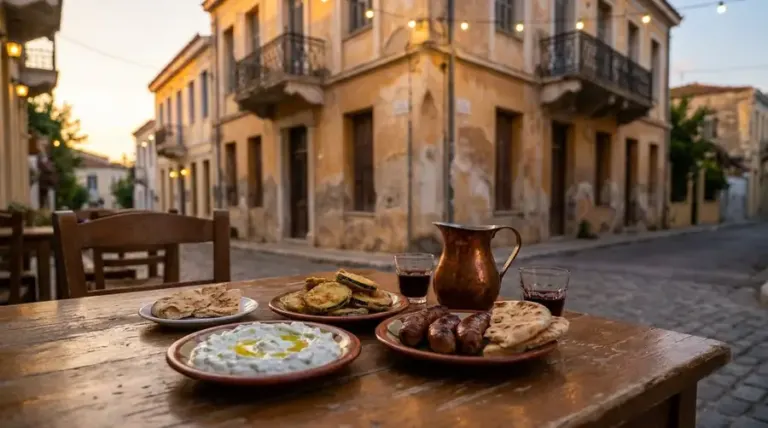
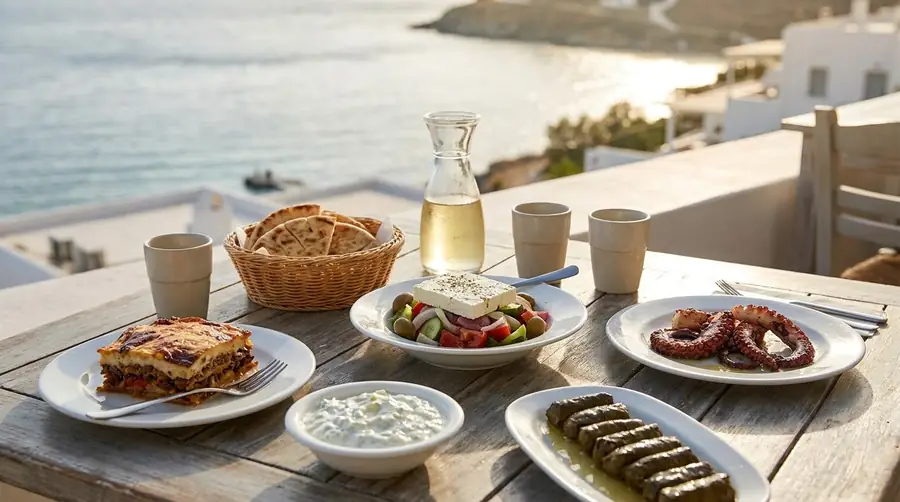
Illustration Check hotels in Athensor compare on AgodaFirst trip
Athens
The whole Greek menu in one city, with the Acropolis between meals.
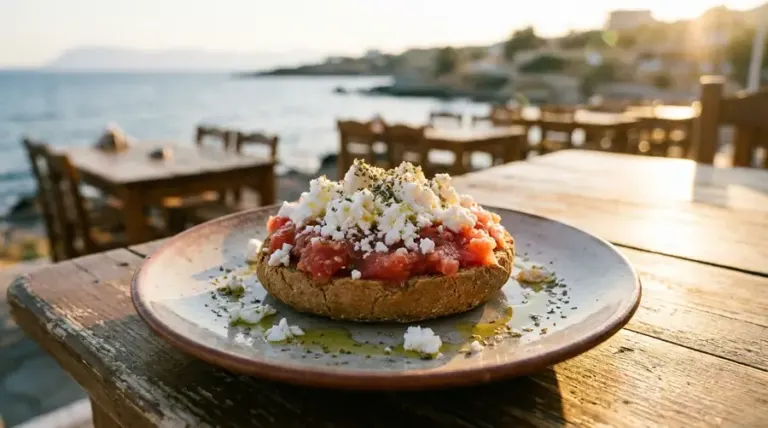
Illustration Check hotels in Chaniaor compare on AgodaBest for food
Chania
Cretan cooking, the original Mediterranean diet, in a harbour town.
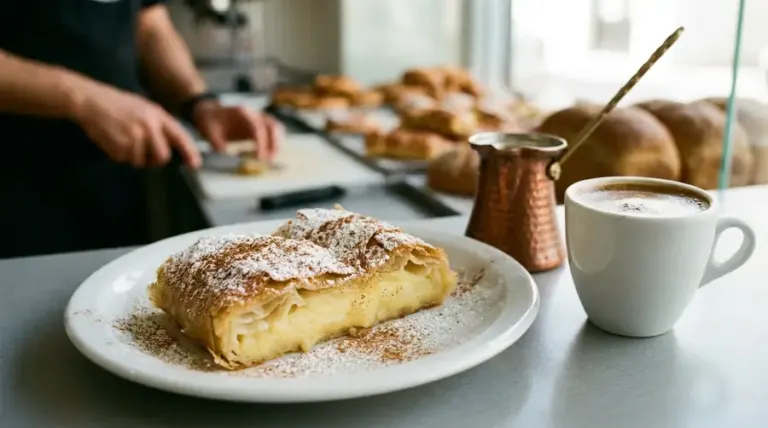
Illustration Check hotels in Thessalonikior compare on AgodaStreet food and sweets
Thessaloniki
Pastry breakfasts, markets and meze bars, cheaper than the islands.
On this page
- Greek food by region: the menu
- Where to eat each Greek dish, region by region
- Athens: souvlaki, gyros, meze and the classic Greek taverna
- Thessaloniki: bougatsa, koulouri and Greek street food
- Ioannina and Epirus: Greek pies, mountain cheese and lake trout
- Crete: dakos, kalitsounia, Cretan cheese and raki
- Santorini and the Cyclades: fava, tomato fritters and assyrtiko wine
- Naxos and Mykonos: Cycladic cheese, potatoes and kitron
- Rhodes and the Dodecanese: pitaroudia, honey and sesame sweets
- Corfu and the Ionian islands: pastitsada, sofrito and Venetian flavours
- The Peloponnese: Kalamata olives, smoked pork and Nemea wine
- How a Greek meal works: from appetizer to main course
- More traditional Greek dishes to try in Greece
- Greek comfort food: stew, meatball and orzo dishes
- Greek street food and quick bites: gyros vs souvlaki
- Greek desserts and sweet treats
- Greek drinks: ouzo, wine and Greek coffee
- When to eat what: Greek food by season
- Ordering words
- When Greeks eat
- Hotels near the food in Athens, with live prices
- Famous Greek food: FAQ
Greek food is regional. The souvlaki and moussaka you know from home are only the start of Greek cuisine. Every region of Greece cooks differently: pies in the mountains of Epirus, Venetian-style stews on Corfu, chickpeas and sesame on Rhodes, wild greens and raki on Crete, and Ottoman and Jewish dishes in Thessaloniki. What they share is olive oil, fresh vegetables, bread, feta cheese, herbs and a habit of sharing plates. This guide is for travellers, not cooks: it is not a set of traditional Greek recipes to make at home, though every Greek family will tell you theirs is the best. First comes the menu, every famous Greek dish with the place it belongs to. Then we go region by region, from Athens and Thessaloniki to Crete, Santorini, Naxos, Rhodes, Corfu and the Peloponnese, with what to order there, when it is in season, and where to stay so dinner is a short walk home. If you are still planning the route, our Greece itinerary connects most of these places.
Some links below are affiliate links. We may earn a commission if you book through them, at no extra cost to you. We do not rank hotels, and any prices on the map come live from the booking sites.
Short answer
- Eat each dish where it comes from: bougatsa in Thessaloniki, dakos in Crete, fava in Santorini, pastitsada in Corfu.
- Order several plates for the table and share; Greeks rarely order a starter and a main each.
- Follow the season: greens and Easter lamb in spring, tomatoes and fish in summer, stews and pies in winter.
Triplarks · Greece
Greek food by region: the menu
Each famous Greek dish and the region, island or city it belongs to.
Greek meze, dips and salads mezedes, orektika
TzatzikiEverywhere
Strained Greek yoghurt with grated cucumber, garlic, olive oil and dill or mint. Eaten with bread or grilled meat.
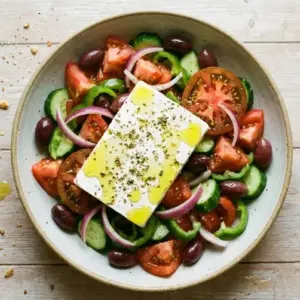
Horiatiki (Greek salad)Everywhere
Tomato, cucumber, red onion, green pepper, Kalamata olives and a slab of feta cheese with oregano and olive oil. No lettuce.
DakosCrete
A hard barley rusk soaked with grated tomato, topped with crumbled mizithra or feta, olive oil and oregano.
TaramasalataAthens, islands
A dip of cured fish roe whipped with bread or potato, lemon and olive oil. The real thing is pale pink, not bright pink.
MelitzanosalataEverywhere
Smoky dip of grilled aubergine (eggplant) with garlic, olive oil and parsley.
FavaSantorini
A purée of yellow split peas, not broad beans, topped with olive oil, red onion and capers.
DolmadesEverywhere
Vine leaves rolled around rice and herbs. Served cold with lemon, or warm with meat and avgolemono sauce.
SaganakiEverywhere
Hard cheese such as kefalograviera, fried in a small pan until crisp outside and soft inside.
HtipitiThessaloniki
A spicy whipped feta dip with roasted peppers and chilli, a northern Greek favourite.
TomatokeftedesSantorini
Fritters of the island’s small sweet tomatoes with onion, mint and flour.
Gigantes plakiEverywhere
Giant white beans baked in tomato sauce with onion, herbs and plenty of olive oil.
KeftedesEverywhere
Fried meatballs of minced meat, onion, mint and oregano, eaten as meze with a dipping sauce.
KalamarakiaCoasts, islands
Fried squid rings, or small squid served whole with lemon, a summer meze by the sea.
Grilled octopusIslands
Octopus dried in the sun, then grilled and dressed with olive oil, vinegar and oregano. A classic with ouzo.
Pies, grills and Greek street food pites, souvlaki
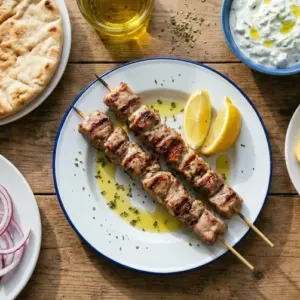
SouvlakiEverywhere
Small pieces of marinated pork or chicken grilled on a skewer, served on the stick or wrapped in pita bread.
GyrosEverywhere
Meat cooked on a vertical rotisserie, shaved thin and wrapped in pita bread with tomato, onion, tzatziki and chips.
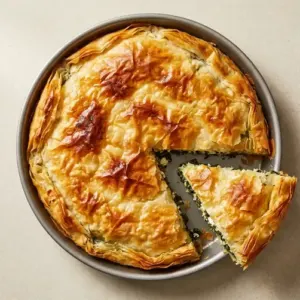
SpanakopitaEverywhere
Spinach pie: spinach, feta cheese, spring onion and herbs between layers of filo pastry.
TiropitaEverywhere
Cheese pie in filo, the classic Greek breakfast eaten from a paper bag on the way to work.
BougatsaThessaloniki
A custard pie: filo with a warm semolina custard, dusted with icing sugar and cinnamon. Savoury versions use cheese or minced meat.
KoulouriThessaloniki, Athens
A ring of bread covered in sesame seeds, sold from street carts every morning.
HortopitaEpirus
Pie of wild greens and herbs with feta, the speciality of the mountain villages around Ioannina.
KalitsouniaCrete
Small cheese pies filled with soft myzithra or with wild greens, fried or baked.
PitaroudiaRhodes
Chickpea fritters with onion, tomato and mint.
LoukanikoEverywhere
Greek pork sausage flavoured with orange peel, fennel or leek, grilled and served as meze.
PaidakiaEverywhere
Grilled lamb chops with lemon and oregano, often ordered by the kilo at a grill house.
KontosouvliEpirus, Easter
Large chunks of pork or lamb roasted on a long spit over charcoal.
Greek main dishes magirefta, ladera
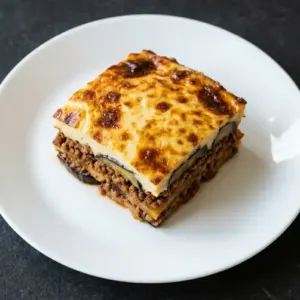
MoussakaEverywhere
Layers of fried aubergine, potato and spiced minced meat in tomato sauce, under a thick béchamel sauce.
PastitsioEverywhere
Baked tubular pasta layered with minced meat in tomato sauce and béchamel, spiced with cinnamon.
StifadoEverywhere
Beef or rabbit stewed with small whole onions, red wine, cinnamon and bay.
Lamb kleftikoEverywhere
Lamb slow-cooked in parchment or a sealed pot with garlic, lemon and potatoes until it falls apart.
GemistaEverywhere
Tomatoes and peppers stuffed with rice and herbs, baked with potatoes. A summer dish.
FasoladaEverywhere
White bean soup with tomato, carrot, celery and olive oil, often called the national dish of Greece.
Avgolemono soupEverywhere
Chicken soup with rice thickened with egg and lemon juice.
GiouvetsiEverywhere
Lamb or beef baked in a clay pot with orzo pasta and tomato.
SoutzoukakiaThessaloniki
Long cumin-scented meatballs in tomato sauce, brought by refugees from Smyrna.
GamopilafoCrete
The Cretan wedding pilaf: rice cooked in a rich meat stock, finished with stakovoutyro butter.
PastitsadaCorfu
Rooster or beef in a spiced tomato sauce, served over thick pasta.
SofritoCorfu
Thin slices of veal cooked in white wine, garlic, vinegar and parsley.
BourdetoCorfu
Scorpion fish or other white fish stewed with lots of red pepper.
KagianasPeloponnese
Scrambled eggs with tomato, often with smoked pork siglino from the Mani.
Greek dessert and drinks glyka, poto
BaklavaEverywhere
Layers of filo with walnuts or pistachios, soaked in honey or syrup.
GalaktobourekoEverywhere
Semolina custard baked in filo and soaked in syrup.
LoukoumadesAthens
Small fried dough balls with honey, cinnamon and walnuts, the Greek version of doughnuts.
Greek yoghurt with honeyEverywhere
Thick, creamy Greek yoghurt, strained and often sheep’s milk, with thyme honey and walnuts.
PortokalopitaEverywhere
Orange cake made with crumbled filo and soaked in orange syrup.
Trigona PanoramatosThessaloniki
Crisp filo cones filled with cream, from the suburb of Panorama.
MelomakaronaEverywhere, Christmas
Honey and walnut cookies scented with orange, baked for Christmas.
MelekouniRhodes
A bar of sesame seeds and honey with spices, once a wedding sweet.
Ouzo and tsipouroEverywhere
Anise-flavoured spirit (ouzo) and grape spirit (tsipouro), sipped slowly with meze.
Raki (tsikoudia)Crete
Clear grape spirit served in small glasses at the end of most Cretan meals, often on the house.
Greek coffee and frappéEverywhere
Strong boiled coffee in a small cup, and the iced frappé of the summer.
Assyrtiko and retsinaSantorini, Attica
Crisp white wine from Santorini’s volcanic soil, and retsina, white wine flavoured with pine resin.
Seasonal dishes come and go, so check what is on the day.Dish photos are illustrations.
Where to eat it
Where to eat each Greek dish, region by region
- 1Athens
Street food · tavernas · the central market
Where to eat ↓Hotels in Athens → - 2Thessaloniki
Pastry breakfasts · markets · meze bars
Where to eat ↓Hotels in Thessaloniki → - 3Ioannina
Filo pies · mountain cooking
Where to eat ↓Hotels in Ioannina → - 4Chania
Olive oil · wild greens · raki
Where to eat ↓Hotels in Chania → - 5Santorini
Volcanic produce · island wine
Where to eat ↓Hotels in Santorini → - 6Naxos
Cheese · farm produce · island grills
Where to eat ↓Hotels in Naxos → - 7Rhodes
Chickpeas · sesame · seafood
Where to eat ↓Hotels in Rhodes → - 8Corfu
Venetian-style stews · kumquat
Where to eat ↓Hotels in Corfu → - 9Nafplio
Olives · olive oil · red wine
Where to eat ↓Hotels in Nafplio →
Region 1 of 9
Athens: souvlaki, gyros, meze and the classic Greek taverna
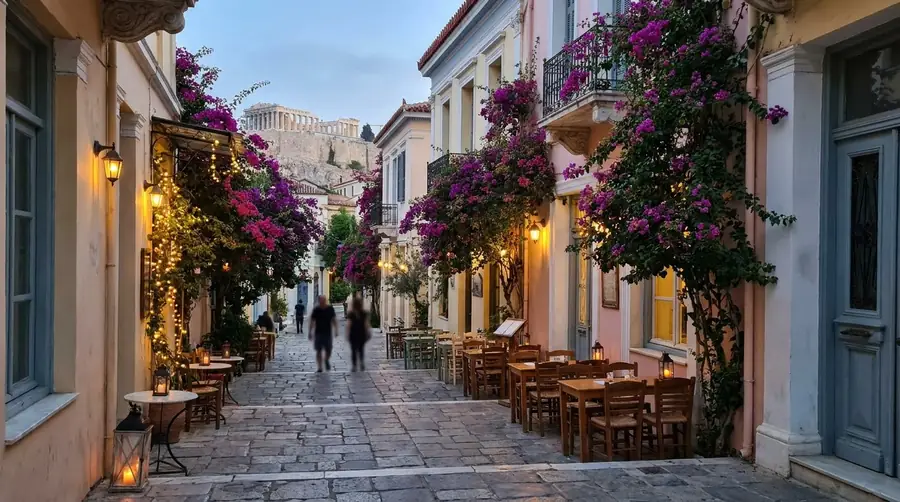
Athens is the best place to learn the whole Greek menu, because cooks from every region of Greece have moved to the capital. Start with Greek street food. A souvlaki wrapped in pita bread, or gyros shaved off the vertical spit with tomato, onion and tzatziki, is the cheap lunch of the city, and the best places are busy grill shops around Monastiraki and in the neighbourhoods. In the evening, go to a taverna or a mezedopoleio (meze house) and order small plates to share: tzatziki, fried courgette, grilled loukaniko sausage, saganaki and a Greek salad. Old-style magirefta restaurants cook moussaka, pastitsio, stifado and gemista in the morning and keep them warm in trays; you point at what you want. Walk through the Varvakios central market on Athinas Street to see the fish, meat, olives and spices of Greece in one place. Sweet tooth? Loukoumades with honey are a late-night Athens treat. First visit? Read how many days in Athens before you plan the meals.
Order hereSouvlakiGyrosMoussakaSaganakiLoukoumades
Region 2 of 9
Thessaloniki: bougatsa, koulouri and Greek street food
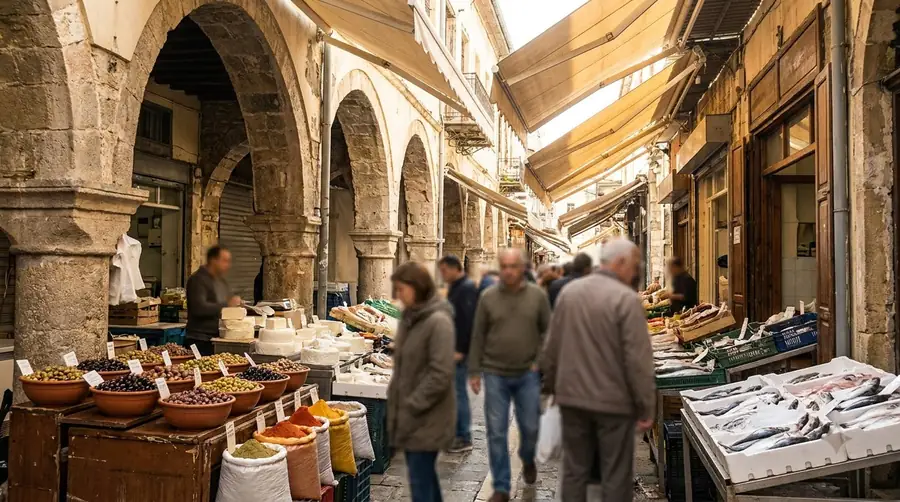
Many Greeks will tell you that Thessaloniki, the second city, has the best food in Greece. Its cooking mixes Macedonian, Ottoman, Jewish and Asia Minor traditions, and the city eats out all day. Breakfast is bougatsa, filo pie filled with warm custard and covered with icing sugar and cinnamon, or with cheese or minced meat, and a sesame koulouri from a street cart. At lunch, go to the Kapani and Modiano markets, and around them small restaurants serve soutzoukakia, meatballs with cumin in tomato sauce, a recipe brought by refugees from Smyrna in 1922. In the evening the Ladadika district fills with ouzeri and tsipouradiko bars, where every round of tsipouro comes with a plate of meze: mussels, grilled peppers, htipiti, the spicy feta dip. Finish with trigona Panoramatos, filo cones filled with cream. The food is also cheaper than on the islands.
Region 3 of 9
Ioannina and Epirus: Greek pies, mountain cheese and lake trout
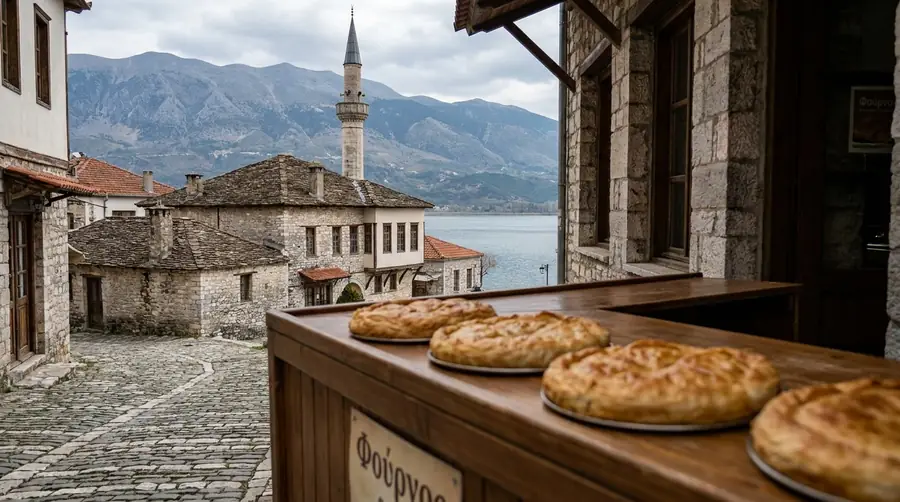
The mountains of Epirus, in the north-west, are the home of the Greek pie. Here pites are a whole meal, and almost anything goes between hand-rolled sheets of filo pastry: wild greens in hortopita, spinach and feta in spanakopita, cheese in tiropita, leek, pumpkin, or meat. The town of Ioannina, on a lake, has bakeries that make round pies in huge trays; buy a slice warm in the morning. In the villages of Zagori and in Metsovo, the cooking is shepherds’ food: lamb and goat, kontosouvli roasted on a spit, trout from the rivers, and strong mountain cheese such as metsovone. Ioannina is also known for its sweets, including baklava and syrup-soaked pastries. Few international visitors come this far, so the food is aimed at Greek travellers, and that is a good sign. Combine it with Meteora, two hours to the east.
Order hereHortopitaSpanakopitaKontosouvliBaklava
Region 4 of 9
Crete: dakos, kalitsounia, Cretan cheese and raki
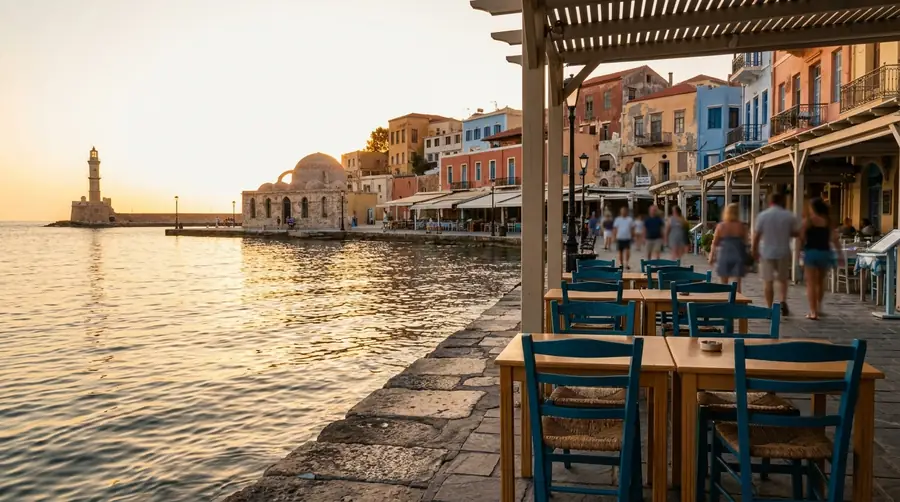
Crete has its own Greek cuisine, and for many food lovers it is the best reason to visit Greece. The Cretan diet, the model for the Mediterranean diet, is built on olive oil, wild greens, pulses, cheese, a little meat and lots of herbs. Start a meal with dakos: a hard barley rusk topped with grated tomato, crumbled mizithra cheese, olive oil and oregano. Then order kalitsounia (small cheese or greens pies), boiled wild greens called horta, snails fried with rosemary, and lamb with stamnagathi greens. Gamopilafo, the wedding pilaf, is rice cooked in meat stock, and staka, a rich butter cream, is eaten with fried eggs or bread. The hard cheese graviera from Crete is excellent. Meals end with a small glass of raki (tsikoudia), often brought free with fruit. Chania in the west is the best base for food; our Crete itinerary covers the whole island.
Order hereDakosKalitsouniaGamopilafoRaki
Region 5 of 9
Santorini and the Cyclades: fava, tomato fritters and assyrtiko wine
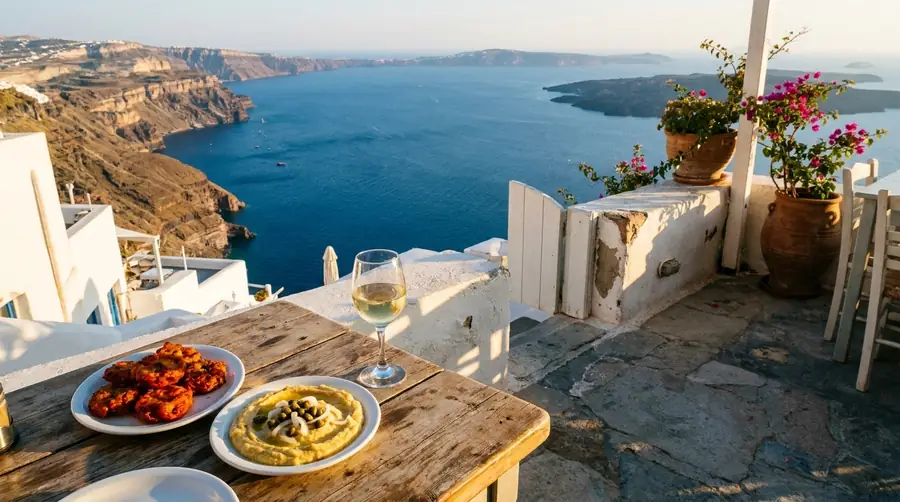
Santorini’s volcanic soil and lack of rain produce small, intense crops, and the island’s dishes are built on them. Fava here is a smooth purée of yellow split peas, not broad beans, topped with olive oil, raw onion and capers. Tomatokeftedes are fritters of the island’s tiny, sweet cherry tomatoes with mint. White aubergines, sweet and not bitter, are grilled or made into a salad, and the soft goat’s cheese chlorotyri appears on salads. Santorini is also a wine island: the vines are trained into low baskets to protect the grapes from the wind, and assyrtiko is the crisp white wine to drink with grilled fish and seafood. Vinsanto is the sweet wine. Caldera restaurants charge for the view, so eat in villages such as Pyrgos or by the sea at Ammoudi. Plan the island with how many days in Santorini, and see things to do in Santorini for what to do between meals.
Region 6 of 9
Naxos and Mykonos: Cycladic cheese, potatoes and kitron
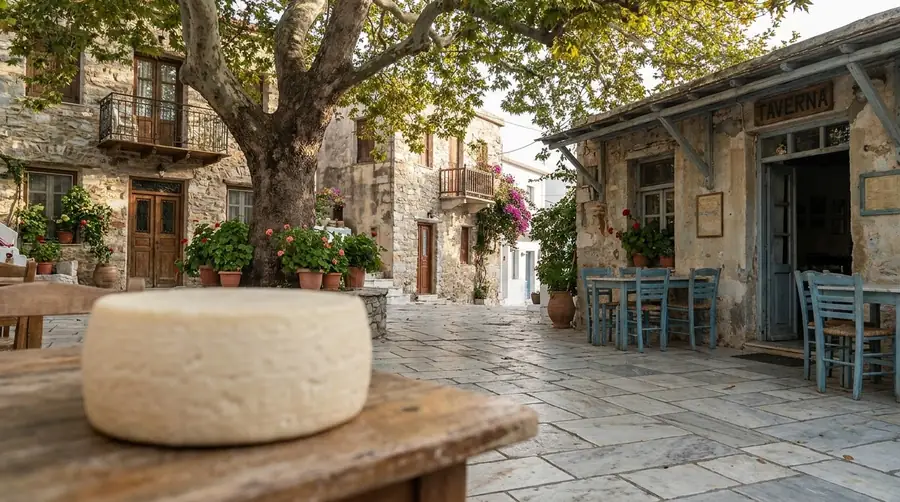
Naxos is the farm of the Cyclades. It is green and big enough for cows, sheep and potatoes, and it feeds the smaller islands around it. Its cheeses are the stars: graviera of Naxos, a nutty hard cheese, and arseniko, a sharp aged one. Naxos potatoes are famous across Greece, and they come as chips with almost everything. In the mountain villages such as Halki and Apiranthos, tavernas cook rooster in wine, goat and slow-roasted pork. The local spirit is kitron, made from the leaves of the citron tree, and the old distillery in Halki is open to visitors. On Mykonos, ask for kopanisti, a peppery soft cheese, and louza, cured pork with spices. Island grills serve souvlaki, lamb chops and grilled octopus by the sea. See where to stay in Naxos or where to stay in Mykonos.
Order hereSaganakiPaidakiaGrilled octopusSouvlaki
Region 7 of 9
Rhodes and the Dodecanese: pitaroudia, honey and sesame sweets
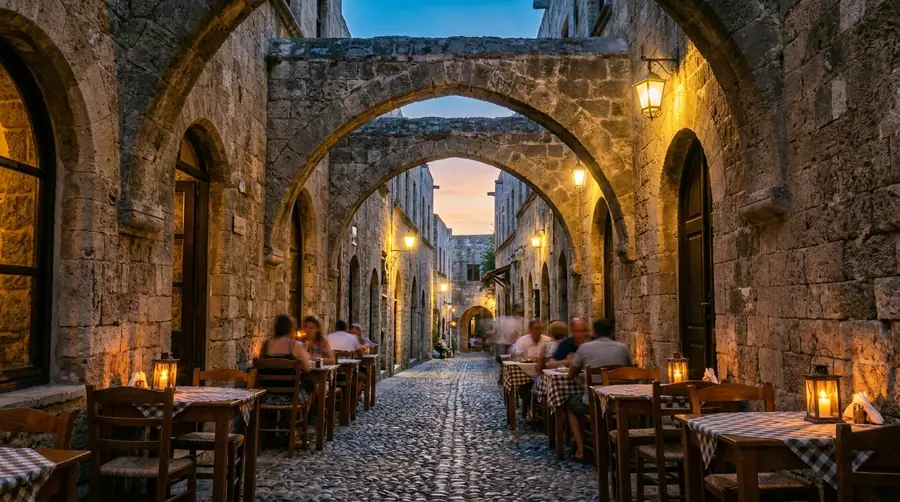
Rhodes, close to the coast of Turkey, cooks with chickpeas, sesame, cumin and honey. The island’s best-known dish is pitaroudia, fritters of chickpeas or tomato with mint and onion. Matsi is a local fresh pasta, often served with onions and grated cheese. Fish tavernas in fishing villages such as Kamiros Skala and Lindos grill whatever came in that morning; ask what is fresh and pay by the kilo. Inside the medieval old town, the restaurants are mostly for visitors, so walk to the new town or out to the villages for better food. Melekouni, a bar of sesame seeds and thyme honey with spices, is a protected Rhodes sweet once given at weddings. Souma, a clear grape spirit, is the local drink. Nearby Symi is known for its small sweet shrimps, eaten fried whole. Our where to stay in Rhodes guide covers the island’s towns.
Order herePitaroudiaGrilled octopusMelekouni
Region 8 of 9
Corfu and the Ionian islands: pastitsada, sofrito and Venetian flavours
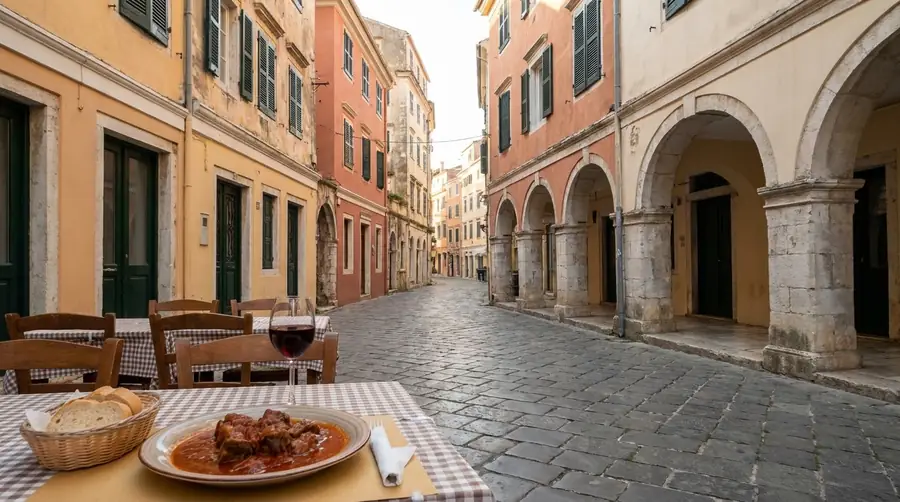
Corfu was ruled by Venice for four centuries and never by the Ottomans, so its cooking tastes different from the rest of Greece. The famous Corfu dishes have Italian names. Pastitsada is rooster or beef cooked slowly in a spiced tomato sauce and served over thick pasta, a Sunday lunch dish. Sofrito is thin veal cooked in white wine, garlic, vinegar and parsley. Bourdeto is fish, often scorpion fish, stewed with plenty of red pepper; it is hot. The island also grows kumquats, brought by the British, and they turn up as liqueur, sweets and jam. Corfu’s old town, a UNESCO site, is the best place to eat, with tavernas in the narrow lanes. The other Ionian islands, Kefalonia and Zakynthos, add their own meat pies and wines.
Order herePastitsadaSofritoBourdeto
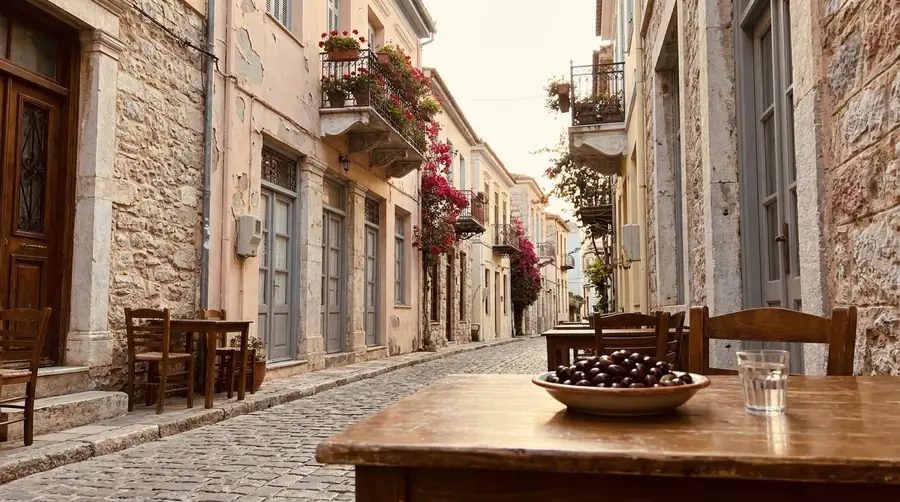
Region 9 of 9
The Peloponnese: Kalamata olives, smoked pork and Nemea wine
The Peloponnese grows much of the olive oil of Greece, and its most famous product is the Kalamata olive, dark purple and almond-shaped, from the groves around Kalamata in Messinia. In the Mani, the wild southern peninsula, cooks smoke pork with sage to make siglino and fry it into kagianas, scrambled eggs with tomato. Lalangia are twisted strips of fried dough. Inland, Nemea makes red wine from the agiorgitiko grape, and Monemvasia gives its name to the old sweet wine called malmsey. Nafplio, the first capital of modern Greece, is the easiest base: an elegant old town with tavernas, two hours from Athens, close to Mycenae, Epidaurus and the Nemea wineries. Along the coast, fish tavernas serve grilled sardines, fried calamari and octopus. Add it to a Greece itinerary as a road trip from Athens.
Order hereKagianasGreek saladLoukaniko
How a Greek meal works: from appetizer to main course
A full Greek meal is made for sharing. Nobody orders an appetizer and a main course just for themselves; the table orders several plates and everyone eats from the middle. Bread arrives first, often with a small cover charge, and a jug of tap water is usually served free. Food is central to Greek culture, and a long lunch with family or friends on a Sunday or a holiday can last all afternoon.
- Mezedes
- The appetizer course, small plates to share: dips, cheese, fried vegetables, grilled sausage, olives.
- Salata
- Salad, ordered for the table. Horiatiki is the Greek village salad.
- Magirefta
- Cooked dishes made earlier in the day in the oven or on the stove: moussaka, stews, stuffed vegetables.
- Tis oras
- “Of the hour”: grilled to order, such as lamb chops, souvlaki or fish.
- Ladera
- Vegetables cooked slowly in olive oil and tomato, such as green beans or okra. A main for some, a side dish for others.
- Glyko
- Dessert, often brought free with fruit or a small glass of raki.
More traditional Greek dishes to try in Greece
These classic Greek dishes appear on menus all over the country, and they are the popular choices at most Greek tavernas, so you can order them almost anywhere. Authentic Greek food is simple, and the tastiest versions are usually the plainest.
Greek salad: what a real horiatiki looks like
A real Greek salad has no lettuce. It is tomato, cucumber, onion, green pepper and olives, with a whole slab of feta cheese on top, dried oregano and olive oil. Mop up the juices with bread. On Crete it often comes with a rusk; on the islands, with capers.
Spanakopita and other flaky filo pies
Savoury pies are traditionally made with phyllo (filo) pastry rolled by hand, and a good bakery pie is crispy and flaky on top and soft inside. Spanakopita, the spinach and feta pie, is the best known; tiropita is the cheese version. Buy them at a bakery in the morning, not at a taverna at night.
Saganaki: pan-fried Greek fried cheese
Saganaki is named after the small two-handled pan it is cooked in. A slice of hard cheese is pan-fried until golden and served with lemon. The flaming version, lit at the table with a shout of “opa”, was invented by Greek restaurants in Chicago, not in Greece.
Moussaka
The best-known Greek dish abroad: aubergine, potato and minced meat in tomato sauce, topped with a creamy béchamel sauce and baked. The moussaka recipe most tavernas follow today, with its thick creamy béchamel top, was written down by the chef Nikolaos Tselementes in the 1920s. Order it where it is made that morning; it is usually served warm rather than piping hot.
Pastitsio
Often called Greek lasagne: tubes of pasta, minced meat (ground meat) cooked with tomato and cinnamon, and béchamel, baked in the oven and cut into squares.
Avgolemono and the egg-lemon sauce
Egg and lemon juice are beaten together and stirred into hot chicken stock with rice to make avgolemono soup. The same lemon sauce goes over dolmades, meatballs and lamb with greens.
Lamb kleftiko and roast lamb
Lamb is the meat of celebration in Greece. Kleftiko is roasted slowly in a sealed pot or paper with garlic and lemon; at Easter, whole lambs turn on spits over charcoal in every village.
Gemista and Greek stuffed onions
Tomatoes and peppers filled with rice and fresh herbs, baked with potatoes in olive oil. Order them in summer, when the vegetables are ripe. In the north and on Lesvos, look for sogania, Greek stuffed onions filled with minced meat and rice.
Greek comfort food: stew, meatball and orzo dishes
Every Greek family has its own comfort food, cooked on a Sunday or when someone is ill. These are the hearty dishes Greeks miss when they live abroad.
Stifado, the Greek beef stew
A beef stew with lots of small whole onions, red wine, tomato, cinnamon and bay. On the islands it is often made with rabbit or octopus.
Keftedes and soutzoukakia: Greek meatballs
Greek meatballs are made with minced meat, grated onion, soaked bread, mint and oregano, then fried. Keftedes are eaten as meze with a dipping sauce such as tzatziki; soutzoukakia are longer, scented with cumin and cooked in tomato sauce. Bifteki, a flat Greek-style burger often stuffed with feta, is the grilled version.
Giouvetsi with orzo
Lamb or beef baked in a clay pot with orzo (kritharaki) pasta and tomato sauce, finished with grated cheese.
Fakes, Greek lentil soup, and fasolada
Fakes is a soup made with brown lentils, garlic, bay and a splash of vinegar. Fasolada, the white bean soup with tomato, carrot and celery, is often called the national dish of Greece. Both are cheap, filling and eaten with bread, olives and a piece of feta.
Greek street food and quick bites: gyros vs souvlaki
Both are Greek fast food, and both come in pita bread with tomato, onion, tzatziki and a few chips (French fries). Souvlaki is small cubes of pork or chicken grilled on a skewer; cooks marinate the meat in olive oil, lemon and oregano, and the marinade keeps it juicy. Gyros is meat stacked on a vertical rotisserie and sliced thin as it cooks, a cousin of the Turkish doner kebab. Pork is the most common meat for both in Greece. In Athens a “souvlaki” can mean the whole wrap, whatever the meat inside, so point at the spit if you want gyros. Other quick bites: a koulouri, a slice of cheese pie, fried squid (kalamarakia) in a paper cone by the sea, or loukoumades.
Greek desserts and sweet treats
Greek pastry shops (zacharoplasteia) sell sweet treats soaked in sweet syrup or honey, and they are an important part of Greek culture at name days and holidays.
Baklava and galaktoboureko
The two most popular Greek desserts. Baklava layers filo with walnut or pistachio and sweet honey syrup; galaktoboureko is a custard pie, semolina custard baked in filo and soaked in syrup.
Greek yoghurt with honey
Thick, creamy Greek yoghurt (sold as Greek yogurt abroad, and called strained yogurt by food writers) is made from cow’s or sheep’s milk. Eaten with thyme honey and walnuts, it is a delicious Greek dessert and a hotel breakfast.
Loukoumades and cake
Loukoumades are small fried dough balls with honey and cinnamon, among the oldest sweets in Greece; a similar fried treat was given to winners in Ancient Greece, the story goes. Portokalopita is an orange cake made with filo, and vasilopita is the cake made for New Year, with a coin hidden inside.
Greek drinks: ouzo, wine and Greek coffee
Ouzo is an anise liquor that turns cloudy with water and ice; drink it slowly with meze, never on its own. Tsipouro and Cretan raki are clear grape spirits. Greek wine is better than its reputation: assyrtiko from Santorini, agiorgitiko from Nemea and xinomavro from Naoussa are the names to know, and house wine comes by the kilo. Greek coffee is boiled in a small pot and served with the grounds; order it metrio for medium sweet. In summer, everyone drinks iced coffee: frappé or freddo espresso.
When to eat what: Greek food by season
Greek cooking follows the market and the church calendar. Plan the trip around a season and order what is in season. Our Greece itinerary covers the route around the Greek Islands and the mainland.
- Spring (March to May): wild greens, artichokes, broad beans and Easter. Easter Sunday means lamb on the spit, red-dyed eggs and the sweet bread tsoureki, after magiritsa soup at midnight.
- Summer (June to August): tomatoes, aubergines, courgettes and watermelon, gemista, grilled fish and octopus by the sea.
- Autumn (September to November): the grape harvest, new olive oil, chestnuts, and pomegranates.
- Winter (December to February): stews, bean soups, pies, oranges, and melomakarona and kourabiedes at Christmas.
During Lent and other fasting periods, tavernas offer nistisima, dishes without meat or dairy, which makes Greece easy for vegetarian and vegan travellers.
Ordering words
- To logariasmo, parakalo
- The bill, please.
- Efharisto
- Thank you.
- Kalí órexi
- Enjoy your meal.
- Nero
- Water. Tap water is often served free in a jug.
- Hima krasi
- House wine from the barrel, by the quarter, half or full kilo.
- Yia mas
- Cheers.
- Horis kreas
- Without meat.
- Ti einai frésko?
- What is fresh? Ask this about fish.
When Greeks eat
Greeks eat lunch late and dinner later. Tavernas on the islands serve all day in summer, but in cities many locals sit down for dinner after 9 pm.
A typical day
- ProinoAbout 7–10 amCoffee and a pie or koulouri on the go.
- MesimerianoAbout 2–5 pmLunch, often the main meal.
- Ouzo and mezeAbout 6–8 pmA drink with small plates.
- VradinoFrom about 9 pmDinner, often until late.
Typical times, not opening hours. Check each place.
Live prices
Hotels near the food in Athens, with live prices
Prices appear on the pins once dates are set. We pre-fill a week about a month ahead; change the dates on the map to see yours.
Famous Greek food: FAQ
What is the most famous Greek food?
Moussaka, souvlaki, gyros, Greek salad, spanakopita, tzatziki and baklava are the most famous Greek dishes. Each tastes best in Greece, where they are made with local olive oil, feta and vegetables.
What is the national dish of Greece?
There is no official national dish. Fasolada, a white bean soup, is the traditional answer; moussaka and souvlaki are the dishes most visitors name.
What is traditional Greek food?
Traditional Greek food is simple Mediterranean cooking: olive oil, vegetables, pulses, bread, cheese, fish and some meat, with herbs such as oregano, mint and dill. Each region adds its own dishes.
What do Greeks eat for breakfast?
Usually something small: a Greek coffee or frappé with a cheese pie, a koulouri, or bougatsa in Thessaloniki. Greek yoghurt with honey is more common in hotels than in Greek homes.
Which part of Greece has the best food?
Crete is the classic answer for its olive oil, cheese and wild greens. Thessaloniki is known for street food and sweets, and Athens has the widest choice.
Is Greek food vegetarian friendly?
Yes. Many meze, salads, pies, bean dishes and ladera vegetable dishes have no meat, and during fasting periods tavernas offer dishes without meat or dairy.
Where should I stay in Greece for food?
Athens for a first trip, Chania on Crete if food is the main reason to travel, and Thessaloniki for street food and sweets.
Keep planning Greece
- Where to Stay in Rhodes: You Are Picking a Side, Not a Town
- Where to Stay in Naxos: The Beds Are All on One Beach
- Where to Stay in Crete: Three Cities on One Road
- Where to Stay in Mykonos: Every Beach Is a Dead End
- Where to Stay in Santorini: The Caldera Side Has No Beaches
- Where to Stay in Athens: Best Areas Near the Acropolis
- How Many Days in Santorini? Three, and You Are Buying Hours Not Sights
- How Many Days in Athens? Two Is the Honest Answer
Written and checked by
Triplarks Editorial
An editorial desk, not an invented persona: research, drafting and fact-checking are done by the same small team. Every number here carries the date it was read.