Quick answer where to stay if you are here to eat
The centro: the markets, the street food and the restaurants in this guide are all within walking distance. Jalatlaco, just east, is quieter and full of small guesthouses.
On this page
- Oaxacan food is one dough in many shapes
- Tlayudas: the big one
- Memelas, tetelas and the smaller masa
- Tamales in Mexico, and why Oaxaca wraps them in banana leaf
- Mole in Oaxaca: the seven moles
- The best tacos in Oaxaca and the meat at Mercado 20 de Noviembre
- Oaxaca cheese: quesillo and the rest
- Chapulines, chicatanas and the things people ask about
- Where to eat in Oaxaca: markets, Oaxaca street food stands and restaurants
- The best restaurant in Oaxaca City, and the upscale end
- Foods and drinks: mezcal, hot chocolate and tejate
- A short glossary before you go to Oaxaca
- An Oaxaca food tour or a cooking class?
- Vegetarian in Oaxaca
- Breakfast, lunch and dinner: how the day is eaten
- Beyond the city: Tlacolula and the region of Oaxaca
- Frequently asked questions
The menu in a comedor in Oaxaca City reads like a list of words you do not know. Tlayuda, memela, tetela, empanada, tamal, quesadilla, molote.
Some links below are affiliate links. We may earn a commission if you book through them, at no extra cost to you. We do not rank hotels, and any prices on the map come live from the booking sites.
They are all the same thing. Every one of them is masa, corn dough made from maize cooked with lime, pressed or folded into a different shape and cooked on a comal, a flat clay griddle. What changes is the shape, the filling and the salsa. Once you see that, the whole menu decodes itself and you stop ordering the only word you recognize. For the coast, see our guide to Oaxaca’s beaches.
The second axis is mole. Oaxaca is famous as the land of seven moles, and a mole sauce is defined by its chiles rather than by its meat. Between those two ideas, corn and chile, sits almost all the best food in Oaxaca.
Dish descriptions, market names and market days read 10 September 2026. Opening hours change, and we do not print prices, so check locally.
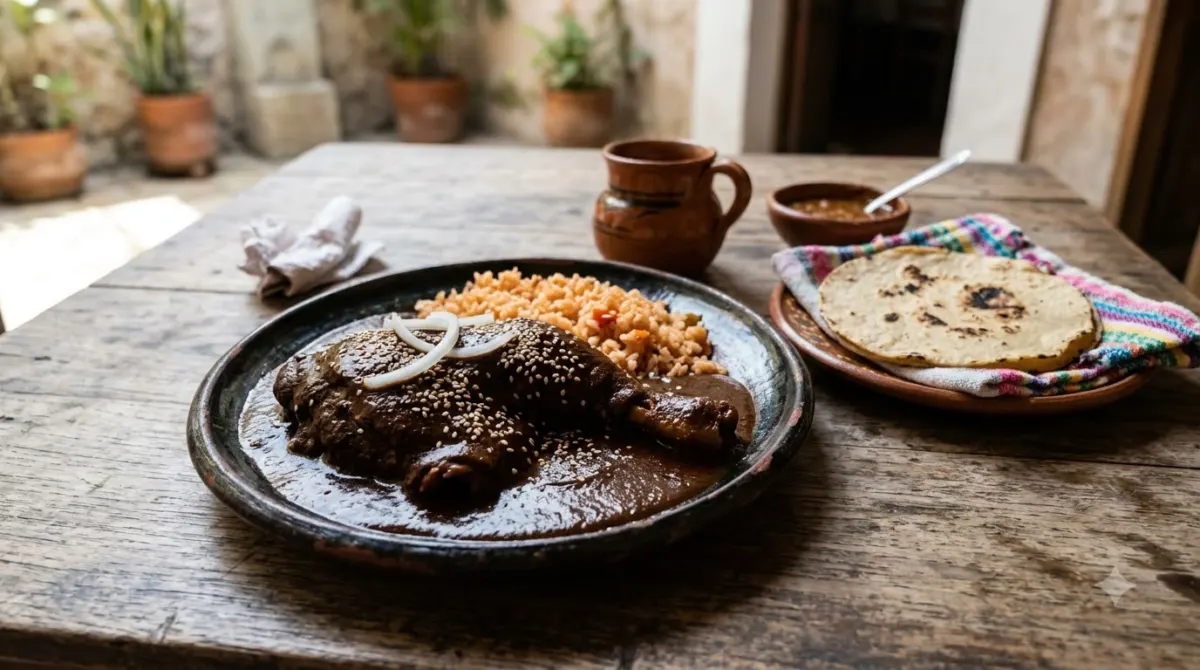
Oaxacan food is one dough in many shapes
Here is the grid. Every row is masa on a comal, and the difference is geometry.
| Shape | What it is | Where to eat it |
|---|---|---|
| Tortilla | Thin flat round, the base of everything | Everywhere, all day |
| Tlayuda | Huge crisp tortilla, loaded and folded | Street stalls, late at night |
| Memela | Thick oval with a pinched rim | Breakfast, market food stands |
| Tetela | Triangle folded around a filling | Market food stalls |
| Tamale | Steamed in a banana leaf | Morning street stands |
| Empanada | Half moon folded over mole | Markets, lunch |
| Quesadilla | Folded with quesillo inside | Anywhere, any time |
| Molote | Stuffed masa, fried | Street food carts |
If you eat three things in Oaxaca: a tlayuda, a plate of mole negro, and grilled tasajo from the smoke aisle at the 20 de Noviembre market. Everything else is bonus. That is the short version of any guide to Oaxaca City and its delicious food.
Tlayudas: the big one
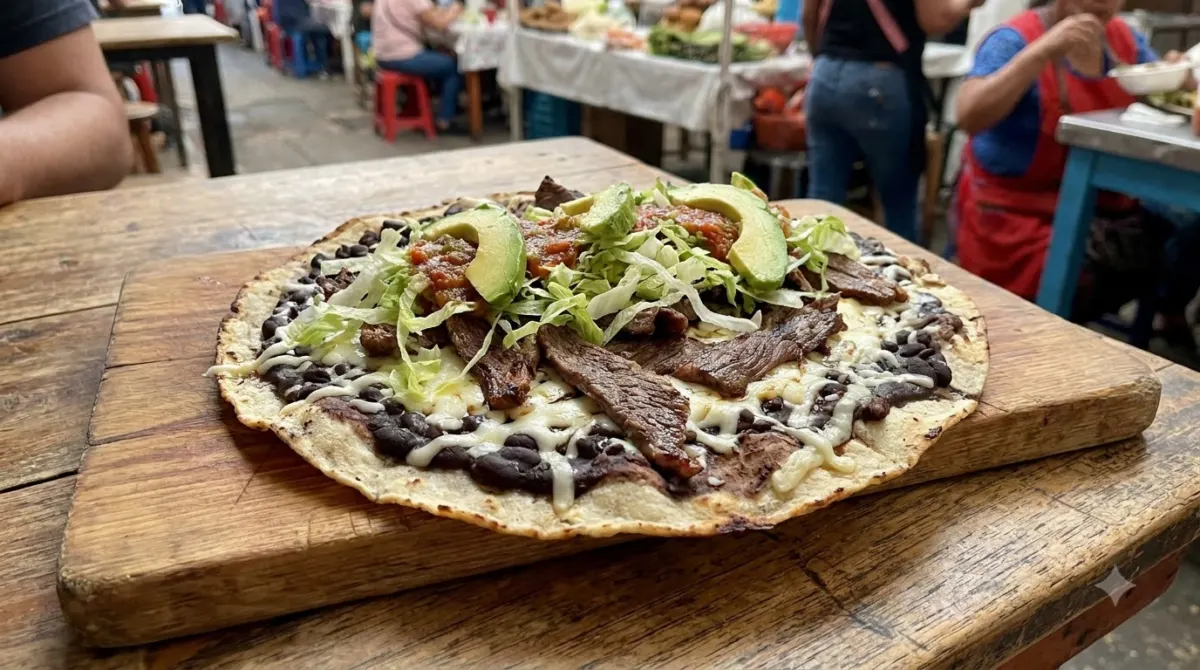
- A tlayuda is a tortilla about thirty centimeters across, dried hard rather than fresh, then heated over charcoal until it blisters.
- The base layer is asiento, unrefined pork lard, then black beans, then quesillo, then whatever meat you chose.
- Tasajo is thin salted beef, cecina is chile-rubbed pork, and chorizo is chorizo. Those are the three standard choices.
- It comes open like a pizza or folded in half and grilled shut. Folded is the traditional way and the better one.
- It is late-night food. The best tlayuda stands set up in the evening and work until the small hours.
- One tlayuda feeds two people unless you have skipped lunch, which is a reasonable plan.
- It should be crispy, not chewy. If it bends, it has been sitting; a traditional Oaxacan tlayuda cracks when you fold it.
Memelas, tetelas and the smaller masa
- A memela is a thick oval with a pinched rim to hold the toppings: asiento, beans, salsa and crumbled white cheese. It is the standard Oaxacan breakfast.
- Tetelas are triangles, folded around beans or quesillo and toasted on the comal. Simple, cheap and extremely good.
- Empanadas here are not pastry. They are a masa half-moon folded around mole amarillo or squash blossom and cooked on the griddle.
- A molote is stuffed masa deep fried, usually with potato and chorizo, and it is the least virtuous item on any menu.
- Entomatadas and enfrijoladas are tortillas bathed in tomato or bean sauce, and they are the lunch dish people order when they are not very hungry.
- All of these come from the same dough, which is why a market food stall can offer twelve items from one bucket of masa. It is the single most useful thing to understand when visiting Oaxaca.
Tamales in Mexico, and why Oaxaca wraps them in banana leaf
- Most tamales in Mexico are wrapped in corn husk. Oaxaca uses banana leaf, which makes them flatter, moister and slightly herbal.
- Tamal de mole negro is the classic: chicken and mole, steamed until the masa sets around it.
- They are breakfast. The tamale stands are on the street from about seven in the morning and gone by mid-morning.
- A tamal in a torta, in a bread roll, is a real and much-loved thing here. Carbohydrate inside carbohydrate.
- Anise and hoja santa turn up in the sweeter and the greener versions respectively.
Mole in Oaxaca: the seven moles
A mole is a sauce built on chiles, thickened with seeds, nuts or bread, and defined by color. The moles of Oaxaca are the reason Oaxacan cuisine is treated as a regional cuisine in its own right rather than as Mexican food with a local accent.
- Mole negro is the famous one: chilhuacle chiles burned almost to charcoal, plus cocoa bean, almond, pumpkin seed, plantain and around thirty ingredients. Dark, complex, faintly bitter, barely sweet.
- Mole coloradito is red, softer, more tomato and ancho. It is the one most visitors prefer and nobody admits it.
- Mole amarillo is yellow, thinner, built on guajillo and thickened with masa, usually with vegetables and often served as a soup with chochoyotes, small masa dumplings.
- Mole verde is green with tomatillo, hoja santa and epazote, fresh rather than deep, and usually with pork and white beans.
- Chichilo, manchamanteles and estofado complete the seven. Chichilo is the rarest and the hardest to find on a menu.
- Mole is not a chile con queso situation. It is not spicy in the burning sense. It is chile used for flavor, not heat.
- A good mole takes a day or more, which is why it is a fiesta dish and why the paste is sold by weight in every market. Buy a bag of it: it is the one thing worth carrying home.
- Mole is what separates this from Mexican cuisine in general. Oaxaca is known for these seven the way Champagne is known for one grape blend, and nothing else in the country comes close.
The best tacos in Oaxaca and the meat at Mercado 20 de Noviembre
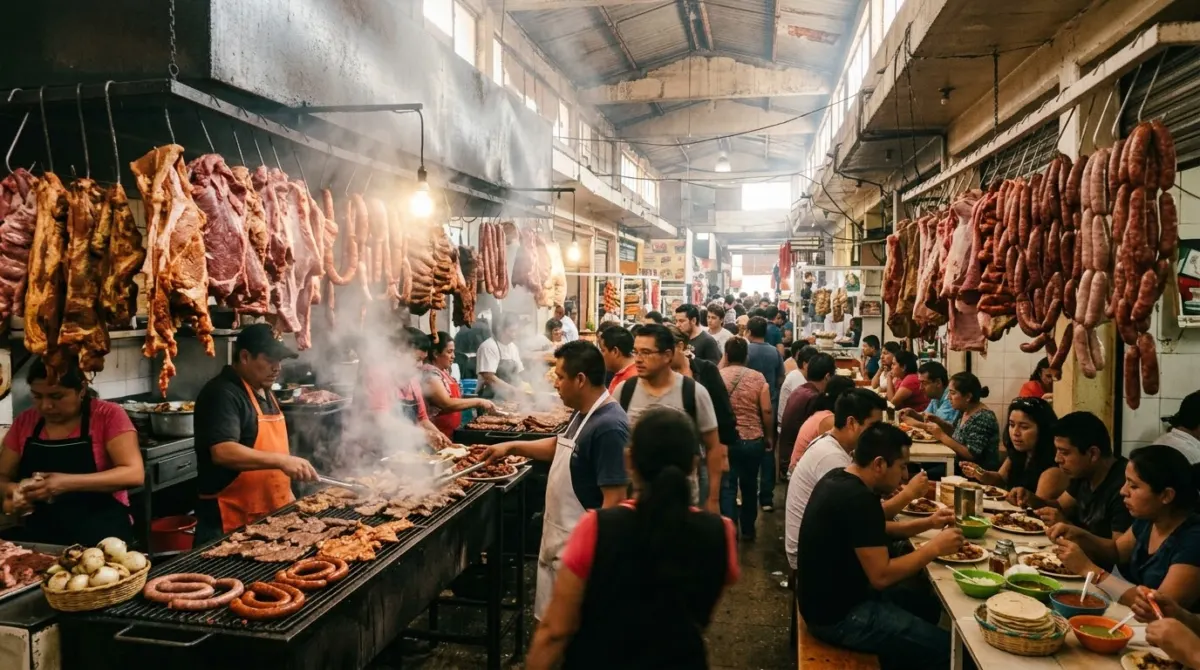
- The Pasillo de Humo, the smoke aisle inside Mercado 20 de Noviembre, is the single best food experience in the city of Oaxaca.
- How it works: you buy raw tasajo, cecina or chorizo by weight from one stall, hand it to a grill, and buy tortillas, spring onions, salsa and guacamole from the women working the aisle.
- You will leave smelling of smoke and it is worth it. It is the single best place in Oaxaca to eat and it costs almost nothing.
- The best tacos in Oaxaca are not a taqueria phenomenon the way they are in Mexico City. Here the meat comes off a grill and you build it yourself.
- Chicharrón, fried pork rind, is sold in sheets in every market and eaten with salsa and lime.
- Barbacoa and birria appear at weekend stands, and a caldo de res on a Sunday morning is the local repair job.
Oaxaca cheese: quesillo and the rest
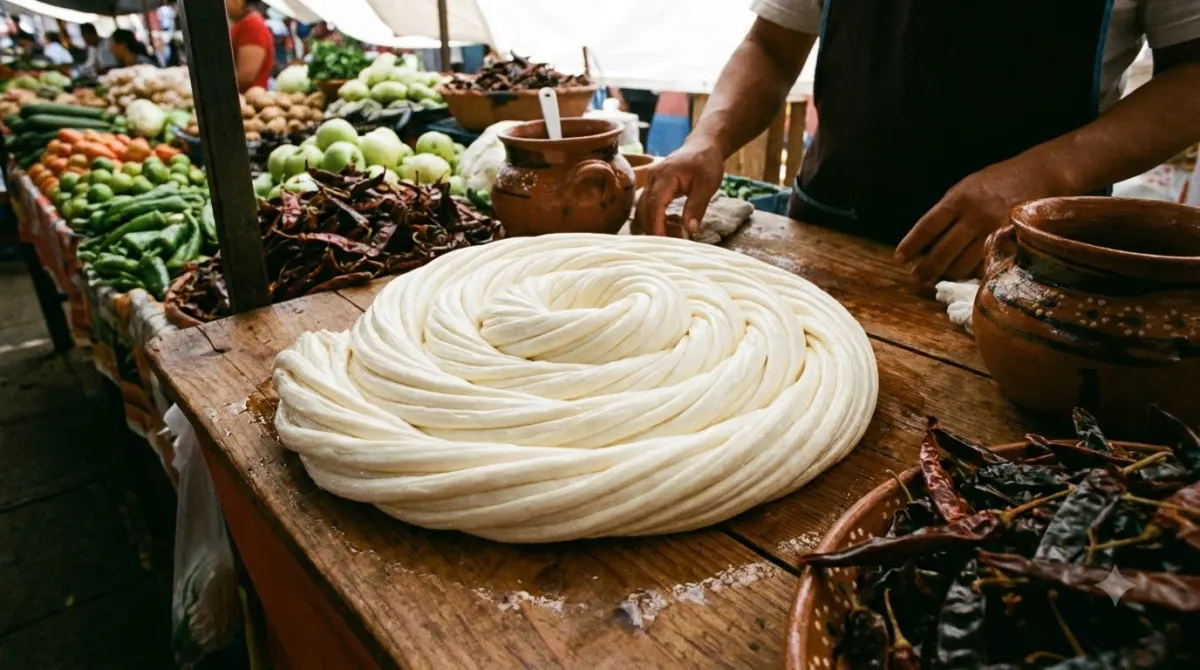
- Quesillo is the Oaxacan cheese everyone means: a white stretched-curd Oaxaca cheese sold in a coil and pulled apart in strands like mozzarella.
- It melts rather than browns, which is why it is inside every quesadilla and on top of every tlayuda.
- Queso fresco is the crumbly salty white cheese scattered over memelas and beans.
- Both come from Reyes Etla, a village north of the city, and the market cheese there is the reference version.
- Ask for it by the strand rather than by weight if you just want to eat some while you walk.
Chapulines, chicatanas and the things people ask about
- Chapulines are grasshoppers, toasted with lime, garlic and chile, sold by the bag in every market and eaten as a snack or scattered on a tlayuda.
- They taste of lime and chile more than of anything else, and the texture is closer to a crisp than to an insect.
- Chicatanas are flying ants, available only for a few days after the first heavy rains, and ground into a salsa that is genuinely one of the great sauces of Mexico.
- Huitlacoche is corn smut, a fungus that grows on the cob, and it tastes earthy and mushroom-like. It goes in quesadillas.
- Squash blossom, epazote and hoja santa are the three herbs and vegetables you will meet constantly and nowhere at home.
- None of this is a dare. It is ordinary food the indigenous peoples of the valley have eaten since long before Spain arrived, and you will find in Oaxaca that nobody treats it as unusual.
Map shows live availability and prices. We may earn a commission on bookings made through it, at no extra cost to you.
Where to eat in Oaxaca: markets, Oaxaca street food stands and restaurants
- Mercado 20 de Noviembre is the food market and where most visitors start. Go for the smoke aisle and the comedores along the sides.
- Mercado Benito Juárez next door is more produce, chocolate and chapulines than cooked food.
- Mercado de la Merced, a few blocks east, is where people who live in the centro actually eat breakfast.
- La Cosecha is the organic market, a covered courtyard of small food stands and a good soft landing if the big markets feel like a lot.
- Street food stands set up in the evening around the churches and on the streets north of Santo Domingo. Look for a queue of locals and join it.
- A food cart or food truck is not really the format here. Oaxaca street food is a folding table, a comal and a gas bottle, and the best places look like nothing at all.
The best restaurant in Oaxaca City, and the upscale end
- Casa Oaxaca is the name everyone knows, an upscale restaurant in the city center with a rooftop facing Santo Domingo, cooking Oaxacan dishes at a fine-dining level.
- Los Danzantes in a courtyard on Alcalá is the other landmark, and it makes its own mezcal.
- Criollo, Levadura de Olla and Origen are the other names that come up repeatedly in any Oaxaca food guide at that level.
- The honest note: upscale restaurants here are cooking the same dish from the same valley as the market comedores, plated and served with wine. The chef is better trained. The corn is the same corn. They are not better in the way the price gap suggests.
- Book ahead for the rooftop tables, especially around Day of the Dead.
- These are listed as landmarks, not recommendations. Nobody here has eaten in them and we do not print prices. Check current menus and book directly.
Foods and drinks: mezcal, hot chocolate and tejate
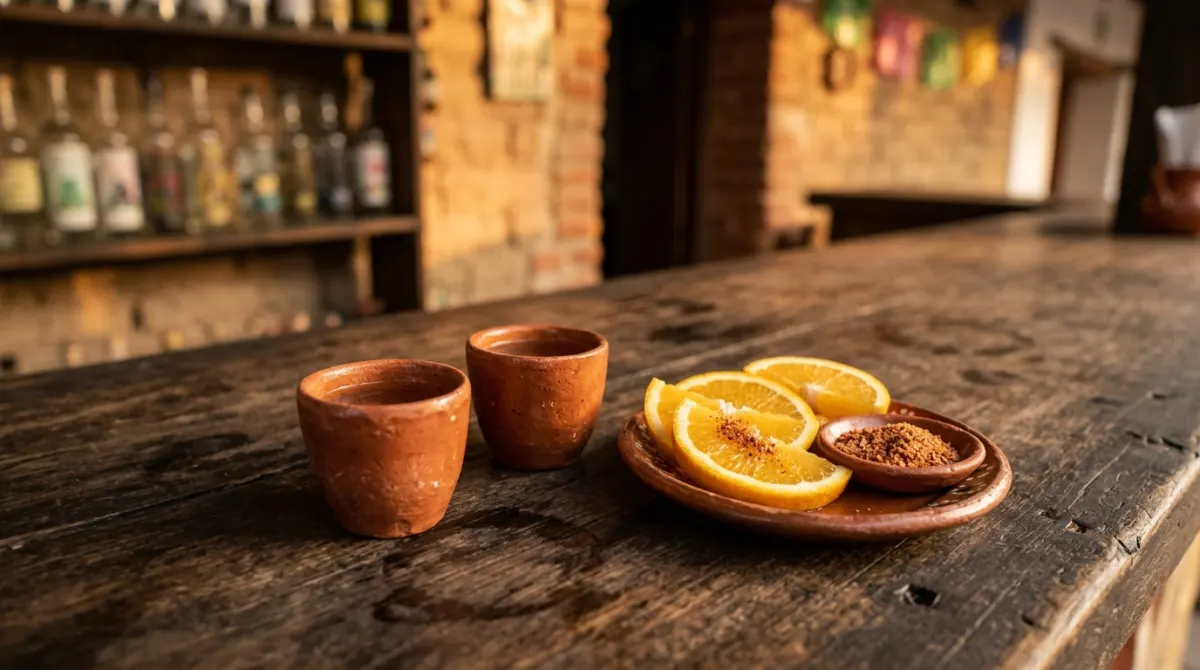
- Mezcal is distilled from agave roasted in an earth pit, which is where the smoke comes from. It is sipped, with orange and worm salt, and never shot.
- Oaxacan hot chocolate is made with water rather than milk, whisked to a foam, and flavored with cinnamon and almond. The cocoa bean is ground to order in the market.
- Tejate is the pre-Hispanic drink: maize, cocoa, mamey seed and flor de cacao, served cold from a big painted bowl with white foam on top.
- Agua de jamaica is hibiscus, agua de horchata here comes with cactus fruit and walnut on top, and both are sold by the liter.
- Oaxacan coffee from the Sierra is excellent and largely stays in the country.
- Nieves, the local ice cream, is sold on the plaza beside the Basílica de la Soledad in flavors including leche quemada and, yes, mezcal.
A short glossary before you go to Oaxaca
Worth knowing before you try the food, because none of these words appear on a translated menu.
- Masa is corn dough made from maize cooked in lime water. A corn tortilla is masa pressed thin. Maize is the staple food here and always has been.
- Comal is the flat clay or steel griddle everything is cooked on. Grilling over charcoal is the other method and the two cover most Oaxacan recipes.
- Antojito means the small masa snacks as a category: memelas, tetelas, molotes and the rest.
- Asiento is unrefined pork lard, closer to a flavoring than to butter, and it is spread under almost everything.
- Epazote (Dysphania ambrosioides) and hoja santa (Piper auritum) are the two herbs that make a dish taste Oaxacan rather than generically Mexican.
- Chile de agua is the local fresh chile pepper, and chilhuacle is the dried one that makes mole negro black.
- Salsa arrives on the table, not in the dish. That is where the heat lives.
- Black turtle beans, avocado, corn on the cob with mayonnaise and cheese, and a torta sandwich for the bus are the everyday things you will eat without noticing.
- Chile con queso is not Oaxacan. If you see it, you are in a place cooking for visitors.
An Oaxaca food tour or a cooking class?
- An Oaxaca food tour is the fastest way in. Three hours through a local market with someone who can tell you what everything is, which is not information you can read off a sign.
- A cooking class takes most of a day, starts with the market shop and ends with you grinding chiles for a mole. Casa Crespo and the Seasons of My Heart cooking school in Oaxaca are the long-established names.
- Do the tour first if you are doing both. The class makes far more sense once you can recognize the ingredients.
- A street food guide walking tour in the evening is the third option and the cheapest.
- Either one pays for itself in the meals you order correctly for the rest of the trip.
Vegetarian in Oaxaca
- It is easier than most of Mexico. Beans, quesillo, squash blossom, huitlacoche, nopales and mushrooms carry a lot of the menu.
- Watch the lard. Asiento is pork fat and it is the default base on memelas and tlayudas. Ask for them sin asiento.
- Mole amarillo and mole verde are often made with a meat stock even when served with vegetables.
- Tetelas, entomatadas and quesadillas are the reliable orders at any market food stall.
- Vegetarianism is well understood in the center and less so in the villages.
Breakfast, lunch and dinner: how the day is eaten
- Breakfast is early and savory: memelas, tamales from a street stand, eggs with salsa, and chocolate. Nothing sweet, and no butter.
- Comida is the main meal, around two or three in the afternoon, and the comida corrida set menu in a comedor is the best value meal in the country.
- Dinner is late and light, which is why the tlayuda exists.
- Sunday is the big family meal, and restaurants in Oaxaca fill from two o’clock.
- Nothing here is rushed. If you want to eat quickly, buy from a stall.
Beyond the city: Tlacolula and the region of Oaxaca
- Tlacolula de Matamoros holds the big Sunday market an hour east of the city, and it is where the valley trades. The barbacoa there is the reason to go early.
- Every village has a specialty: bread in Etla, mezcal in Santiago Matatlán, black pottery in Coyotepec. Oaxaca’s best cooking has always been village cooking.
- Oaxaca is a state as well as a city, and the coast in the far south cooks completely differently: seafood, coconut, and almost no mole.
- Southern Mexico shares ingredients with Chiapas and Guerrero, but the seven moles and the masa vocabulary are unique to Oaxaca.
- Diana Kennedy spent decades documenting this regional cooking, and her recipe books remain the reference if you want to go deeper than a trip allows. For anyone who reads food and travel writing, that is where to start before you go to Oaxaca.
- Oaxaca has to offer more than one week can hold, and the valley villages are where the rest of it is.
Planning the rest of the trip? See our guide to the best things to do in Oaxaca, which sorts the sights by how much of your trip each one eats.
More on this destination: Huatulco Oaxaca.
Frequently asked questions
What kind of food is Oaxaca known for?
Mole and tlayudas above all. Oaxaca is called the land of seven moles, with mole negro the most famous, and the tlayuda is the huge crisp tortilla loaded with beans, quesillo and grilled meat. Beyond those: tamales in banana leaf, memelas, quesillo cheese, chapulines and mezcal.
What is the best street food in Oaxaca?
Tlayudas from an evening charcoal stand, tamales from a morning street stall, and grilled tasajo from the Pasillo de Humo inside Mercado 20 de Noviembre. Memelas are the standard breakfast. Look for a stall with a queue of local people rather than a menu in English.
What are the seven moles of Oaxaca?
Negro, coloradito, amarillo, verde, chichilo, manchamanteles and estofado. Negro is dark, complex and made with burnt chilhuacle chiles and cocoa. Coloradito is red and milder. Amarillo is thin and often served as a soup. Verde is fresh, with tomatillo and herbs. Chichilo is the rarest.
Is Oaxacan food spicy?
Less than people expect. Chiles here are used for flavor and color rather than heat, and moles are complex rather than burning. The heat lives in the salsas on the table, which you control. Ask for salsa aparte if you want it on the side.
What is a tlayuda?
A tortilla about thirty centimeters across, dried hard then heated over charcoal, spread with pork lard and black beans, topped with quesillo and grilled meat, and usually folded in half and grilled shut. It is eaten late at night and one comfortably feeds two people.
What is Oaxaca cheese?
Quesillo, a white stretched-curd cheese sold in a coil and pulled apart into strands. It melts smoothly rather than browning, which is why it goes inside quesadillas and on top of tlayudas. The other one you will meet is queso fresco, crumbly and salty, scattered over memelas and beans.
Should I do a food tour or a cooking class in Oaxaca?
Do a food tour first. Three hours through a local market with a guide tells you what everything is, which no sign will. A cooking class takes most of a day, starts with the market shop and ends with a mole, and it makes far more sense once you can recognize the ingredients. Both are good value.
Are chapulines worth trying?
Yes, and they are not a dare. They are grasshoppers toasted with lime, garlic and chile, sold by the bag in every market, and they taste mostly of lime and chile with a texture like a crisp. Scatter them on a tlayuda rather than eating a handful cold.
Keep planning Mexico
Written and checked by
Triplarks Editorial
An editorial desk, not an invented persona: research, drafting and fact-checking are done by the same small team. Every number here carries the date it was read.