Quick answer
The city centre between George Square and the river for a short stay, with both stations on your doorstep. The West End for galleries, parks and better value, ten minutes away on the subway. Check what is on at the stadiums before deciding your dates are expensive for no reason.
On this page
- Where to stay in Glasgow: the short answer
- The city centre
- Merchant City
- Finnieston and the West End
- The Southside
- Getting around
- What the accommodation is like
- How many nights
- Glasgow or Edinburgh?
- What you are here for
- Glasgow with children
- The dates that fill the city
- Glasgow as a base
- What the districts feel like
- Getting between Glasgow and Edinburgh
- The short version
- Frequently asked questions
Glasgow is bigger than Edinburgh, less pretty, and more fun. It is a Victorian industrial city with grand architecture, the best music scene in Scotland, serious galleries and a food culture that Edinburgh does not match.
Some links below are affiliate links. We may earn a commission if you book through them, at no extra cost to you. We do not rank hotels, and any prices on the map come live from the booking sites.
It is also laid out differently: a grid centre, distinct districts, and a subway that runs in a circle. Where you stay changes the trip more than it does in Edinburgh. For the other bases, see where to stay in Edinburgh and where to stay in Inverness.
Where to stay in Glasgow: the short answer
| If you are | Stay in | Why |
|---|---|---|
| Here one or two nights | City centre, around George Square | Stations, shops, everything walkable |
| Here for bars, music and food | Merchant City or Finnieston | The two best eating and drinking districts |
| Here for the galleries and the university | West End | Kelvingrove, the park, Victorian terraces |
| Arriving by train from Edinburgh | Centre, near Queen Street | Trains arrive in the middle of town |
| Wanting value | West End or Southside | Cheaper, and a short subway ride |
One answer with no caveats: the city centre between George Square and the river. Both stations are there, the Merchant City is a five-minute walk, and the subway reaches the West End in ten minutes.
Map shows live availability and prices. We may earn a commission on bookings made through it, at no extra cost to you.
The city centre
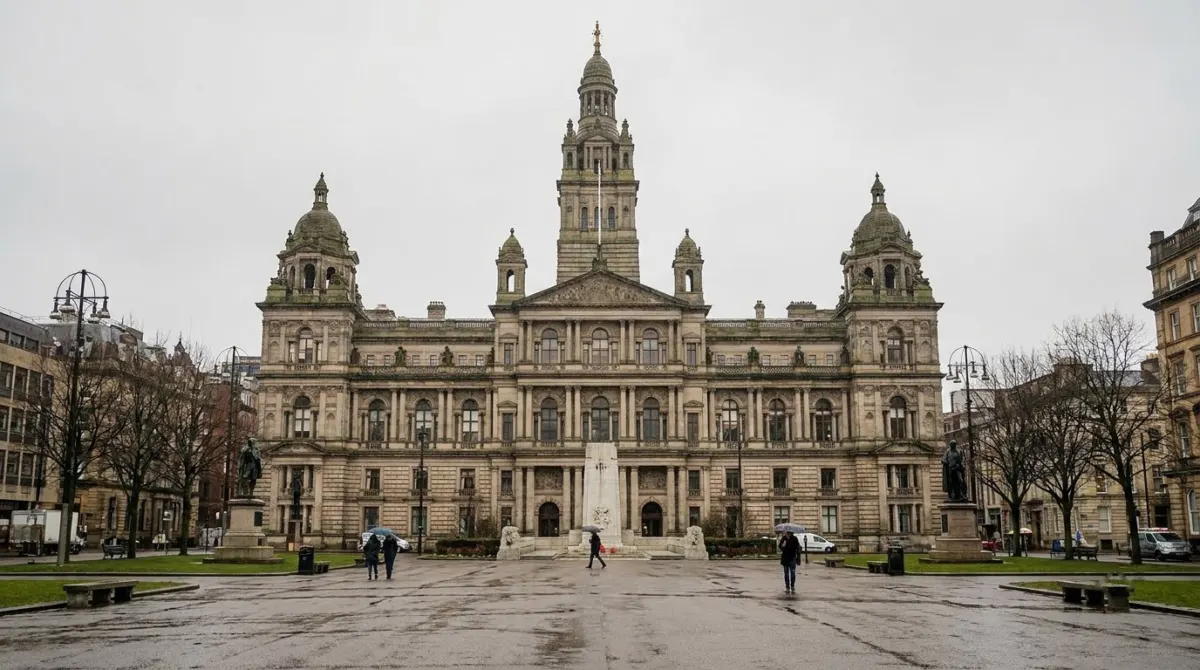
Glasgow’s centre is a grid on a slope, with George Square and the City Chambers at its heart and the two main railway stations — Central and Queen Street — a few minutes apart.
Staying here puts you within walking distance of the shopping streets, the Merchant City, the river and both stations. It is the practical choice for a short visit and it has the highest concentration of hotels.
The trade is character. Parts of the centre are quiet in the evening once the shops close, and some streets around the stations are rough late at night in the way city centres are.
Merchant City
East of George Square, the Merchant City is the old warehouse district: eighteenth and nineteenth-century buildings converted into bars, restaurants and flats.
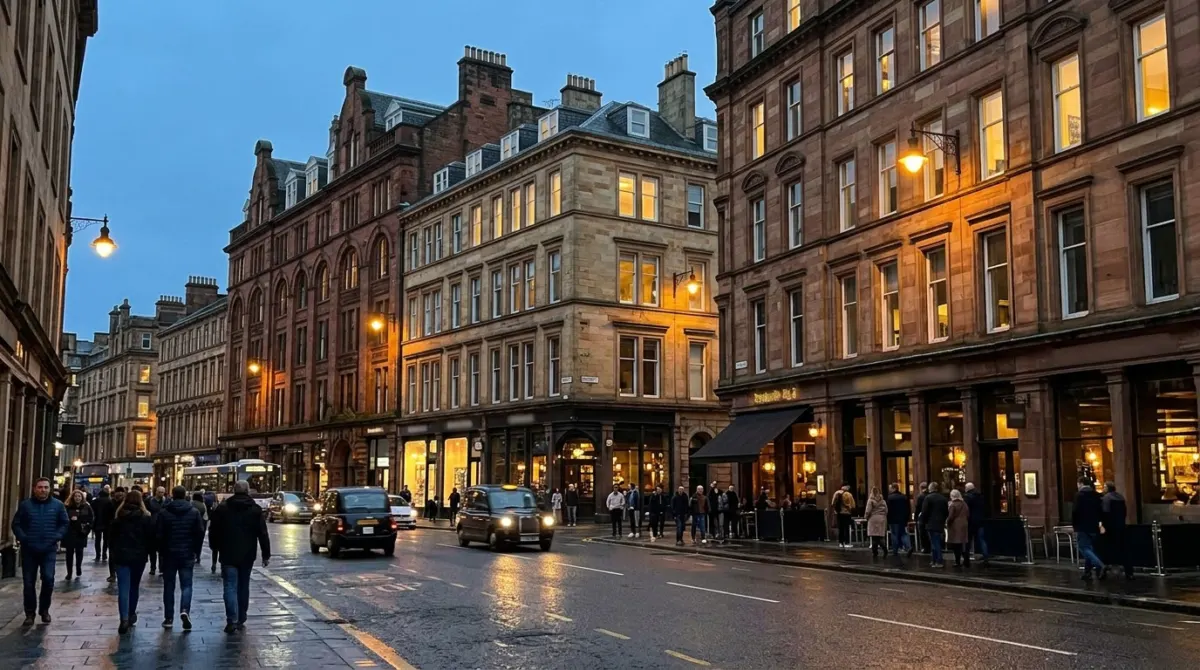
It is the liveliest central area in the evening and it is walkable to everything. Rooms here are mostly apartments and converted buildings rather than large hotels.
Good for a weekend. Loud at weekends, which is the same thing said twice.
Finnieston and the West End
Finnieston, west of the centre along Argyle Street, has been Glasgow’s restaurant district for a decade: a long run of small restaurants and bars, with the conference and concert venues beside it.
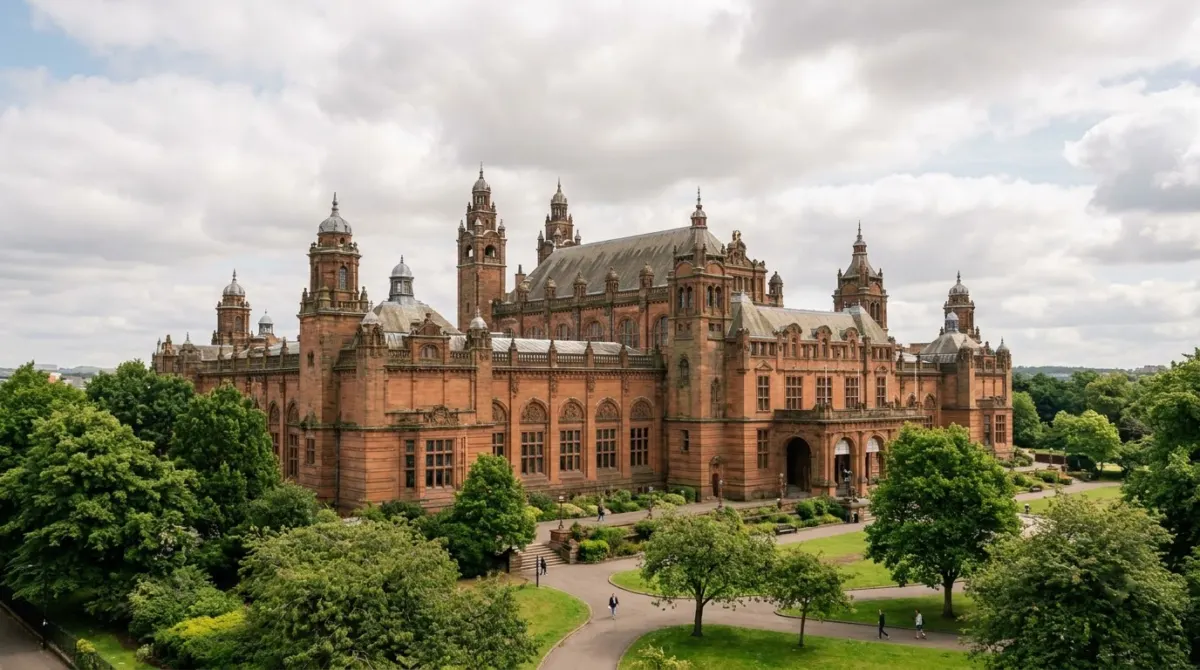
Beyond it, the West End around the university is the handsome part of Glasgow: Victorian terraces, Kelvingrove Park, the Kelvingrove Art Gallery — free, and one of the best museums in Britain — and the streets around Byres Road.
The West End is ten minutes from the centre on the subway and is where many visitors wish they had stayed. Rooms are often better value, and the area has a settled, residential feel.
The Southside
South of the river, the Southside is residential, cheaper and largely unvisited. It holds Pollok Country Park and the Burrell Collection, and the streets around Shawlands and Queen’s Park have a growing run of restaurants.
It is a subway or train ride from the centre. Worth considering for value or a longer stay, and not for a first two-night visit.
Getting around
Glasgow’s subway is a single circular line, one of the oldest underground railways in the world, and it connects the centre, Finnieston and the West End in minutes. It does not go south-east or to the airport.
Trains run everywhere else, including to Edinburgh in about fifty minutes from Queen Street. Buses fill the gaps.
The airport is about twenty-five minutes by bus from the centre. There is no rail link.
The centre is walkable but hilly in places, and the distances between districts are real: the West End is two and a half kilometres from George Square.
What the accommodation is like
Glasgow is consistently cheaper than Edinburgh, which is the main practical argument for basing here and taking the train east for a day.
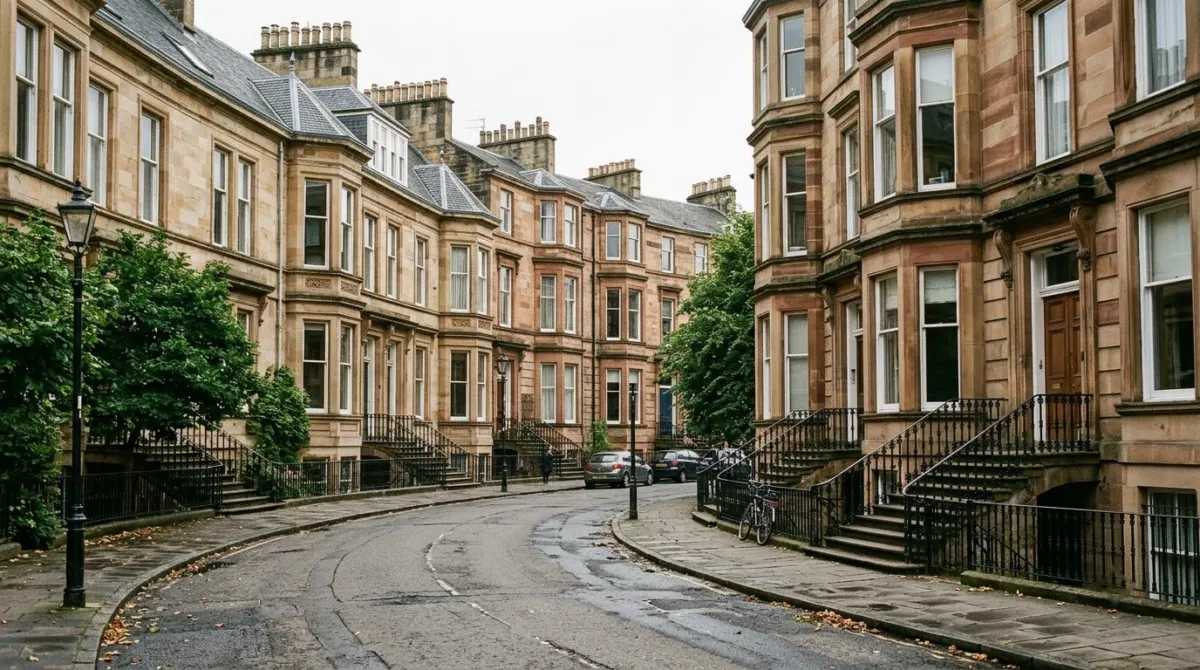
Hotels in the centre are mostly modern with lifts and standard rooms. Apartments are widespread in the Merchant City and the West End. Guesthouses in the West End occupy Victorian terraces, which usually means stairs.
Prices rise sharply for concerts and football matches — Glasgow has two very large stadiums and a major arena — and those dates are not obvious from outside Scotland. If rates look strange for your dates, an event is usually the reason.
How many nights
One night covers the centre and a good dinner. Two covers Kelvingrove, the West End and an evening of music, which is what Glasgow does better than anywhere else in Scotland.
Three makes it a base: Loch Lomond is forty minutes, Stirling is half an hour, Edinburgh is fifty minutes, and the ferries to Arran and the islands leave from the coast an hour away.
Glasgow or Edinburgh?
If you have one night, Edinburgh is the postcard and Glasgow is the city. Edinburgh has the castle, the Old Town and the festival; Glasgow has the galleries, the music, the food and the architecture of Charles Rennie Mackintosh.
Most Scottish itineraries include both, because they are fifty minutes apart and entirely different. Our Scotland itinerary shows where each fits.
What you are here for
Glasgow’s attractions are spread across the districts, and three of the best are free.
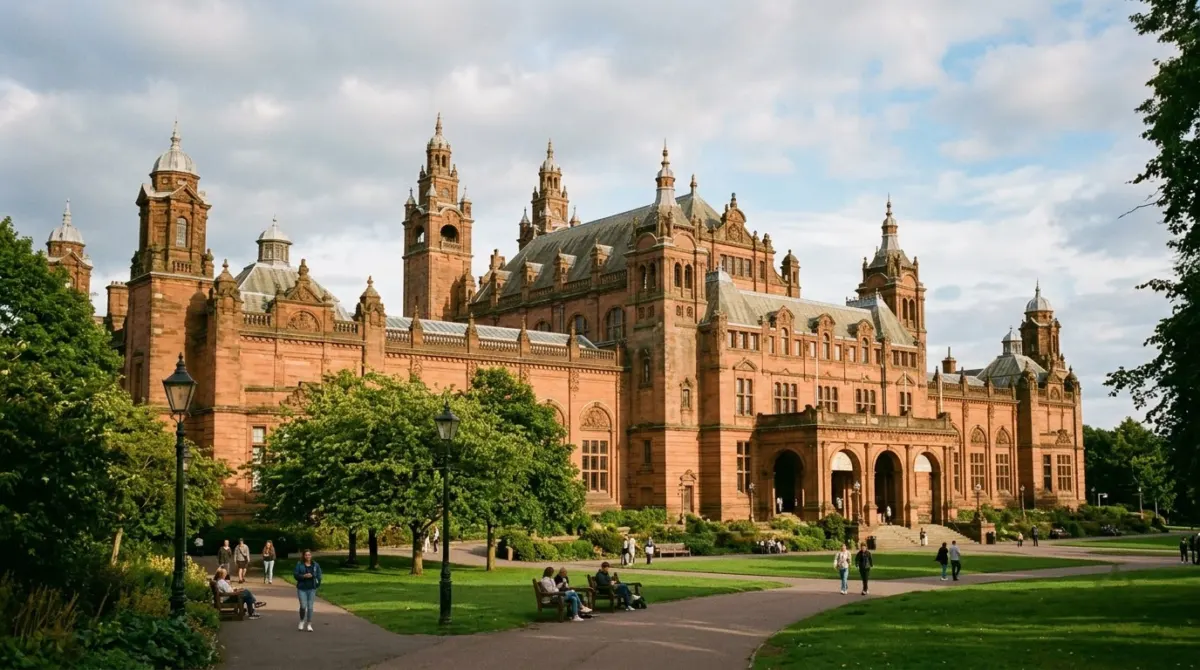
Kelvingrove Art Gallery and Museum in the West End, a red sandstone palace holding everything from Dalí to armour, and the most visited free attraction in Scotland.
The Riverside Museum, a transport museum in a Zaha Hadid building on the Clyde, with a tall ship moored outside.
The Burrell Collection in Pollok Park on the Southside, a shipping magnate’s collection in a purpose-built gallery in the woods.
Beyond the museums: the Victorian city centre, the work of Charles Rennie Mackintosh scattered across the city, and a live music scene that is the strongest in Scotland by a distance.
Glasgow with children
Easier than Edinburgh, mostly because it is flatter and the museums are hands-on.
The Riverside Museum has trams and trains to climb on. The Science Centre across the river is a full day. Kelvingrove has armour, dinosaurs and a Spitfire hanging from the ceiling.
For a family stay, the West End is the district: parks, flatter streets, apartments and a short subway ride into town.
The dates that fill the city
Glasgow’s accommodation market is driven by events more than by season, and the events are not obvious from abroad.
Two very large football stadiums and a major arena mean that concert nights, cup finals and international matches can fill the city and double rates on dates that look ordinary. Large conferences at the riverside venues do the same.
If prices for your dates look strange, check what is on. Moving by a day or staying in the West End or Southside usually solves it.
Glasgow as a base
Three things are within an hour, which makes a third night worthwhile.
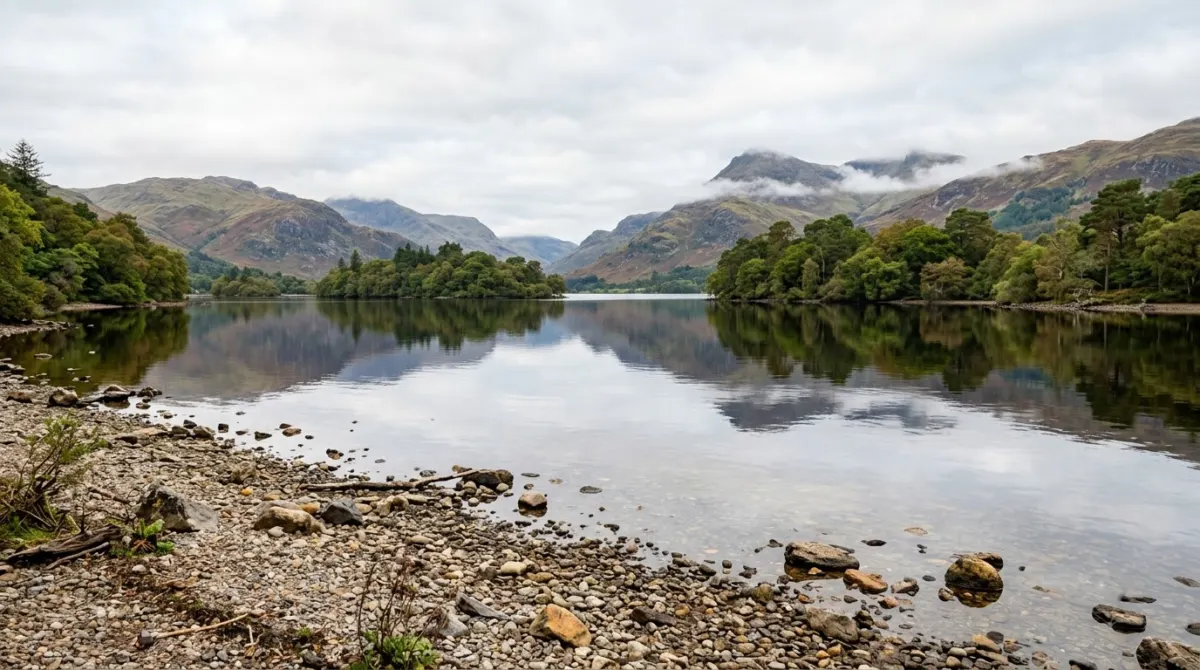
Loch Lomond is forty minutes and is the easiest Highland scenery to reach from any Scottish city.
Stirling is half an hour, with the castle and the Wallace Monument.
The Clyde coast and the islands — the ferry to Arran leaves from Ardrossan, about an hour by train, and Arran is a day trip or an overnight.
Edinburgh is fifty minutes by train, which is why basing in Glasgow and visiting Edinburgh for a day is a reasonable strategy in August when Edinburgh prices multiply.
What the districts feel like
Glasgow’s character changes sharply between districts, more than Edinburgh’s does, and it is worth knowing which one you are booking into.
The centre is a Victorian commercial grid on a slope: grand banks and warehouses, busy by day, patchy in the evening once the shops close.
The Merchant City is the converted warehouse quarter, dense with bars and restaurants, and it is the loudest area at weekends.
Finnieston is a long street of small restaurants and bars with the arena and conference centre at one end, which means it fills on event nights.
The West End is leafy and residential: terraces, a park, a university and a run of independent shops along Byres Road.
The Southside is where Glasgow lives, with no visitors and the cheapest rooms.
Getting between Glasgow and Edinburgh
Fifty minutes by train from Queen Street, with departures every fifteen minutes for much of the day. It is one of the easiest intercity journeys in Britain and it has a practical consequence.
You do not have to choose. Many visitors base in Glasgow — cheaper, with better food and music — and take the train to Edinburgh for a day, which is particularly sensible in August when Edinburgh’s festival pricing is at its peak.
The reverse works too, and a day in Glasgow from Edinburgh is the single best day trip the capital offers.
The short version
City centre between George Square and the river for a short stay, since both stations are there. West End for galleries, parks, value and a residential feel. Finnieston or the Merchant City for restaurants and bars. Southside for value on a longer stay. Check what is on at the stadiums and the arena before you decide the dates are expensive for no reason.
Frequently asked questions
What is the best area to stay in Glasgow?
The city centre between George Square and the river for a short visit, since both stations are there and everything is walkable. The West End for galleries, parks and better value, and Finnieston or the Merchant City for restaurants and bars.
Is Glasgow cheaper than Edinburgh?
Consistently, yes. That makes basing in Glasgow and taking the fifty-minute train to Edinburgh for a day a reasonable strategy, particularly in August when Edinburgh prices multiply.
Is the West End worth staying in?
Yes, for anything longer than a night. It has Kelvingrove Park and the free art gallery, Victorian terraces, the university and Byres Road, and it is ten minutes from the centre on the subway.
Is Glasgow city centre safe at night?
It is an ordinary large British city centre: busy, fine with normal city sense, and rougher around some station streets late at night. The West End and the Merchant City are the easier areas to walk back through.
How many nights do you need in Glasgow?
One covers the centre and a good dinner. Two covers Kelvingrove and the West End with an evening of live music. Three makes it a base for Loch Lomond, Stirling, Edinburgh and the island ferries.
Glasgow or Edinburgh — which should I stay in?
Edinburgh for the castle, the Old Town and the festival; Glasgow for galleries, music, food and Victorian architecture. They are fifty minutes apart by train, so most Scottish trips include both rather than choosing.
Keep planning Scotland
- Where to Stay in Glencoe: Inside the Glen, or Twenty Minutes Away
- Where to Stay on Skye: Portree, or Closer to What You Came For
- Where to Stay in Inverness: A Base, Not a Destination
- Where to Stay in Edinburgh: Two Cities, Five Minutes Apart
- How Many Days in Scotland? Seven for the Highlands, Ten for Skye
- How Many Days in Edinburgh? Three, and the Hills Count
- 6 Day Scotland Itinerary: Three Bases, or Two Done Properly
- 5 Day Scotland Itinerary: Two Bases, and What Will Not Fit
Written and checked by
Triplarks Editorial
An editorial desk, not an invented persona: research, drafting and fact-checking are done by the same small team. Every number here carries the date it was read.