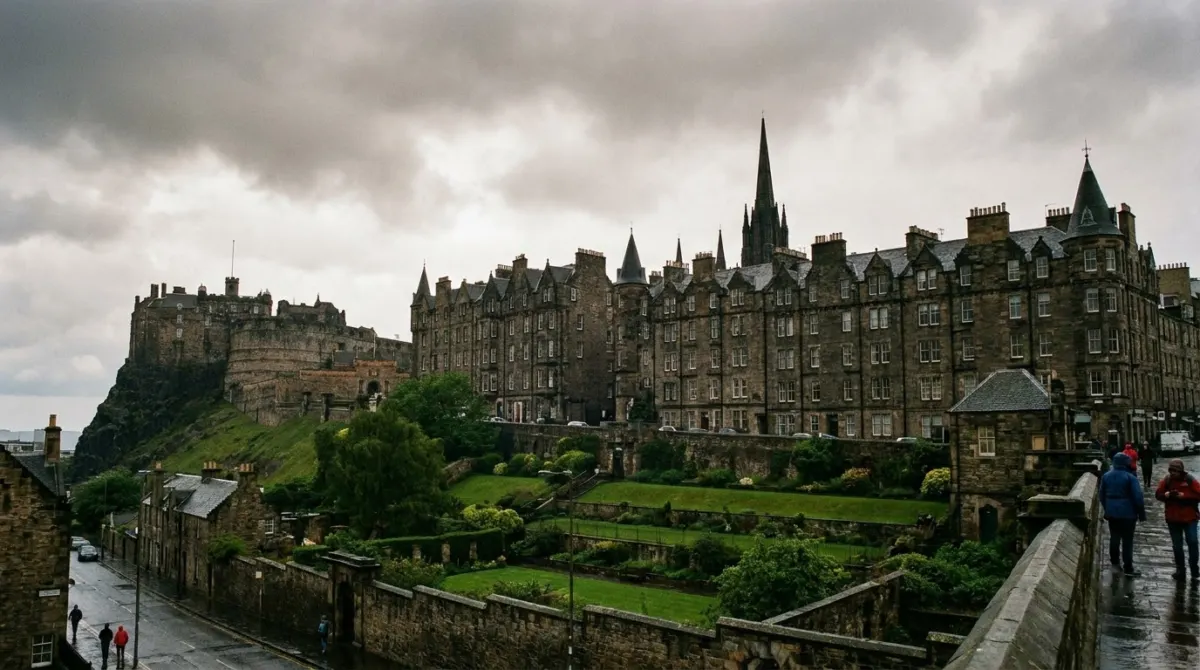
Quick answer
The New Town suits most visitors: flat streets, larger rooms and five minutes from the castle. The Old Town is the atmosphere, with stairs and noise included. Leith is the food and the value. Whatever you pick, check whether your dates fall in August before booking anything.
On this page
- Where to stay in Edinburgh: the short answer
- The Old Town
- The New Town
- Stockbridge
- Leith
- Haymarket and the West End
- August changes everything
- What you can walk to, from where
- Trams, buses and the airport
- Hills, stairs and luggage
- Getting around
- How many nights
- Where not to stay
- What the accommodation is actually like
- Edinburgh with children
- Booking windows
- Edinburgh at Hogmanay
- The short version
- Frequently asked questions
Edinburgh is two cities side by side. The Old Town runs along a ridge from the castle down to Holyrood, medieval, vertical and built on top of itself. The New Town below it is Georgian, flat and laid out on a grid in the eighteenth century. They are five minutes apart and they suit completely different trips.
Some links below are affiliate links. We may earn a commission if you book through them, at no extra cost to you. We do not rank hotels, and any prices on the map come live from the booking sites.
Choosing between them is most of the decision. The rest is noise, hills and whether your dates fall in August. If Edinburgh is part of a trip that includes Ireland, see our Ireland and Scotland itinerary.
Where to stay in Edinburgh: the short answer
| If you are | Stay in | Why |
|---|---|---|
| Here two nights, first visit | Old Town | The castle, the Royal Mile, the atmosphere |
| Wanting space and quiet | New Town | Georgian streets, flat, better value |
| Here with family or for longer | Stockbridge | Residential, village feel, fifteen minutes in |
| Here for food and bars | Leith | The waterfront, the best eating in the city |
| Arriving by train or tram | Haymarket or the West End | Station, airport tram, quieter streets |
| Here in August | Anywhere you can book | The festival fills the entire city |
One answer with no caveats: the New Town, within ten minutes of Princes Street. You are five minutes from the Old Town, the streets are flat, and the rooms are larger for the money.
Map shows live availability and prices. We may earn a commission on bookings made through it, at no extra cost to you.
The Old Town
The Old Town is the ridge: the castle at the top, the Royal Mile running down to the Palace of Holyroodhouse, and a web of closes and stairs dropping away on either side.
Staying here means you walk out into the part of Edinburgh people come for. It also means cobbles, stairs and slopes — the Old Town is genuinely steep, and buildings here are old, which usually means no lift and small rooms.
The Royal Mile itself is busy until late and is loud during festival season. One close back is quieter, but the stairs are the same.
This is the right choice for two nights and the wrong one for luggage, mobility problems or light sleepers.
The New Town
North of Princes Street Gardens, the New Town is a planned Georgian grid of wide streets, terraces and squares, built when the Old Town became unliveable. It is a UNESCO site in its own right and it is where a lot of Edinburgh actually lives and works.
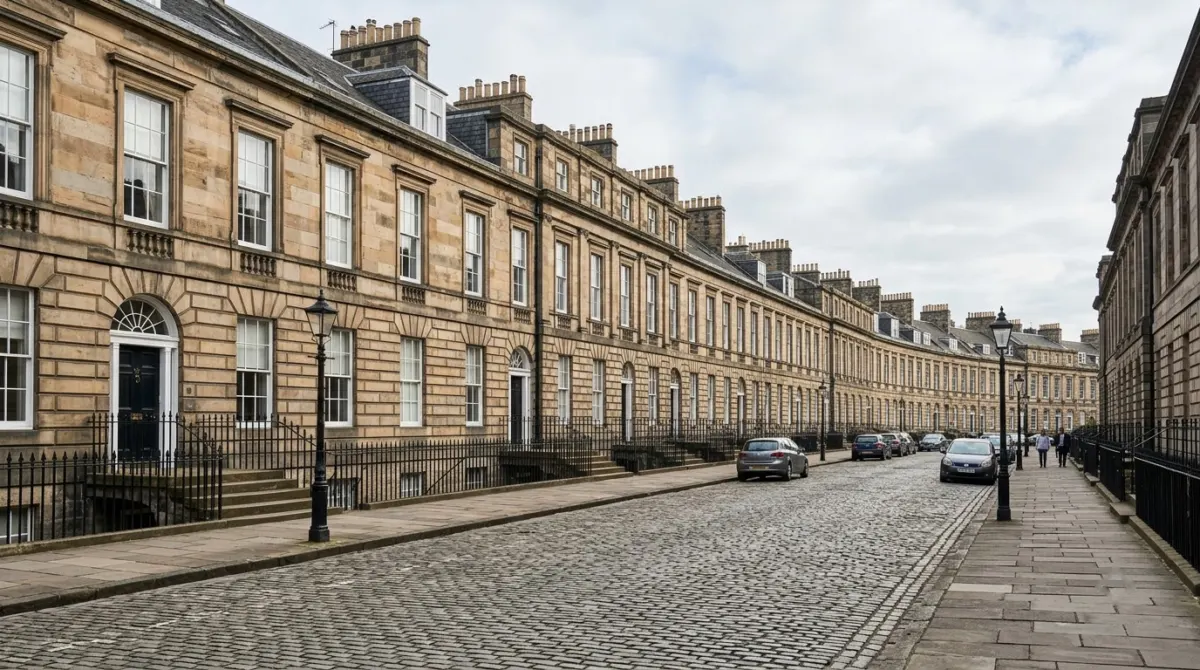
For visitors it offers the best combination in the city: five to ten minutes’ walk from the castle and the Royal Mile, flat pavements, larger rooms, more lifts, and restaurants that are not aimed at tourists.
It is the answer for most people, and particularly for anyone staying more than two nights.
Stockbridge
North-west and downhill from the New Town, Stockbridge is a residential district with the feel of a village: independent shops, a Sunday market, cafes, and the Water of Leith walkway running through it.
It is fifteen to twenty minutes’ walk into the centre, mostly downhill on the way out and uphill on the way back, which matters more than it sounds.
Good for families, apartments and longer stays. Less good if you want to fall out of a pub and into bed.
Leith
Edinburgh’s port, two or three kilometres north of the centre and now on the tram line. Leith has the best concentration of restaurants in the city, a waterfront, and a character entirely separate from the tourist centre.
The tram and frequent buses make the journey in fifteen to twenty minutes. Rooms are better value than anywhere central.
Stay here if food matters more than being five minutes from the castle, or if you are in Edinburgh for several nights and want somewhere that is not performing for visitors.
Haymarket and the West End
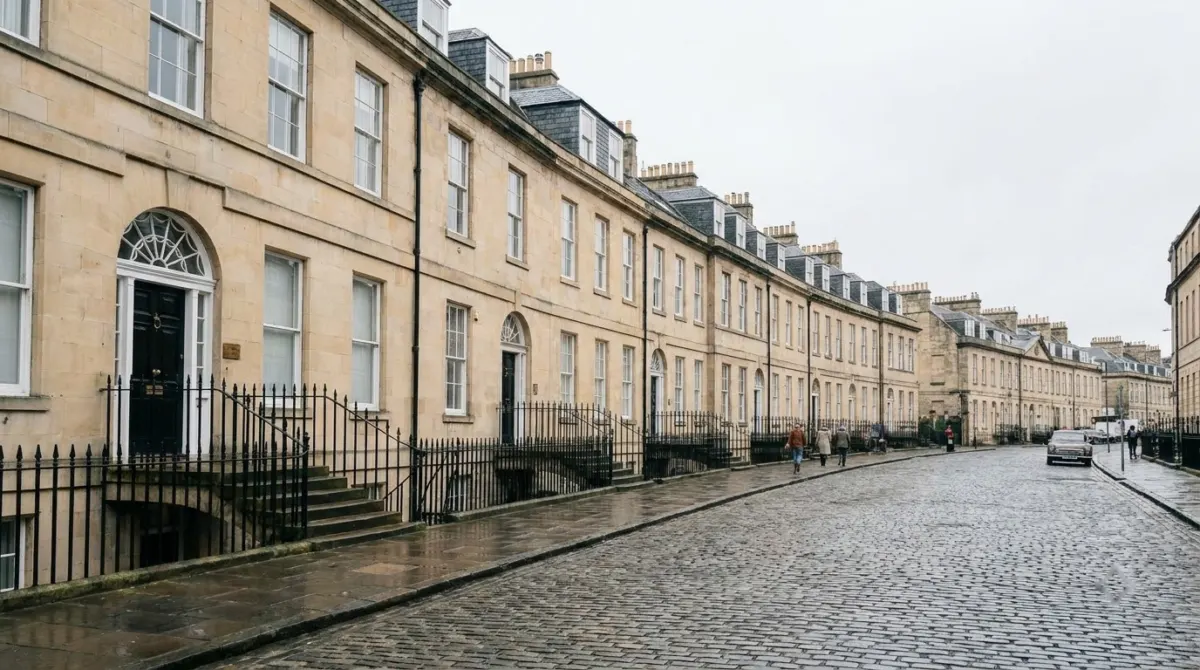
West of the centre, around Haymarket station, this is the practical district: trains, the airport tram, and a short walk or one stop to Princes Street.
The streets here are Victorian rather than Georgian, the hotels are generally modern, and the prices are lower than the New Town for a similar distance from the sights.
It is the sensible choice for an early flight, a short stay, or anyone arriving by train from Glasgow.
August changes everything
This is the single most important thing to know about booking Edinburgh.
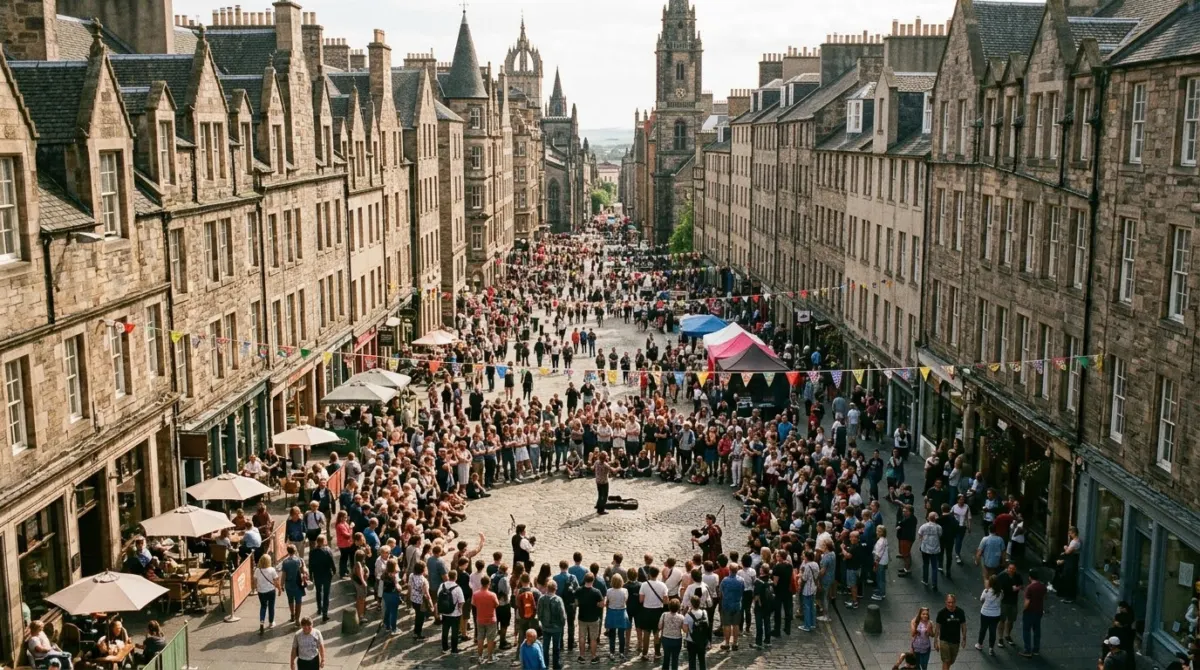
For most of August the city hosts the Fringe, the largest arts festival in the world, alongside the Edinburgh International Festival and several others. The population of the city roughly doubles.
During those weeks, accommodation rates rise several times over, minimum stays appear, availability disappears months in advance, and the Old Town is physically crowded from morning until late at night.
If you are coming for the festival, book as early as you can — a year ahead is not unusual — and expect to pay accordingly. If you are not, check the dates before booking flights, because the same room in July or September costs a fraction of the August price.
Hogmanay, the New Year celebration, has a smaller version of the same effect over four or five days.
What you can walk to, from where
Edinburgh is small enough that the question is not whether you can walk, but what is at the end of the walk.
From the Old Town you are on the Royal Mile, with Edinburgh Castle at the top and the Palace of Holyroodhouse at the bottom, and Arthur’s Seat rising directly behind it. The climb up Arthur’s Seat takes about an hour from the Holyrood side and is the best free thing in the city.
From the New Town you walk to Princes Street, the Scott Monument and the galleries, with Edinburgh Waverley station in the valley between the two towns — useful, because it is where the trains from London and Glasgow arrive.
From Leith you walk the Water of Leith path into the centre in about forty minutes, or you are five minutes from the Royal Yacht Britannia at Ocean Terminal.
From the Southside, the university quarter puts you ten minutes from the Old Town and in the middle of the student end of the city, which is quiet out of term and the opposite in September.
Trams, buses and the airport
Public transport here is simple enough that most visitors use it twice: once from the airport, once to Leith.
The tram runs from Edinburgh Airport through the West End and Princes Street and now continues to Newhaven by way of Leith, which is the easiest link between the two ends of this guide. The airport journey takes about half an hour.
Buses cover everything the tram does not, run frequently, and take contactless with a daily cap. The Airlink bus is the cheaper airport option and about as quick.
Serviced apartments are worth a look in Leith and the West End if you want a kitchen and more floor space, and they are usually easier to find with parking attached than a central hotel is.
Hills, stairs and luggage
Edinburgh is built on volcanic rock and it shows. The Old Town sits on a ridge with steep closes and long flights of stairs dropping to the streets below, and the walk between the Old and New Towns involves a climb in one direction whichever way you go.
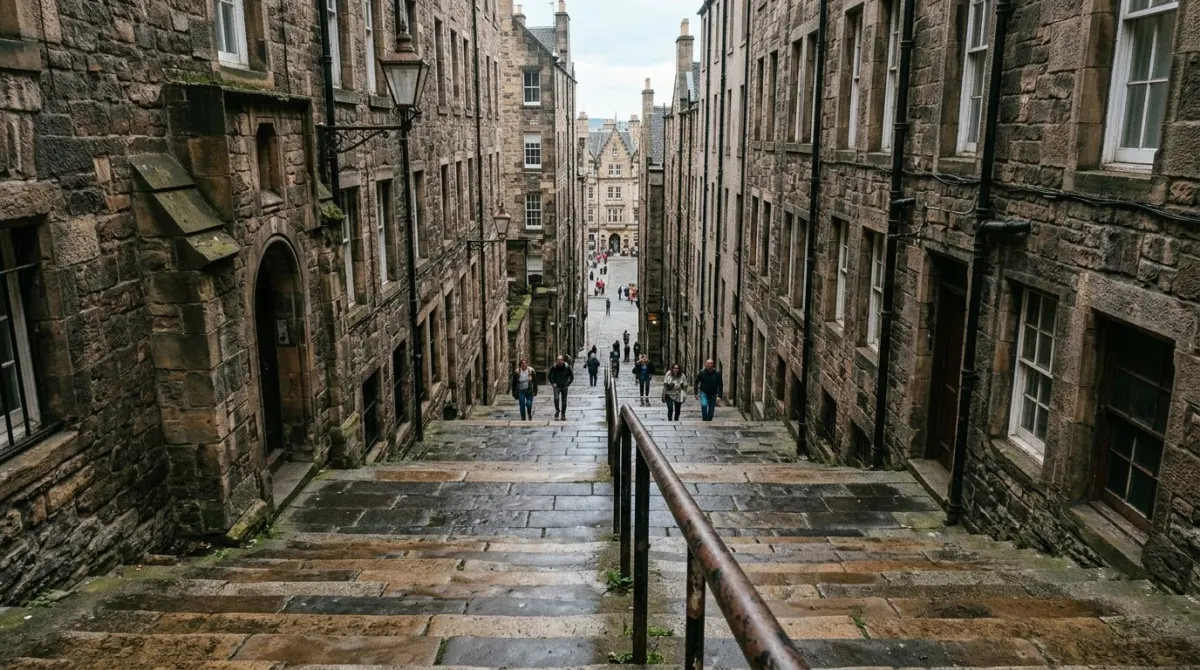
Two practical consequences. If you have heavy luggage, think about how you will reach the front door rather than how far it is on a map. And if stairs are a problem, the New Town, Haymarket and Leith are all much flatter than the Old Town, and modern buildings there are more likely to have lifts.
Getting around
The centre is walkable: the castle to Holyrood is about a mile downhill, and Princes Street runs parallel below.
Buses are frequent and cover everything. The tram runs from the airport through the city centre to Leith, which makes both of those easy. There is no underground.
The airport is about thirty minutes by tram or bus. Taxis take a similar time.
How many nights
Two nights covers the castle, the Royal Mile and one museum. Three is the right number for a first visit, adding Holyrood, Arthur’s Seat and a proper evening.
Four or more makes Edinburgh a base for day trips: Stirling, Glasgow, the Borders and even a long day to the Highlands are all possible by train or coach.
Our guide to how many days in Edinburgh works through each length, and the 3 day Edinburgh itinerary sets out the standard visit.
Where not to stay
Directly on the Royal Mile above a bar, unless you are out until it closes.
The airport hotels, except for a flight before about seven; the tram makes the city easy otherwise.
The far southern suburbs, which look cheap on a map and mean a bus ride each way for the sake of a small saving.
What the accommodation is actually like
The building stock explains most of what you will encounter.
Old Town properties are conversions of buildings that are three or four hundred years old, on streets that were never designed for wheeled luggage. Rooms are small, layouts are odd, lifts are uncommon and stairs are steep. In exchange you are inside the thing you came to see.
New Town properties are Georgian townhouses and later buildings. Ceilings are high, rooms are large, and lifts exist in some but far from all — a top-floor room in a Georgian terrace is four flights up.
Modern hotels cluster around Haymarket, the West End and Leith, and these are where you find reliable lifts, air conditioning and accessible rooms.
Apartments are widespread across all three and are the better choice for stays over three nights or for groups.
Edinburgh with children
The city works well with children, with one caveat: the hills tire small legs faster than the sights do.
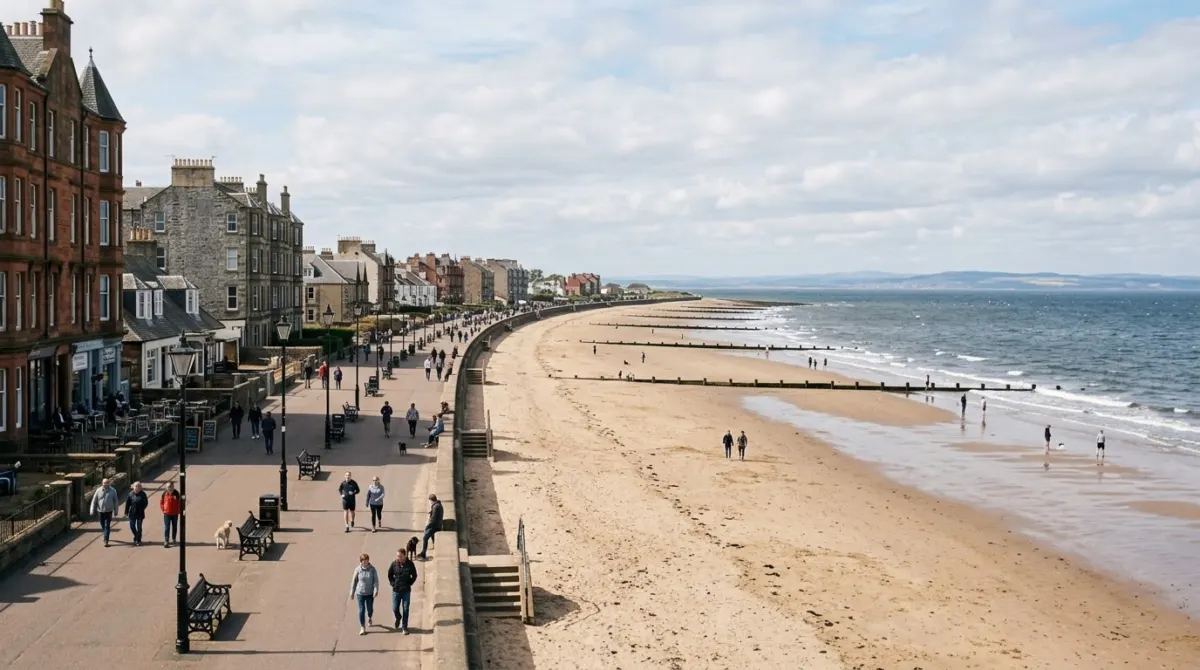
The castle holds most children for an hour. The National Museum of Scotland is free and has an entire hands-on floor. Holyrood Park gives space without the full Arthur’s Seat climb, and the beach at Portobello is twenty minutes by bus.
For a family stay, the New Town, Stockbridge or Leith all beat the Old Town: flatter streets, larger rooms, and apartments rather than converted attics.
Booking windows
Outside August, Edinburgh is not a difficult city to book. A few weeks is usually enough midweek, and a month or two for a weekend in summer.
The exceptions are absolute and worth repeating: August, when the festivals fill the city and rates multiply; Hogmanay, which sells out months ahead; and rugby international weekends at Murrayfield, which take rooms across the whole city and are invisible to visitors who do not follow the sport.
If rates look strange for your dates and it is not August, a match or a concert is usually the explanation.
Edinburgh at Hogmanay
The New Year celebration runs over several days around the turn of the year and fills the city in a smaller version of August.
Accommodation sells out months ahead, rates rise, and parts of the centre are ticketed and closed to through traffic on the night itself. If you are coming for it, book early and stay central enough to walk, because transport is heavily restricted.
If you are not, late January and February are the cheapest and quietest weeks of the year in Edinburgh, and the museums and pubs are exactly as good.
The short version
New Town for most visitors: flat, spacious and five minutes from the castle. Old Town if the medieval atmosphere is worth the stairs and the noise. Leith for food and value, Stockbridge for a village feel, Haymarket for an early flight. And whatever you decide, check whether your dates fall in August before you book anything at all.
Check Edinburgh availability →
Frequently asked questions
What is the best area to stay in Edinburgh?
The New Town for most visitors: five to ten minutes from the castle, flat streets, larger rooms and better value. The Old Town if the medieval atmosphere is the point and you do not mind stairs and noise.
Is it better to stay in the Old Town or New Town in Edinburgh?
Old Town for two nights and atmosphere; New Town for comfort, space and anything longer. They are five minutes apart, so this is a question about the street you walk out onto rather than about distance from the sights.
Is Leith worth staying in?
Yes, if food matters to you or you are staying several nights. It has the best concentration of restaurants in the city, better value rooms, and the tram reaches the centre in fifteen to twenty minutes.
How bad are the hills in Edinburgh?
Real. The Old Town sits on a ridge with steep closes and long stairways, and moving between the Old and New Towns means a climb in one direction. The New Town, Haymarket and Leith are much flatter.
When should I book accommodation in Edinburgh?
For August, as early as you possibly can — the Fringe roughly doubles the population and rates rise several times over. Hogmanay is similar on a smaller scale. Other months, a few weeks is usually enough.
Do I need a car in Edinburgh?
No. The centre is walkable, the buses are frequent, and the tram runs from the airport through the city to Leith. Parking in the centre is expensive and the Old Town streets are not designed for it.
Keep planning Scotland
- Where to Stay in Glencoe: Inside the Glen, or Twenty Minutes Away
- Where to Stay on Skye: Portree, or Closer to What You Came For
- Where to Stay in Glasgow: Centre for Convenience, West End for Everything Else
- Where to Stay in Inverness: A Base, Not a Destination
- How Many Days in Scotland? Seven for the Highlands, Ten for Skye
- How Many Days in Edinburgh? Three, and the Hills Count
- 6 Day Scotland Itinerary: Three Bases, or Two Done Properly
- 5 Day Scotland Itinerary: Two Bases, and What Will Not Fit
Written and checked by
Triplarks Editorial
An editorial desk, not an invented persona: research, drafting and fact-checking are done by the same small team. Every number here carries the date it was read.