Quick answer
Five bases over ten nights: Edinburgh three, Glasgow or Stirling one, Glencoe or Fort William two, Skye two, Inverness two. Book Skye and Glencoe before anything else, and drop the car at Inverness rather than driving back south.
On this page
- 10 day Scotland itinerary at a glance
- Days 1 to 3 — Edinburgh
- Day 4 — west, with one stop
- Days 5 and 6 — the west Highlands
- Days 7 and 8 — Skye
- Days 9 and 10 — Inverness and out
- Alternative 1 — swap Skye for the north coast
- Alternative 2 — swap Skye for the islands
- Driving this route
- When to go
- Where to stay on this route
- What to book before you travel
- The Explorer Pass, and when it pays
- Doing this route without a car
- Food and whisky along the way
- Budgeting the days
- Ten days with children
- Ten days in winter
- What this route leaves out
- The short version
- Frequently asked questions
Ten days is the length at which Scotland stops being compressed. Each region gets two or three nights, no transfer runs beyond about four hours, and the weather has room to be unhelpful on one day without writing off a whole area.
Some links below are affiliate links. We may earn a commission if you book through them, at no extra cost to you. We do not rank hotels, and any prices on the map come live from the booking sites.
This is the ten-day route day by day, with two alternatives. For the reasoning behind the bases, see our Scotland itinerary; for other lengths, how many days in Scotland.
10 day Scotland itinerary at a glance
| Days | Base | Nights |
|---|---|---|
| 1–3 | Edinburgh | 3 |
| 4 | Glasgow or Stirling | 1 |
| 5–6 | Glencoe or Fort William | 2 |
| 7–8 | Skye | 2 |
| 9–10 | Inverness | 2 |
Where to sleep on this route
Days 1 to 3 — Edinburgh
Three nights, on foot, with no car.
Day 1: the castle on an early slot, the Royal Mile and its closes, and the free National Museum of Scotland.
Day 2: the Palace of Holyroodhouse, the climb up Arthur’s Seat, and the New Town galleries in the afternoon.
Day 3: Leith on the tram, or the Water of Leith walkway through Dean Village, and an evening where the city eats rather than where it performs.
Collect the car on the morning of day 4. Our 3 day Edinburgh itinerary has these days in full.
Day 4 — west, with one stop
Two choices, and both are good.
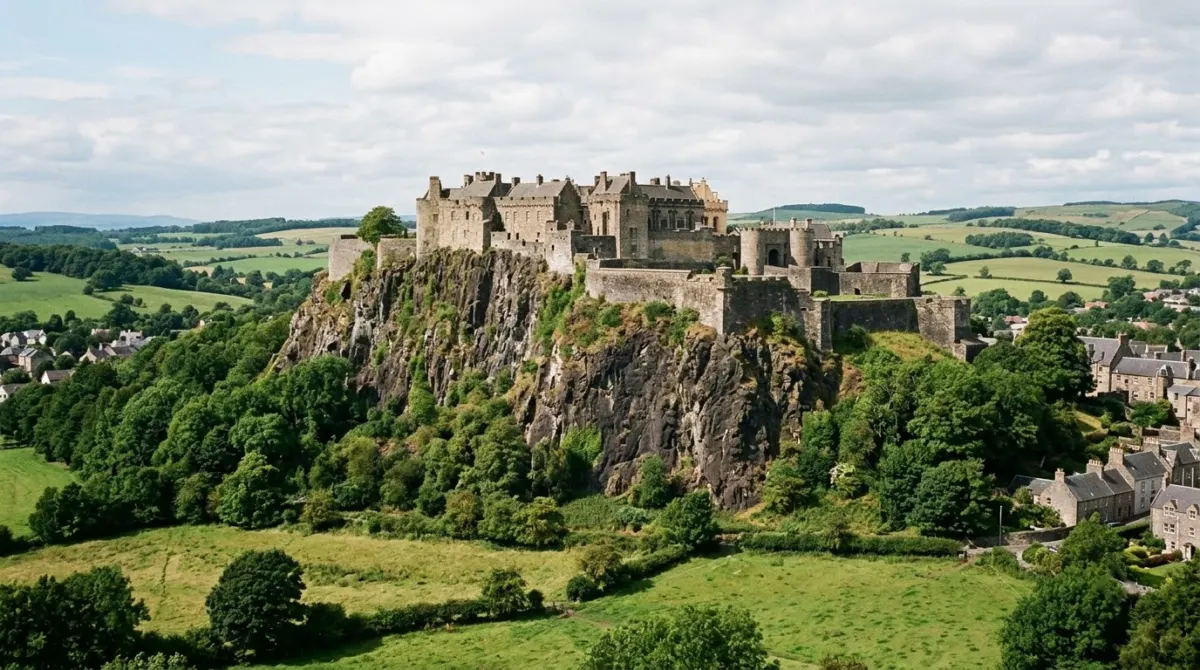
Stirling, forty-five minutes away, holds the castle on its crag, the Wallace Monument and the Bannockburn battlefield — more Scottish history per square kilometre than anywhere else.
Glasgow, an hour away, is Victorian, industrial and bigger, with the free Kelvingrove gallery and the best music scene in the country. See where to stay in Glasgow.
Take Stirling if you want to keep moving north; take Glasgow if you want a city night.
Days 5 and 6 — the west Highlands
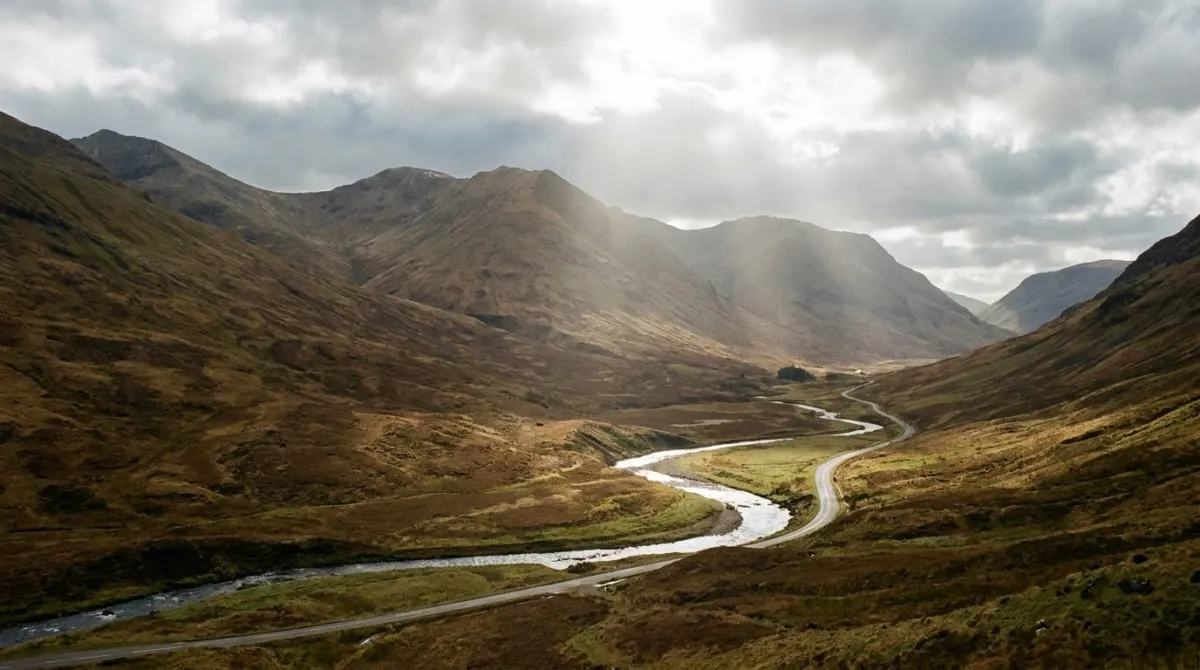
North through Loch Lomond and across Rannoch Moor into Glencoe, which is the most dramatic landscape in Britain and the one people remember.
From a base at Glencoe or Fort William: the Jacobite steam train over the Glenfinnan viaduct, Ben Nevis for walkers, the Nevis Range gondola for everyone else, and the road out to Mallaig along the coast.
Two nights is the minimum here, because one wet day would otherwise take the whole region.
Be realistic about Ben Nevis. It is the highest mountain in Britain, the main path from Glen Nevis takes most walkers seven to nine hours up and down, and the summit can be cold, cloudy and windy even in July. It is a whole day of the two, and only on the better one.
Map shows live availability and prices. We may earn a commission on bookings made through it, at no extra cost to you.
Days 7 and 8 — Skye
Over the bridge at Kyle of Lochalsh, or by the small ferry from Mallaig if you want the better arrival.
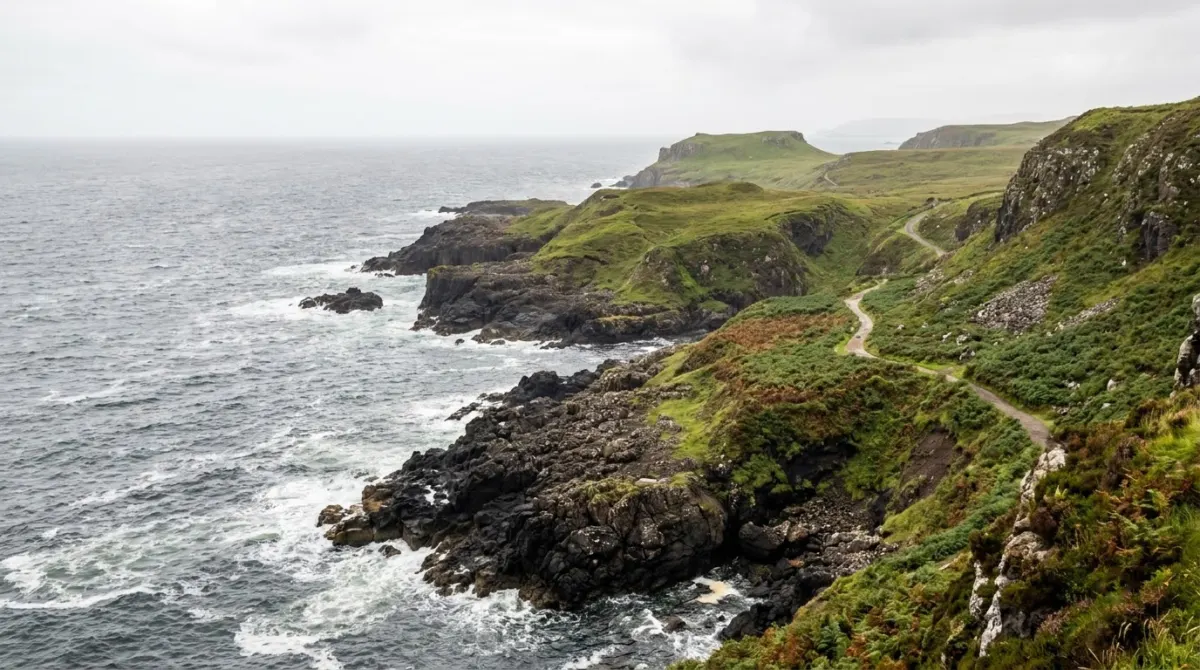
Skye is larger than it looks and the roads are slow. The Old Man of Storr, the Quiraing and the Fairy Pools are each a half day with the walking, and they are at opposite ends of the island.
Base at Portree for choice, or further north for quiet. Book months ahead in summer; if Skye is full, Kyle of Lochalsh and Plockton on the mainland are the fallbacks.
Days 9 and 10 — Inverness and out
East from Skye to Inverness, two and a half to three hours through Glen Shiel and along Loch Ness.
On the way or from the town: Eilean Donan Castle at the head of the loch, Urquhart Castle on Loch Ness, and Culloden, where the Jacobite rising ended in 1746 and where the visitor centre is unusually good.
Ten minutes from Culloden, Clava Cairns is a cluster of Bronze Age burial cairns and standing stones in a ring of old trees. It is free, rarely busy, and the natural second stop on the same morning.
Fly home from Inverness or take the train south, which takes about three and a half hours to Edinburgh and is a far better last day than driving it. See where to stay in Inverness.
Alternative 1 — swap Skye for the north coast
If you would rather drive than walk, replace days 7 and 8 with the first section of the North Coast 500: Inverness to Ullapool, then north to Lochinver and Durness.
This is emptier, wilder country than Skye, with Suilven and Stac Pollaidh rising out of the bog and beaches in the far north-west that look tropical until you touch the water.
You will not complete the NC500 in two days, and you should not try. Treat it as an out-and-back.
Alternative 2 — swap Skye for the islands
From Oban, ferries reach Mull, and from Mull a small boat reaches Iona, where Columba founded a monastery in 563 and from which Christianity spread through Scotland.
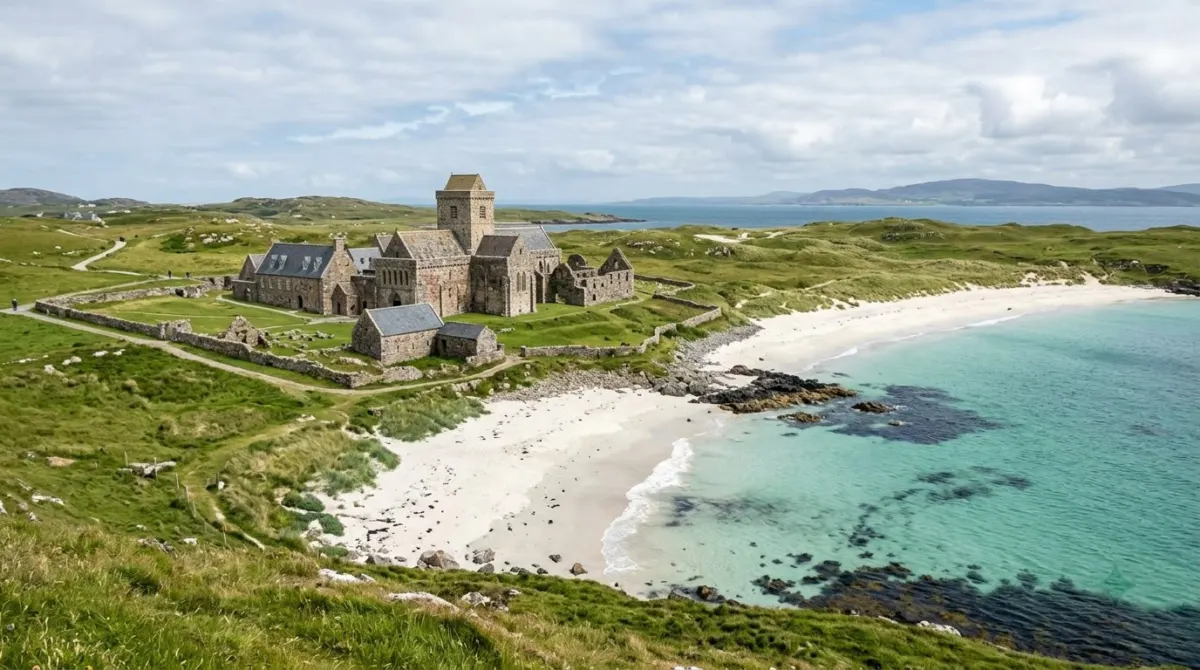
Two nights on Mull, with a day on Iona and Staffa, is a quieter and more atmospheric version of the island section. It replaces Skye rather than adding to it.
Driving this route
Roughly twelve hours of driving spread over four days: Edinburgh to Glencoe about three hours, Glencoe to Skye about three, Skye to Inverness about three, Inverness back south about three and a half if you drive rather than fly.
Beyond the central belt, Highland A-roads are winding and slower than the limit suggests, and on Skye and the north-west single-track roads with passing places are normal. Pull into a passing place on your left or stop opposite one on your right, and let faster traffic through.
Fill the tank when you can. Petrol stations are far apart in the north-west and many close in the evening.
When to go
May, June and September are the best months: long daylight, everything open, and fewer midges than high summer.
July and August bring the heaviest traffic, the highest prices, the Edinburgh festivals and the worst of the midges in the west.
October to March shortens the Highland day to about seven hours, closes some island and mountain attractions, and makes the single-track roads a different proposition. The cities work year-round.
Where to stay on this route
Edinburgh: central and on foot, with the New Town the easier choice for luggage and the Old Town the atmospheric one — see where to stay in Edinburgh.
Glasgow: the centre for convenience or the West End for value — see where to stay in Glasgow.
Glencoe or Fort William: book first and book early. The supply in this area is small, and in summer it goes months ahead.
Skye: Portree for a first visit, Staffin if you want the Quiraing at sunrise — see where to stay on Skye.
Inverness: the centre near the station — see where to stay in Inverness.
What to book before you travel
- Skye and Glencoe accommodation — months ahead from June to September, and the first thing to fix in the whole plan.
- Edinburgh Castle — a timed slot, ideally the first of the day.
- The Jacobite steam train, if you want it — it sells out in summer.
- An automatic car, if you need one — manual is the default in Britain.
- Ferry vehicle space, if you cross from Mallaig to Skye or take alternative 2 to Mull — CalMac’s summer sailings fill well before the day.
Everything else can stay flexible, and should: the value of ten days is being able to move a viewpoint to the clear morning.
The Explorer Pass, and when it pays
Historic Environment Scotland looks after many of the paid sites on this route, and its Explorer Pass gives one visit to each of its properties for 14 consecutive days from the start date you choose. Ten days fits inside it with room to spare.
On this itinerary it covers Edinburgh Castle on day 1, Stirling Castle on day 4 and Urquhart Castle on Loch Ness on day 9 or 10, plus Fort George, the eighteenth-century fortress east of Inverness, if you have a spare morning. Linlithgow Palace and Doune Castle both sit close to the day 4 drive as well.
It does not cover sites run by anyone else, and several of the best-known stops on this route fall into that group. The Palace of Holyroodhouse is excluded, and so is everything in the care of the National Trust for Scotland, which includes the Culloden and Glencoe visitor centres and the Glenfinnan monument. Eilean Donan is run by a private trust.
The test is simple: add up the individual tickets for the HES sites you will actually visit and compare. With Edinburgh, Stirling and Urquhart all on the plan, it is worth pricing; with Edinburgh Castle alone, it is not. Either way, reserve visit times at the busiest sites, because the pass does not guarantee entry on a full summer day.
Doing this route without a car
A version of it works on public transport, with changes.
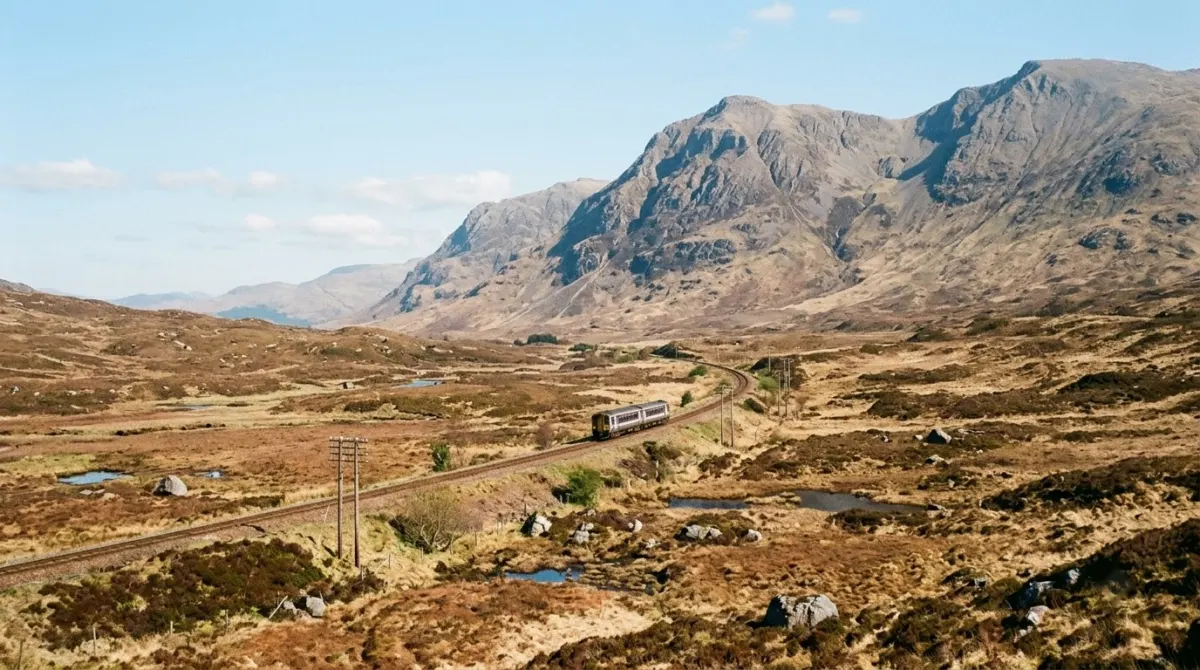
Trains reach Edinburgh, Glasgow, Fort William, Mallaig and Inverness, and the West Highland Line is one of the great railway journeys in Europe. Buses run to Portree on Skye.
The gap in the rail map is between Fort William and Inverness: there is no direct train, and the Great Glen is covered by Scottish Citylink coaches instead. For Skye, the line from Inverness to Kyle of Lochalsh is one of the most scenic in the country, and buses continue over the bridge to Portree. Over ten days, ScotRail’s Spirit of Scotland pass in its eight-days-in-fifteen version covers the trains and gives discounts on selected coach routes; price your journeys before you buy it.
What you cannot do is the Trotternish loop, the Fairy Pools or the glens between stations without a tour. Small-group multi-day tours from Edinburgh and Inverness cover exactly this gap and are a well-established way to see the Highlands without driving.
Food and whisky along the way
The western half of this route runs along one of the best seafood coasts in Europe, and the rule is easy: eat fish where the boats come in. Mallaig, Portree and the villages around Kyle of Lochalsh have shellfish and smoked fish on their menus as a matter of course rather than as a specialty.
Whisky fits without detours. The Ben Nevis distillery sits on the edge of Fort William, Talisker is at Carbost on Skye, a short drive from the Fairy Pools, and if you take the islands alternative, Oban has a distillery in the middle of the town. Speyside, the densest whisky region in Scotland, is a detour east from Inverness if you are driving south at the end.
Two practical points. Tours at the popular distilleries fill in summer, so reserve a time slot. And Scotland’s drink-driving limit is lower than England’s, low enough that the only safe amount for the driver is none; most distilleries will give the driver a sample to take away instead.
Budgeting the days
Ten days with five bases leaves about seven full days of sightseeing once arrival, departure and four transfers are counted.
Plan seven good days rather than ten, with one substantial thing each: a city district, a glen, a loop on Skye, a battlefield. The transfers can carry something small — Eilean Donan on the way east, Glenfinnan on the way north — but they should not carry a whole plan.
Ten days with children
The route works with children if you shorten the drives rather than the stops.
Keep Edinburgh at three nights: the castle, the hands-on galleries of the National Museum and the climb up Arthur’s Seat appeal to very different ages. On day 4, take Stirling rather than Glasgow, because a castle on a rock is an easier sell than an art gallery.
In the west Highlands, the Jacobite steam train is the fixed point, and the Nevis Range gondola lifts small legs high onto Aonach Mòr without a climb. On Skye, the Fairy Pools walk is short enough for most children but the rocks and water are slippery, and the path up to the Storr is steep; the Fairy Glen near Uig is the gentler alternative.
Break the long transfer days with a stop every hour. Glen Shiel and Loch Ness both have places to pull over, and a three-hour drive becoming a four-hour one is the right trade. At Inverness, a Loch Ness boat trip and the visitor centre at Culloden are the usual pair.
Family rooms are scarce in the Highlands, so self-catering cottages are often the easier answer, and they fill as early as the hotels do.
Ten days in winter
The same route is possible from November to March and it is a different trip.
Highland daylight runs to about seven hours, which means one substantial thing per day rather than two, and the three-hour transfers eat most of a short day. Some Skye and island attractions close, and mountain roads can shut in snow.
In exchange, the Quiraing and Glencoe in low winter light are better than at any other time of year, accommodation is available and cheap, and the roads are empty.
The practical adjustment is to cut one base — usually Glasgow — and give the days to the regions you keep.
What this route leaves out
The North Coast 500, a 500-mile loop from Inverness that needs five days of its own and is the best driving in Britain.
The Outer Hebrides — Lewis, Harris and the Uists — which need ferries and three or four days.
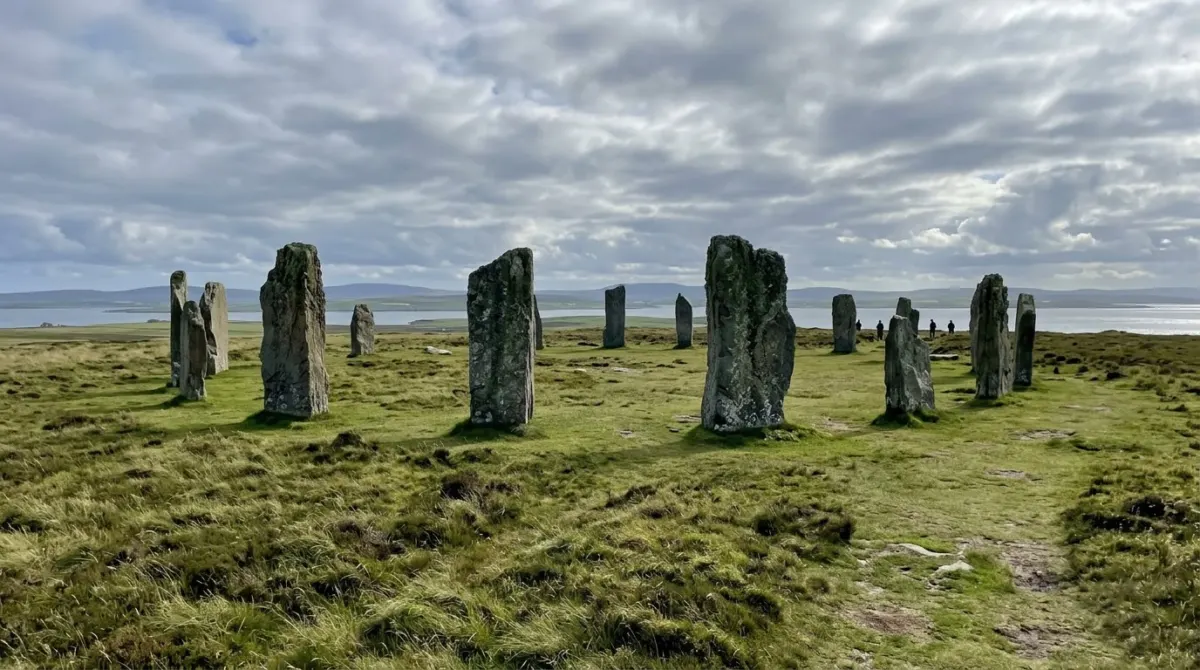
Orkney, where the Neolithic sites are older than Stonehenge, and which needs two or three days including the crossing.
The Borders and Galloway in the south, which almost every itinerary skips and which are an easy add-on from Edinburgh.
Each of those is a reason to come back rather than a gap in ten days.
The short version
Edinburgh three nights, Glasgow or Stirling one, Glencoe or Fort William two, Skye two, Inverness two. Collect the car on day four and drop it at Inverness rather than driving back. Book Skye and Glencoe first, keep the viewpoints flexible for the weather, and come in May, June or September if you have the choice.
Not sure which towns to base yourself in? See where to stay in Scotland, region by region.
Frequently asked questions
What is the best 10 day Scotland itinerary?
Edinburgh for three nights, Glasgow or Stirling for one, Glencoe or Fort William for two, Skye for two and Inverness for two. Four or five bases, with no transfer longer than about three hours.
Is 10 days enough for Scotland?
It is the length at which the country stops feeling compressed. Each region gets two or three nights and one bad weather day does not write off an area. What it does not fit is the North Coast 500 or the Outer Hebrides.
How much driving is a 10 day Scotland itinerary?
Roughly twelve hours spread over four driving days, plus whatever you do locally. Edinburgh to Glencoe, Glencoe to Skye and Skye to Inverness are each about three hours on roads slower than the map suggests.
Should I include Skye in 10 days in Scotland?
Yes, with two nights. The island is larger than it looks and its main sights are at opposite ends, so a day trip means seeing one of them. If Skye is full, the north coast from Ullapool is the alternative.
Is it better to fly home from Inverness or drive back to Edinburgh?
Fly, or take the train. Driving back costs three and a half hours of your last day, and an open-jaw booking into Edinburgh and out of Inverness usually costs little more than a return.
When is the best time for a 10 day Scotland trip?
May, June or September: long daylight, everything open and fewer midges than July and August. Winter shortens the Highland day to about seven hours, which does not fit this route comfortably.
Is the Historic Scotland Explorer Pass worth it for 10 days?
Only if you will visit several Historic Environment Scotland sites. It lasts 14 consecutive days and covers Edinburgh, Stirling and Urquhart castles on this route, but not Holyroodhouse or National Trust for Scotland sites such as Culloden and Glencoe. Price the individual tickets first.
Keep planning Scotland
- Where to Stay in Glencoe: Inside the Glen, or Twenty Minutes Away
- Where to Stay on Skye: Portree, or Closer to What You Came For
- Where to Stay in Glasgow: Centre for Convenience, West End for Everything Else
- Where to Stay in Inverness: A Base, Not a Destination
- Where to Stay in Edinburgh: Two Cities, Five Minutes Apart
- How Many Days in Scotland? Seven for the Highlands, Ten for Skye
- How Many Days in Edinburgh? Three, and the Hills Count
- 6 Day Scotland Itinerary: Three Bases, or Two Done Properly
Written and checked by
Triplarks Editorial
An editorial desk, not an invented persona: research, drafting and fact-checking are done by the same small team. Every number here carries the date it was read.