Quick answer
Stay in the town centre within ten minutes of the bus and railway stations, because almost every day trip leaves from there early. The west bank of the river is quieter and better value, and Drumnadrochit suits anyone whose trip is specifically about Loch Ness.
On this page
- Where to stay in Inverness: the short answer
- The town centre
- The river banks and the west side
- The edge of town, for drivers
- Drumnadrochit and the loch
- What the accommodation is like
- What there is to do
- How many nights
- When it fills up
- Getting to Inverness
- Using Inverness without a car
- Eating and the evening
- Where this fits in a Highland trip
- Inverness in winter
- When Inverness is the wrong choice
- The short version
- Frequently asked questions
Inverness is the capital of the Highlands and, for most visitors, a base rather than a destination. It is the last place on a Highland route with an airport, a railway station, supermarkets and a choice of restaurants, and almost everyone who stays here is using it to reach something else.
Some links below are affiliate links. We may earn a commission if you book through them, at no extra cost to you. We do not rank hotels, and any prices on the map come live from the booking sites.
That shapes the question of where to sleep: the town centre is small and the real decision is how close you need to be to the station and the tour departures.
Where to stay in Inverness: the short answer
| If you are | Stay | Why |
|---|---|---|
| Taking day tours to Loch Ness or Skye | The centre, near the bus and train stations | Early departures |
| Arriving by train | The centre, east of the river | Everything within ten minutes |
| Driving and touring | The edge of town, or across the river | Parking, larger rooms |
| Wanting quiet and a view | The west bank of the Ness | Riverside, five minutes in |
| Here for Loch Ness specifically | Drumnadrochit | On the loch, thirty minutes away |
One answer with no caveats: the town centre within ten minutes of the station. Inverness is small enough that nothing else buys you much, and the early departures are the thing that matters.
Map shows live availability and prices. We may earn a commission on bookings made through it, at no extra cost to you.
The town centre
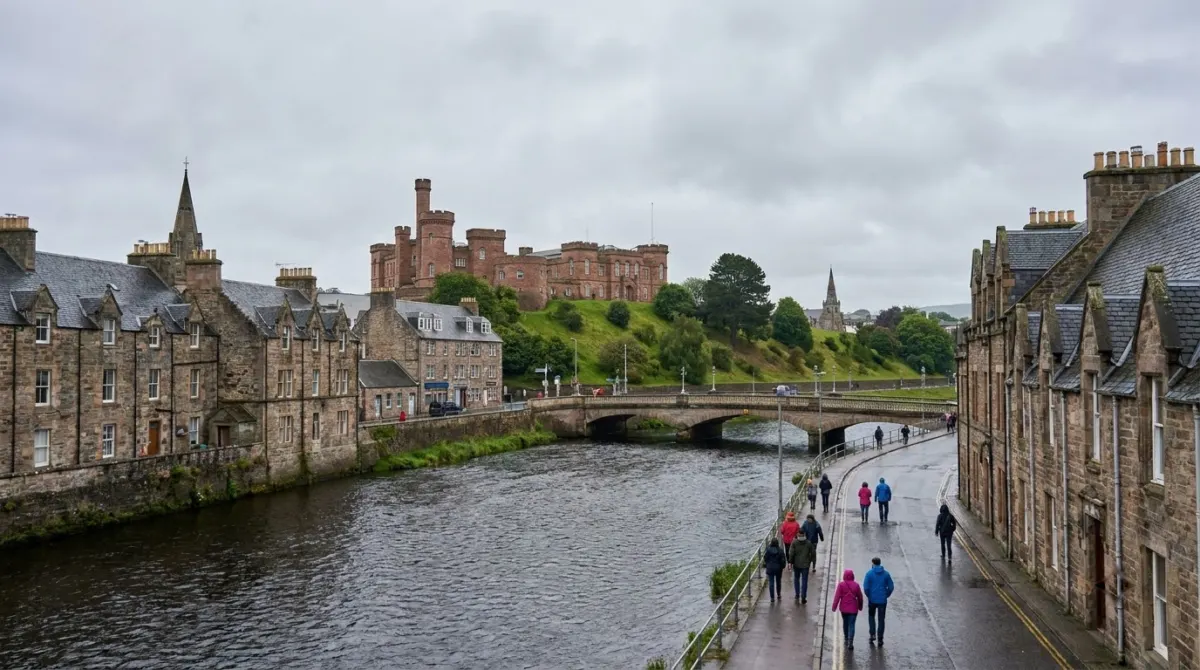
Inverness is built around the River Ness, with the castle on a rise above the east bank and the small city centre below it. You can cross the centre on foot in fifteen minutes.
The bus and railway stations are together on the eastern side, and almost every organised trip — Loch Ness, Skye, the Orkney ferry connection, the whisky distilleries of Speyside — leaves from there or close to it.
Staying in the centre means walking to those departures, to dinner and to the supermarket. For a stay of one or two nights it is the obvious choice.
The river banks and the west side
The west bank of the Ness, across any of the footbridges, is quieter: Victorian terraces, bed and breakfasts and guesthouses, five to ten minutes’ walk from the centre.
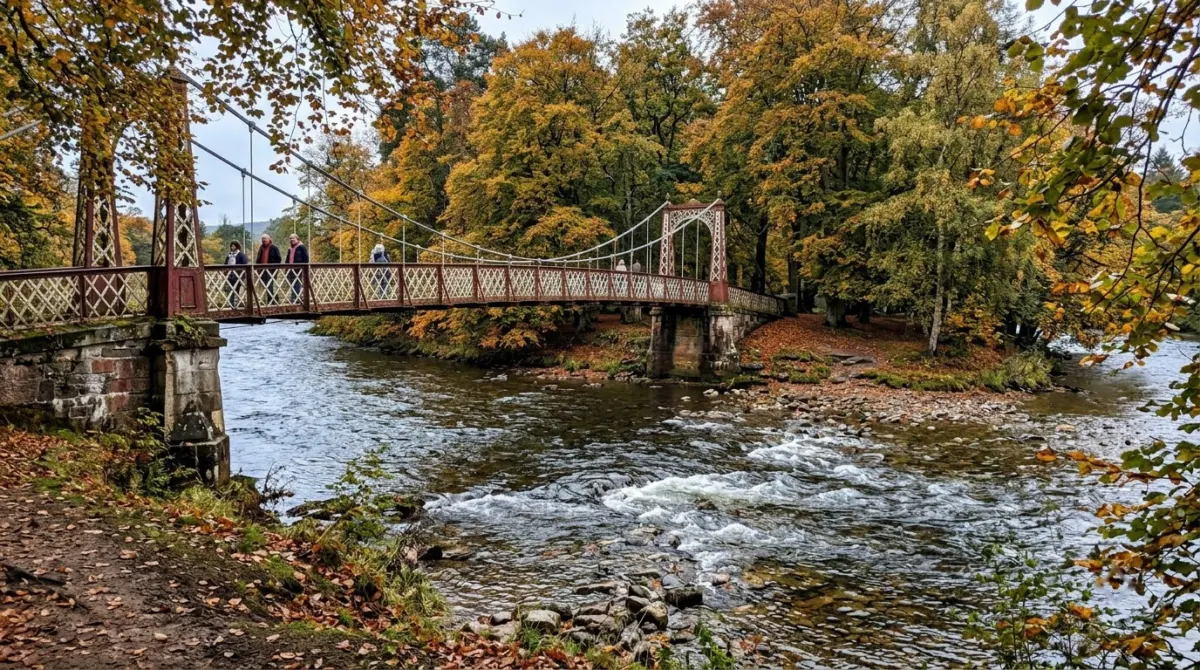
This is where most of Inverness’s guesthouse accommodation is, and it is usually better value than the hotels on the other side. The riverside walk south towards the Ness Islands — wooded islands joined by Victorian footbridges — starts here and is the nicest half hour in the town.
The edge of town, for drivers
If you are touring the Highlands by car, the roads out of Inverness hold larger modern hotels with car parks, and they are five to ten minutes from the centre.
The trade is that you will drive or walk back in for dinner. Given that this is a town where most visitors are driving the next morning anyway, that is often a reasonable deal — and parking in the centre is both limited and charged.
Drumnadrochit and the loch
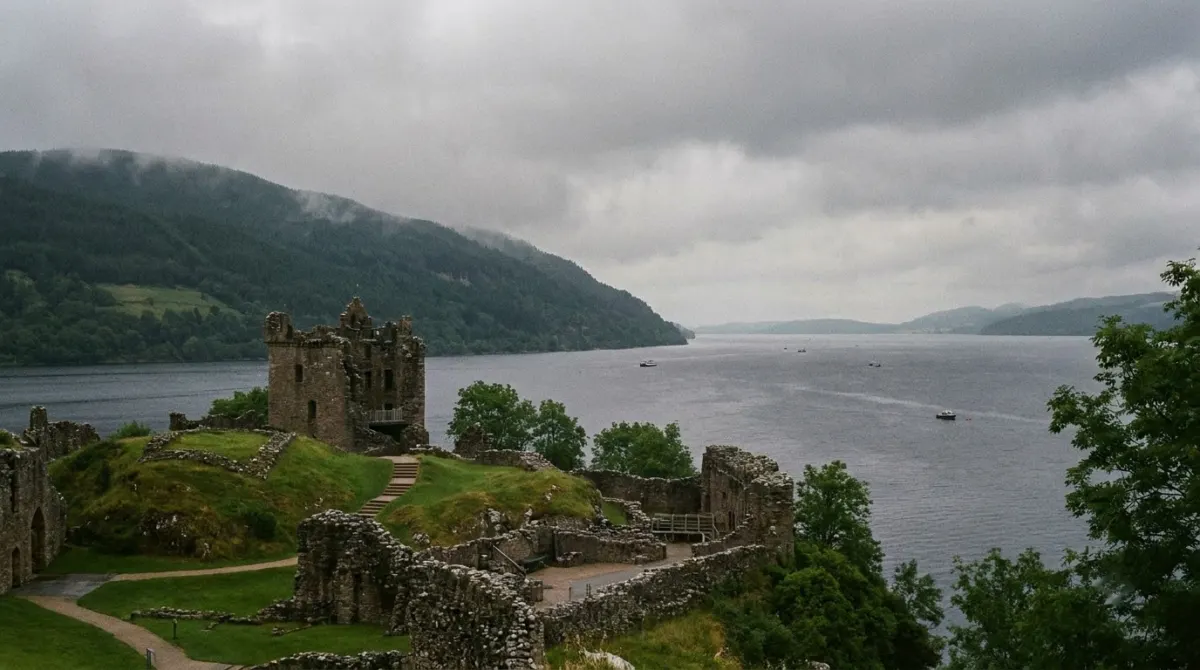
If Loch Ness is the specific reason you are here, Drumnadrochit is a village on its western shore about half an hour from Inverness, beside Urquhart Castle and the loch itself.
Staying there buys you the loch in the early morning and the evening, without the day traffic. It costs you the restaurants and the transport links of a town.
For one night on a touring route, it is a good swap. For a base, Inverness wins.
What the accommodation is like
Inverness has more rooms than any other Highland town and a wider range.
Guesthouses and bed and breakfasts dominate the west bank and the residential streets, usually with breakfast included and often run by people who know the area well. They are the best value here.
Hotels cluster in the centre and on the approach roads, and the modern ones have lifts and parking where the Victorian conversions often have neither.
Self-catering is widespread and suits longer stays, particularly if you are using Inverness as a base for a week.
Air conditioning is rare and almost never needed. Heating is the thing to check in winter.
What there is to do
Inverness itself is modest, and an honest list is short: the castle viewpoint, the Victorian Market, the riverside walk to the Ness Islands, and the cathedral.
What is around it is the point.
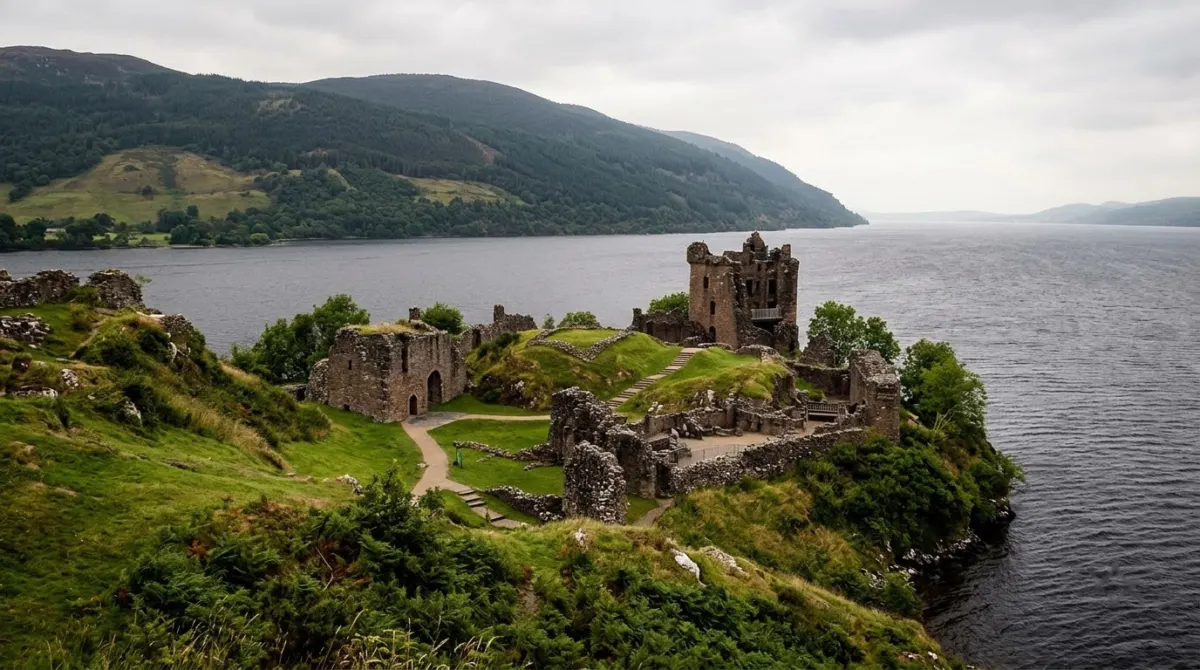
Loch Ness and Urquhart Castle, thirty minutes south-west. Culloden, fifteen minutes east, where the Jacobite rising ended in 1746 and where the visitor centre is unusually good. Clava Cairns, prehistoric burial cairns beside it. The Moray Firth, where boat trips go out to see dolphins. The Speyside distilleries, an hour east. And the Cairngorms, an hour south.
How many nights
One night is what most touring routes allocate, and it works as a stop.
Two nights lets you do Loch Ness and Culloden properly rather than in passing.
Three or more makes Inverness a base, which suits anyone not driving: day tours from the town reach Skye, the North Coast and the distilleries, which is the best way to see the Highlands without a car.
When it fills up
July and August are busy and prices rise, particularly at weekends. The town also fills for the Highland Games season events and for the Belladrum festival in summer.
Winter is quiet and cheap, and several Highland attractions outside the town close or reduce hours. The town itself stays open.
Getting to Inverness
Inverness is unusually well connected for a town of its size, which is what makes it a base.
By train from Edinburgh takes about three and a half hours and from Glasgow a little over three. The Caledonian Sleeper runs overnight from London. For the Edinburgh end, see where to stay in Edinburgh and how many days in Edinburgh.
By car from Edinburgh is about three hours up the A9, which is a fast road by Highland standards and heavily policed for speed.
By air, Inverness Airport is fifteen minutes east of the town with flights from several UK cities, which makes an open-jaw trip — into Edinburgh, out of Inverness — a sensible way to avoid driving the length of the country twice.
Using Inverness without a car
This is the strongest argument for the town, and it is underused.
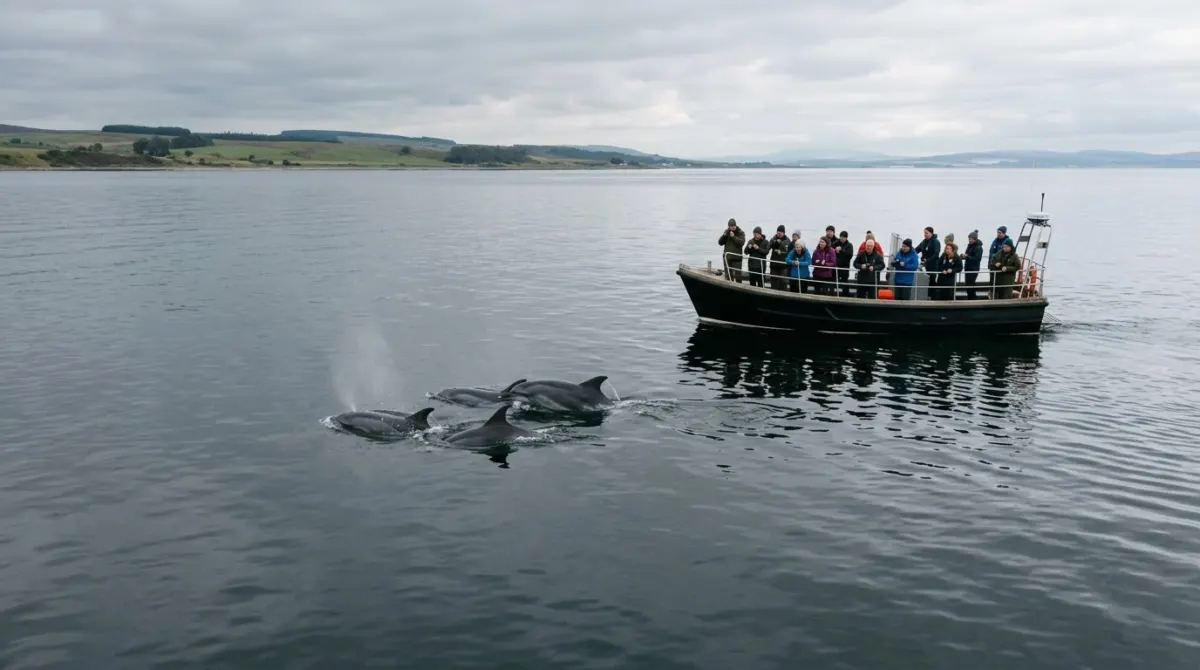
Day tours leave from the centre for Loch Ness, Skye, the North Coast, Orkney and the Speyside distilleries. Local buses reach Culloden and Clava Cairns. Boat trips for dolphins leave from the Moray Firth.
That makes Inverness the only place in the Highlands where a week without a car is genuinely practical, which matters if you would rather not drive single-track roads.
If this is your plan, stay in the centre near the bus station, because the tours start early and some pick up only there.
Eating and the evening
Inverness has more choice than anywhere else in the Highlands and less than a city, and the season affects it sharply.
In summer, book dinner at weekends. In winter, check what is open before planning an evening around it, since some places close or shorten hours.
Kitchens in the Highlands often stop serving earlier than visitors expect, around eight or nine, which catches out people arriving after a long drive.
Where this fits in a Highland trip
Inverness sits at the top of almost every Scottish route, and the usual pattern is to arrive from Skye or Glencoe, spend one or two nights, and leave by air or rail rather than driving back south.
That last point is worth planning for. The drive from Inverness to Edinburgh takes three hours of your last day; the train takes three and a half but costs you nothing in concentration, and an open-jaw flight removes the question entirely.
Our Scotland itinerary uses Inverness exactly this way.
Inverness in winter
The town stays open and the Highlands around it largely do not.
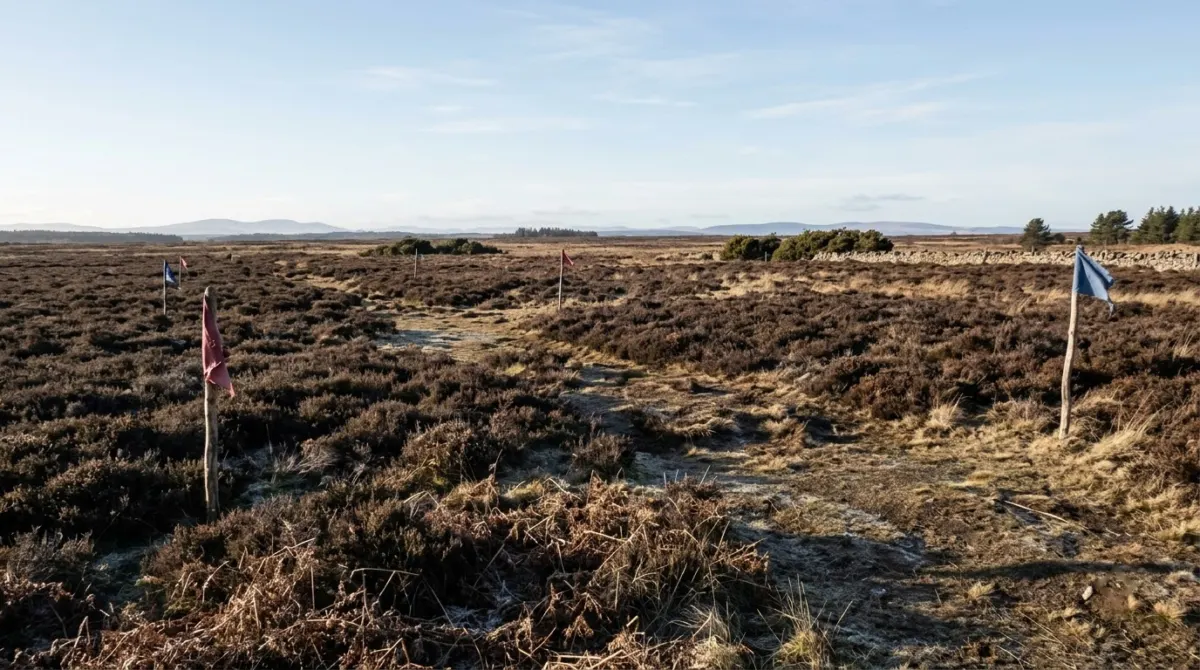
Loch Ness and Culloden are open year-round. The day tours run at reduced frequency. The far north and the mountain roads become weather-dependent, and some smaller attractions close from October.
The compensation is price and emptiness, and on clear winter days the light in the Highlands is better than at any other time of year. The risk is a short daylight window of about seven hours, which does not leave room for a long day trip.
When Inverness is the wrong choice
Two cases where somewhere else serves you better.
If you want the Highlands rather than a town. Inverness is a working small city with supermarkets and traffic. If what you came for is a glen and a loch, a night in Glencoe, Torridon or on Skye gives you that and Inverness does not.
If you are driving straight through. Inverness sits at a junction rather than at a destination, and a night here costs you an evening you could spend further west with better scenery outside the window.
Where it is clearly right: an early flight or train, a base for day tours, a supply stop, or a last night before heading south.
The short version
Stay in the centre within ten minutes of the station, because the tours leave early and the town is small enough that nothing else buys much. The west bank is quieter and better value for guesthouses; the edge of town suits drivers; Drumnadrochit suits anyone whose trip is specifically about Loch Ness. One or two nights for a touring route, three or more if you are using it as a car-free base.
Check Inverness availability →
Frequently asked questions
Where is the best place to stay in Inverness?
The town centre within ten minutes of the bus and railway stations, because almost every day trip leaves from there early. The west bank of the river is quieter and better value for guesthouses, and the edge of town suits drivers who want parking.
Is Inverness worth staying in?
As a base, yes — it is the only Highland town with an airport, a railway station and a real choice of restaurants. The town itself is modest; Loch Ness, Culloden, the Cairngorms and Speyside are what you are there for.
Should I stay in Inverness or Drumnadrochit for Loch Ness?
Drumnadrochit if the loch is the specific reason you came, since you get it early and late without the day traffic. Inverness if you want restaurants, transport and a base for more than one thing.
How many nights do you need in Inverness?
One as a stop on a touring route. Two to do Loch Ness and Culloden properly. Three or more if you are using it as a base for day tours, which is the best way to see the Highlands without a car.
Can you visit Skye from Inverness?
As a long day tour, yes — but it is a very long day for a short time on the island. Skye deserves two nights of its own. If a day tour is the only option, expect most of it to be driving.
Do I need a car in Inverness?
Not if you stay central. Day tours to Loch Ness, Skye, the North Coast and the Speyside distilleries all leave from the town centre, which makes Inverness the best car-free base in the Highlands.
Keep planning Scotland
- Where to Stay in Glencoe: Inside the Glen, or Twenty Minutes Away
- Where to Stay on Skye: Portree, or Closer to What You Came For
- Where to Stay in Glasgow: Centre for Convenience, West End for Everything Else
- Where to Stay in Edinburgh: Two Cities, Five Minutes Apart
- How Many Days in Scotland? Seven for the Highlands, Ten for Skye
- How Many Days in Edinburgh? Three, and the Hills Count
- 6 Day Scotland Itinerary: Three Bases, or Two Done Properly
- 5 Day Scotland Itinerary: Two Bases, and What Will Not Fit
Written and checked by
Triplarks Editorial
An editorial desk, not an invented persona: research, drafting and fact-checking are done by the same small team. Every number here carries the date it was read.