Quick answer
Glencoe village or Ballachulish puts the glen outside the window at first light, which is the whole reason to sleep here rather than drive through. Fort William is twenty-five minutes north with far more rooms and a supermarket. Book this part of a Scottish trip first.
On this page
- Where to stay in Glencoe: the short answer
- Glencoe village and the glen
- Ballachulish and Onich
- Fort William
- Kinlochleven and the walkers’ option
- What there is to do
- What the accommodation is like
- How many nights
- When it fills up
- Glencoe in each season
- Walking from a base in the glen
- What to check before booking
- Getting here
- Glencoe with a camera
- The short version
- Frequently asked questions
Glencoe is a glen rather than a town. There is a village of a few hundred people at its western end, a visitor centre, a handful of hotels and hostels along the road, and almost nothing else for twenty kilometres in either direction.
Some links below are affiliate links. We may earn a commission if you book through them, at no extra cost to you. We do not rank hotels, and any prices on the map come live from the booking sites.
That makes the accommodation question unusual: you are not choosing a neighbourhood, you are choosing how far from the glen you are willing to sleep. If Glencoe sits between other stops, see where to stay in Skye and where to stay in Inverness.
Where to stay in Glencoe: the short answer
| If you are | Stay | Why |
|---|---|---|
| Here for the glen itself | Glencoe village or along the A82 | Wake up in it |
| Wanting restaurants and supplies | Fort William | Twenty-five minutes north |
| Walking or climbing | Glencoe or Kinlochleven | At the trailheads |
| Travelling by bus | Glencoe village or Fort William | On the Glasgow to Fort William route |
| Booking late in summer | Ballachulish or Onich | Minutes away, more rooms |
One answer with no caveats: Glencoe village or Ballachulish, at the western end of the glen. You are inside the landscape, five minutes from the main road, and twenty-five minutes from Fort William when you need a supermarket.
Map shows live availability and prices. We may earn a commission on bookings made through it, at no extra cost to you.
Glencoe village and the glen
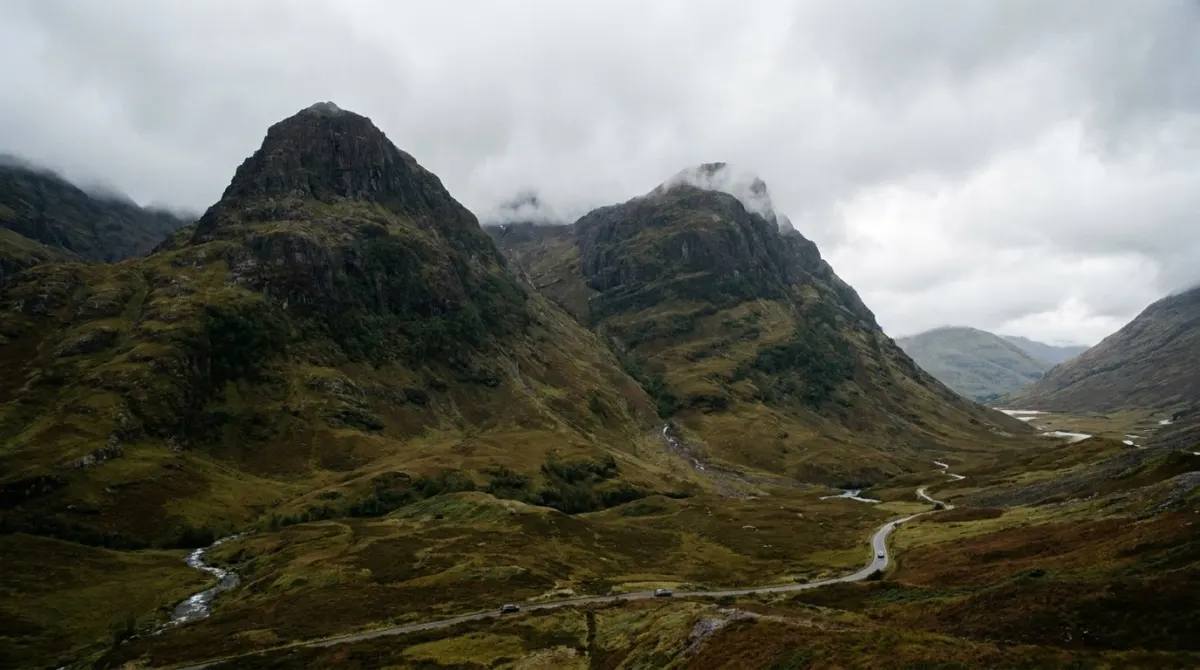
The village sits where the glen meets Loch Leven, with the Three Sisters ridges rising behind it and the A82 running through the pass above.
Staying here means the glen is outside the window in the early morning, which is when it is at its best — the light on the ridges before the day traffic arrives is the reason to sleep here rather than drive through.
Accommodation is a small number of hotels, guesthouses, bunkhouses and self-catering cottages. It is limited, it books out months ahead in summer, and it is not cheap for what it is.
Ballachulish and Onich
Ballachulish is a village on Loch Leven two minutes from the mouth of the glen, built around a former slate quarry. Onich is a few minutes further along the loch towards Fort William.
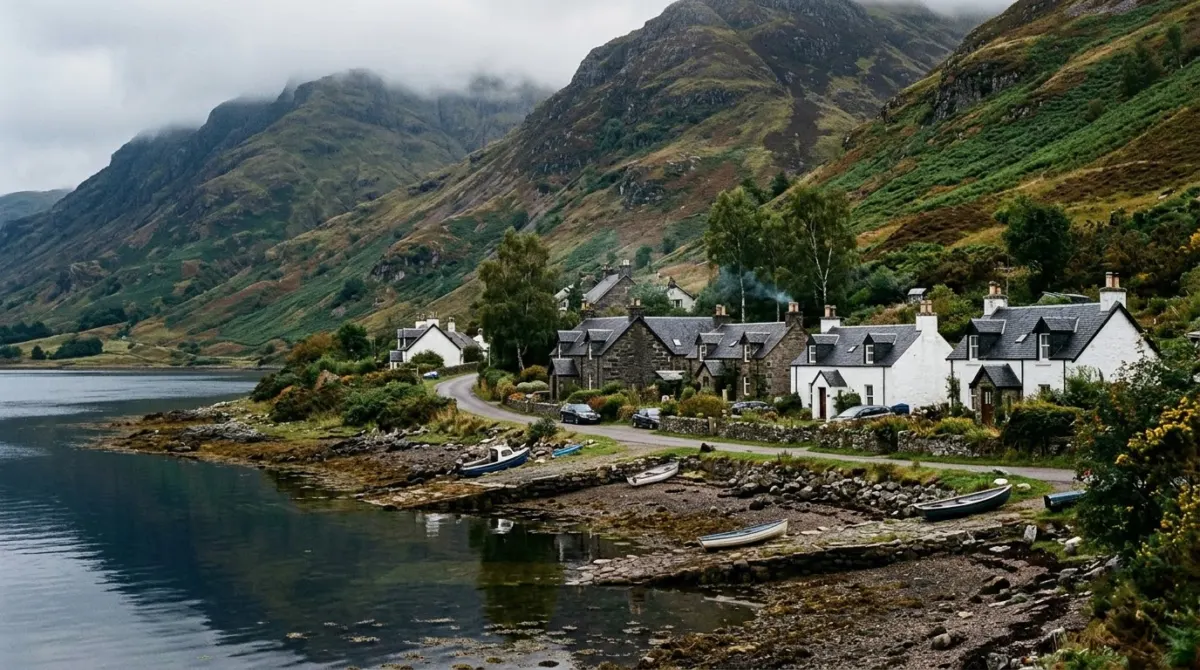
Both have more rooms than Glencoe village and are close enough that nothing is lost. For most visitors these are the practical answer, particularly if you are booking later than you should have.
Fort William
Twenty-five minutes north, Fort William is the only town of any size in the west Highlands: supermarkets, restaurants, a railway station and the widest choice of accommodation in the area.
It sits under Ben Nevis, which is the other reason people base here, and it is the terminus of the West Highland Line and the departure point for the Jacobite steam train to Mallaig.
What it lacks is charm. Fort William is functional rather than beautiful, and the glen is the thing you came for. Base here for choice and convenience, in Glencoe for the landscape.
Kinlochleven and the walkers’ option
Kinlochleven sits at the head of Loch Leven, about twenty minutes east of Glencoe village on a dead-end road.
It is on the West Highland Way, the long-distance path from Glasgow to Fort William, which means hostels, bunkhouses and bed and breakfasts used to walkers arriving wet.
For climbing and hillwalking it is well placed, with the Mamores immediately above. For anything else it is a detour.
What there is to do
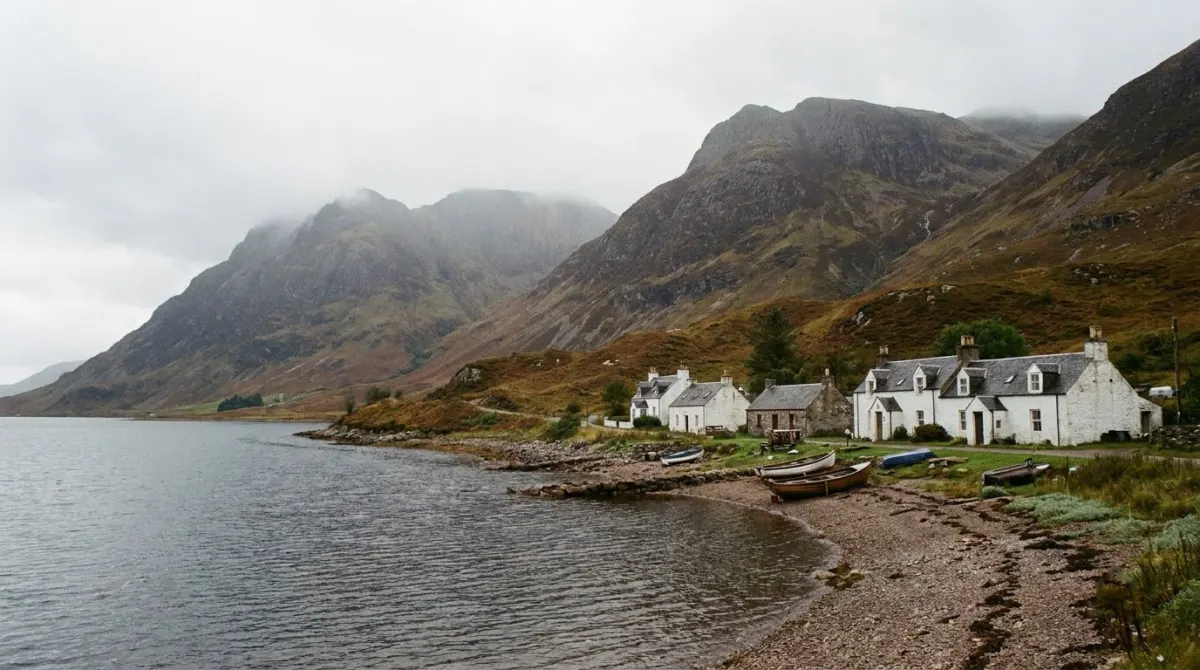
The glen itself is the main event: the pass, the Three Sisters viewpoint, the Study, and the Lost Valley — a hidden corrie above the road where the MacDonalds reputedly hid cattle, reached by an hour’s scramble.
The Glencoe Visitor Centre covers the 1692 massacre, when government soldiers quartered on the MacDonalds killed their hosts, which is the history that gives the glen its atmosphere.
Walking ranges from the valley floor to serious mountaineering on the Aonach Eagach ridge, which is not a walk.
Nearby: Ben Nevis and the Nevis Range gondola, the Glenfinnan viaduct, Loch Leven and the road to Oban.
What the accommodation is like
The supply here is small, old and quickly taken.
Hotels along the A82 and in the villages are mostly Victorian coaching inns and walkers’ hotels — warm, functional, and rarely with lifts.
Bunkhouses and hostels are unusually good in this area, because the West Highland Way brings a steady flow of walkers, and most now have private rooms.
Self-catering cottages are widespread and often let by the week in summer.
Two practical points: mobile signal is patchy through the glen, and dinner stops early — Highland kitchens often close at eight or nine, and in a place with three options that matters.
How many nights
One night works as a stop on a touring route, and it buys you the glen in the evening and the morning rather than only in passing.
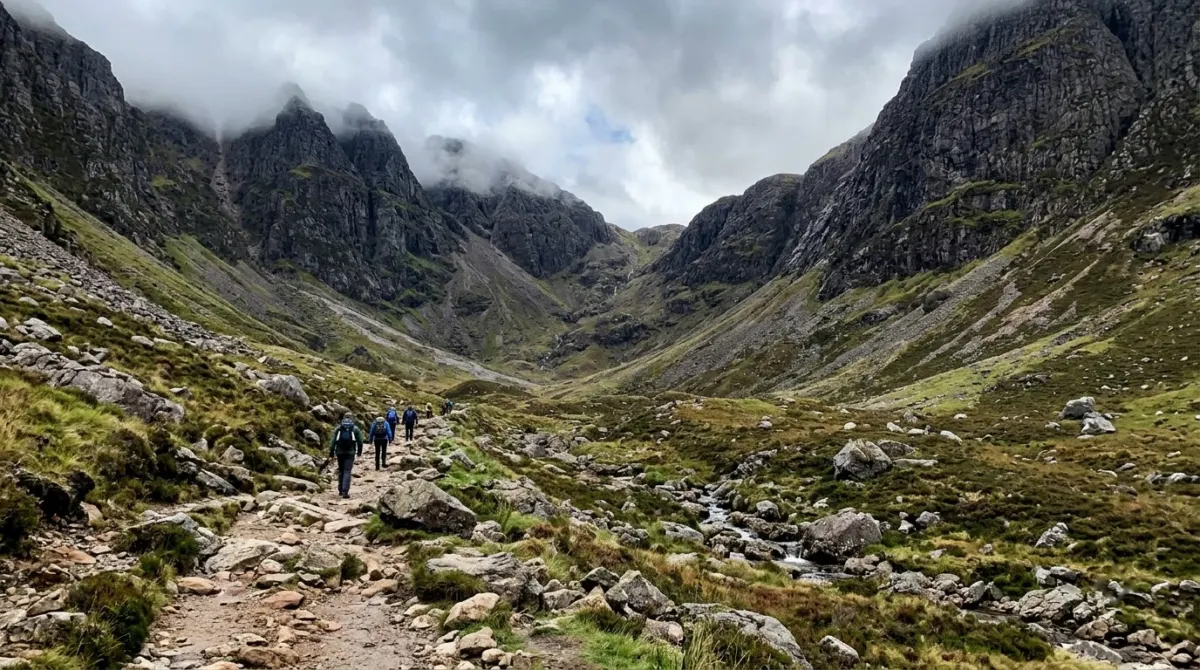
Two nights is the right number. Highland weather changes within the hour, and a second day is a second chance at the view — which in a landscape this dependent on cloud is not a small thing.
Three or more if you are walking: the Lost Valley, Buachaille Etive Mor and the Mamores each take a day.
When it fills up
June to September, and every weekend within that window. The supply across Glencoe, Ballachulish and Fort William is finite and the demand is national as well as international.
Book the Highland nights first and build the rest of your Scottish trip around them — it is the single most useful piece of planning advice for this region, and our Scotland itinerary is built around it.
Glencoe in each season
May and June are the best weeks here: long daylight, the glen green rather than brown, and the midges not yet at full strength. The ridges are still streaked with snow into May.
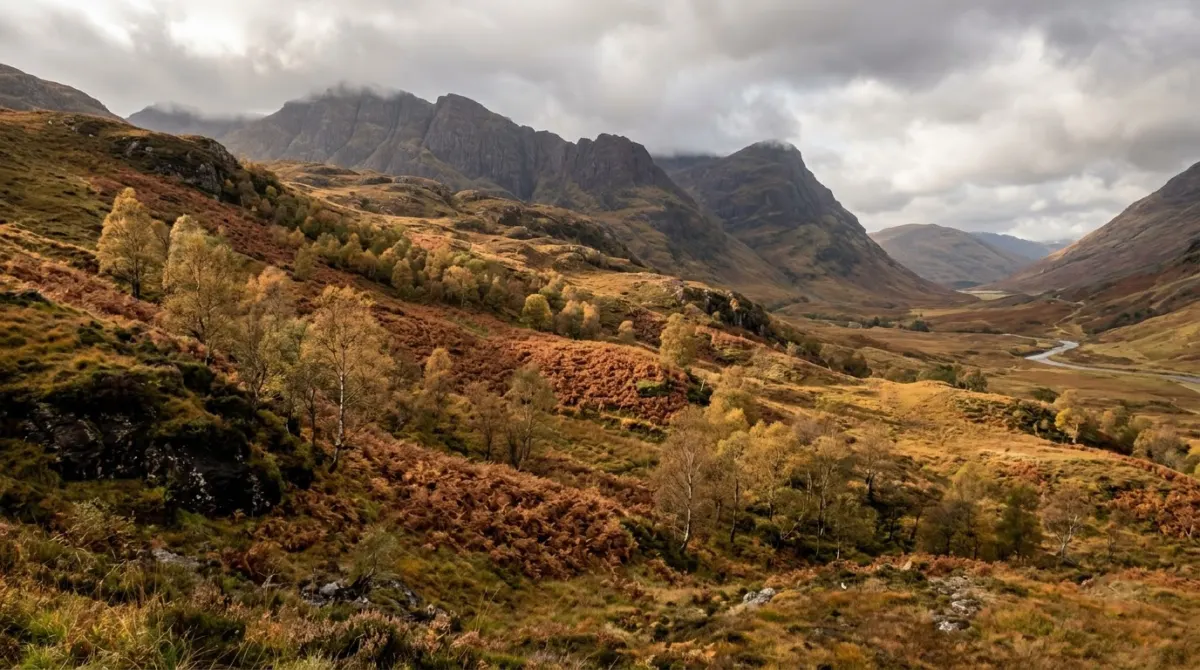
July and August bring the heaviest traffic on the A82, full car parks at the main viewpoints and the worst of the midges on still evenings. The glen is still extraordinary; you share it.
September and October turn the bracken and birch copper, which is when Glencoe photographs best, and the crowds thin from the middle of September.
November to March gives about seven hours of light, snow on the tops, and a real chance of the road over Rannoch Moor being difficult. Winter here is spectacular and it is not a casual drive.
Walking from a base in the glen
The reason to sleep here rather than pass through is that the walks start at the road.
The Lost Valley — Coire Gabhail — is the classic: about three hours return, with a river crossing and a steep scramble into a hidden corrie between the Three Sisters.
The Pap of Glencoe above the village is a shorter, steeper climb with a view down Loch Leven.
Buachaille Etive Mor, the pyramid at the eastern entrance, is a full mountain day.
The Aonach Eagach is a serious scramble along a knife-edge ridge and is not a walk. Do not treat it as one.
Lower down, the old military road and the West Highland Way give level walking for an afternoon.
What to check before booking
Four things that matter more here than in a city.
Whether dinner is available on site. In a place with three or four options, a hotel that serves food is worth a premium.
Parking. Most properties have it; a few on the A82 do not, and there is nowhere else.
Heating and drying. If you are walking, a drying room is the difference between wet boots and dry ones for the second day.
Mobile signal and wifi. Patchy through the glen. Download maps and anything you need before you arrive.
Getting here
Glencoe is about two and a half to three hours from Edinburgh and two from Glasgow, mostly on the A82 along Loch Lomond and across Rannoch Moor — which is one of the great drives in Britain and also a slow one.
Fort William is twenty-five minutes north and has the nearest railway station, on the West Highland Line from Glasgow. Buses between Glasgow and Fort William stop in Glencoe village.
If you are coming from Skye, allow about two and a half hours; from Inverness, two and a half via the Great Glen.
Glencoe with a camera
The glen is one of the most photographed places in Britain and the good light is early and late, which is the whole argument for sleeping here.
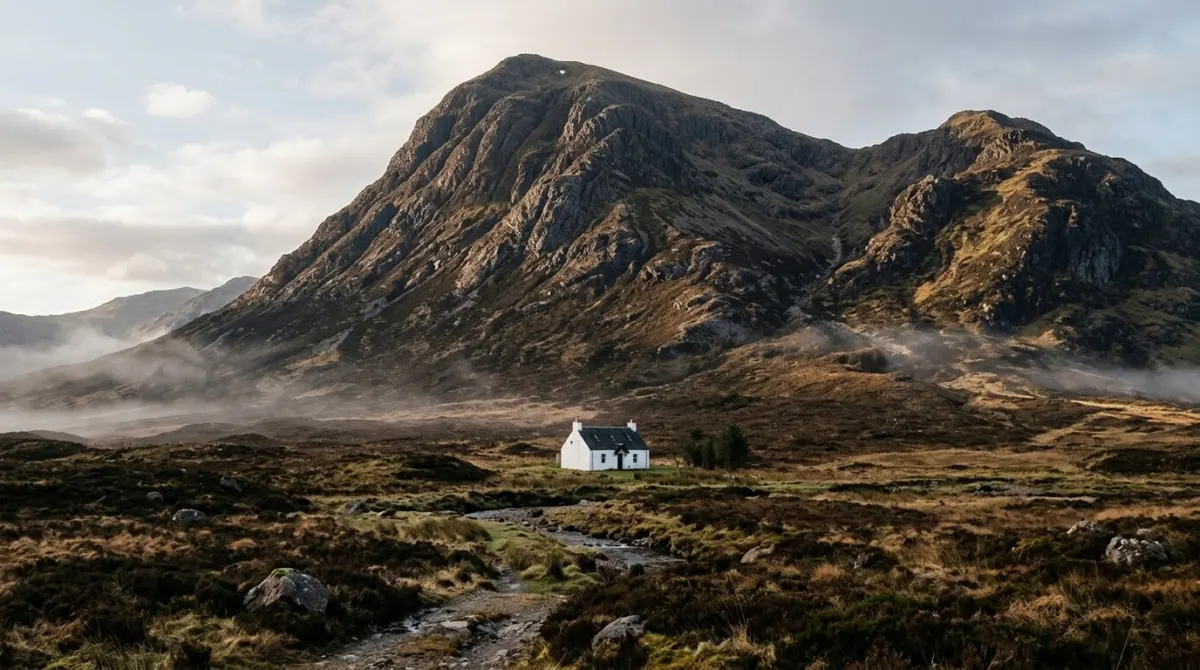
The Three Sisters viewpoint on the A82 faces roughly north, so it works through the day. Buachaille Etive Mor and the small white cottage at Lagangarbh are at their best in early morning side light. The Glencoe Lochan near the village gives reflections on still mornings.
What ruins photographs here is not rain but flat cloud, and the only answer is a second day.
The short version
Sleep in Glencoe village or Ballachulish to have the glen outside the window at first light, in Fort William if you want restaurants and a supermarket, in Kinlochleven if you are walking. Two nights rather than one, because the cloud needs a second chance. Book months ahead for summer, check that dinner is available nearby, and expect no mobile signal through the pass.
Frequently asked questions
Where is the best place to stay in Glencoe?
Glencoe village or Ballachulish at the western end of the glen, which puts you inside the landscape and twenty-five minutes from Fort William for supplies. Fort William itself has far more rooms and far less atmosphere.
Is it better to stay in Glencoe or Fort William?
Glencoe for the landscape and the early morning light; Fort William for choice, restaurants, a supermarket and the railway station. On a two-night stay, Glencoe wins. On a late booking, Fort William is what will be available.
How many nights do you need in Glencoe?
One works as a stop, two is right. Highland weather changes within the hour, and a second day is a second chance at the view. Three or more if you are walking the Lost Valley, Buachaille Etive Mor or the Mamores.
Is there anywhere to eat in Glencoe?
A handful of hotels and pubs in the village and along the road, and that is all. Kitchens often stop serving at eight or nine, and in the shoulder season some close entirely, so check before planning an evening around it.
Can you get to Glencoe without a car?
Yes. Buses between Glasgow and Fort William stop in Glencoe village, and the West Highland Line runs to Fort William. Once there you are limited to what you can walk to, which in Glencoe is a great deal.
When should I book accommodation in Glencoe?
Months ahead for June to September and for any weekend in that period. The supply across Glencoe, Ballachulish and Fort William is small, and this is the part of a Scottish itinerary to book first.
Keep planning Scotland
- Where to Stay on Skye: Portree, or Closer to What You Came For
- Where to Stay in Glasgow: Centre for Convenience, West End for Everything Else
- Where to Stay in Inverness: A Base, Not a Destination
- Where to Stay in Edinburgh: Two Cities, Five Minutes Apart
- How Many Days in Scotland? Seven for the Highlands, Ten for Skye
- How Many Days in Edinburgh? Three, and the Hills Count
- 6 Day Scotland Itinerary: Three Bases, or Two Done Properly
- 5 Day Scotland Itinerary: Two Bases, and What Will Not Fit
Written and checked by
Triplarks Editorial
An editorial desk, not an invented persona: research, drafting and fact-checking are done by the same small team. Every number here carries the date it was read.