Quick answer
Santa Cruz for the cathedral on the doorstep, El Arenal for the same walk with wider streets, Triana across the river for a local evening, and Alameda or Macarena for lower rates and a younger night.
On this page
- Best hotels in Seville: the districts
- Santa Cruz
- El Arenal
- Triana
- Alameda and Macarena
- The heat, which is a planning factor
- The two weeks that sell out
- Barrio by barrio: what the city centre addresses mean
- Patios, pools and Moorish buildings
- What to check before booking
- What the accommodation is like
- Eating, and when
- Getting around
- When to go
- Seville with a car, and why not to
- How many nights, and what each adds
- Seville with children
- Where not to stay
- Day trips, and whether to base yourself here
- The short version
- Frequently asked questions
Seville’s accommodation question is unusual in one respect: for three months of the year the city is extremely hot, and for two weeks of the year it sells out entirely. Both of those matter more than any individual hotel.
Some links below are affiliate links. We may earn a commission if you book through them, at no extra cost to you. We do not rank hotels, and any prices on the map come live from the booking sites.
This guide covers the districts, what the different kinds of Sevillan accommodation get you, and the dates that change everything. For the neighbourhood question first, see where to stay in Seville; for the wider route, our southern Spain itinerary and where to stay in Granada.
Best hotels in Seville: the districts
| District | Character | Suits |
|---|---|---|
| Santa Cruz | The old Jewish quarter, narrow lanes | First visits, atmosphere |
| El Arenal | Between the cathedral and the river | Central, slightly calmer |
| Triana | Across the river | Local life, ceramics, food |
| Alameda and Macarena | North of the centre | Nightlife, younger, cheaper |
| Nervión | Modern, east | Business, larger rooms |
One answer with no caveats: El Arenal or the edge of Santa Cruz. You are a few minutes from the cathedral and the Alcázar, on streets wide enough to find, and slightly out of the densest tourist run.
Santa Cruz
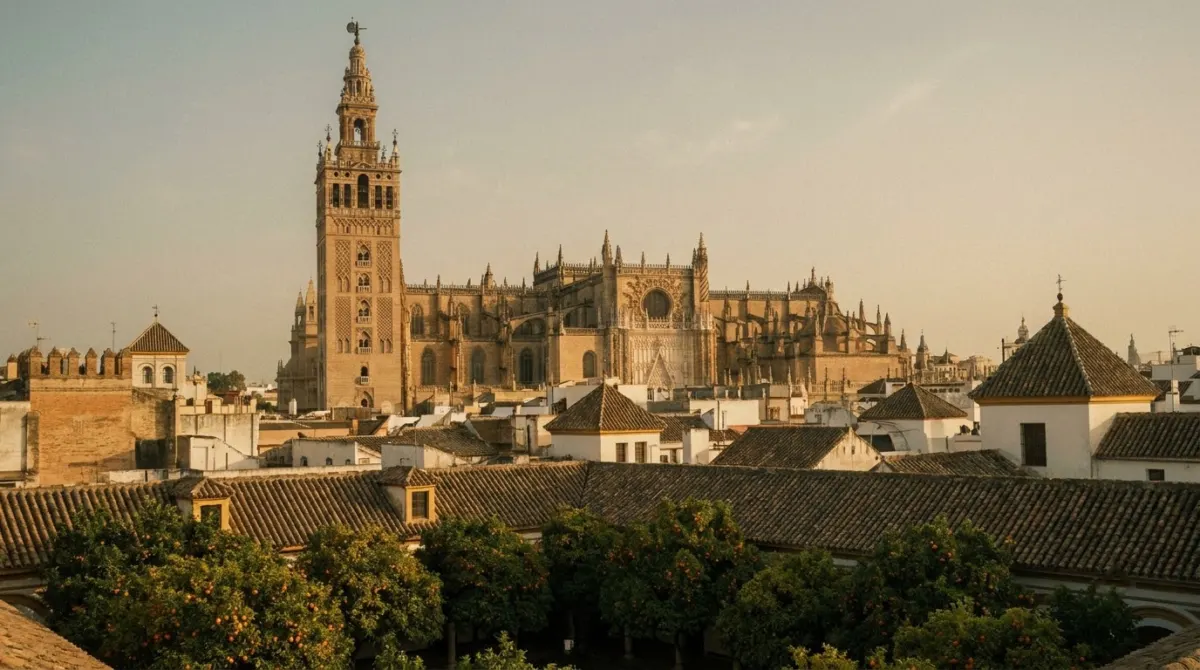
The old quarter beside the cathedral is a maze of whitewashed lanes, orange trees and tiled courtyards. It is the most beautiful part of Seville and the easiest place in Spain to get lost.
Staying here puts the cathedral, the Alcázar and the Archive of the Indies within a few minutes’ walk.
Two drawbacks. The lanes are too narrow for cars, so arriving with luggage means a walk. And it is the busiest part of the city through the day.
El Arenal
Between Santa Cruz and the river, around the bullring and the Torre del Oro.
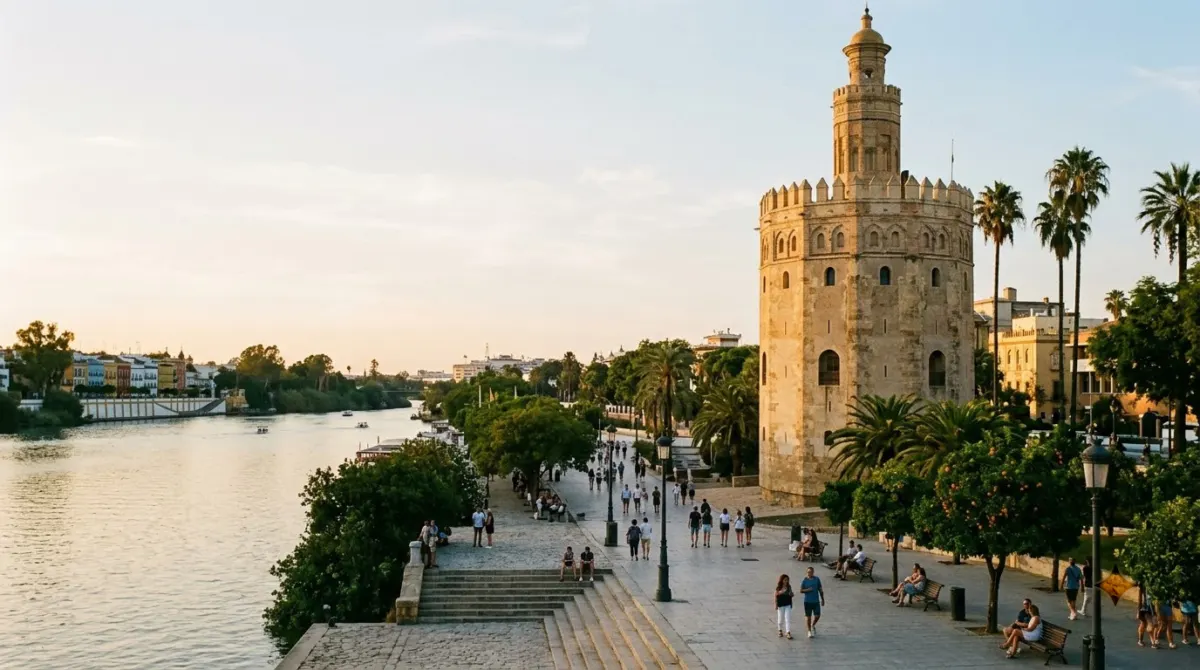
It is central, slightly less crowded, and the streets are wide enough to navigate. Accommodation ranges from converted townhouses to modern hotels.
For most visitors this is the practical choice.
Triana
Across the Guadalquivir, Triana is the old ceramics and flamenco quarter and still feels separate from the centre.
It has the city’s best food market, a run of tapas bars along Calle Betis facing the old town, and prices lower than across the water.
It is ten minutes’ walk over the bridge to the cathedral. For a second visit, or for anyone who wants to eat where locals eat, it is the better side.
Alameda and Macarena
North of the centre, around the Alameda de Hércules, this is the younger, cheaper and noisier part of Seville, with the nightlife to match.
It is fifteen to twenty minutes’ walk from the cathedral. Good value, lively at weekends, and further from the sights than it looks on a map in August.
The heat, which is a planning factor
Seville is one of the hottest cities in Europe. In July and August temperatures regularly exceed forty degrees, and the city adapts rather than fights it: shops close in the afternoon, people go out after nine, and the streets are empty at three.
For accommodation this means two things. Air conditioning is not optional — check it exists and works. And a pool or a courtyard, which many converted houses have, changes a summer stay more than any other feature.
A siesta is not laziness here; it is how the day is structured.
The two weeks that sell out
Semana Santa, the week before Easter, when processions move through the city day and night.
The Feria de Abril, two weeks later, when a temporary city of marquees goes up across the river.
During both, accommodation across Seville sells out months — sometimes a year — in advance, prices multiply, and minimum stays appear. Routes through the centre are closed for processions during Semana Santa.
If you are coming for either, book as early as you can. If you are not, check the dates before booking flights.
Map shows live availability and prices. We may earn a commission on bookings made through it, at no extra cost to you.
Barrio by barrio: what the city centre addresses mean
Seville is described by barrio rather than by postcode, and the names appear in every listing.
Barrio Santa Cruz is the old Jewish quarter, the tangle of lanes between the Alcázar and the Murillo gardens. It is the most atmospheric address in the city centre and the one where the streets are narrowest, which matters with luggage and in the heat.
El Arenal runs between the cathedral and the river, with wider streets and the bullring.
Both put you within a few minutes of Seville Cathedral and the Giralda, which is the single orientation point everyone uses.
Patios, pools and Moorish buildings
What distinguishes the better places here is architectural, and it is worth knowing what to look for.
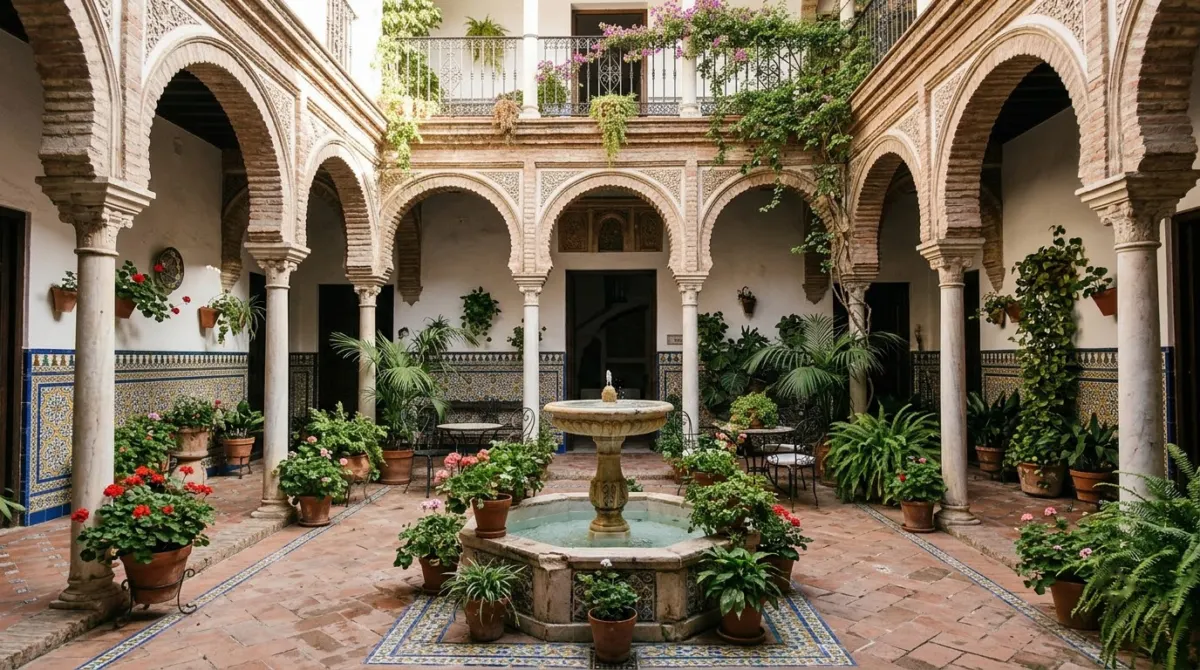
The courtyard. The traditional Sevillian house is built around a central patio with a fountain, which is how the building cooled itself before air conditioning. Converted houses keep it, and a room facing the patio is quieter and darker than one facing the street.
Moorish and mudéjar detail — horseshoe arches, carved plaster, glazed tilework — survives in the older conversions, and is the reason several of them are listed buildings with the lift problems that implies.
A swimming pool or a rooftop pool is close to essential from June to September, when Seville is the hottest city in Europe. In the old quarters it will be small and on the roof, because there is no ground to put one on. Confirm it is open — several close out of season.
What to check before booking
Air conditioning, for the obvious reason.
How close a vehicle can get, since Santa Cruz is largely unreachable by car.
A lift, which older converted houses often lack.
Noise, particularly around the Alameda and the tapas streets.
What the accommodation is like
Seville’s centre is dense and old, which shapes the stock.
Converted townhouses built around a central courtyard are the characteristic format, and the courtyard is the point: it keeps the building cool and it is where breakfast is served.
Modern hotels are concentrated on the wider streets and in Nervión, and are where lifts and reliable air conditioning are certain.
Apartments are widespread and suit stays over three nights, particularly with the heat and the late dining.
Rooftop terraces are common and are worth more here than in most cities, because the evening is when Seville is outdoors.
Eating, and when
Seville runs late even by Spanish standards, and this affects what you want from a location.
Lunch is from around two, dinner from nine or later, and tapas bars fill between those. Many kitchens do not open before eight thirty in the evening.
That makes a central address more useful than it sounds, because walking twenty minutes home at midnight in August is unpleasant. It also means a hotel breakfast matters less here than in northern Europe — a coffee and a tostada at a bar is the local pattern and costs very little.
Getting around
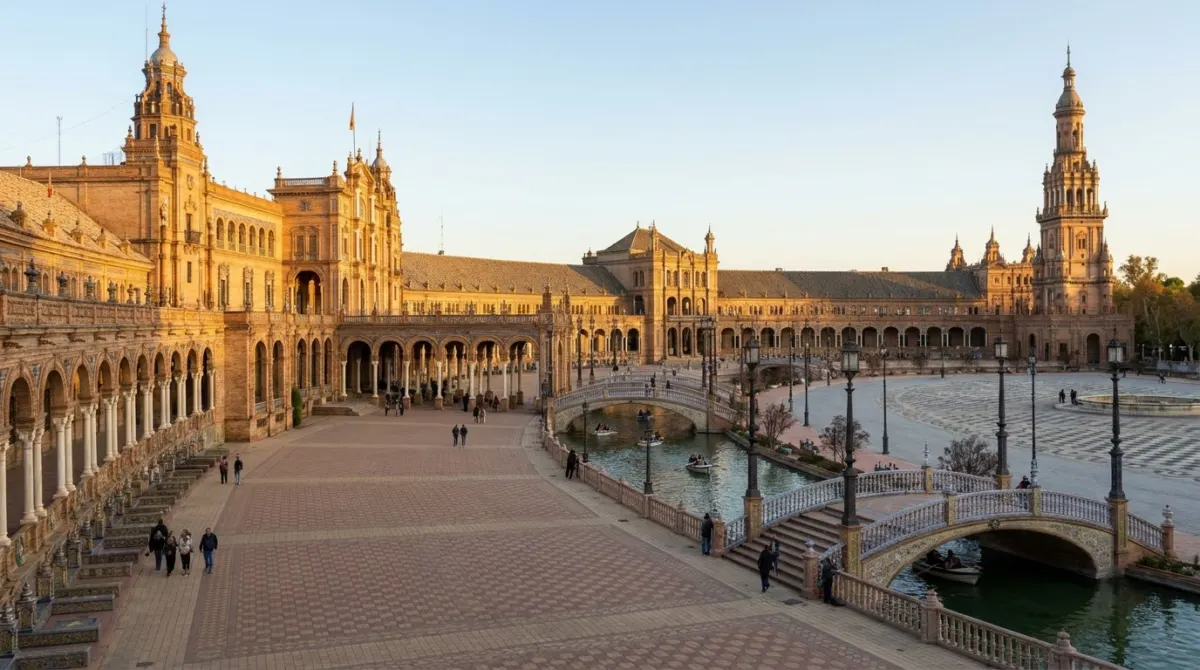
The centre is walkable and much of it is pedestrianised. Distances are short: the cathedral to the Plaza de España is about fifteen minutes.
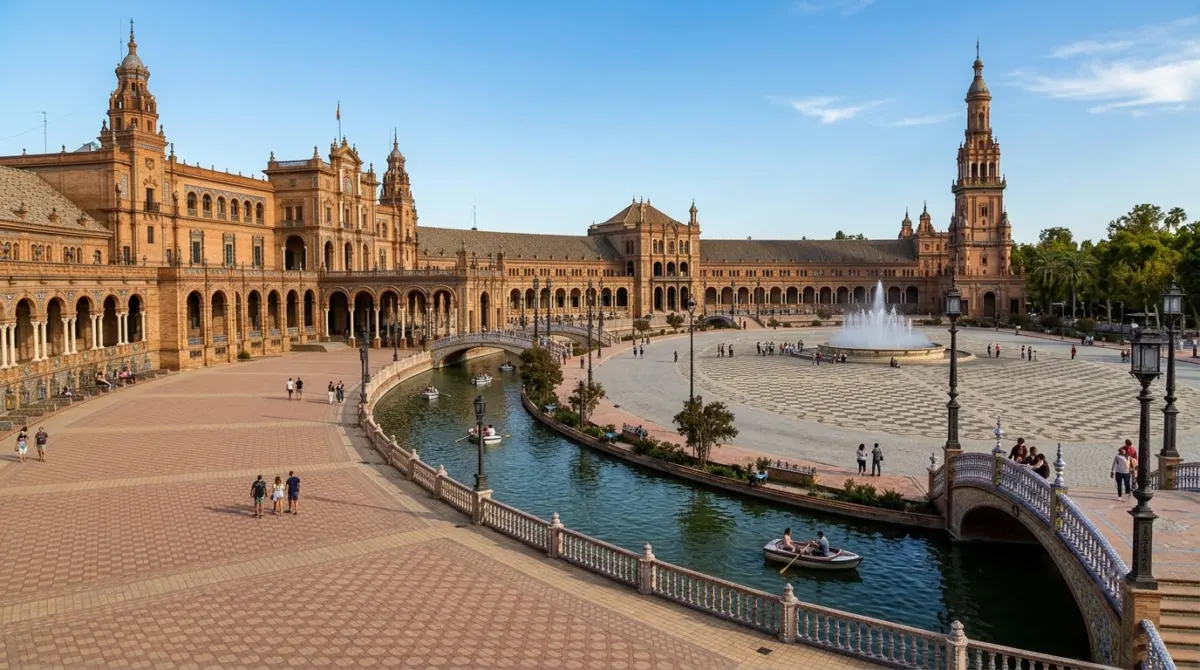
There is one metro line, which is useful for Nervión and little else, and a tram along the main axis.
The airport is about twenty minutes by bus from the centre.
Trains from Santa Justa reach Córdoba in forty-five minutes and Madrid in two and a half hours, which makes Seville easy to combine.
When to go
March to May and October to November are the best months: warm, open and comfortable to walk in.
June to September is extremely hot, with August the quietest month locally because Sevillanos leave.
December to February is mild, cheap and quiet, and the orange trees are in fruit.
And the two weeks that override everything: Semana Santa and the Feria de Abril, when the city sells out and the centre closes for processions.
Seville with a car, and why not to
The historic centre is a maze of one-way lanes with restricted access, and street parking is effectively nonexistent.
If you are touring Andalusia by car — which is a good way to see it — the sensible approach is a hotel with its own garage or a public car park on the edge of the centre, and leaving the car there for the duration.
Within the city you will walk. For Córdoba, the train is faster than driving; for the white villages and Ronda, the car earns its place.
How many nights, and what each adds
Two nights covers the cathedral, the Alcázar and Santa Cruz at a brisk pace.
Three adds Triana, the Plaza de España and an evening of flamenco without rushing.
Four adds a day trip, with Córdoba forty-five minutes away by fast train and Cádiz about an hour and a half.
Five or more makes Seville a base for Andalusia, with Ronda and the white villages reachable by car and Granada about three hours by road.
Seville with children
The heat is the constraint, and the answer is to invert the day: out early, indoors or in a pool from two until six, out again in the evening when the city is.
What works: the Alcázar gardens, the boat on the canal at the Plaza de España, the river cruise, and the Isla Mágica theme park on the old Expo site.
For accommodation, a pool or a shaded courtyard is worth more than any other feature between June and September, and an apartment with a kitchen suits the late dining pattern better than a hotel breakfast.
Where not to stay
Deep inside Santa Cruz with heavy luggage, where the lanes are too narrow for cars.
On the Alameda, unless you want the nightlife underneath you.
Anywhere without air conditioning between June and September, which is not a comfort question in a city that passes forty degrees.
Day trips, and whether to base yourself here
Seville makes a strong base for western Andalusia, which is an argument for booking more nights in one place rather than moving every two days.
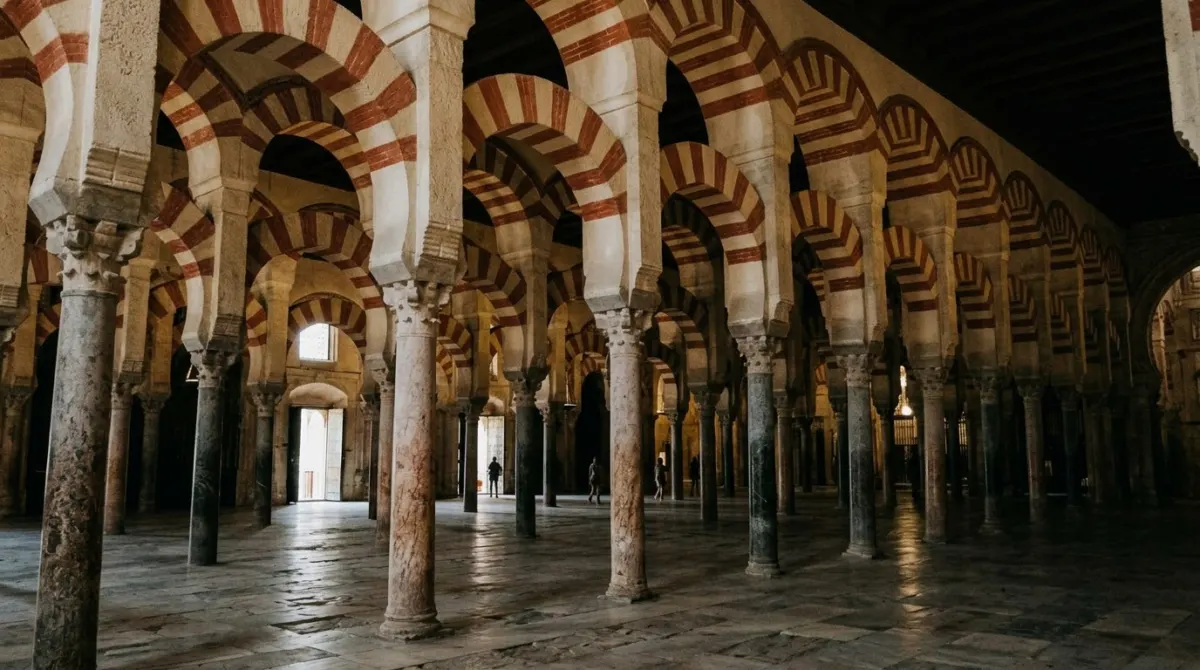
Córdoba is about forty-five minutes by fast train, for the Mezquita and the old Jewish quarter, and it works comfortably as a day out.
Cádiz is an hour and a half, a sea-surrounded old town with beaches inside the city.
Jerez de la Frontera is an hour, for the sherry bodegas and the riding school.
Itálica, the Roman town at Santiponce, is twenty minutes by bus and has an amphitheatre most visitors never hear about.
Ronda and the white villages are further — around two hours each way — and are better as an overnight than a day trip.
All of the first four run on public transport from the centre, which is the practical reason to stay near Santa Justa station or within easy reach of it rather than deep in the old town.
The short version
El Arenal or the edge of Santa Cruz for most visitors, Triana across the river for food and local life, the Alameda for value and nightlife, Nervión for larger modern rooms. Confirm air conditioning, a lift and how close a vehicle can get. Book the Alcázar and the cathedral online, eat late because the city does, and check whether your dates collide with Semana Santa or the Feria before you book anything at all.
Frequently asked questions
What is the best area to stay in Seville?
El Arenal or the edge of Santa Cruz: a few minutes from the cathedral and the Alcázar, on streets wide enough to navigate, and slightly outside the densest tourist run. Triana across the river for food and local life.
Is Santa Cruz a good place to stay?
It is the most beautiful quarter and the hardest to reach with luggage, because the lanes are too narrow for cars. Stay on its edge rather than deep inside it if you are arriving by taxi.
Do I need air conditioning in Seville?
In summer it is essential. Seville regularly exceeds forty degrees in July and August, and a courtyard or a pool makes a bigger difference to a stay there than any other feature.
When does Seville sell out?
Semana Santa, the week before Easter, and the Feria de Abril two weeks later. Accommodation across the city goes months or even a year ahead for both, prices multiply and minimum stays appear.
Is Triana worth staying in?
Yes, particularly on a second visit. It is the old ceramics and flamenco quarter across the river, with the best market and a run of tapas bars, and it is ten minutes' walk from the cathedral.
How many nights do you need in Seville?
Three for the cathedral, the Alcázar, Santa Cruz, Triana and the Plaza de España. Four if you want Córdoba, which is forty-five minutes by fast train, or a slower pace with a flamenco evening.
Keep planning Spain
- Where to Stay in Granada: Book the Alhambra Ticket First
- Where to Stay in Seville: You Are Choosing a Patio, Not a View
- Where to Stay in Madrid: Pick the Evening, Not the Distance
- Where to Stay in Barcelona: Best Neighborhoods Compared
- How Many Days in Granada? Count the Nights Instead
- How Many Days in Madrid? Three for the City, Five for the Day Trips
- How Many Days in Barcelona? Four, and the Tickets Explain Why
- Southern Spain Itinerary: The One Part of Spain You Should Drive
Written and checked by
Triplarks Editorial
An editorial desk, not an invented persona: research, drafting and fact-checking are done by the same small team. Every number here carries the date it was read.