
Madrid has no single old town you have to stay inside. The center of Madrid is a ring of barrios around Puerta del Sol, and almost all of them are within walking distance of it — fifteen to twenty minutes, on flat ground.
Some links below are affiliate links. We may earn a commission if you book through them, at no extra cost to you. We do not rank hotels, and any prices on the map come live from the booking sites.
Quick answer: where to stay in Madrid. Barrio de las Letras: five minutes from Sol, five from the Prado, full of restaurants and quiet enough to sleep in. Sol and Centro for a short first trip, La Latina for tapas and old Madrid.
So the question is not how central you are. It is which evening you want when you step out of the door: a plaza of terraces, a street of old tiled taverns, a strip of bars that runs until four, or a quiet residential block.
This is a guide to the best places to stay in Madrid worked through on that basis, area by area. Planning a trip here starts with this choice, not with a hotel list. Metro lines, walking times and neighborhood boundaries checked 7 September 2026. Rates change constantly, so check current prices yourself.
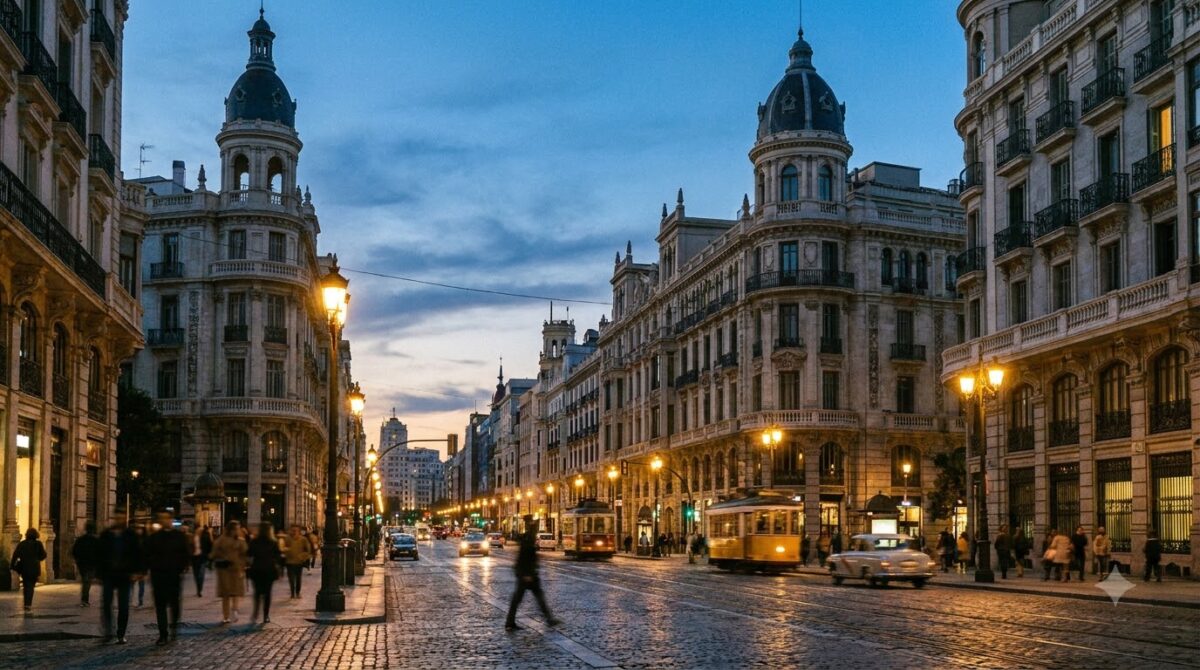
The best places to stay in Madrid at a glance
| Neighborhood | Walk to Sol | Price | Best for |
|---|---|---|---|
| Sol and Centro | 0–5 min | Moderate | First timers, short trips |
| Barrio de las Letras | 5–10 min | Moderate–high | The best all-round choice |
| La Latina | 10 min | Moderate | Tapas, old Madrid, Sunday market |
| Malasaña | 10–15 min | Moderate | Nightlife, independent shops |
| Chueca | 10 min | Moderate | Bars, restaurants, LGBTQ scene |
| Salamanca | 20–25 min | High | Luxury, quiet, shopping |
| Retiro and Paseo del Prado | 15 min | High | Museums, green space, calm |
| Lavapiés | 10–15 min | Lowest | Budget, food, character |
If you want one recommendation: Barrio de las Letras. It is five minutes from Sol, five from the Prado Museum, full of restaurants, and quiet enough to sleep in. For a first time in Madrid it is the best area to stay by a clear margin.
Sol and Madrid Centro: the most central place to stay
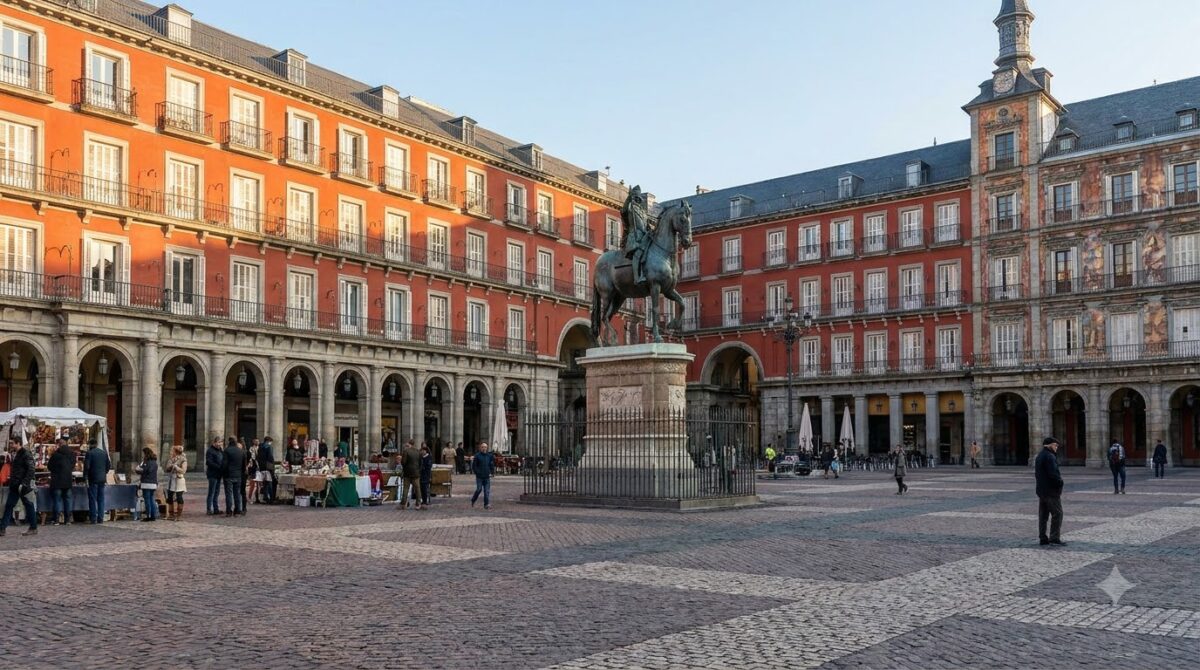
Puerta del Sol is the geographic centre of the city and, officially, of Spain — kilometre zero is marked in the pavement. Everything in central Madrid is measured from here.
- You cannot be closer to the city’s main tourist attraction cluster. Plaza Mayor, Madrid, the Royal Palace and Gran Via are all a few minutes on foot.
- Metro lines converge at Sol, and the airport connection is straightforward.
- It is loud and busy at all hours, and the streets immediately around Sol are the most touristed part of the city.
- Pricing in Madrid Centro is middling rather than high, because there are many places to stay packed into a small area.
Stay somewhere in Sol if you have two or three days in Madrid and want zero transit time. Stay one street away from it if you want to sleep.
Gran Vía
Gran Vía, Madrid is the grand boulevard cut through the city in the 1910s, lined with theatres, shops and early skyscrapers. Plaza de España sits at its western end. Staying on it is spectacular and noisy; a room on a side street off Gran Vía gives you the location without the traffic.
Madrid de los Austrias
The oldest part of the city, west of Sol around Plaza Mayor and the Royal Palace, named for the Habsburg kings who built it. Narrow streets, stone arcades and the closest thing Madrid has to a medieval quarter. Quieter at night than Sol, and just as central.
Barrio de las Letras: the top recommendation
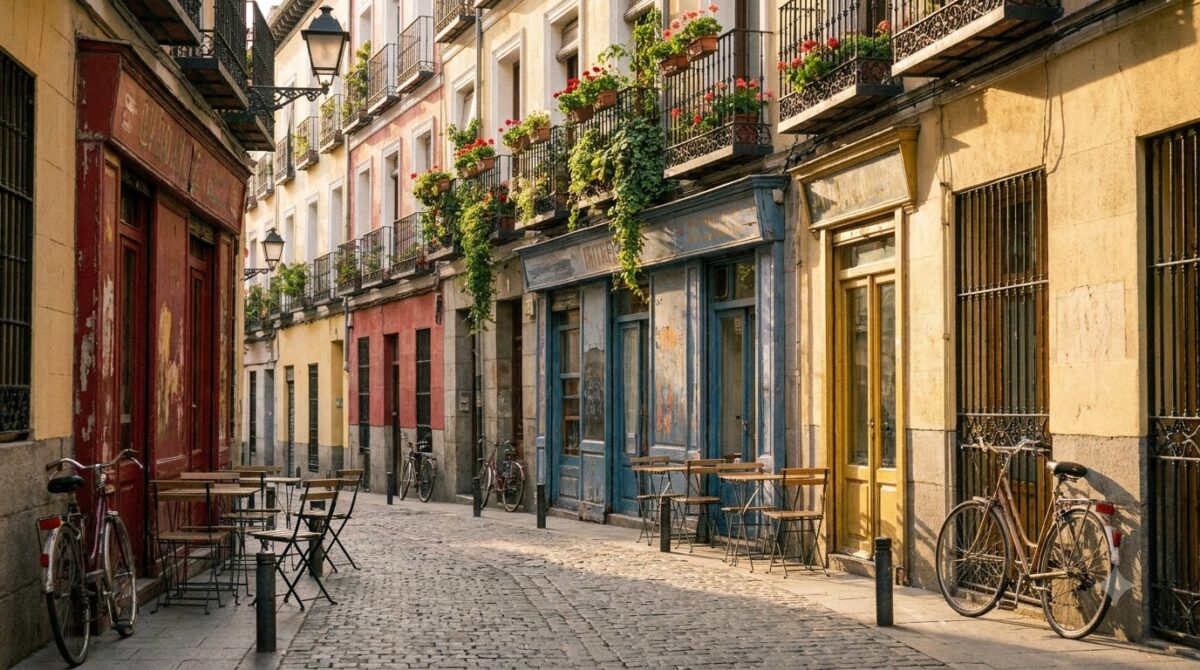
Also called Huertas, this is the old literary quarter between Sol and the Paseo del Prado, where Cervantes and Lope de Vega lived. Lines of their writing are set into the paving stones.
- Position is the whole argument. Five minutes to Sol, five to the Museo del Prado, ten to La Latina.
- Plaza Santa Ana at its heart is a square of terraces and old theatres, busy in the evening and calm by midnight. Apartments and Airbnb listings around Santa Ana are plentiful.
- Restaurants are dense and good, and less aimed at visitors than those around Plaza Mayor.
- Boutique hotel supply is strong here, in converted townhouses on quiet streets.
If it’s your first time in Madrid and you do not want to think about it, book here. This is the standard answer for where to stay for first-timers and it is the right one.
Map shows live availability and prices. We may earn a commission on bookings made through it, at no extra cost to you.
La Latina: old Madrid and the best tapas
Southwest of Sol, Barrio de La Latina (Madrid) is the barrio of tiled taverns, narrow streets and vermouth on a Sunday. Calle Cava Baja alone has more good tapas bars in three hundred metres than most cities have in total.
- El Rastro, the Sunday flea market, runs through it and fills the whole quarter.
- Evenings are the point. This is where Madrid’s best and the city’s best traditional bars are, and where locals go. It is the oldest part of the neighborhood fabric south of the palace.
- Accommodation is limited — few large hotels, more apartments and small guesthouses.
- Noise on weekend nights is real on the main bar streets.
Malasaña: the coolest neighborhood in Madrid
North of Gran Vía, Malasaña is the barrio that the movida madrileña came out of in the 1980s and it has stayed the city’s creative quarter since.
- Plaza del Dos de Mayo is its centre, ringed with terraces.
- Independent shops, record stores and coffee bars fill the streets between it and Gran Vía.
- Nightlife runs very late. If you want to be in the middle of it, stay here; if you want to sleep, do not.
- Modern hotel and apartment supply has grown fast here, with several serviced-apartment operators in converted blocks.
Chueca: bars, restaurants and the best nightlife
East of Malasaña and north of Barrio de las Letras, Chueca, Madrid is the heart of Madrid’s LGBTQ scene and one of the best parts of the city to eat in.
- Mercado de San Antón is the neighborhood market turned food hall, with a roof terrace.
- Restaurants outnumber sights here, which is the appeal.
- Central without being touristed, and ten minutes from Sol on foot.
- Busy at night, particularly at weekends and during Pride in early July, when the whole barrio closes to traffic.
Salamanca: luxury and quiet
East of the Paseo de la Castellana, Salamanca is Madrid’s grid of nineteenth-century apartment blocks and luxury goods shopping on Calle Serrano.
- The best luxury hotels in Madrid are concentrated here and along the Paseo del Prado.
- It is residential and calm, with wide pavements and no nightlife to speak of.
- Twenty to twenty-five minutes on foot to Sol, or five stops on the metro.
- Best for a longer stay, a second visit, or travellers who want space over atmosphere.
Retiro and Paseo del Prado: museums and green space
The eastern edge of the centre, running along the museum boulevard and up against El Retiro park.
- The Museo del Prado, the Reina Sofía and the Thyssen-Bornemisza Museum sit on the same stretch, which is a UNESCO World Heritage listing in its own right. The three best museums in Madrid are within ten minutes of each other.
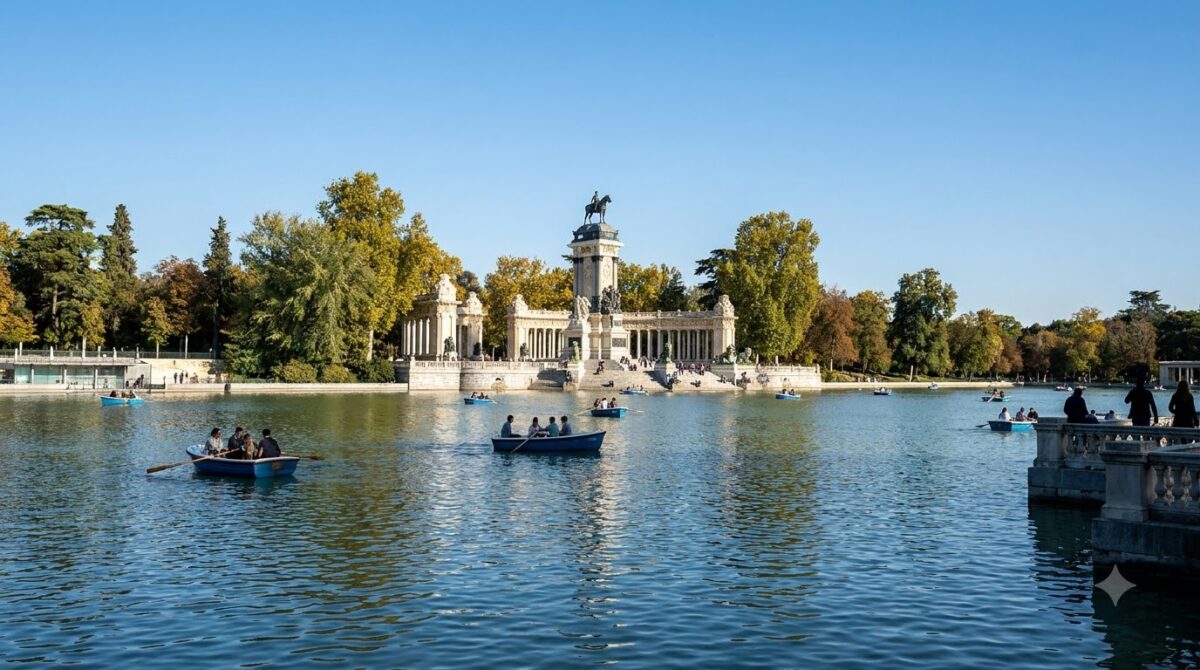
- Parque del Buen Retiro is 125 hectares of gardens, a boating lake and a glass palace, and El Retiro is the reason to stay on this side.
- Grand hotels face the boulevard, including several converted palaces around the Retiro end.
- Quiet at night, and fifteen minutes from Sol.
Madrid Atocha railway station is at the southern end of this stretch, which matters if you are taking the AVE to Seville or Barcelona.
Lavapiés and Chamberí: cheap places to stay in Madrid
- Lavapiés, south of Barrio de las Letras, is the most multicultural part of the city and the cheapest place to stay near the centre. Excellent food, rough edges, and ten to fifteen minutes on foot to Sol.
- Chamberí, north of Malasaña, is residential Madrid with almost no visitors, good restaurants and lower prices. Twenty-five minutes on foot or a short metro ride.
Both are safe, and both give you noticeably more room for the money than anything in Centro.
Accommodation in Madrid: the best hotels and where they cluster
Listings are hard to place because a Madrid address rarely tells you which barrio it is in. These are the categories and the parts of the city they sit in, described by position and type only. Check rates and availability yourself rather than trusting any guide, including this one.
Boutique hotels in converted townhouses
Concentrated in Barrio de las Letras and Madrid de los Austrias, usually twenty to forty rooms in a nineteenth-century building, often with a roof terrace. A stylish boutique hotel on Calle Valverde such as 7 Islas Hotel, on a quiet street between Gran Vía and Malasaña, is typical of the type: central, small, and built around a courtyard rather than a lobby.
Grand and luxury hotels
Along the Paseo del Prado and in Salamanca, mostly in converted palaces and early twentieth-century blocks. Hotel Palacio del Retiro, in a listed 1900s palace facing the park, is the clearest example of where this category sits: on the green eastern edge rather than in the middle.
Serviced apartments
Operators such as Líbere Malasaña and Limehome Madrid have taken over whole residential blocks in Malasaña, Chueca and Centro (Madrid). The typical hotel is very modern in this category, and these operators and they are the practical answer for stays over three nights or for families. Self check-in, a kitchen, no reception, and generally better value than a hotel room of the same size.
Budget hotels and hostels
Chains operate budget properties around Lavapiés, Atocha and the southern edge of Centro — Ibis Budget Madrid Centro Lavapies is the clearest marker of where this category sits — and the hostel supply around Sol and Malasaña is large and good. This is the cheapest way to keep a central location.
Getting around Madrid: is it walkable?
Traveling to Madrid, the first thing you notice is that it is one of the most walkable capitals in Europe. Getting around Madrid on foot is the default. The centre is flat, compact and continuous, and the walk from Malasaña in the north to Lavapiés in the south takes about thirty minutes.
- You will walk everywhere within the centre. Every one of these parts of Madrid is within walking distance of the main sights, and the architecture and street culture are half the reason to be here.
- The metro is excellent and cheap, with twelve lines and trains every few minutes. Use it for the airport, Salamanca and the football grounds.
- The airport connection runs from Nuevos Ministerios and Sol with one change, and takes about forty minutes.
- Do not rent a car. Central Madrid is a low-emission zone with camera enforcement and parking is difficult and expensive.
Which part of Madrid is safest?
Madrid is among the safer large cities in Europe, and every neighborhood in this guide is fine to stay in, including at night.
- Pickpocketing is the real risk, concentrated around Sol, Gran Vía, Plaza Mayor and on the metro.
- Salamanca, Chamberí and Retiro are the quietest and most residential if that is your priority. If you want to stay in Salamanca, that is the trade you are making: calm over character.
- Lavapiés feels rougher than the rest of the centre but is not dangerous; it is simply less polished.
- The area immediately south of Gran Vía around Calle Montera is the one stretch most locals would tell you to walk past rather than linger in.
How many days in Madrid, and what it costs
- Three nights is the standard, and it fits the Prado, the Royal Palace, Retiro and two evenings out.
- Four nights adds a day trip to Toledo or Segovia without cutting the city short.
- Two nights works if Madrid is one stop on a wider itinerary through Spain.
- Madrid is cheaper than Barcelona for accommodation of the same standard, and much cheaper than Paris or Rome.
- Prices spike during Semana Santa, in early July for Pride, and around major football fixtures. Booking early matters more than knowing exactly where to stay.
The best area to stay in Madrid, by type of traveler
Madrid has a lot of central neighborhoods and they are genuinely close together, so pick from these areas and hotels based on your travel style rather than on a map.
| You are | Stay in | Why |
|---|---|---|
| Here for the first time | Barrio de las Letras | Between Sol and the museums, quiet at night |
| Here for two nights only | Sol or Centro | Zero transit, everything on foot |
| Here to eat | La Latina or Chueca | The city’s best tapas bars and restaurants |
| Here for the nightlife | Malasaña | The heart of the neighborhood runs until four |
| A family of 4 | Chamberí or Retiro | Apartments, space, green, calm |
| On a budget | Lavapiés | Cheapest rooms near the centre |
| Wanting luxury | Salamanca or Paseo del Prado | Grand hotels, wide streets, shopping |
Choose your hotel Madrid base based on your travel plans and the rest follows. Deciding where to stay in Madrid is easier than in most European capitals, because the penalty for choosing wrong is fifteen minutes of walking rather than an hour of transit. If you cannot figure out where to stay, take Barrio de las Letras and stop thinking about it.
Checking current rates in Madrid
Everything above is about position — which area suits which kind of trip. What it deliberately does not do is quote prices, because rates in Madrid move a long way by season, by day of the week and by how far ahead you book, and any figure printed in a guide is out of date the week after it is written.
These searches show live availability and current prices, so you can check them against the areas described above:
These are affiliate links. If you book through one we may earn a commission, at no extra cost to you. It does not affect which areas we recommend above — nobody pays to be listed here.
Heading south afterwards? See the southern Spain itinerary for Seville, Córdoba, Ronda and Granada.
Still deciding on trip length? See how many days in Madrid you need, and why the day trips change the answer.
Frequently asked questions
Where are the best areas to stay in Madrid?
Barrio de las Letras for a first visit, because it sits between Sol and the Prado Museum with good restaurants and quiet streets. Sol and Centro if you want to be at the exact centre, La Latina for traditional tapas bars, Malasaña and Chueca for nightlife, and Salamanca or Retiro for quiet and luxury.
Where should first-time visitors stay in Madrid?
Barrio de las Letras, also called Huertas. It is five minutes from Puerta del Sol, five from the Museo del Prado and ten from La Latina, so you walk to everything. It also has the best concentration of boutique hotels in the city centre and is quieter at night than the streets right around Sol.
What is the coolest neighborhood in Madrid?
Malasaña. It came out of the movida madrileña of the 1980s and is still the city’s creative quarter, full of independent shops, record stores, coffee bars and late nightlife around Plaza del Dos de Mayo. Chueca next door is a close second and better for eating.
Is Madrid a very walkable city?
Yes, unusually so. The centre is flat and compact, and every neighborhood in this guide is within about twenty minutes on foot of Puerta del Sol. The metro is excellent for the airport, Salamanca and the outer districts, but you will walk most of a trip to Madrid rather than ride.
Which neighborhood in Madrid is considered the safest?
Salamanca, Chamberí and the Retiro area are the quietest and most residential. That said, Madrid is one of the safer large cities in Europe and all the central barrios are fine at night. The genuine risk is pickpocketing around Sol, Gran Vía and Plaza Mayor rather than anything more serious.
How much does a hotel typically cost in Madrid?
Madrid is cheaper than Barcelona for a comparable room and much cheaper than Paris or Rome. Lavapiés and Chamberí are the best value near the centre, Sol and Centro sit in the middle because supply is large, and Salamanca and the Paseo del Prado are the most expensive. Rates rise sharply during Semana Santa and Pride, so check current prices directly.
Should I stay near Atocha station?
Only if you have an early AVE train. Atocha train station sits at the southern end of the Paseo del Prado, which is a fifteen minute walk from Sol and next to the museums, so it is a reasonable location. But the streets immediately around the station are unremarkable, and Barrio de las Letras is ten minutes closer to everything for the same money.