
Spain is the wrong size to drive and the right size to take the train. Madrid to Seville is two and a half hours on the AVE. Madrid to Barcelona is the same. Madrid to Valencia is under two.
Some links below are affiliate links. We may earn a commission if you book through them, at no extra cost to you. We do not rank hotels, and any prices on the map come live from the booking sites.
Quick answer: where to stay on this route. Three bases: Madrid for days 1 to 4, Seville for 5 to 7, and Barcelona for 8 to 10. Fly into Madrid and out of Barcelona, or the reverse.
That changes the shape of a Spain itinerary. Most guides give you a loop. What actually works is spokes: Madrid in the middle, the other cities hanging off it, and almost no time lost in transit.
The travel itinerary below is 10 days built that way, with a short itinerary and a longer one after it. Rail connections, opening patterns and booking rules checked 7 September 2026.
How many days do you need to visit Spain?
- Seven days in Spain — two cities. Barcelona and Madrid, or Madrid and Seville. Anything more is packing and unpacking.
- 9 days — three cities, comfortably. This is the shortest trip that feels unhurried.
- 10 days in Spain — three cities plus two day trips, which is the itinerary below and the best value for the flight. This is the standard 10 day trip to Spain and the one most people should take.
- Two weeks in Spain — adds Andalusia properly, or northern Spain, or a stretch of coast.
- Three weeks — Spain and Portugal together, which is a natural pairing by rail and by bus.
Do not try to see all the best places in Spain in a week. Your time in Spain goes further in three cities than in six. The country is the second largest in western Europe, and the distance from Barcelona to Seville is roughly London to Edinburgh twice.
The 10-day Spain itinerary at a glance
| Days | Base | Doing |
|---|---|---|
| 1–3 | Madrid | The city, the Prado, Retiro Park |
| 4 | Madrid | Day trip to Toledo or Segovia |
| 5–7 | Seville | Alcazar, cathedral, Cordoba day trip |
| 8–10 | Barcelona | Gaudi, Gothic Quarter, the beach |
Fly into Madrid–Barajas Airport and out of Josep Tarradellas Barcelona–El Prat Airport, or the reverse. Flights from the United States land at both. An open-jaw ticket saves you a whole travel day and usually costs little more.
Day 1: arrive in Madrid
Your first day in Madrid should be deliberately light, because you will be tired and Spain eats late.
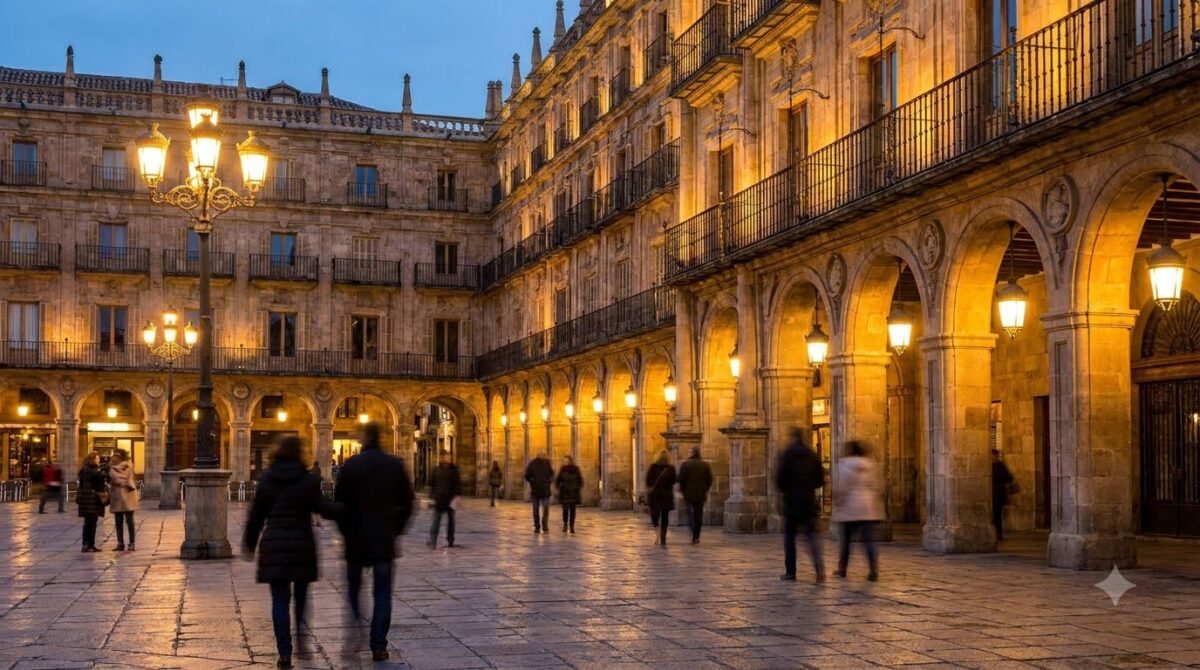
- Plaza Mayor and the streets around it, the enclosed seventeenth-century square at the heart of old Madrid.
- Mercado de San Miguel, the covered iron Market of San Miguel beside it. Touristy, expensive, and still the easiest first meal in Spain.
- Puerta del Sol and a slow walk without a plan.
- Chocolateria San Gines for churros, which has been open since 1894 and runs very late.
Eat at nine or later. Kitchens in most Spanish cities barely start before then, and a restaurant full at seven is a restaurant full of visitors.
Day 2: the Prado Museum and Retiro Park
- The Prado Museum holds the Spanish crown’s collection — Velazquez, Goya, Bosch. Three hours is enough; six is a mistake. Book a timed slot.
- The Reina Sofia, ten minutes away, has Guernica. If you only do one museum, the Prado; if two, this.
- Retiro Park in the afternoon, with its boating lake and the glass Palacio de Cristal. This is where Madrid goes on a Sunday.
- A tapas bar crawl in La Latina or Huertas in the evening. Order at the bar, stand up, move on after one.
Day 3: the Royal Palace and Madrid’s neighborhoods
- The Royal Palace is the largest functioning royal palace in Europe by floor area, and the state rooms take about two hours.
- Almudena Cathedral next door, and the Sabatini gardens behind.
- Malasana and Chueca in the afternoon — the neighborhoods where Madrid actually lives, full of small shops and bars.
- A walking tour of the old center is worth it on this day rather than the first, once you have your bearings.
Association football matters here in a way that surprises visitors. The Bernabeu stadium tour is in Madrid, Atletico’s ground is across the city, and in Barcelona the FC Barcelona museum is the equivalent stop.
Map shows live availability and prices. We may earn a commission on bookings made through it, at no extra cost to you.
Day 4: a day trip from Madrid to Toledo or Segovia
Both are half an hour from Madrid by high-speed train, and both are worth a full day. Take a day trip to one of them — one day trip from Madrid, not two — this is the day people try to squeeze in both and enjoy neither.
A day trip to Toledo
Toledo, Spain is the old Spanish capital, standing on a rock inside a river bend, where Christian, Jewish and Muslim quarters survive side by side within a single wall. The whole city is a UNESCO World Heritage Site. Choose this one if you want history, and go up to the mirador across the gorge for the view back.
A day trip to Segovia
Segovia has a Roman aqueduct standing in the middle of town, 28 metres high and built without mortar, plus a fairytale castle on a spur above the valley and roast suckling pig as the local dish. Choose this one if you are travelling with children, or if you have already seen Toledo.
Book the return train in advance. Both trips are popular, and the late afternoon services fill.
Day 5: train to Seville
Take a morning train from Madrid and be in Seville for lunch. This is the day the trip changes character, because Andalusia does not feel like the rest of Spain.
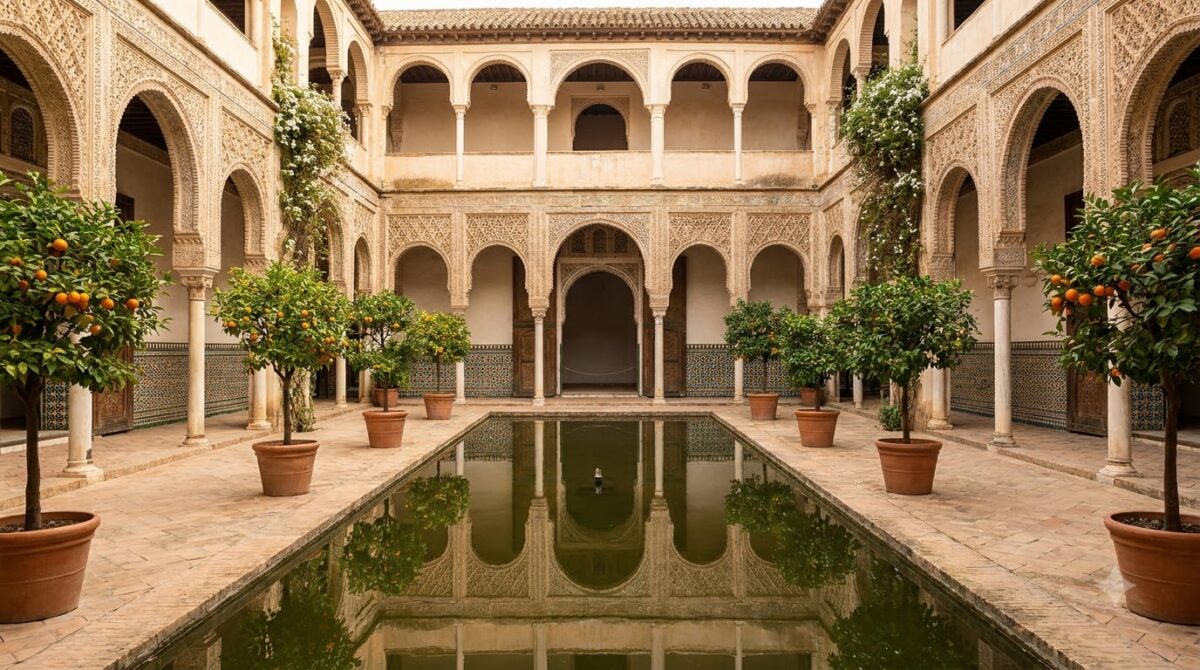
- Walk the Barrio Santa Cruz, the old Jewish quarter, which is a knot of white lanes and orange trees. A first day in Sevilla is best spent without a plan.
- Plaza de Espana in the late afternoon, a vast tiled semicircle built for the 1929 exposition.
- Dinner late, outside, which in Seville is possible most of the year.
Day 6: the Alcazar and Seville Cathedral
- The Alcazar of Seville is the reason to come. A royal palace built by Moorish craftsmen for Christian kings, still in use by the Spanish royal family, and the best surviving Moorish architecture outside the Alhambra. Book ahead; it sells out days in advance.
- Seville Cathedral, the largest Gothic cathedral in the world, with the Giralda minaret beside it that you climb by ramp rather than stairs.
- A flamenco performance in the evening, in a small venue rather than a dinner show.
- Triana, across the river, for tapas away from the center.
Day 7: day trip to Cordoba
Forty-five minutes from Seville by train, and home to the Mezquita — a mosque with a cathedral built inside it, a forest of red and white arches under a Renaissance nave. There is nothing else like it in Europe.
- Go early. The Mezquita is free for the first hour on weekday mornings, before the tour groups.
- The Jewish quarter of Cordoba, Spain and the Roman bridge fill the rest of the day.
- In May, the patio festival opens private courtyards across the old town.
The alternative is a trip to Granada for the Alhambra, but Granada deserves an overnight rather than a day, and Alhambra tickets need booking weeks ahead.
Day 8: train to Barcelona
Seville to Barcelona is around five and a half hours direct, which is a long train but still faster door to door than flying once you count airports. Alternatively route back through Madrid and break the journey.
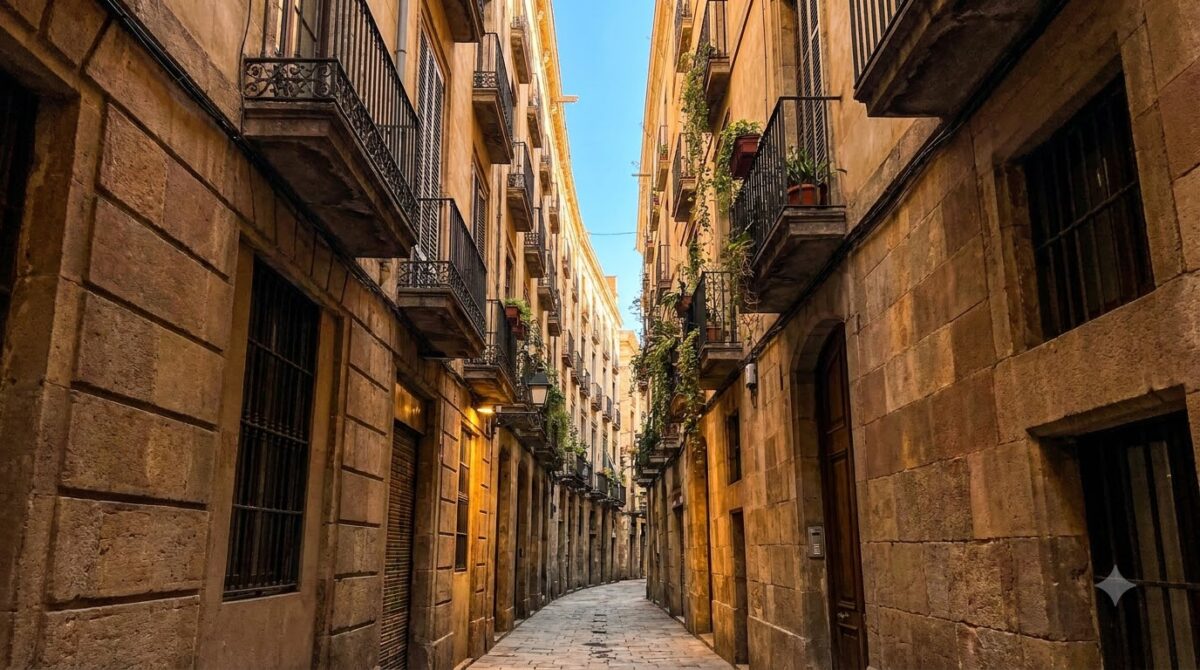
- Arrive and walk the Gothic Quarter, the medieval core, which is dense and easy to lose yourself in.
- La Rambla once, briefly, and then the streets either side of it, which are better.
- The Born district for dinner. If you are looping back to Barcelona at the end of a longer trip in Spain, this is the neighborhood to base yourself in.
Day 9: Gaudi and modernist Barcelona
Antoni Gaudi shaped this city more than any other architect has shaped a European capital, and a day in Barcelona built around his buildings is the obvious use of the time.
- The Sagrada Familia, still unfinished after more than 140 years. Book a timed entry with tower access.
- Park Guell in the afternoon, on the hill above the city, with the mosaic terrace and the view down over the rooftops.
- Casa Batllo and La Pedrera on Passeig de Gracia, which you can see from the street if you are short of time or money.
Everything Gaudi is timed-entry and sells out. This is the single most common way a Barcelona day goes wrong.
Day 10: the beach, the market, or Montserrat
Your last day, with three good options depending on the weather.
- Barceloneta beach and the seafront, ten minutes from the old town on foot. Your last day in Barcelona is the one to leave loose.
- La Boqueria market and the Raval, then Montjuic for the view back over the city and the port.
- Montserrat, an hour inland — a monastery built into a mountain of rounded rock pillars, reached by rack railway or cable car. It is the best day trip from Barcelona and the only one worth a full day.
If you have an extra day, use it here. A fourth day in Barcelona is worth more than a fourth in Madrid, and a longer trip in Barcelona is the easiest way to slow a busy itinerary down.
Visiting Spain for the first time: how many days in each city
Before fixing a detailed itinerary to follow, it helps to know how much each of the cities in Spain actually holds. This is the part of planning a trip to Spain that decides whether the trip feels calm or rushed. The diversity of Spain is the thing that catches first-timers out — the different regions of Spain feel like different countries, and the parts of Spain worth your time depend entirely on what you came for.
| City | Nights | What it gives you |
|---|---|---|
| Madrid | 3 | The capital of Spain: museums, food, day trips |
| Barcelona | 3–4 | Gaudi, the Gothic Quarter, a beach |
| Seville | 3 | Andalusia, Moorish architecture, flamenco |
| Granada | 2 | The Alhambra, and it needs an overnight |
| Cordoba | 1 | The Mezquita, easy as a day trip |
| San Sebastian | 2 | The best food in northern Spain |
| Valencia | 2 | Paella, beaches, modern architecture |
The perfect itinerary for first-timers is one that visits fewer places than you want. Three cities in ten days, with two day trips, gives you two or three full days in each rather than a series of half days spent in transit. The most common mistake exploring Spain as a first-timer is adding a fourth city.
Granada and the Alhambra
Granada sits below the Sierra Nevada and holds the Alhambra, the Moorish palace and fortress complex that is the single most visited monument in Spain. A trip to Granada needs two nights: one for the Alhambra, which takes half a day and requires tickets booked weeks in advance, and one for the Albaicin quarter and Granada Cathedral.
Granada does not fit into a 10 day trip to Spain alongside Madrid, Seville and Barcelona. It belongs in a two week trip, or in an Andalusia-only itinerary where you skip Barcelona entirely.
7 days in Spain: how to spend one week
Seven days means two cities. To spend one week in Spain well, pick one pair and do it properly — a one week itinerary that tries for three cities loses a day to each move.
- Madrid and Barcelona — the two big cities, three nights each, with a day trip to Toledo. Best for a first trip to Spain if you want cities.
- Madrid and Seville — the capital plus Andalusia, with Cordoba as the day trip. Better food, more atmosphere, fewer crowds.
- Barcelona and the coast — four nights in the city, three on the Costa Brava. Best in summer.
Travel within Spain is fast, but a stop in Spain still costs you half a day at each end. That is why a week itinerary across three cities is possible on paper and unpleasant in practice.
Two weeks in Spain: choosing a second region of Spain
With fourteen days you choose a second region rather than adding more cities. You will still not see Spain in full — nobody does in two weeks — but you will see two parts of it properly.
Southern Spain: Seville, Cordoba and Granada
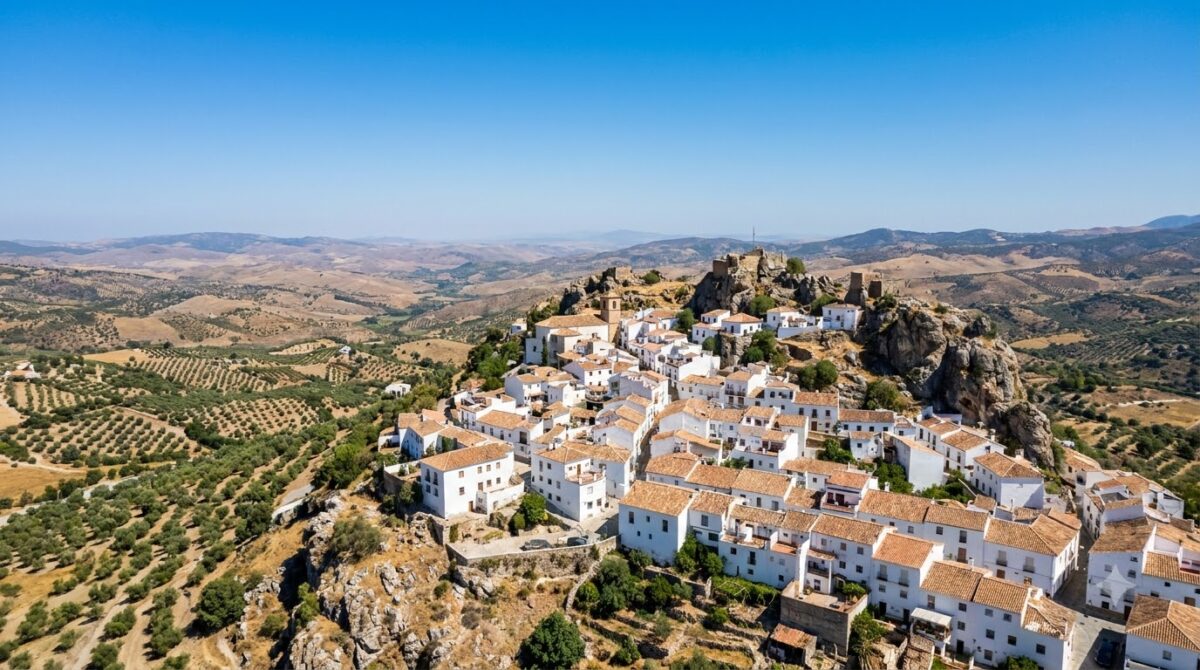
- Seville, Cordoba, Granada and Ronda, which together are the highlights of Spain for most repeat visitors.
- Granada for the Alhambra, with two nights so you can see it properly. A trip to Granada is the single most booked-out thing in Spain.
- The white villages around Ronda, which need a car for a couple of days.
- Nerja and the Costa del Sol if you want beach time at the end.
Northern Spain: the green route
- San Sebastian, which has more Michelin stars per head than almost anywhere and the best pintxos bars in the country.
- Bilbao for the Guggenheim, an hour away.
- Santiago de Compostela, the end of the Camino de Santiago, reachable by train or on foot over several weeks.
- Asturias and the Picos de Europa for mountains and cider.
Northern Spain is green, cooler and wetter, and it is the part of the country most first-timers skip and most returning visitors go to next. Spain sits on the Iberian Peninsula with North Africa fourteen kilometers off its southern tip, and the contrast between the two ends of the country is the reason a second trip is worth taking.
Spain travel guide: the practical parts
Getting around
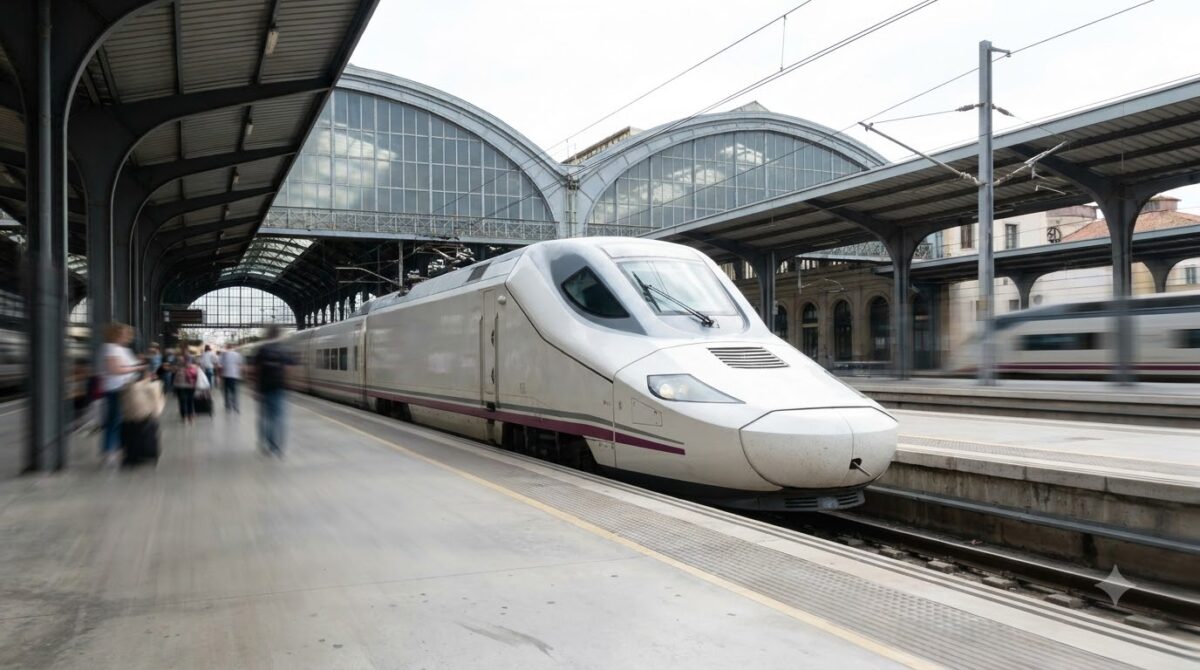
- Trains for the cities. Renfe runs the AVE network; book two to four weeks ahead for the cheap fares, which are a fraction of walk-up prices.
- A car only for the countryside — the white villages, the Picos, rural Andalusia. In cities it is a liability.
- Buses reach what trains do not, cheaply and reliably.
- A taxi from Madrid–Barajas Airport to the center is a fixed fare; the metro is cheaper and takes about the same time with luggage.
When to go
- April to June and September to October are the best months across the country.
- July and August are punishing in Madrid, Seville and Cordoba, where inland temperatures pass 40 degrees. The coast is fine and full.
- Winter is mild in Andalusia and cold in Madrid, and it is much cheaper everywhere.
- Semana Santa and the Feria in Seville transform the city and fill every room months ahead.
Money and habits
- Lunch is the big meal, often a fixed-price menu del dia at good value.
- Dinner starts at nine or ten. Nothing you can do about it.
- The siesta is real in smaller towns, where shops close from around two to five.
- Tipping is minimal — rounding up is normal, ten percent is generous.
- Wine is cheap and good — Rioja, Ribera del Duero, Albarino from the northwest, and sherry in Andalusia.
- Spain is cheaper than France or Italy for food and rooms, and noticeably cheaper outside Madrid and Barcelona.
Booking the Madrid leg? See where to stay in Madrid for the barrios compared on walking distance and price.
Weighing the Barcelona leg? Our guide to how many days in Barcelona explains why four is the number.
Going deeper into the south? The southern Spain itinerary covers Andalusia properly, including when a rental car is worth it.
Three nights in Seville on the route? Our guide to where to stay in Seville covers which barrio suits which kind of trip.
Weighing the Madrid leg? Our guide to how many days in Madrid explains why three becomes five.
Adding Portugal? The Portugal itinerary explains how the two countries fit together and how long it really takes.
For the Alhambra city, see where to stay in Granada.
Frequently asked questions
How many days are enough for a Spain trip?
Ten days is the sweet spot: three cities plus two day trips, with no rushed transfers. Seven days covers two cities properly. Two weeks lets you add Andalusia or northern Spain as a second region rather than simply visiting more cities.
Where should first-timers go in Spain?
Madrid, Seville and Barcelona, in that order geographically. Madrid is central and connects by high-speed train to everywhere, Seville gives you Andalusia and the Moorish architecture, and Barcelona gives you Gaudi and the sea. Toledo and Cordoba slot in as day trips without changing hotels.
What is the best way to get around Spain?
The train. The AVE high-speed network links Madrid to Seville, Barcelona, Valencia and Malaga in under three hours each, which is faster than flying door to door. Book two to four weeks ahead for cheap fares. A rental car is only worth it for the white villages of Andalusia, the north coast and rural areas.
What is the best month to go to Spain?
May, June, September or October. July and August are extremely hot inland, with Seville and Cordoba regularly above 40 degrees, and the coast is crowded. Winter is mild in the south and cheap everywhere, though days are short and some coastal resorts close.
How much does an average trip to Spain cost?
Spain is one of the better-value countries in western Europe, generally cheaper than France or Italy for food and accommodation. The biggest variables are the season and the two big cities: Madrid and Barcelona cost noticeably more than Seville, Granada or the smaller towns. Book AVE trains early, since advance fares are a fraction of walk-up prices.
Is Madrid or Barcelona better?
Barcelona for a first visit, Madrid for a second. Barcelona has Gaudi, the Gothic Quarter, the beach and a compact center you can walk. Madrid has the better museums, the better food scene and the better nightlife, and it works as the hub for day trips to Toledo and Segovia. Most 10 day Spain itineraries include both.
Can you do Spain and Portugal in one trip?
Yes, and it is a natural pairing. Seville to Lisbon is around six hours by bus, and Madrid connects to Lisbon by air in an hour. Allow three weeks to do both countries without rushing, or two weeks for southern Spain plus Lisbon and the Algarve.