
Portugal covers less ground than the state of Indiana, and people look at that and assume a week is plenty for all of it.
Some links below are affiliate links. We may earn a commission if you book through them, at no extra cost to you. We do not rank hotels, and any prices on the map come live from the booking sites.
Quick answer: where to stay in each region. Lisbon: Baixa or Chiado for a first visit. Porto: the Baixa around Aliados for convenience, the Ribeira for the postcard. The Algarve: Lagos or Tavira rather than the resort strip between them.
The problem is the shape. Portugal is long and narrow, and its three regions are strung end to end down the Atlantic coast: Porto and the Douro in the north, Lisbon in the middle, the Algarve in the south. Porto to Faro is around 550 kilometres, or five and a half hours of driving.
There is also no true high-speed rail here, unlike Spain. Lisbon to Porto on the fast Alfa Pendular takes about three hours, not ninety minutes. So distance costs more time in Portugal than the map suggests, and that single fact should shape your route.
The itinerary below is 10 days built around it, with a 7 day version, a two-week extension, and honest advice on whether to rent a car. There is a train network that connects everything you actually need, which is the part most people planning a trip to Portugal do not expect. Rail times, driving times and booking rules checked 8 September 2026.
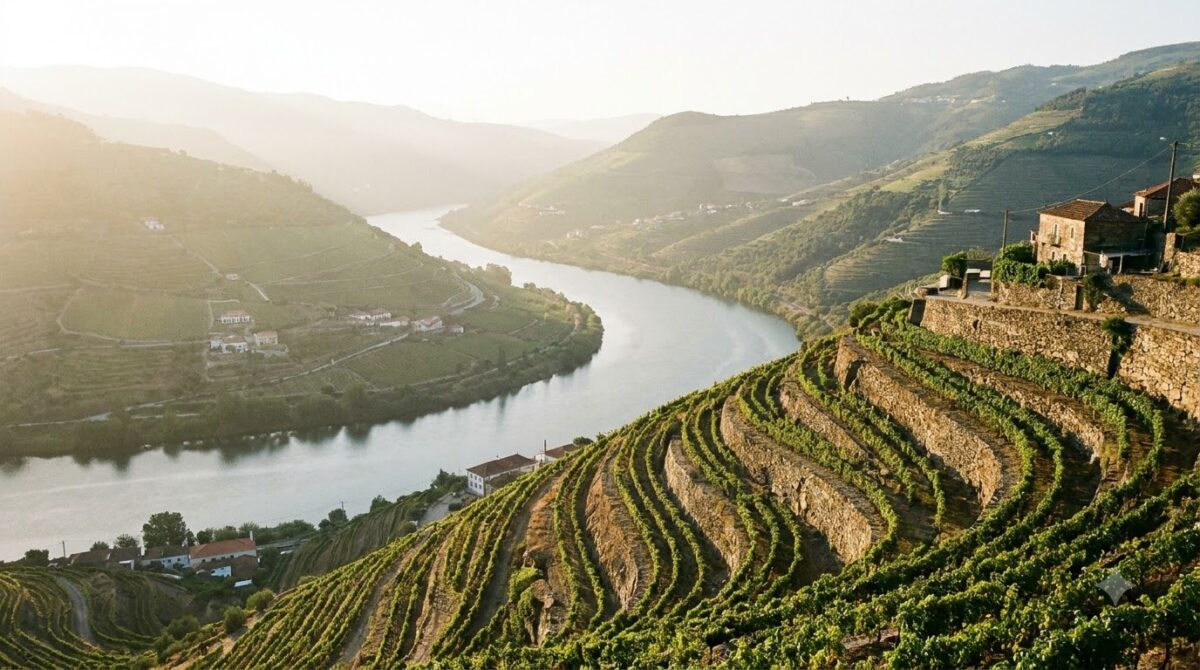
How many days do you need in Portugal?
| Length | Covers | Car? |
|---|---|---|
| 5 days | Lisbon and Sintra, or Porto and the Douro | No |
| 7 days | Lisbon and Porto, with day trips | No |
| 10 days in Portugal | Adds the Douro properly and either the Algarve or the centre | Helpful |
| 14 days | All three regions without rushing | Yes |
Spending one week in Portugal means choosing two of the three regions, not all of them. The most common mistake is Lisbon, Porto and the Algarve in seven days, which is two travel days out of seven and no time in any of them.
The 7 day Portugal itinerary
Lisbon and Porto, connected by train. No car needed at any point. This 7-day Portugal itinerary is the one most first-time visitors should take.
Day 1: arrive, and your first day in Lisbon
Lisbon Airport is fifteen minutes from the centre by metro, which is unusual for a European capital and worth knowing.
- Rossio and the Baixa, the grid rebuilt after the 1755 earthquake. A first stop to get your bearings, and it takes half a day at most.
- Chiado for coffee and bookshops, then up into Bairro Alto as it gets dark.
- Tram 28 if the queue is short, though walking the same route is often faster.
- A miradouro at sunset — São Pedro de Alcântara is the easiest, and the view of the city from it is the one you will remember.
Day 2: Alfama, the castle and Belém
- Alfama in the morning — the medieval quarter that survived the earthquake, and a knot of lanes with no logic to them.
- Castelo de São Jorge above it — São Jorge Castle on the signs — for the walls and the best wide view of the city and the river.
- Belém, Lisbon in the afternoon, twenty minutes west by tram. Give it a half day rather than an hour. The Belém Tower and the Jerónimos Monastery are both UNESCO World Heritage Site listings and both are Manueline, a style that exists nowhere else.
- Pastéis de Belém, the custard tarts, from the place that has been making them since 1837.
- Fado in the evening in Alfama, in a small house rather than a dinner show.
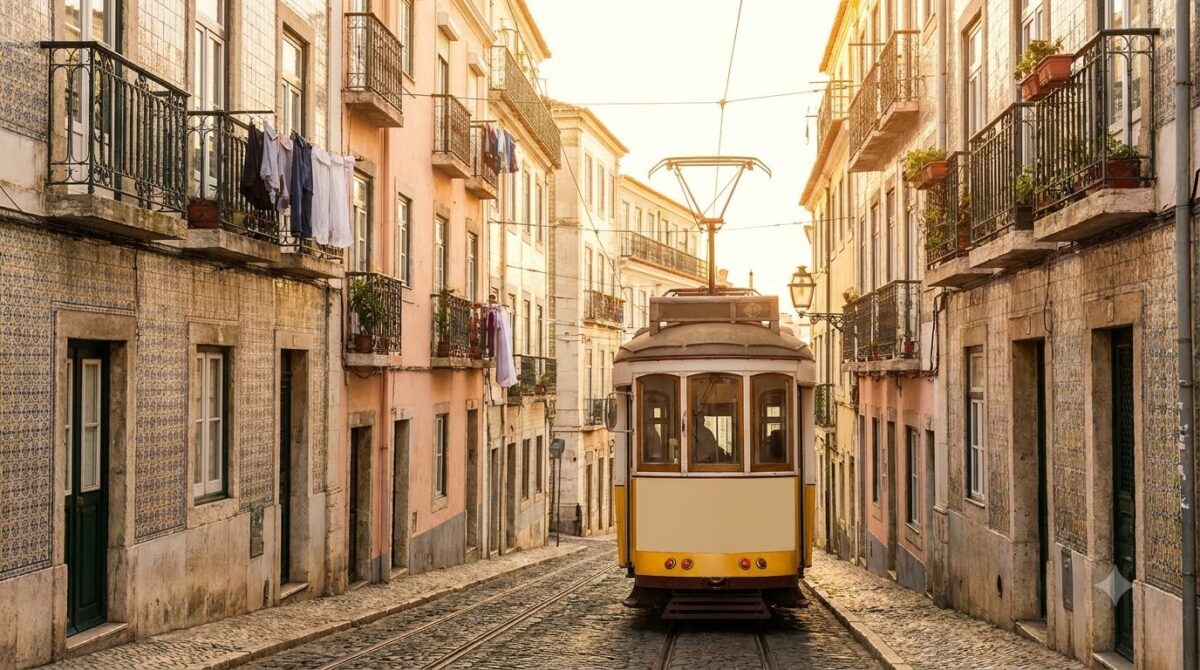
Day 3: a day trip to Sintra
Forty minutes from Rossio by train and the best of the day trips from Lisbon. Sintra is a wooded hill covered in romantic palaces, and the whole cultural landscape is UNESCO listed.
- Pena Palace, the yellow and red fantasy on the summit. Book a timed entry; this is the one thing in Portugal that genuinely sells out.
- Quinta da Regaleira, with the initiation well — a spiral staircase descending into the ground. Many people prefer it to Pena.
- The Moorish castle ruins along the ridge of the Sintra Mountains, for the walk and the view.
- Go early and pick two. Sintra takes a full day and trying for three sites means queueing for all of them.

Day 4: take the train to Porto
Take a train rather than flying. Lisbon to Porto is around three hours on the Alfa Pendular from Santa Apolónia or Oriente, and it is far better than the airport at either end. Book ahead on Comboios de Portugal for the cheap fares.
- Arrive at Campanhã and change to the local train for one stop to São Bento train station, which is worth seeing for its twenty thousand tiles.
- Your first day in Porto should be Ribeira, the riverfront quay, and a walk across the upper deck of the Dom Luís I Bridge at sunset.
- Dinner in the Baixa, uphill from the river.
Day 5: Porto and a port wine tasting
- Clérigos tower and the Livraria Lello bookshop in the morning — the bookshop is small, ticketed and crowded, so decide whether it is for you.
- Bolhão Market and the Baixa lanes for lunch.
- Vila Nova de Gaia in the afternoon, across the bridge, for a wine tasting at one of the port lodges. Book one rather than three; the rest of the day is better spent walking. Every port cellar is on that bank and always has been.
- Stay for sunset on the Gaia side, because the famous view of Porto faces back across the water.
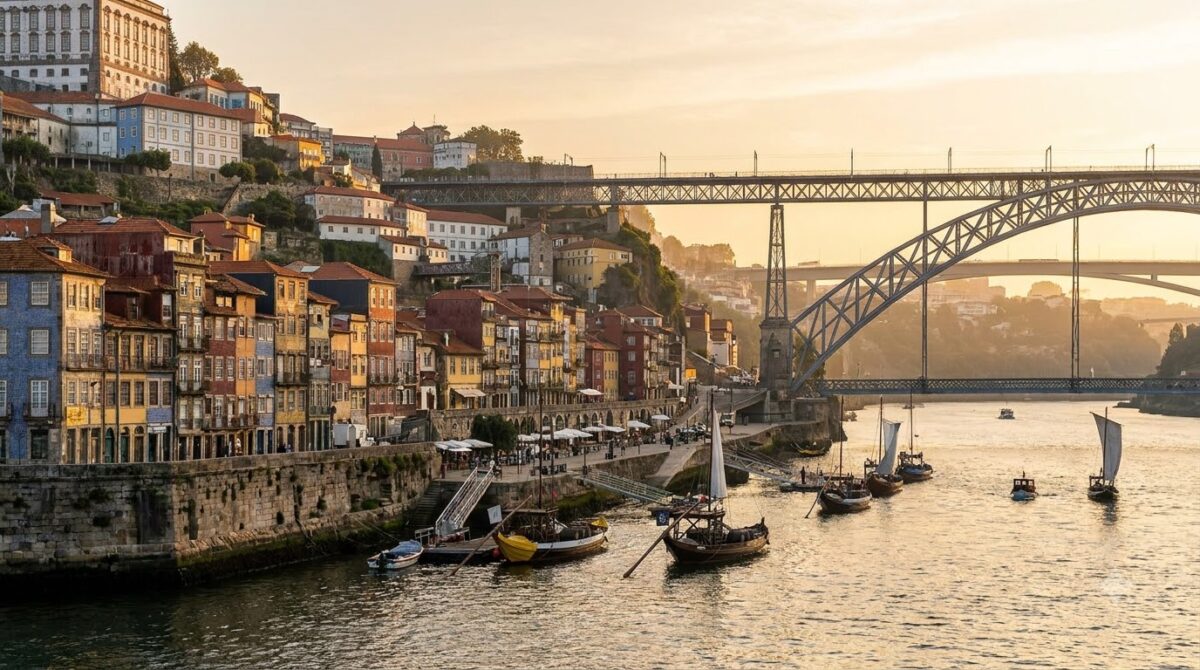
Day 6: a day trip to the Douro valley
The Douro is the oldest demarcated wine region in the world, and reaching the Douro valley from Porto for a day is the best day in northern Portugal. Two full days in Porto plus this one is why three nights is the right allocation.
- Take the train from São Bento to Pinhão. The last hour runs along the water through the terraces and is one of the finest rail journeys in Europe.
- A quinta visit with a tasting, most of which are walkable or a short taxi from Pinhão station.
- A river cruise of an hour or two if you want the valley from the water.
- Or a guided tour from Porto, which packs in two quintas and lunch and removes the timetable problem.
Day 7: last day in Porto, or back to Lisbon
Either a slow last day to explore Porto — Foz do Douro at the river mouth, the Serralves museum and gardens, Cedofeita — or the train back to Lisbon if you are flying out from there. Exploring Portugal properly means leaving one day unplanned, and this is the one.
Fly out of Porto if you can. An open-jaw ticket into Lisbon and out of Porto saves you the entire last travel day.
Map shows live availability and prices. We may earn a commission on bookings made through it, at no extra cost to you.
10 days in Portugal: adding the third region
Ten days lets you add either the south or the centre. Both are good and they suit different trips.
Day 8: south to the Algarve
Fly Porto to Faro, or train back through Lisbon and continue south. The southern coast of Portugal is around three hours from Lisbon by train to Faro, then local transport.
- Lagos, Portugal is the best base on the western Algarve, with an old walled town and the cove beaches at Ponta da Piedade.
- Tavira is the eastern alternative, quieter and prettier and much less developed.
- Avoid the central strip around Albufeira unless resort nightlife is what you came for.
Day 9: the Algarve coast
- A boat trip along the sea caves at Benagil and Ponta da Piedade, which is what the coast of Portugal is actually famous for.
- Sagres, the south-western tip of Europe, where the cliffs end and the Atlantic starts.
- Or just the beach. The Algarve is where a Portugal trip should decelerate, and Portimão and Lagos both have long stretches of it.
Day 10: back to Lisbon
Train or a short flight, and a last evening in Lisbon before flying home.
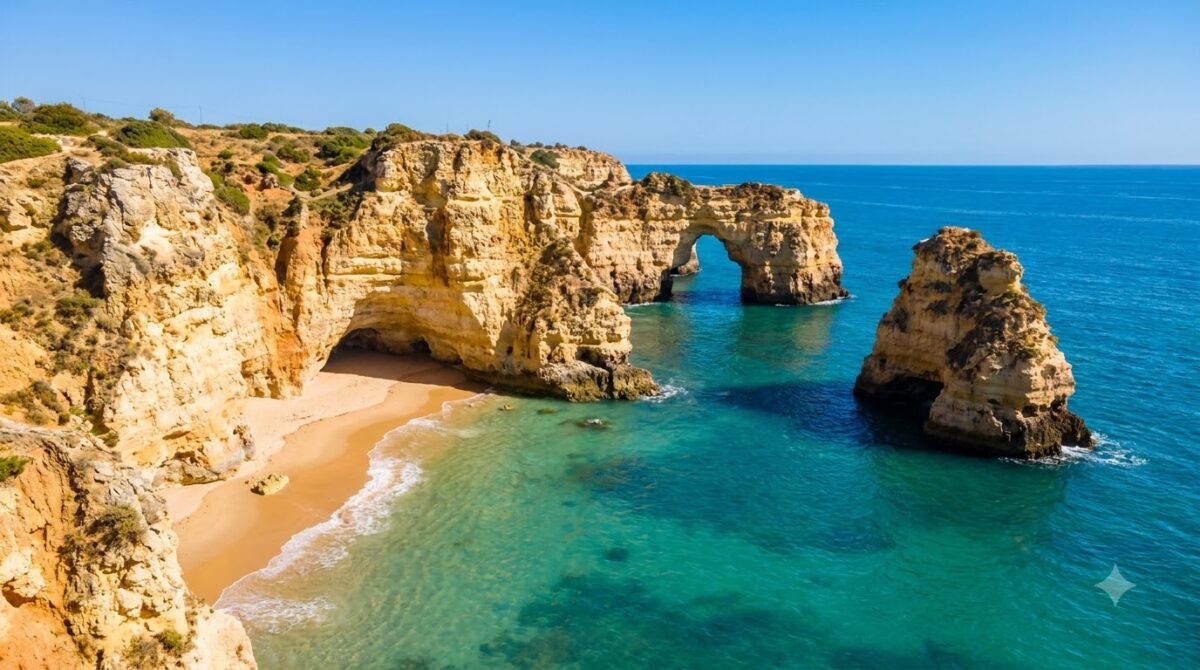
The alternative: the centre instead of the south
If beaches are not the point, spend days 8 to 10 in the middle of the country instead, which almost nobody does and which is excellent.
- Coimbra — the medieval university town on the Mondego, with the Joanina library at the University of Coimbra, one of the most beautiful rooms in Europe.
- Évora — a walled town in the Alentejo with a Roman temple in the middle of it, and the best food region in the country.
- Tomar — the Convent of Christ, headquarters of the Portuguese Knights Templar and a UNESCO site.
- Óbidos — a small walled village, easily combined with the drive between Lisbon and Coimbra.
Two weeks: Day 11, Day 12 and beyond
- Day 11 and Day 12 — the Minho, north of Porto: Guimarães, the birthplace of Portugal, and Braga, its oldest cathedral city. Both are under an hour from Porto.
- Or the Azores or Madeira, which are flights rather than drives and really deserve a trip of their own.
- Or slow the whole thing down. Fourteen days spent on the same route as ten is a better holiday than fourteen days covering more ground.
How long in each place: 3 days in Lisbon, 3 nights in Porto
Planning a trip to Portugal gets much easier once you fix how many days to spend in each stop rather than arguing about the route. These are the allocations that work.
| Place | Nights | What that buys |
|---|---|---|
| Lisbon | 3 | 2 full days in the city plus Sintra |
| Porto | 3 nights | 2 days in Porto plus the Douro valley from Porto |
| Douro valley | 0–2 | A day trip works; staying at a quinta is better |
| Algarve | 2–3 | One beach day, one boat day, one slow day |
| Évora | 1 | Half a day for the town, half for the food |
| Coimbra | 1 | The university takes a half day |
| Óbidos | 0 | A stop of 2-3 hours on the way past |
3 days in Lisbon is the figure most people get wrong, usually by allowing two. Lisbon is the capital of Portugal and a genuinely large city on seven hills, and Belém alone is a half day. Two days means one day in Lisbon proper and one on the train to Sintra, which is not enough for either.
The same applies in reverse to the Algarve: people allocate five days to beaches and two to everything else, then find the rest of the day gone once they have driven anywhere.
What a day actually looks like here
Two habits shape a Portugal trip more than any sight does, and neither appears on most lists of things to do in Lisbon.
- Lunch runs from one to three, and the prato do dia at a neighbourhood restaurant is the best value meal in western Europe.
- Dinner starts at eight, earlier than Spain and later than northern Europe.
- The hills are real. Both big cities are built on slopes, and a day exploring on foot costs more energy than the distances suggest.
- Nothing is far apart within a city. A first stop in the morning, a long lunch, and one more stop in the afternoon is a full day and a good one.
- Portuguese is not Spanish. The Spanish language will get you understood but is not appreciated; English is widely spoken in both cities.
Portugal travel: how to get around
This is where a lot of Portugal travel planning goes wrong, so it is worth being specific.
- Comboios de Portugal runs the trains. The Lisbon to Porto line is fast, comfortable and cheap if booked ahead; the Douro line from Porto is slow and beautiful.
- Train and bus together cover the cities — Lisbon, Porto, Coimbra, Faro, Évora are all reachable without a car.
- Rede Expressos buses reach what the trains do not, cheaply.
- Public transportation inside Lisbon and Porto is good, with metro, tram and funicular in both.
- A rental car earns its keep in the Algarve, the Alentejo and the Douro back roads, and nowhere else. A Portugal road trip is a real option, but it is not the default.
Can you visit Portugal without a car?
Yes, easily, for the itinerary above. Lisbon, Sintra, Porto and the Douro are all reachable by train, and the two cities are better without a car than with one.
You want a car only if you are doing the Algarve coast properly, touring the Alentejo, or driving the Douro rather than taking the train. If you rent one, note that Portuguese motorways use electronic tolls and you should ask the rental company to fit a transponder.
The best time to visit Portugal
- April to June and September to October are the best months everywhere. Warm, dry and not yet full.
- July and August are peak on the Algarve, where prices double and beaches fill. Lisbon and Porto are hot but manageable.
- The Douro in September is the harvest, and the valley is at its best.
- Winter is mild on the coast and genuinely cheap, though the Algarve half-closes and northern Portugal gets a lot of rain.
- Porto is wetter than Lisbon year-round by a wide margin. Pack for it.
Spain and Portugal in one trip
A common question, and the honest answer is that they combine well but need three weeks to do without rushing.
- Seville to Lisbon is around six hours by bus, and there is no direct train worth taking.
- Madrid to Lisbon is an hour by air, and the overland options are poor.
- Porto to Santiago de Compostela in Galicia is around three and a half hours by bus, which is the natural northern crossing.
- If you have two weeks, do one country properly rather than half of each.
Our Spain itinerary covers the other side, and the southern Spain itinerary is the natural pairing with Lisbon and the Algarve.
Where to stay in each region
- Lisbon — Baixa or Chiado for a first visit, Alfama for atmosphere, Príncipe Real for calm.
- Porto — Baixa around Aliados for convenience, Ribeira for the postcard, Gaia for the views.
- The Douro — a quinta with rooms, which is the whole point of staying rather than day-tripping.
- The Algarve — Lagos or Tavira rather than the resort strip between them.
- Évora and Coimbra — small hotels or an Airbnb inside the walls; both towns are compact enough that any restaurant is a short walk.
The full breakdowns are in our guides to where to stay in Lisbon and where to stay in Porto.
Weighing the Lisbon leg? Our guide to how many days in Lisbon explains why three becomes four.
Heading south? See where to stay in the Algarve — the coast changes character three times along its length.
Splitting the north? See how many days in Porto before fixing the dates.
Check hotels across Portugal →
Frequently asked questions
How many days do you need in Portugal?
Seven days covers Lisbon and Porto with day trips to Sintra and the Douro, and needs no car. Ten days adds a third region, either the Algarve or the centre around Coimbra and Évora. Five days is enough for one region only. Trying to fit Lisbon, Porto and the Algarve into a week means losing two of the seven days to travel.
What is the perfect itinerary for a trip to Portugal?
Two full days in Lisbon, a day trip to Sintra, the train to Porto, two days there, and a day in the Douro valley — seven days, no car, and an open-jaw flight out of Porto. On ten days, add the Algarve for beaches or Coimbra, Évora and Tomar if you would rather have history.
How do you get around Portugal?
Trains for the main line. Comboios de Portugal runs Lisbon to Porto in about three hours on the Alfa Pendular, and the Douro line out of Porto is slow and spectacular. Rede Expressos buses cover what the railway misses. A rental car is only worth it for the Algarve coast, the Alentejo and the Douro back roads.
Can I visit Portugal without a car?
Yes. Lisbon, Sintra, Porto, the Douro valley, Coimbra, Évora and Faro are all reachable by train or bus, and both big cities are easier without a car than with one. You only need to rent one to tour the Algarve beaches properly or to drive the Alentejo.
What is the best time of year to visit Portugal?
April to June and September to October. July and August are peak on the Algarve, where prices roughly double, though Lisbon and Porto stay manageable. September in the Douro is the wine harvest and the valley’s best month. Winter is mild and cheap on the coast, but Porto is considerably wetter than Lisbon all year.
Should I visit Spain or Portugal first, or combine them?
They combine well but need about three weeks to do properly. Seville to Lisbon is roughly six hours by bus and Madrid to Lisbon is an hour by air, since the overland links between the two countries are weak. On two weeks, do one country properly rather than half of each.
What are the main regions to visit in Portugal?
Three, strung from north to south. Porto and the Douro valley in the north for wine and the river; Lisbon and its day trips to Sintra and Belém in the middle; the Algarve on the southern coast for beaches. The centre — Coimbra, Tomar, Évora and Óbidos — is a strong fourth that most itineraries skip.