
Porto is built on the side of a gorge. The Douro river runs at the bottom, the Ribeira quay sits at water level, and the city centre — Aliados, São Bento, Bolhão — is roughly 60 to 70 metres above it.
Some links below are affiliate links. We may earn a commission if you book through them, at no extra cost to you. We do not rank hotels, and any prices on the map come live from the booking sites.
Quick answer: where to stay in Porto. The Baixa around Aliados and São Bento: the historic heart of the city, flat once you are on it, with everything within walking distance. The Ribeira is the postcard, at a price; Vila Nova de Gaia has the views.
That is what decides where to stay in Porto. Not how central you are, because central Porto is small and you can cross it in twenty minutes. It is whether you end each evening walking uphill.
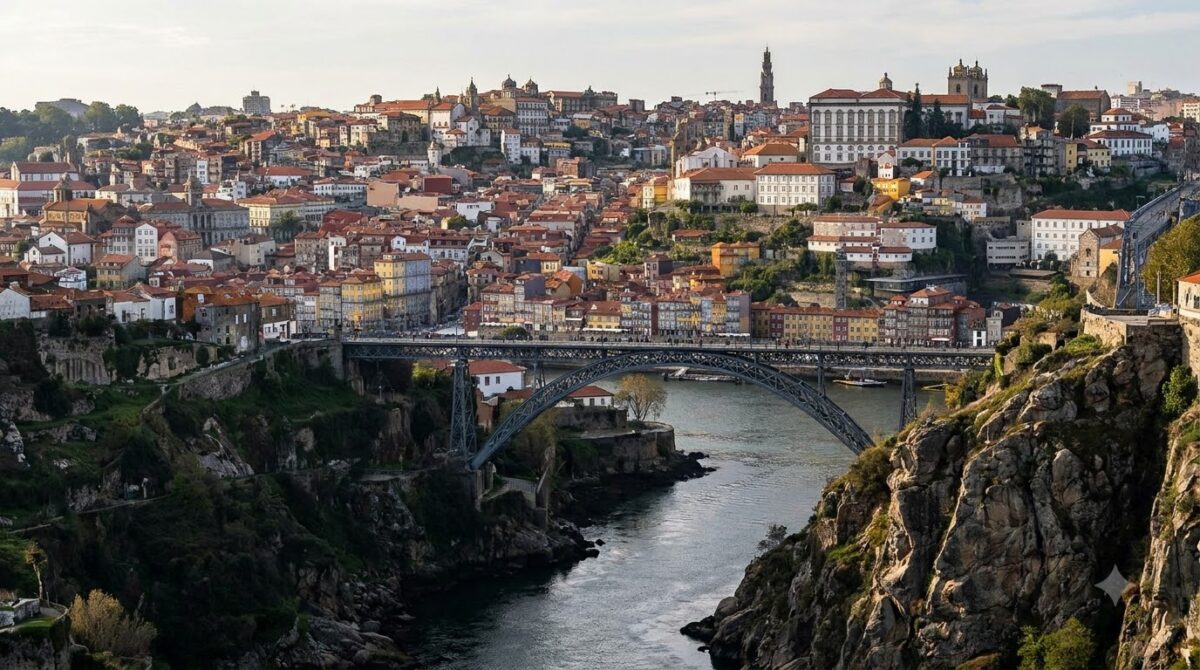
And there is a second consequence people discover too late: the famous view of Porto is from Vila Nova de Gaia, across the river. You cannot see Porto from inside Porto. If the view is why you came, sleep on the other bank deliberately.
This Portugal travel guide works through every place to stay in Porto on that basis. Walking times, gradients, funicular and transport connections checked 8 September 2026. Rates change constantly, so check current prices yourself.
The best area to stay in Porto: all the places to stay in Porto at a glance
| Neighbourhood | Level | Price | Best for |
|---|---|---|---|
| Ribeira | River level | High | First visits, atmosphere |
| Baixa and Aliados | Upper | Moderate | The best all-round choice |
| Vila Nova de Gaia | Both banks | Moderate | The views, port wine cellars |
| Cedofeita and Miguel Bombarda | Upper | Moderate | Galleries, local vibe, quieter |
| Bonfim | Upper, east | Lower | Budget, longer stays |
| Boavista | West, flat | Moderate | Business, families, space |
| Foz do Douro | Coast | Higher | Beach, quiet, second visits |
If you want one answer: Baixa, around Aliados and São Bento. It is the Porto city center and the historic heart of the city, it is flat once you are on it, everything is within walking distance, and it costs less than Ribeira for a better room.
Ribeira: the postcard area to stay in Porto, at a price
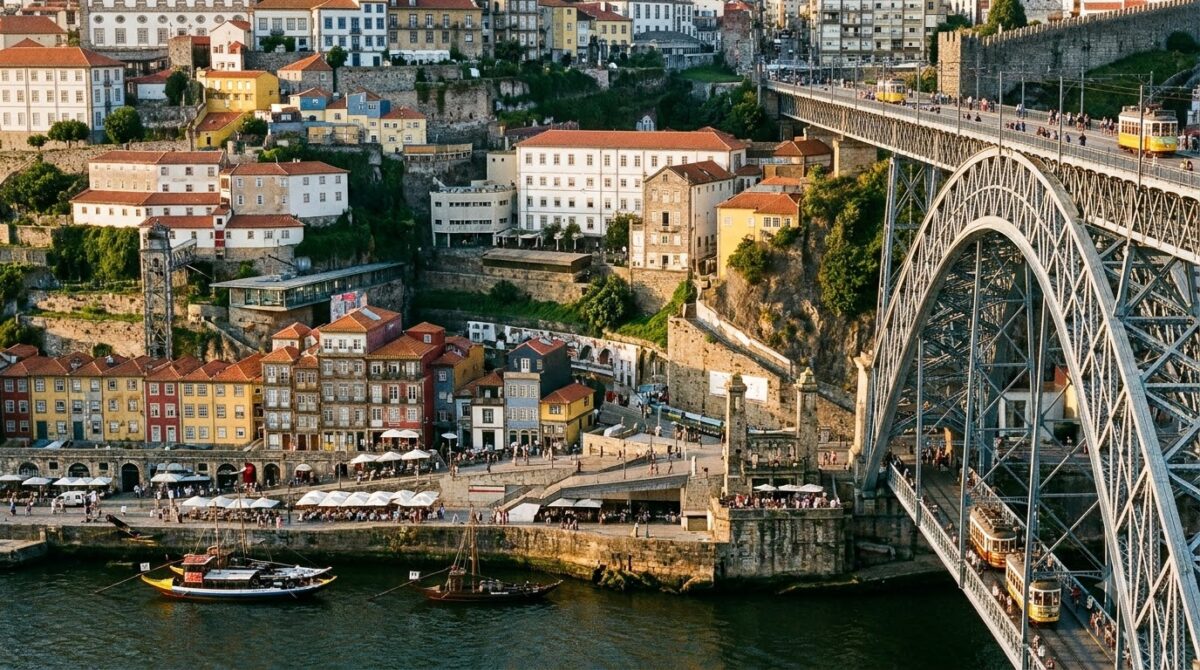
The Ribeira district is the UNESCO-listed waterfront strip of tall narrow houses stacked along the quay under the Dom Luís I Bridge. It is the image of Porto that sold you the trip.
- It is beautiful and it is loud. The riverfront is a solid line of restaurant and bar terraces near the water, and one of the busy areas of the city from lunch until late.
- Rooms are small. These are medieval buildings on a narrow shelf; expect stairs, no lift, and odd shapes.
- Everything else is uphill. Getting back from the centre of Porto means a climb or a taxi, and the streets are steep enough that it matters.
- Prices are the highest in the city for the least space.
Stay in Ribeira if you are here for two or three nights and want to walk out of the door into the postcard. Accept the stairs and the noise as the price.
Baixa, Aliados and São Bento: the best place to stay in the Porto city center
The upper town, centred on Avenida dos Aliados — a wide boulevard of belle époque facades running up to the city hall — and the streets around São Bento station.
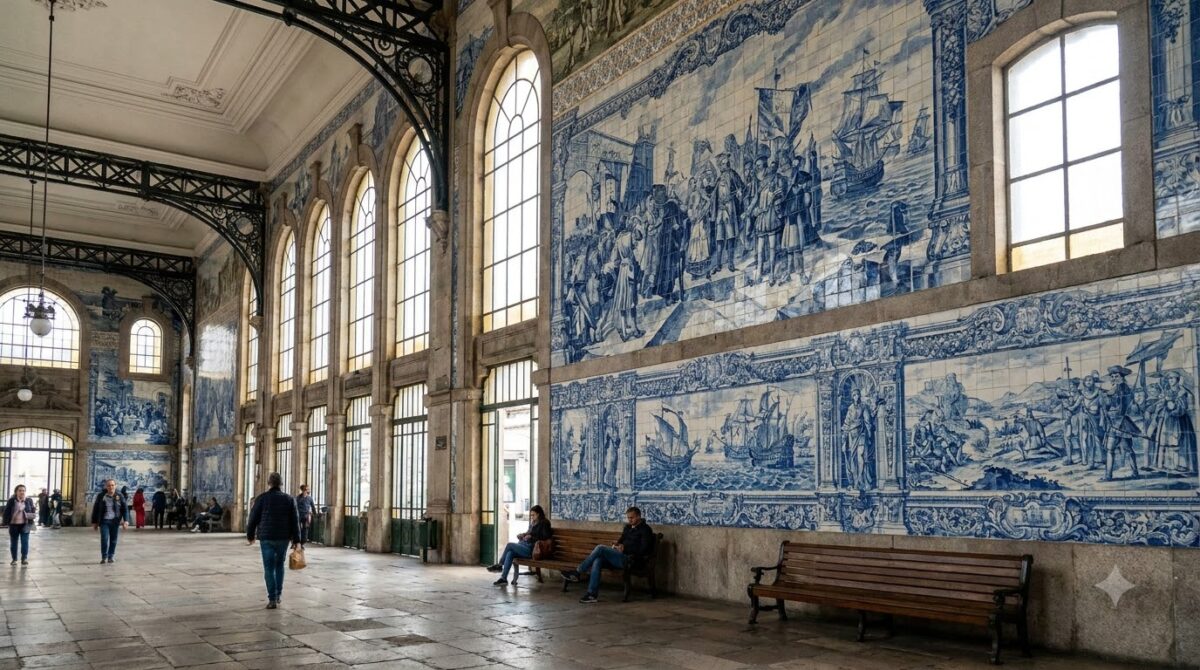
- São Bento train station, the São Bento railway station on the maps, is worth going inside even if you are not catching a train: the hall is lined with around twenty thousand painted azulejo tiles.
- Rua das Flores, the pedestrian shopping street running down from it, has the best concentration of places to eat and small shops.
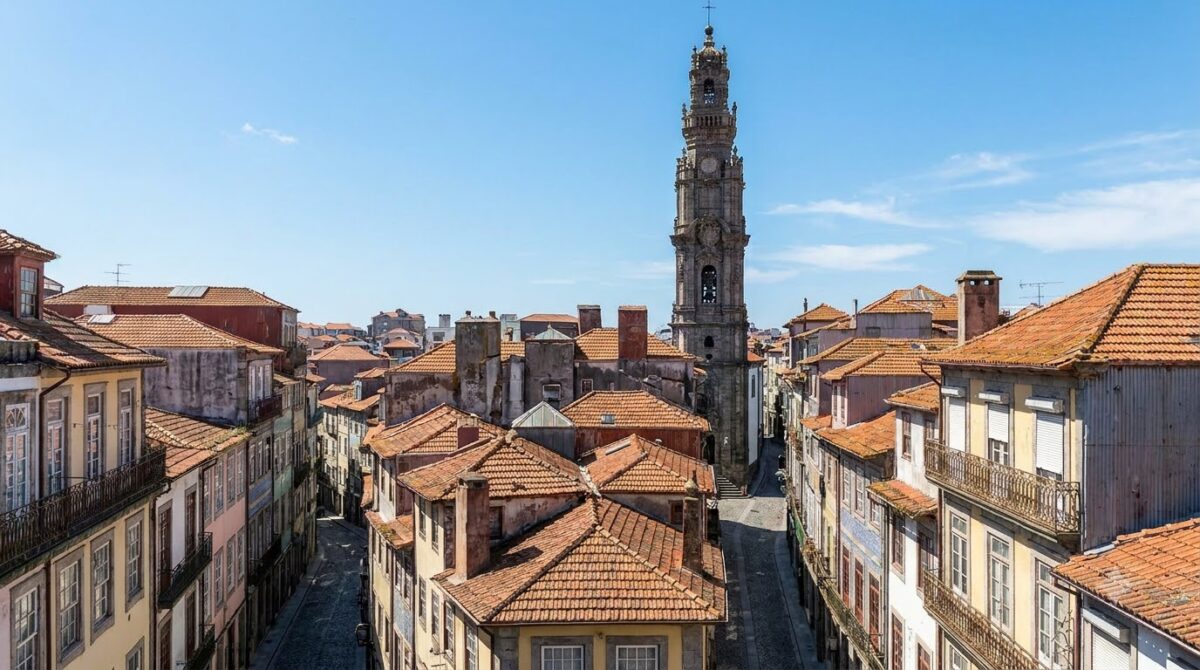
- Bolhão Market, Clérigos Church and its tower, the cathedral and the Livraria Lello bookshop are all within ten minutes. This part of Porto holds most of the architecture worth stopping for.
- Metro connects here, including the direct line to Porto airport, which takes about 30 minutes. Staying near the airport is rarely worth it as a result.
- It is flat once you are up, and Ribeira is a ten-minute walk down.
This is the area to stay in Porto that suits the most people, and the best place to stay for a first trip. Many nice hotels here are in restored historic buildings, the central location is unbeatable, and there is none of Ribeira’s premium.
Map shows live availability and prices. We may earn a commission on bookings made through it, at no extra cost to you.
Vila Nova de Gaia: where the views of Porto are
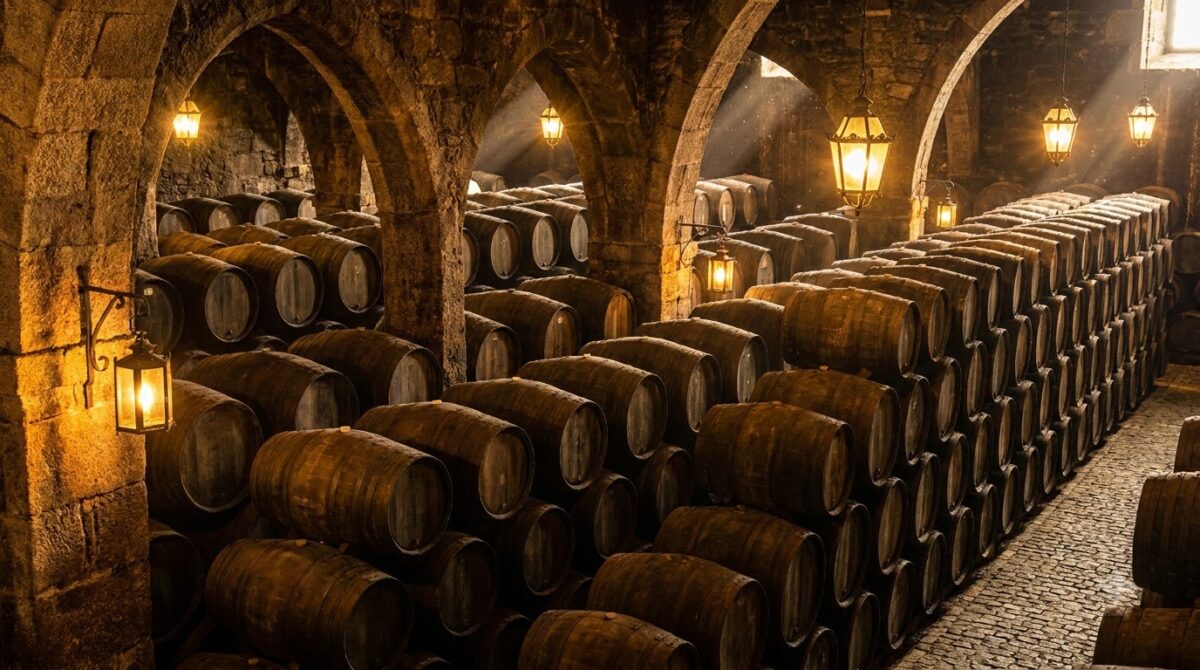
Gaia is a separate city across the Douro, joined by the Dom Luís I Bridge, and it is where every port wine cellar has been since the eighteenth century. Port is aged in Gaia and always has been; the name on the bottle is a Porto name but the wine cellar is not.
- The best views in the city. The Gaia bank looks straight across at the stacked houses of Ribeira, and these views of Porto city are what appears on every cover. Tourism here runs on that one outlook.
- Port wine cellars — Sandeman, Graham’s, Taylor’s and the rest, most offering tours and tastings, all within a few streets.
- The upper deck of the bridge is a five-minute walk across to Porto, and the lower deck lands you in Ribeira.
- Cheaper than Ribeira for a room with a better outlook.
- Quieter in the evening, and the walk back over the bridge at night is the best free thing in the city.
Should you stay in Porto or Vila Nova de Gaia? Porto if you want to be in the middle of things; Gaia if you want to look at them. On a second visit, Gaia.
Exploring Porto beyond the centre: Cedofeita, Bonfim and Boavista
- Stay in Cedofeita — north-west of Aliados, with the Rua Miguel Bombarda gallery district, independent shops and a genuine local vibe. Ten to fifteen minutes from the centre and noticeably calmer than the rest of Porto.
- Bonfim — east of Bolhão, residential, and the cheapest area still within walking distance of everything. Apartments in Porto are best value here.
- Boavista — west, flat, modern, built around the Casa da Música concert hall and near the FC Porto stadium. Larger hotels, more space, and a metro ride from the old town. Good for families with a child or two.
- Miragaia — the quiet strip of riverfront west of Ribeira, with the same water frontage and none of the crowds.
- Foz do Douro — where the river meets the Atlantic, 25 minutes out by tram. A good porto hotel here is cheaper than the same standard downtown. Beaches, seafood, and a completely different pace. A place for a longer stay, not a first trip to Porto.
Where to avoid staying in Porto
Porto is a safe city and there is very little to warn about.
- Campanhã, around the main long-distance train station east of the centre, is not dangerous but is a dull place to sleep with a long walk into anything.
- Anything near the airport unless you have a genuinely early flight. The metro takes half an hour and the hotels out there are surrounded by nothing.
- The riverfront row in Ribeira if you are a light sleeper. This is about noise, not safety.
- Steep streets with luggage. Not an area so much as a warning — check the gradient on a map before you book anything between Ribeira and the centre.
Accommodation in Porto: the best hotels and where they cluster
Listings are hard to place because a Porto address tells you nothing about which level it is on. These are the categories and where they cluster, described by position and type only. Check rates and availability yourself rather than trusting any guide, including this one.
Boutique hotels in historic buildings
The dominant category in Baixa and Ribeira and the answer for most people choosing where to stay: eighteenth and nineteenth-century townhouses restored into fifteen to fifty rooms, often with a small spa and a roof terrace. The best hotels in Porto are nearly all of this type. Infante Sagres, just off Aliados, is the long-standing grand hotel of the city and the usual reference point at the top of the market.
Guest houses and apartments
Porto has a very large supply of small guest houses and serviced apartments, more so than most Portuguese cities. For a stay over three nights, or with children, an apartment with a kitchen and a balcony is usually the better deal — and it is the honest answer to whether a hotel or an Airbnb suits Porto better. Hotels win on breakfast and on someone carrying your bag up the hill; apartments win on space and price.
Riverfront and Gaia rooms
The rooms with the best views are on the Gaia bank or high on the Porto side above Ribeira. A river-facing room costs a clear premium in both, and a shared terrace often gives you the same outlook for less.
Getting around to visit Porto: walkability and Porto airport
Walkable but not flat, and the difference matters more here than in Lisbon.
- The centre is small — Aliados to Ribeira is about ten minutes down, fifteen back up, and getting around Porto on foot covers every attraction.
- Gradients are serious. Several connecting streets are effectively staircases, and cobbles are slippery in rain.
- The Guindais funicular runs between Ribeira and the upper town beside the bridge, and it is worth the fare every time.
- The metro is clean and simple, with the airport line running to the centre in about 30 minutes.
- Tram 1 runs along the river from Ribeira to Foz do Douro, and is transport rather than a tourist ride.
- Do not rent a car. The old town is a maze of one-ways and parking is scarce.
How many days? Portugal travel beyond Porto
- Two nights covers Ribeira, São Bento, Clérigos, Lello and one port cellar in Gaia. Tight but real.
- Three nights is the right length for a trip to Porto: adds Bolhão, Cedofeita, Foz and a proper evening or two of exploring the city.
- Four days in Porto is not too much if you use the fourth for the Douro valley — a train up the river to Pinhão is one of the best rail journeys in Europe.
- Longer only if you are working, or using Porto as a base for northern Portugal — Guimarães, Braga and the Minho are all within an hour or two.
For the wider trip, see our Portugal itinerary and our guide to where to stay in Lisbon.
Choosing an area to stay: two areas, one decision
Strip out the detail and a trip to Portugal that includes Porto comes down to two areas, and the rest of Porto is a variation on one of them.
| You are | Stay in | Why |
|---|---|---|
| Here for the first time | Baixa / Aliados | Heart of the city, flat once you are up |
| Here for two nights | Ribeira | Walk out into the postcard, accept the stairs |
| Here for the views | Vila Nova de Gaia | The best views in the city face back at Porto |
| Here for port wine | Gaia | Every cellar is on that bank |
| On a budget | Bonfim | Cheapest walkable option |
| Here for a week | Cedofeita or Foz | A nice place to stay away from the busy areas |
| Flying out very early | Near the airport | Only then — otherwise the metro is 30 minutes |
If you cannot figure out where to stay, take Baixa and stop thinking about it. There are many hotels there in every price band, it is the most connected part of Porto, and no other of the areas in Porto is more than twenty minutes away on foot.
Eating, drinking and the evening
Where you sleep shapes dinner here more than the map suggests, because coming back up the hill at midnight is a real consideration.
- Ribeira and the riverside have the setting and the highest prices. Good for one dinner near the water rather than every night.
- Rua das Flores and the Baixa lanes hold the best density of restaurants, tascas and coffeehouse stops, at ordinary prices.
- Cedofeita and Bonfim are where you eat for local money.
- Nightlife concentrates on Rua Galeria de Paris and Rua Cândido dos Reis in Baixa, which is loud until very late at weekends.
- Francesinha, the city’s absurd layered sandwich under melted cheese and beer sauce, is the local dish. Bolhão Market and the streets around it are the place for lunch.
- Douro DOC wines from the vineyard terraces upriver are on every list, and are the thing to drink besides port.
Checking current rates in Porto
Everything above is about position — which area suits which kind of trip. What it deliberately does not do is quote prices, because rates in Porto move a long way by season, by day of the week and by how far ahead you book, and any figure printed in a guide is out of date the week after it is written.
These searches show live availability and current prices, so you can check them against the areas described above:
These are affiliate links. If you book through one we may earn a commission, at no extra cost to you. It does not affect which areas we recommend above — nobody pays to be listed here.
Working out the length? See how many days in Porto — the Douro Valley needs a day you probably have not budgeted.
Frequently asked questions
Where are the best neighbourhoods to stay in Porto for first-time visitors?
Baixa, around Avenida dos Aliados and São Bento station, is the best all-round choice: central, flat once you are up there, and cheaper than the riverfront for a better room. Ribeira is more atmospheric but smaller, louder and uphill from everything. Vila Nova de Gaia across the bridge is the third option and has the best views.
Should I stay in Porto or Vila Nova de Gaia?
Porto if you want to be in the middle of the city, Gaia if you want to look at it. The famous view of Porto’s stacked houses is from the Gaia bank, and every port wine cellar is there too. Gaia is also cheaper for a room with a better outlook, and the walk across the Dom Luís I Bridge takes five minutes.
Is Porto a walkable city?
Yes, but it is steep. The centre is small — Aliados to Ribeira is ten minutes downhill and fifteen back up — and some connecting streets are effectively staircases. The Guindais funicular links the two levels beside the bridge, and the metro covers longer distances including the airport.
Is 4 days in Porto too much?
Not if you use one of them outside the city. Three nights covers Porto itself comfortably. A fourth day is well spent on the Douro valley, taking the train up the river to Pinhão, which is one of the finest rail journeys in Europe. Four days spent entirely inside the city is one day more than most people need.
Where should I avoid staying in Porto?
Nothing is unsafe. Campanhã, around the long-distance station, is dull and a long walk from anything. Airport hotels are surrounded by nothing and the metro is only 30 minutes, so there is rarely a reason. The real warning is about gradient rather than area: check how steep the street is before booking anything between Ribeira and the upper town.
Is it better to stay in a hotel or an Airbnb in Porto?
An apartment usually wins for stays over three nights or with children, since Porto has a large supply and rooms in the old buildings are small. Hotels win on breakfast, on a lift, and on someone helping with luggage — which in a city this steep is worth more than it sounds.
What are the best areas to stay in Porto on a budget?
Bonfim first, east of Bolhão market, which is residential and still within walking distance of the centre. Cedofeita is slightly more expensive but has more life. Gaia is also cheaper than Ribeira for a comparable room. All three are safe, and all three beat staying somewhere genuinely far out to save money.