
Four days. Three if you skip Sintra, which you should not.
Some links below are affiliate links. We may earn a commission if you book through them, at no extra cost to you. We do not rank hotels, and any prices on the map come live from the booking sites.
Quick answer: where to stay. Baixa or Chiado for a first visit and a central location, Alfama for atmosphere and stairs, Príncipe Real for calm. Bairro Alto only if you intend to be out late.
The reason is not that Lisbon is large. It is that Lisbon is the city of seven hills, and its sights are spread vertically rather than flat. Alfama climbs to the castle, Bairro Alto sits above Baixa, and the miradouros that make the city worth seeing are all at the top of something.
So a day in Lisbon holds less than a day in a flat city. You walk the same distance and cover fewer places, and you finish earlier than you meant to. Any perfect Lisbon itinerary that promises the city center in one day in Lisbon was written by someone who did not walk it.
Add Sintra, a compulsory full day forty minutes away, and four is what you need in Lisbon. It is enough time to see the city without treating it as a checklist.
Planning a trip around that is the whole job. Walking times, gradients, transport and booking rules checked 8 September 2026.
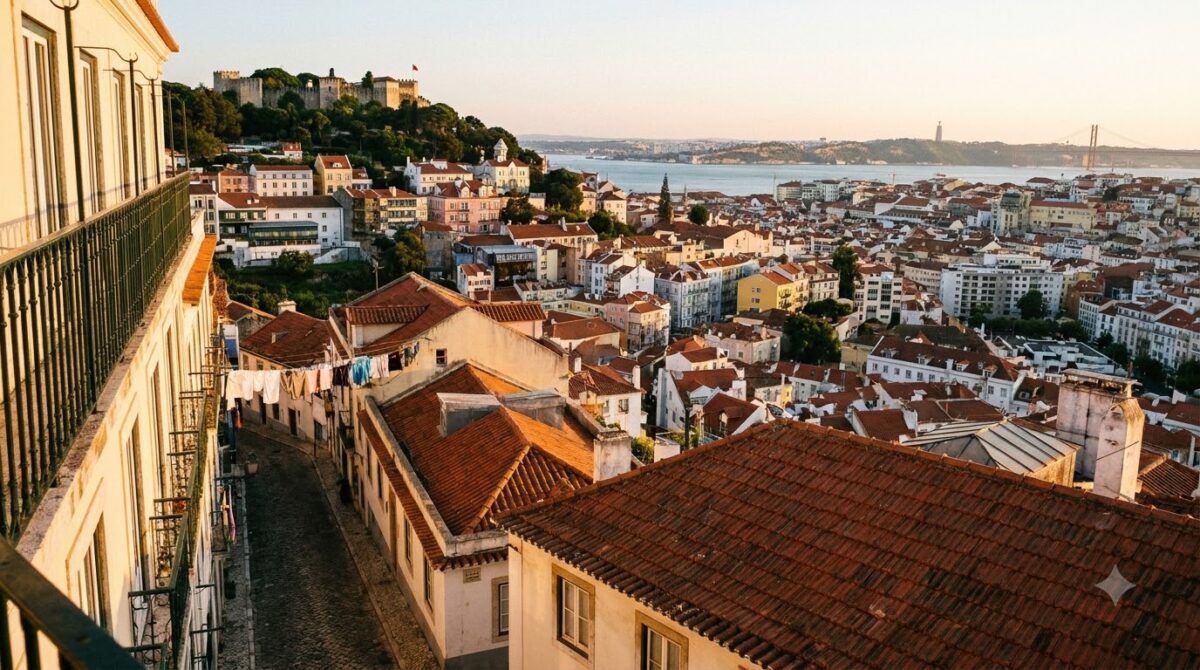
How many days in Lisbon do you need? The Lisbon itinerary at a glance
| Length | What it covers | Verdict |
|---|---|---|
| 1 day | Baixa, Alfama, one miradouro | A stopover, not a visit |
| 2 days in Lisbon | Adds Belém and Bairro Alto | The city, barely |
| 3 days in Lisbon | Adds Sintra | Enough, and busy |
| 4 days | Adds a slow day and Príncipe Real | The right answer |
| 5–6 days | Adds Cascais, the LX Factory, a second day trip | Comfortable |
The honest version: you can see the main sights in the center of Lisbon in two days and you will spend both of them climbing. The third day is Sintra. The fourth is where the Lisbon trip becomes enjoyable rather than efficient.
Day 1: Baixa and Chiado, Alfama and the castle
Start in the heart of Lisbon and work uphill, because the reverse is worse.
- Praça do Comércio, the great riverfront square opening onto the Tagus river, and the arch through to the Lisbon Baixa grid rebuilt after the 1755 earthquake.
- Livraria Bertrand on Rua Garrett, the oldest operating bookshop in the world, opened 1732.
- Alfama in the afternoon — the medieval quarter that survived the earthquake, and a knot of lanes with no logic to it. Getting lost here is the correct way to spend two hours.
- Castelo de São Jorge, or São Jorge Castle, at the top — the main tourist attraction in this half of the centre of Lisbon, and the widest views of the city and the river.
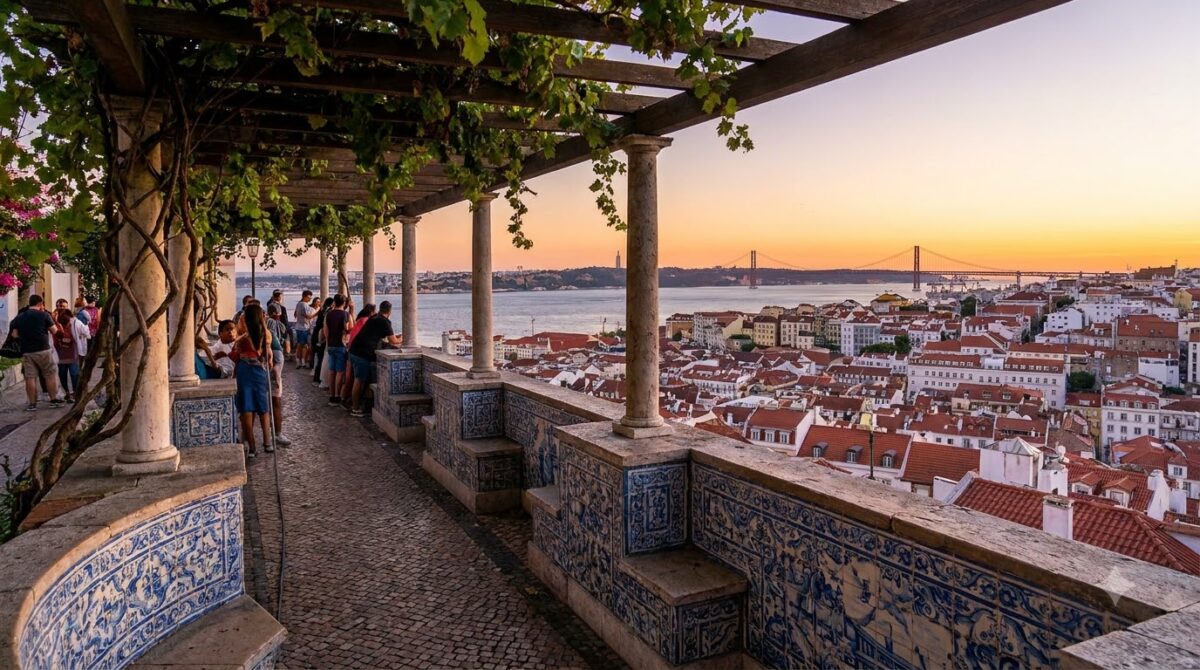
- Miradouro de Santa Luzia on the way up, a tiled terrace looking over Alfama to the water.
- Fado in the evening in a small Alfama house rather than a dinner show.
Use the funiculars and the Santa Justa lift rather than treating them as attractions. They are public transport and they exist because the hills are serious.
Day 2: Belém and Bairro Alto
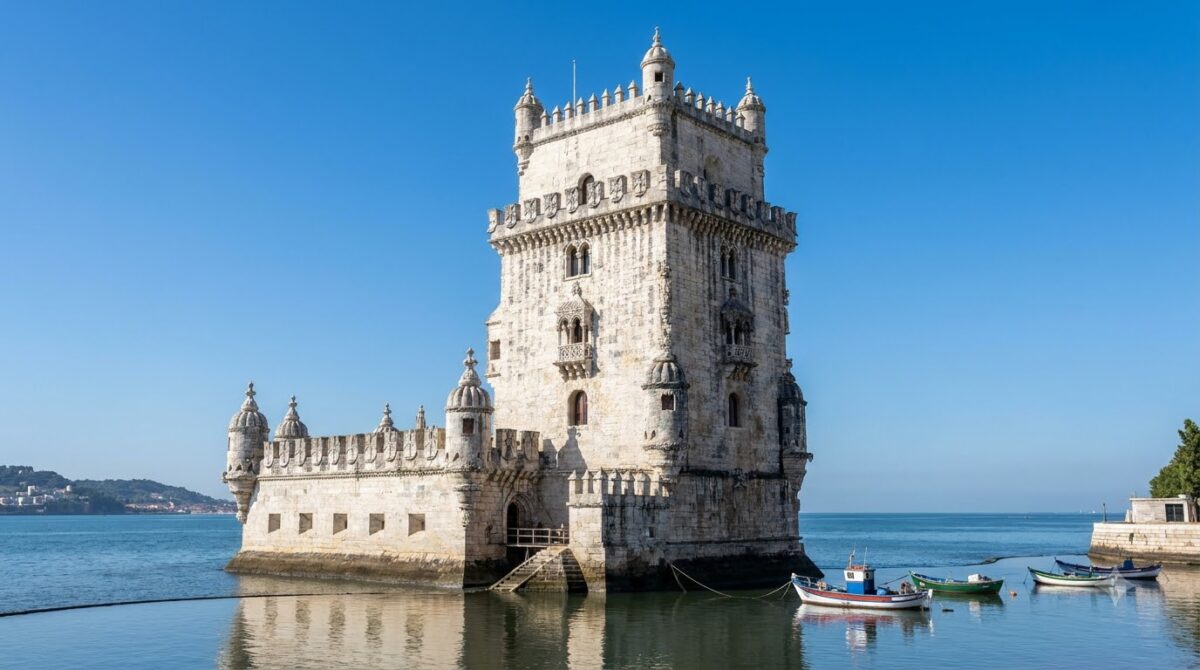
- Belém, Lisbon in the morning, twenty minutes west by tram. Torre de Belém and the Jerónimos Monastery are both UNESCO listed and both Manueline, a style that exists nowhere else.
- Pastéis de Belém, from the shop that has made them since 1837. The queue moves; the one for takeaway is faster.
- Chiado in the afternoon for the cafés and bookshops, then up into Bairro Alto — Barrio Alto in half the listings — which is quiet by day and loud from ten at night.
- Avenida da Liberdade if you want the grand boulevard and the shops, on the walk back down.
- A miradouro at sunset — São Pedro de Alcântara is the easiest to reach and one of the best.
Belém alone is a half day. Trying to do it and Alfama on the same day is the most common way a two-day Lisbon itinerary falls apart.
Map shows live availability and prices. We may earn a commission on bookings made through it, at no extra cost to you.
Day 3: take the train to Sintra
Take the train to Sintra from Rossio, forty minutes, and it is the best day trip from Lisbon by a distance. Visit Sintra with a plan, because it is a wooded hill covered in palaces and you cannot do all of them.
- Pena Palace, the yellow and red fantasy on the summit. Book a timed entry before you go to Sintra — it is the one thing in Portugal that genuinely sells out.
- Quinta da Regaleira, with the initiation well, a spiral staircase descending into the ground. Plenty of people prefer it to Pena.
- Sintra National Palace in the town itself, with the two conical kitchen chimneys, and the easiest to fit in.
- The Moorish castle ruins along the ridge if you would rather walk than queue.
Pick two, not four. The 434 bus loops between them and fills up; a walking tour between sites through the forest is pleasant but slow. Leave Lisbon by nine, and budget your time in Sintra as a full day rather than a long morning.
Day 4: the slow day
This is the day people cut and then regret, and it is the one that makes your time in Lisbon feel like a visit rather than a march. Exploring Lisbon slowly is most of what the city is for.
- Príncipe Real — the calmest central neighbourhood, with a garden square, antique shops and the best small restaurants in Lisbon.
- The LX Factory, a converted industrial complex under the bridge in Alcântara, for bookshops, food and a Sunday market.
- Time Out Market at Cais do Sodré if you want thirty kitchens in one hall, or the ordinary tascas around it if you do not.
- The Gulbenkian museum, which is one of the best private collections in Europe and almost never crowded.
- Or nothing at all. Sit at a miradouro with a coffee. Around Lisbon there are dozens, and it counts.
Is 2 days in Lisbon enough?
For the main sights of the city itself, just about. A two-day trip to Lisbon covers Baixa, Alfama, the castle, Belém and one evening in Bairro Alto, and you will be tired.
What you lose is Sintra, and that is a real loss — it is the single best thing within reach of the Portuguese capital. If you have exactly two days, spend both in Lisbon and come back rather than trying to squeeze Sintra into a half day.
Is 4 days in Lisbon too long?
No. Four is the natural length: two for the city, one for Sintra, one loose. Five and six days work too if you add Cascais or a second day trip.
Beyond six days, most people move on — the city is not large, and the rest of Portugal is close. That is the point at which a Lisbon trip should become a wider trip to Portugal.
A day trip from Lisbon beyond Sintra: around Lisbon and outside of it
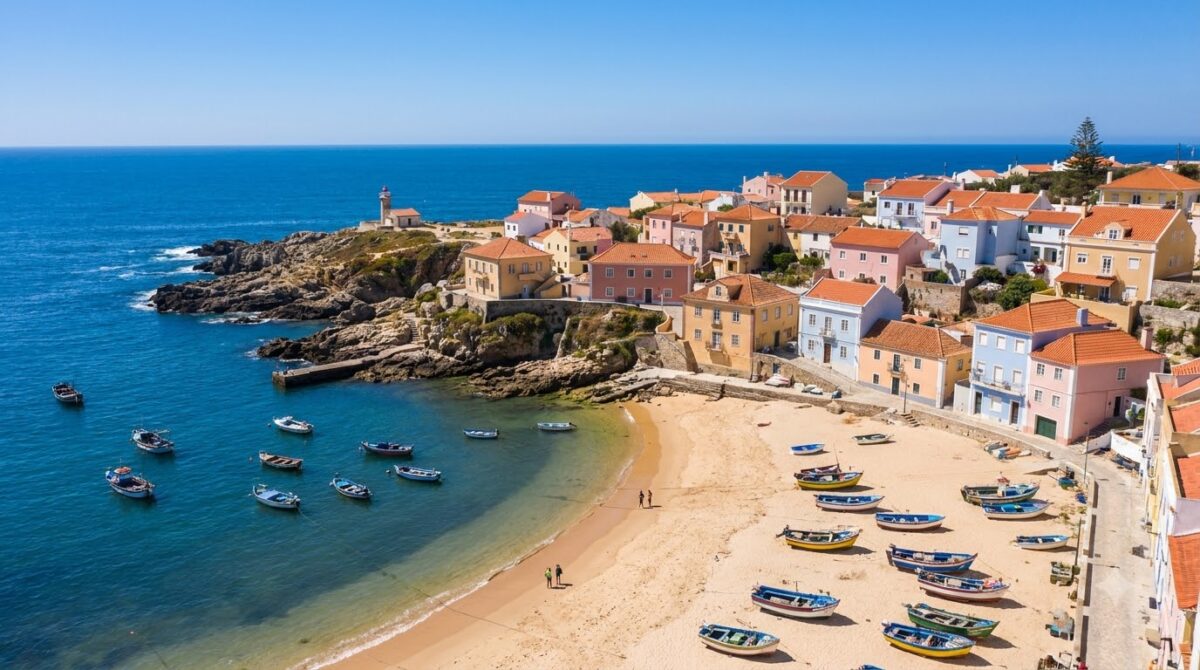
- Cascais — a coastal town 40 minutes by train along the river mouth, with a beach and a marina. The easiest half day out of the city.
- Cabo da Roca, the westernmost point of mainland Europe, reachable by bus from Sintra or Cascais.
- Setúbal and Arrábida, south across the bridge, for the best beaches outside of Lisbon and a wine region.
- Óbidos — a small walled village an hour north, easily combined with a drive onwards.
- Évora — a walled Alentejo town with a Roman temple, an hour and a half away and a long day. It is also the gateway to the Algarve if you are heading south afterwards.
Lisbon or Porto: which city in Portugal for a short trip?
- Lisbon for a first visit to Portugal. It is bigger, has more variety, has Sintra and Belém, and connects to everywhere.
- Porto for a long weekend. It is more compact, cheaper, and three days there feels complete in a way three days in Lisbon does not.
- Both if you have seven days — the train between them takes about three hours and the two cities are genuinely different.
Our Portugal itinerary covers the full route, and the where to stay in Porto guide covers the northern end.
Where to eat in Lisbon, and exploring Lisbon on foot
Two things that shape how much you fit into a day.
- Portuguese cuisine runs late — lunch from one, dinner from eight. A restaurant busy at seven is full of visitors.
- Where to eat in Lisbon: the tascas in Alfama and Príncipe Real for bacalhau and grilled fish, Time Out Market for choice, the pastelarias everywhere for a pastel de nata and a bica.
- The metro is cheap and simple, with the airport 15 minutes from the centre — unusual for a European capital.
- Trams 28 and 15 are transport as well as sights. Tram 28 is packed; walk it instead if the queue is long.
- Uber and Bolt are cheap here and worth it at the end of a day, because the last hill is always the hardest.
- Wear real shoes. The calçada pavement is polished limestone and lethal in rain.
The best time to visit Lisbon
- March to June and September to October are the best months: warm, dry and not yet full.
- July and August are hot and busy, and climbing Alfama at two in the afternoon is genuinely unpleasant.
- June has the Festas de Lisboa and the Santo António street parties on the 12th, which is the city at its best and its most crowded.
- Winter is mild and cheap, with short bright days and almost no queues.
Where to stay in Lisbon on a longer trip
Short version: Baixa or Chiado for a first visit and a central location, Alfama for atmosphere and stairs, Príncipe Real for calm, Bairro Alto only if you intend to be out late. The full breakdown is in our guide to where to stay in Lisbon.
Fitting a Lisbon trip into a wider trip to Portugal
Most people planning a trip here are not only visiting Lisbon, and the length of the Lisbon leg should follow from the rest of the route rather than the other way round.
- Lisbon only — four days, or five with Cascais. This is the standard long weekend plus one.
- Lisbon and Porto — seven days, split four and three, with the train between them. The best short Portugal itinerary there is.
- Lisbon, Porto and the Algarve — ten days minimum. In seven you would spend two of them travelling.
- Lisbon and the south — four days in the city, then three or four on the Algarve coast, which is around three hours by train.
The mistake worth naming: cutting Lisbon to two days in order to fit another city in. A visit to Lisbon of two days and a rushed stop somewhere else is worse than four days here and coming back for the rest.
The full route is in our Portugal itinerary, which covers 7 and 10 day versions.
Frequently asked questions
How many days are ideal for visiting Lisbon?
Four. Two full days for the city itself, one for a day trip to Sintra, and one left loose. Lisbon is built on seven hills and its sights are spread vertically, so you cover less ground per day than the map suggests — which is why three days feels rushed and four does not.
Is 3 days in Lisbon enough time?
Yes, if you accept it will be busy. Three days covers Baixa and Alfama, Belém and Bairro Alto, and a day trip to Sintra, with no slack. The thing you lose is the unstructured day, which in a city with this many viewpoints and cafés is a real part of the appeal.
Is 2 days in Lisbon sufficient to see the main sights?
Just about, for the city itself. Two days covers Praça do Comércio and the Baixa, Alfama and São Jorge Castle, Belém, and one evening in Bairro Alto. It does not leave room for Sintra, and squeezing Sintra into a half day is worse than skipping it.
Is 4 days in Lisbon too long?
No, it is the natural length. Five and six days also work if you add Cascais, the LX Factory or a second day trip. Past six days most people move on, because Lisbon is not a large city and the rest of Portugal is within a few hours.
How many days do you need for Lisbon including day trips like Sintra?
Four minimum, five if you want two day trips. Sintra needs a full day on its own — Pena Palace and Quinta da Regaleira alone will fill it, and the 434 bus between sites is slow. Cascais is the natural second trip and only takes a half day.
Which city is better for a short trip, Lisbon or Porto?
Porto for a long weekend, Lisbon for a first visit to Portugal. Porto is compact enough that three days feels complete, and it is cheaper. Lisbon is bigger and more varied, with Sintra and Belém attached, and it rewards four days more than Porto does.
Can you visit Lisbon in just one day?
You can see a slice of it. One day gets you Praça do Comércio, the Baixa, a walk up through Alfama to São Jorge Castle and one miradouro at sunset. You will miss Belém entirely, and the hills mean you will do less than the distances imply. Treat it as a stopover rather than a visit.