
Deciding where to stay in Lisbon is mostly a question nobody warns you about: how much climbing are you willing to do every day?
Some links below are affiliate links. We may earn a commission if you book through them, at no extra cost to you. We do not rank hotels, and any prices on the map come live from the booking sites.
Quick answer: where to stay in Lisbon. Book Baixa or Chiado for a first trip: central, walkable, connected to everywhere by metro and tram, and you can roll a suitcase to your door. Alfama for atmosphere, if you do not mind constant hills.
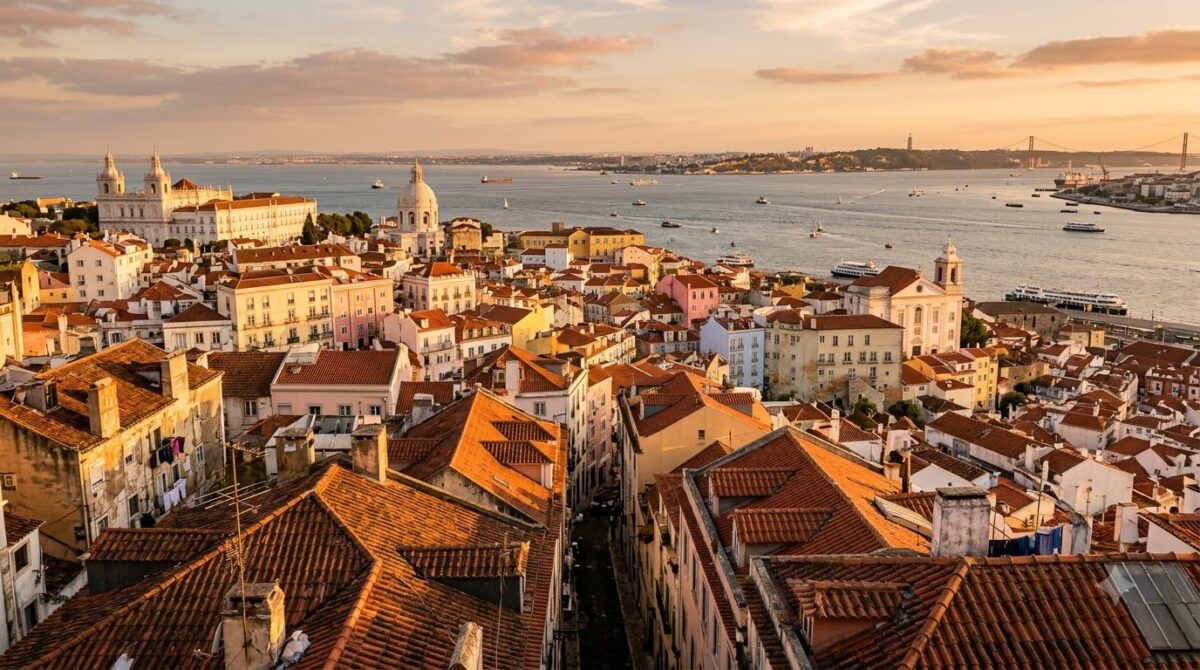
Lisbon is built on hills, and they are steeper than photographs suggest. Two hotels four hundred meters apart on a map can be a flat two minute stroll or a breathless ten minute ascent up worn limestone. That difference matters more than the star rating, and it is the reason people who loved their Lisbon hotel and people who hated theirs are often describing the same neighborhood.
This guide splits the best areas to stay in Lisbon by what they are actually like to live in for a few days. Neighborhoods, transport and access details checked 6 September 2026.
The short answer
| If you are | Stay in | Hills |
|---|---|---|
| On your first trip to Lisbon | Baixa or Chiado | Flat to moderate |
| Here for atmosphere and old Lisbon | Alfama | Steep, constant |
| Here for the nightlife scene | Bairro Alto | Steep |
| Wanting calm and good food | Principe Real | Uphill, then flat |
| Booking a high-end hotel | Avenida da Liberdade | Flat |
| Travelling with mobility limits or heavy bags | Baixa or Avenida | Flat |
| Staying a week or more | Principe Real or Estrela | Mixed |
If you read nothing else: book Baixa or Chiado for a first trip. They are central, walkable, connected to everywhere by metro and tram, and you can roll a suitcase to your door.
Baixa: flat, central, and slightly soulless
Baixa is the grid of straight streets between the river and the higher districts, rebuilt after the 1755 earthquake. It is the only genuinely flat part of central Lisbon, and it is the transport hub of the city.
Who it suits: first time visitors, short stays, anyone with a wheeled suitcase or a knee that objects to stairs.
- Flat. This is the practical headline. You can walk from the metro to your hotel without a climb, which no other central neighborhood offers.
- Everything connects here. Two metro lines, the tram network, and buses. Rossio station runs trains to Sintra.
- Walk to almost everything. Alfama, Chiado and the riverside are ten to fifteen minutes on foot, and the funiculars carry you up to Bairro Alto.
- It is the least characterful central area. Grand squares and uniform eighteenth-century blocks, with ground floors given over to souvenir shops and chain restaurants.
Eat carefully here. The restaurants along the main pedestrian streets, particularly Rua Augusta, are the weakest value in Lisbon. Walk two streets off the main drag before sitting down.
Chiado: the best all-round choice
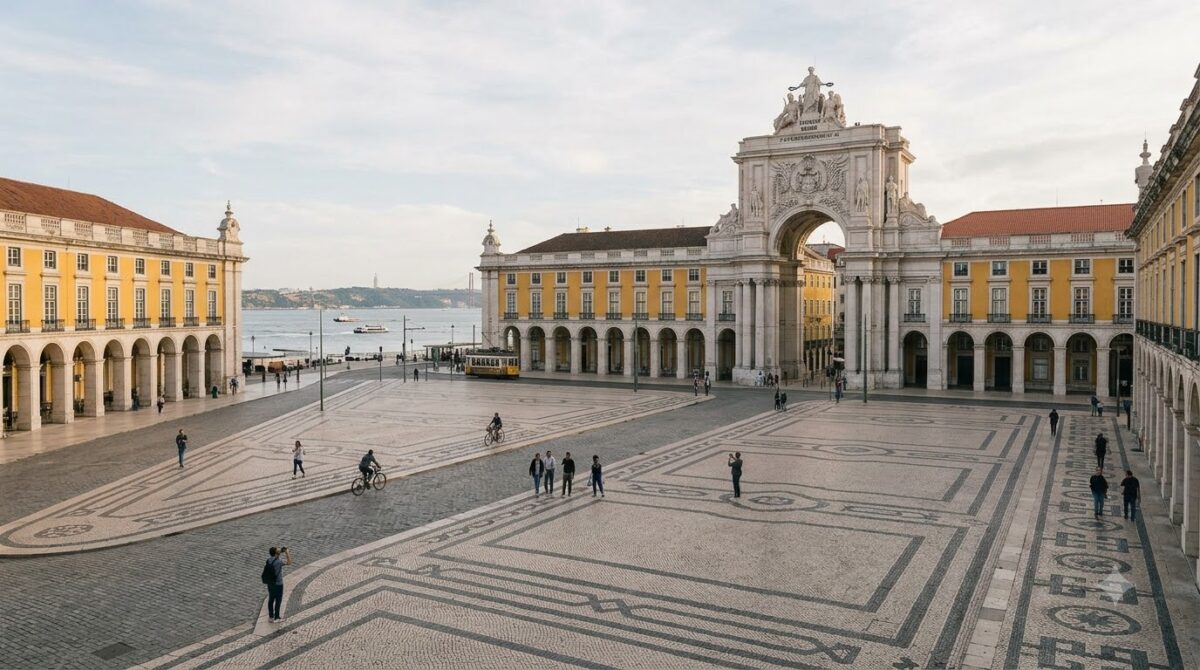
Chiado sits just above Baixa, on the slope up towards Bairro Alto. It is the elegant shopping and theater district, with bookshops, old cafes, and the city’s best concentration of good restaurants within a short walk.
Who it suits: almost everyone. This is the answer if you want one recommendation and no caveats.
- Central without being touristy. Right in the heart of the city but with genuine shops and residents.
- The best food radius in central Lisbon. Time Out Market is a short walk downhill, and Bairro Alto is a short walk uphill.
- Moderate hills. There is a climb from Baixa, but the Santa Justa lift and the Elevador da Bica handle the worst of it.
- More expensive than Baixa for a comparable room, though not dramatically.
To stay in Chiado is to be twenty minutes on foot from every major sight, which in a city this compact is the whole argument.
Map shows live availability and prices. We may earn a commission on bookings made through it, at no extra cost to you.
Alfama: the one people fall in love with
Alfama is the oldest part of Lisbon, the medieval quarter that survived the earthquake. Narrow lanes that turn into staircases, washing between windows, tiled facades, fado bars, and the Castelo de Sao Jorge on top of it all.
Who it suits: repeat visitors, couples, and travellers who want atmosphere more than convenience and are honest with themselves about the stairs.
- The most beautiful area to stay in Lisbon, by a distance. Every corner is a photograph.
- Fado, the Portuguese music tradition, lives here, in small rooms rather than dinner shows.
- Two of the best viewpoints in the city are inside the neighborhood: Miradouro das Portas do Sol and Santa Luzia.
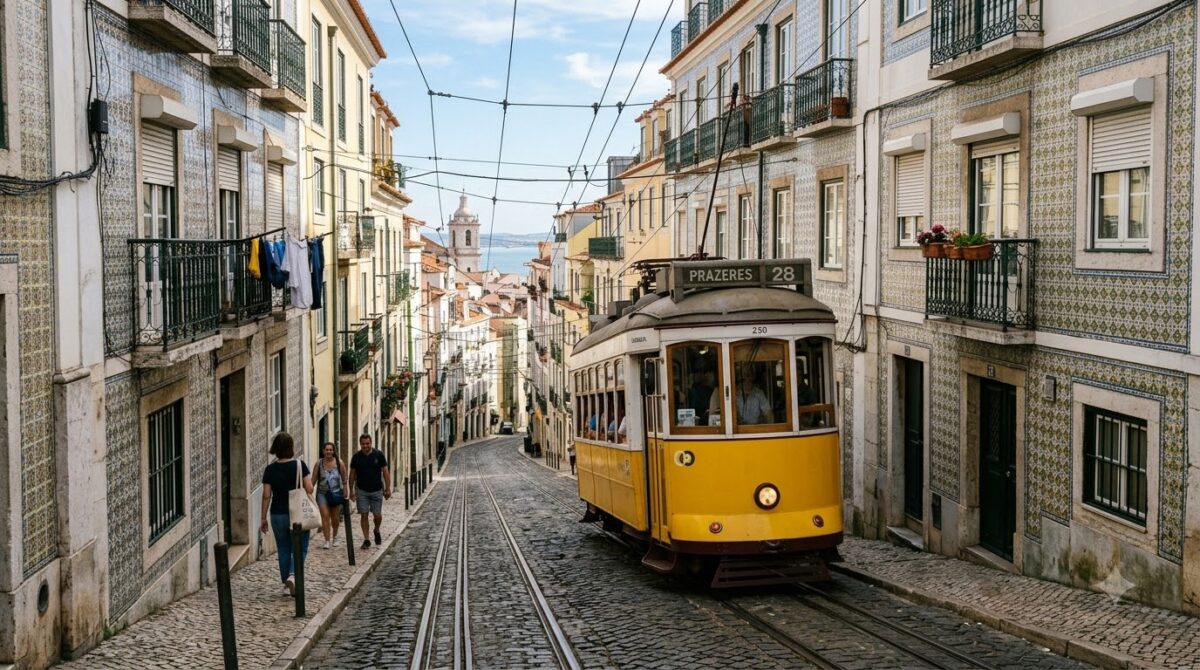
- Tram 28 runs through it, which is both a charm and a noise source.
Now the honest part. Alfama is a hill with a maze on it. Taxis often cannot reach the door, so you may be walking the last few hundred meters up a staircase with your luggage. Streets are unlit and confusing at night. Delivery is difficult and there are few supermarkets. If any of that is a problem, admire Alfama in the daytime and sleep in Chiado.
Bairro Alto: nightlife, and the sleep question
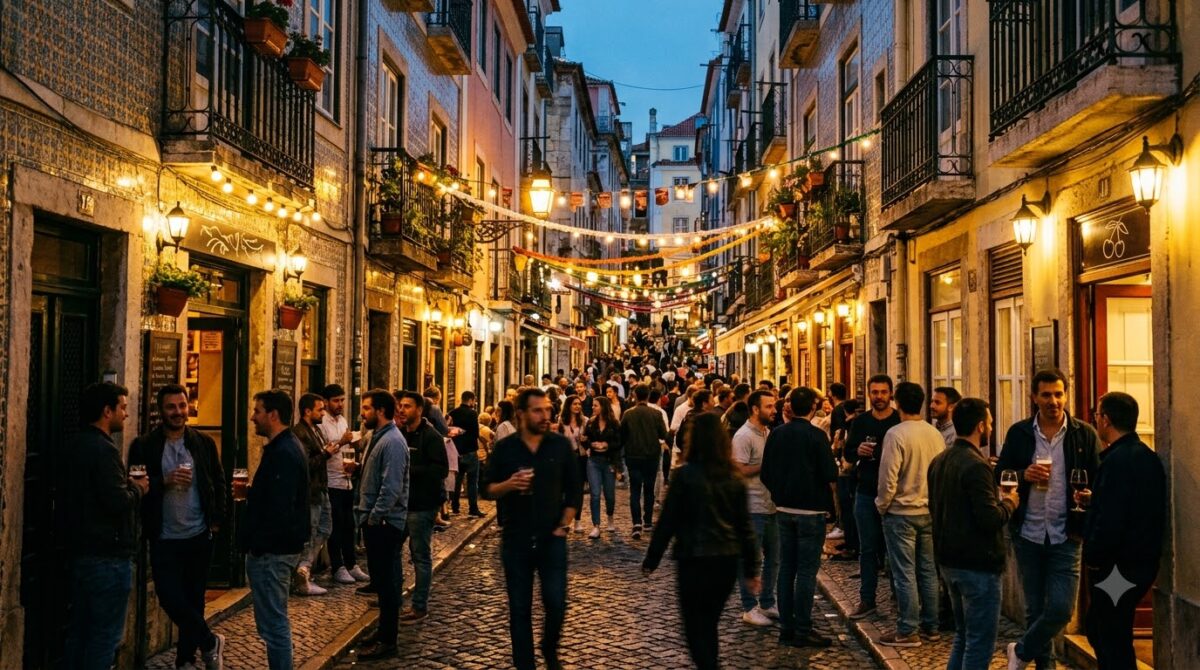
Bairro Alto is a small grid on the hill above Chiado. In the daytime it is quiet and shuttered and looks like nothing much. From about ten at night it becomes the center of the Lisbon nightlife scene, with tiny bars whose customers drink in the street.
Who it suits: people whose trip is built around going out, and who plan to be part of the noise rather than trying to sleep through it.
- The densest bar scene in the city, and the drinks are cheap by Western European standards.
- Central. Chiado is downhill, Principe Real is a few streets north.
- Rooms are cheap for the location, for the obvious reason.
The noise is not a rumour and it is not occasional. Streets in the core of Bairro Alto are loud until two or three in the morning, every night of the week in summer. If you are not going to be out in it, this is the wrong choice. A room here with good glazing and a courtyard aspect can work; ask specifically, and do not assume.
Principe Real: quiet, green and increasingly the smart choice
Principe Real sits above Bairro Alto, and it is the area Lisbon residents mention when they are asked where they would stay. A leafy garden square, nineteenth-century townhouses, independent boutiques, and some of the best restaurants in the city without the crowds.
Who it suits: second-time visitors, longer stays, anyone who wants a neighborhood rather than a sightseeing base.
- Genuinely calm at night, while being a five minute walk from Bairro Alto if you want the opposite.
- The best restaurant density outside Chiado, and aimed at locals.
- Small design hotels in converted townhouses are the characteristic stay here.
- Green space, which central Lisbon otherwise lacks. The Botanical Garden is on its edge.
The trade-off is the climb. Principe Real is at the top of the hill. Going out is easy and coming home is not, though the Elevador da Gloria funicular from Baixa takes the sting out of it.
Avenida da Liberdade: the luxury strip
Avenida da Liberdade is the wide tree-lined boulevard running north from Baixa, lined with designer shops and most of Lisbon’s five-star hotels.
Who it suits: travellers choosing the hotel first, business visitors, and anyone who wants a large modern room with a lift.
- Flat, wide pavements and the easiest luggage handling in the city.
- The concentration of luxury hotels is highest here, including several international brands and some restored palaces.
- Metro along its length, and a direct airport connection.
- It is not atmospheric. This is a grand boulevard, not old Lisbon, and the immediate area empties in the evening.
Belem, and why not to sleep there
Belem is the riverside district six kilometers west, with the monastery, the tower, the monument to the discoveries and the original custard tart bakery. It is essential to visit and a poor place to stay.
It is a half day trip, not a base. The sights are clustered, you can see all of them in one morning, and there is very little to do there in the evening. Getting back into the center takes twenty-five minutes by tram, which you would be doing twice a day for no gain.

Areas to think twice about
- Cais do Sodre — the riverside strip, now full of good restaurants, but Rua Nova do Carvalho (Pink Street) is a late-night drinking street. Good area, wrong street for sleeping.
- Martim Moniz and Intendente — genuinely central and much cheaper, with the most diverse food in Lisbon. It is also the scruffiest central area and the most persistent for street drug offers. Not dangerous, but not restful.
- Parque das Nacoes — the modern riverside development from the 1998 expo. Clean, spacious, family-friendly, and twenty minutes by metro from anything historic.
- Anywhere chosen only on price — in Lisbon a bargain often means the top of a hill with no lift, four floors up.
The hills, the trams and the lifts
Since this is the thing that shapes a Lisbon stay, it deserves its own section.
- The pavements are calcada, small polished limestone blocks. They are beautiful and they are slippery, especially in rain. Flat soles with grip, not smooth ones.
- Three funiculars and one street lift exist purely because the hills defeated everyone: Gloria, Bica, Lavra and the Santa Justa lift. They are public transport and take a normal ticket.
- Tram 28 is not a tourist attraction, it is a working tram that happens to run a beautiful route. It is packed, and it is the most pickpocketed place in Lisbon.
- Get a rechargeable Viva Viagem card at any metro station. It covers metro, trams, buses and the funiculars, and is far cheaper than single tickets.
- Ask your hotel two questions before booking: is there a lift, and can a taxi reach the door. In Alfama and the upper streets the answer to both is often no.
Hotel, apartment or hostel?
Lisbon has an unusually good spread at every level, and the building stock shapes what you get.
- Small design hotels in restored townhouses are what Lisbon does best. Chiado, Principe Real and Alfama are full of them, typically ten to thirty rooms.
- Apartments are plentiful and good value for a longer stay or a family, and give you a kitchen. Confirm the floor and whether there is a lift, because a fourth-floor walk-up is common and rarely advertised.
- Hostels are exceptional here. Lisbon hostels win international awards regularly and many have private rooms, so they are worth considering even if you left dorm life behind.
- Large international hotels cluster on and around Avenida da Liberdade, and that is where to look if you want a predictable modern room.
How many nights do you need in Lisbon?
- Three nights is the sensible minimum: two days for the city, one for Sintra.
- Four or five lets you add Belem properly, a day trip to Cascais or Sintra without rushing, and time to sit in a square doing nothing, which is what Lisbon is for.
- A week works well as a base, with day trips out by train and a different neighborhood explored each evening.
Sintra deserves the day. It is forty minutes by train from Rossio station in Baixa, and it is the single best day trip in Portugal. Book the palace tickets before you go.
Does the season change where to stay?
- June to September is hot, busy and expensive, and the hill climbs are considerably harder in the afternoon heat. A flat neighborhood is worth more in August than in March.
- March to May and October are the best months. Mild, long days, and prices well below summer.
- November to February is cheap and wet. Rain plus calcada pavement is genuinely slippery, which is another argument for flatter ground in winter.
- Air conditioning is not universal in converted old buildings. In summer, check.
Where to stay in Lisbon, in one line
Chiado if you want one safe answer, Baixa if you want flat ground, Alfama if you want beauty and will pay for it in stairs, Principe Real if you are staying a while.
Combining Lisbon with other cities? Our guide to where to stay in Rome uses the same neighborhood-first approach for a city with the same problem of old buildings and no lifts.
What is walkable from each base
Lisbon is small. The historic core is roughly two kilometers across, and the practical question is not whether you can reach a sight but whether the walk back is uphill.
| From | On foot within 15 minutes | The climb home |
|---|---|---|
| Baixa | Chiado, Cais do Sodre, Praca do Comercio, Rossio, Time Out Market | None |
| Chiado | Baixa, Bairro Alto, Time Out Market, Santa Justa lift | Gentle |
| Alfama | Castelo de Sao Jorge, the cathedral, Portas do Sol, Baixa (downhill) | Steep, and stepped |
| Bairro Alto | Chiado, Principe Real, Sao Pedro de Alcantara viewpoint | Steep |
| Principe Real | Bairro Alto, Botanical Garden, Avenida da Liberdade | Long but even |
| Avenida da Liberdade | Baixa, Marques de Pombal, Principe Real | None |
Castelo de Sao Jorge is the exception to everything. The Moorish castle sits at the top of the Alfama hill and there is no gentle way up to it from any base. Either take tram 28, take the 737 bus, or accept twenty minutes of climbing. Staying in Alfama means you are already most of the way there, which is the single practical argument in its favour.
A 3-day Lisbon itinerary, and how your base changes it
Three days is the standard first trip to Lisbon, and it splits neatly.
- Day 1 — the center. Baixa, Chiado, the Santa Justa lift, Time Out Market, and a viewpoint at sunset. Everything on foot from anywhere central.
- Day 2 — Alfama and Belem. The castle and the old quarter in the morning, tram or bus out to Belem after lunch for the monastery and the tower.
- Day 3 — Sintra. Train from Rossio, forty minutes, palaces all day. Back for dinner.
If you are based in Baixa or Chiado this works with no wasted movement, because Rossio station for Sintra and the Belem trams both start near you.
If you are based in Alfama, flip days one and two: do your own neighborhood and the castle first thing, before the tour groups arrive at around ten, then come down into the center.
If you are based in Principe Real or Bairro Alto, the days work the same but plan to descend in the morning and use a funicular to come back up in the evening rather than walking it after dinner.
Eating, by neighborhood
Where you sleep in Lisbon shapes where you eat more than in most cities, because the good and bad restaurants are geographically sorted.
- Chiado and Principe Real hold the best restaurants in Lisbon for a visitor: contemporary Portuguese cooking at prices well below the equivalent in Paris or Rome.
- Cais do Sodre, on the river below Chiado, is where Time Out Market sits, along with a strip of good independent places. Busy and worth it.
- Alfama is a mixed bag. There are excellent family-run tascas and there are fado-with-dinner tourist traps on the same street. Look for handwritten menus and no photographs of the food.
- Baixa, specifically Rua Augusta and the streets straight off it, is the weakest eating in central Lisbon. Menus in six languages and a person outside inviting you in are the reliable warning signs.
- Martim Moniz has the best and cheapest South Asian and African food in the city, which is worth the walk even if you sleep elsewhere.
One habit worth adopting: the small plates put on your table before you order are couvert, and they are charged for. Sending them back is completely normal and nobody minds.
Getting from the airport to each area
Lisbon airport is unusually close to the center, about seven kilometers, which makes the transfer decision easy.
- Metro is the cheapest option and runs from inside the terminal on the red line. Change at Alameda or Saldanha for the center. It is fine with a small bag and unpleasant with two large ones at rush hour.
- Taxi or ride app takes fifteen to twenty-five minutes to any of the areas above and is inexpensive by Western European standards. This is the sensible choice with luggage.
- For Alfama, expect to walk the last part. Tell the driver the nearest square rather than the street address, and ask your accommodation in advance where cars can actually stop.
- Buy a Viva Viagem card at the airport metro station and load it there. It works on everything for the rest of your stay.
Deciding where to stay in Lisbon: a short checklist
If you are planning your first trip to Lisbon and the neighborhoods still blur together, work through these in order.
- How long is your visit to Lisbon? Two or three nights means paying for a central location. Five or more and areas in Lisbon slightly further out become better value.
- How much can you climb? This is the question that separates the areas of Lisbon more than price does.
- Hotels or apartments? Under four nights, lean hotel. Longer, or with family, lean apartment.
- Do you want to be out late? If yes, Bairro Alto. If no, stay somewhere at least two streets from it.
- Then pick the hotel. Not before.
Most people who ask where to stay in Lisbon are really asking one of the first two questions without knowing it. Answer those and the list of places to stay in Lisbon shrinks from dozens of neighborhoods to two or three.
Is 3 days in Lisbon enough?
Yes for the city itself, and it is the most common length of a Lisbon trip. Three days covers the center of Lisbon, Alfama and the cathedral, Belem, and a day in Sintra, which is the one day trip nobody should skip.
What three days does not allow is the rest of Lisbon: the Gulbenkian museum, the Marvila and Alcantara districts, a day at the beach in Cascais, or simply sitting in a square for two hours, which is a large part of the Lisbon experience. Four or five nights is the version most people wish they had booked.
If you only have two nights, cut Sintra rather than cutting the city, and stay in Chiado or Baixa so that walking around Lisbon costs you no travel time at all.
What is the safest area to stay in Lisbon?
Lisbon is one of the safer capital cities in Western Europe, and the question is really about comfort rather than danger.
- The safest-feeling areas are Principe Real, Avenida da Liberdade, Estrela and Chiado. Residential, well lit, and quiet after midnight.
- Baixa is safe but heavily pickpocketed, because it is where the crowds are. Watch bags on tram 28 and at the Santa Justa lift.
- Alfama is safe and disorienting. The risk is getting lost on unlit stairs, not crime.
- Martim Moniz and Intendente feel the least comfortable at night, mostly because of persistent street drug offers. A nuisance, not a threat.
For a first time in Lisbon with any concern about this, book Chiado or Principe Real. Both are central, both are calm at night, and neither requires walking through anywhere you would rather not.
How to find the best place to stay in Lisbon
Lisbon hotels are unusual in one respect: the building matters as much as the brand. Most hotels in Lisbon in the historic districts are conversions of eighteenth or nineteenth century townhouses, so two properties on the same street with the same rating can be completely different places to sleep.
When you decide where to stay, filter on these four things rather than on stars.
- Lift or no lift. The single most useful filter for hotels and apartments alike.
- Which floor. Ground floor in a narrow street means street noise; top floor without a lift means a daily climb on top of the hill you already climbed.
- Aspect. A room facing an internal courtyard is a different night’s sleep from one facing the street, especially in Bairro Alto and Cais do Sodre.
- Can a car reach the door. In Alfama and the upper lanes, often not.
Small townhouse hotels give you the classic Lisbon feel: tiled entrance halls, a roof terrace, fifteen rooms and a person at the desk who knows the city. Larger hotels cluster along Avenida da Liberdade and around Marques de Pombal, and they are the right call if you want a predictable large room, a gym and a lift that always works. Apartments in Lisbon are plentiful and are the better answer for four nights or more.
Lisbon also has some of the best hostels in Europe, several of which win international awards, and most have private rooms as well as dorms. If your only reason for skipping hostels is that you want a door of your own, look again.
The neighborhoods in Lisbon, side by side
| Neighborhood | Feel | Best for | Watch out for |
|---|---|---|---|
| Baixa | Grand, flat, busy | First visits, easy luggage | Weak restaurants on the main streets |
| Chiado | Elegant, lively | Almost everyone | Slightly higher prices |
| Alfama | Medieval, steep | Atmosphere, repeat visitors | Stairs, no car access |
| Bairro Alto | Quiet by day, loud by night | Nightlife | Noise until 3am |
| Principe Real | Leafy, residential | Longer stays, food | The climb home |
| Avenida da Liberdade | Formal, wide | Luxury, business | Empties in the evening |
| Cais do Sodre | Riverside, trendy | Eating and drinking | Pink Street at night |
Chiado and Bairro Alto sit directly next to each other and are the pairing most often confused. Chiado is the shopping and cafe district; Bairro Alto is the drinking grid above it. They are three minutes apart and completely different at eleven at night.
Staying in the heart of the city, or just outside it
A base for exploring Lisbon does not have to be in the historic core, and on a longer visit it probably should not be.
- Estrela and Campo de Ourique — residential, excellent local market, tram connections, and noticeably cheaper. This is where people who return to Lisbon repeatedly often stay.
- Alcantara and the LX Factory area — converted industrial buildings under the 25 de Abril Bridge, good food and design shops, twenty minutes from the center.
- Graca — above Alfama, with the best viewpoints in the city and a fraction of the visitors. Steep, and worth it.
The trade-off is simple. Stay in the heart of classic Lisbon and you walk everywhere but pay for it. Stay one district out and you take a tram twice a day and get a bigger room, a better neighborhood restaurant and a quieter night. On a first visit to Lisbon, pay for central. On a fourth, do not.
Sights near each base
Two landmarks anchor the eastern side of the city and are worth knowing when you pick an area. Lisbon Cathedral, the Se, sits at the bottom of the Alfama hill on the tram 28 route, about ten minutes uphill from Baixa. Castelo de Sao Jorge is above it, at the top.
Staying anywhere in Alfama or Graca puts both on your doorstep. From Baixa or Chiado they are a short but steep walk. From Principe Real or Avenida da Liberdade they are a tram ride, which is no hardship but is a decision you will make every day.
Also looking at Spain? See where to stay in Barcelona, where the choice is grid versus old city rather than flat versus hill.
Adding Spain to the trip? See the Spain itinerary for how the two countries fit together.
Checking current rates in Lisbon
Everything above is about position — which area suits which kind of trip. What it deliberately does not do is quote prices, because rates in Lisbon move a long way by season, by day of the week and by how far ahead you book, and any figure printed in a guide is out of date the week after it is written.
These searches show live availability and current prices, so you can check them against the areas described above:
These are affiliate links. If you book through one we may earn a commission, at no extra cost to you. It does not affect which areas we recommend above — nobody pays to be listed here.
Heading north as well? See where to stay in Porto for the areas compared, and why the gradient matters more than the map.
Planning the whole route? Our Portugal itinerary covers 7 and 10 days by train, and why the shape of the country matters.
Still fixing the trip length? See how many days in Lisbon you need, and why the hills change the answer.
Adding the coast? Our where to stay in the Algarve guide covers the south, about three hours away.
Frequently asked questions
What is the best area to stay in Lisbon for the first time?
Chiado or Baixa. Chiado is central, walkable and has the best restaurants nearby, with moderate hills eased by the Santa Justa lift and the Bica funicular. Baixa is the only flat central district, which matters if you have a wheeled suitcase, and it is the transport hub for the whole city.
Is Alfama a good place to stay in Lisbon?
It is the most beautiful area and the least practical. The lanes turn into staircases, taxis frequently cannot reach the door, streets are dark and confusing at night and there are few shops. Choose it if atmosphere matters more than convenience and you are travelling light, otherwise visit in daylight and sleep in Chiado.
Is Bairro Alto too noisy to sleep in?
In the core streets, yes, unless you are out in it. The bars are tiny so drinkers fill the streets until two or three in the morning, every night in summer. A room with good glazing facing a courtyard can work, but ask specifically rather than assuming.
How bad are the hills in Lisbon?
Steeper than photographs suggest, and they shape the whole stay. Baixa and Avenida da Liberdade are flat; Chiado is a moderate slope; Alfama, Bairro Alto and Principe Real all involve real climbing. Three funiculars and the Santa Justa lift exist to help, and they take a normal transport ticket.
How many nights should I spend in Lisbon?
Three at a minimum: two days for the city and one for Sintra, which is forty minutes by train from Rossio. Four or five allows Belem, a second day trip and time to slow down. A week works well if you use Lisbon as a base for trains along the coast.
Should I stay in Belem?
No. Belem is essential to visit and poor to sleep in. The monastery, tower and custard tart bakery are all within one morning of each other, and there is little happening in the evening. Staying there adds a twenty-five minute tram ride at each end of every day.
Is Lisbon safe at night?
Yes, by European city standards, with the usual caveats. Violent crime is rare and pickpocketing is the real risk, concentrated on tram 28, at Santa Justa and in crowded Baixa streets. Martim Moniz and Intendente are scruffier and you will get repeated street drug offers, which are a nuisance rather than a danger.
Hotel or apartment in Lisbon?
Apartments are better value for stays of four nights or more and for families, and they give you a kitchen. Small design hotels in restored townhouses are what Lisbon does best for shorter stays. With either, confirm the floor and whether the building has a lift, because fourth-floor walk-ups are common and rarely mentioned in listings.