
Santa Teresa is a surf town and beach town at the bottom of the Nicoya Peninsula with one dusty dirt road, some of the best food in Costa Rica, and a sunset that empties every restaurant onto the beach at six every evening. It is also four hours from the nearest international airport by a route that involves a ferry, and it costs considerably more than it did five years ago.
Some links below are affiliate links. We may earn a commission if you book through them, at no extra cost to you. We do not rank hotels, and any prices on the map come live from the booking sites.
Quick answer: where to stay in Santa Teresa. The beach side of the road if you want to walk to the sand; up the hill behind it for quieter, cooler and usually better value. Most boutique hotels are in Playa Hermosa and north Santa Teresa. Book months ahead for December to April.
This guide to Santa Teresa covers how to reach Santa Teresa, which stretch of the coastline to stay on, where to eat, what there is to do beyond surfing, and an honest answer to the question that keeps coming up: whether the town has been ruined by its own popularity.
Prices and transport details were read on 15 August 2026.
Where is Santa Teresa, and what is actually there?
Santa Teresa sits on the Pacific coast at the southern tip of the Nicoya Peninsula, in Puntarenas province. It is not a town in any conventional sense — there is no square, no centre and no grid. There is one road running parallel to the sea for about six kilometres, with everything strung along it.
The confusing part is that the Santa Teresa area is really five beaches with different names, and people use the names loosely.
| Beach | Character | Best for |
|---|---|---|
| Mal Pais | The southern end, a fishing village with a rocky shoreline. Quietest, oldest, least changed | People who want out of the scene entirely |
| Playa Carmen | Where the road from Cobano meets the sea. The main junction, supermarkets, gentler surf | Beginners and anyone who wants to be central |
| Playa Santa Teresa | The long main beach. Best waves, most restaurants, most accommodation | Almost everyone |
| Playa Hermosa | The Santa Teresa and Playa Hermosa stretch runs north of the centre, wider and emptier, with the best sunsets and a mellower wave | Longer stays, families, anyone wanting space |
| Manzanillo | Twenty minutes further north, barely developed | Day trip |
Note that Playa Hermosa here is a different beach from the Playa Hermosa in Guanacaste and the one near Jaco. Costa Rica has several and they are nothing like each other.
How to get to Santa Teresa
This is the part worth planning properly, because there are three genuinely different routes and the wrong choice costs you a day.
The ferry route, from San Jose
Drive or take a bus to Puntarenas, take the ferry to Paquera, then drive the last 90 minutes through Cobano. Total journey around five hours from San Jose international airport.
- The ferry ride takes about 70 minutes and costs roughly 1,200 colones per person plus around 12,000 for a car.
- Sailings run roughly every two hours. Check the current timetable before you leave, because it changes seasonally and missing one costs you two hours.
- Arrive 45 minutes early with a vehicle in high season. Cars queue and the ferry does fill.
- The crossing itself is pleasant and it breaks up the drive.
Driving around, from Liberia
From Liberia airport it is a four to five hour drive down the length of the peninsula with no ferry involved. Slower than it looks on a map because the last hour and a half is unpaved. If you are combining Santa Teresa with Guanacaste or Nosara, this is the route.
Flying
Domestic flights from San Jose to Tambor take about 30 minutes and cost roughly US$90 to US$150 one way, followed by a 45-minute transfer. This is the fastest option by a wide margin and worth it on a short trip.
Shuttles
Shared shuttles run from San Jose, Liberia, Monteverde, La Fortuna, Tamarindo and Manuel Antonio for around US$60 to US$90 per person, ferry included. For most people this is the sensible answer — you do not want to drive this route for the first time in the dark.
The road, the ATV and whether to rent a car
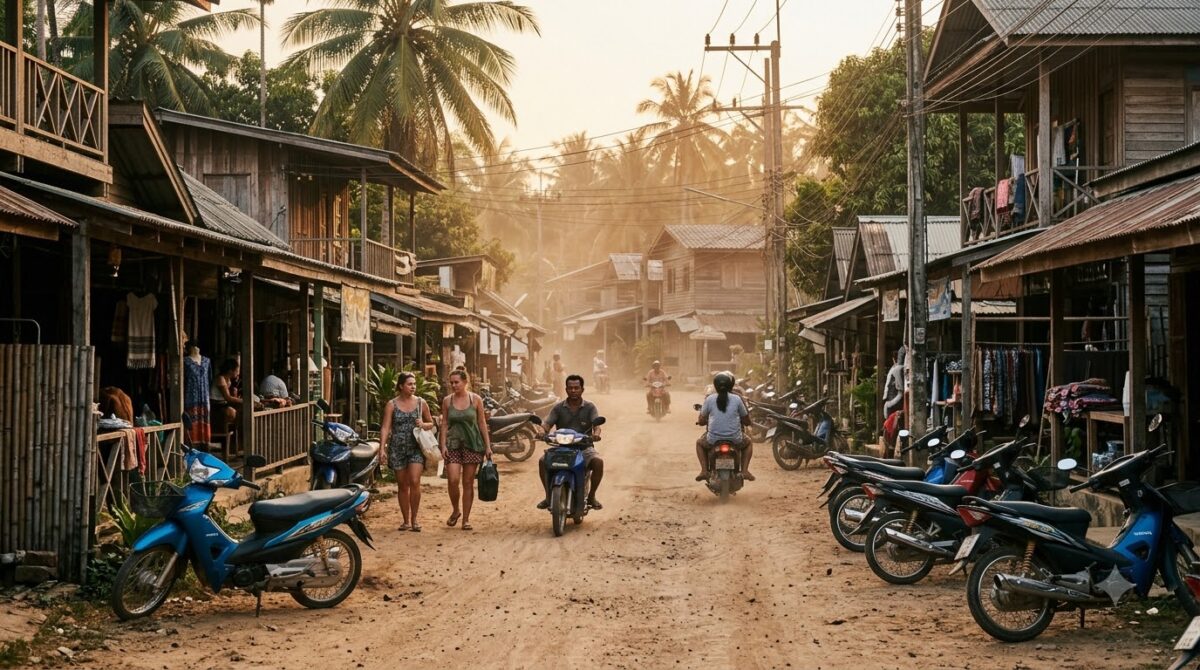
The main road through town is dirt. Not a rough patch of dirt — the whole thing. In the dry season it throws up a fine white dust that coats everything within twenty metres, and in the rainy season it turns to deep mud and potholes. Talk of paving it has been going on for years.
- An ATV or quad is the standard way to get around, and roughly US$45 to US$70 a day. This is genuinely what most visitors use.
- Scooters are cheaper at US$25 to US$40 but harder work on the loose surface, and accidents are common.
- If you rent a car, get four-wheel drive. Two-wheel drive is refused by some rental agreements on this route, and mandatory insurance adds US$30 to US$45 a day on top of the advertised rate regardless of vehicle.
- Taxis exist and cost US$5 to US$15 for a hop along the strip.
- Walking works within one beach section but not between them. The strip is six kilometres end to end.
- Wear a mask or a buff on an ATV in the dry season. Everyone local does.
Santa Teresa surf and where to take a surf lesson
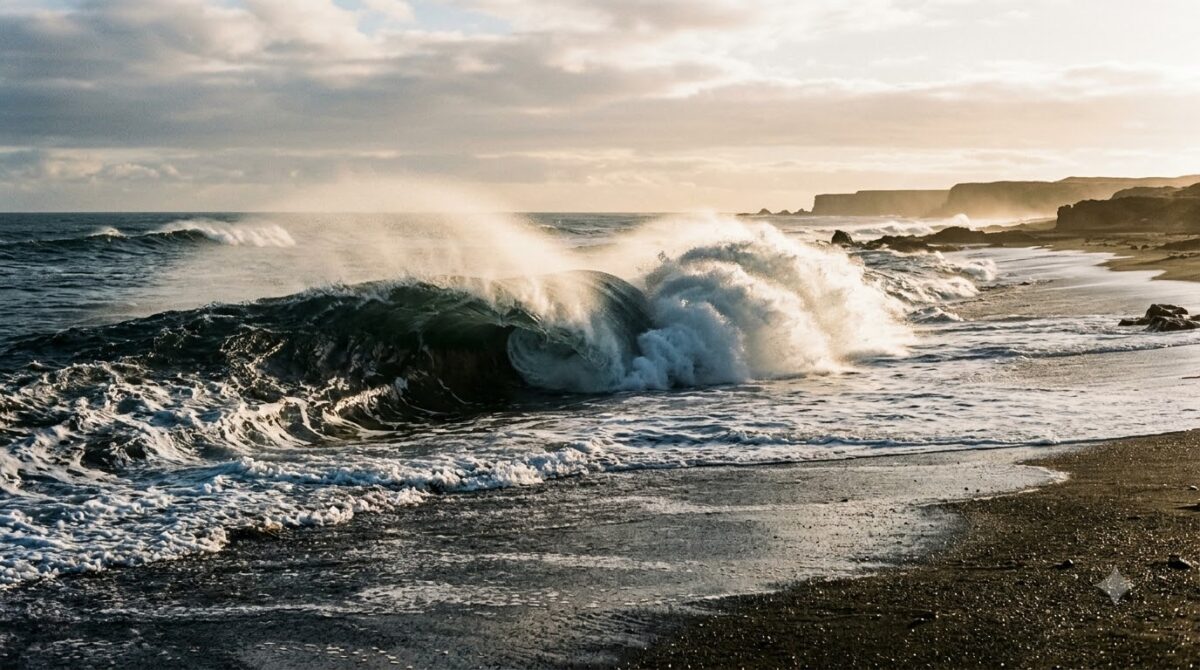
Santa Teresa is a beach break that works almost every day of the year, which is why the surf culture here is stronger than in most Costa Rican towns. It is more powerful than Nosara and less forgiving than Tamarindo.
- Playa Carmen has the gentlest, most forgiving surf breaks and is where beginners should start.
- Central Santa Teresa is the main event: hollow, punchy and better at mid tide.
- Playa Hermosa is mellower and more spread out, good for improvers and less crowded.
- Mal Pais has a rockier setup and a couple of reef options for experienced surfers.
- Santa Teresa surf lessons cost around US$50 to US$70 for a group lesson and US$80 to US$120 private. Board rental is US$15 to US$25 a day.
- Best swell is in the green season from May to November. The dry season is smaller and cleaner.
Things to do beyond surfing: Montezuma falls, yoga and sunset
- Cabo Blanco nature reserve — a 45-minute drive south, this was the first protected area in Costa Rica, established in 1963, and the beginning of the entire national park system. A two-hour trail leads through forest to an empty beach. Entry around US$12.
- Montezuma waterfall — an hour’s drive east. Three tiers of Montezuma falls with pools you can swim in. The upper falls involve a scramble that people underestimate; go with sensible shoes.
- Tortuga Island — a boat day trip to white sand and clear water, with snorkelling. Around US$80 to US$120 including lunch. The one properly touristy thing here.
- Santa Teresa tide pools — at the northern end and at Mal Pais, worth timing to low tide.
- Horseback riding on the beach at sunset, roughly US$60 to US$80.
- Yoga — almost as established as the surf. A yoga class is US$15 to US$25, and surf and yoga packages are the standard week-long product here.
- Bioluminescence tours in the mangroves near Paquera on a new moon.
- Sunset at Playa Hermosa, which is the single best free thing in town.
Where to stay: boutique hotels along the coastline
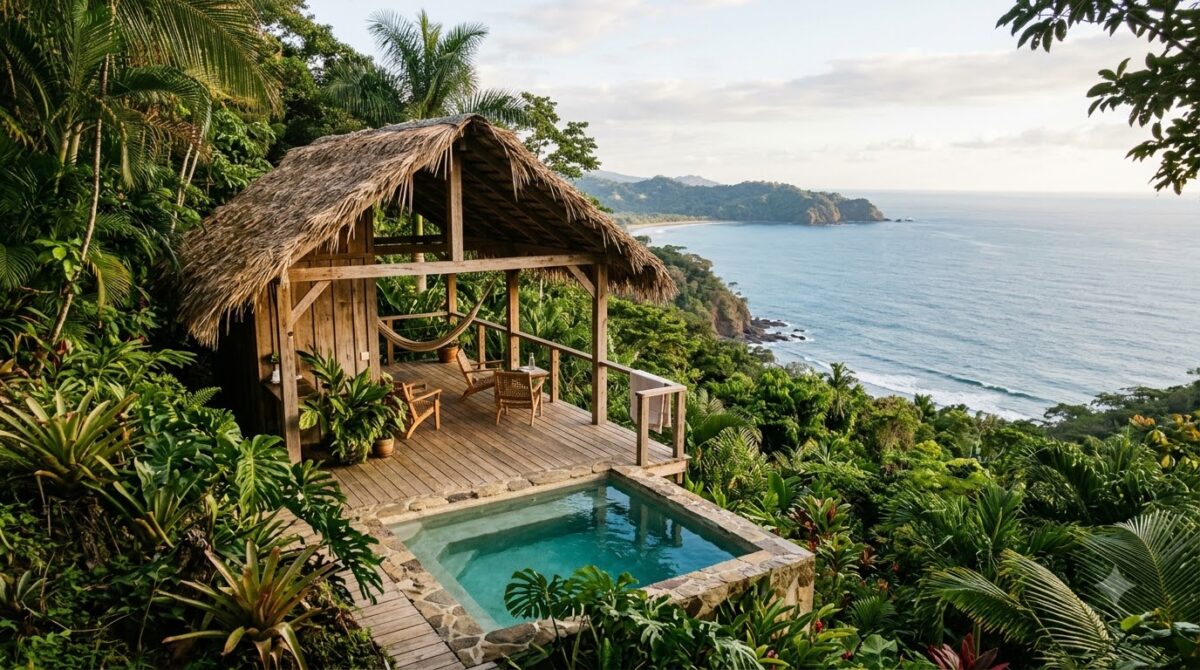
Accommodation splits into two: on the beach side of the road, or up the hill behind it with an ocean view. The hill is quieter, cooler and usually better value; the beach side means you can walk to the sand.
| Type | Nightly rate | Notes |
|---|---|---|
| Surf hostel dorm | US$18–35 | Concentrated around Playa Carmen and central Santa Teresa |
| Private room, small guesthouse | US$50–100 | The bulk of what is available |
| Boutique hotel or bungalow | US$120–300 | Mostly in Playa Hermosa and north Santa Teresa |
| Jungle villa with ocean view | US$250–700 | Up the hill, needs a vehicle |
| Surf and yoga camp, per week | US$900–2,200 | Includes lessons, food and accommodation |
Book months ahead for December to April. In September and October you can arrive and negotiate, though some places close.
Map shows live availability and prices. We may earn a commission on bookings made through it, at no extra cost to you.
Santa Teresa restaurants: the best thing about the town
This is where Santa Teresa genuinely stands out. For a town on a dirt road at the end of a peninsula, the restaurants in Santa Teresa are absurdly good — a consequence of two decades of Italians, Argentinians, Israelis and Californians arriving to surf and staying to open kitchens.
- What you will find: excellent sushi, wood-fired pizza, Argentinian grills, poke, serious vegan cooking and very good coffee. Seafood is fresh and everywhere.
- What you will not find easily: traditional Costa Rican food. For a casado at local prices, look for the small sodas in Cobano or the ones set back from the main road.
- Prices: US$15 to US$35 a head at the good places to eat, US$7 to US$10 at a soda. Beach clubs and sunset spots charge a premium for the view.
- Live music most nights somewhere along the strip, particularly at the beach bars around Playa Carmen.
- Nightlife in Santa Teresa is real but not enormous — a handful of bars, a couple of clubs, and a weekly rotation everyone knows. It goes later than Nosara and nowhere near as late as Tamarindo.
The best restaurants in Santa Teresa, by type
Because Santa Teresa restaurants are the reason a lot of people extend their stay, it is worth breaking down what is where along the strip rather than listing names that change hands every season.
- Playa Carmen — the supermarkets, the bakeries and the most casual food. Best for breakfast and for stocking up.
- Central Santa Teresa beach — the densest cluster of the best places to eat, from sushi to Argentinian grills, mostly on the inland side of the road.
- Between Santa Teresa and Playa Hermosa — the beach clubs and sunset restaurants, where you pay a premium for the view and it is usually worth it once.
- Mal Pais — the seafood end. Boats land here and a couple of long-standing places cook what comes off them.
- Cobano, twenty minutes inland, is where the sodas and the local prices are. Also the bank and the hospital.
One practical note for a Santa Teresa vacation: most kitchens close by ten, several places shut one day a week, and almost nothing takes reservations. Turn up early or expect to wait.
Best time to visit Santa Teresa
- December to April (dry season) — sun every day, biggest crowds, highest prices, and the dust at its worst.
- May to July — clear mornings, afternoon rain, green, good surf, far fewer people. The best balance.
- August to October — wettest, biggest swell, cheapest, and the road at its muddiest. Some businesses close in late September.
- November — rain easing, everything green, crowds not yet arrived. The best value month of the year.
Santa Teresa vs Nosara vs Tamarindo
| Santa Teresa | Nosara | Tamarindo | |
|---|---|---|---|
| Surf | Powerful beach break, all levels | Forgiving, best for beginners | Easy, very crowded |
| Food | The best of the three | Healthy, international, pricey | Huge range, variable |
| Nightlife | Moderate, later | Almost none | The busiest in the country |
| Feel | Dusty, young, laid-back | Green, quiet, wellness | Developed, convenient |
| Getting there | Hardest, ferry or long drive | Hard, 2.5 hours from Liberia | Easiest, one hour from Liberia |
| Families | Works, but the road is a factor | Best of the three | Convenient but busy |
How is Santa Teresa these days, honestly?
The fair answer is that it has changed a great deal and is still worth going to. Twenty years ago this was a fishing village that surfers reached with difficulty. It is now one of the best-known beach places in Costa Rica, with a large digital nomad population, restaurant prices closer to California than to Costa Rica, and construction visible on the hillsides in every direction.
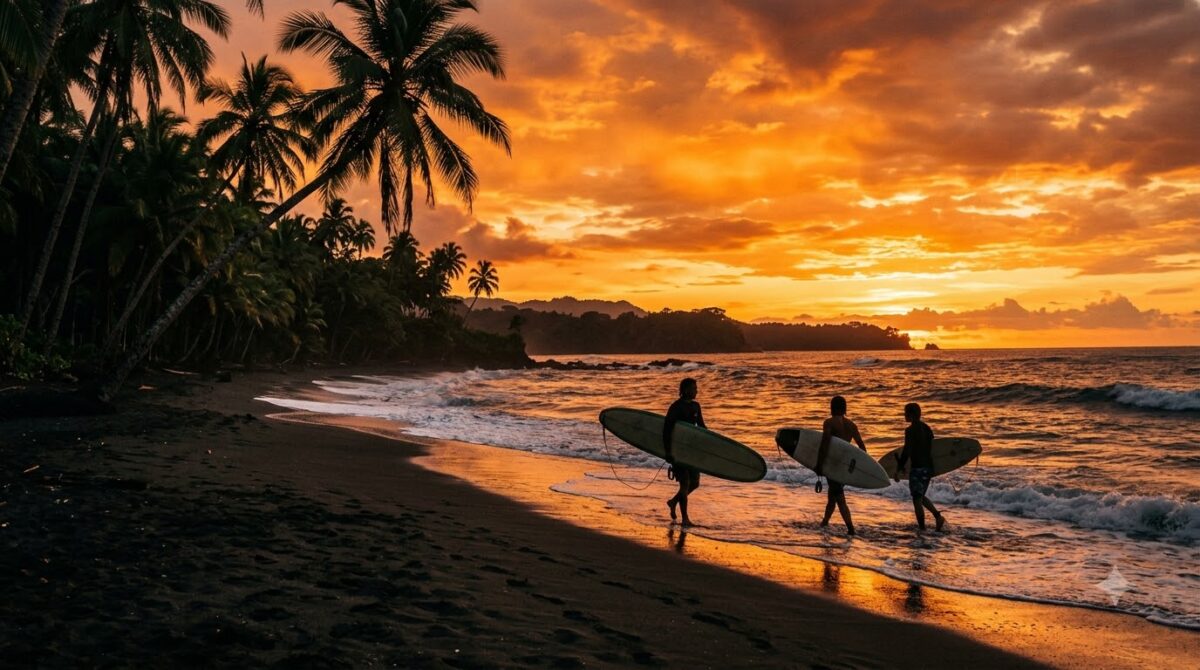
What has not changed: the wave still breaks every day, the beach is still six kilometres of dark sand with no hotel strip on it, the sunsets are still the best on this coast, and the best Santa Teresa has to offer costs nothing, and the road is still dirt. The town has grown outward and upward rather than becoming a resort.
What has: it is expensive, it is crowded from December to April, and if you came looking for an undiscovered fishing village you are about fifteen years late. Mal Pais and Manzanillo are where that feeling survives.
Half an hour away and half the price, Montezuma makes the obvious pairing.
How many days for a Santa Teresa vacation?
Four nights minimum given the journey at each end — a shorter stay spends most of itself travelling. A week is right if surfing is the point. On a two-week trip to Costa Rica, five nights here plus Montezuma and Cabo Blanco as day trips makes a complete southern Nicoya leg.
A drive from Santa Teresa to anywhere else takes longer than you expect. Nosara is three to four hours away despite being close on the map, Samara is similar, and Monteverde is a full day. Plan one move, not three.
For the wider trip, see our guides to the beaches on both coasts, Nosara, the best time to visit and things to do around the country.
Check hotels in Santa Teresa →
Frequently asked questions
How do you get to Santa Teresa, Costa Rica?
From San Jose, drive or bus to Puntarenas, take the 70-minute ferry to Paquera and drive 90 minutes through Cobano — about five hours total. From Liberia it is a four to five hour drive with no ferry. The fastest option is a 30-minute domestic flight from San Jose to Tambor at around US$90 to US$150, then a 45-minute transfer.
Do you need a car in Santa Teresa?
Not necessarily. Most visitors rent an ATV for US$45 to US$70 a day, which handles the dirt road better than a car. If you do rent a car, get four-wheel drive and budget the mandatory insurance at US$30 to US$45 a day on top of the advertised rate.
Is Santa Teresa good for beginner surfers?
Playa Carmen is, with gentler waves and most of the surf schools. Central Santa Teresa is a more powerful beach break that suits improvers and experienced surfers better. Lessons cost US$50 to US$70 in a group.
Is Santa Teresa expensive?
Yes, by Costa Rican standards. Meals run US$15 to US$35 a head, boutique accommodation US$120 to US$300 a night and ATV rental US$45 to US$70 a day. Hostels from US$18 and sodas at US$7 to US$10 keep it manageable.
What is the difference between Santa Teresa and Mal Pais?
They are two ends of the same six-kilometre strip. Mal Pais is the southern, quieter, rockier fishing village end. Santa Teresa is the long sandy main beach with the restaurants, surf schools and accommodation.
How many days should you spend in Santa Teresa?
Four nights minimum because of the travel time at each end, and a week if surfing is the main reason for the trip. Cabo Blanco and the Montezuma waterfall work as day trips from here.
What is the best time to visit Santa Teresa?
May to July for the balance of clear mornings, green landscape, good surf and low crowds, or November for the best value of the year. December to April has the most reliable sun but the highest prices and the worst dust.
Ferry fares, rental and accommodation prices read 15 August 2026. Ferry timetables change seasonally — check before travelling.