
Montezuma is a village of about four streets at the southern tip of the Nicoya Peninsula, wedged between forest and a shoreline of rocky coves. It has a waterfall you can swim in, a nature reserve that started the entire Costa Rican national park system, and a reputation as the country’s hippie town that it has never quite shaken.
Some links below are affiliate links. We may earn a commission if you book through them, at no extra cost to you. We do not rank hotels, and any prices on the map come live from the booking sites.
Quick answer: where to stay in Montezuma. The village is walkable end to end in ten minutes, so stay in or near it; simple guesthouses are the bulk of what is available. Prices run roughly half of Santa Teresa’s for the equivalent. Cabuya and the south are very quiet but need a car.
It is much smaller and much cheaper than the beach town of Santa Teresa half an hour away, and it suits a completely different traveller. This guide to Montezuma covers the best things to do in Montezuma, how to get to Montezuma, where to stay, and one safety point that genuinely matters.
Prices and details were read on 16 August 2026.
Where the town of Montezuma is, and what it is like
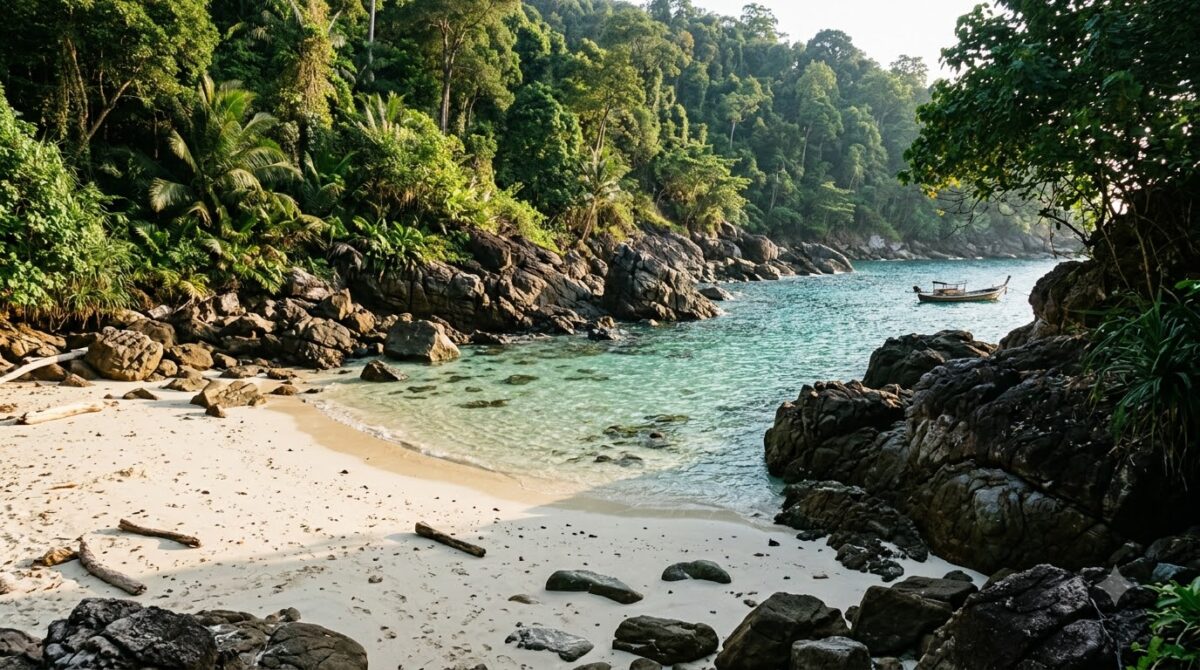
Montezuma sits on the eastern side of the southern tip of the Nicoya Peninsula in Puntarenas province, facing the Gulf of Nicoya rather than the open Pacific. It is about five hours from San José including the ferry, and half an hour by road from Santa Teresa on the other coast.
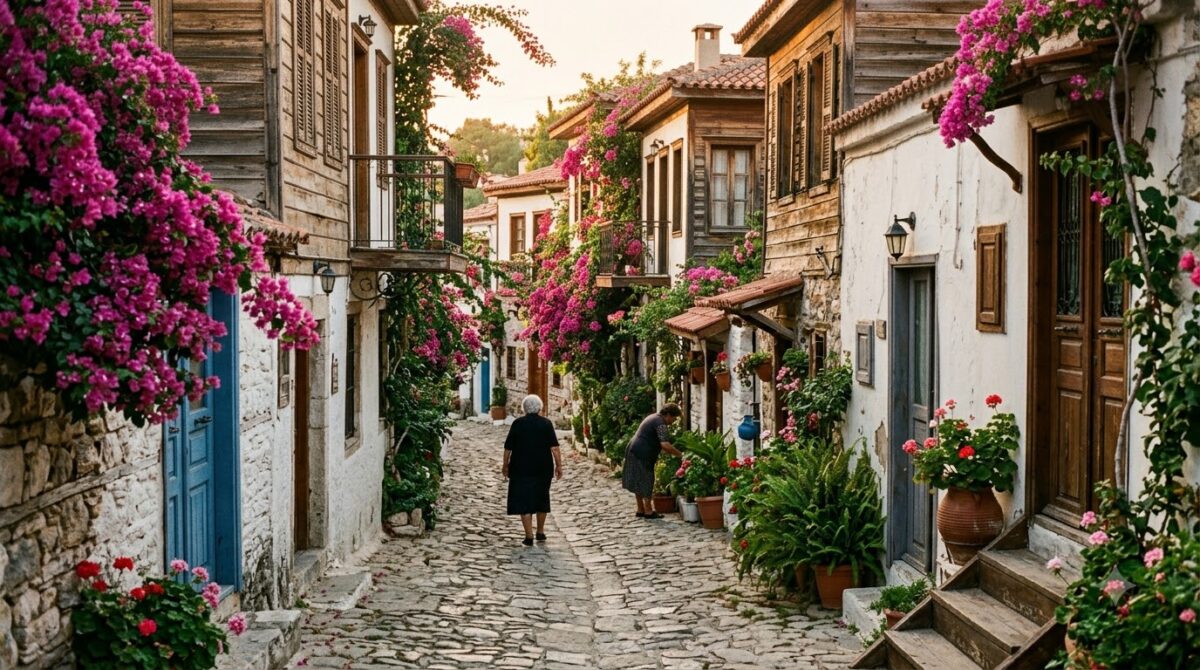
The town of Montezuma is genuinely small — a T-junction, a handful of streets, a few dozen businesses. There are no chain anything, no high-rises and no resorts. The backpacker reputation, which produced the affectionate local nickname Montefuma, dates from the 1980s and has faded considerably, but the town is still the most laid-back beach town on this peninsula and the cheapest by a distance.
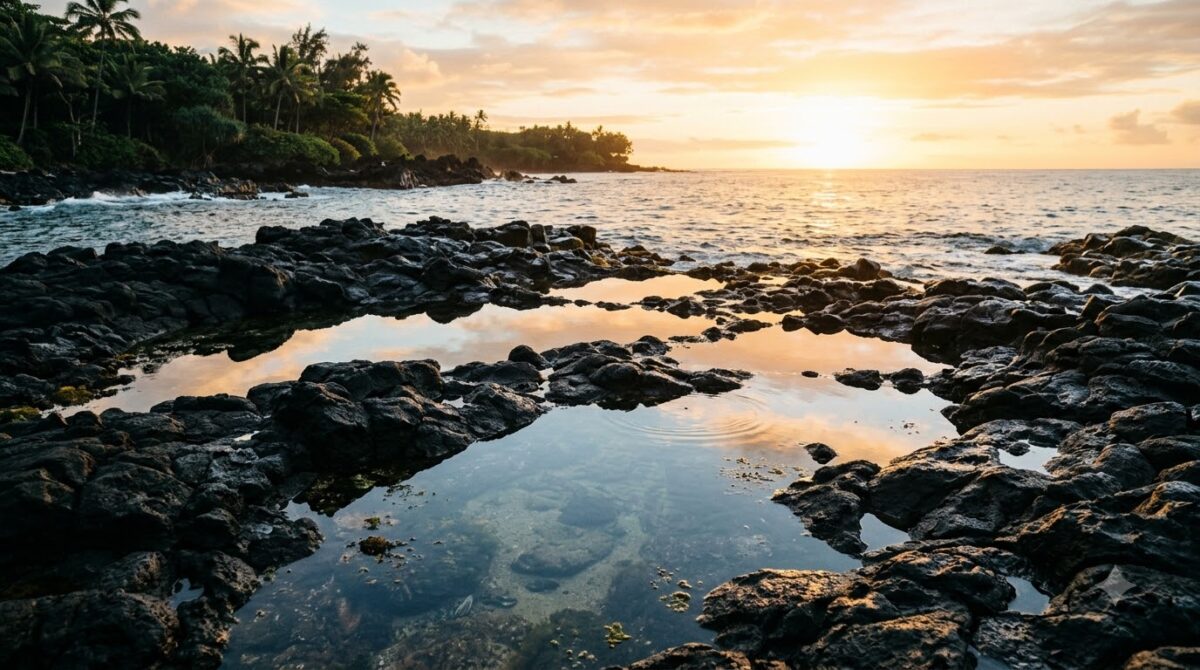
What it is not: a place with one long beautiful beach to sunbathe on. There is no popular beach here in the Guanacaste sense. The beach in Montezuma is a series of small coves separated by dark volcanic rock, with tide pools between them. It is lovely and it is not a sunbathing beach in the conventional sense.
The Montezuma waterfall and Montezuma falls
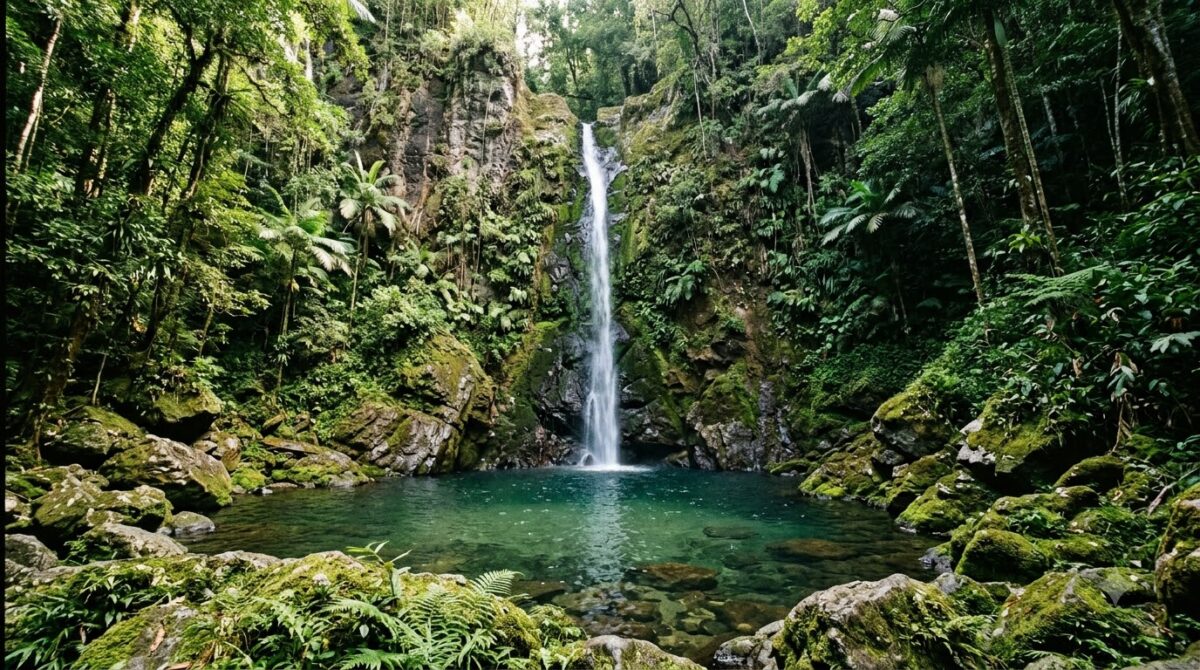
The Montezuma falls are the main reason people come, and the trailhead is a ten-minute walk from the middle of the village. There are three tiers.
- The lower fall is a 20-minute scramble up the riverbed from the bridge, over boulders and through water. It drops into a deep pool you can swim in. Entry is free.
- The middle and upper falls are reached either by continuing up a much harder scramble, or from a separate paid entrance up the hill that leads to a rope swing and platforms.
- Wear shoes with grip. The rock is smooth, wet and genuinely slippery. Flip-flops are how people get hurt.
- Go early. By eleven the pool is busy.
⚠ People have died jumping here
This needs saying plainly rather than being left out. There have been fatalities at the Montezuma waterfall over the years, from jumping into pools of unknown depth and from falls on the wet rock above the lower cascade.
- Do not jump unless you have watched someone local do it from exactly that spot on that day. Water depth changes with rainfall.
- The upper scramble is not a marked trail. It is a river gorge. In the rainy season the water rises fast.
- Nobody is patrolling it and there is no rescue service standing by.
None of this should stop you going. The lower pool is a swim, not a stunt, and it is one of the best free things to do on the Nicoya Peninsula.
Things to do around Montezuma: Cabo Blanco and Isla Tortuga
Cabo Blanco Absolute Natural Reserve
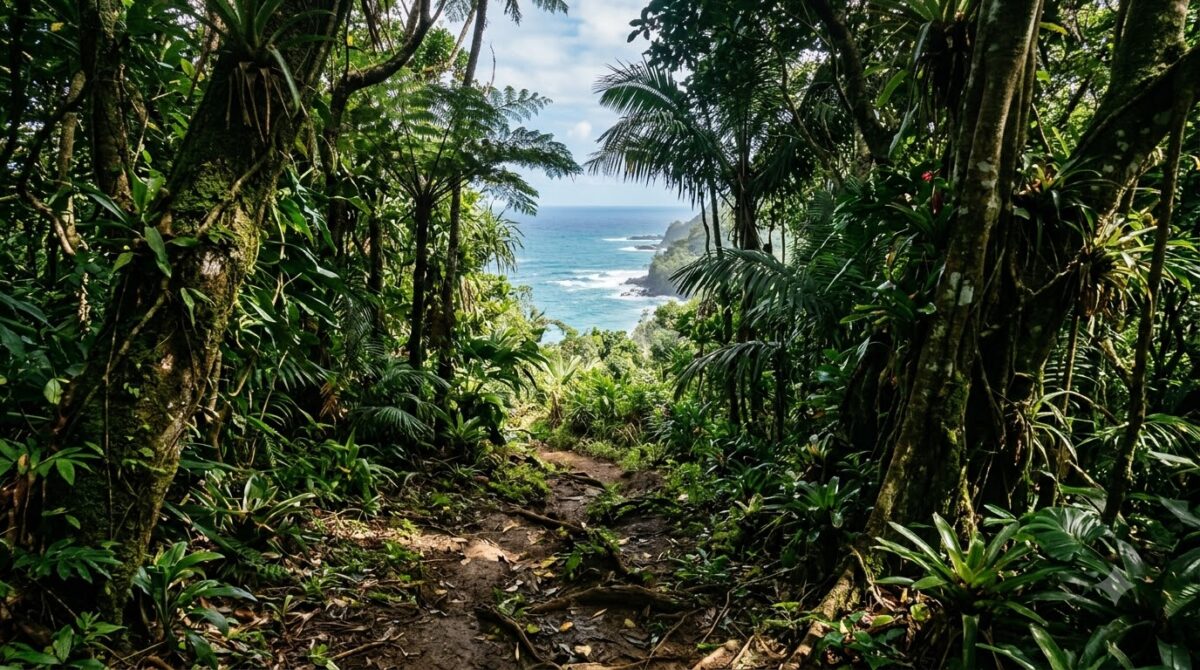
Half an hour south of Montezuma, past Cabuya, the Cabo Blanco nature reserve was established in 1963 and is the oldest protected area in Costa Rica. The entire national park system grew out of it, after a Danish-Swedish couple campaigned to stop the forest being cleared.
- The main trail is about 4.5 kilometres each way, downhill through forest to an empty beach, then back up. Allow four hours.
- Entry is around US$12.
- It is closed on Mondays and Tuesdays. This catches people out constantly. Check before you drive down.
- Howler and capuchin monkeys, coatis, peccary and a great deal of birdlife. This is proper forest, not a garden.
- Bring water. There is nothing on the trail.
Isla de Cabuya, the island cemetery
This is the strangest thing in the area and one very few guides mention. Just off Cabuya, a small rocky island holds the local cemetery, and at low tide a natural causeway of rock and coral emerges so you can walk out to it dry-shod.
At high tide it is an island again. The graves face the sea. It costs nothing, it takes half an hour, and it is worth timing a low tide for.
Isla Tortuga
Tortuga Island is a white sand island in the Gulf of Nicoya reached by boat ride from Montezuma, and it is the one properly touristy thing here. Day trips run around US$60 to US$95 including snorkelling, lunch and the boat, taking most of the day.
The water is clearer than anything on the mainland shore and the snorkelling is decent by Pacific standards. It does get busy with boats from Puntarenas, so an early departure helps.
Playa Grande and the coves north of town
Walk north along the shoreline from Montezuma beach for about 40 minutes and you reach Playa Grande, a long stretch of sand that is usually close to empty. There is a smaller waterfall reachable from it, and secluded coves along the way.
Go at low tide — parts of the route are impassable when the water is up. Take water; there is nothing there.
Curú Wildlife Refuge
About 45 minutes north towards Paquera, the Curú Wildlife Refuge is a private reserve with easy flat trails, mangroves and a beach. Spider monkeys were reintroduced here and are reliable. Entry is around US$15, and most boat trips to Isla Tortuga can include it.
Other things
- Snorkel the rocks at the south end of Montezuma beach at slack low tide.
- Butterfly garden in the hills above town, a small local operation.
- Horse riding along the beach to Playa Grande, roughly US$50 to US$70.
- Yoga, which several hostels and small hotels run daily.
- The artesanal market along the main street in the evening, macramé and jewellery mostly, which is where the hippie reputation lives on.
- Sunset from the tide pools, which is free and better than most paid activities here.
Travel tips for visiting Montezuma
A short list of the things that change how a trip to Costa Rica’s quietest peninsula town actually goes.
- Check the tide before you plan the day. The walk to Playa Grande, the Isla de Cabuya causeway and the snorkelling all depend on low water.
- Bring cash. There is one ATM and it runs out. Cards are accepted patchily.
- Book Isla Tortuga through a local tour company in the village rather than online. It costs less and the early boats leave before the Puntarenas crowds arrive.
- There is no beach in Montezuma for sunbathing in the way Guanacaste has. If lying on a long beach is the point of the trip, Sámara and Santa Teresa have the stunning beaches; this coast has coves.
- Green sea turtles and olive ridleys nest on beaches south towards Cedros and Manzanillo. Ask locally rather than booking a tour — sightings are seasonal and unpredictable.
- Nights are dark. Street lighting is minimal outside the centre. Bring a torch.
- The amazing food reputation is real but small. A dozen good places, several closed one day a week, most shut by nine.
Getting to Montezuma: ferry from Puntarenas via Paquera
Every route involves either a ferry or a long drive around the Gulf of Nicoya.
- Ferry from Puntarenas to Paquera — the standard route. About 70 minutes, roughly 1,200 colones per person plus around 12,000 for a car, then an hour by road through Cóbano.
- Public bus from San José — Transportes Cóbano runs a through service including the ferry, taking about six hours for roughly 8,000 colones, around US$15.
- Shuttles from San José, Santa Teresa, Monteverde and La Fortuna cost US$55 to US$85 per person.
- Driving from Liberia avoids the ferry but takes five to six hours down the peninsula.
- Domestic flights land at Tambor, 45 minutes away, about 30 minutes from San José for US$90 to US$150.
Do you need a 4×4?
For Montezuma itself, no — the road from Cóbano is paved. For Cabo Blanco, Cabuya and the road towards Santa Teresa, a 4×4 is strongly advisable, and in the rainy season it is close to essential. Budget the mandatory insurance at US$30 to US$45 a day on top of the advertised rental rate.
Within Montezuma you walk. The village is small enough that a car is a liability rather than a help.
Where to stay in Montezuma: hostel to jungle view
| Type | Nightly rate | Notes |
|---|---|---|
| Hostel dorm | US$14–28 | Cheapest beds on the Nicoya Peninsula. Several right in the village |
| Simple guesthouse room | US$35–70 | The bulk of what is available, mostly walkable to the beach |
| Hillside hotel with jungle views | US$80–200 | Private bungalows above town. Luminosa Montezuma is among the better known |
| Cabuya and south | US$50–150 | Very quiet, needs a car |
Prices here are roughly half what Santa Teresa charges for the equivalent, which is the strongest practical argument for staying on this side.
Map shows live availability and prices. We may earn a commission on bookings made through it, at no extra cost to you.
Where to eat: Playa de los Artistas and ceviche
For a village this size the food is surprisingly good, and cheap by Costa Rican beach standards.
- Playa de los Artistas is the long-standing landmark, tables on the sand at the south end, Italian-leaning and the one place people book ahead.
- Puggo’s and the cluster around the main junction cover Middle Eastern, sushi and craft beer.
- Ceviche is good here, since this is still a fishing village underneath the tourism.
- For traditional Costa Rican food, the sodas one street back serve a casado for around 4,000 colones, roughly US$7.50.
- Expect US$10 to US$25 a head generally, which is noticeably less than Santa Teresa.
Best time to visit Montezuma
- December to April — dry season, most reliable weather, busiest.
- May to July — clear mornings, afternoon rain, waterfall at good flow, few people.
- August to October — the rainy season proper. The waterfall is at its most impressive and its most dangerous, and some places close.
- November — rain easing, everything green, best value of the year.
Full detail in our month-by-month guide to when to visit Costa Rica.
Montezuma or Santa Teresa?
| Montezuma | Santa Teresa | |
|---|---|---|
| Beach | Rocky coves and tide pools | Six kilometres of open sand |
| Surf | Almost none | The reason the town exists |
| Cost | Roughly half | Expensive |
| Nightlife | A few bars, quiet | Real, and later |
| Roads | Paved into town | Dirt the whole strip |
| Best for | Waterfalls, nature reserves, backpackers, quiet | Surfing, food, a younger scene |
Many people do both, since they are half an hour apart. Two nights in Montezuma and three or four in Santa Teresa is the standard split.
Is Montezuma worth going to?
Yes, if you want a small village on a trip to Costa Rica, a waterfall you can walk to, one of the most important nature reserves in Central America down the road, and prices that make a long stay possible. For adventurous types and anyone travelling on a budget it is one of the best places on the Nicoya Peninsula.
No, if you want a long white sand beach to lie on, surfing, or much to do after nine at night. Santa Teresa and Sámara both do those better.
Two to three nights is right. For the wider trip, see our guides to beaches on both coasts and things to do in Costa Rica.
Frequently asked questions
How do you get to Montezuma, Costa Rica?
Take the ferry from Puntarenas to Paquera, about 70 minutes, then drive an hour through Cóbano. The Transportes Cóbano bus from San José takes six hours including the ferry for around 8,000 colones. Shuttles cost US$55 to US$85, and there are flights to Tambor 45 minutes away.
Is the Montezuma waterfall safe?
The lower fall and its swimming pool are fine with proper shoes. The upper scramble is a river gorge rather than a marked trail, and there have been fatalities from jumping into pools of unknown depth and from falls on wet rock. Do not jump unless you have seen a local do it from that exact spot that day.
Is Montezuma worth visiting?
Yes for a waterfall walkable from town, Cabo Blanco reserve, the island cemetery at Cabuya and prices around half those of Santa Teresa. No if you want a long sandy beach, surfing or nightlife.
What is there to do in Montezuma?
The Montezuma waterfall, Cabo Blanco Absolute Natural Reserve, the Isla de Cabuya cemetery island at low tide, a boat trip to Isla Tortuga, the walk north to Playa Grande, and Curú Wildlife Refuge.
Do you need a car in Montezuma?
Not in the village, which is walkable. You do want a 4×4 for Cabo Blanco, Cabuya and the road to Santa Teresa, especially in the rainy season.
Is Montezuma or Santa Teresa better?
Montezuma for waterfalls, nature reserves, quiet and low prices. Santa Teresa for surfing, food and nightlife. They are half an hour apart and many people stay in both.
When is Cabo Blanco reserve open?
Wednesday to Sunday. It is closed Mondays and Tuesdays, which catches a lot of people out. Entry is around US$12 and the main trail is 4.5 kilometres each way.
Fares, entry fees and opening days read 16 August 2026. Reserve opening days and ferry timetables change — confirm before travelling.