
Five days in Costa Rica is enough for two places. Not three, and definitely not four. The single biggest mistake in a short trip to Costa Rica is treating it like a small country because it looks small on a map.
Some links below are affiliate links. We may earn a commission if you book through them, at no extra cost to you. We do not rank hotels, and any prices on the map come live from the booking sites.
Quick answer: where to stay on this 5-day route. Two bases, two nights each: La Fortuna, then Manuel Antonio. If you fly into Liberia instead, swap in the beaches of Guanacaste.
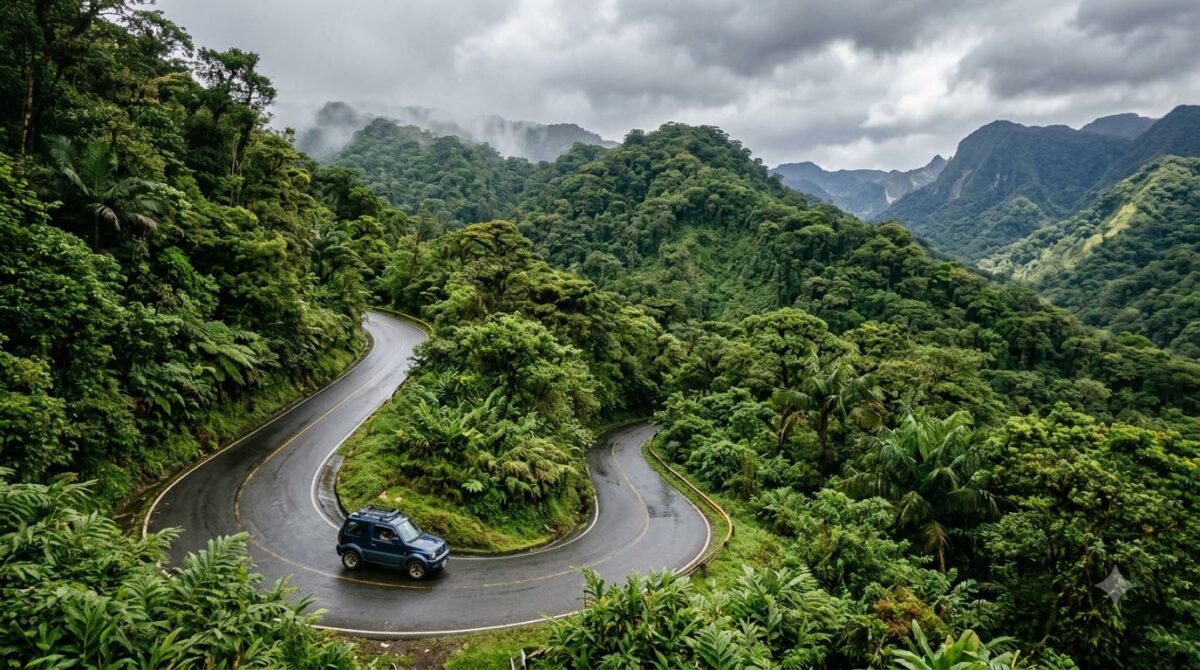
It is not small in driving terms. Roads are winding, mountainous and often single lane, and a 120 kilometre drive can take four hours. Every extra stop you add costs you most of a day.
This 5 day Costa Rica itinerary picks two bases, keeps the driving under three hours a leg, and starts with the decision that shapes everything else — which airport you fly into. Drive times and park details checked 6 September 2026.
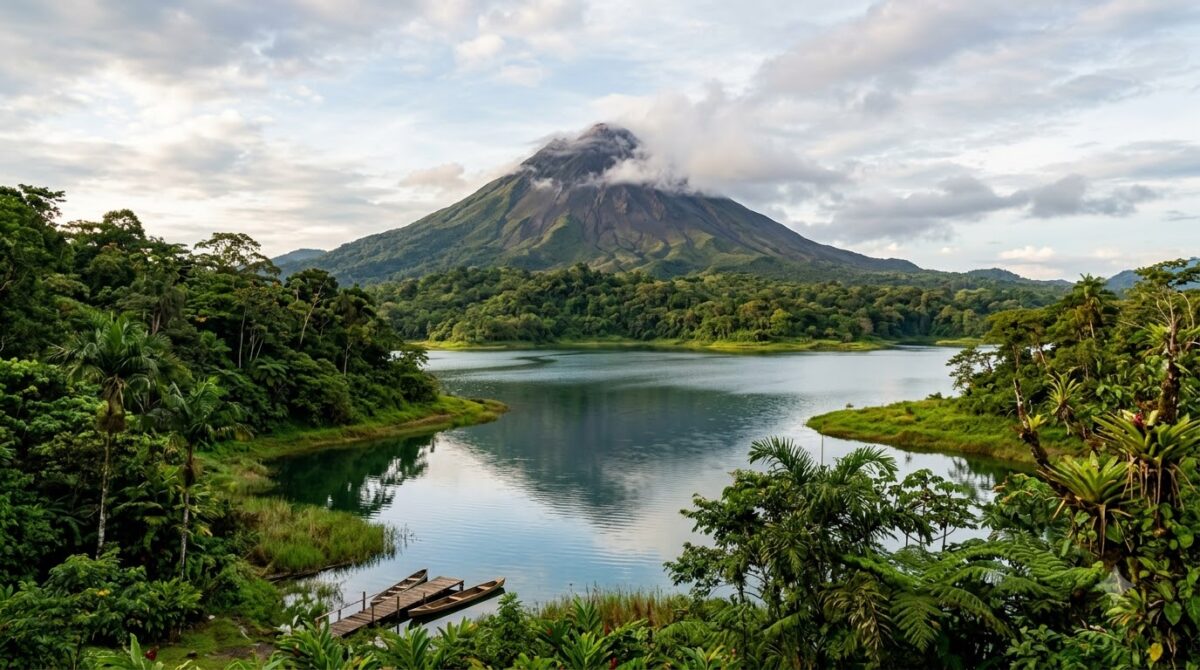
First: San Jose or Liberia?
Costa Rica has two international airports and they are about four hours apart. Booking the wrong one costs you a full day out of five. This is the decision to make before you book anything else.
| San Jose (SJO) | Liberia (LIR) | |
|---|---|---|
| Where it is | Central Valley, middle of the country | Northwest, near Guanacaste |
| Best for | Volcanoes, cloud forest, Pacific coast parks | Guanacaste beaches, dry northwest |
| Drive to La Fortuna | about 3 hours | about 3 hours |
| Drive to Manuel Antonio | about 3 hours | about 5 hours |
| Drive to Tamarindo | about 4 hours 30 | about 1 hour 15 |
| Flight options | More routes, usually cheaper | Fewer routes, often a small premium |
The rule: if you want rainforest, volcano and wildlife, fly into San Jose, the capital of Costa Rica. If you want beach time above all, fly into Liberia. Flying into one and out of the other is possible and worth pricing, because an open-jaw ticket removes a long return drive.
The itinerary at a glance
The main version below starts and ends in San Jose. It is the one that suits most first time visitors, because it delivers the two things people actually come to Costa Rica for: a volcano and a rainforest full of animals.
| Day | Where | Driving |
|---|---|---|
| 1 | Arrive San Jose, drive to La Fortuna | about 3 hours |
| 2 | La Fortuna: waterfall, hanging bridges, hot springs | local only |
| 3 | Drive to Manuel Antonio | about 4 hours |
| 4 | Manuel Antonio National Park and the beach | local only |
| 5 | Drive back to San Jose, fly home | about 3 hours |
Two bases, two travel days, two full days. That is what five days in Costa Rica honestly holds.
Day 1: arrive and drive to La Fortuna
The drive from San Jose to La Fortuna takes around three hours, and it is a pleasant one through the Central Valley and up past Lake Arenal.
- Do not plan anything else for day one. Immigration, the rental car desk and the drive will use the whole afternoon.
- Land before about 2pm if you can. Costa Rica sits near the equator, so it gets dark around six all year, and driving these roads after dark is genuinely worse: no street lighting, potholes and no verge.
- If your flight lands late, sleep near the airport in Alajuela and drive out first thing. It is a better trade than arriving in La Fortuna at nine at night.
Map shows live availability and prices. We may earn a commission on bookings made through it, at no extra cost to you.
Day 2: La Fortuna and Arenal Volcano
This is the fullest day of the trip and the reason most people put Arenal Volcano National Park on a short itinerary.
Morning: the volcano and the bridges
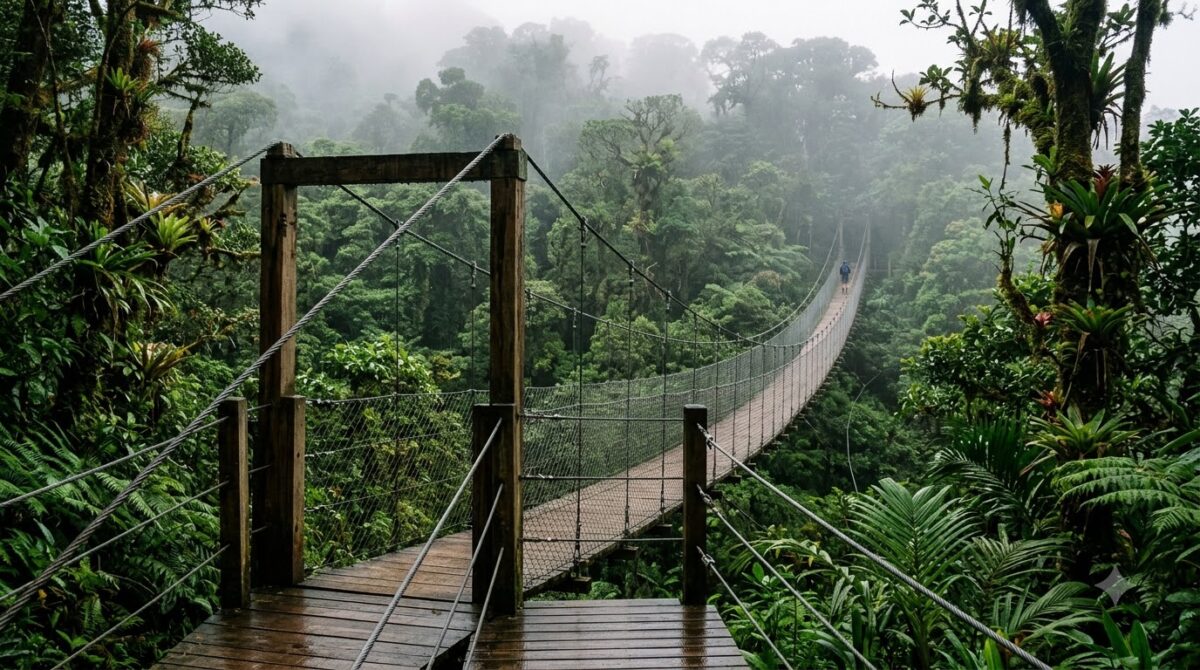
Mistletoe Falls aside, the two things worth your morning are the hanging bridges and a park trail. The hanging bridge parks put you at canopy height, which is where the birds and monkeys actually are. From the ground you look up into leaves; from a bridge you look across at them.
Arenal Volcano itself has not had a major eruption in years and the summit is usually in cloud. Go for the lava fields and the forest around it rather than for a view of the cone, and treat a clear summit as a bonus.
Afternoon: La Fortuna Waterfall
La Fortuna Waterfall drops into a pool at the bottom of a steep staircase of roughly 500 steps. Going down is easy. Coming back up in the heat is the part people underestimate. There is an entrance fee, and it is worth it.
Evening: natural hot springs
The volcano heats the groundwater, and La Fortuna has built an industry on it. Options run from large resort complexes with a dozen pools to a free public river where hot water runs under a road bridge.
The free river spot is genuinely good, but it is dark, there are no facilities and the rocks are slippery. If you go, go before sunset and bring shoes you can walk in water with.
The alternative: Bajos del Toro
If La Fortuna sounds too developed for you — and it is a tourist town, openly — Bajos del Toro is the quieter substitute, about 90 minutes from San Jose in the Central Valley.
It has Catarata del Toro, a waterfall falling into a collapsed volcanic crater, and the blue river pools at Rio Celeste country nearby, and a fraction of the visitors. The trade-off is fewer restaurants, fewer tours and no hot spring resorts. It suits travellers who would rather walk than book activities.
Day 3: drive to Manuel Antonio
The drive from La Fortuna to Manuel Antonio takes around four hours, and it is the longest leg. Leave early and treat the afternoon as arrival time.
Why Manuel Antonio and not Monteverde? Monteverde cloud forest is the other classic second stop, and it is excellent. But the road in is rough, it is cooler and wetter than people expect, and on a five day trip it means finishing in the mountains rather than at a beach. Most people on a short first trip want the beach. If wildlife and cloud forest matter more to you than sand, swap Monteverde in and expect a slower drive.
Day 4: Manuel Antonio National Park
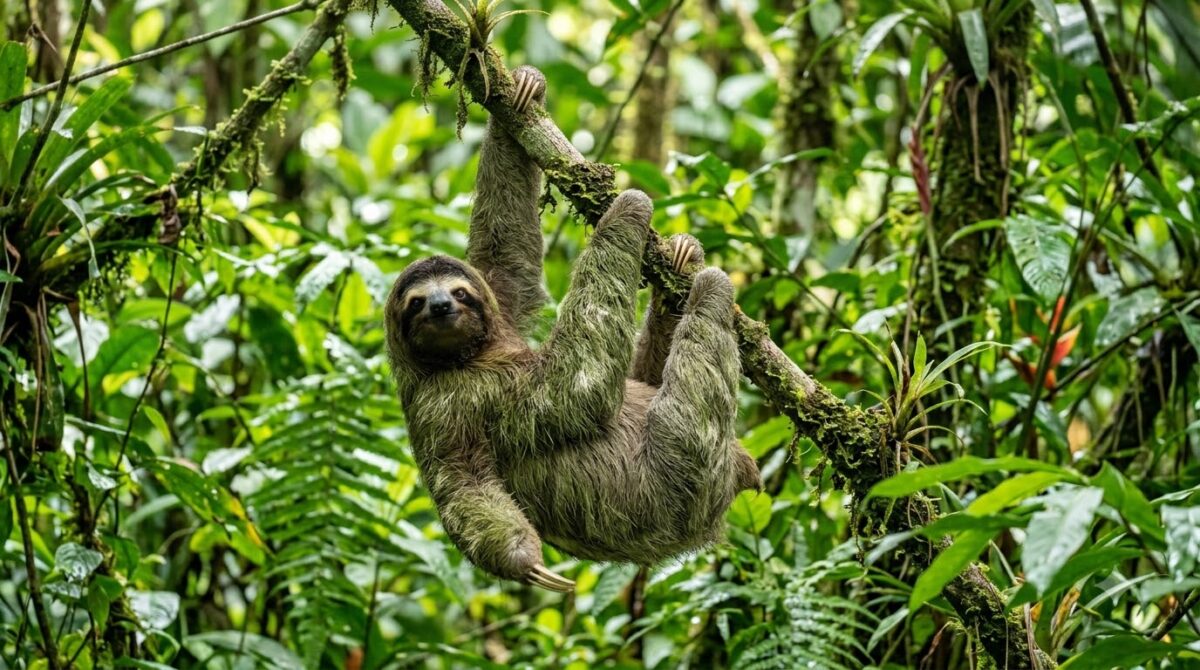
Manuel Antonio National Park is the smallest of Costa Rica’s major parks and the easiest to see well in a morning. It is also the most reliable place in the country to see wildlife without effort: sloths, howler and capuchin monkeys, iguanas and coatis, on flat well-made trails.
- Book entry online in advance. The park caps daily visitors and it does sell out in high season.
- Go at opening. Animals are active early, and by eleven the heat flattens everything including you.
- Hire a guide at the gate. This is the single best value in Costa Rica. Guides carry a telescope and know which tree the sloth is in. Without one you will walk past most of what you came to see.
- The park is closed one day a week, so check before you build the day around it.
- Do not feed the monkeys, and keep bags zipped. The capuchins are practised thieves.
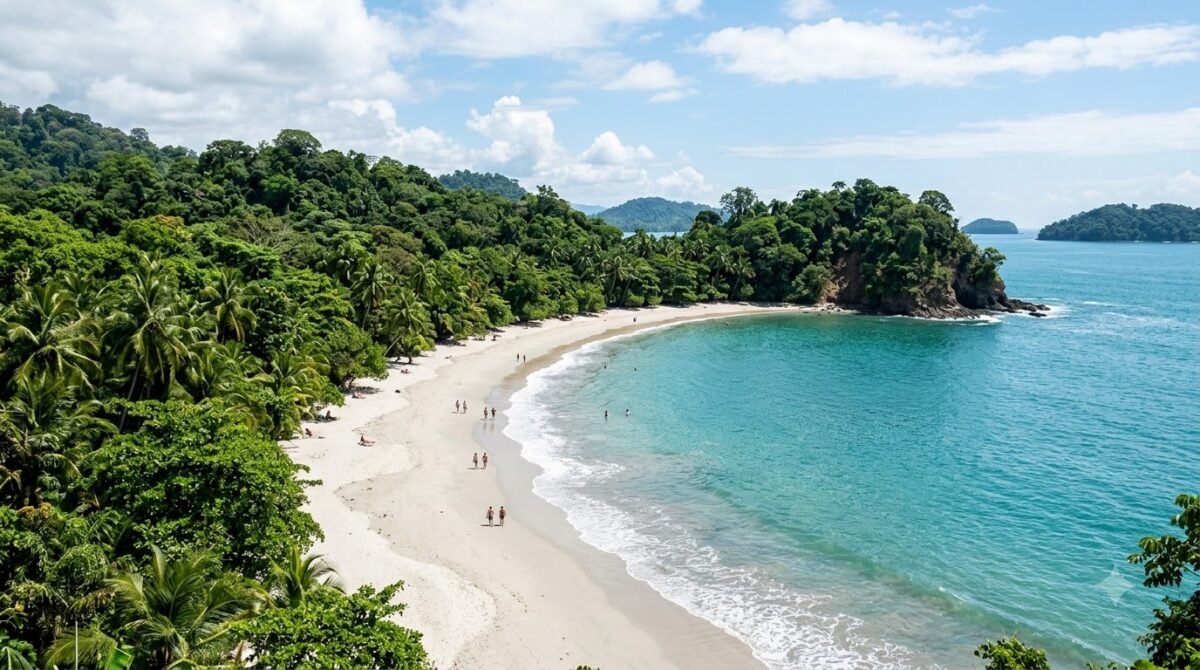
Afternoon: the park beaches are among the best on the Pacific coast, and Playa Espadilla just outside the park is free and open later.
Day 5: drive back and fly home
Around three hours back to San Jose. Leave four hours before you need to be at the airport, not three. The approach into San Jose is the most congested driving of the whole trip, and the road from the Pacific coast has a habit of stopping dead for roadworks.
If you have a late flight, break the drive at a coffee plantation in the Central Valley rather than sitting at the airport.
The Liberia version: beaches instead
If you fly into Liberia, the same five day structure works with different content.
| Day | Where | Driving |
|---|---|---|
| 1 | Arrive Liberia, drive to Tamarindo or Playa Flamingo | about 1 hour 15 |
| 2 | Beach, surf lesson, sunset | local only |
| 3 | Drive to La Fortuna | about 3 hours |
| 4 | Arenal: bridges, waterfall, hot springs | local only |
| 5 | Drive back to Liberia, fly home | about 3 hours |
Same principle: two bases, nothing over about three hours.
Driving in Costa Rica on a short trip
A rental car is the right call for this itinerary, but there are things worth knowing before you collect it. Our guide to driving in Costa Rica covers it in full; the short version:
- Mandatory third-party liability insurance is added at the desk and is not covered by your credit card. The advertised online rate is never the final price.
- Take the 4×4 if any part of your route is unpaved. On this itinerary a normal car is fine for San Jose, La Fortuna and Manuel Antonio.
- Do not drive after dark if you can avoid it.
- Download offline maps. Signal drops in the mountains, and some turnings are unmarked.
- Shuttles are a real alternative. Shared shuttle vans run between all the towns on this route. Slower and less flexible, but you arrive relaxed.
What to leave out of five days
- The Caribbean coast — Puerto Viejo and Tortuguero are five to six hours from San Jose and a different climate. They need their own trip.
- The Osa Peninsula — the best wildlife in the country and the hardest to reach. Not on five days.
- Three stops instead of two — the thing everyone tries. Adding Monteverde between La Fortuna and Manuel Antonio turns two travel days into three.
- San Jose itself — the capital has a good gold museum and a fine market, and on five days it is still the wrong use of a day.
If you have more time
Five days is a taster. With seven you can add Monteverde properly, and with ten you can reach both coasts. See our 7 day Costa Rica itinerary and the 10 day version for how the route changes.
Before you book, check the best time to visit Costa Rica — the dry and green seasons make a real difference to a trip this short, because one rained-off day is 20 percent of your holiday.
What you can realistically expect to see
People book a trip to Costa Rica for the wildlife and then worry that five days is not long enough to see any. On this route it is, provided you do two things: go early, and pay for a guide.
Very likely on this itinerary: two-toed and three-toed sloths, howler monkeys (you will hear them before dawn whether you want to or not), white-faced capuchins, coatis, iguanas, leafcutter ant trails, toucans and hummingbirds.
Possible with luck: scarlet macaws on the Pacific coast, poison dart frogs, an agouti, a basilisk lizard running across water.
Not on this route: quetzals, which need cloud forest at altitude, and tapirs or big cats, which need the Osa Peninsula and time. Sea turtle nesting is a Caribbean and seasonal thing and belongs on a different trip.
The guided tour point is worth repeating because it is the difference between a good day and a disappointing one. Guides work these trails daily, they know which tree the sloth has been sleeping in for a week, and they carry a spotting scope you can look through. Costa Rica’s lush rainforests hide their animals extremely well, and untrained eyes walking past a sloth three metres away is the normal outcome, not the exception.
Costs and how to keep them sensible
Costa Rica is the most expensive country in Central America to travel in, and first time visitors are often caught out by it. Prices in tourist towns are quoted in US dollars and sit closer to North American levels than to the rest of the region.
- The rental car is the line item that surprises people. The mandatory liability insurance added at the desk can approach the advertised daily rate. Get a written quote including it before you book.
- Eat at sodas. A soda is a small family-run restaurant serving a casado, the standard plate of rice, beans, salad, plantain and meat or fish. It costs a fraction of a tourist restaurant and it is usually better.
- Park entry is per person, per park, and non-resident rates are higher than resident ones. Budget for it rather than being surprised at the gate.
- Hot springs vary enormously. The resort complexes charge resort prices; the public river costs nothing.
- Book the two or three things that sell out and leave the rest loose. On this route that is the national park entry and, in high season, your accommodation.
What to pack for five days
Short trips punish overpacking, and the climate here is more varied than a map suggests. La Fortuna is warm and wet, Manuel Antonio is hot and humid, and the drive between them crosses cool high ground.
- Quick-dry everything. Cotton does not dry in this humidity and will still be damp the next morning.
- A light rain jacket, in every season. The green season brings a heavy afternoon downpour most days, and even the dry season is wet in the rainforest.
- Shoes with grip. Park trails, waterfall steps and river rocks are all slippery.
- Reef-safe sun cream and strong insect repellent.
- A dry bag or waterproof phone pouch for boats, waterfalls and rain.
The full list is in our Costa Rica packing list, which covers the season-by-season differences.
Frequently asked questions
Is 5 days enough for Costa Rica?
Yes, for two places. It is enough to see a volcano and a rainforest national park properly, or a beach and a volcano. It is not enough for both coasts, and it is not enough for three stops, because each move costs you most of a day on winding mountain roads.
Should I fly into San Jose or Liberia for 5 days?
San Jose for volcanoes, cloud forest and Pacific coast national parks. Liberia for the Guanacaste beaches. The two airports are about four hours apart, so choosing wrongly can cost you a full day out of five. Price an open-jaw ticket into one and out of the other.
How many places can you visit in 5 days in Costa Rica?
Two. La Fortuna and Manuel Antonio is the standard pairing from San Jose. Adding a third stop means three travel days out of five, and roads here are slow enough that a 200 kilometre leg takes four hours.
Do I need a rental car for a 5 day Costa Rica itinerary?
It is the easiest option, but shared shuttle vans run between all the towns on this route and are a genuine alternative. If you do rent, budget for the mandatory third-party liability insurance added at the desk, which is not covered by credit card policies and is not in the online price.
Is La Fortuna or Monteverde better on a short trip?
La Fortuna, for most people. It has the volcano, the waterfall, the hanging bridges and the hot springs within a short drive of one town, and the road in is paved. Monteverde has better cloud forest and cooler weather, but the access road is rough and it leaves you finishing in the mountains rather than at a beach.
Is Manuel Antonio worth visiting on a 5 day trip?
Yes. It is the smallest major national park and the most reliable place in Costa Rica to see sloths and monkeys on flat, easy trails. Book entry online because daily numbers are capped, go at opening, and hire a guide at the gate because they carry a telescope and find what you would walk past.
What is Bajos del Toro and should I go instead of La Fortuna?
Bajos del Toro is a quiet Central Valley area about 90 minutes from San Jose with Catarata del Toro, a waterfall falling into a collapsed volcanic crater. It suits travellers who find La Fortuna too developed. The trade-off is far fewer restaurants, tours and hot spring options.
How far in advance should I book Manuel Antonio National Park?
Book online as soon as your dates are fixed in high season, because the park caps daily visitor numbers and sells out. It also closes one day a week, so check the current closure day before you plan the itinerary around it.