
Greece is not a destination. It is a mainland plus around 6,000 islands, of which roughly 200 are inhabited, and the ferries between them do not run on a schedule that cares about your plans.
Some links below are affiliate links. We may earn a commission if you book through them, at no extra cost to you. We do not rank hotels, and any prices on the map come live from the booking sites.
Quick answer: where to stay in Greece. Two nights in Athens, in Plaka for a short first visit or Koukaki for anything longer, then at least three nights on each island. Naxos and Paros are the easiest first islands by fast ferry.
That is the whole problem with planning a trip to Greece. Every Greek itinerary you read online fits Athens, Santorini and Mykonos into seven days. It is possible. It also means three ferry or flight transfers in a week, two of which eat most of a day, and you will spend your holiday moving luggage.
This sets out how many islands actually fit in the time you have, which ones to pick, and how the ferry network shapes all of it. Ferry routes and seasonal patterns checked 7 September 2026; confirm current timetables on the operators’ own sites before booking.
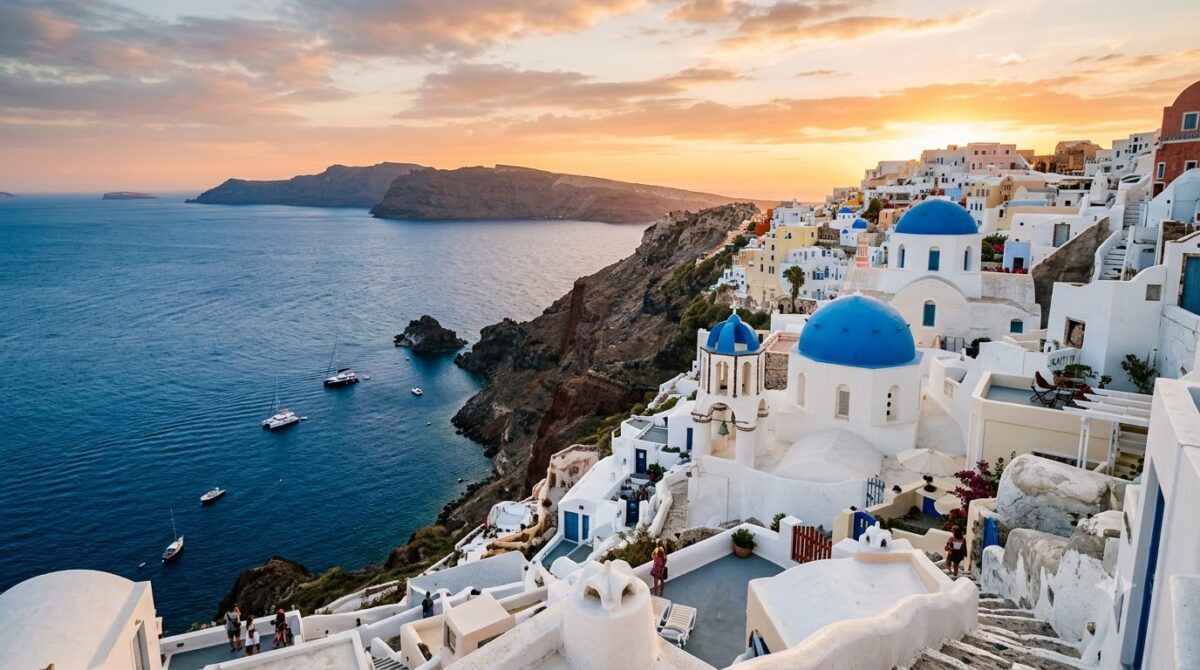
How many days to spend in Greece: give each island at least three days
Every transfer between islands costs you between half a day and a full day, and there is no way around it. Ferries leave from ports that are not near your hotel, arrive at ports that are not near your next one, and get cancelled in high winds.
| Days in Greece | Realistic plan | Transfers |
|---|---|---|
| 5 | Athens plus one island | 1 |
| 7 | Athens plus one island, properly, or two islands and less Athens | 1–2 |
| 10 | Athens plus two islands | 2 |
| 14 | Athens plus three islands, or Athens, Meteora and two islands | 3 |
If you take one thing from this page: two islands in a week is the maximum, and one is often better. The best Greece trips people report are the ones where they stayed put long enough to find a beach they liked twice.
Athens is the natural first stop, and it needs two full days
Most itineraries give Athens one day on the way to the islands. That is a mistake, and it is why so many people come back saying Athens is just a big city to get through.
Day 1: ancient Athens
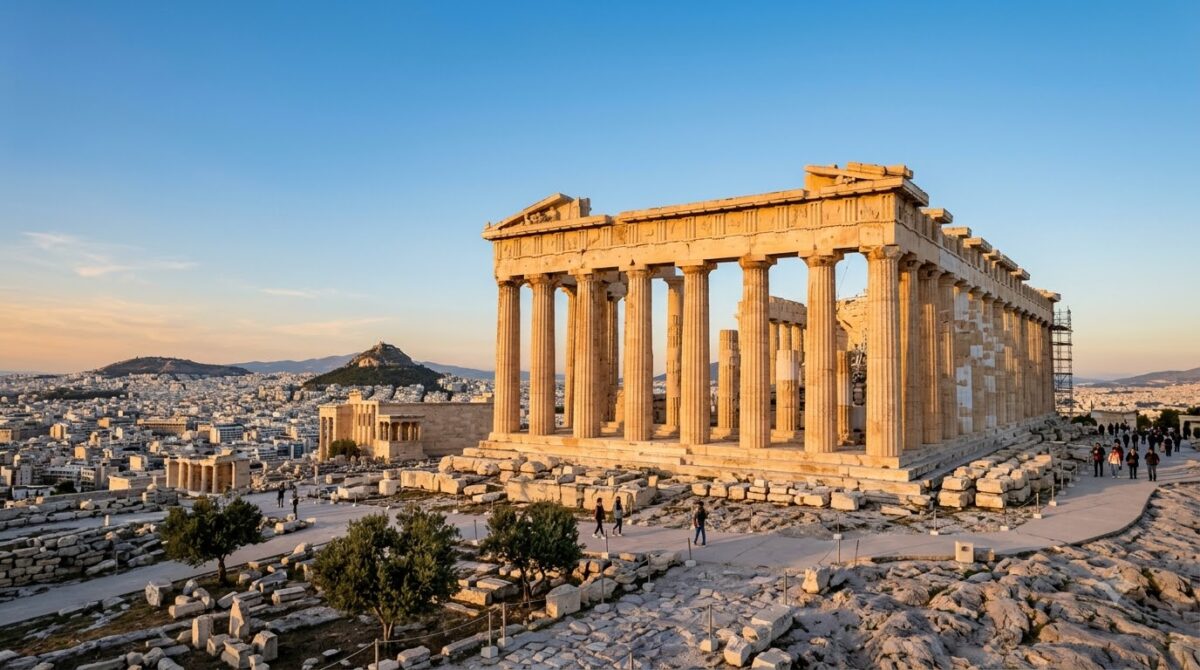
- The Acropolis of Athens at opening, before the heat and the tour groups. It is the most visited tourist attraction in the country and the ruins are the reason most people come. The Parthenon is a UNESCO World Heritage Site and the single most recognisable thing in ancient Greece.
- The Acropolis Museum directly below it, which holds what was taken off the hill. Air conditioned, which matters from June to September.
- The Ancient Agora in the afternoon, where the philosophers actually argued. On the way up, the small Temple of Athena Nike on the bastion is the one building everybody walks past.
- Evening in Plaka or Monastiraki, with a rooftop dinner facing the lit Acropolis.
Day 2: modern Athens
The second day in Athens is the one that changes people’s minds about the city.
- The National Archaeological Museum, which is one of the great museums of the world and half empty compared with the Acropolis.
- Exarchia, Koukaki or Psyrri for street art, coffee and food that is not aimed at visitors.
- Mount Lycabettus at sunset, or the Panathenaic Stadium, which hosted the first modern Olympic Games in 1896.
- A day trip alternative: Cape Sounion and the Temple of Poseidon, about ninety minutes down the coast.
Where you base yourself matters more than usual here, because Athens neighborhoods vary sharply. Our guide to where to stay in Athens covers which ones suit a short stay, and how many days in Athens goes into what a third and fourth day buy you.
Map shows live availability and prices. We may earn a commission on bookings made through it, at no extra cost to you.
How much time to spend in Greece: a decision checklist
Work through these in order and the number falls out on its own. Most people pick the destination first and then try to make the days fit, which is backwards.
- Decide how long to stay before you pick islands. Flights and leave usually fix this anyway, and every other choice depends on it.
- Subtract two days for Athens. It is the natural first stop and the arrival airport for almost everyone, so that time is spent whether you plan it or not.
- Divide what is left by three. That is how many islands you get, because three nights is the minimum for an island to repay the transfer.
- Take one off. Whatever that division gave you, one fewer island and more days exploring each is the better trip. You explore Greece properly by subtracting, not adding, and the popular islands are the easiest ones to cut. Take your time; the rest of Greece will still be there.
- Only now decide whether to go to Santorini. If the caldera is the reason you are traveling to Greece, build around it. If not, spend a few days on a quieter island instead.
- Add more days for the mainland, not for another island. A fourth island gives you a variation on the third. Delphi or the Peloponnese gives you a different country.
The best way to spend your time in Greece depends on this alone. The short version of how much time to spend in Greece: seven days for a slice, ten days for a proper first trip, fourteen for the best of Greece including the mainland. Anything under five days is a city break in Athens with a day to explore beyond it.
Choosing your islands: the Cyclades islands and the best Greek islands
This is the decision that makes or breaks a Greece trip, and the popular Greek islands are not automatically the right ones.
Santorini
What it is: a flooded volcanic caldera with white villages along the rim. Genuinely spectacular, and the most photographed place in Greece.
The honest version: it is the busiest and most expensive island, cruise ships unload thousands of day visitors into Oia and Fira, and the beaches are black volcanic sand rather than the ones in the photographs. Two nights is enough for most people. Sunset in Oia is genuinely crowded to the point of being unpleasant in July and August.
Go if the caldera view is the reason you booked Greece. Skip it if you want beaches and quiet.
Mykonos
What it is: the party island, with the best beach club scene in Greece and a beautiful whitewashed old town.
The honest version: the most expensive island in the country by some distance, and if you are not there for the nightlife you are paying a large premium for beaches that other islands do better.
Naxos and Paros: the ones people wish they had picked
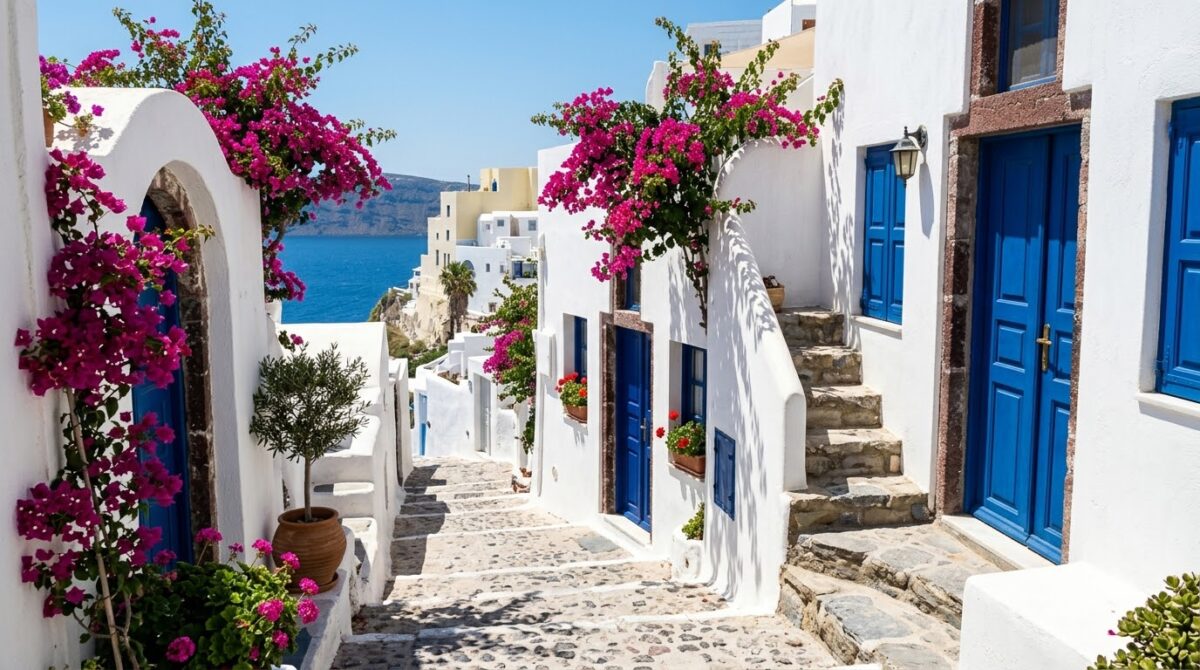
Both are in the same Cyclades chain as Santorini and Mykonos, both are an easy ferry hop, and both are dramatically cheaper and calmer.
- Naxos is the largest Cycladic island, with the best beaches in the group, mountain villages, and a real agricultural economy that means it does not shut down out of season.
- Paros is prettier in the postcard sense, with Naoussa harbour and good food, and it sits at the centre of the ferry network so it connects to everything.
The classic seven-day mistake fix: swap Mykonos for Naxos or Paros. Same island chain, same ferries, half the price, and you will like it more.
Crete
Crete is not an island stop, it is its own trip. Chania in the west, Heraklion and the Minoan civilization palace at Knossos in the middle, and the gorges in between. It is 260 kilometers long with a mountain range down the middle, Minoan palaces, gorges to hike, and the best food in Greece.
Adding Crete to a Cyclades itinerary is the single most common overreach. Give it a week of its own, or leave it for a different holiday.
Milos, Folegandros and the quieter Cyclades
Milos has the strangest coastline in Greece, all white volcanic rock and swimming coves. Sifnos is the food island and Syros is the working capital of the Cyclades, and either one of the Cyclades makes a better second stop than a second famous island. Folegandros is tiny, cliff-top and almost undeveloped. Both are for a second or third trip, and both need more ferry planning because connections are thinner.
The ferries: take the ferry, and what really shapes a days in Greece itinerary
People plan Greek itineraries by looking at a map. The map is misleading, because two islands that look close may have no direct ferry at all.
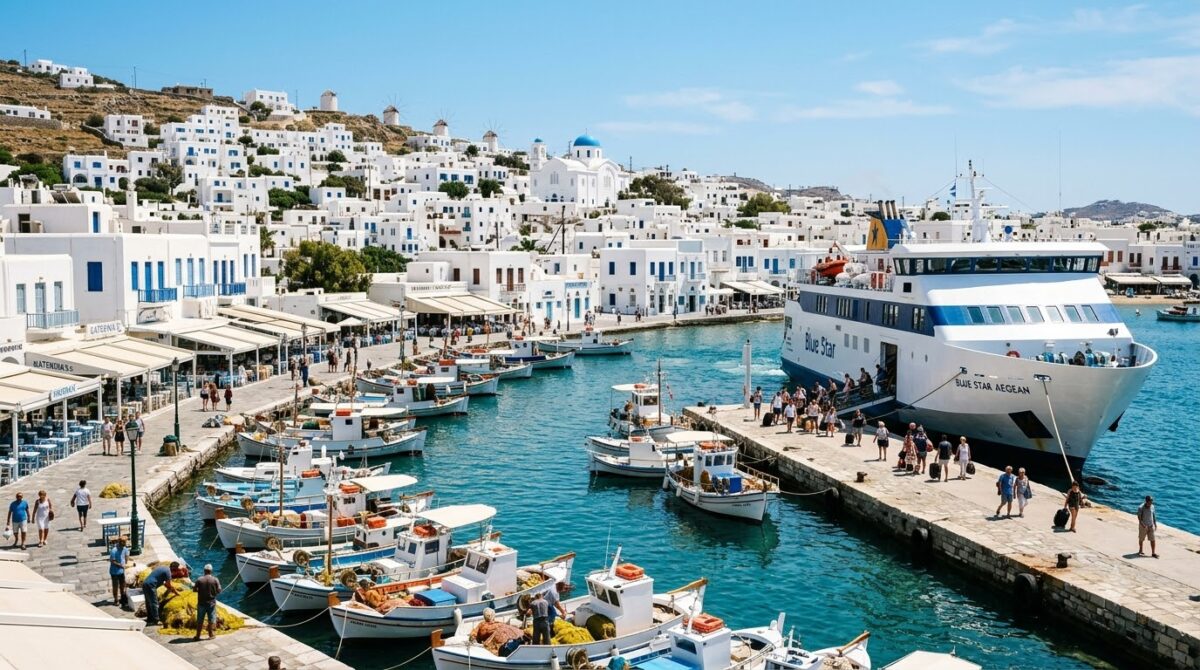
- Athens has two ports. Piraeus is the main one and is on the metro; Rafina is closer to the airport and serves some Cyclades routes. Check which one your ferry leaves from — they are an hour apart.
- Fast ferries and slow ferries run the same routes at very different speeds and prices. A slow ferry to Santorini can take eight hours; a fast one under five.
- Book ahead in July and August. Popular routes sell out, particularly with a car.
- High winds cancel ferries, especially the fast ones, and the meltemi wind blows hardest in July and August. This is the single biggest risk to a tight itinerary.
- Never plan a ferry on the day you fly home. Get back to Athens the night before, or fly the island-to-Athens leg.
- Domestic flights are often worth it for the long legs, particularly Athens to Crete or Rhodes.
The practical rule: pick islands in one chain. The Cyclades connect to each other well. Mixing a Cycladic island with an Ionian one like Corfu means going back through Athens.
The Greece itineraries: one destination or several, by length of trip
7 days in Greece: Athens and one island
- Days 1–2 — Athens, as above.
- Day 3 — morning ferry to Naxos or Paros. Afternoon at the beach.
- Days 4–6 — the island: beaches, a mountain village, a boat trip to a nearby island, and nothing scheduled.
- Day 7 — ferry or flight back to Athens, fly home.
This is the week Greece itinerary most first-time visitors should book and almost nobody does. It gives you two places to visit in Greece rather than four, and Greece is not one destination but several.
10 days in Greece: Athens and two islands
- Days 1–2 — Athens.
- Days 3–5 — Naxos or Paros. Three nights, so two full days.
- Days 6–8 — ferry to Santorini. Two nights is enough; three if you want a boat trip into the caldera.
- Days 9–10 — back to Athens by ferry or a short flight, one night, fly home.
Order matters: do the cheaper, calmer island first and Santorini last. Doing it the other way round makes everything after Santorini feel like a downgrade.
14 days in Greece: adding the mainland
Two weeks is where northern Greece and the mainland become possible, and they are the part almost every itinerary skips.
- Days 1–2 — Athens.
- Days 3–4 — Meteora. The monasteries of Meteora sit on top of vertical rock pillars and are a UNESCO World Heritage Site. Four to five hours by train from Athens, and one of the most extraordinary places in Europe.
- Days 5–6 — day trips to Delphi on the way back, or Athens and the Peloponnese from Nafplio. Delphi is where ancient history and Greek mythology sit on the same hillside, and the myth of the oracle is easier to believe once you have stood on the site.
- Days 7–13 — two islands, three or four nights each.
- Day 14 — Athens, fly home.
The best time to visit Greece
- May, June, September and early October are the best months. Warm sea, full ferry timetables, and prices below the peak.
- July and August are hot, expensive and crowded, and the meltemi wind cancels ferries most often.
- April and late October are cheap and lovely on the mainland, but many island hotels and restaurants are shut.
- November to March is mainland only. Most Cycladic islands close almost entirely, with skeleton ferry services.
September is the single best month for a Greece trip: the sea is at its warmest after a summer of heating, the crowds thin after the first week, and everything is still open.
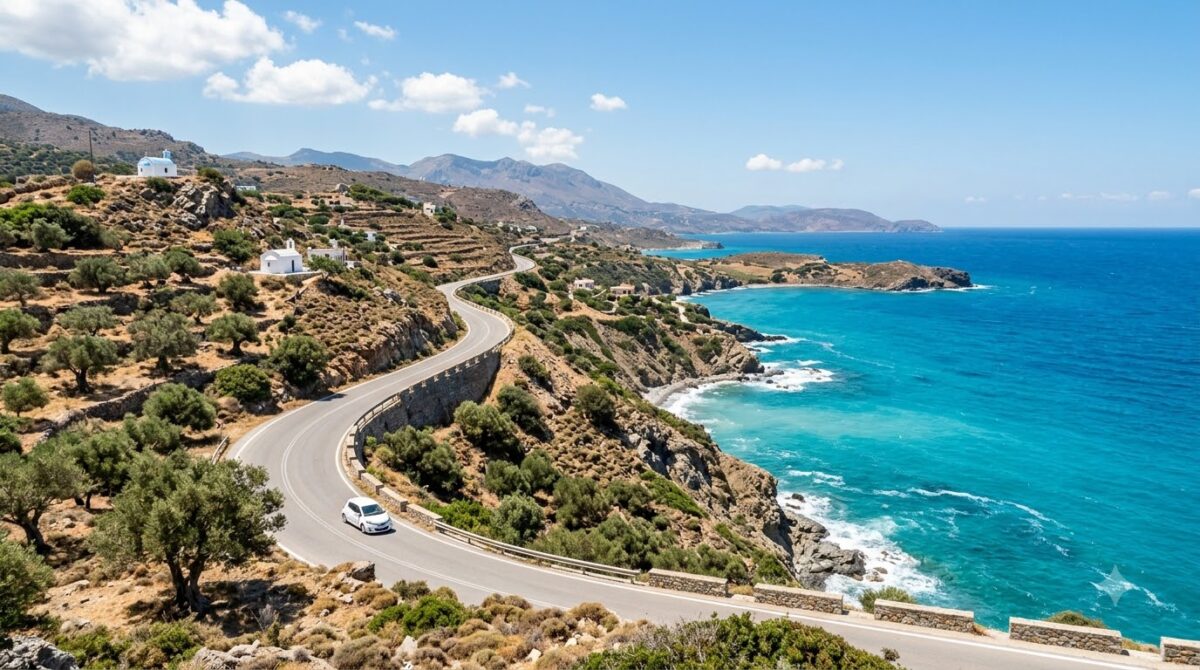
Greece travel tips for a first trip to Greece
- Cash still matters on smaller islands and in tavernas, though cards are widely accepted now.
- Rent a car or a scooter on the island, not in Athens. Island buses exist but are infrequent, and the good beaches are not on the routes.
- Book accommodation before ferries in high season, because island rooms sell out faster than boat seats.
- Travel insurance is worth it here specifically because of ferry cancellations and the medical distance from smaller islands.
- Eat late. Greek dinner starts at nine and tavernas fill after ten.
- Do not flush paper on most islands. The plumbing is narrow and the bins are there for a reason.
- Sunscreen and shade. The Aegean sun in July is stronger than people expect, and many beaches have no natural shade at all.
A 10-day Greece itinerary, day by day: how to spend 10 days in Greece
The ten day version is the one that works best for most first-time visitors, so here it is in full rather than as a summary.
Day 1: arrive in Athens
Land, get into the city, and do nothing ambitious. The metro from the airport takes about 40 minutes to Syntagma. Walk Plaka in the evening and eat on a rooftop with the Acropolis lit above you.
Day 2: exploring Athens, ancient
Acropolis at opening, Acropolis Museum after, Ancient Agora in the afternoon. That is a full day and it is hot work from June to September, so build in a long lunch.
Day 3: Athens, modern, then heading to the islands
National Archaeological Museum in the morning, then the afternoon ferry from Piraeus. Fast ferries to Naxos and Paros take roughly four to five hours; the slow ones considerably longer. Arrive, find dinner, sleep.
Or reverse it: take the early ferry and use the afternoon on the island. Which way round depends on the timetable that week, not on preference.
Day 4 and Day 5: the first island, 3 nights
Three nights gives you 2 full days, and that is the minimum for an island to be worth the transfer.
- One day for beaches. Rent a car or scooter and drive to three of them. The good ones are never on the bus route.
- One day for everything else: the main town in the morning, a mountain village for lunch, and a boat trip to one of the nearby islands if the weather holds.
On Naxos that means the Portara at sunset, the marble villages of Halki and Apiranthos, and Plaka or Agios Prokopios beach. On Paros it means Naoussa harbour, Lefkes village, and a boat to Antiparos.
Day 6: ferry to Santorini
Two to three hours from Naxos or Paros on a fast ferry. Arrive in the afternoon, and be warned that the port at Athinios is at the bottom of a steep switchback road well away from the villages, so arrange the transfer in advance.
Days 7 and 8: Santorini
Two nights is enough for most people, three if you want a caldera boat trip. If you go to Santorini at all, three days in Santorini is the number that stops it feeling like a photo stop, and the island of Santorini rewards an early start more than any other.
- The caldera walk from Fira to Oia along the rim, about three hours, best started early.
- A boat trip to the volcano and the hot springs, which is the best half day on the island.
- Sunset somewhere other than Oia, Greece, where the castle is the single most crowded square metre in the country. The windmill at the end of the village is no better. Imerovigli or a restaurant terrace gives you the same sun and none of the crush.
- Akrotiri, the Bronze Age town buried by the eruption, which is the most underrated site in the Cyclades.
Day 9: back to Athens
Ferry or a 45 minute flight. Take the flight if the budget allows, because the ferry from Santorini is long and it is the leg most likely to be cancelled by wind.
Day 10: fly home
Morning in Athens if the flight is late. The Benaki Museum and the central market are both good uses of three hours.
Boat trips, a day of sailing and nearby islands
One thing that separates a good Greek itinerary from a rushed one: day boat trips let you see extra islands without paying the transfer cost.
- From Paros — Antiparos is a 10 minute ferry, and there are day boats to Delos and Mykonos.
- From Naxos — the Small Cyclades: Koufonisia, Iraklia and Schinoussa, all tiny and almost undeveloped.
- From Santorini — the volcano, the hot springs and Thirassia across the caldera.
- From Athens — the one day Saronic cruise to Hydra island, which has no cars on it, plus Poros and Aegina. It is the easiest detour from the city and it needs no ferry booking. Touristy, and a genuine option if you have no time for a proper island stay.
A boat trip costs you a day and no luggage. An island change costs you a day and all your luggage. That is the whole argument for spending a few days in one place and using boats.
Places to visit in Greece: Greek food, beach time and your favorite Greece day
Itineraries list sites. Time in the Greek islands is mostly not spent on sites, and it helps to know what the hours actually go on before you decide how many of them you need.
- Beach days are the bulk of it. On any island, plan one full beach day for every two days you are there. Beach time is not filler here, it is the reason people come back.
- Greek food takes longer than you think. A taverna dinner is two hours minimum and nobody will bring the bill until you ask. Build that in rather than fighting it.
- Watch the sunset somewhere with your back to the crowd. Oia castle is the famous one and the worst one. Imerovigli, a rooftop, or the Portara on Naxos all give you the same sun.
- The Red Beach on Santorini and the volcanic coves on Milos are the two places where the landscape does the work and you do nothing at all.
- Places to stay change the day more than the island does. A room in a village means walking to dinner; a room on a beach means driving to it.
- The streets of Mykonos town at nine in the morning, before the cruise passengers land, are a different place from the same streets at noon. So is Fira, and so is Naoussa on Paros.
- An authentic Greek day is not a thing you can book. It is what happens when you give one of the Cyclades three nights instead of one and stop moving.
- A day of exploring inland beats a second day at the port on every island in this guide.
Ask people about their favorite Greece memory and it is almost never a monument. Athens is the exception, and that is exactly why it needs its two days.
What a Greece trip costs: the euro, ATMs and the exchange rate
Greece is cheaper than western Europe on the mainland and more expensive than people expect on the famous islands. Mykonos prices sit closer to Ibiza than to Italy, and visitors from the United States often budget for the whole vacation at Athens prices and get a shock on the ferry.
- Athens is good value — hotels, food and transport are all noticeably cheaper than Rome or Barcelona.
- Naxos and Paros are moderate. A taverna dinner costs a fraction of the same meal in Santorini.
- Santorini and Mykonos are expensive, and caldera-view rooms in Santorini are the single biggest cost in most Greek itineraries.
- Ferries add up. Fast ferries cost roughly double the slow ones on the same route.
- Car hire on an island is usually worth it for two or three days rather than the whole stay.
The cheapest meaningful saving: swap one famous island for a quieter one. It cuts accommodation and food costs sharply and, for most travellers, improves the trip.
What to pack for visiting Greece and the islands
- Shoes with grip. Island villages are marble and cobblestone, polished smooth by centuries, and lethal when wet.
- A hat and real sunscreen. The Aegean sun is stronger than the temperature suggests, and many beaches have no shade.
- Water shoes if you care about swimming comfortably. A lot of Greek beaches are pebble rather than sand.
- A light layer for evenings, especially on ferries and in spring or autumn. The wind off the sea is cold after dark.
- A dry bag for boat trips.
- Modest cover for monasteries if Meteora is on the plan. Shoulders and knees, and long skirts are provided at the door for women.
Two weeks in Greece: ten to fourteen days, and mainland Greece
If you have longer than ten days, the ultimate Greece trip is not more islands. It is the mainland, which almost nobody visits and which holds most of ancient Greece.
- The Peloponnese — Nafplio, Mycenae, Epidaurus and Olympia, Greece, all reachable by car in a loop from Athens. Go further south and you reach Monemvasia, a town inside a rock, the Mani Peninsula and Kalamata.
- Delphi — the oracle site on the slope of Mount Parnassus, three hours from Athens and doable as a long day trip.
- Northern Greece — Thessaloniki, the second city, with the best food in the country and almost no international tourism.
- The Zagori villages — stone villages and gorges in the northwest, for hiking rather than beaches.
For first-time visitors the islands are the right call. For a second trip to Greece, the mainland is where the value is.
Is a week enough for Greece, and what is the best Greece trip?
It depends entirely on what you decide Greece means for this trip.
Enough for Athens and one island, done properly. That is a genuinely good week and it is what this page recommends. You get the Acropolis, a real sense of the city, and four or five days somewhere you can settle into.
Not enough for the postcard version where you spend time in Athens, on the island of Santorini and on the island of Mykonos in seven days. That itinerary exists on every travel site and it means two ferry days out of seven. People do it and people come home tired.
The honest answer to whether a week is enough for Greece is that a week is enough for a slice of Greece. The country is too spread out for anything else, and accepting that early makes the trip better.
Common mistakes when planning a trip to Greece
- Too many islands. The single biggest error. Each one costs a day to reach.
- One day in Athens. The city gets dismissed because visitors only see it exhausted, between flights.
- Booking a ferry on the departure day. Wind cancels ferries and you cannot argue with a port authority about your flight.
- Mixing island chains. Going from the Cyclades to the Ionian islands means routing back through Athens. Pick one group.
- Assuming Santorini has beaches like the photos. The famous images are of the caldera villages. The beaches are black volcanic sand on the other side of the island.
- Not renting anything on the island. Buses are infrequent and the good beaches are not on the routes.
- Travelling in August. Hottest, priciest, windiest and busiest, all at once.
Getting around Greece: ferries, flights and a rental car
- Athens has a good metro that reaches the airport, both main archaeological areas and Piraeus port. You will not need a taxi much.
- Domestic flights are cheap and quick on the long legs. Athens to Santorini or Crete is 45 to 55 minutes against eight hours by slow ferry.
- Trains serve the mainland, and the Athens to Kalambaka line for Meteora is one of the better journeys in the country.
- Rent a car for the Peloponnese if you go, because the sites are spread out and buses between them are slow.
- On islands, hire a car or a scooter for two or three days rather than the whole stay. You do not need it on the days you sit on a beach.
One practical note on ferry tickets: book online in advance in high season, and print or download the ticket. Some operators still require a paper boarding pass collected at the port, which is a nasty surprise twenty minutes before departure.
Weighing the two? Our Croatia itinerary covers the Adriatic alternative, and why Split rather than Dubrovnik is the hub.
Booking the Santorini leg? See where to stay in Santorini — the caldera side has the views and no beaches at all.
Weighing the Santorini leg? Our guide to how many days in Santorini explains why three is the number.
Adding the largest island? Our Crete itinerary explains why one base will not cover a 260km island.
Adding the party island? See where to stay in Mykonos — the island has no coast road, and that decides everything.
Adding a bigger island? See where to stay in Naxos — almost every bed sits on one strip of sand.
Adding the Dodecanese? See where to stay in Rhodes — on that island the wind decides which coast you book.
Frequently asked questions
How many days do you need in Greece?
Seven days covers Athens properly and one island. Ten days allows Athens and two islands at a reasonable pace. Fourteen adds either a third island or the mainland, including Meteora and Delphi. Fewer than five days means Athens plus a single island, with one transfer.
How many Greek islands can you visit in a week?
One, comfortably, or two if you accept that a full day goes to transfers. Every island change costs between half a day and a whole day once you account for ferry times, ports that are far from hotels, and the risk of wind cancellations. Two islands in seven days is the practical maximum.
Should I visit Santorini or Mykonos?
Santorini if you want the caldera view and dramatic scenery; Mykonos if you want nightlife and beach clubs. Both are expensive and crowded. If you want beaches, food and value, choose Naxos or Paros instead, which are in the same island chain and connected by the same ferries.
Is 2 days in Athens enough?
Two full days covers the Acropolis, the Acropolis Museum, the Ancient Agora and one modern neighborhood, which is the essential version. Most itineraries give Athens one day, and that is why so many people dismiss the city. A third day allows the National Archaeological Museum and a day trip to Cape Sounion.
What is the best month for a Greece itinerary?
September. The sea is at its warmest after the summer, the crowds thin after the first week, ferries still run full timetables and prices drop from the peak. May, June and early October are close behind. July and August are hot, expensive and the windiest months for ferry cancellations.
Can you add Crete to a Greek island itinerary?
Not comfortably. Crete is 260 kilometers long with its own mountains, gorges and Minoan sites, and it needs a week of its own. Adding it to a Cyclades trip is the most common overreach in Greece planning. Fly Athens to Crete and treat it as a separate holiday.
Do ferries in Greece get cancelled?
Yes, and it is the biggest risk to a tight itinerary. High winds, especially the meltemi in July and August, cancel fast ferries most often. Never schedule a ferry on the day you fly home; return to Athens the night before, or take a domestic flight for the final leg.
Is Meteora worth adding to a Greece trip?
Yes, if you have ten days or more. The monasteries of Meteora sit on top of sheer rock pillars in northern Greece and are a UNESCO World Heritage Site. It is four to five hours by train from Athens and it is one of the most extraordinary places in Europe, with a fraction of the visitors the islands get.