
Two full days in Athens is the honest minimum, and 3-4 days is where the city starts to make sense. One day gets you the Acropolis and nothing else.
Some links below are affiliate links. We may earn a commission if you book through them, at no extra cost to you. We do not rank hotels, and any prices on the map come live from the booking sites.
Quick answer: where to stay. On a two or three day trip a central base is worth paying for, because everything worth seeing clusters around one hill. Plaka, Monastiraki and Koukaki are all within about ten minutes of the Acropolis entrance on foot.
Almost every Greece itinerary gives Athens a single day on the way to the islands. That is why so many people come home saying Athens is a city to get through rather than visit — they saw one rock, in the heat, jet-lagged, and left.
This sets out exactly what each day in Athens buys you. Opening patterns and travel times checked 7 September 2026.
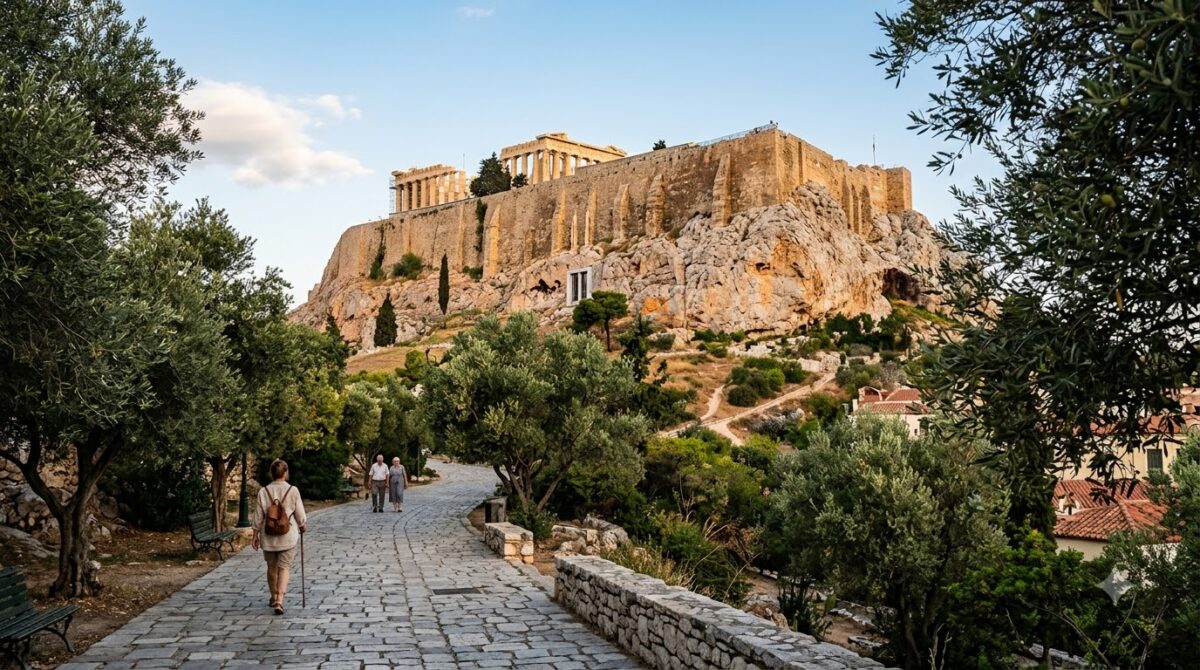
The short answer
| Days to spend in Athens | What you get | Who it suits |
|---|---|---|
| 1 day | Acropolis, Acropolis Museum, an evening in Plaka | A layover, or heading to the islands the next morning |
| 2 days | The above plus the Ancient Agora, the National Archaeological Museum and a real neighborhood | Most visitors |
| 3 days | The above plus a day trip, or a slow day of markets and hills | Anyone who dislikes rushing |
| 4 days | Delphi or Cape Sounion, plus repeat visits to what you liked | Athens as a destination rather than a transit stop |
The single most useful thing on this page: if your plan currently gives Athens one day, take a day from an island and give it here. Almost nobody regrets that trade and a lot of people regret not making it.
1 day in Athens: the compressed version
One day is a taste of ancient Athens and nothing more, and the mistake is trying to make it a summary of the city.
- Acropolis at opening. There is no shade on the rock and it is punishing by ten in summer. Buy the ticket online the night before.
- Acropolis Museum straight after. It holds what was taken off the hill, it is air conditioned, and it makes sense of what you just walked around.
- Lunch in Koukaki or Plaka.
- Ancient Agora in the late afternoon if you still have energy, or just wander Plaka and Monastiraki.
- Dinner on a rooftop facing the lit Acropolis. This is the memory people keep.
What one day misses: the National Archaeological Museum, every modern neighborhood, and any sense of Athens as a living city rather than a set of ruins.
2 days in Athens: the minimum that works
The second day is the one that changes people’s opinion of the city, and it does it by moving away from the ancient sites.
Day 1: ancient Athens
Acropolis at opening, Acropolis Museum, lunch, then the Ancient Agora. The Agora is where Socrates argued and where the Temple of Hephaestus stands almost intact — better preserved than the Parthenon and with a fraction of the visitors.
A guided tour is worth more on the Agora than on the Acropolis. The Parthenon explains itself; a field of foundations does not.
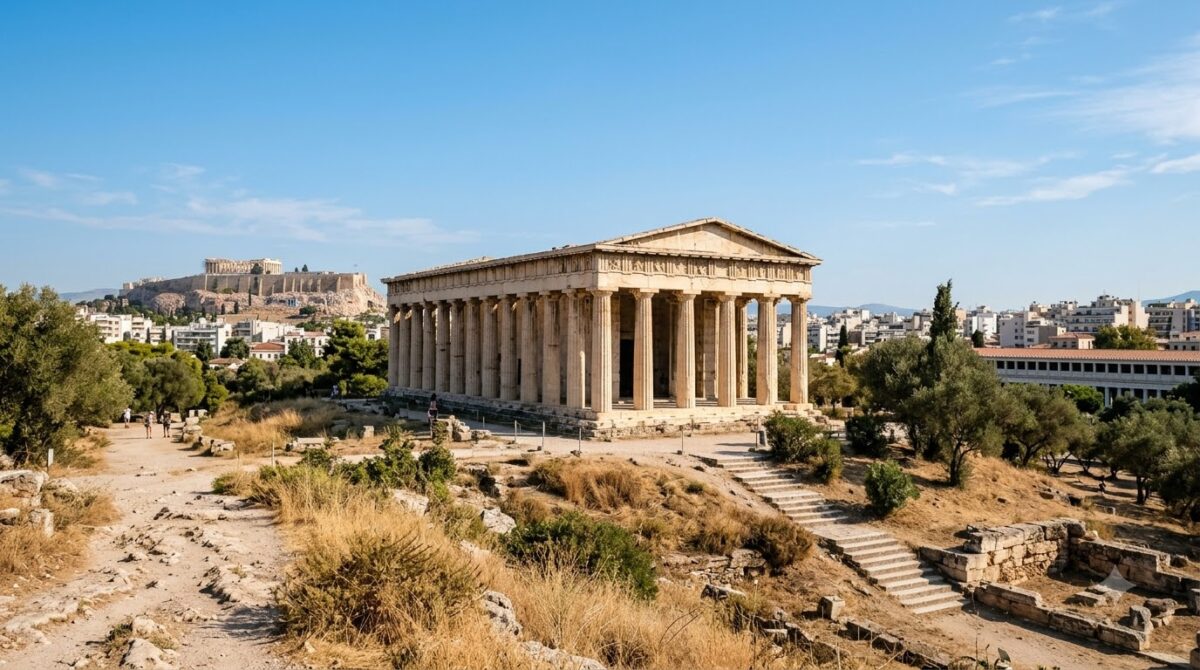
Day 2: the city of Athens, not the ruins
- The National Archaeological Museum in the morning. This is one of the great museums of the world — the Mask of Agamemnon, the Antikythera mechanism, the bronze Poseidon — and it is half empty compared with the Acropolis. Allow two hours minimum.
- The central market and Psyrri for lunch. The covered meat and fish market on Athinas street is the most alive place in central Athens and costs nothing to walk through.
- Exarchia or Koukaki in the afternoon for coffee, street art and shops that are not selling souvenirs.
- Lycabettus Hill at sunset. Funicular up, walk down. The best view over the city and the Acropolis, and free if you walk both ways.

3 days in Athens: adding depth or a day trip
Three days is where you choose between going wider or going deeper, and both work.
Option A: a day trip from Athens
- Cape Sounion — the Temple of Poseidon on a headland above the sea, about 90 minutes down the coast. Best at sunset, and the drive along the Athens Riviera is half the point. Half a day.
- Delphi — the oracle site on the slope of Mount Parnassus, about three hours each way. A full and long day, and one of the great ancient sites in Greece.
- Nafplio — a Venetian harbour town two hours away, often combined with Mycenae and Epidaurus.
- The Saronic islands — a one day cruise to Hydra, Poros and Aegina from Piraeus. Touristy, and a real option if the islands are not otherwise on the trip.
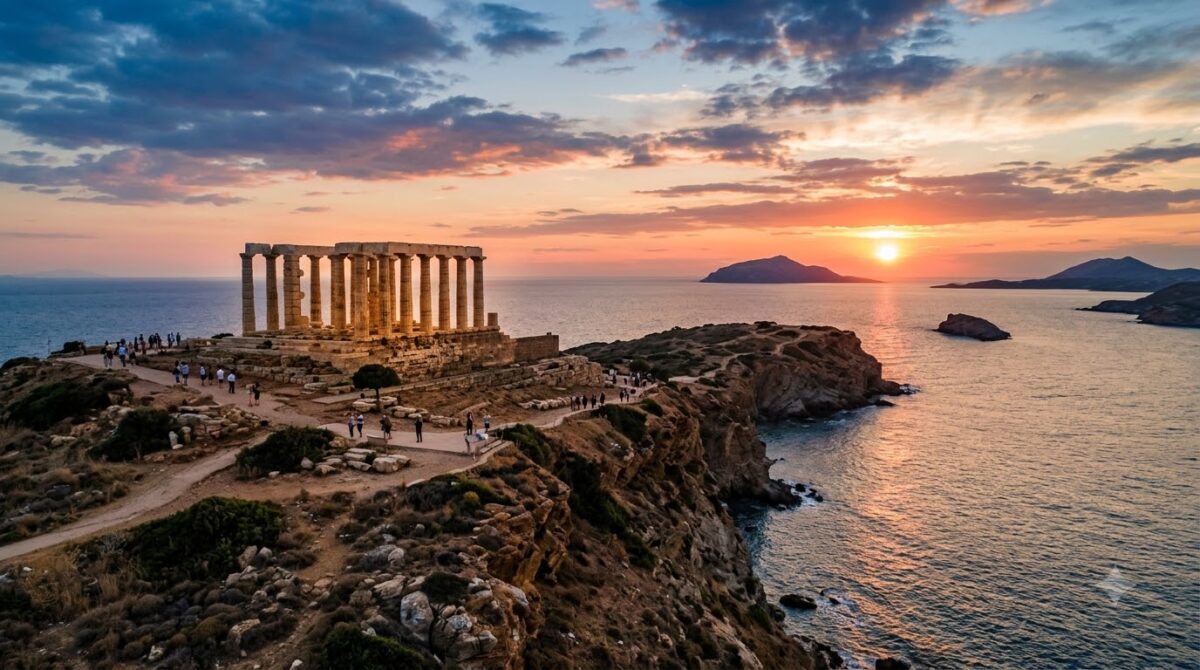
Option B: stay in the city
- The Benaki Museum and the Museum of Cycladic Art, both in Kolonaki and both excellent.
- Kerameikos, the ancient cemetery, which is quiet and strange and almost nobody goes.
- The Panathenaic Stadium, all marble, where the first modern Olympics were held.
- The Temple of Olympian Zeus and Hadrian’s Arch, a short walk from Plaka.
- A food tour or a cooking class, which is the best way to get past the traditional Greek dishes aimed at visitors.
4 days in Athens and beyond
Four days lets you do both a day trip and a slow day, and it is the point at which Athens stops feeling like a stopover.
Past four days, the returns flatten for a first visit. Athens is a big, hot, sprawling city and the concentration of things visitors want is genuinely in the center. If you have a week in Greece, four days here and three on one island beats seven days in the city.
Our Greece itinerary sets out how the islands fit around Athens, and how many of them realistically fit at all.
What changes the number
- Summer heat. July and August regularly pass 35 degrees, and the middle of the day becomes unusable for the exposed ancient sites. In practice that removes a third of each day, so add one.
- Museum closing days. Some sites and museums close on Mondays or Tuesdays and hours shorten out of season. A two day trip landing on the wrong pair can lose you a major site.
- Whether you are heading to the islands. If your ferry leaves Piraeus at seven in the morning, that is not a day in Athens.
- Children. The Acropolis rock is steep, hot and has nowhere to sit. Three days at a slower pace beats two at full speed.
Count nights, not days
The most common way people lose a day in Athens is arithmetic.
A flight landing at four in the afternoon and a ferry leaving at seven the next morning is described as two days in Athens and is really one evening. Arrival and departure days are not sightseeing days. If you want two full days, book three nights.
Travel time to know: the airport metro takes about 40 minutes to Syntagma, and Piraeus port is about 30 minutes from the center on line 1. Build both into the plan rather than discovering them.
Where to stay affects how many days you need
On a two or three day trip in Athens, a central base is worth paying for, because everything worth seeing clusters around one hill and walking beats the metro.
Plaka, Monastiraki and Koukaki are all within about ten minutes of the Acropolis entrance on foot. Our guide to where to stay in Athens compares them and explains which central areas to avoid.

Map shows live availability and prices. We may earn a commission on bookings made through it, at no extra cost to you.
A 3 days in Athens itinerary, laid out
The three day version is what most people should book, so here it is as an actual Athens itinerary rather than a list of options.
Day 1: ancient Athens
- 08:00 — Acropolis at opening. Ninety minutes on the rock.
- 10:00 — Acropolis Museum, directly below. Two hours, air conditioned.
- 13:00 — lunch in Koukaki or on the pedestrian street below the rock.
- 15:00 — Ancient Agora and the Temple of Hephaestus.
- 19:00 — dinner on a rooftop in Plaka with the Acropolis lit above.
That is the full day of major sites, and it is enough ruins for most people in one go.
Day 2: the modern city
- 09:00 — National Archaeological Museum. Two hours minimum, and it is the best museum in Greece.
- 12:00 — the central market on Athinas street, then lunch in Psyrri.
- 15:00 — Exarchia or Koukaki for coffee and street art, or the Benaki Museum in Kolonaki.
- 18:30 — Lycabettus Hill for sunset over the city.
This is the day that decides whether you like Athens, and it is the day one-day visitors never get.
Day 3: out of the city, or deeper into it
Either a day trip from Athens, or the quieter sites: Kerameikos, the Temple of Olympian Zeus, the Panathenaic Stadium and the Museum of Cycladic Art. Both are good uses of the day, and which you pick depends on whether you have island time later in the trip.
Eating in Athens, and why it needs its own time
One reason two days feels tight is that meals here are not quick, and they should not be.
- Lunch runs long and dinner starts at nine. A taverna filling at seven is filling with visitors.
- Traditional Greek food in the tourist lanes is a weaker version of what you get two streets away. In Plaka in particular, walk away from the main routes before you sit down.
- The central market area, Psyrri and Koukaki are where to eat in Athens without paying the view premium.
- Budget two real meals a day. That is roughly three hours, and it is part of the visit rather than overhead.
People who give Athens one day usually eat two rushed meals near the Acropolis and conclude the food is mediocre. It is not; they were in the wrong three streets.
Getting around Athens, and what it costs in time
Athens is bigger than it looks on a map, but the part visitors want is compact.
- Central Athens is walkable. The Acropolis, Agora, Plaka, Monastiraki and Syntagma are all within fifteen minutes of each other on foot.
- The metro is clean, cheap and fast, with three lines. Line 3 goes to the airport, line 1 to Piraeus port.
- Athens time to the airport is about 40 minutes by metro and 45 by taxi at a fixed fare.
- Travel time to Piraeus is about 30 minutes on line 1, which matters if you are heading to the islands.
- Taxis are cheap by European standards and useful for Lycabettus or the National Archaeological Museum if it is hot.
Because central Athens is walkable, extra days buy you sights rather than transit. That is not true in most capital cities and it is why a third day here goes further than a third day in, say, Rome.
How Athens fits into a wider trip to Greece
Almost nobody visits Athens alone, so the real question is how many days to spend in Athens as a share of the whole trip.
| Total days in Greece | Days in Athens | Rest |
|---|---|---|
| 5 | 2 | One island, 3 nights |
| 7 | 2 | One island, 5 nights |
| 10 | 2 to 3 | Two islands |
| 14 | 3 to 4 | Meteora plus two islands |
Notice that Athens does not scale up much. Even on a two week trip, three or four days is plenty, because the extra time is better spent on the mainland at Meteora and Delphi or on a second island.
The mistake runs the other way: giving Athens one day on a ten day trip in order to fit a third island in, which costs you a good city and gains you a rushed island.
Planning your Athens itinerary: what not to miss
If you are spending 3-4 days in Athens, these are the things visitors to Athens most often say they were glad they did not miss, and a couple they wish they had known about.
- See the Acropolis at opening, not at midday. The single highest-value scheduling decision of the trip.
- The Temple of Zeus — the Temple of Olympian Zeus with Hadrian’s Arch beside it, a few minutes from Plaka. Once the largest temple in Greece, and most people walk past the fence rather than going in.
- The changing of the guard at the Tomb of the Unknown Soldier in Syntagma square, on the hour. Free, brief, and unlike anything else you will see.
- Wandering the streets without a plan in Plaka, Anafiotika and Psyrri. This is what a second and third day are for.
- The view of modern Greece from Lycabettus or Filopappou Hill, which puts the ancient city in the middle of a very large modern one.
Take the metro rather than taxis for anything beyond walking distance. It is fast, cheap and reaches both the airport and the port, and in a city this hot it saves more than money.
The best of Athens in 2-3 days
For a first trip to Athens where the city is not the main destination, this is the shape that gets the most out of the hours you have.
- 2-day Athens: ancient sites on day one, National Archaeological Museum plus a neighborhood and a hill on day two. That is the perfect Athens minimum and it covers the essential places in Athens.
- 3 days: add either an easy day trip from Athens to Cape Sounion, or the quieter city sites at your own pace.
- 4 days: add Delphi, which needs a full day, or simply repeat the parts you liked.
People who have spent 4 full days here generally report the same thing: the city grew on them steadily, and the day they enjoyed most was the one with nothing booked.
Traveling with kids
Athens with children needs one more day than the same trip without them.
- The Acropolis is steep, hot and exposed, with nowhere to sit at the top. Go at opening and keep it short.
- The Acropolis Museum works well — air conditioned, glass floors over the excavations, and a good cafe.
- The National Garden behind parliament is shaded and free, and it is the release valve in the middle of the city.
- The Athens Riviera beaches are 40 minutes by tram and worth a half day if the trip is longer than three days.
- Build in a proper afternoon break. Greek families do; the city is designed around it.
How Athens compares with the islands
The reason this question gets asked at all is that Athens competes for days with the beautiful Greek islands, and the islands usually win on the first pass.
They should not win by as much as they do. Athens holds the best museum in the country, the most important ancient site in Europe, the best food value in Greece, and a genuine modern city. The islands hold scenery and rest. A trip with two days of Athens and five on one island is better balanced than one day and six.
For how the islands themselves divide up, and how many realistically fit, see our Greece itinerary.
Frequently asked questions
How many days do you need in Athens?
Two full days is the honest minimum: one for the Acropolis, Acropolis Museum and Ancient Agora, one for the National Archaeological Museum and a modern neighborhood. Three to four days is where the city starts to make sense, allowing a day trip to Cape Sounion or Delphi and time to slow down.
Is 1 day in Athens enough?
Only for the Acropolis and the Acropolis Museum, plus an evening in Plaka. It is a taste of ancient Athens and misses the National Archaeological Museum and every modern neighborhood. One day is why so many visitors dismiss the city, because they only see it exhausted and in transit.
Is 3 days in Athens too many?
No. The third day is the first comfortable one, and it buys either a day trip to Cape Sounion, Delphi or Nafplio, or a slower day covering the Benaki Museum, Kerameikos and the central market. Returns start to flatten after four days for a first visit.
What is the best day trip from Athens?
Cape Sounion for a half day, Delphi for a full one. The Temple of Poseidon at Sounion is about 90 minutes down the coast and best at sunset. Delphi is roughly three hours each way and is one of the great ancient sites in Greece, so it needs a whole day rather than an afternoon.
How many days in Athens before going to the islands?
Two full days, which means three nights, before you take a ferry. Doing Athens on the arrival day and catching an early ferry the next morning gives you one evening, not a visit. Ferries leave from Piraeus, about 30 minutes from the center on metro line 1.
Do you need a guided tour in Athens?
It helps most at the Ancient Agora, which is a field of foundations that means little unexplained. The Acropolis is largely self-explanatory and the Acropolis Museum has good signage. A food tour is the other one worth paying for, because it gets you past the tourist versions of traditional Greek dishes.
What is the best time of year to visit Athens?
April to early June, or late September into October. Warm without the summer heat, and the ancient sites are bearable in the middle of the day. July and August regularly pass 35 degrees with no shade on the Acropolis, which effectively removes a third of each day.
Should I count arrival and departure days as days in Athens?
No. An afternoon arrival and a morning ferry is one evening, not two days. Count nights instead: three nights gives you two full days. The airport metro takes about 40 minutes each way, and Piraeus port about 30 minutes, and both come out of your sightseeing time.