Quick answer where to stay
Spend four nights in Seoul, in Myeongdong or Jongno for the palaces and markets, then two nights in Busan, in Haeundae for the beach or Seomyeon for easy train connections. Gyeongju works as a stop on the way, no overnight needed.
On this page
- South Korea itinerary 7 days at a glance
- Day 1: Arrive in Seoul, Myeongdong and N Seoul Tower
- Day 2: Seoul itinerary for Gyeongbokgung, Bukchon and Insadong
- Day 3: Changdeokgung, Ikseon-dong and modern Seoul
- Day 4: DMZ tour or Suwon Hwaseong Fortress, then Hongdae
- Day 5: KTX to Gyeongju, the ancient capital, then on to Busan
- Day 6: Busan itinerary for Gamcheon, Jagalchi and Haedong Yonggungsa
- Day 7: Haeundae, then back to Seoul or fly home from Busan
- Seoul itinerary 7 days: the Seoul-only version
- Where to stay in Seoul and Busan
- Getting around South Korea: KTX, subway and T-money
- Best time for a one-week trip to South Korea
- Seoul itinerary 5 days, or South Korea in five days
- If you have more than a week in South Korea
- The short version
- Frequently asked questions
This South Korea itinerary for 7 days gives Seoul the time it deserves, four nights, then takes the KTX bullet train south to the ancient capital of Gyeongju and on to the beaches and hillside neighborhoods of Busan for two nights. It is designed for a first trip, works year-round, and is at its best in spring and fall, when the weather is mild and the city parks turn pink or red.
Some links below are affiliate links. We may earn a commission if you book through them, at no extra cost to you. We do not rank hotels, and any prices on the map come live from the booking sites.
Korea is easy to travel in a week because distances are short and trains are fast. The biggest mistake in a Korea itinerary is trying to add Jeju, Jeonju and the mountains as well. Two bases, Seoul and Busan, with Gyeongju as a stop between them, keeps the plan relaxed. If you only want Seoul, there is a Seoul-only version below, plus a 5-day plan, which is what many people search for as a Seoul itinerary 5 days.
South Korea itinerary 7 days at a glance
| Day | Base | Main stops | Getting there |
|---|---|---|---|
| Day 1 | Seoul | Arrive, Myeongdong, N Seoul Tower | AREX train from Incheon, about 45 to 60 minutes |
| Day 2 | Seoul | Gyeongbokgung, Bukchon, Insadong, Gwangjang Market | Subway |
| Day 3 | Seoul | Changdeokgung, Ikseon-dong, DDP, Seongsu, Han River | Subway |
| Day 4 | Seoul | DMZ tour or Suwon fortress, Hongdae at night | Tour bus or subway and train |
| Day 5 | Busan | KTX to Gyeongju: Bulguksa, tombs, Woljeong Bridge, on to Busan | KTX, about 2 hours 10 minutes, then 30 minutes |
| Day 6 | Busan | Gamcheon, Jagalchi, Haedong Yonggungsa, Gwangalli | Subway, bus, taxi |
| Day 7 | – | Haeundae morning, KTX back to Seoul and Incheon, or fly from Busan | KTX, about 2.5 hours |
That makes one week with six nights: four in Seoul and two in Busan. Seoul’s palaces close one day a week each, so check the day you plan before you go: Gyeongbokgung closes on Tuesdays and Changdeokgung on Mondays.
Where to sleep on this route
Day 1: Arrive in Seoul, Myeongdong and N Seoul Tower
Flights from the US land at Incheon International Airport, about an hour west of the city. The AREX airport railroad is the simplest way in: the express train runs nonstop to Seoul Station in roughly 45 to 50 minutes, and the cheaper all-stop train takes about an hour and stops at Hongdae. Airport limousine buses are a good choice if your hotel is not near a station.
Buy a T-money card at an airport convenience store and load it with cash. It works on the subway, buses and in many taxis across the country. Download Naver Map or KakaoMap as well, since Google Maps has limited walking directions in Korea.
Spend the first evening around Myeongdong, Seoul’s busiest shopping street, where food carts set up in the late afternoon selling egg bread, skewers and fried snacks. From there, it is a short walk or cable car ride up Namsan to the N Seoul Tower. The view of the city lights is free from the terraces at the base, or pay to go up to the observation deck. Head to bed early to be ready for the palaces.
Day 2: Seoul itinerary for Gyeongbokgung, Bukchon and Insadong
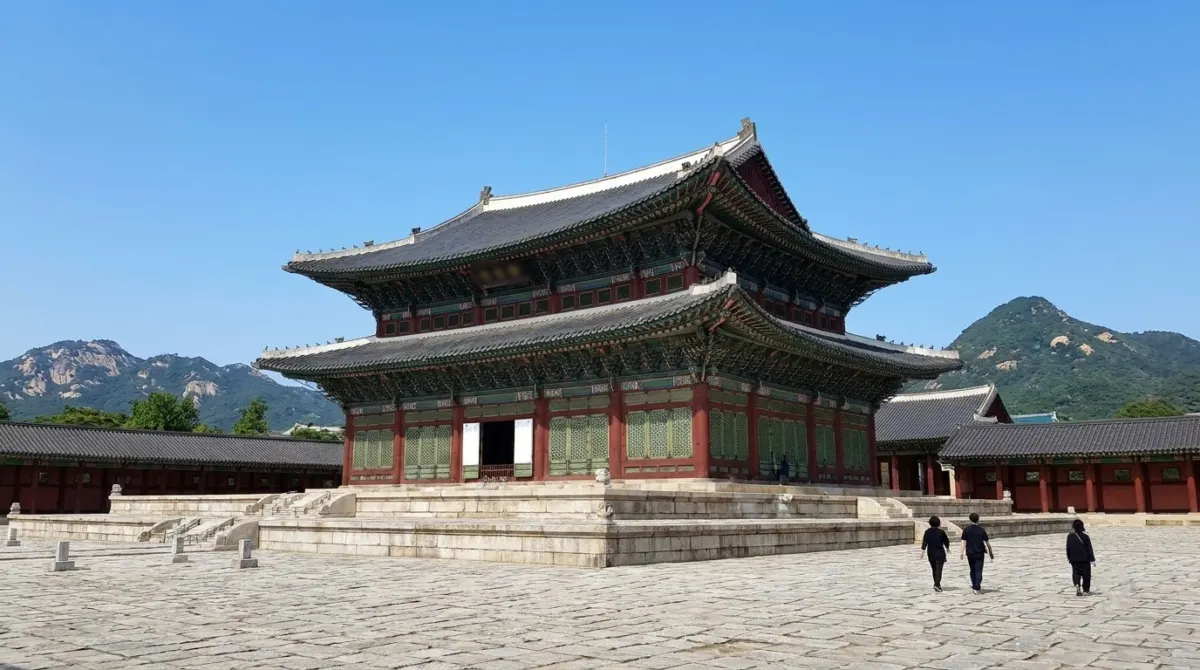
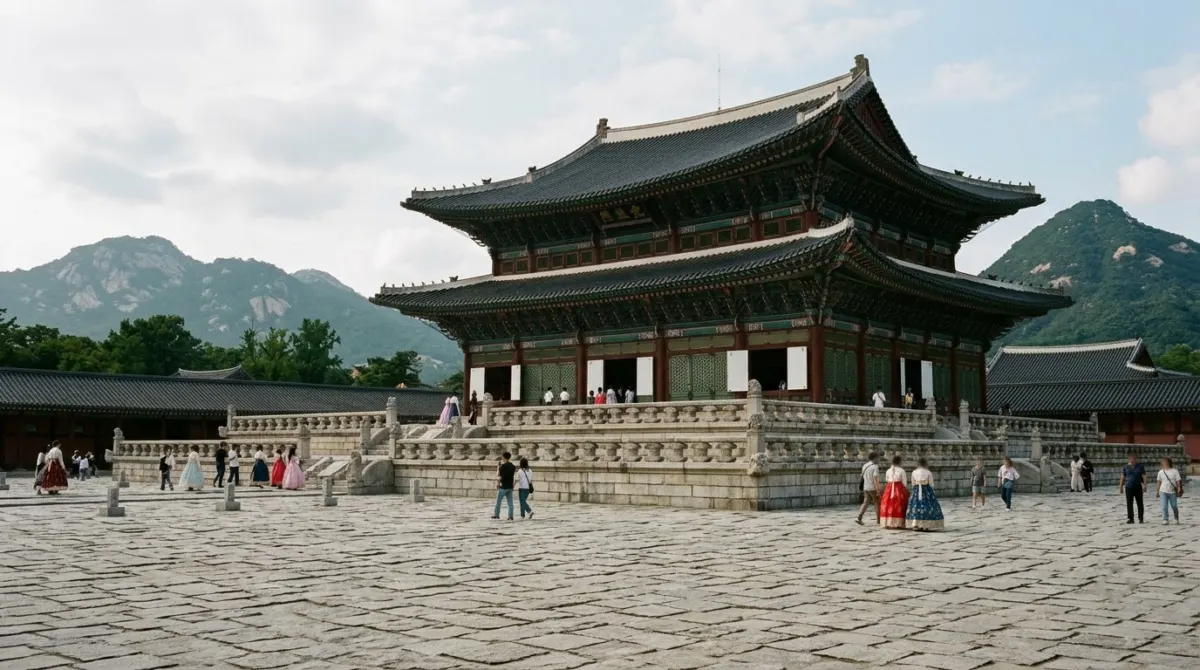
Start at Gyeongbokgung, the largest of Seoul’s five Joseon dynasty palaces, built in 1395. Arrive at opening time to see the main halls before tour groups fill the courtyards, and stay for the changing of the guard ceremony at the main gate, held in the morning and afternoon on days the palace is open. Visitors wearing hanbok, the traditional Korean dress, get free entry; rental shops line the streets near the palace if you want to try it.
Walk east to Bukchon Hanok Village, a hillside of traditional wooden houses with tiled roofs. People live here, and the district now closes the most popular “red zone” lanes to tourists from 5 p.m. to 10 a.m., so go between 10 a.m. and 5 p.m. and keep your voice down. Wander south into Insadong, a street of tea houses, galleries and craft shops; the Ssamziegil courtyard building is the easiest place to browse.
In the evening, take the subway to Gwangjang Market, one of Seoul’s oldest covered markets. Sit at a counter for bindaetteok mung bean pancakes, mayak gimbap rolls and yukhoe raw beef. Afterward, walk along the Cheonggyecheon Stream, a restored waterway with footpaths that runs through downtown.
Day 3: Changdeokgung, Ikseon-dong and modern Seoul
Begin at Changdeokgung, the most attractive of the palaces and a UNESCO World Heritage Site. Its rear garden, the Secret Garden, can only be visited on a guided tour with a limited number of places, including tours in English. Book online in advance if you can, since spots go quickly in spring and fall.
For lunch, walk to Ikseon-dong, a small tangle of hanok houses that have been turned into cafes, bakeries and restaurants. Then ride the subway to Dongdaemun Design Plaza, the curving silver building designed by Zaha Hadid, surrounded by late-night fashion malls.
In the afternoon, head across to Seongsu-dong, a former factory district that is now Seoul’s busiest neighborhood for pop-up stores, concept shops and coffee. Seoul Forest park is right next door if you want a green break. As the sun goes down, go to one of the Han River parks. Locals picnic on the riverbank with fried chicken and convenience store ramen; join them. From spring to fall, the Banpo Bridge fountain show runs in the evening at Banpo Hangang Park; check the season’s schedule before heading there.
Day 4: DMZ tour or Suwon Hwaseong Fortress, then Hongdae
Use day four for a trip outside the city. The two best options are very different.
The DMZ: the demilitarized zone between North and South Korea is only about an hour’s drive north of Seoul. It can only be visited on organized tours, which usually include observation points, the Third Infiltration Tunnel and Dorasan Station. What a tour covers changes with security conditions, and some sites close at short notice, so read the current itinerary before you book and bring your passport, which tours check.
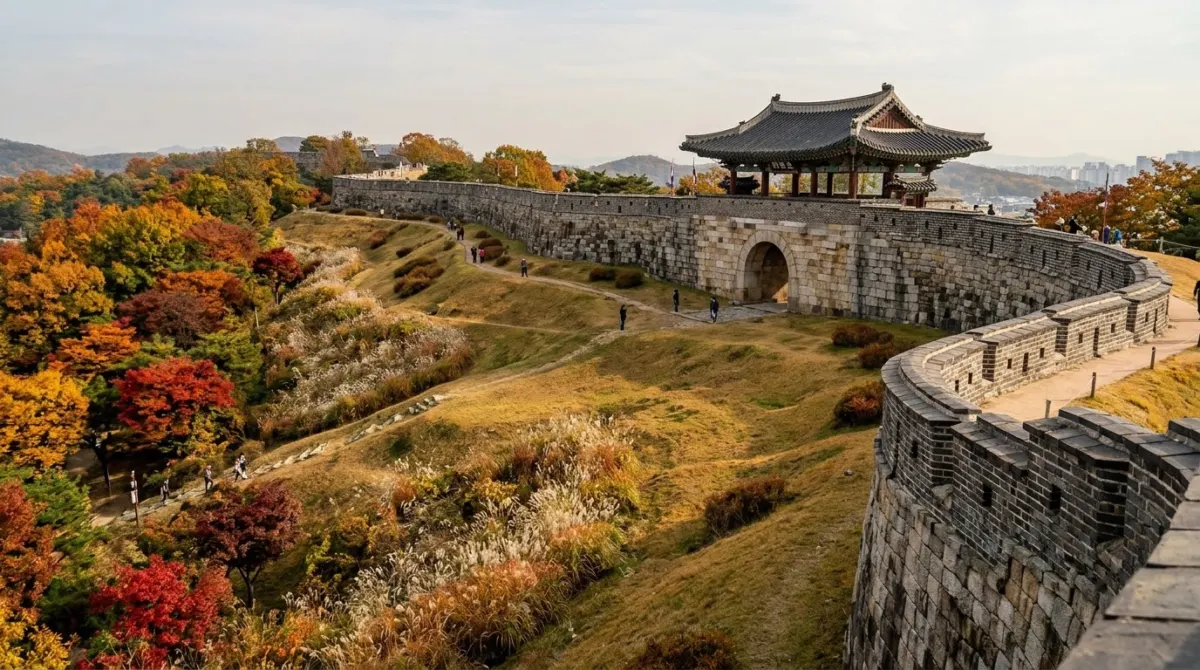
Suwon Hwaseong Fortress: if you prefer history at your own pace, take the subway or a train south to Suwon. The 18th-century fortress walls, a UNESCO World Heritage Site, run for nearly six kilometers around the old town, and you can walk long sections of them, past gates, watchtowers and a reconstructed palace. Suwon is also known for its fried chicken streets.
Back in Seoul, spend the evening in Hongdae, the university neighborhood around Hongik University. It is full of street performers, small music venues, budget restaurants, photo booths and Korean barbecue spots that stay busy late. Pack tonight; tomorrow you leave Seoul early.
Day 5: KTX to Gyeongju, the ancient capital, then on to Busan
Take an early KTX from Seoul Station to Gyeongju Station (called Singyeongju Station until late 2023), about 2 hours 10 minutes. Gyeongju was the capital of the Silla kingdom for nearly a thousand years, and the town is filled with royal tombs, temples and archaeological sites. Travel with a small bag today, or send your luggage ahead, because the sights are spread out.
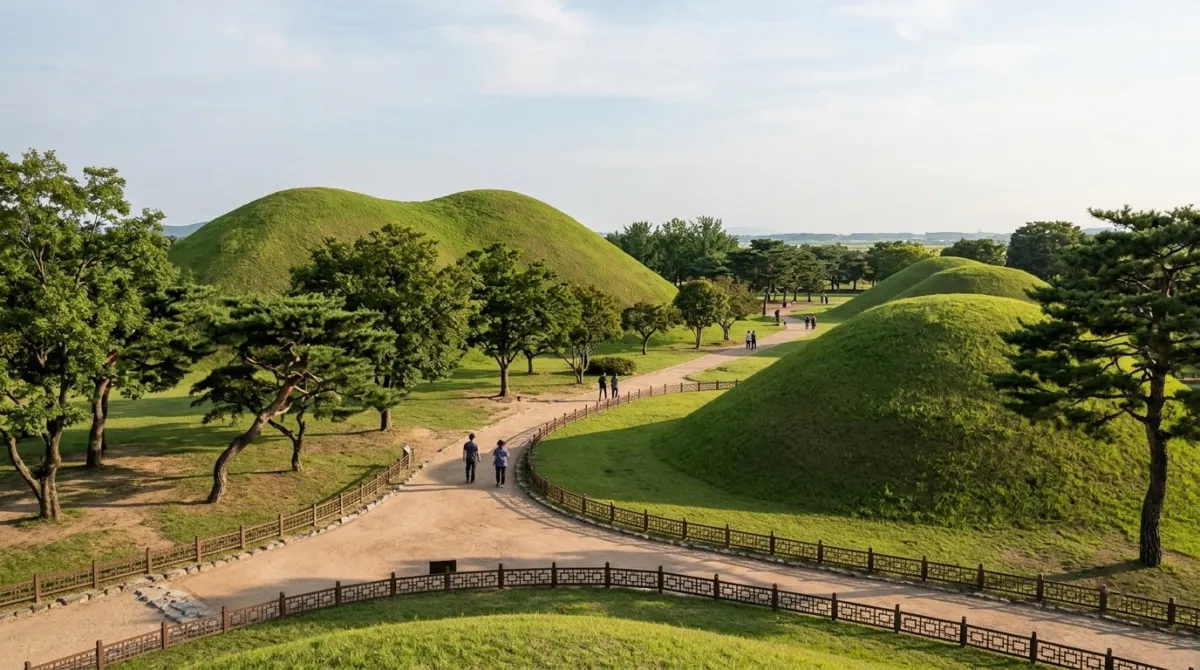
From the station, take a taxi to Bulguksa, a temple complex on the slopes of Mount Toham and one of Korea’s most important Buddhist sites, with stone pagodas from the eighth century. Then head into town to Daereungwon, a park of grassy burial mounds, where one tomb is open to see inside. Walk to Cheomseongdae, an ancient stone observatory, and on to Donggung Palace and Wolji Pond, which is most beautiful when the pavilions are lit up after dark. The reconstructed Woljeonggyo Bridge nearby is also lit at night.
After dinner, take a taxi back to Gyeongju Station and catch the KTX to Busan, about 30 minutes. Check the evening timetable on Korail before you set out; buses from the Gyeongju intercity terminal are another option.
Day 6: Busan itinerary for Gamcheon, Jagalchi and Haedong Yonggungsa
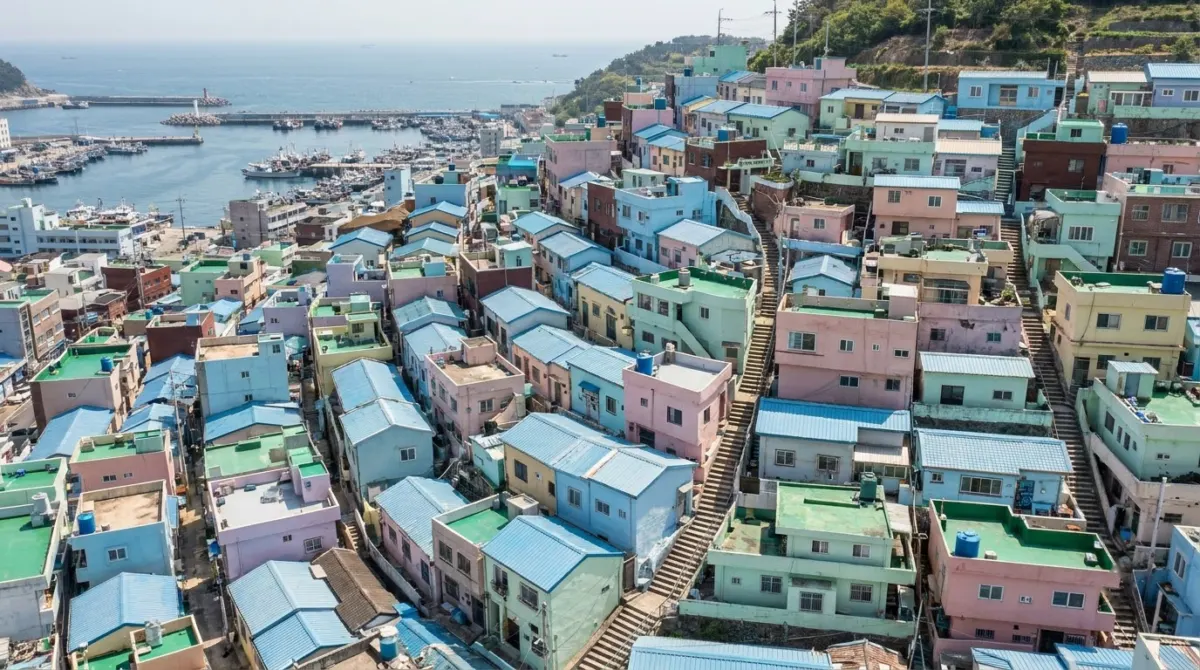
Busan, Korea’s second city, spreads along mountains and bays, so plan the day in two halves. In the morning, take a bus or taxi to Gamcheon Culture Village, a hillside neighborhood of brightly painted houses and murals. Pick up a map at the information center and follow the trail of art installations; remember that residents live in these houses.
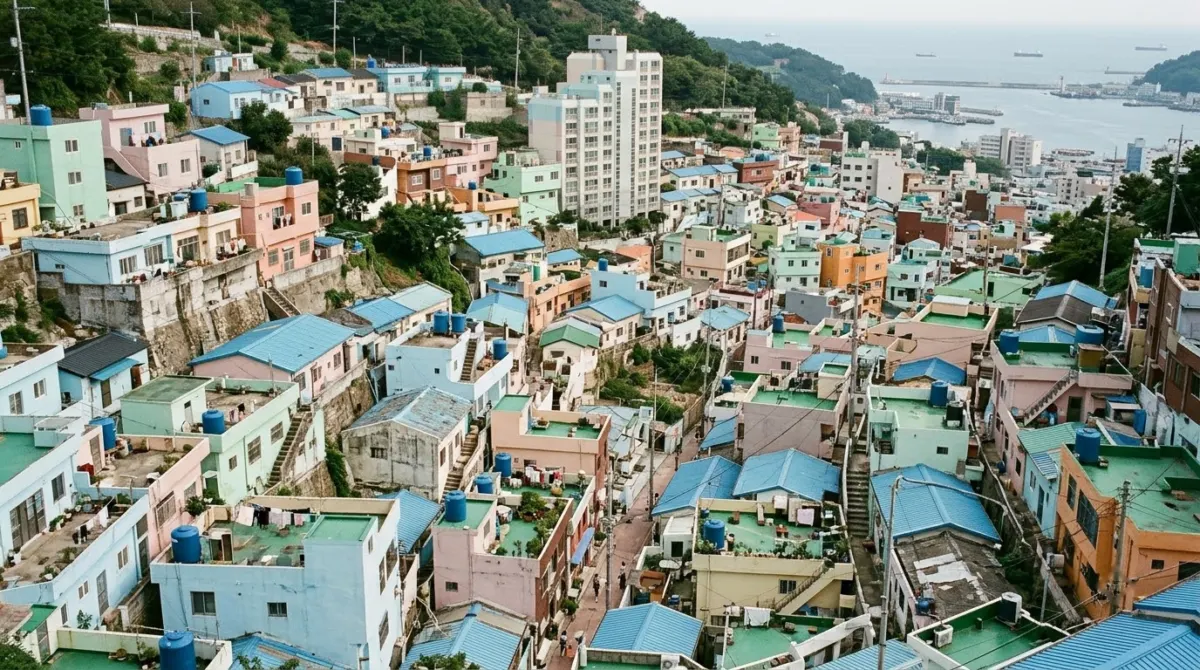
Head down to the waterfront at Nampo for Jagalchi Fish Market, one of Korea’s largest seafood markets; it closes on the first and third Tuesdays of the month. You can choose live seafood on the ground floor and have it prepared upstairs. Walk through BIFF Square and Gukje Market for street food such as ssiat hotteok, seed-filled sweet pancakes.
In the afternoon, cross the city east to Haedong Yonggungsa, a Buddhist temple built on rocks right above the sea, which is rare in Korea, where most temples sit in the mountains. Then take a taxi to Gwangalli Beach for the evening. The Gwangan Bridge lights up after dark, and the beachfront is lined with seafood restaurants and cafes. On Saturday evenings, weather permitting, a free drone light show of about 12 minutes runs over the bay; showtimes change with the season, so check the official Gwangalli drone show site or Busan’s city website.
Day 7: Haeundae, then back to Seoul or fly home from Busan
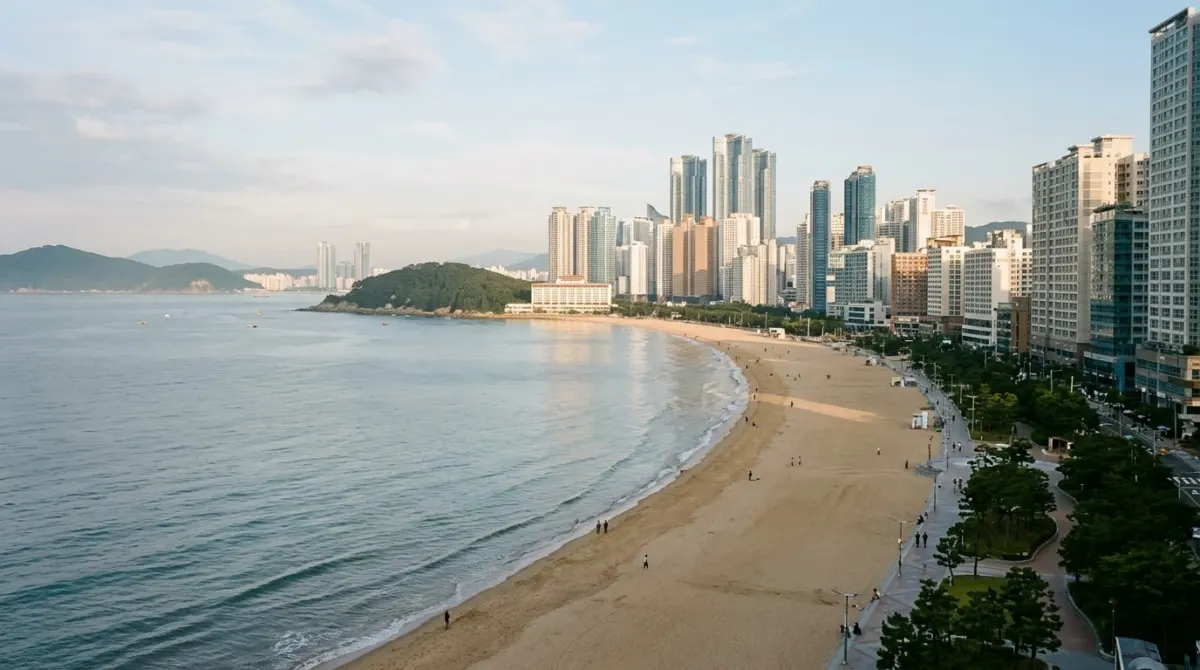
Spend a slow morning at Haeundae Beach, Busan’s most famous stretch of sand. Walk the Dongbaekseom Island trail at the western end for sea views, or ride the Haeundae Blueline Park sky capsules along the old coastal railroad toward Cheongsapo, a ride that is popular enough that booking ahead is wise.
How you finish depends on your flight. Most flights to the US leave from Incheon, so take a late-morning KTX from Busan Station to Seoul Station, about two and a half hours, and then the AREX to the airport. Allow at least five to six hours between leaving Busan and your departure time to be safe.
The alternative is to fly out of Gimhae International Airport in Busan, which has flights to other Asian hubs where you can connect to the US. This saves the trip back north and is worth comparing when you book your flights. Either way, use the morning to buy any final snacks or cosmetics, which are famously good value in Korea.
Seoul itinerary 7 days: the Seoul-only version
Many travelers prefer to base themselves in Seoul for the entire week and take day trips. It means unpacking once and is a good option in winter, when the coast is cold and windy. A Seoul itinerary for 7 days could look like this:
- Days 1 to 3: follow days one to three above: Myeongdong and Namsan, palaces and Bukchon, then Changdeokgung, Ikseon-dong, Seongsu and the Han River.
- Day 4: the DMZ tour.
- Day 5: Suwon Hwaseong Fortress in the morning, then the Lotte World Tower area in Jamsil in the afternoon.
- Day 6: a day trip to Nami Island and the Garden of Morning Calm, or to Gangneung on the east coast by KTX.
- Day 7: the National Museum of Korea, shopping in Myeongdong or Hongdae, and the AREX to Incheon.
If you want to see Busan without moving hotels, a day trip by KTX is possible, but with five hours of travel it is a long day. The two-base plan above is more comfortable.
Where to stay in Seoul and Busan
Seoul (four nights): Myeongdong and the area around Jung-gu are the most convenient for a first visit, close to the palaces, markets and airport buses. Jongno and Insadong put you within walking distance of Gyeongbokgung and Bukchon, and some guesthouses there are in traditional hanok houses. Hongdae is livelier and younger, with a direct AREX connection to Incheon. Staying near Seoul Station makes the KTX and the airport express easiest.
Busan (two nights): Haeundae is the most popular base, with the beach, plenty of restaurants and a subway line into the city. Seomyeon is central and well connected, six stops on subway Line 1 from the KTX at Busan Station. Gwangalli is smaller and has the bridge views at night.
Rooms in Seoul are often compact, and some older buildings lack elevators, so check the details if you are traveling with large luggage.
Getting around South Korea: KTX, subway and T-money
KTX: Korea’s high-speed trains connect Seoul with Gyeongju and Busan in a few hours. Book through Korail’s official website or app; seats can sell out on Fridays, Sundays and holidays, especially during Chuseok and Lunar New Year. The Korea Rail Pass for foreign visitors exists, but with only two or three long rides in this itinerary, compare its price with point-to-point tickets first.
Subway and buses: Seoul and Busan have large, clean and inexpensive subway networks with signs in English. Tap your T-money card when you enter and leave, and when you get off buses, to receive transfer discounts.
Taxis: taxis are cheap by US standards and useful in Gyeongju and hilly parts of Busan. Kakao T is the main taxi app, and it can be set up with foreign cards, though the setup sometimes fails, so keep cash or a card handy to pay drivers directly.
Navigation: use Naver Map or KakaoMap. Search in English or paste the Korean address of your destination.
Entry: the K-ETA exemption for US citizens currently runs through December 31, 2026. Without a K-ETA, you fill in an arrival card. For trips from January 2027 onward, the exemption ends unless Korea extends it again, so confirm the current rules on the official K-ETA site before you travel.
Best time for a one-week trip to South Korea
Spring (April to May): cherry blossoms usually bloom in Seoul in early April, slightly earlier in Busan and Gyeongju, which is especially beautiful in blossom season. The weather is mild, though fine dust from the west can make some days hazy.
Summer (June to August): hot and humid, with the monsoon, called jangma, usually arriving from late June to late July. Busan’s beaches are busiest in July and August. Plan indoor activities, such as museums and shopping, for the middle of the day.
Fall (September to November): the best time for many travelers. Skies are clear, temperatures are comfortable, and the leaves turn red and gold from mid-October in the north to early November in the south. Chuseok, the harvest holiday in September or October, fills trains and closes some shops.
Winter (December to February): cold and dry, often below freezing in Seoul. It is a good season for cheaper rooms, hot food and fewer crowds, but bring a warm coat. Lunar New Year also brings heavy train demand.
Seoul itinerary 5 days, or South Korea in five days
With only 5 days, choose between depth and variety.
Option one, Seoul only (5 days, 4 nights): follow days one to four above, then spend the last day at the National Museum of Korea or shopping before taking the AREX to the airport. This is the most relaxed version and is the best choice for a first-time visitor who wants to really get to know Seoul.
Option two, Seoul and Busan (5 days):
- Day 1: arrive in Seoul, Myeongdong and Namsan.
- Day 2: Gyeongbokgung, Bukchon, Insadong and Gwangjang Market.
- Day 3: Changdeokgung in the morning, Seongsu and the Han River in the afternoon.
- Day 4: KTX to Busan, about two and a half hours, then Gamcheon, Jagalchi and Gwangalli at night.
- Day 5: Haedong Yonggungsa and Haeundae, then fly out of Busan or take the KTX back.
The second option drops Gyeongju, the DMZ and Suwon. It is a fast pace, but because the KTX is so quick, it is manageable.
If you have more than a week in South Korea
An extra few days open up some of Korea’s best areas:
- Jeju Island (2 to 3 days): a volcanic island known for its coastal walks, lava tubes and tangerine farms. Flights from Seoul’s Gimpo Airport or from Busan take around an hour. Renting a car makes it much easier to explore.
- Jeonju (1 to 2 days): a city famous for its hanok village and its food, especially bibimbap. It is reached from Seoul by KTX in around one and a half to two hours.
- Andong (1 day): Hahoe Folk Village, a UNESCO World Heritage site, gives a glimpse of rural Korea; Andong is linked to Seoul by KTX.
- Seoraksan National Park (1 to 2 days): Korea’s most famous mountain park, best in fall, reached by bus from Seoul to Sokcho.
With ten days, the most balanced route is Seoul, Gyeongju, Busan and then a flight to Jeju before flying home through Seoul.
Map shows live availability and prices. We may earn a commission on bookings made through it, at no extra cost to you.
Adding another country? Japan is a short flight from Seoul or Busan; see our Japan itinerary for 7 days, or our China itinerary for a longer trip.
The short version
For a 7-day South Korea itinerary, spend four nights in Seoul: Myeongdong and N Seoul Tower on arrival, Gyeongbokgung and Bukchon on day two, Changdeokgung, Seongsu and the Han River on day three, and the DMZ or Suwon fortress on day four. Then take the KTX south to Gyeongju for the temples and royal tombs, and continue to Busan for two nights with Gamcheon, Jagalchi, the seaside temple and the beaches. Use a T-money card and Naver Map, book KTX seats ahead on weekends, and check the K-ETA site before you fly; US citizens are exempt through the end of 2026.
Check South Korea availability →
Frequently asked questions
Is 7 days enough for South Korea?
Yes, for a first trip focused on Seoul and Busan with a stop in Gyeongju. The KTX makes the country feel small. You will not have time for Jeju Island or the east coast mountains without cutting Seoul short.
Do US citizens need a K-ETA for South Korea in 2026?
South Korea has extended the K-ETA exemption for US citizens through December 31, 2026, so you can enter visa-free for a short tourist stay without one. You can still apply for a K-ETA voluntarily, for a fee, to skip the arrival card. Check the official K-ETA website for trips in 2027 and later.
How many days should I spend in Seoul?
Four days is a good amount for a first visit: one for the palaces and Bukchon, one for markets and modern Seoul, one for a day trip, and a buffer for arrival. With five days or more in Seoul alone, add Suwon, Namiseom Island or a DMZ tour.
Does Google Maps work in South Korea?
Only partly. Google Maps shows public transit routes, but walking and driving directions are limited. Most visitors use Naver Map or KakaoMap, which both have English menus and accurate subway and bus directions.
Is a credit card enough in Korea, or do I need cash?
Cards are accepted almost everywhere, including taxis and most market stalls in Seoul. Keep a small amount of won in cash for street food, older market vendors and topping up a T-money card, which usually requires cash.
When is the rainy season in South Korea?
The summer monsoon, called jangma, usually runs from late June to late July. Expect heavy downpours, high humidity and heat. Spring and fall are the most comfortable seasons for a one-week trip.
How long is the KTX from Seoul to Busan?
Direct KTX trains take roughly two and a half hours, a little less on the fastest services. If you stop in Gyeongju on the way, it is about 2 hours 10 minutes from Seoul to Gyeongju Station and around half an hour more to Busan.
Written and checked by
Triplarks Editorial
An editorial desk, not an invented persona: research, drafting and fact-checking are done by the same small team. Every number here carries the date it was read.