Quick answer
Settle the ZTL question first if you are driving, then pick the area: historic centre for convenience, Oltrarno for value and character, the station side for transport. Check for a lift, air conditioning and street noise before you compare prices.
On this page
- Best hotels in Florence: the five kinds of place to stay
- The ZTL, which decides more than the hotel does
- What the extra money buys
- Four things to check before booking
- Which area of the city centre to stay in
- Boutique, grand and the ground between
- When Florence fills up
- Staying outside Florence
- What to book before you arrive
- How many nights, and where they go
- Breakfast, and why it matters here
- Noise, and which streets to avoid
- Accessibility in a Renaissance city
- Where to stay by kind of trip
- What is actually worth paying for
- Booking in the shoulder season
- The short version
- Frequently asked questions
This is not a ranked list of hotels. A ranking that does not know your dates or your budget is close to useless, and Florence in particular has a structural problem that matters far more than any individual property: the ZTL, a camera-enforced traffic restriction covering the historic centre.
Some links below are affiliate links. We may earn a commission if you book through them, at no extra cost to you. We do not rank hotels, and any prices on the map come live from the booking sites.
What follows is what the different kinds of Florentine accommodation actually get you, what the extra money buys, and the four things to check before booking. For the neighbourhood question first, see where to stay in Florence, and for the countryside, where to stay in Tuscany.
Best hotels in Florence: the five kinds of place to stay
Palazzo conversions. Renaissance and later townhouses in the centre, turned into hotels. High ceilings, stone staircases, frescoed ceilings in the better rooms, and frequently small bathrooms fitted into corners.
Modern hotels. Mostly near the station and on the edge of the centre. Lifts, air conditioning and reliable rooms, with none of the character.
Residenze and guesthouses. A handful of rooms inside an apartment building, often on an upper floor. The best value in central Florence, and the format most likely to involve stairs.
Apartments. Widespread and sensible for three nights or more, particularly in the Oltrarno.
Villas in the hills. Above the city towards Fiesole, with gardens, pools and views. Beautiful, and dependent on a car or taxi for everything.
The ZTL, which decides more than the hotel does
Florence’s historic centre is a limited traffic zone enforced by cameras. Driving into it without authorisation produces an automatic fine, often months later, and once per camera crossed.
If you are arriving by car, this is the single most important thing to settle before booking. Hotels inside the zone can usually register your plate for access, but it must be arranged in advance and it does not always cover parking.
The simplest answer is not to bring a car into Florence at all. The city is walkable, the hills are the only reason to drive, and garages on the edge of the centre are straightforward.
What the extra money buys
At the lower end you are buying position: a small room, often up stairs, with a shower cubicle and breakfast as an extra.
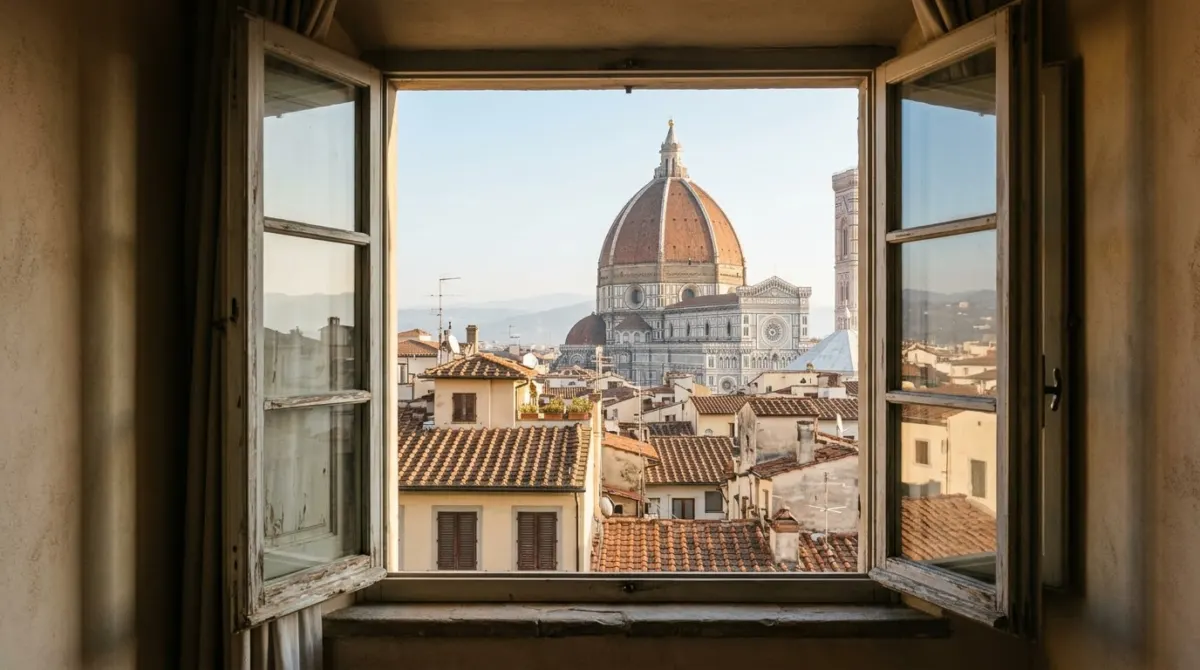
In the middle you get space, a lift more often than not, air conditioning, and breakfast included.
At the upper end you are buying the building and the view. A room with the Duomo in the window costs a substantial premium over an identical room facing a courtyard.
The view is the most overpriced variable in Florence and the one people most often regret paying for, since you will be out all day.
Four things to check before booking
A lift. Many central buildings have none, or one that starts on the first floor. Florentine staircases are stone and steep.
Air conditioning. Essential from June to September, when the city is genuinely hot, and not universal in older conversions.
Noise. The centre is dense and the streets are stone; a room over a bar is loud until two. Ask for a courtyard-facing room.
ZTL and parking, if you are driving. See above.
Map shows live availability and prices. We may earn a commission on bookings made through it, at no extra cost to you.
Which area of the city centre to stay in
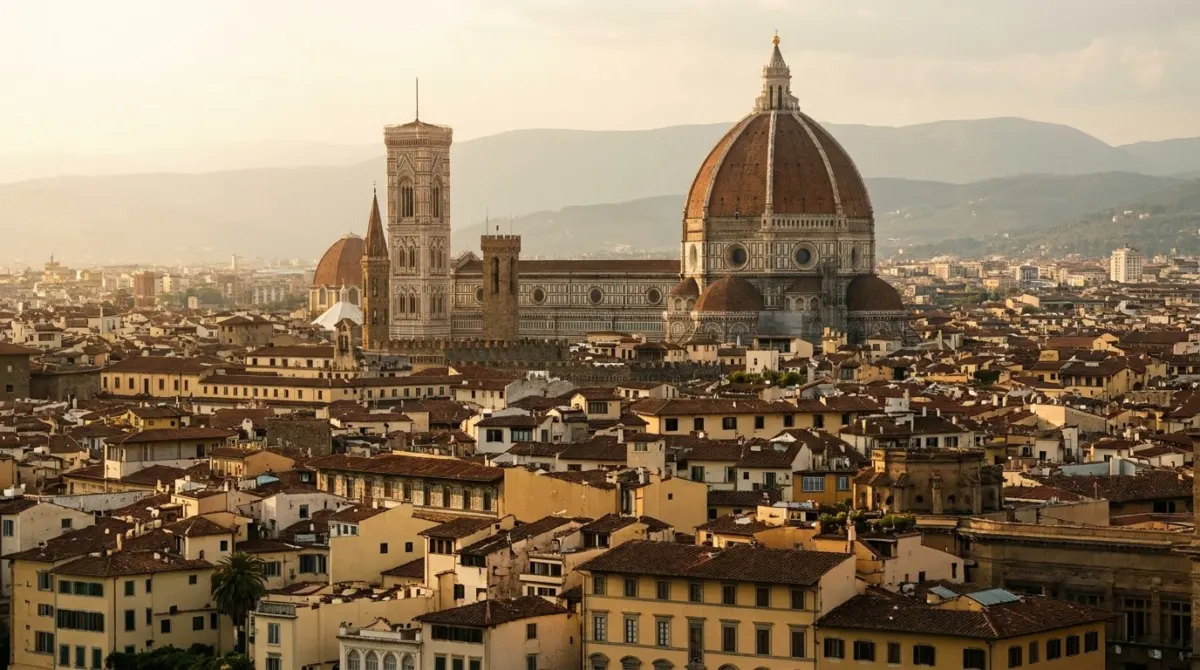
The historic centre, between the Duomo and the Uffizi, puts everything on foot and costs the most.
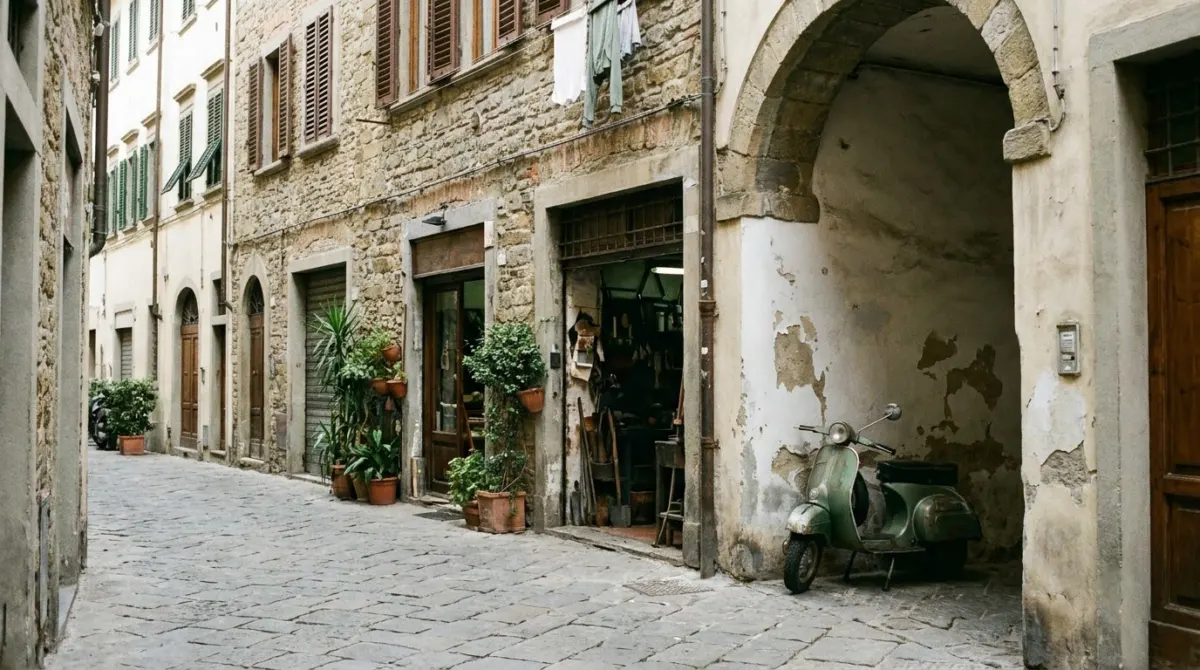
The Oltrarno, across the river, is the artisan quarter: workshops, trattorias and the Pitti Palace, five minutes from the centre and noticeably cheaper.
Santa Maria Novella, around the station, is convenient for trains and the least pleasant to walk around at night.
San Niccolò and the slopes below Piazzale Michelangelo are quiet and residential, ten minutes’ walk from the Ponte Vecchio.
Boutique, grand and the ground between
Florence — Firenze on every sign and timetable you will read once you arrive — has an unusually top-heavy market for a city of its size, and the categories do not mean quite what they do elsewhere.
A boutique hotel here is usually a converted floor or two of a Renaissance palazzo: ten to thirty rooms, frescoed ceilings in the better ones, a lift that was added in the 1960s, and no public space to speak of. That is the characteristic Florentine room and the reason people come back.
The grand hotels sit along the Arno and around Santa Maria Novella, in buildings designed to be hotels, with the lifts, the lobbies and the air conditioning that implies.
Between the two are the residenze d’epoca — historic residences, often a few rooms in a family building, with a breakfast room and no reception after nine in the evening. They are the best value in the city centre and the most likely to involve stairs.
The thing all three share is that the building decides the experience far more than the category does, which is why the four checks earlier in this guide matter more here than the label on the listing.
When Florence fills up
The city has a long season and two clear peaks.
April to June and September to October are the busiest and the most pleasant, and accommodation tightens months ahead.
July and August are hot and busy, with many Italians away and some smaller restaurants closed in August.
November to March is the quiet season, with noticeably lower rates and the museums at their most civilised.
Any weekend with a major event — a fashion week, a trade fair at the Fortezza — fills the city at short notice.
Staying outside Florence
Two situations where it makes sense.
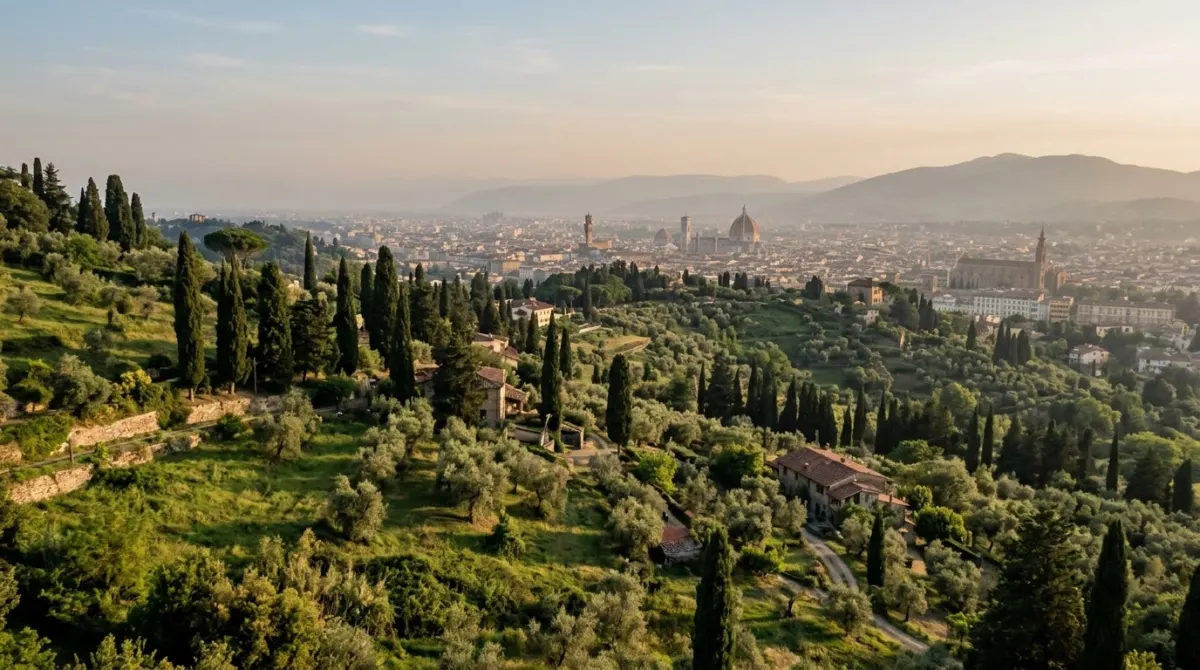
If you are touring Tuscany by car, basing in the hills or in a town such as Fiesole avoids the ZTL entirely and gives you parking.
If prices are the problem, Prato and Pistoia are twenty to forty minutes by train and considerably cheaper, and the trains run frequently.
What you lose in both cases is the evening, which in Florence is when the day-trip crowds leave and the centre becomes pleasant.
What to book before you arrive
- The Uffizi and the Accademia, both with timed entry; the queues without a booking are long.
- The Duomo complex, including the dome climb, which has a limited number of slots.
- Accommodation, months ahead for spring and autumn.
- ZTL authorisation with your hotel, if you are driving.
How many nights, and where they go
Three nights is the sensible minimum for Florence: the Uffizi, the Accademia, the Duomo complex and the Oltrarno.
A fourth night adds a day trip — Siena, San Gimignano, Lucca or Pisa are all under two hours by train or bus. A fifth and sixth turn the city into a base for Tuscany, which is the better way to see the region than moving every two nights.
If you are only passing through, note that Florence works as a day trip from Bologna or Siena and does not work as a day trip from Rome, which is ninety minutes each way plus the queues.
Breakfast, and why it matters here
Italian hotel breakfast is lighter than German or British: pastries, coffee, fruit, sometimes cold cuts and eggs at the better places.
That has a practical consequence in Florence, where a cappuccino and a pastry standing at a bar costs a fraction of a hotel breakfast and is what locals actually do. If a room rate includes a large breakfast charge, it is often worth taking the room without it.
The exception is a hotel with a roof terrace, where breakfast is partly the view.
Noise, and which streets to avoid
Florence’s centre is dense, the streets are narrow and stone, and sound carries.
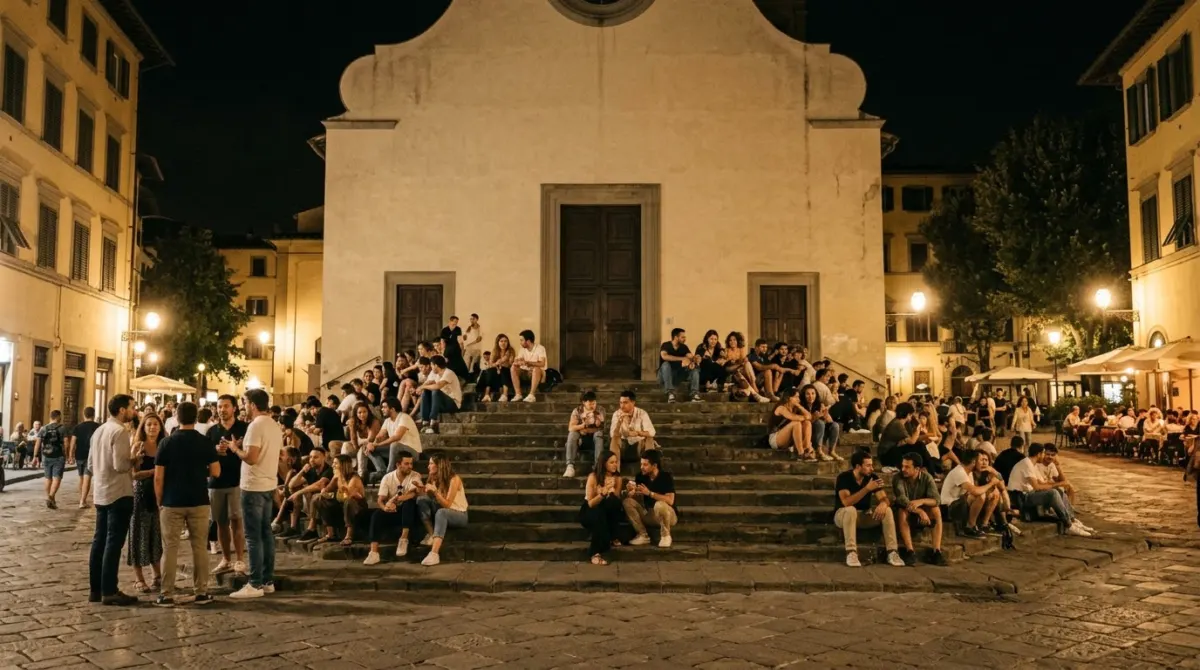
The areas to be careful about are around Piazza Santo Spirito and Santa Croce, which have late nightlife, and the streets immediately around the station.
The fix is the same everywhere: ask for a courtyard-facing room, or take a property one street back from the busy run. Double glazing is not universal in historic buildings.
Accessibility in a Renaissance city
Florence is flat, which helps, and its buildings are old, which does not.
Palazzo conversions frequently have steps at the entrance, lifts that start on the first floor, or no lift at all. Bathrooms fitted into historic rooms are often small.
If step-free access matters, look at the modern hotels near the station and on the edge of the centre, and confirm specifics with the property rather than relying on a filter.
Where to stay by kind of trip
First visit, three nights, no car: the historic centre or the Oltrarno, both on foot.
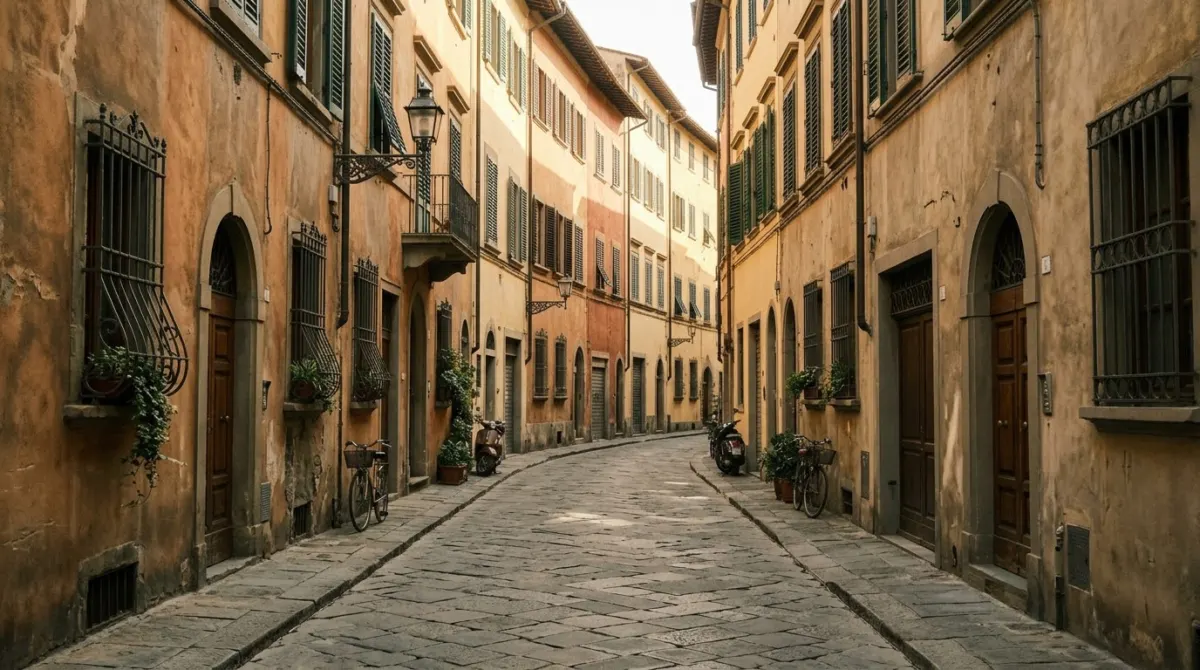
Touring Tuscany by car: outside the ZTL, in the hills or in a town with parking, and take the bus or a taxi into the centre.
With family: an apartment in the Oltrarno or San Niccolo, where streets are quieter and rooms larger.
On a budget: a residenza on an upper floor in the centre, or a hotel in Prato or Pistoia with a twenty-minute train.
For a long stay: an apartment, because central Florence is expensive to eat in three times a day.
What is actually worth paying for
Three things, in order.
A lift, if you have luggage or stairs are difficult, because Florentine staircases are stone and steep.
Air conditioning, from June to September, when the city holds heat between its buildings.
A quiet room, which usually means facing a courtyard rather than a street.
What is not worth paying for, in most cases, is the Duomo view: you will be out all day, and the same money buys a considerably better room one street back.
Booking in the shoulder season
Florence rewards travelling in November, January or February more than almost any other Italian city.
Rates fall sharply, the Uffizi and the Accademia become civilised rather than crowded, and the city is still fully open because people live and work in the centre.
What you lose is the long evening and the warm stone. What you gain is the version of Florence that existed before mass tourism, for a fraction of the price.
The short version
Settle the ZTL question first if you are driving, then pick the area: historic centre for convenience, Oltrarno for value and character, station for transport, hills for a car-based Tuscan trip. Check for a lift, air conditioning and street noise before you compare prices. Book the Uffizi, the Accademia and the dome climb before you arrive, and do not pay a premium for a Duomo view you will not be in the room to see.
Frequently asked questions
What is the best area to stay in Florence?
The historic centre between the Duomo and the Uffizi if you want everything on foot and will pay for it. The Oltrarno across the river is five minutes away, cheaper and more characterful. Santa Maria Novella is convenient for trains and the least pleasant at night.
What is the ZTL in Florence?
A camera-enforced limited traffic zone covering the historic centre. Driving in without authorisation produces automatic fines, often months later and once per camera. If you are arriving by car, arrange access with your hotel in advance or do not bring the car in at all.
Do Florence hotels have air conditioning?
Most do, but not all — older palazzo conversions sometimes do not. It matters from June to September, when the city is genuinely hot, so check rather than assume.
Is a room with a view of the Duomo worth it?
It carries a substantial premium over an identical room facing a courtyard, and you will be out all day. It is the most overpriced variable in Florence and the one people most often regret paying for.
When should I book accommodation in Florence?
Months ahead for April to June and September to October, which are the peak months. November to March is noticeably cheaper and quieter, and the museums are far more civilised.
Is it cheaper to stay outside Florence?
Yes. Prato and Pistoia are twenty to forty minutes by train and much cheaper, and basing in the hills avoids the ZTL if you are driving. What you lose is the evening, when the day visitors leave and the centre is at its best.
Keep planning Italy
- Best Hotels in Taormina: The Town Is Up, the Sea Is Down
- Best Hotels on the Amalfi Coast: Pick the Town First
- Best Hotels in Positano: Count the Steps Before the Stars
- Where to Stay in Verona: Inside the River Loop, or Outside It
- Where to Stay in Tuscany: You Are Choosing a Driving Radius
- Where to Stay in Puglia: Pick the Building, Not the Town
- Where to Stay in Cinque Terre: Ask About the Stairs First
- Where to Stay in Taormina: Up in the Town, or Down at the Beach?
Written and checked by
Triplarks Editorial
An editorial desk, not an invented persona: research, drafting and fact-checking are done by the same small team. Every number here carries the date it was read.