
Florence is small enough that figuring out where to stay looks easy and then is not. The historic center is barely a kilometer across, everything is walkable, and yet the difference between two hotels four streets apart is the difference between sleeping and not.
Some links below are affiliate links. We may earn a commission if you book through them, at no extra cost to you. We do not rank hotels, and any prices on the map come live from the booking sites.
Quick answer: where to stay in Florence. The centro storico between the Duomo and the Arno. It is the most expensive area, and on a two or three night visit it is worth it. Santa Croce if you are here for food, Santo Spirito in the Oltrarno for the local side.
The real decisions are three: which side of the Arno, how close to the Duomo, and how near the train station. Everything else follows from those.
Areas, transport and access details checked 7 September 2026. Florence hotel prices swing sharply between high summer and winter, so treat any figure you see elsewhere as a starting point.
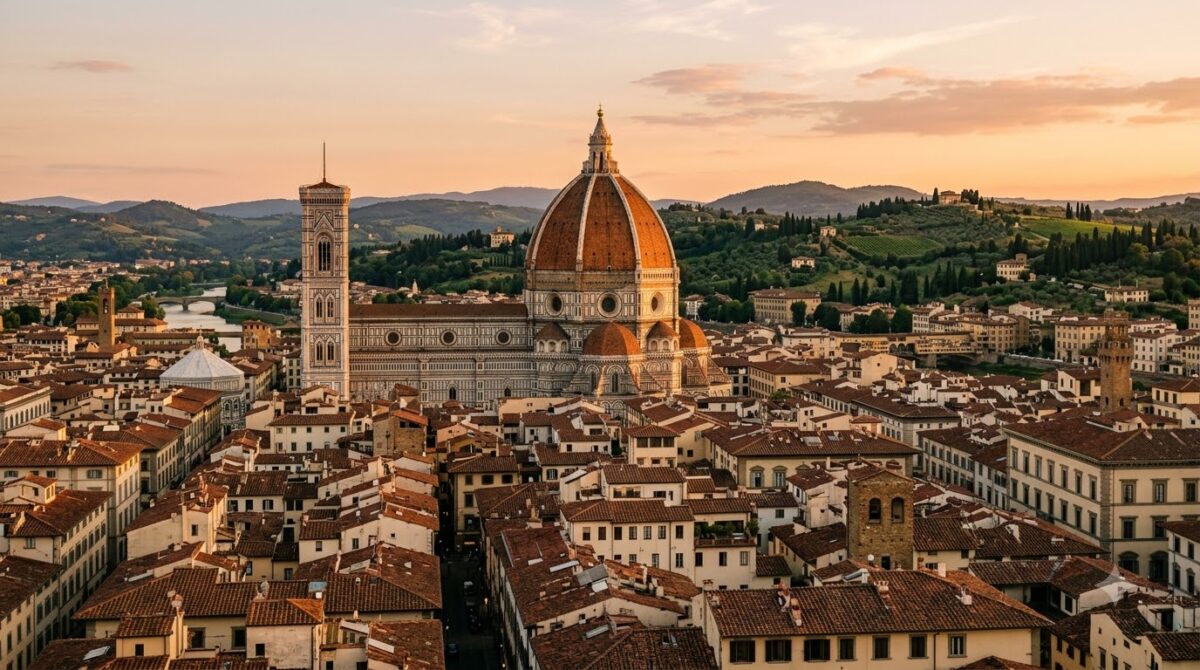
The best areas to stay in Florence, at a glance
| If you are | Best area to stay | Walk to Duomo |
|---|---|---|
| A first time visitor | Duomo and the historic center | 0–5 min |
| Arriving or leaving by train | Santa Maria Novella | 10 min |
| Here for food and wine | Santa Croce or San Lorenzo | 10 min |
| Wanting local rather than touristy | Oltrarno and Santo Spirito | 15 min |
| Travelling with children | Santa Maria Novella or Oltrarno | 10–15 min |
| Booking a luxury hotel | Along the Arno, or Oltrarno | 5–15 min |
| Driving, or day-tripping into Tuscany | Outside of Florence, near a tram stop | Tram |
One answer with no caveats: the centro storico between the Duomo and the Arno. It is the most expensive area and on a two or three night visit to Florence it is worth it, because you will walk out of the door into everything you came for.
Getting around Florence: understand the map first
Florence is laid out simply once you see it, and the shape explains the prices.
- The Duomo sits in the middle of the historic center, and the cathedral dome is visible from almost everywhere, which makes navigation easy.
- The Arno river runs east to west below it. North of the river is the main center; south of it is the Oltrarno, which literally means beyond the Arno.
- Santa Maria Novella station is at the northwest corner of the center, ten minutes from the Duomo on foot.
- Piazza della Signoria and the Uffizi sit between the Duomo and the river.
- The whole of that is about a kilometer across. Nothing in central Florence is more than a twenty minute walk from anything else.
This is why Florence is different from Rome. In Rome, location buys you time. In Florence it buys you atmosphere and quiet, because you were going to walk everywhere anyway.
Duomo and the centro storico: the middle of it
The area immediately around the cathedral, running down to Piazza della Signoria, is the most central place to stay in Florence and the most expensive.
- You are inside the sights. The Duomo complex, the baptistery, the bell tower and the Museo dell’Opera del Duomo are all on your doorstep, and the Uffizi is five minutes away.
- Every walk starts at zero. On a two night trip that matters more than the price difference.
- Best hotels in Florence cluster here and along the Arno, in converted palazzi with small rooms and good bones.
- It empties in the evening, because most of the buildings are hotels and shops rather than homes.
The trade-offs: restaurants within two streets of the Duomo are the weakest in the city, prices are the highest, and the bells are loud and early. If your room faces the cathedral you will hear them.
Map shows live availability and prices. We may earn a commission on bookings made through it, at no extra cost to you.
Santa Maria Novella: near the train station, and better than it sounds
The area around Santa Maria Novella church and the station of the same name has a reputation problem it mostly does not deserve.
- Easy access to the train station, which matters more in Florence than in most cities because it is the hub for Tuscany day trips, and for Rome and Venice.
- Ten minutes on foot to the Duomo, which is nothing.
- Noticeably cheaper than the centro storico for a comparable room, and rooms tend to be larger.
- The church itself has one of the finest marble facades in Italy and a quiet cloister most visitors skip.
The honest caveat: the streets immediately north and west of the station are the least appealing in central Florence, scruffier and busier with traffic. South and east of the station is fine and that is where to book. As with any station district, check exactly which street a property is on rather than trusting the area name.
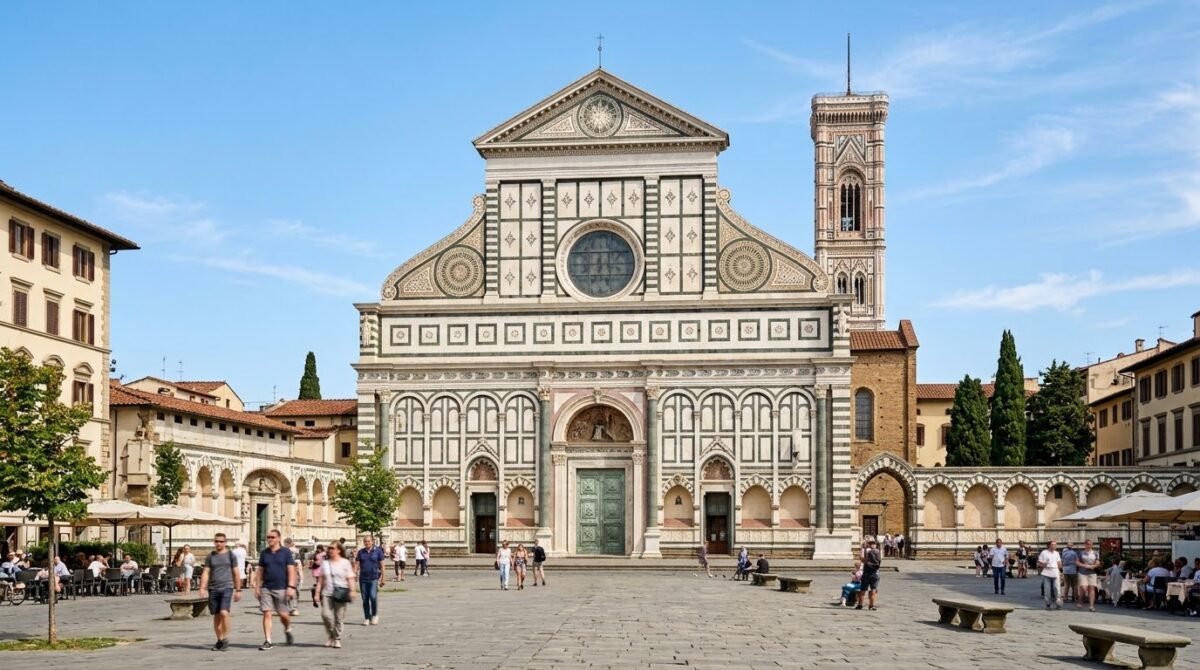
San Lorenzo: markets and value
San Lorenzo sits between the station and the Duomo, built around the basilica, the Medici Chapels and the two markets.
- The Mercato Centrale is the best food building in Florence: a produce market downstairs and a food hall upstairs, open late.
- The street market around it sells leather and souvenirs and is worth walking through once.
- Prices are moderate and the area is central without being in the middle of the crowd.
- The Medici Chapels and the Laurentian Library are here and both are quiet compared with the Uffizi.
It is a practical, slightly workaday area, and it is one of the best value places to stay in central Florence.
Santa Croce: eating and evenings
Santa Croce is the eastern part of the center, around the enormous Franciscan basilica where Michelangelo and Galileo are buried.
- The best concentration of restaurants and wine bars north of the river, aimed at people who live in Florence as well as visitors.
- Ten minutes to the Duomo, and quieter than the middle.
- Sant’Ambrogio market at its eastern edge is the local alternative to Mercato Centrale.
- More residential than the centro storico, so it feels lived in.
Watch the streets around the basilica square itself, which get loud at night with bars aimed at students and visitors.
Oltrarno and Santo Spirito: the local side
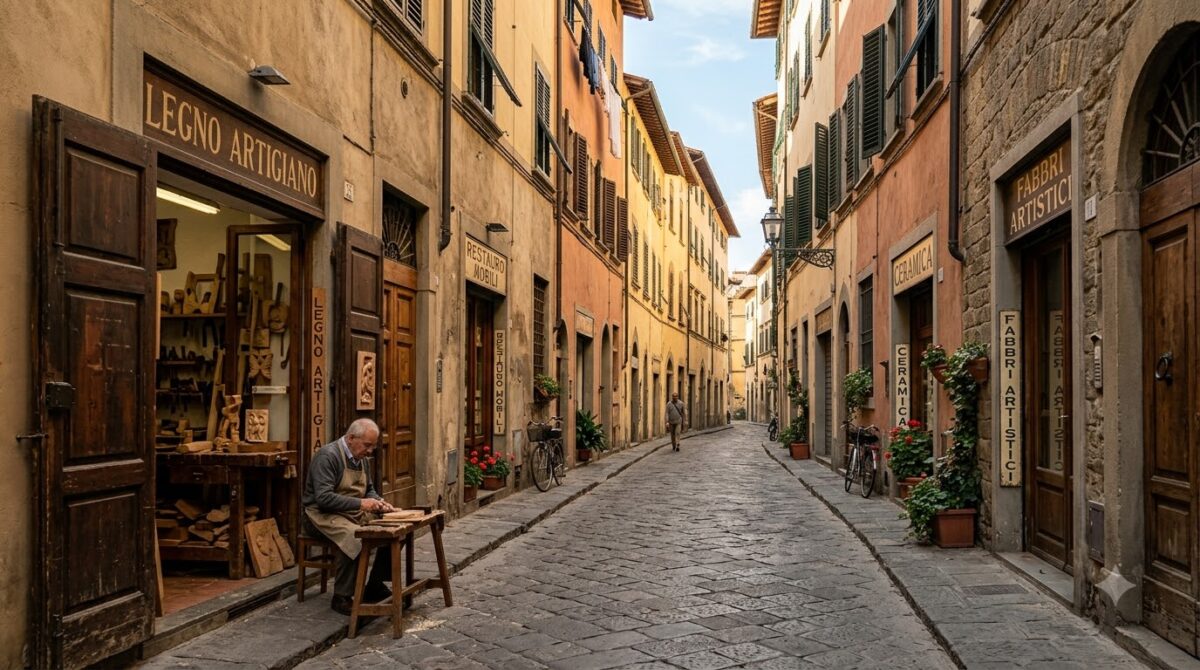
Cross any bridge south and Florence changes. The Oltrarno is where the artisan workshops still are — gilders, leather workers, framers — along with the Pitti Palace, the Boboli Gardens and Piazza Santo Spirito.
- The most atmospheric area to stay in Florence for anyone who has been before, and increasingly for first visits too.
- Genuinely residential. Workshops, bakeries, and squares where the tables are full of locals in the evening.
- Ten to fifteen minutes to the Duomo across Ponte Vecchio or Ponte Santa Trinita.
- Cheaper than the centro storico, though the gap has narrowed as the area has become fashionable.
- Several of the best luxury hotels are here too, in large villas and palazzi with gardens, which the compressed center cannot offer.
The trade-off: you cross the river at least twice a day, and Piazza Santo Spirito is lively at night in a way that carries.
Where not to stay in Florence
- Immediately north and west of Santa Maria Novella station. Traffic, and the least pleasant streets in the center.
- Directly on Piazza del Duomo or Piazza della Signoria, unless you have checked the room faces away. Crowds from eight in the morning and bells before that.
- Anywhere outside of Florence chosen only on price, unless it is on the tram line. Florence has no metro and the buses are slow.
- Any hotel with parking you plan to use. The historic center is a ZTL with camera enforcement, and each unauthorised entry is a separate automatic fine.
The ZTL, and why you should not drive here
This deserves its own section because it costs visitors more money than anything else in Florence.
The whole historic center is a Zona a Traffico Limitato, closed to non-resident vehicles and enforced by automatic cameras. There is no barrier and nobody stops you. A camera reads the plate and the fine arrives at your home address months later through the rental company, which adds its own administration charge.
- Each separate entry is a separate fine. Circling to find a hotel can generate several in ten minutes.
- If your hotel has parking, it must register your plate in advance. Get that confirmed in writing before you drive in.
- Better: do not have a car in Florence at all. Collect it on the day you leave, from a depot outside the center or at the airport.
- For Tuscany day trips, the train covers Pisa, Lucca, Siena and Arezzo, and buses reach San Gimignano.
Best hotels in Florence: what each kind of building gives you
- Converted palazzi are the norm in the center. High ceilings, stone stairs, small bathrooms, and lifts that are rare and tiny where they exist.
- Ask which floor and whether there is a lift. Four flights with luggage is common and rarely advertised.
- Ask about the aspect. Interior courtyard rooms are dramatically quieter, and hotels do not volunteer which you are getting.
- Apartments are good value for four nights or more, particularly in Oltrarno and San Lorenzo. Check for a licence number in the listing.
- Air conditioning is essential from June to September. Florence sits in a river basin and holds heat badly.
- A roof terrace is the upgrade worth paying for, more than a room size or a star. Evening drinks with the dome in front of you is the thing people remember.
How many nights do you need in Florence?
Two full days covers the essentials; three is comfortable and allows a Tuscany day trip. Our guide to how many days in Florence breaks down what each day covers.
Book the Uffizi, the Accademia and the Duomo dome climb before you fly. All three use timed entry, and the dome climb cannot be bought on the door at all.
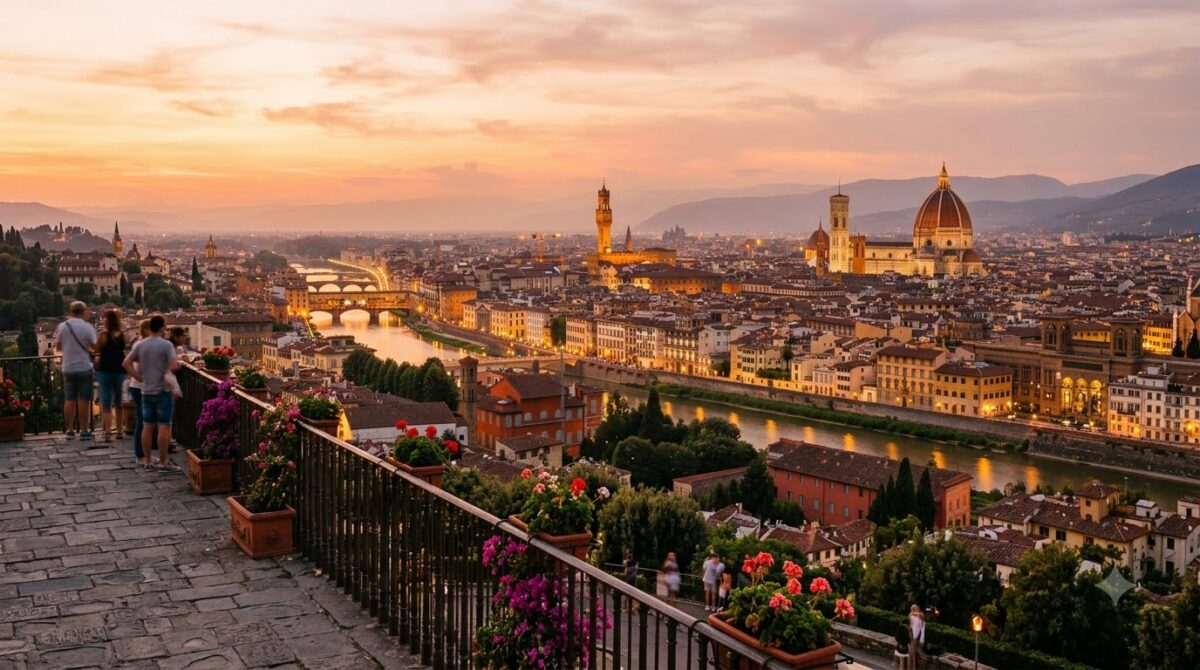
Florence as part of a longer trip to Italy
Most people arrive in Florence by train from Rome or Venice, which is why the station district matters more here than in most cities.
- Rome to Florence is about 1 hour 30 on the fast train.
- Florence to Venice is about 2 hours.
- Florence to Bologna is 35 minutes, which makes Bologna the easiest food day trip in Italy.
Our 10 day Italy itinerary puts Florence in the middle of the standard first trip, and where to stay in Rome covers the same neighborhood question for the previous stop.
The safest parts of Florence to stay in
Florence is one of the safer cities in Italy and violent crime against visitors is rare. The realistic risk is pickpocketing, and it is concentrated in predictable places.
- Safest-feeling areas: the centro storico around the Duomo and Palazzo Vecchio, Santa Croce, San Lorenzo and most of the Oltrarno. All are well lit and busy into the evening.
- Watch your bag in the queues at the Galleria dell’Accademia and the Uffizi, on Ponte Vecchio, and around the San Lorenzo street market. Those four are where nearly all reported thefts happen.
- The station area at night is the one place to be more deliberate. It is not dangerous, but the streets north and west of Santa Maria Novella are quiet and scruffy after dark.
- The Cascine park west of the center is pleasant by day and not somewhere to walk at night.
For a first visit to Florence with any concern about this, book between the Duomo and Santa Croce. Central, busy, and you never have to walk anywhere you would rather not.
Budget-friendly accommodation in Florence
Florence is expensive for its size, because the historic center is small and demand is constant. But the cheap options are real and they are in specific places.
- San Lorenzo has the best concentration of budget hotels and bed and breakfast rooms that are still ten minutes from the Duomo.
- The Oltrarno beyond Santo Spirito, heading towards Porta Romana, drops in price quickly while staying walkable.
- South and east of Santa Maria Novella station is the cheapest genuinely central option.
- Bed and breakfast rooms in converted apartments are common here and are often better value than a hotel of the same price, though rarely with a lift.
- Hostels cluster near the station and in the Oltrarno, and several have private rooms.
The saving that costs you nothing: book a room facing an interior courtyard rather than a view. In Florence a view room carries a large premium and you will be outside all day anyway.
The saving that costs you a lot: booking outside of Florence to save money. Without a car, and with the ZTL making a car a liability, an outlying hotel means a bus into the center twice a day. Only do it if the property is on the tram line to the station.
The best neighborhoods in Florence for families
Florence is hard work with small children — stone streets, no lift, small rooms, and queues in the heat — and the neighborhood choice can fix most of that.
- Santa Maria Novella is the practical family answer. Buildings are newer, rooms and apartments are larger, lifts are more common, and the station is close for Tuscany day trips.
- The Oltrarno works well for a longer stay: apartments with space, the Boboli Gardens for running around, and quieter streets in the evening.
- Santa Croce has a large open square that children can actually use, which the rest of the center does not.
- Avoid the immediate Duomo area with a pushchair. The crowds are constant and the pavements are narrow.
Two practical family notes: ask specifically about a lift rather than assuming, and take the Boboli Gardens or a hillside walk seriously as a day-half rather than an afterthought. Florence rewards a slower pace with children more than most Italian cities.
Where to stay in Florence by hotel type
The building matters as much as the address here, because almost everything central is a conversion.
Boutique hotels in converted palazzi
This is the characteristic Florence stay. Fifteen to forty rooms inside a Renaissance or nineteenth-century palazzo, frescoed ceilings in the public rooms, a small bar, and often a terrace with a view of the cathedral dome. They cluster around Via de’ Tornabuoni, near Santa Maria Novella and along the Arno.
What you are buying is architecture and location. What you are giving up is room size, reliable lifts and predictable bathrooms.
Grand hotels and luxury
The riverside and Via de’ Tornabuoni hold the grand end, including properties run by international luxury groups such as Rocco Forte. The real luxury alternative is outside the walls: villa hotels in the hills like Belmond Villa San Michele above Fiesole and Villa La Massa on the Arno east of the city, which trade walkability for gardens, pools and views over Florence.
That trade is the whole decision at this level. A villa in the hills is a beautiful stay and a twenty minute shuttle from the Uffizi. On two nights, stay in town. On five, the villa starts to make sense.
Residenze d’epoca and apartments
A residenza d’epoca is a historic residence licensed as accommodation, usually a handful of rooms in a private palazzo, and properties like Palazzo della Stufa sit in this category. They are the middle ground between a hotel and an apartment, and they are unusually good value in Florence.
Full apartments are widely available and are the right answer for four nights or more, particularly in the Oltrarno and San Lorenzo.
Small design hotels
A newer category, mostly in the centro storico and near the station: twenty rooms, contemporary interiors inside an old shell, a rooftop bar. Properties such as Hotel Number Nine and The Place Firenze sit here. They solve the lift problem that older conversions have.
What is within walking distance of each area
Because Florence is compact, this table is less about time and more about what you step out into.
| From | Duomo | Uffizi | Accademia | Station | Ponte Vecchio |
|---|---|---|---|---|---|
| Centro storico | 2 min | 5 min | 10 min | 10 min | 5 min |
| Santa Maria Novella | 10 min | 12 min | 15 min | 3 min | 12 min |
| San Lorenzo | 5 min | 10 min | 5 min | 7 min | 12 min |
| Santa Croce | 10 min | 8 min | 12 min | 18 min | 10 min |
| Oltrarno | 15 min | 10 min | 20 min | 20 min | 5 min |
The Galleria dell’Accademia is the outlier. It sits north of the Duomo, away from everything else, which is why staying in San Lorenzo is more convenient than it looks on a map.
What each area is like to eat in
Where you sleep in Florence shapes dinner more than lunch, because you will be near the sights at midday whatever you do.
- Centro storico — the weakest eating in the city within two streets of the Duomo. Walk further or eat elsewhere.
- Santa Croce — the strongest north of the river, with trattorias and wine bars aimed at residents.
- San Lorenzo — Mercato Centrale upstairs is open late and is the easiest good meal in Florence.
- Oltrarno and Santo Spirito — the best overall, and where people who live in Florence go out.
- Sant’Ambrogio, east of Santa Croce — a proper local market with a lunch counter inside.
One habit: a restaurant with a menu in six languages and someone outside inviting you in is a restaurant to walk past. That rule works everywhere in Italy and it works hardest here.
Choosing where to stay in Florence: a short guide
If you are wondering where to stay and the area names still blur together, this is the decision in four questions.
- How many nights? Two or three, and you want to stay in the centro storico. Four or more, and Oltrarno or San Lorenzo give you more room for the money.
- Are you arriving by train? If Florence sits between Rome and Venice on your route, staying close to the train station saves two awkward walks with luggage.
- Do you want to be among residents or among sights? Oltrarno for the first, the middle of Florence for the second.
- Then pick the hotel, filtering on floor, lift and aspect.
Most visitors to Florence are really answering the first two questions without realising it. Once those are settled, the list of best areas in Florence shrinks to two or three, and the rest is detail.
Close to the train station, or away from it?
This is a bigger question in Florence than in most Italian cities, because Santa Maria Novella train station is both the arrival point and the launch pad for every Tuscany day trip.
Reasons to stay close to the train station:
- You are doing day trips to Siena, Lucca, Pisa or Bologna and will use it repeatedly.
- You are arriving late or leaving early and do not want to drag a case across cobbles.
- You want affordable hotels that are still walkable to the Florence Cathedral.
Reasons to stay away from the train station:
- The streets immediately around it are the least attractive part of the center.
- You are here for two nights and will only use the station twice.
- You would rather step out into somewhere you want to be.
The compromise most people should take: stay in San Lorenzo. It is seven minutes from Santa Maria Novella train station and five from the Duomo, which is the best of both, and it has the widest range of types of hotels at the middle of the market.
Stay in the centro storico, Santa Croce or Santa Maria Novella?
These three are the realistic shortlist for most first trips, so here they are directly against each other.
- Stay in the centro storico if the trip is short and you want zero walking to the major sights. It is the most expensive and the least residential, and it empties at night.
- Stay in Santa Croce if you care about places to eat and drink more than about being two minutes from the Duomo. It is the best evening neighborhood north of the river and it is genuinely lived in.
- Stay in Santa Maria Novella if you are arriving by train, travelling with family, or want the same walkability for less. Pick a street south or east of the station rather than north of it.
Any of the three is a great place to stay. The mistake is not choosing between them; it is booking a room without checking the floor, the lift and whether the window faces a courtyard.
High-end hotels and the villa alternative
At the top of the market Florence splits in two, and the split matters more than the brand.
- High-end hotels in the city sit along the Arno and around Via de’ Tornabuoni, including the grand old riverside names such as the St Regis Florence and its neighbours. You get the address, the architecture and a walk to everything.
- Villa hotels in the hills above the city trade that for gardens, a pool and a view back over Florence. They are beautiful and they put you fifteen to twenty-five minutes from the center by shuttle.
On a short trip, stay in town. On five nights or more, or in July and August when the city holds heat badly, the villa becomes the better stay.
What a day in Florence actually looks like
It is worth picturing the shape of a day here, because it explains why the neighborhood choice matters less than people expect and the building matters more.
You will be out from about eight thirty, since the Florence Cathedral complex and the Uffizi are both best early. Exploring Florence on foot takes you through the same three or four streets repeatedly, because the center is that small. You will come back to the room in the afternoon when it is hot, go out again at seven, and eat at nine.
That pattern means two things. First, an air-conditioned room you can retreat to in the afternoon is worth more than a slightly better location. Second, being near places to eat and drink in the evening matters more than being near the museums, because you will walk to the museums whatever happens.
People living in Florence eat late and locally. Following that rhythm is the single easiest way to have a better trip, and it is another argument for Santa Croce or the Oltrarno if you are choosing between similar rooms.
Florence versus staying in Tuscany
A question worth answering because a lot of people arrive intending to do both and end up doing neither well.
Stay in Florence and day trip out if you have four nights or fewer, or no car. The train reaches Pisa, Lucca, Siena and Arezzo directly, and buses run to San Gimignano. You keep the city in the evenings, which is when Florence is at its best.
Stay in the Tuscan countryside if you have a week, a car, and the countryside is the reason you came. Val d Orcia and Chianti are an hour or so south and are a different holiday: an agriturismo, a pool, and villages rather than museums.
Splitting the trip works well on seven nights or more: three in Florence, four in the country. Trying to split five nights means two packing days out of five, which is the same arithmetic that ruins short Italian itineraries everywhere.
One practical note if you do rent: collect the car on the day you leave Florence, from a depot outside the walls or at the airport, and never drive it into the center. The ZTL fines are the most expensive mistake visitors make here.
Venice next on the route? Where to stay in Venice covers the sestieri and whether Mestre is worth the saving.
Checking current rates in Florence
Everything above is about position — which area suits which kind of trip. What it deliberately does not do is quote prices, because rates in Florence move a long way by season, by day of the week and by how far ahead you book, and any figure printed in a guide is out of date the week after it is written.
These searches show live availability and current prices, so you can check them against the areas described above:
These are affiliate links. If you book through one we may earn a commission, at no extra cost to you. It does not affect which areas we recommend above — nobody pays to be listed here.
Adding the countryside? See where to stay in Tuscany for the areas beyond the city.
Frequently asked questions
What is the best area to stay in Florence for the first time?
The centro storico between the Duomo and the Arno. It is the most expensive part of the city and on a short visit it is worth it, because every sight is a few minutes on foot and you spend no time in transit. Santa Maria Novella and San Lorenzo are cheaper and only ten minutes further out.
Is it safe to stay near Santa Maria Novella station?
South and east of the station is fine and good value, ten minutes from the Duomo. The streets immediately north and west are the least pleasant in central Florence, busier with traffic and scruffier. Check the exact street rather than relying on the neighborhood name.
Should I stay in the Oltrarno?
Yes if you want a residential Florence with artisan workshops, good wine bars and squares full of locals rather than tour groups. It is ten to fifteen minutes across the river from the Duomo and slightly cheaper than the centro storico. Piazza Santo Spirito is lively at night, so pick the street with that in mind.
Can I drive to my hotel in Florence?
Almost certainly not. The entire historic center is a camera-enforced limited traffic zone, and every unauthorised entry generates a separate automatic fine that reaches you months later. If your hotel has parking it must register your plate in advance, in writing. The simplest answer is to have no car in Florence at all.
Is Florence walkable?
Extremely. The historic center is about a kilometer across and nothing in it is more than a twenty minute walk from anything else. That is why a central location in Florence buys you quiet and atmosphere rather than time, which is the opposite of how it works in Rome.
Where are the best luxury hotels in Florence?
Along the Arno and in the Oltrarno. Riverside properties trade on the view and the address; Oltrarno has the villas and palazzi with gardens and pools, which the compressed center cannot offer. Both are within fifteen minutes of the Duomo on foot.
What should I check before booking a hotel in Florence?
Four things: which floor and whether there is a lift, because converted palazzi often have neither; whether the room faces a courtyard or the street; whether there is air conditioning, essential from June to September; and whether the property is inside the ZTL if you are arriving by car.