
The biggest decision about where to stay in Venice is not which sestiere. It is whether you sleep on the islands at all.
Some links below are affiliate links. We may earn a commission if you book through them, at no extra cost to you. We do not rank hotels, and any prices on the map come live from the booking sites.
Quick answer: where to stay in Venice. Cannaregio, away from the main tourist route: central, walkable to everything, close to the train station and cheaper than San Marco. Dorsoduro for galleries and the best evenings. Mestre is cheaper still, but read the section on it first.
Mestre, on the mainland ten minutes away by train, costs roughly a third of Venice proper. That saving is real and it is the most common regret people report about a trip to Venice, because the city at seven in the morning and eleven at night is a completely different place from the city at midday, and staying on the mainland means you never see either.
This covers both questions: island or mainland, and then which area of Venice. Neighborhoods, transport and access details checked 7 September 2026.
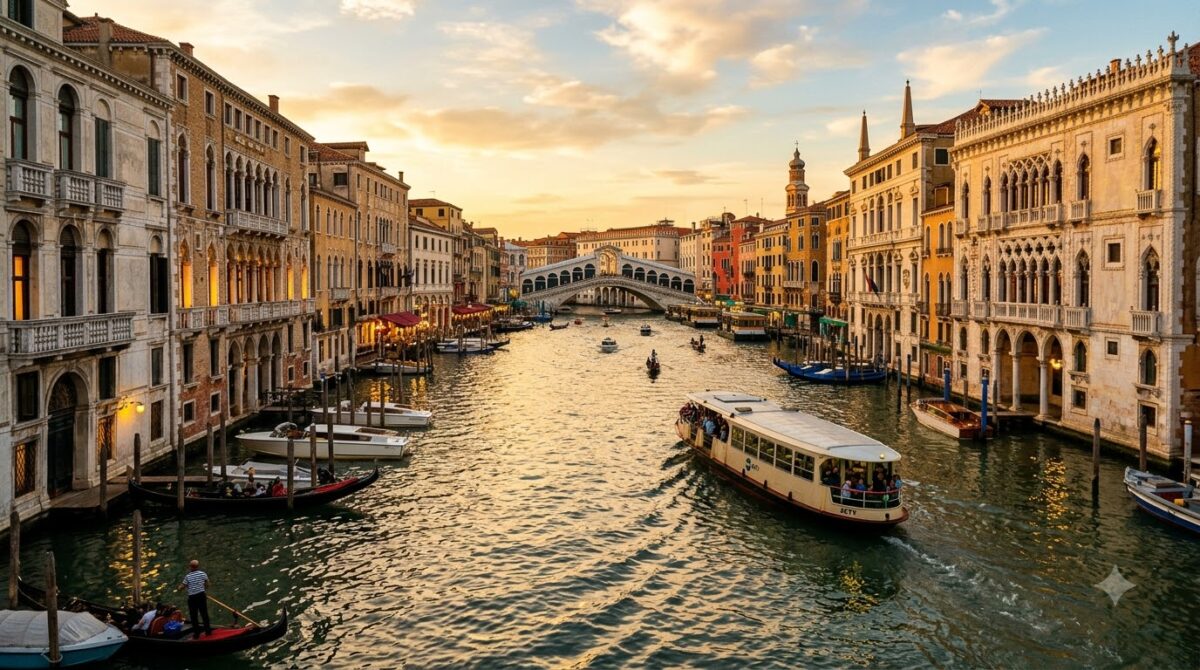
The best areas to stay in Venice, at a glance
| If you are | Best area to stay in Venice |
|---|---|
| A first time visitor, two or three nights | San Marco or Castello |
| Wanting local rather than touristy | Cannaregio |
| Here for galleries and evenings | Dorsoduro |
| Wanting food and markets | San Polo or Santa Croce |
| Arriving or leaving by train | Cannaregio or Santa Croce |
| Travelling with heavy luggage or limited mobility | Near Piazzale Roma, in Santa Croce |
| Wanting a pool and a view back at the city | Giudecca |
| On a strict budget | Mestre — read the section below first |
One answer if you want no caveats: Cannaregio, away from the main tourist route. Central, walkable to everything, close to the train station, cheaper than San Marco, and still full of people who live there.
Should you stay in Venice or Mestre?
This deserves answering properly rather than dismissing, because the price gap is large.
The case for Mestre: hotels cost far less, rooms are bigger and newer, there is parking, and the train to Venezia Santa Lucia takes about ten minutes and runs frequently.
The case against, which is stronger:
- You miss the two best times of day. Venice before nine and after seven, once the day visitors and the cruise crowds have gone, is the reason to come. From Mestre you arrive after the first and leave before the second.
- Every outing becomes a round trip. Train, then vaporetto or a long walk, twice a day.
- Mestre is an ordinary mainland town. There is nothing wrong with it and nothing to do in it.
- The saving shrinks once you count transport and the meals you end up eating on the island anyway.
The honest recommendation: stay in Venice proper for fewer nights rather than Mestre for more. Two nights on the island beats four on the mainland, and it usually costs about the same.
Mestre makes sense if you are driving through Italy, if you need a family room at a price the islands cannot offer, or if Venice is one stop on a longer trip and you have been before.
Map shows live availability and prices. We may earn a commission on bookings made through it, at no extra cost to you.
Understanding the map: the six sestieri
Venice is divided into six districts, or sestieri, and the Grand Canal winds through the middle in an S shape.
- San Marco — the middle, with the basilica, the Doge’s Palace and the highest prices.
- Castello — east of San Marco, the largest sestiere, quieter as you go further east.
- Cannaregio — north, running from the train station towards the Rialto. Where most Venetians live.
- Dorsoduro — south, across the Grand Canal. Galleries, the university and the best evening scene.
- San Polo — the smallest, around the Rialto market.
- Santa Croce — northwest, containing Piazzale Roma where cars and buses stop.
The whole of it is walkable in about 45 minutes end to end, if you do not get lost, which you will. That is the useful thing to know: no area of Venice is far from another, so choose on character and noise rather than distance.
San Marco: the middle, and the price of it
San Marco holds St Mark’s Basilica, the Doge’s Palace, the campanile and the most expensive hotels in the city.
- You are inside the postcard. Walking into an empty St Mark’s Square at seven in the morning is the single best thing about staying here.
- Central to everything, with vaporetto stops on the Grand Canal and the lagoon side.
- The grand hotels along the waterfront and the Grand Canal are here.
The trade-offs are real. It is the most crowded part of Venice from nine to six, restaurants near the square are the worst value in Italy, and prices for everything carry a premium. Rooms are often small, because the buildings are old and the good ones face water.
Stay in San Marco if you have two nights, want the location above all, and will be out early and late to use it.
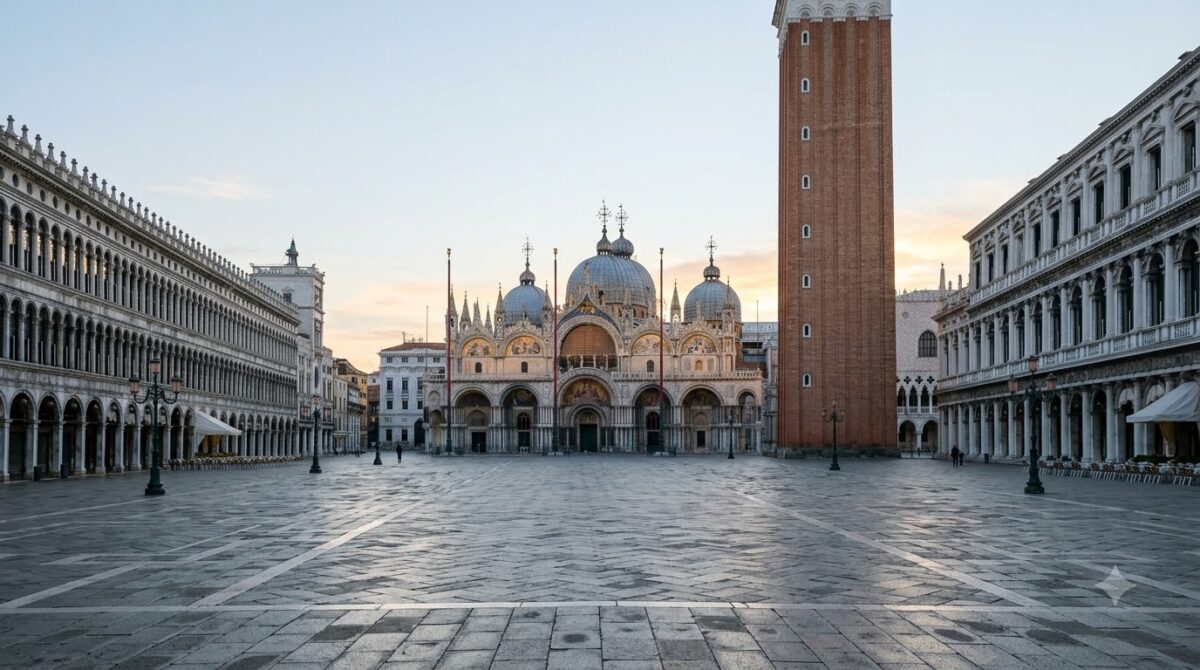
Cannaregio: the best all-round choice
Cannaregio runs north from the train station along the top of the city. The main street between the station and the Rialto is busy and forgettable; two streets either side of it is where Venice lives.
- Genuinely residential. Washing lines, bakeries, children going to school, and bars where the customers are local.
- Close to the train station, which matters more in Venice than anywhere because of the luggage problem.
- Cheaper than San Marco for a comparable room, sometimes considerably.
- The Jewish Ghetto is here, the oldest in the world, and one of the quietest squares in the city.
- Fondamenta della Misericordia is the best canal-side strip for an evening drink.
The trade-off: the northern edge is fifteen to twenty minutes from San Marco on foot. In Venice that is nothing, but it does mean crossing the crowds twice a day.
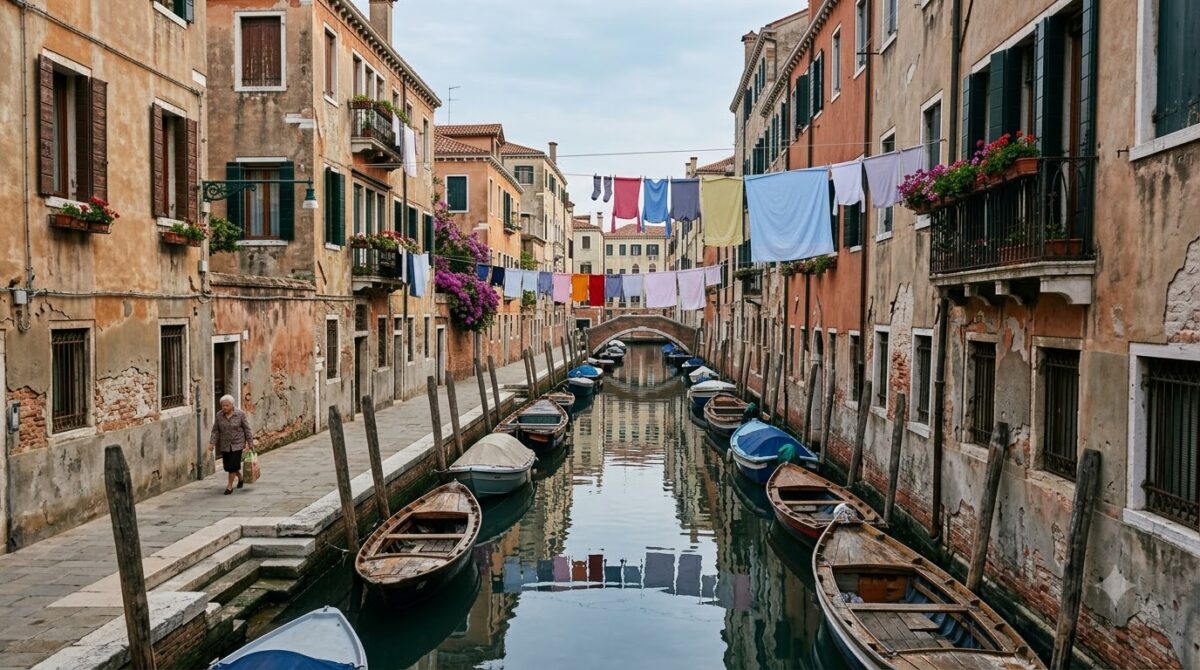
Dorsoduro: galleries and the best evenings
Dorsoduro is across the Grand Canal from San Marco, and it is where the art and the students are.
- The Gallerie dell’Accademia and the Peggy Guggenheim Collection are both here, along with Santa Maria della Salute at the point where the canal meets the lagoon.
- Campo Santa Margherita is the liveliest square in Venice in the evening, because of the university.
- The Zattere, the long southern promenade, is the best walk in the city and gets sun all afternoon.
- Quieter than San Marco, and a five minute walk across the Accademia bridge to it.
Best for: second visits, people who want to be out in the evening, and anyone who would rather look at Titian than queue for the Doge’s Palace.
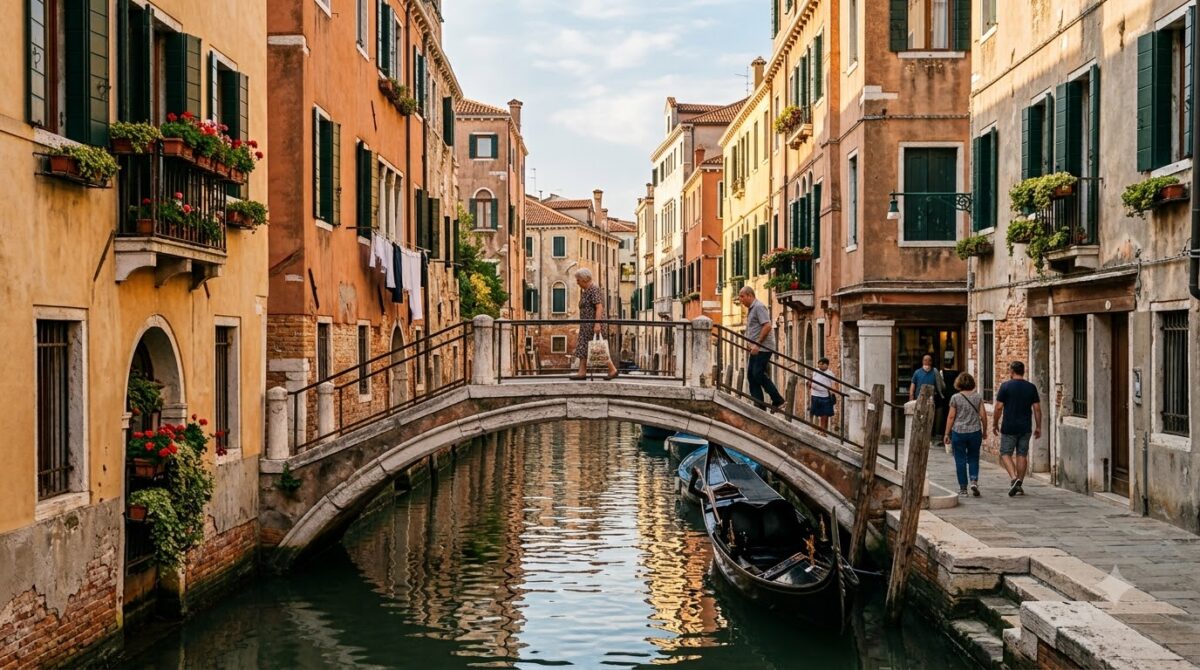
San Polo and Santa Croce: markets and arrival
San Polo is the smallest sestiere and holds the Rialto market, which is the best reason to be up early in Venice after the empty squares.
- The Rialto fish and produce market runs in the mornings and is a working market, not a display.
- The best bacari — small wine bars serving cicchetti, the Venetian snack — are in the lanes around it.
- Central without being San Marco, and a few minutes from the Rialto bridge.
Santa Croce, next to it, contains Piazzale Roma, where the road bridge from the mainland ends. It is the only part of Venice a car or bus can reach, which makes it the practical choice if you are arriving with heavy bags, driving, or have limited mobility.
Castello and Giudecca: quieter alternatives
Castello is the largest sestiere and runs east from San Marco. The western end is busy; walk fifteen minutes east and you are in a residential Venice with almost no visitors, near the Arsenale and the Biennale gardens. Good value and genuinely peaceful.
Giudecca is the long island across the water from Dorsoduro, two minutes by vaporetto. It is residential and industrial in parts, and it has the one thing central Venice cannot offer: space, gardens and a pool. The Hilton Molino Stucky Venice, a converted flour mill at the western end, is the landmark you will use to place it. You get the best view back at Venice and you take a boat to get anywhere.
The luggage problem
This deserves its own section because it surprises people more than anything else about staying in Venice.
There are no cars, no taxis and no wheeled transport of any kind on the islands. Between the vaporetto stop and your hotel you carry your bag, and the route almost certainly crosses bridges with steps on both sides.
- Ask your hotel for the nearest vaporetto stop and how many bridges from it. This is a normal question and they will answer it.
- Pack lighter than you would for anywhere else in Italy. One bag you can carry up steps, not two you can roll.
- A water taxi to the hotel door is expensive and, with heavy luggage or limited mobility, is money well spent for the arrival and departure only.
- Staying near Piazzale Roma or the train station removes most of the problem, which is a genuine argument for Santa Croce and western Cannaregio.
Where not to stay in Venice
- Directly on the main route from the station to the Rialto to San Marco. It is a moving crowd from nine until six and the shops are all the same.
- Anywhere without checking the bridge count if you have heavy bags.
- Lido unless you specifically want a beach. It is a separate island, twenty minutes by boat, and it has cars.
- Mestre for a first visit, for the reasons above.
Venice hotels: what to check
- How many bridges from the nearest vaporetto stop. The single most useful question.
- Whether there is a lift. Rare in converted palazzi and worth confirming.
- Canal view or courtyard. A canal view is lovely and can be noisy at dawn when the delivery boats start.
- Air conditioning, essential from June to September. Venice is humid and still.
- Ground floor rooms in a city at sea level. Acqua alta, the seasonal high water, is most likely between October and January.
On the tourist tax: Venice charges a day-visitor access fee on selected busy days. Overnight guests are exempt, because the accommodation tax you pay at the hotel already covers it. That is one more small argument for sleeping on the island.
How many nights do you need in Venice?
Two nights is the working minimum and three is comfortable. One night means you see Venice only in its worst hours.
- Night 1 — arrive, walk, eat, and see the city empty after dark.
- Day 2 — San Marco early, the Doge’s Palace, the Grand Canal by vaporetto, and a district away from the crowds in the afternoon.
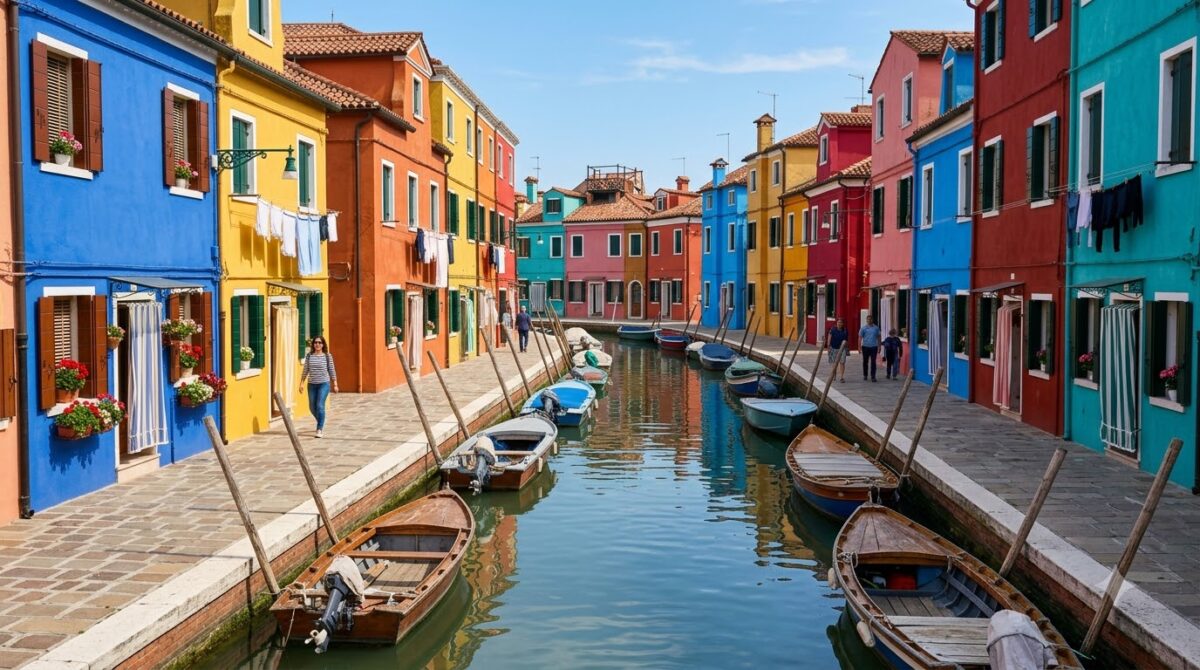
- Day 3 — the lagoon islands: Burano for the coloured houses, Murano for the glass. About 45 minutes each way.
Venice as part of a trip to Italy
Venice sits at the northern end of the main fast line, which is why it works best as the last stop.
- Florence to Venice is about 2 hours by train.
- Rome to Venice is about 3 hours 45.
- Venice airport connects to the city by bus to Piazzale Roma or by water bus across the lagoon.
Our 10 day Italy itinerary finishes in Venice for exactly this reason, and where to stay in Florence covers the same question for the stop before it.
A guide to where to stay in Venice, by traveller
If you are wondering where to stay and the six sestieri still blur together, this is the decision in plain terms. Venice is an expensive city and the wrong area costs you either money or the hours that make the trip.
- First time in Venice, two nights. Stay in San Marco or eastern Cannaregio. You want to be able to walk out into the center of Venice at seven in the morning without thinking about it.
- You want somewhere that feels like a real place. Cannaregio, two streets off the main route. This is the best part of Venice to sleep in and it is not close.
- You are on a budget but want to stay within the historic city. Eastern Castello, or northern Cannaregio. Both are Venice proper and both cost noticeably less than anywhere near the Rialto.
- You want galleries and a good evening. Stay in Dorsoduro.
- You want markets and cicchetti. Stay in San Polo, near the Rialto bridge.
- You are arriving in Venice by train and leaving the same way. Stay near the main train station, in western Cannaregio or Santa Croce.
The one rule underneath all of it: pick the area first, then the hotel. In most cities that order is optional. Here it decides how many bridges you carry a suitcase over.
Where to stay near the train station or the Rialto
Two specific requests come up constantly, so they are worth answering directly.
Near the main train station
Venezia Santa Lucia is at the northwest corner of the islands. Staying near it is not a compromise: western Cannaregio and Santa Croce are both proper Venice, both are ten minutes from the Rialto on foot, and both remove the worst of the luggage problem.
This is the sensible choice if you are visiting Venice for one or two nights on a longer Italy trip, arriving and leaving by train.
Near the Rialto bridge
The area around the Rialto is the geographic middle of Venice, with San Polo on one side of the Grand Canal and Cannaregio and San Marco on the other. Staying near Ponte di Rialto means you can walk to everything in fifteen minutes and you are on the vaporetto line that runs the length of the Grand Canal.
The catch is the same as San Marco: the streets immediately around the bridge are a moving crowd from mid-morning until evening. One or two lanes back is quiet and costs less.
Venice hotels: what the price bands get you
Rather than a list of top hotels, it is more useful to know what each band buys in a city where every building is old and every room is different.
- Luxury. The grand palazzo hotels along the Grand Canal and the San Marco waterfront. You are paying for a water entrance, a canal view and a famous address. Rooms are often smaller than the price suggests.
- Upper mid-range. Converted palazzi across all six sestieri, typically fifteen to forty rooms, sometimes with a courtyard garden. The best value band in Venice and where most of the best hotels sit.
- Mid-range. Small family-run hotels, often three or four floors with no lift. Perfectly good, and this is where to ask about bridges and stairs.
- Budget. Guesthouses in Castello and northern Cannaregio, plus a few hostels. Staying in Venice proper on a budget is possible; it just means walking further and carrying your own bag.
- Apartments. Good for three nights or more and for families, particularly in Cannaregio and Castello.
What people who stayed at a hotel in Venice most often mention afterwards is not the room. It is either the walk from the boat, or waking up to church bells and boat engines instead of traffic. Both are worth factoring in.
How to explore Venice from each area
Venice has no cars, so getting around is walking, the vaporetto water bus, or a water taxi. Where you sleep changes which of those you use.
| Area | To San Marco | To the Rialto | To the train station |
|---|---|---|---|
| San Marco | — | 10 min walk | 30 min walk or vaporetto |
| Cannaregio (east) | 20 min walk | 10 min walk | 15 min walk |
| Cannaregio (west) | 30 min walk | 15 min walk | 5 min walk |
| Dorsoduro | 10 min via Accademia bridge | 15 min walk | 25 min walk |
| San Polo | 15 min walk | 5 min walk | 15 min walk |
| Santa Croce | 25 min walk | 12 min walk | 8 min walk |
| Castello (east) | 20 min walk | 25 min walk | vaporetto |
| Giudecca | vaporetto only | vaporetto only | vaporetto only |
Buy a multi-day vaporetto pass if you are staying two nights or more. Single tickets are expensive and you will use the boats more than you plan to, particularly to cross the Grand Canal, which only has four bridges along its whole length.
Which side of Venice to stay on
The Grand Canal splits the city, and crossing it is less trivial than it looks because there are only four bridges: Scalzi by the station, Rialto, Accademia, and Costituzione at Piazzale Roma.
- The San Marco side — San Marco, Castello and eastern Cannaregio. Where most of the famous sights are, and busier.
- The Dorsoduro side — Dorsoduro, San Polo and Santa Croce. Quieter, better for eating and drinking, and a short bridge crossing from the other half.
It matters less than the map suggests, because the walking distances are small. But if your hotel is on one side and the sight you want is on the other, plan the day around one crossing rather than three.
Days in Venice and what they cost you
The number of nights changes the right area more than in most cities.
- Venice for one night — stay in San Marco or by the Rialto and accept the price. You have too few hours to spend any of them walking in from the edges.
- Two nights — anywhere central. This is the most common length and the sweet spot for San Marco or Cannaregio.
- Three nights — Dorsoduro or Castello start to make more sense, because you have time to use the quieter areas properly and a day for the lagoon islands.
- Four or more — an apartment in Cannaregio or Castello, and treat Venice as somewhere to live rather than tick off.
When to visit, and how it changes the choice
- April to June and September to October are the best months: mild, and the crowds are heavy rather than impossible.
- July and August are hot, humid and still. Air conditioning becomes the single most important hotel feature, and canal-side rooms can smell at low tide.
- November to February is cheap, atmospheric and often foggy, which suits Venice better than sunshine does. Acqua alta high water is most likely in this window, so avoid ground floor rooms.
- Carnival in February fills the city and doubles prices for about two weeks.
Winter is the underrated season here. Visiting Venice in January with fog on the canals and no queues is a completely different city, and the hotels that cost a fortune in June are affordable.
Heading south afterwards? Where to stay on the Amalfi Coast ranks the towns by logistics rather than looks.
Heading west afterwards? See where to stay in Lake Como for the Bellagio, Varenna and Menaggio comparison.
Checking current rates in Venice
Everything above is about position — which area suits which kind of trip. What it deliberately does not do is quote prices, because rates in Venice move a long way by season, by day of the week and by how far ahead you book, and any figure printed in a guide is out of date the week after it is written.
These searches show live availability and current prices, so you can check them against the areas described above:
These are affiliate links. If you book through one we may earn a commission, at no extra cost to you. It does not affect which areas we recommend above — nobody pays to be listed here.
Working out the length first? See how many days in Venice you need — the city covers less ground per day than any other in Italy.
Looking further west? Our where to stay in Verona guide covers the next city along the line.
Frequently asked questions
What is the best area to stay in Venice for the first time?
San Marco if you have two nights and want to step out into the main sights, or Cannaregio if you want the best balance of central, affordable and residential. Cannaregio is close to the train station, walkable to everything, and full of people who actually live in Venice, which San Marco is not.
Should I stay in Venice or Mestre?
Venice, for a first visit. Mestre is about a third of the price and ten minutes away by train, but you miss Venice before nine and after seven, which is when the city is at its best and emptiest. Stay on the island for fewer nights rather than on the mainland for more.
Is San Marco too touristy to stay in?
It is the most crowded area between nine and six and the most expensive, and it is still a good choice for a short stay. The reason is timing: staying there means you get St Marks Square early in the morning and late at night, which is when it is worth seeing. Eat elsewhere.
How bad is the luggage problem in Venice?
Worse than people expect. There is no wheeled transport of any kind on the islands, so you carry your bag from the vaporetto stop to the hotel, over bridges with steps. Ask the hotel how many bridges from the nearest stop before booking, pack one carryable bag, and consider a water taxi for arrival if you are heavily loaded.
Is Dorsoduro a good area to stay in Venice?
Yes, particularly on a second visit. It has the Accademia and Peggy Guggenheim galleries, the Zattere promenade, and Campo Santa Margherita, which is the liveliest square in the city in the evening because of the university. It is five minutes across the Accademia bridge from San Marco and noticeably calmer.
How many nights should I spend in Venice?
Two nights minimum, three if you want the lagoon islands. One night means you only see Venice during the crowded middle of the day. The third day is for Burano and Murano, about 45 minutes each way by vaporetto across the lagoon.
Do I pay the Venice tourist tax if I stay overnight?
No. The day-visitor access fee applies on selected busy days and overnight guests are exempt, because the accommodation tax collected at your hotel already covers it. Check the city official page for current dates if you are arriving as a day visitor.
What should I check before booking a Venice hotel?
Five things: how many bridges from the nearest vaporetto stop, whether there is a lift, whether the room faces a canal or a courtyard, whether there is air conditioning for summer, and whether it is a ground floor room, since acqua alta high water is most likely between October and January.