
Lake Como is shaped like an upside-down Y, and that single fact decides everything about where to stay in Lake Como.
Some links below are affiliate links. We may earn a commission if you book through them, at no extra cost to you. We do not rank hotels, and any prices on the map come live from the booking sites.
Quick answer: where to stay on Lake Como. For a first trip, one of the Centro Lago towns. Varenna is the practical answer, with the only train station; Bellagio is the postcard and the most expensive; Menaggio is the moderately priced, ordinary town.
The three arms meet at a point called Centro Lago. This guide on where to stay works outward from there, because that junction is what makes the difference. Stay inside the triangle and the whole lake is reachable in twenty minutes by ferry. Stay outside it and you spend an hour on the water before your day starts.
That is the entire decision. Everything else — lake view or not, hotel or apartment, luxury hotels or a family guesthouse — comes second.
Prices below are indicative only and quoted in euro (€) where they appear at all. Ferry routes, train times and transport connections checked 7 September 2026. Rates change constantly, so check current prices per night yourself.
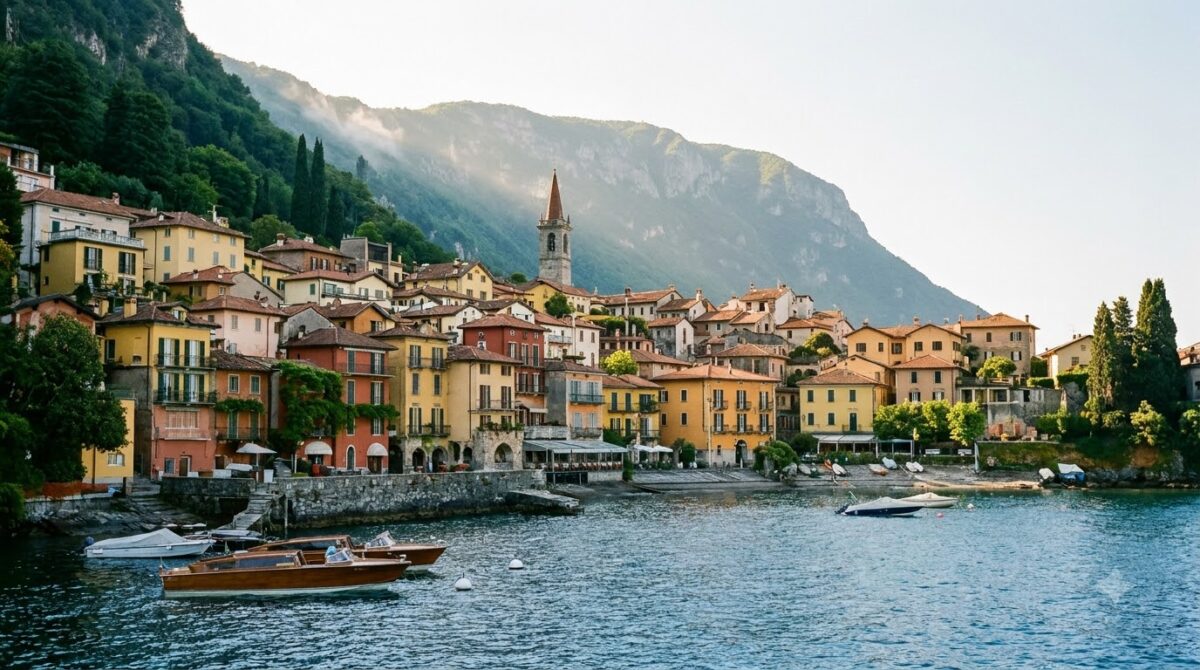
The Centro Lago triangle: the perfect place to stay on Lake Como
Bellagio, Varenna and Menaggio are the three Lake Como towns that sit at the junction of the arms, facing each other across the water. Ferries connect them constantly, and the crossing between any two is ten to twenty minutes.
For a first trip, the best place to stay on Lake Como is one of these three. Which one depends on how you are arriving and what you want the evenings to feel like.
| Town | Getting there from Milan | Price | Feels like |
|---|---|---|---|
| Varenna | Direct train, 1 hour | High | Small, pretty, walkable |
| Bellagio | Train to Varenna, then ferry | Highest | Busy, elegant, the postcard |
| Menaggio | Train to Como, then bus or ferry | Moderate | Ordinary town, real life |
Varenna
Varenna is the practical answer for most people, and the reason is the train station. It is the only town in the triangle on the Milan to Lecco line, so you step off a train and are ten minutes from your hotel on foot.
- The lakefront promenade, a walkway partly built out over the water, is the best short walk on the lake.
- Villa Monastero has terraced botanical gardens running along the shore of Lake Como.
- It is small. A handful of restaurants, one main street of steps, and quiet after nine.
- Ferry terminal and train station are a few minutes apart, which matters with luggage on a steep hillside.
Stay in Varenna if you are coming by train, want lake views without a car, and would rather have dinner in a small place than a lively one.
Bellagio
Bellagio sits on the tip of the promontory where the two southern arms split, and it is the most photographed town on the lake. Stepped alleys of shops climb from the ferry terminal, and the views run down both arms at once.
- Villa Melzi and its gardens are a fifteen minute walk along the water.
- It fills up daily. Day trippers arrive from about ten and thin out after six, and the town is genuinely lovely in the hours either side.
- Prices are the highest on the lake, for hotels and restaurants both.
- Getting there needs two legs from Milan — train to Varenna, then the ferry across.
Varenna or Bellagio is the question most people end up asking, and the answer is: Bellagio if the view is the point of the trip and you are willing to pay for it, Varenna if you want the easier logistics. Whether it is better to stay in Lake Como generally or in Bellagio specifically comes down to that: Bellagio is the concentrated version, at concentrated prices.
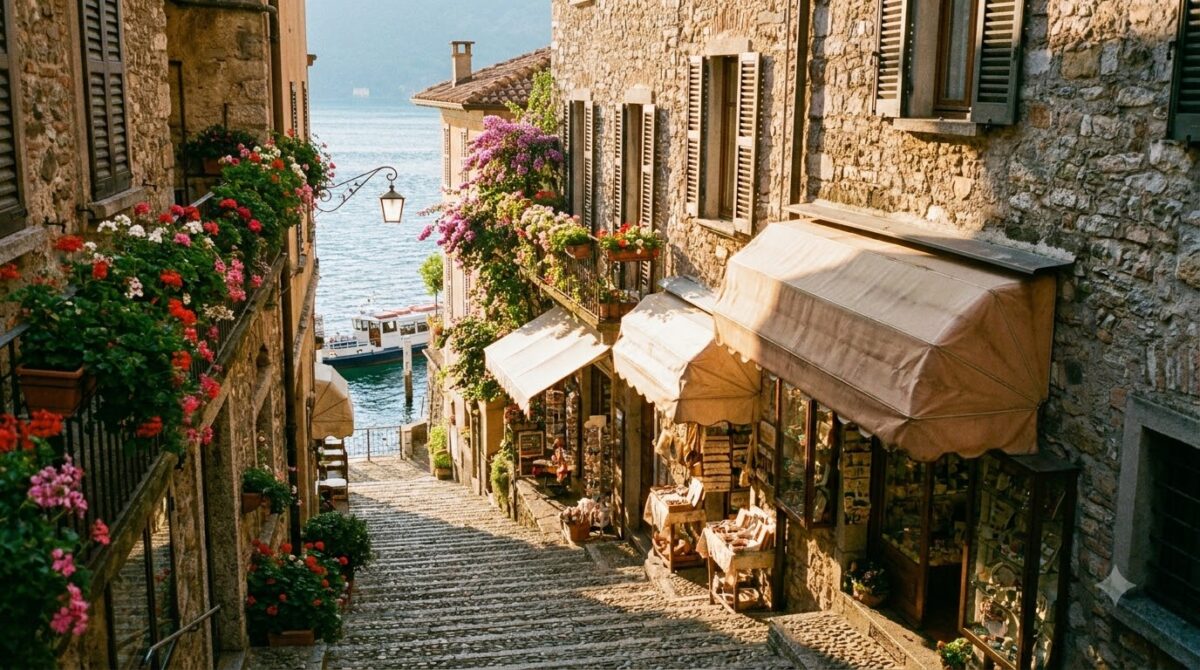
Menaggio
Menaggio is on the western shore across from Bellagio, and it is a working town rather than a resort. There is a piazza with cafes, a supermarket, a lido, and hotels at prices the other two do not offer.
- Best value in the triangle, often meaningfully cheaper for the same standard of room.
- Good for families, because of the lido, the flat lakefront and the space.
- The bus from Como runs along the western shore, so you can reach it without a ferry.
- It is the gateway to Lugano and Switzerland, forty minutes north over the border.
Map shows live availability and prices. We may earn a commission on bookings made through it, at no extra cost to you.
Tremezzo, Lenno and the western shore
South of Menaggio the western shore holds the grandest villas on the lake, in what is loosely called the central lake area, the heart of the Lake Como area. They are scattered along a few kilometers along the lakeside road between Lenno and Cadenabbia, and this stretch is worth a visit even if you stay elsewhere.
- Villa Carlotta at Tremezzo, an eighteenth century palazzo with a botanical garden of azaleas and camellias.
- Villa del Balbianello at Lenno, on its own wooded headland, reached by boat or a mile-long footpath. It is the most striking building on Lake Como and has appeared in more films than any other.
- Grand Hotel Tremezzo, the belle epoque landmark directly opposite Bellagio, is the reference point people use for this stretch of shore. If you want a hotel in Lake Como with the classic postcard outlook, this is the part of the lake it is on.
Staying here works if you want the villa gardens and a quieter base, and are happy that the ferry is a short hop rather than a step outside the door.
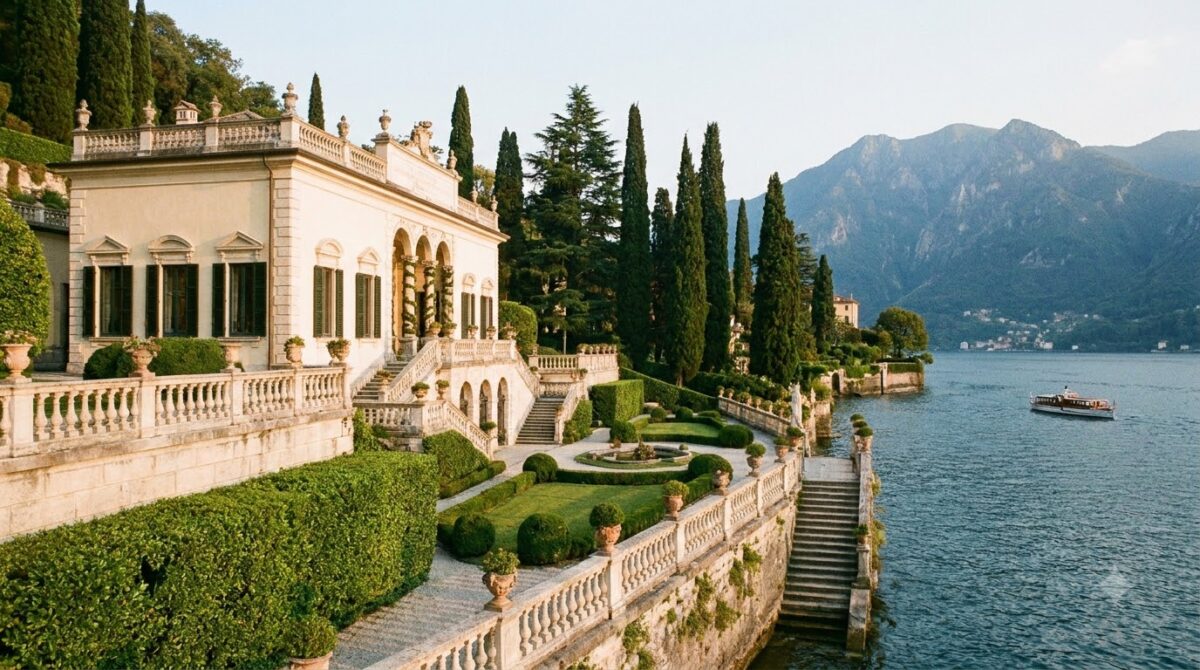
Should you stay in Como city? Staying in Como city, honestly
Como city sits at the bottom of the western arm and is the largest town on the lake. It is a proper Italian city rather than a resort, with a walled center, a marble cathedral, silk museums and a funicular up to Brunate. Anything located in Como is also the cheapest accommodation you will find anywhere on the water.
Staying in Como city is a real option, and it is the wrong one for most people. Here is the honest split.
- For — cheapest accommodation on the lake, the widest choice of restaurants, direct trains to Milan from Como San Giovanni in under forty minutes, and a proper town rather than a resort.
- Against — you are an hour from Centro Lago by ferry. The views of Lake Como that people come for start well north of here, where the villages around the shoreline get smaller and the mountains close in.
- Cernobbio, ten minutes north of the town of Como, is the smarter version of the same idea: a lakeside village with the same rail access and a better outlook.
Stay in Como for one or two nights at the start or end of a trip, or if you are combining the lake with Milan. For a stay of three nights or more, move north.
Lecco and the eastern arm
Lecco anchors the eastern arm, backed by the sharp limestone peaks of the Grigne. It is the one part of the lake that is not a spot for tourists first and a town second. It is the least touristed part of the lake and by some distance the cheapest.
- The mountains are the draw, not the villages. This is the hiking end of the lake.
- Direct trains from Milan, around forty minutes.
- Few ferries. The eastern arm has a thin service, so getting to Bellagio or Varenna means driving or a slow connection.
Worth it if the Alps interest you more than the villas. Otherwise the saving is not enough to justify being that far out.
Lake view, or not?
A room with a lake view can cost fifty percent more than the identical room facing the hill behind, and it is the most common thing people get wrong when booking.
- Confirm the specific room, not the hotel. A hotel photographed from the water may have half its rooms facing a wall of rock.
- “Lake view” and “partial lake view” are different products at similar prices. Ask which you are being sold.
- A balcony is worth more than square meters here. A spacious room with no outlook is the worse deal.
- Air conditioning is not universal in older lakeside buildings, and July and August get genuinely hot.
- A rooftop or lakefront terrace shared by the hotel is often the better buy than a view room, especially at a boutique property with only a few rooms.
The pattern: pay for the view if you are staying two or three nights and will actually sit in the room. On a longer trip, put the money into position instead.
Do you need to rent a car?
No, and for most itineraries a car is worse than no car.
- The ferries are the road. Boats run all day between the triangle towns and reach almost everywhere worth going.
- The lakeside roads are narrow, walled on both sides, and slow. The stretch north of Bellagio is single-lane in places.
- Parking is scarce and expensive in every lakeside town, and many hotels have none.
- Trains from Milan reach Varenna, Como and Lecco directly. A car adds nothing to a trip based in those towns.
- Rent a car only if you are staying in the hills, combining Lake Como with the Valtellina or Switzerland, or travelling with people who cannot manage steps and luggage.
There is also a car ferry between Varenna, Bellagio, Menaggio and Cadenabbia, which is the one crossing that makes driving around the lake bearable.
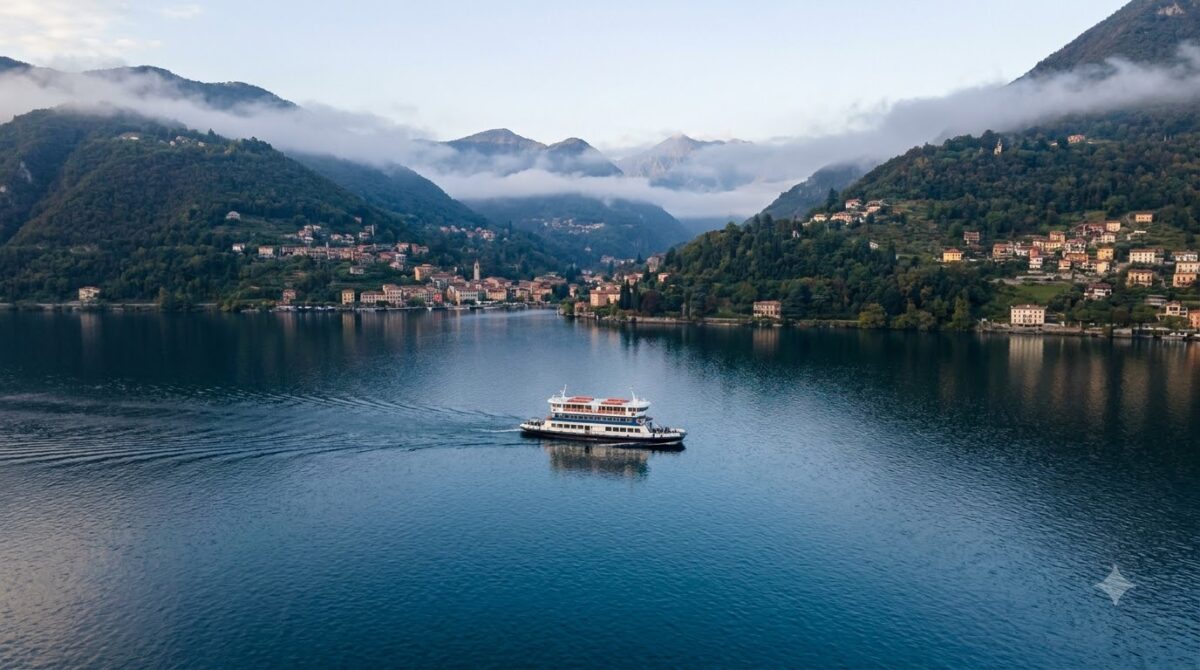
Getting there and moving around
- From Milan — trains leave from Centrale for Varenna and Lecco, and from Cadorna for Como. The train ride is under an hour either way.
- From Milan Malpensa — a direct bus to Como, or the train via Milan.
- Ferries — slow boats and fast hydrofoils run the same routes at different prices. The slow boat is more pleasant and only marginally longer within the triangle.
- A private boat tour is the standard way to see the villa shoreline properly, and taxi boats also work as transport late in the evening when the ferries have stopped.
- Check the last ferry before booking dinner across the water. This catches people out constantly.
The best time to visit Lake Como
- May, June and September are the best months. The gardens are open, the ferries run a full timetable, and the weather is warm without being heavy.
- April is when the azaleas at Villa Carlotta flower, and it is quieter and cheaper.
- July and August are hot, crowded and the most expensive. Bellagio in particular is uncomfortable at midday.
- November to March is very quiet. Many hotels, villas and restaurants close entirely, and the ferry timetable thins out.
If you are planning a trip around the villa gardens, the season runs roughly from March to early November, so a winter visit means looking at them from the outside.
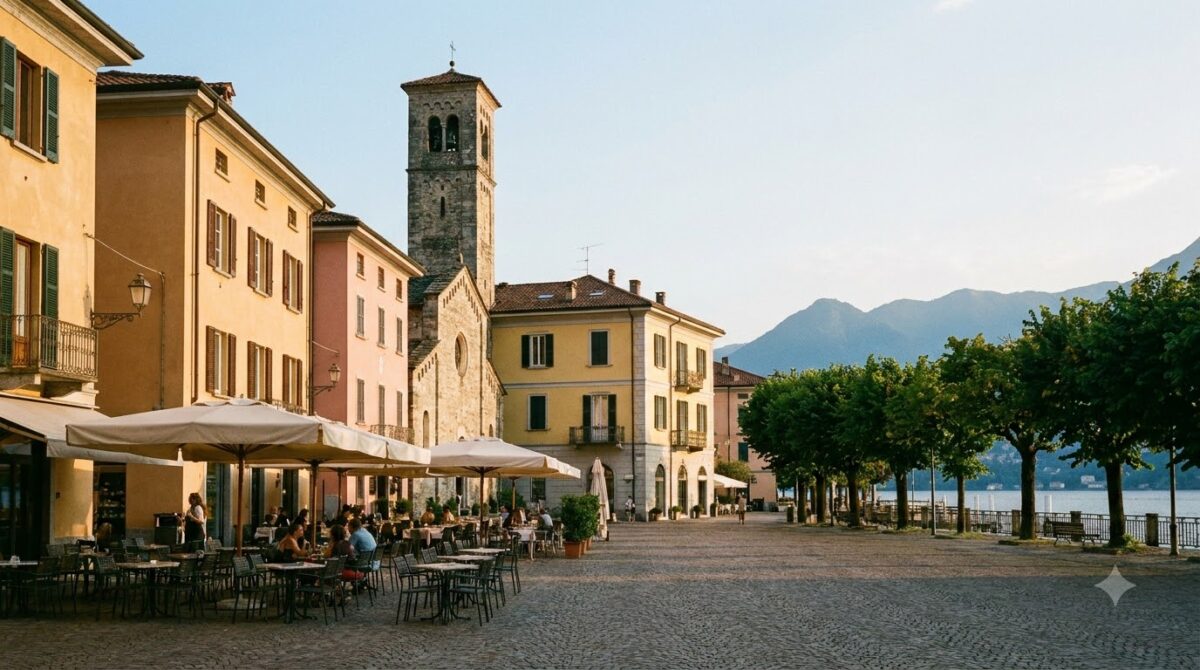
Planning a trip: final tips for where to stay in Lake Como
- Book early for May, June and September. Places to stay in Lake Como are few and they go months ahead, particularly anything with a terrace.
- Ask about steps. Almost every town is built up a slope, and a hotel five minutes from the ferry can be five minutes of stairs.
- Check whether breakfast is included and where it is served. A terrace breakfast over the water is a large part of what you are paying for.
- Two nights is not enough. Three to four lets you see the villas, both shores and one full day doing nothing.
- Split stays work well — two nights in Como or Cernobbio, then three at Centro Lago. A Lake Como trip of five nights or more is better for the change of view.
- Verify current rates and availability yourself. Prices per night on Lake Como swing enormously by month and by day of the week, and no guide can be current on that.
How to choose the best area to stay in Lake Como
If you want a single rule rather than a travel guide full of options, use this one: pick the arm of the lake you will spend most of your time on, then stay as close to Centro Lago as your budget allows.
Working through it in order takes about a minute, and it settles where to stay at Lake Como faster than reading fifty hotel listings.
- Are you arriving by train? Varenna. It is the only town in the triangle near the train line from Milan, and the train ride from Milan Centrale takes about an hour.
- Is the view the point? Bellagio or the western shore around Tremezzo, both of which look straight down the lake.
- Is budget the constraint? Menaggio, Como city, or Lecco, in that order of preference.
- Travelling with children? Menaggio, for the lido, the flat lakefront and rooms with space.
- Only one or two nights, combined with Milan? Stay in Como. Anything further north wastes half of it on transfers.
- Four nights or more? Split it — two near Como or Cernobbio, then the rest right on the shores at Centro Lago.
The mistake to avoid is booking on photographs alone. Every hotel on this lake photographs well; not every one is within walking distance of a ferry, and that is what you will feel on day two.
Lake Como towns compared, by type of traveler
| You are | Stay in | Why |
|---|---|---|
| First-time visitor | Varenna | Train access, central, easy to navigate on foot |
| Couple, splurging | Bellagio or Tremezzo | Panoramic views down both arms of the lake |
| Family | Menaggio | Lido, space, moderate prices |
| On a budget | Como city or Lecco | Cheapest rooms, direct trains, more restaurants |
| Hiker | Lecco or Varenna | Straight into the Grigne mountains |
| Here for the villas | Lenno or Tremezzo | Villa Balbianello and Villa Carlotta on the doorstep |
| Car-free weekend from Milan | Varenna | Door to door in about ninety minutes |
Picking a hotel in Lake Como: the best hotels as landmarks
Listings for the lake are hard to place, because a Lake Como address tells you nothing about which arm you are on. These are the properties people use as reference points, described by position and type only. Rates, availability and current condition change constantly, so check those yourself rather than trusting any guide, including this one.
Grand Hotel Tremezzo
A belle epoque hotel of 1910 on the western shore at Tremezzo, directly opposite Bellagio and next door to Villa Carlotta. It is the most recognisable building on that stretch of lakeside and has an outdoor swimming pool floating on the lake itself, which is the detail everyone photographs.
Villa d’Este, Cernobbio
A sixteenth-century cardinal’s villa turned hotel, at Cernobbio just north of the town of Como. It sits in its own park on the western shore, and it is the reference point for the southern end of the lake in the way Tremezzo is for the middle.
Grand hotels in Bellagio and Varenna
Both towns have nineteenth-century grand hotel buildings right on the water beside the ferry terminal, and both have a second tier of smaller hotels up the hill behind. The lakefront ones cost more and involve no stairs; the ones above have the wider views and, often, a terrace worth more than a room service menu.
Accommodation beyond the landmarks: small hotels, B&Bs and apartments
Beyond the landmarks, accommodation on the lake is mostly small. Names like Hotel Bellavista, Hotel Miramonti and Albergo Firenze recur across several towns, because they are common Italian hotel names rather than one property — check which town a listing is actually in before booking. What the good ones have in common is a handful of rooms, a terrace, and a specific number of steps between the front door and the ferry that you should ask about in advance.
The pattern across all of them: the higher up the slope, the wider the panoramic view and the more stairs. The closer to the ferry terminal, the more convenient and the more expensive. Very few properties on Lake Como give you both.
Eating and the evening
Where you stay decides dinner here more than it does in most Italian cities, because the last ferry sets a curfew.
- Como and Bellagio have the widest choice, and Bellagio has the highest prices, and a ristorante with a lake terrace is a large part of what people come for.
- Varenna has perhaps a dozen places, several right on the water, and they fill early in season.
- Menaggio and Como have ordinary town restaurants at ordinary town prices, which is a relief after a few days.
- Local food leans lake fish — perch with rice, dried shad, missoltino — plus pizzoccheri from the Valtellina valley to the north.
- Book ahead in summer, and check the last boat before choosing a restaurant across the water.
Checking current rates in Lake Como
Everything above is about position — which area suits which kind of trip. What it deliberately does not do is quote prices, because rates in Lake Como move a long way by season, by day of the week and by how far ahead you book, and any figure printed in a guide is out of date the week after it is written.
These searches show live availability and current prices, so you can check them against the areas described above:
These are affiliate links. If you book through one we may earn a commission, at no extra cost to you. It does not affect which areas we recommend above — nobody pays to be listed here.
Planning the wider route? See our 10 day Italy itinerary, and our guides to where to stay in Venice and where to stay in Florence for the other northern stops.
Planning the wider route? See our 10 day Italy itinerary, and our guides to where to stay in Venice and where to stay in Florence for the other northern stops.
Frequently asked questions
What is the best area of Lake Como to stay in?
Centro Lago, the point where the lake’s three arms meet. Bellagio, Varenna and Menaggio all sit on that junction and are ten to twenty minutes from each other by ferry, which puts the whole lake within easy reach. Staying at the southern end near Como city means an hour on the water before each day starts.
Is it better to stay in Bellagio or Varenna?
Varenna if you are arriving by train, because it is the only one of the three with its own station on the direct Milan line. Bellagio if the view is the point of the trip; it sits on the promontory looking down both southern arms and is the more spectacular of the two. Bellagio is also busier during the day and more expensive throughout.
Is it better to stay on the lake or in town?
On the lake, in one of the ferry towns. Como city has cheaper hotels, more restaurants and the fastest trains to Milan, but the scenery people come for begins well to the north of it. Como works for one or two nights at the start or end of a trip rather than as a base.
Do I need a car to get around Lake Como?
No. Ferries connect the lakeside towns all day and reach almost everything worth seeing, and trains from Milan run direct to Varenna, Como and Lecco. Lakeside roads are narrow and slow, and parking in the towns is scarce and expensive. A car only helps if you are staying in the hills or continuing into the Valtellina or Switzerland.
How many days do you need at Lake Como?
Three to four nights. That covers the villa gardens at Villa Carlotta and Villa del Balbianello, a day on each shore, and time to sit still, which is most of the point. Two nights works as an add-on to Milan but means choosing between the villas and the towns.
What is the best time to visit Lake Como?
May, June and September. The gardens are open, ferries run a full timetable, and the weather is warm without the July and August heat and crowds. April is quieter and cheaper and catches the azaleas in flower. From November to March many hotels and villas close and the ferry service thins considerably.
Is Lake Como expensive?
Bellagio and the grand lakefront hotels are among the most expensive places to stay in Italy. Menaggio, Como city and the eastern arm around Lecco are far more moderate for the same standard of room. The biggest single lever is the view: a room facing the water can cost half as much again as the identical room facing the hillside.