
Most people planning a trip to Italy make the same two decisions on day one, and both of them are wrong. They try to fit four or five cities into ten days, and they book a rental car.
Some links below are affiliate links. We may earn a commission if you book through them, at no extra cost to you. We do not rank hotels, and any prices on the map come live from the booking sites.
Quick answer: where to stay on this route. Four bases: Rome for days 1 to 3, Florence for 4 to 6, the Cinque Terre for 7 and 8, and Venice for 9 and 10. Fly into Rome and out of Venice.
This 10 day Italy itinerary does the opposite. Four bases, three of them reached by train, and a car for exactly two days in the Tuscan countryside — or none at all. It is built for a first trip to Italy, flying in from North America, with the best of Italy that can honestly fit in ten days.
Train times, opening days and booking rules checked 6 September 2026 against the operators’ own sites. Prices in Italy move, so treat figures as a guide and confirm before you book.
The 10 day Italy itinerary at a glance
Fly into Rome and out of Venice. This single choice saves most of a day. An open-jaw ticket — into one city, home from another — usually costs about the same as a return, and it means you never travel back through Italy to where you started.
| Days | Base | Why |
|---|---|---|
| 1–3 | Rome | Ancient Rome, the Vatican, and the easiest arrival airport |
| 4–6 | Florence | Renaissance art, and the base for day trips into Tuscany |
| 7–8 | Cinque Terre | The coast. Five villages, one train line, no cars |
| 9–10 | Venice | Nothing else in Italy looks like it, and it is your exit airport |
Three train journeys, none over about four hours, all bookable on one operator. That is the entire logistics of this trip.
Why four bases and not six
Ten days in Italy sounds like a lot until you count what moving actually costs you. Every change of city takes a morning: pack, check out, cross town to the station, ride, find the new place, drop bags. Call it four hours, door to door, even on a fast train.
Six cities in ten days means six of those mornings. That is more than two full days spent in transit, out of ten. Four bases means three moves and roughly half a day lost. The extra city you squeeze in is never worth the day you pay for it.
This is the single most common mistake in first trips to Italy, and it is the reason people come home saying the country was exhausting.
Days 1 to 3: Rome
The capital of Italy needs three days and rewards more. Do not try to do it in two.
Day 1: arrival, and nothing ambitious
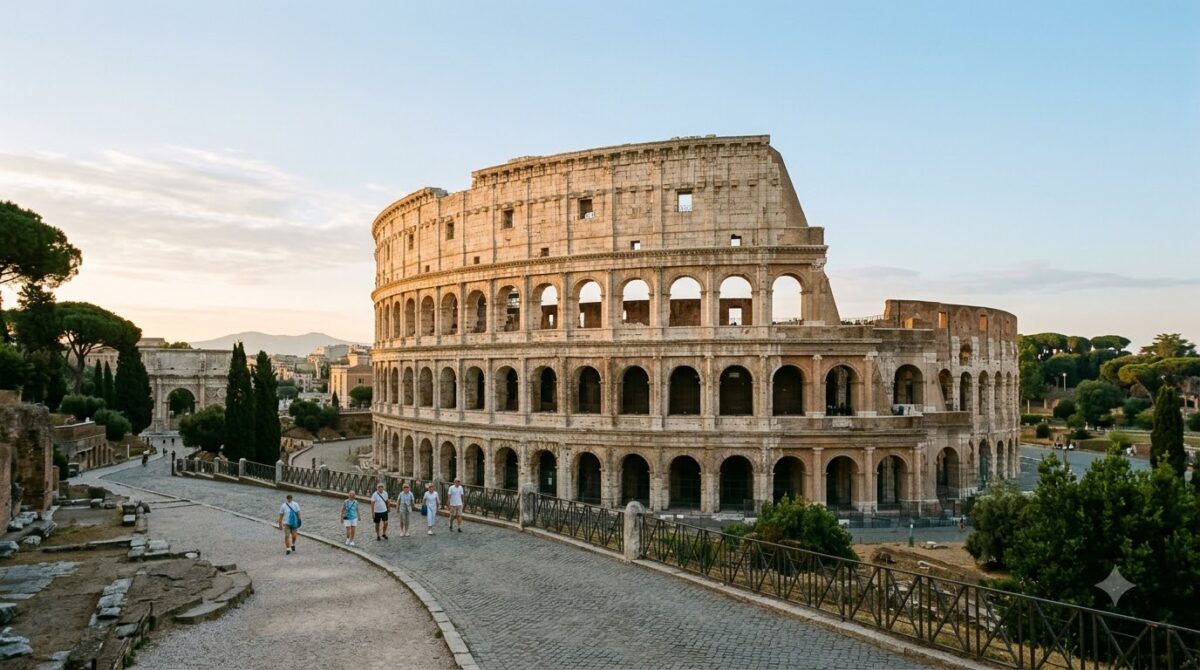
You will land jet-lagged. Plan almost nothing. Walk the centre in the late afternoon: the Pantheon, Piazza Navona, the Trevi Fountain, and dinner in Trastevere across the river. All of it is free, none of it needs booking, and it is the best possible introduction to travel in Italy.
Getting in from the airport: the Leonardo Express runs from Fiumicino to Roma Termini in about 32 minutes. A taxi from Fiumicino to the historic centre is a fixed fare set by the city, so you cannot be overcharged — agree it is the fixed rate before you set off.
Day 2: ancient Rome
The Colosseum, the Roman Forum and Palatine Hill share one ticket and one very long morning. Book it online in advance. Timed entry to the Colosseum sells out days ahead in summer, and the queue for same-day tickets is the worst wait of the whole trip.
A guided tour is worth it here more than anywhere else in Italy. The Forum is a field of broken stone that means almost nothing without someone explaining it.
Afternoon: Capitoline Museums, or simply walk. Rome is a city where wandering works.
Day 3: the Vatican
St Peter’s Basilica, the Vatican Museums and the Sistine Chapel. Book a timed entry, and go early. The Vatican Museums are one long one-way corridor that ends at the Sistine Chapel, and by midday it is shoulder to shoulder.
St Peter’s itself is free to enter but has a security queue. The dome climb is separate, ticketed, and worth it if you do not mind the last narrow stretch of stairs.
Dress code is enforced at both: shoulders and knees covered, for everyone. People are turned away every day for this.
Should you add a day trip to Pompeii?
Pompeii is roughly two hours south of Rome by fast train to Naples, then a local line. It is possible as a very long day trip and a lot of people do it.
Honest answer: not on a ten day trip. You spend five hours travelling to see one site, and you lose a day of Rome to do it. Pompeii belongs on a trip that includes Naples and the Amalfi Coast properly — which is a different holiday, in southern Italy, and a good reason for a return trip to Italy later.
If Naples itself is pulling at you, read whether Naples is worth visiting before you commit a day to it.
For choosing an area to sleep in, our guide to where to stay in Rome covers the trade-off between the historic centre, Trastevere and the area around Termini.
Map shows live availability and prices. We may earn a commission on bookings made through it, at no extra cost to you.
Days 4 to 6: Florence and the Tuscan countryside
Rome to Florence is about 1 hour 30 minutes on the fast train. It is the easiest leg of the trip. Take a morning train and you have most of the day.
Florence after Rome is a relief. The historic centre is small enough to cross on foot in half an hour, and almost everything you came for sits inside it.
Day 4: the Duomo and the centre
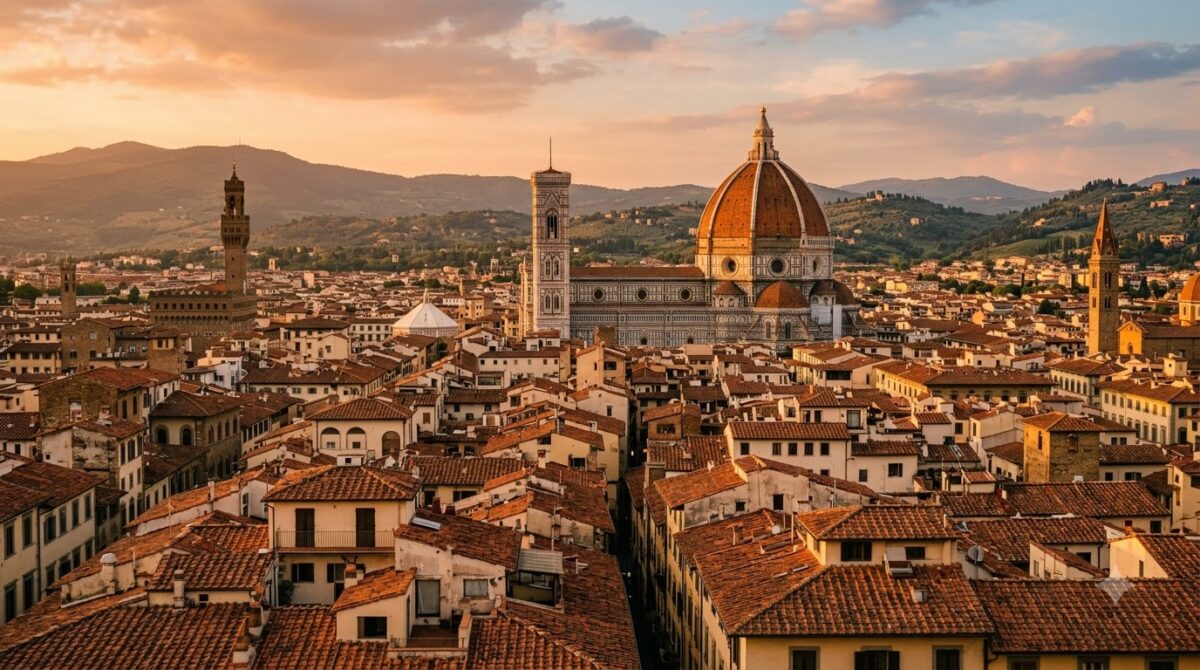
The Duomo complex — cathedral, dome climb, baptistery, bell tower, museum — is sold as a combined ticket, and the dome climb must be reserved for a specific time slot. It cannot be bought on the door.
Then Piazza della Signoria, the Ponte Vecchio, and a walk up to Piazzale Michelangelo for the view back over the terracotta rooftops. Sunset there is the standard first night in Florence, and it deserves the cliche.
Day 5: Renaissance art, properly
The Uffizi Gallery and the Accademia are the two that matter. The Accademia holds Michelangelo’s David; the Uffizi holds Botticelli. Both need advance timed tickets. Both are small enough that a morning and an afternoon covers them.
Do not attempt both plus the Duomo in one day. Renaissance art is heavier going than people expect, and three major sites in a day is where a trip stops being enjoyable.
Day 6: a day trip from Florence
This is the flexible day, and the choice tells you what kind of traveller you are.
- A day trip to Siena — a medieval hill town with the best square in Italy, about 1 hour 30 minutes by bus. The easy day trip, and the one most people pick.
- A day trip to Bologna — about 35 minutes by fast train, and the best food city in the country. If you care more about eating than about churches, go here.
- Pisa — about an hour by train. The Leaning Tower is genuinely strange to stand under, and honestly that is the whole visit. Half a day, not a full one.
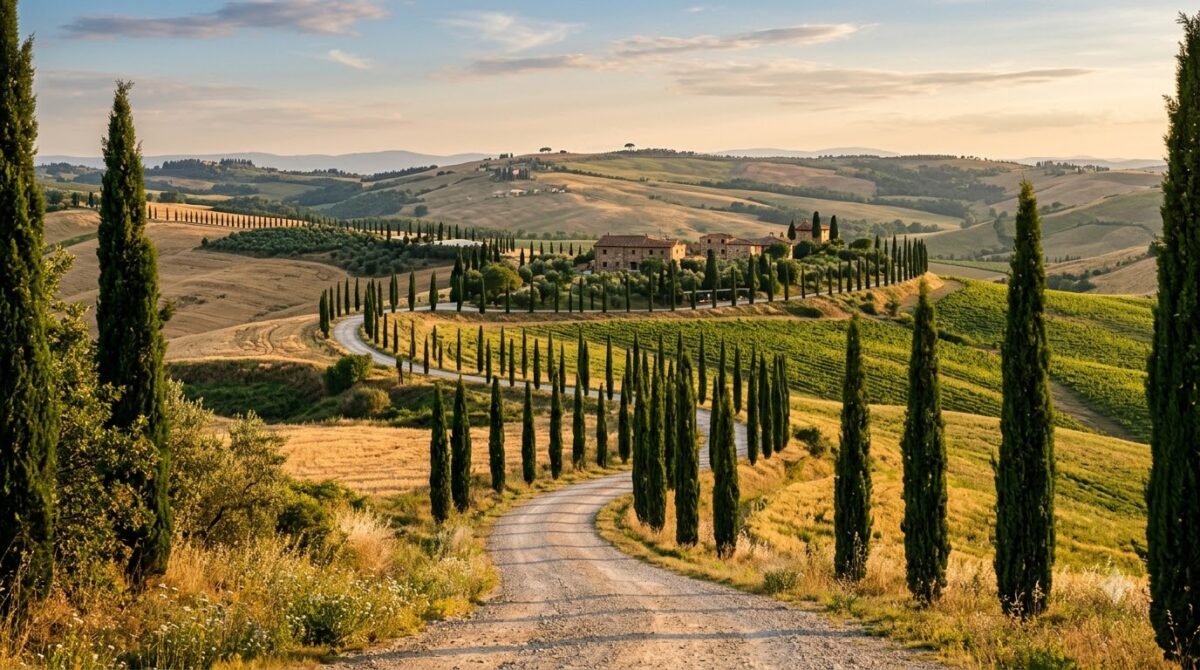
- A trip into the Tuscan countryside — Val d’Orcia, San Gimignano, a winery. This is the one thing on this itinerary that a car does better than a train.
Days 7 and 8: Cinque Terre
Florence to Cinque Terre takes about 2 hours 30 minutes, changing at La Spezia onto the local line that links the five villages.
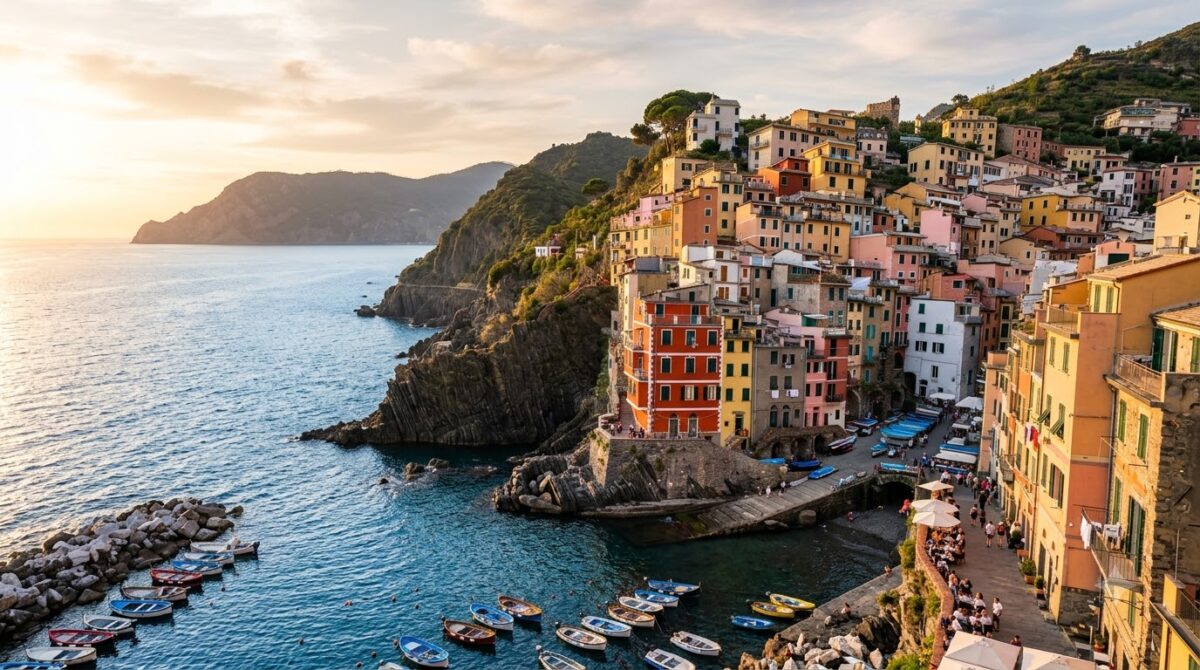
Cinque Terre is five villages — Monterosso, Vernazza, Corniglia, Manarola, Riomaggiore — strung along a cliff coast with no through road. A local train runs between them every twenty minutes or so and takes three or four minutes a hop. That train is the whole transport system, and it is why a car here is worse than useless.
- Sleep in Monterosso if you want the only real beach, or Vernazza if you want the prettiest harbour.
- The Cinque Terre Card covers the local trains and the walking paths between villages. Buy it at any station in the park.
- Check the coastal paths before you count on them. Sections close after landslides and stay closed for years. The park authority publishes what is open.
- Two nights, not one. One night means you arrive, see one village, and leave.
Days 9 and 10: Venice
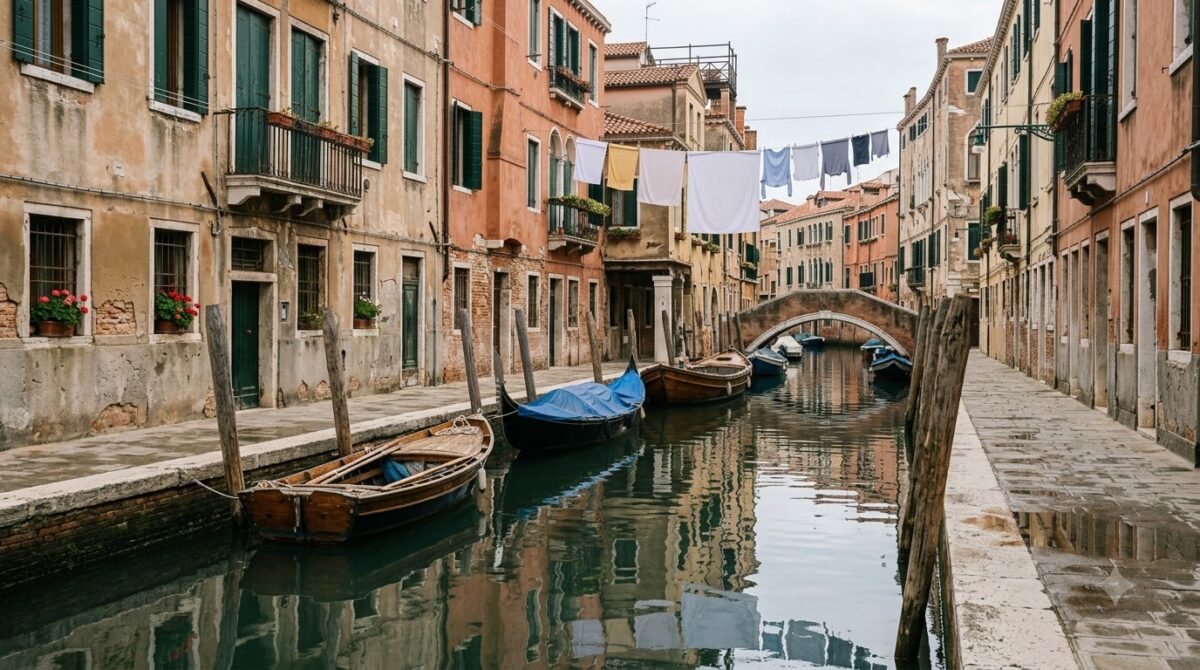
Cinque Terre to Venice is around 5 hours with a change, and it is the longest leg of the trip. Leave in the morning and treat it as a travel day with an evening in Venice at the end of it.
Two days in Venice is enough for a first visit, and it is exactly the right amount if you use it correctly.
Your first day in Venice
St Mark’s Square, the Basilica, the Doge’s Palace and the Rialto Bridge. All of it is worth seeing and all of it is crowded from about nine in the morning until six in the evening. Book the Doge’s Palace ahead.
Ride the Grand Canal on the number 1 vaporetto, the public water bus, which runs the whole length of it for the price of a transport ticket. It is the gondola view without the gondola price.
Your second day: get off the main island
This is the day that decides whether you like Venice. Take the vaporetto out to Burano, about 45 minutes across the lagoon, where the houses are painted in hard colours and there is almost nobody. Murano is closer and glassier.
Come back in the late afternoon and walk the Cannaregio or Dorsoduro districts, away from the route between the station and St Mark’s. Venice twenty minutes off that line is quiet, residential and completely different from the Venice people complain about.
On the tourist tax: Venice charges a day-visitor access fee on selected busy days. Overnight guests are exempt because the fee is already covered by the accommodation tax you pay at your hotel. Check the city’s official page for the current dates.
Take the train, not a car
This is the part of planning a trip to Italy that Americans get wrong most often, because in the United States a road trip is the obvious way to see a country.
For Rome, Florence and Venice, the train wins on every measure.
- City centre to city centre, with no airport-style check-in.
- Rome to Florence in about 1 hour 30; Florence to Bologna in about 35 minutes.
- No parking. Parking in Florence and Venice is expensive and far from where you want to be.
- Venice has no roads at all. A car there is a car left in a garage on the mainland.
Two operators run the fast lines, Trenitalia and Italo, on the same tracks between the same stations. Book a week or two ahead for the cheap fares; walk-up prices on fast trains are much higher. Regional trains are not reservable and do not get cheaper in advance, so there is no need to book those early.
The ZTL trap, which costs more than the car
If you do rent a car for the Tuscan countryside, understand this before you drive.
Italian historic centres are ZTLs — Zona a Traffico Limitato — closed to non-resident vehicles and enforced by automatic camera. There is no barrier and no one waves you down. A camera photographs the plate, and the fine reaches your home address months later through the rental company, which adds an administration charge of its own.
Each separate entry is a separate fine. Drivers who circle a town centre looking for a hotel can collect several in one afternoon and hear nothing about it until the following year.
- Never drive into a historic centre unless your hotel has registered your plate in advance, and get that confirmed in writing.
- Park outside the walls and walk in. Every Tuscan hill town has car parks below the old centre.
- Pick the car up on the way out of a city, not in it — stations outside the centre are easier and cheaper.
- Rent for two days, not ten. Collect it in Florence for the countryside, drop it back before you take the train to the coast.
What to book before you leave
Italy has moved almost everything to timed entry. These are the ones where turning up on the day does not work in high season.
- Colosseum, Forum and Palatine — one combined ticket, timed slot.
- Vatican Museums and Sistine Chapel — timed slot, and go at opening.
- Florence Duomo dome climb — reserved time, cannot be bought on the door.
- Uffizi Gallery and Accademia — timed tickets, both.
- Doge’s Palace in Venice — timed entry.
- Fast trains — a week or two ahead for the cheap fares.
Everything else on this itinerary can be decided the morning of.
When to go
- April to early June and September to October are the best months. Warm, long days, and the crowds are heavy rather than impossible.
- July and August are hot, and Rome and Florence are genuinely uncomfortable at midday. Many family-run restaurants close for part of August.
- November to March is cheap and quiet. Shorter days, some coastal places in Cinque Terre shut for the season, and Venice can flood at high tide.
What this itinerary leaves out
Ten days in Italy is one region and a bit, not a country. Being honest about what you are skipping is more useful than pretending you can fit it in.
- Milan — the Duomo and the Galleria Vittorio Emanuele II are worth a day, but Milan is a working city and the weakest use of a day on a first trip.
- The Dolomites — the best mountains in Italy, and they need their own trip and a car.
- The Amalfi Coast, Naples and Pompeii — all of southern Italy, really. This is the obvious second trip.
- Sicily and Puglia — a different country in feel, and two weeks each.
None of these are failures of the itinerary. They are the reason people go back. If you want itinerary ideas for a return trip to Italy, start from the south and work outward.
How to spend 10 days in Italy differently
Two variations that work as well as the standard route.
- Slower, three bases: Rome 4 nights, Florence 4, Venice 2. Drop Cinque Terre, add day trips to Siena and Bologna. The most relaxed version of this trip.
- Northern Italy: Venice 3, Verona or Bologna 2, the Dolomites 3, Milan 2. Skips Rome entirely, which is only sensible if you have already been.
Still choosing dates? See the best time to visit Italy, which breaks the year down by region as well as by month.
Want the Rome section in detail? See the Rome 3 day itinerary for what to book and in which order.
Wondering whether three days is right for Rome? See how many days you need in Rome.
Staying three nights in Florence? See where to stay in Florence for which side of the Arno suits your trip.
Wondering whether three nights is right for Florence? See how many days in Florence.
Finishing in Venice? See where to stay in Venice, where the first decision is island or mainland.
Saving the south for a second trip? See the Amalfi Coast itinerary for how the coast divides up.
Planning a second trip to Italy? The Sicily itinerary is the obvious next one.
Adding the lakes to your route? Our guide on where to stay in Lake Como explains why the shape of the lake decides the town.
Crossing the border? The south of France itinerary picks up where the Italian Riviera leaves off.
Heading north over the Alps? See the Switzerland itinerary for a rail-based route.
Adding the Ligurian coast? Our Cinque Terre itinerary covers all five villages and why the trail closures decide the plan.
Working out how long to give the coast? See how many days in Cinque Terre before you fix the dates.
Heading further south? Our Puglia itinerary covers the heel of the boot, which needs a car and two bases.
Deciding how long to give the lagoon? See how many days in Venice before you fix the dates.
For the hill towns and the wine country, see our Tuscany itinerary.
Crossing into Switzerland after Italy? See where to stay in Switzerland — the rail network is a fan, not a grid, so the base you pick decides what you can reach.
Thinking further afield? Our China itinerary explains why you pick one rail line there rather than three cities.
Frequently asked questions
Is 10 days enough for Italy?
It is enough for one region done well. Ten days covers Rome, Florence, Tuscany and Venice at a reasonable pace, with the coast at Cinque Terre if you want it. It is not enough for both northern and southern Italy, and trying to do both is the main reason people find the trip tiring.
How many cities should I visit in 10 days in Italy?
Four bases at most. Each move between cities costs about half a day once packing, checking out and travelling are counted. Six cities means more than two of your ten days spent in transit.
Should I rent a car in Italy?
Not for Rome, Florence, Venice or Cinque Terre. The train is faster city centre to city centre, and Venice has no roads. Rent a car only for the Tuscan countryside, for two days, and never drive into a historic centre because ZTL cameras issue automatic fines that reach you months later.
Should I start in Rome or Venice?
Start in Rome. It has the most to see and you want it while you are freshest, and Rome has the better long-haul flight connections for arrivals. Fly home from Venice so you never travel back over the same ground.
What is the best time of year for a 10 day Italy itinerary?
April to early June, or September to October. Warm weather, long daylight and crowds that are heavy but manageable. July and August are hot enough to change how you plan the middle of the day, and some restaurants close for part of August.
Do I need to book museums in advance in Italy?
Yes, for the major ones. The Colosseum, the Vatican Museums, the Uffizi, the Accademia, the Florence Duomo dome climb and the Doge Palace all use timed entry, and the dome climb cannot be bought on the door at all. Everything else can be decided on the day.
Is Cinque Terre worth two days on a 10 day trip?
Yes, if you want coast on this trip. One night is not enough because you lose most of the arrival day travelling. Two nights lets you see three or four of the villages properly. Check which walking paths are open before you go, as sections close after landslides and can stay closed for years.
Can I do Pompeii as a day trip from Rome?
You can, but on a ten day trip it is a poor trade. It is roughly five hours of travelling for one site, and it costs you a day of Rome. Pompeii makes far more sense on a trip that includes Naples and the Amalfi Coast, which is a separate holiday in southern Italy.