
Nobody asks whether Florence is worth visiting. People ask about Naples because they have heard it is dirty, and they have heard it is dangerous, and they are wondering whether the pizza is worth the risk.
Some links below are affiliate links. We may earn a commission if you book through them, at no extra cost to you. We do not rank hotels, and any prices on the map come live from the booking sites.
Quick answer: where to stay in Naples. Chiaia is the easiest choice for a first visit: elegant, safe-feeling and near the waterfront. The Centro Storico puts you among the sights and the noise. Rooms around Napoli Centrale are the cheapest, on the least appealing streets.
Check hotels in Chiaia →Check all of Naples →See them on a map ↓
Short answer: yes, and it is one of the best cities in Italy. But it is also the one city in the country where the warning is worth taking seriously, and there is a specific kind of traveller who should skip Naples and will be happier for it.
This is the long answer. Transport, opening details and safety guidance checked 6 September 2026 against official and local sources.
The short version
| Visit Naples if | Skip Naples if |
|---|---|
| You care about food more than architecture | You want a pretty, tidy Italian city |
| You want Pompeii, Herculaneum or the Amalfi Coast | You are on a first ten day trip to Italy |
| You have been to Italy before and want something rawer | Crowds and noise stress you out |
| You like cities that are alive rather than preserved | You are travelling with small children and heavy bags |
Is Naples dirty? Yes, in places
This is the first thing people have heard and it deserves a straight answer rather than a defensive one.
Parts of Naples are genuinely scruffy. Rubbish collection has been an unresolved problem in the city for decades, there is graffiti on almost everything at street level, and buildings in the historic centre are weathered in a way that Florence and Siena are not. Anyone telling you the city is spotless has an interest in you booking a tour.
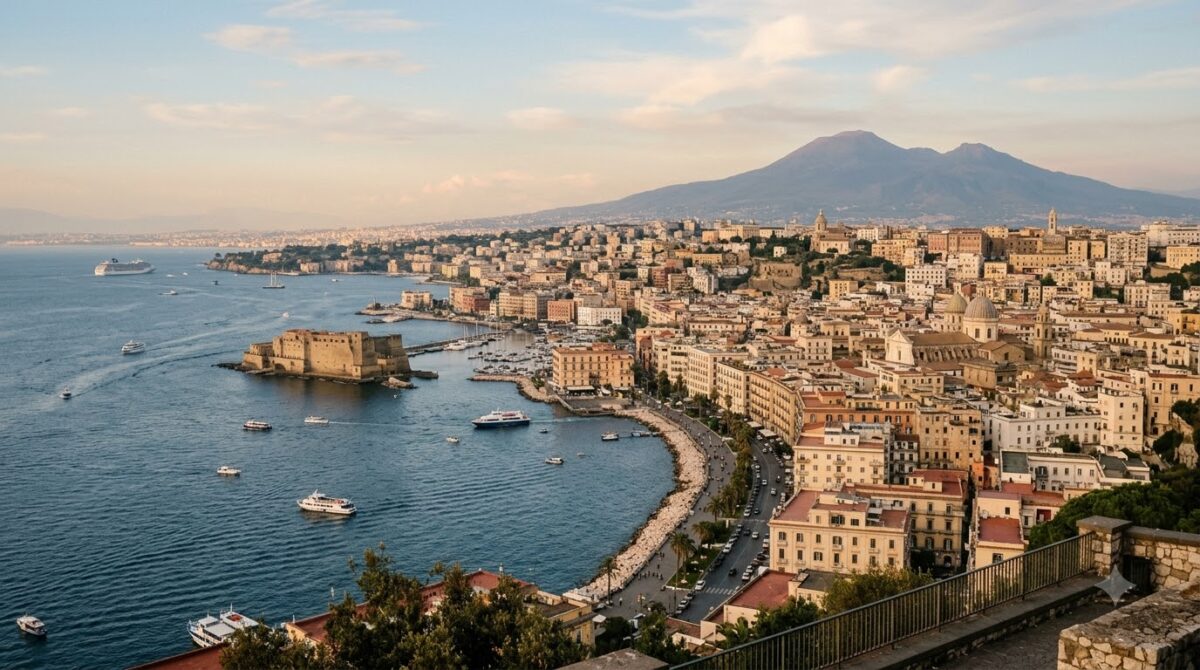
What is also true: the mess is concentrated, it is not everywhere, and it has almost nothing to do with how interesting the place is. The Chiaia and Vomero districts are as neat as anywhere in Italy. The waterfront at Lungomare is one of the finest city walks in the country. The historic centre is chaotic and grubby and also holds more art per street than most European capitals.
The honest framing is this: Naples is not preserved for visitors. It is a working city of roughly three million people in its wider area, and it looks like one. If that reads as a flaw, this is not your city. If it reads as a relief after Florence, you will like it a lot.
Is Naples safe for tourists?
Naples has a reputation for organised crime that is real in the region and almost entirely irrelevant to visitors. That is not the risk. The realistic risk in Naples is theft, and it is higher than in Rome or Florence.
What actually happens to travellers, in rough order of frequency:
- Pickpocketing on crowded streets, at Napoli Centrale station, and on the Circumvesuviana train to Pompeii, which is the single most worked route in the area.
- Bag and phone snatching from scooters, which is the crime Naples is specifically known for. Walk on the inside of the pavement and do not hold a phone out towards the road.
- Traffic. Genuinely the thing most likely to hurt you. Scooters treat red lights as advisory and pedestrian crossings as decoration.
What sensible visitors do: carry a cross-body bag zipped and in front, leave the good watch at home, keep the phone in a front pocket, use the Metro rather than walking through the Forcella and lower Sanita areas after dark, and take a licensed taxi or a booked car at night rather than a long walk.
What the numbers say: Naples is not dangerous in the sense of violent crime against tourists, which is rare. It is a city with a lot of opportunistic theft. Treat it the way you would treat Barcelona or Paris, with one extra notch of attention, and the overwhelming majority of visits pass without incident.
The reasons to visit Naples
The food, which is not an exaggeration
Pizza was invented in Naples, and Neapolitan pizza is a protected specification: a specific dough, a specific oven temperature, sixty to ninety seconds in a wood-fired oven, a soft and blistered crust that does not hold its shape. It is a different food from the pizza sold anywhere else, and in Naples a margherita in a well-regarded pizzeria still costs a few euros.
Beyond pizza there is the whole street food tradition — fried pizza, sfogliatella pastry, taralli, espresso taken standing at the bar — and this is the cheapest serious eating in Italy. Food in Naples is the single strongest reason to come.

The National Archaeological Museum
Most of what was dug out of Pompeii and Herculaneum is not at those sites. It is in the Museo Archeologico Nazionale in the heart of Naples: the mosaics, the frescoes, the bronzes, the Farnese collection.
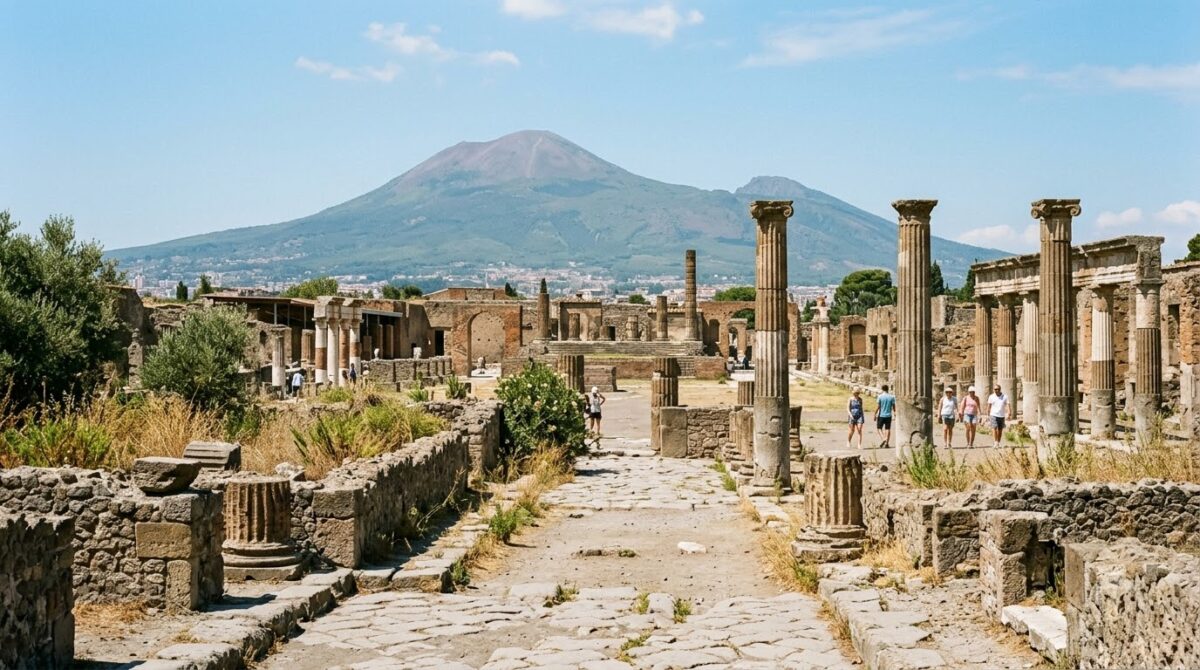
Visit the museum before you visit Pompeii, not after. Pompeii is a city with the contents removed. Seeing the contents first is what makes the empty streets mean something, and this single piece of sequencing improves the day trip more than any guide.
The churches, and what is inside them
The Cappella Sansevero holds the Veiled Christ, a marble sculpture of a body under a marble sheet that people travel to Italy specifically to see. It is a small chapel, tickets are timed, and it sells out.
The Duomo holds the blood of San Gennaro, the city’s patron saint, in a sealed vial that is brought out three times a year in a ceremony the city genuinely cares about. The Royal Palace of Naples and the Certosa di San Martino above the city cover the Bourbon side of the story.
The Metro stations, which nobody tells you about
Line 1 of the Naples Metro includes a series of Art Stations, each commissioned from a different contemporary artist. Toledo station in particular is regularly named among the most striking underground stations in Europe. It costs a standard Metro ticket to see, and most visitors ride straight past.

Naples underground
Beneath the streets of Naples there is a Greek and Roman network of aqueducts, cisterns and quarries, later used as air-raid shelters. Several operators run guided tours down into it. It is claustrophobic in places and it is the best hour of the city’s history you can buy.
Naples as a base: the day trips
Even people who do not warm to the city admit that its position is unmatched. Almost everything in the Bay of Naples is under two hours away.
- Pompeii — about 35 minutes on the Circumvesuviana line. The largest and most complete Roman site anywhere.
- Herculaneum — about 20 minutes, on the same line. Smaller than Pompeii and far better preserved, with wooden beams and upper floors still standing. Many people prefer it, and it needs half the walking.
- Mount Vesuvius — a bus from Pompeii to the car park, then a walk of around 30 minutes up gravel to the crater rim.
- Capri — a ferry from the port at Molo Beverello, roughly 50 minutes on the fast boat.
- The Amalfi Coast — Sorrento is the end of the Circumvesuviana line, and the coast road starts there.
- Caserta — the Royal Palace, the largest palace by volume in the world, about 40 minutes by train.
This is the strongest argument for Naples. Staying in Sorrento to visit Pompeii is common and it costs you more money and more travel time than staying in Naples and doing exactly the same day.
Who should skip Naples
Being useful here means saying it plainly.
- If this is your first trip to Italy and you have ten days, skip it. Rome, Florence and Venice will use that time better, and Naples deserves more than the leftover day. Our 10 day Italy itinerary explains why the detour south costs more than it returns on a short trip.
- If you want an easy, tidy, restful holiday, skip it. Naples is loud, crowded and physically demanding, and there is no version of it that is calm.
- If crowds and noise genuinely stress you, skip it. The historic centre is dense and constant, and there is no quiet edge of it to retreat to in the middle of the day.
- If you only want Pompeii, you do not need Naples. Sorrento is a gentler base on the same train line, at a higher price.
None of that is a criticism of the city. It is a mismatch of expectations, and mismatched expectations are why so many people come back saying they hated it.
How many days do you need in Naples?
- One day — enough for the historic centre, the Archaeological Museum and two meals. Tight but real, and a common stop between Rome and the Amalfi Coast.
- Two days — the city properly, including the Cappella Sansevero, the underground and the waterfront.
- Three or four days — the city plus Pompeii and Herculaneum, or the city plus a day on Capri. This is the version most people should book.
- A week — Naples as a base for the whole Bay of Naples, which is the best-value week in southern Italy.
Where to stay in Naples
Accommodation in Naples is markedly cheaper than in Rome or Florence, and the area matters more than the hotel.
- Chiaia — elegant, safe-feeling, near the waterfront, and the easiest choice for a first visit.
- Centro Storico — in the middle of the noise and the sights. Atmospheric, and you will hear the street until late.
- Vomero — up the hill by funicular, residential and quiet, with the view back over the bay.
- Around Napoli Centrale — the cheapest rooms and the least appealing streets. Convenient for the Circumvesuviana, and not somewhere to walk late at night.
Map shows live availability and prices. We may earn a commission on bookings made through it, at no extra cost to you.
The best time to visit Naples
- April to June and September to October are the best months. Warm, and the ferries to Capri are running a full timetable.
- July and August are hot and humid, and Pompeii in particular is punishing at midday because there is no shade in a ruined city.
- November to March is mild by northern European standards, wet, and quiet. Ferry services to the islands are reduced, and this is when the weather in Naples is least reliable.
Getting there and getting around
The train from Rome to Naples takes a little over an hour on the fast line, city centre to city centre. It is one of the easiest journeys in Italy and there is no reason to fly it.
- Do not bring a car into Naples. The traffic is the hardest in Italy, the historic centre is a limited traffic zone with camera enforcement, and parking is scarce and expensive.
- The Metro is clean, cheap and easy, and Line 1 is worth riding for its own sake.
- The Circumvesuviana is not. It is old, crowded and hot, and it is where pickpocketing is most common. It is also the only sensible way to Pompeii and Sorrento, so take it and watch your bag.
- Funiculars run up to Vomero on a normal transport ticket.
So, is Naples worth visiting?
Yes, if you go on its terms. Naples is the most alive city in Italy, it has the best food in the country at the lowest prices, it holds the contents of Pompeii, and it sits within an hour of more worth seeing than anywhere else in the south.
It is also loud, worn and occasionally exhausting, and it will not tidy itself up for you. People who arrive expecting Florence are disappointed, and people who arrive expecting a real southern Italian city are usually surprised by how much they love Naples.
Save it for a second trip to Italy, give it three days rather than one, and read where to stay in Rome if you are combining the two, since the train between them is barely over an hour.
What Naples is actually like to walk around
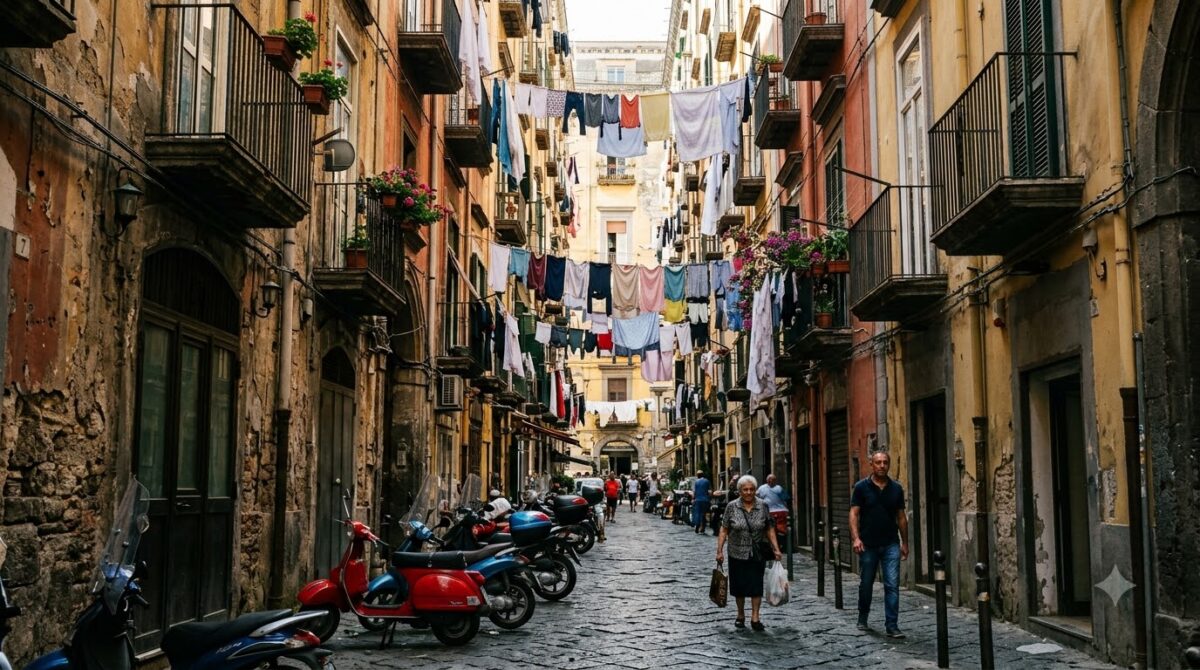
The thing that surprises people most is the density. The streets of Naples in the old centre are narrow, tall and continuous, with laundry strung overhead and scooters coming through gaps you would not walk through. Spaccanapoli, the street that cuts the historic centre in a dead straight line, is the clearest expression of it.
There is no quiet hour. The city starts early, does not pause much in the afternoon, and is busiest in the early evening when everyone is out. That constant activity is either the best thing about the place or the reason you leave after a day, and there is not much middle ground.
Practical consequence: the historic centre is hard on the feet and hard on wheeled luggage. The paving is basalt slabs, worn smooth and uneven, and it slopes. Bring shoes with grip, and if you are staying in the centre expect to carry a bag rather than roll it.
Naples compared with the rest of Italy
People asking whether to visit are usually really asking how it compares with places they already have on the list.
- Against Rome: Naples is cheaper, the food is better, the crowds are more local and the sights are fewer. Rome is the better first visit; Naples is the better second one.
- Against Florence: almost opposites. Florence is compact, tidy and built around Renaissance art. Naples is sprawling, worn and built around daily life. Liking one says nothing about liking the other.
- Against the Amalfi Coast: Naples is a city and the coast is a holiday. Use Naples as the base and the coast as the day trip, unless a beach week is the whole point of the trip.
- Against northern Italy: the south is poorer, louder, warmer and considerably cheaper. Anyone whose picture of Italy comes from Tuscany or the lakes should know that Naples is a different country in feel.
Timing the trip? The best time to visit Italy covers why the south runs a longer season than the north.
Using Naples as the gateway south? Our Amalfi Coast itinerary sets out 3, 5 and 7 day versions built around the ferries.
Frequently asked questions
Is Naples worth visiting?
Yes, for the food, the National Archaeological Museum and its position within an hour of Pompeii, Herculaneum, Vesuvius and Capri. It is not worth visiting if you want a tidy, restful Italian city, and it is a poor use of days on a first ten day trip to Italy.
Is Naples dirty?
Parts of it are. Rubbish collection has been a long-running problem, and the historic centre has graffiti and weathered buildings. Chiaia, Vomero and the Lungomare waterfront are as tidy as anywhere in Italy. Naples is a working city of around three million people rather than a preserved one, and it looks like it.
Is Naples safe for tourists?
Reasonably, with attention. Violent crime against visitors is rare and organised crime does not touch tourists. Theft is the real risk and it is higher than in Rome: pickpocketing at Napoli Centrale and on the Circumvesuviana line, and bag snatching from scooters. Keep your bag zipped and in front, keep your phone away from the roadside, and avoid long walks through Forcella after dark.
How many days do you need in Naples?
Three or four is the sweet spot: two for the city and one or two for Pompeii, Herculaneum or Capri. One day covers the historic centre and the Archaeological Museum if you are passing through. A week works if you are using Naples as a base for the whole Bay of Naples.
Should I stay in Naples or Sorrento to visit Pompeii?
Naples, unless you specifically want a quiet resort town. Both are on the Circumvesuviana line, Naples is closer to Pompeii, and accommodation in Naples is cheaper. Sorrento is calmer and prettier and costs more for the same day trip.
Should I visit Pompeii or Herculaneum?
Herculaneum if you have one morning, Pompeii if you have a full day. Pompeii is far larger and gives a sense of a whole Roman city. Herculaneum is smaller and much better preserved, with wooden fittings and upper floors intact, and it takes half the walking. Visit the National Archaeological Museum in Naples first, because it holds what was removed from both sites.
Do I need a car in Naples?
No, and it is the worst city in Italy to drive in. The traffic is relentless, the historic centre is a camera-enforced limited traffic zone, and parking is scarce. The Metro, the funiculars and the regional trains reach everything, and ferries cover the islands.
When is the best time to visit Naples?
April to June, or September to October. Warm weather, full ferry timetables to Capri and Ischia, and bearable conditions at Pompeii, which has almost no shade. July and August are hot and humid, and winter is mild and wet with reduced island ferries.