
Switzerland is small enough to cross in a day and slow enough that almost nobody should try.
The rail network is a fan, not a grid. Lines radiate out from a handful of junctions, and getting from one valley to the next often means going back down and out again. So a base does not reach everything within its map distance. It reaches a specific set of places, and the set is decided by the timetable rather than the kilometres.
That is why the useful question here is not which hotel to book. It is which two or three bases to build the trip around, because a badly chosen base costs you two or three hours of sitting on a train every single day, and it is the one mistake you cannot undo after the rooms are paid for.
How this page pays for itself: the booking links below are affiliate links, which means we may earn a commission if you book through them, at no extra cost to you. They open a normal search so you can compare for yourself. We do not print prices, we do not rank hotels, and nobody on this team has stayed in any of them. Positions, train times and season notes read 10 September 2026.
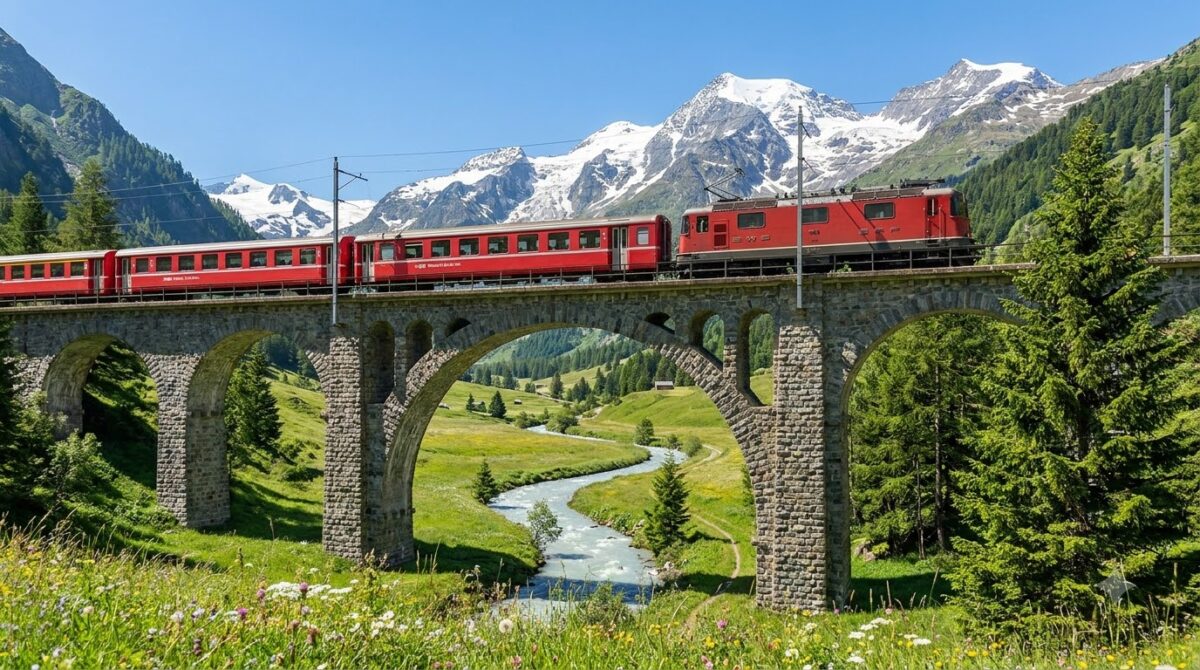
The best places to stay in Switzerland at a glance
| Base | Reaches | Best for |
|---|---|---|
| Interlaken and the Jungfrau villages | Grindelwald, Lauterbrunnen, Wengen, Murren, Schilthorn | Mountains, first trips, hiking |
| Lucerne | Pilatus, Rigi, Titlis, the lake boats | A short trip, city plus mountains |
| Zermatt | The Matterhorn, Gornergrat, glacier skiing | One iconic mountain, car-free village |
| Zurich | Flights, Rhine Falls, Appenzell, Lucerne | Arrival and departure nights |
| Geneva, Montreux, Lausanne | Lavaux vineyards, Chillon, the French side | Lake, wine, a softer pace |
| Bern | Everything, badly. It is the most central and the least used | History, arcades, a quiet night |
| Lugano and Ticino | Italian Switzerland, Bellinzona, the lakes | Warm weather, a change of country without crossing a border |
| St Moritz and the Engadin | The Bernina line, Swiss National Park | A second trip, or a train journey |
If you want one answer: the Jungfrau region for the mountains and Lucerne for the lake and the city, with a night in Zurich at whichever end your flight lands. That covers a first week without a wasted afternoon.
How to pick a base: the radius, not the distance
- Two bases for a week, three for ten days. Each move costs a half day once you count packing, the walk to the station and check-in.
- Do not day trip between mountain regions. Zermatt to the Jungfrau looks close and takes about three and a half hours each way.
- Stay in the mountains, visit the cities. The reverse is what most first-timers book and it is why they spend the week commuting.
- Trains run to the minute and connections are built to work, so a four-change journey is not the problem it would be elsewhere. The problem is total time.
- Check the last mountain train before booking a village above a valley floor. Some run late, some stop at six.
- Luggage travels separately if you want. Swiss rail moves suitcases station to station overnight, which changes what is possible with two bases.
Interlaken and the Jungfrau region: the mountain base
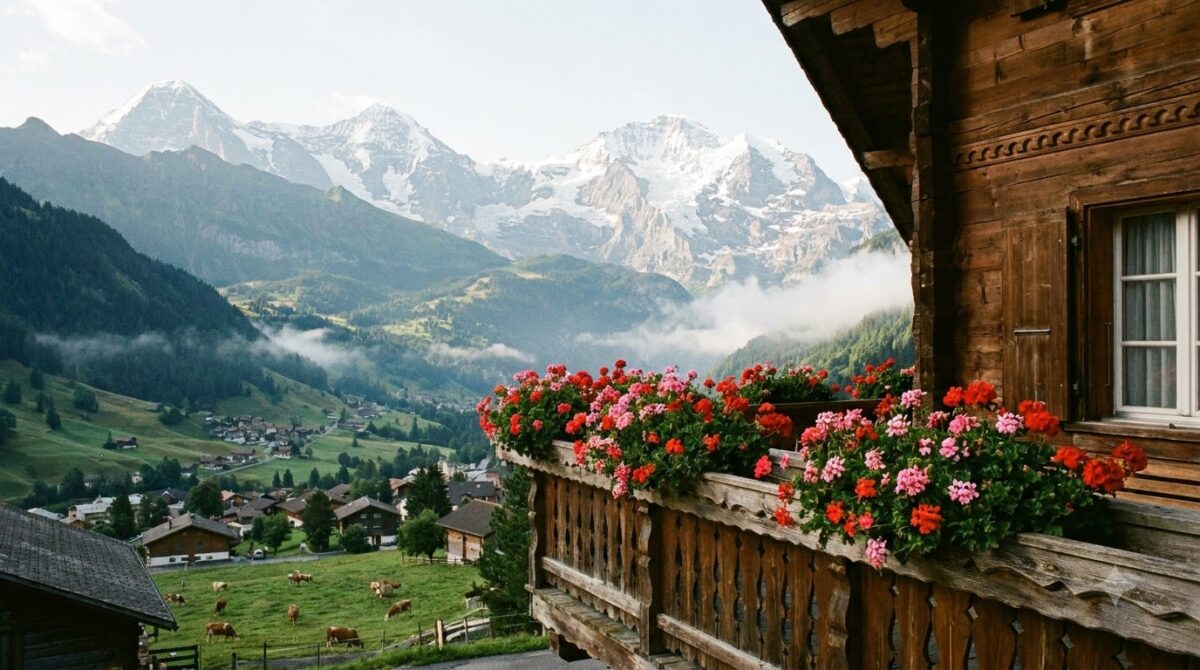
If you have seen a photograph of Switzerland, there is a good chance it was taken within twenty kilometres of here. This is the region most trips should be built around.
- Interlaken itself sits between two lakes and is the transport hub rather than the scenery. Everything leaves from here, and the town is busier and more commercial than its surroundings.
- Lauterbrunnen is the valley floor: vertical cliffs, seventy-two waterfalls, and a train station that connects everything above it. Good for a car, good for families, and in the shade by mid-afternoon in winter.
- Grindelwald is the bigger village on the other side, under the Eiger, with the widest range of hotels and the gondola to the First ridge.
- Wengen and Murren sit on shelves high above Lauterbrunnen and are both car free, reached by cogwheel train or cable car. They are quieter, the views are better, and getting there with luggage is an operation.
- Murren is the one to pick if you want the postcard and do not mind the effort. Wengen is the easier version of the same idea.
- Jungfraujoch, the Top of Europe, is the expensive headline trip. Schilthorn and Harder Kulm are cheaper and, on a clear day, arguably better.
See what is available in the Lauterbrunnen valley — opens a search, not a recommendation.
See what is available in Grindelwald — opens a search, not a recommendation.
See what is available in Interlaken — opens a search, not a recommendation.
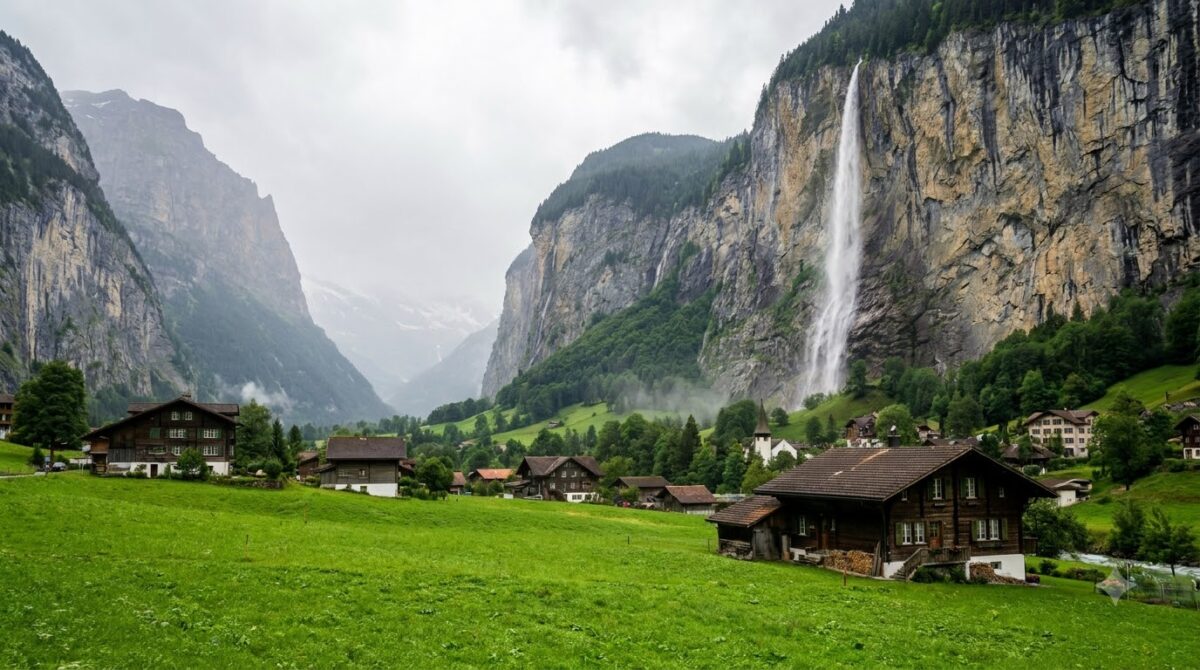
Map shows live availability. We may earn a commission on bookings made through it, at no extra cost to you.
Lucerne: the short-trip base
- Lucerne is the best value base in the country for a trip of three or four nights, because the city, the lake and three mountains all sit within a morning.
- Pilatus, Rigi and Titlis are all day trips from the same station, and the lake boats are transport rather than tours.
- The Altstadt on the north bank of the Reuss is where the painted facades and the covered bridges are.
- Near the station is the practical choice, because every mountain trip starts there or at the pier beside it.
- The lake villages such as Weggis and Vitznau are the quiet alternative, reached by paddle steamer.
- Forty-five minutes from Zurich by train, which makes it an easy first or last stop.
See what is available in Lucerne — opens a search, not a recommendation.
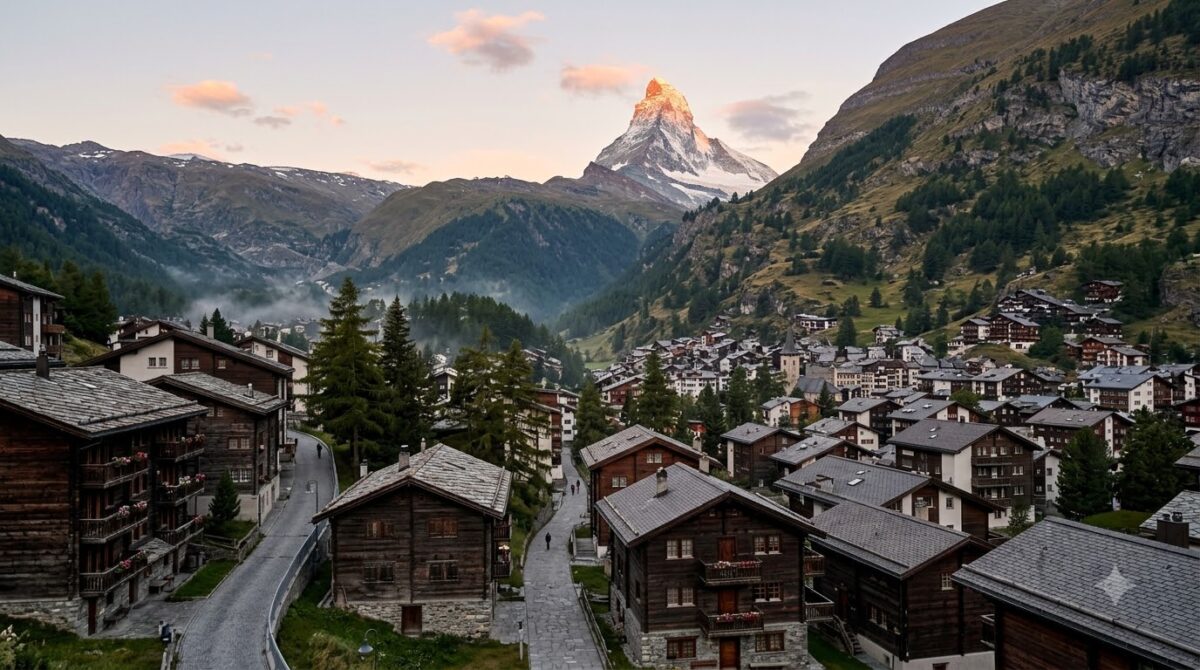
Map shows live availability. We may earn a commission on bookings made through it, at no extra cost to you.
Zermatt: one mountain, and no cars
- Zermatt is car free. You park in Tasch and take the shuttle train up, or you arrive by train from Visp. There is no other way in.
- The village is built around one view, and the Matterhorn either shows itself or it does not. Give it two nights so you get two mornings.
- Gornergrat is the cogwheel railway with the classic view, and the Matterhorn Glacier Paradise is the highest cable car station in Europe.
- Skiing runs almost year round on the glacier, which is unusual and worth knowing if you are travelling in summer.
- It is expensive even by Swiss standards, and the village has almost no cheap beds. Tasch down the valley is where the value is.
- It is a dead end. Zermatt connects to the rest of the country only back down its own valley, so treat it as a there-and-back rather than a stop on a loop.
See what is available in Zermatt — opens a search, not a recommendation.
Zurich: the arrival base
- Zurich has the main international airport and the ten-minute train into the centre, so most trips start or end here whether planned or not.
- Almost everything worth seeing is inside two kilometres and the tram network is good enough that location barely changes journey times.
- What changes between areas is the price. The Altstadt and Bahnhofstrasse cost the most, Zurich West and Langstrasse cost less and are ten minutes away.
- Two nights is plenty, and one is enough if the mountains are the point of the trip.
- Rhine Falls, Appenzell and Lucerne are all day trips from here if you want a city base for the first few days.
- Many hotels include a transport pass for the length of the stay. Ask, because it is not always offered.
See what is available in Zurich — opens a search, not a recommendation.
Geneva, Lausanne and Montreux: the French-speaking side
- This is a different country in feel. French is the language, the pace is slower, and the lake does the work the mountains do elsewhere.
- Geneva is the international city, useful mainly for its airport and for the border with France. It is the least Swiss-feeling place in Switzerland.
- Lausanne is built on a hill above the lake with a metro to climb it, and it is the better city stay of the two.
- Montreux sits at the eastern end with palm trees on the promenade, Chateau de Chillon along the shore, and the jazz festival in July that fills every room for miles.
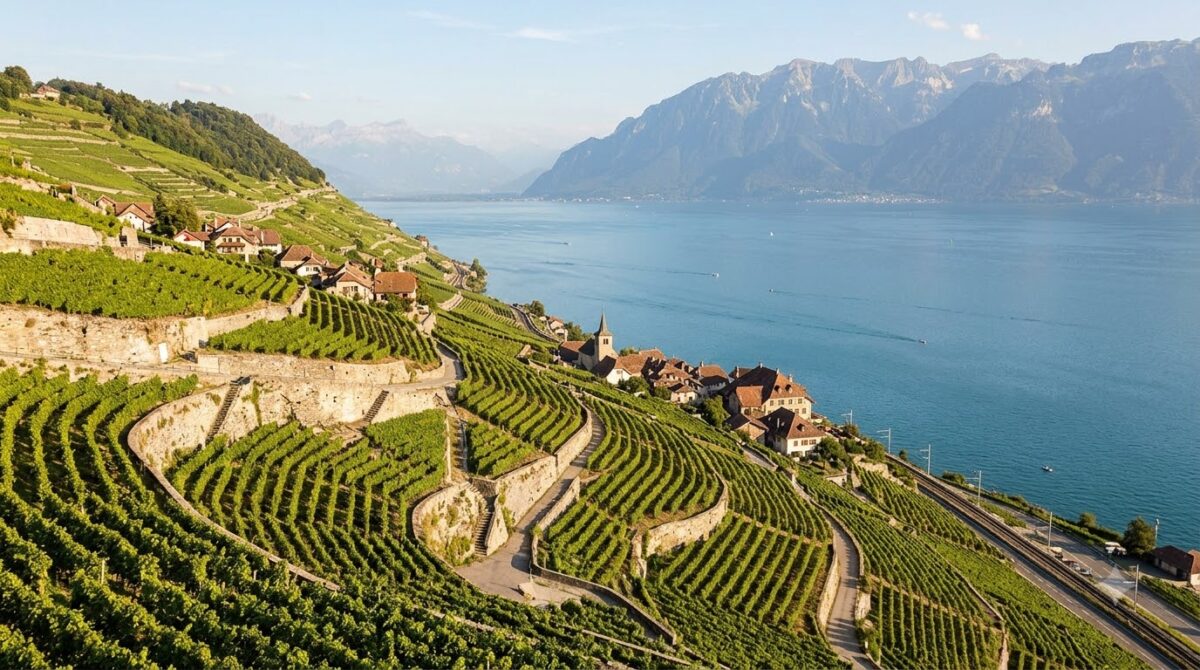
- The Lavaux terraces between Lausanne and Montreux are UNESCO listed vineyards dropping straight into the water, and walking them is the best free half day in the region.
- Best for a second trip, for wine, and for anyone who has decided the Alps are not the whole point.
See what is available in Montreux — opens a search, not a recommendation.
Bern: the most central base nobody uses
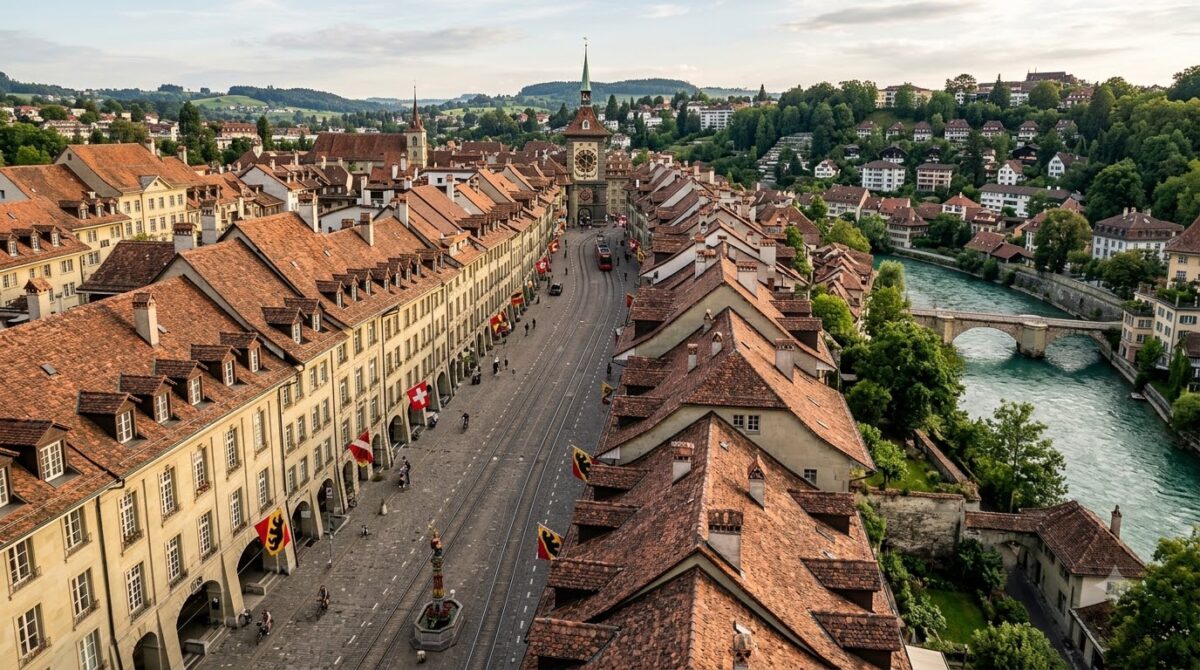
- Bern is the capital, and its old town on a bend of the Aare is a UNESCO site with six kilometres of covered arcades.
- It is the most central point in the country by rail, roughly an hour from Zurich, Lucerne, Interlaken and Lausanne.
- Almost nobody bases here, which means rooms are easier and cheaper than the equivalent in Zurich.
- The Zytglogge clock tower and the bear park are the landmarks, and the Aare is full of locals floating down it in summer.
- Best for a trip where you want one base and do not mind an hour each way, or for a quiet night between regions.
See what is available in Bern — opens a search, not a recommendation.
Lugano and Ticino: Italian Switzerland
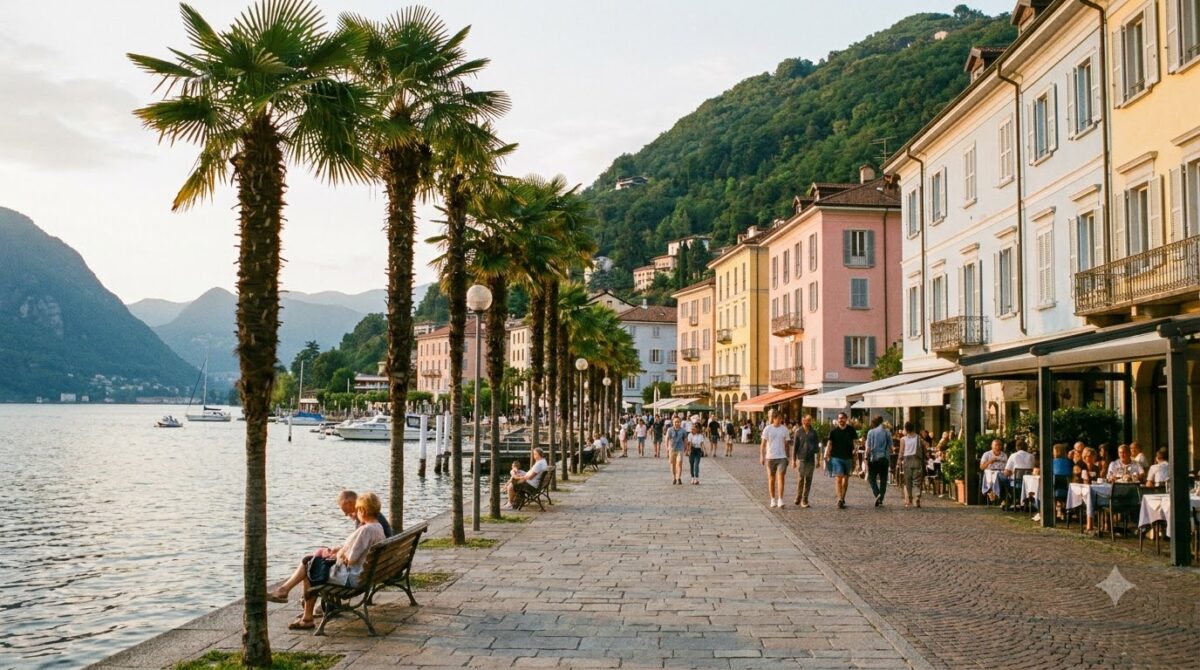
- South of the Alps everything changes. Italian is the language, the architecture is Lombard, and there are palm trees on the lakefront.
- Lugano is the main town, on its own lake, and it is warm when the rest of the country is not.
- Bellinzona has three medieval castles guarding the valley and is a UNESCO site that most visitors drive straight past.
- The Gotthard base tunnel puts Lugano about two hours from Zurich, which is far less than it feels.
- Best for shoulder season, when the mountains are between seasons and Ticino is still warm.
See what is available in Lugano — opens a search, not a recommendation.
St Moritz, the Engadin and the eastern valleys
- This is the far corner, four hours from Zurich, and it is a destination rather than a stop.
- St Moritz is the famous name and an expensive winter resort. Pontresina next door is the quieter, cheaper version of the same valley.
- The Bernina Express runs from Chur over the pass to Tirano in Italy and is the most spectacular rail journey in the country.
- The Swiss National Park near Zernez is the only true wilderness reserve in Switzerland and is strictly protected, which means marked trails only.
- Best for a second or third trip, and for anyone building a holiday around trains rather than around mountains.
See what is available in St. Moritz — opens a search, not a recommendation.
Basel, Appenzell and the rest
- Basel sits where Switzerland, France and Germany meet, has the best museums in the country and a serious art scene.
- Appenzell is the storybook one: painted houses, rolling green hills and the Ebenalp cliff hut, an hour and a half from Zurich.
- Schaffhausen and the Rhine Falls are a half day from Zurich and the falls are the largest in Europe by volume.
- Gruyeres is a walled hilltop village with a castle, a cheese dairy and a great many day visitors.
- None of these need a base of their own on a first trip. They are what you add when you come back.
Switzerland with kids: which bases actually work
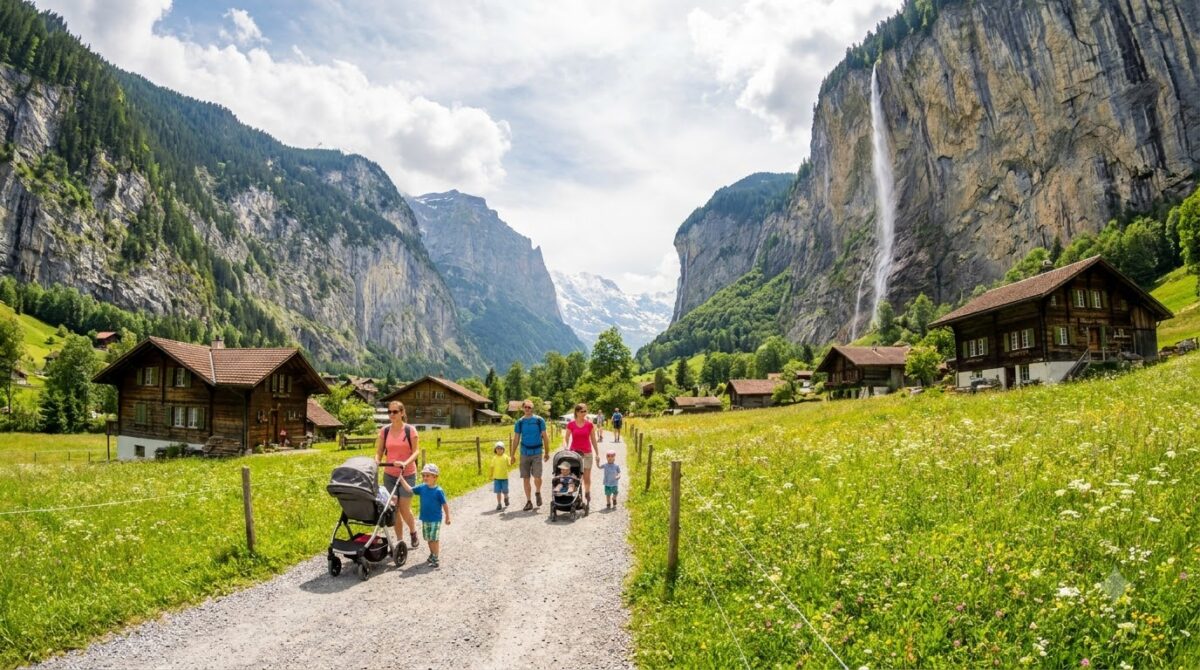
Families get this wrong more often than anyone, because the most photogenic villages are the hardest ones to reach with a pushchair and a tired four-year-old.
- Lauterbrunnen is the family answer in the Jungfrau. It is on the valley floor, the train stops in the village, and you can walk to a supermarket. Wengen and Murren are prettier and involve a cable car with everything you own.
- Lucerne is the family answer overall. Short journeys, boats that count as an activity, the Swiss Museum of Transport for a wet day, and a mountain that is a train ride rather than a hike.
- Apartments beat hotels here more than in most countries, because eating out three times a day in Switzerland with children is genuinely painful.
- Children under six travel free on Swiss trains, and the Swiss Family Card lets children up to sixteen travel free with a parent who holds a pass. Ask for it rather than assuming.
- Avoid a base that needs two transfers. Every change is a chance to lose a glove, a nap or a temper.
- Grindelwald has the widest choice of family rooms and a gondola that children actually enjoy, which is the compromise between pretty and practical.
See family-friendly stays in Grindelwald — opens a search, not a recommendation.
Two different price logics: cities and mountain villages
This is the part that catches people out, and it is worth understanding before you compare anything.
- Cities price by the working week. Zurich, Basel, Geneva and Bern are business towns, so Tuesday and Wednesday cost the most and weekends are often cheaper.
- Mountain villages price by season, and they have two high seasons: snow from December to March, and hiking from late June to September.
- The low season is not a bargain, it is a closure. Late April to early June and late October to early December are when cable cars shut for maintenance, mountain restaurants close and half the hotels take their own holiday.
- Check the lift and railway timetables for your exact dates before you book a village. A cheap week in a beautiful valley is worth nothing if nothing runs.
- Ticino and the lakes are the shoulder-season answer, because they work when the mountains do not.
- July and August book out early in the Jungfrau region and Zermatt, and Montreux does the same for the jazz festival.
The ski resorts: Gstaad, Davos, Verbier and the palace hotels
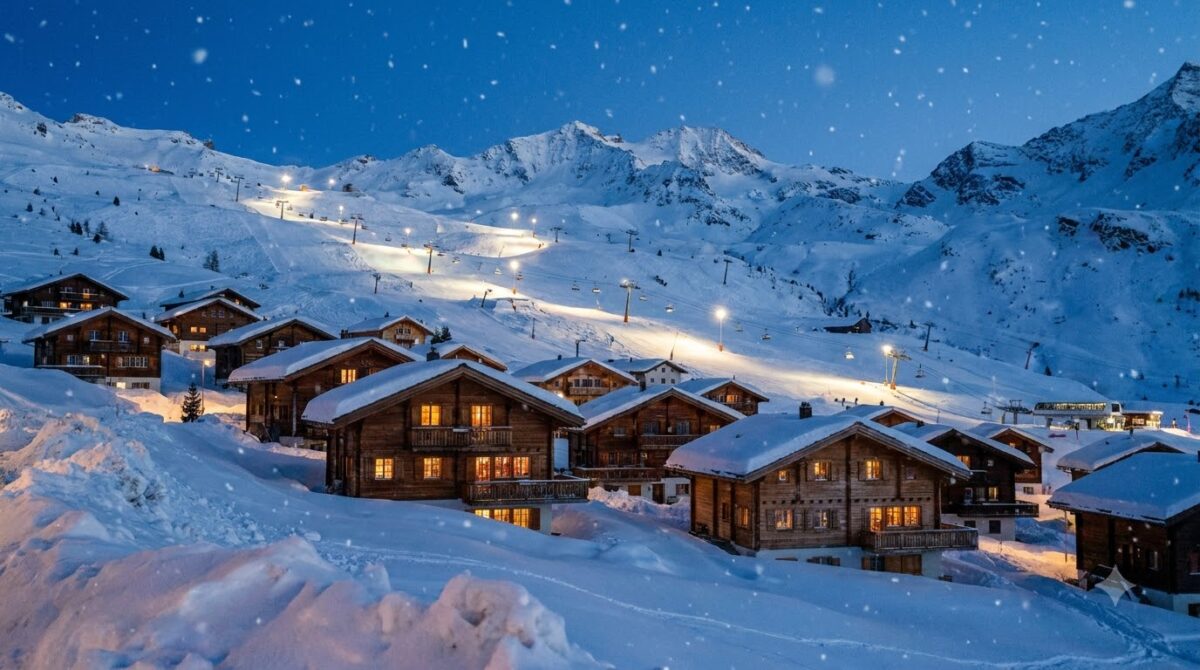
Four names come up constantly in winter and almost never in a summer itinerary, which is why most guides leave them out. If you are travelling between December and March they change the answer completely.
- Gstaad is the discreet money one: a wooden village in the Bernese Oberland with a car-free main street, an hour from Interlaken on a scenic line.
- Davos and Klosters sit in the east, high and cold, with the largest connected ski area in the region and the World Economic Forum in January, which empties the hotels of everyone else.
- Verbier is in the French-speaking Valais, steep, sociable and the strongest off-piste in the country. It is closer to Geneva than to anywhere else.
- St Moritz in the Engadin is the oldest of them and the one with the winter sun, because the valley sits above the cloud more often than not.
- The palace hotels are a category of their own. Badrutt’s Palace in St Moritz and the Gstaad Palace are nineteenth and early twentieth-century grand hotels that have never been anything else, and they are as much landmarks as the mountains behind them.
- In summer these villages are quiet and cheap, the hiking is excellent, and half the restaurants are shut. That is the trade.
See what is available in Gstaad — opens a search, not a recommendation.
See what is available in Davos — opens a search, not a recommendation.
See what is available in Verbier — opens a search, not a recommendation.
Types of accommodation in Switzerland
- Hotels are consistent and expensive, and the star ratings mean roughly what they say, which is not true everywhere.
- Palace hotels are a Swiss institution: grand nineteenth-century buildings in Gstaad, St Moritz, Lucerne and on Lake Geneva that have operated continuously for over a century. They are their own reason to travel, and priced accordingly.
- Gasthaus and Gasthof are the village inns: a restaurant downstairs, simple rooms above, and much better value than a hotel of the same standard.
- A Berghotel is a mountain hotel reached by cable car or on foot, often with no road at all. Staying in one is the single most memorable thing you can book here.
- Swiss youth hostels are unusually good, often in remarkable buildings, and take families as well as backpackers.
- Apartments and chalets are the value play for four nights or more, particularly for families, and they come with a kitchen in a country where eating out is punishing.
- SAC mountain huts are the serious option: dormitories at altitude run by the Alpine Club, bookable in advance, and a completely different holiday.
- Farm stays exist across the country and are the cheapest roof in Switzerland outside a hostel.
The Swiss Travel Pass, and how it changes where you stay
- The pass covers trains, buses and boats across the network, plus most museums, and it discounts the mountain railways rather than covering them.
- It rewards moving. If you are staying in one place and doing two mountains, point-to-point tickets are usually cheaper.
- It punishes nothing. There are no seat reservations to worry about on ordinary trains, so a pass means you can change plans in the morning.
- Guest cards are separate. Many towns give hotel guests a local card covering buses and sometimes cable cars. Lucerne, Interlaken and several Jungfrau villages all do it. Ask at check-in.
- Half Fare Card is the alternative for longer, slower trips and it halves almost everything for a month.
- Work out which one fits before you book rooms, because a pass makes a further-out village viable and a lack of one does the opposite.
Adding Switzerland to a bigger European trip
Very few people fly to Switzerland and only see Switzerland. If you are combining it, the base you pick changes.
- With Italy is the most common pairing, and Ticino or Zermatt are the natural border bases. Milan is under four hours from Zurich and about two from Lugano. See our 10 day Italy itinerary for the other half of that trip.
- With France means Geneva, which sits on the border and has trains into Lyon and the TGV to Paris.
- With Germany or Austria means Zurich or Basel, both of which are rail gateways north and east.
- Do not try to bolt on a third country to a week. Switzerland alone eats a week without effort, and the border crossings are where itineraries fall apart.
- Seasons do not line up. Italy is best in spring and autumn, exactly when the Swiss mountain lifts close. Check both before fixing dates. Our guide to the best time to visit Italy covers that side.
Where to stay in Switzerland by trip length
- Three or four nights — Lucerne only. City, lake and two mountains, no packing.
- A week — the Jungfrau region for four nights and Lucerne for three, with a Zurich airport night if the flight demands it.
- Ten days — add Zermatt, and go there and back rather than trying to loop.
- Two weeks — add Lake Geneva and Lavaux, or Ticino if the weather is against you.
- Winter — one village and stay put. Grindelwald, Wengen or Zermatt, and let the mountain come to you.
- Shoulder season — cities and lakes, not villages. The mountains are shut.
Ready to book?
Pick the base first, then the room. If you are still deciding, search two bases side by side and compare what the same money buys in a city and in a mountain village. The gap is bigger than most people expect.
Search accommodation across Switzerland — opens a search, not a recommendation.
These are affiliate links. We may earn a commission if you book, at no extra cost to you, and it does not change what we wrote above.
Looking much further afield? See where to stay in China, where the first question is whether the hotel can legally take you.
Frequently asked questions
Where is the best place to stay in Switzerland for a first trip?
The Jungfrau region for the mountains, and Lucerne for the lake and a city. Add a Zurich night at whichever end your flight lands. That covers the classic Switzerland in a week without a wasted afternoon, and it means only one change of hotel.
How many bases do you need in Switzerland?
Two for a week, three for ten days. Each move costs about half a day once you count packing, getting to the station and checking in. The rail network is a fan rather than a grid, so a base reaches a specific set of places and not everything within its map distance.
Should you stay in Interlaken or in a mountain village?
A village, if you can. Interlaken is the transport hub and is busier and more commercial than its surroundings. Lauterbrunnen suits families and anyone with a car, Grindelwald has the widest choice, and Wengen and Murren sit high above the valley, are car free and have the better views.
Is Switzerland cheaper in low season?
In the cities, sometimes. In the mountain villages, low season is not a bargain, it is a closure. From late April to early June and late October to early December the cable cars shut for maintenance and many hotels and restaurants close. Check the lift timetables for your exact dates before booking.
Do you need a car in Switzerland?
No, and it is often a liability. The trains reach everything, run to the minute and go places roads do not. Zermatt, Wengen and Murren are car free entirely. A car makes sense only for the Lavaux vineyards, rural Appenzell and some valley-floor stays.
Is the Swiss Travel Pass worth it?
It depends on whether you are moving. The pass covers trains, buses and boats plus most museums, and discounts the mountain railways rather than covering them. If you are changing base two or three times it usually pays. If you are staying in one village and doing two mountains, point-to-point tickets are normally cheaper.
What is the cheapest way to stay in Switzerland?
An apartment or a Gasthaus outside the famous villages, with a kitchen. Swiss youth hostels are unusually good and take families. Farm stays are cheaper again. Tasch instead of Zermatt, or Lauterbrunnen instead of Wengen, saves real money for a short train ride.
Which city in Switzerland is best to stay in?
Lucerne, for most trips. It is the only Swiss city where a lake, an old town and three mountains sit within a single morning of each other, so it works as a whole holiday rather than as a stop. Zurich is the better arrival and departure city because of the airport, and Bern is the most central by rail and the cheapest of the three. If the mountains are the real reason you are going, base in a village and visit the cities instead.
What is the 8 day rule in Switzerland?
It is not a travel rule, and it does not affect tourists. The eight-day rule is a Swiss labour regulation requiring foreign companies to notify the authorities before posting workers into Switzerland. Visitors are governed by Schengen rules instead, which allow most nationalities ninety days in any one hundred and eighty. Nothing about your hotel booking depends on it.
When should you avoid Switzerland?
Late April to early June and late October to early December in the mountains, when the lifts close between seasons. Those are good months for the cities, Ticino and Lake Geneva. July and August are spectacular and busy, and rooms in the Jungfrau region and Zermatt need booking months ahead.