Quick answer where to stay in Lucerne
The Altstadt, on the north bank of the Reuss: a ten-minute walk from the train station, and where the medieval architecture is.
On this page
- The best areas to stay in Lucerne, Switzerland: areas and hotels at a glance
- The Altstadt: the heart of the old town, and the best place to stay
- Near the train station and the Culture and Congress Center Lucerne
- The Lake Lucerne waterfront: the centre of Lucerne with a view
- Neustadt: budget hotels in Lucerne and the residential area
- On the lake outside the city: Weggis, Horw and Kastanienbaum
- The best hotels in Lucerne: luxury hotels in Lucerne, boutique and budget
- Do you need to stay near the train station?
- Switzerland travel: the Swiss Travel Pass, the visitor card and zone 10
- Day trips and how they shape a Lucerne trip
- Where to book hotels in Lucerne by traveller: a hotel in Lucerne for each trip
- Frequently asked questions
Lucerne is small. The Altstadt, the lake, the KKL and the train station all sit inside about fifteen minutes on foot, so almost any central location works.
Some links below are affiliate links. We may earn a commission if you book through them, at no extra cost to you. We do not rank hotels, and any prices on the map come live from the booking sites.
The thing that actually decides it is the mountains. Most people are here for one or two nights and use the city as a base for Pilatus, Rigi, Titlis or Burgenstock. Every one of those trips starts at the train station or at the boat pier immediately beside it. If you are going up, your distance from that one point is your whole morning.
If you are not going up, the calculation flips. You can move out along the shores of Lake Lucerne, give up the ten-minute walk, and buy a view instead.
Area positions, walking times, transport zones and pass details read 10 September 2026. Rates change constantly, so check current prices yourself.
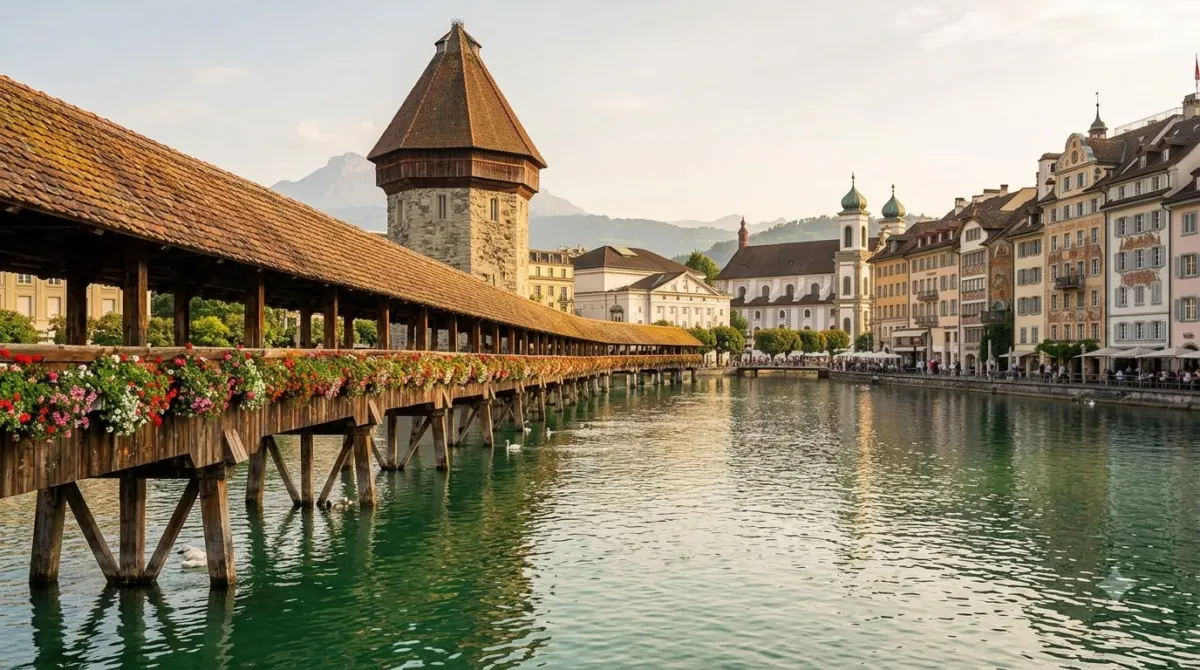
The best areas to stay in Lucerne, Switzerland: areas and hotels at a glance
| Area | Character | Best for |
|---|---|---|
| Altstadt, north bank | Medieval architecture, painted facades | First visits, historic charm |
| Near the train station | Practical, the KKL, the piers | Day trips, short stays |
| Lake Lucerne waterfront | Promenade, views of the lake | Panoramic views, a splurge |
| Neustadt | Residential area, quieter | Budget hotels, longer stays |
| Weggis, Horw, Kastanienbaum | On the lake, outside the city | Natural beauty, a wellness area |
If you want one answer: the Altstadt, on the north bank of the Reuss. It is a ten-minute walk from the train station, it is where the medieval architecture is, and you can leave the car behind entirely.
Map shows live availability. We may earn a commission on bookings made through it, at no extra cost to you.
The Altstadt: the heart of the old town, and the best place to stay
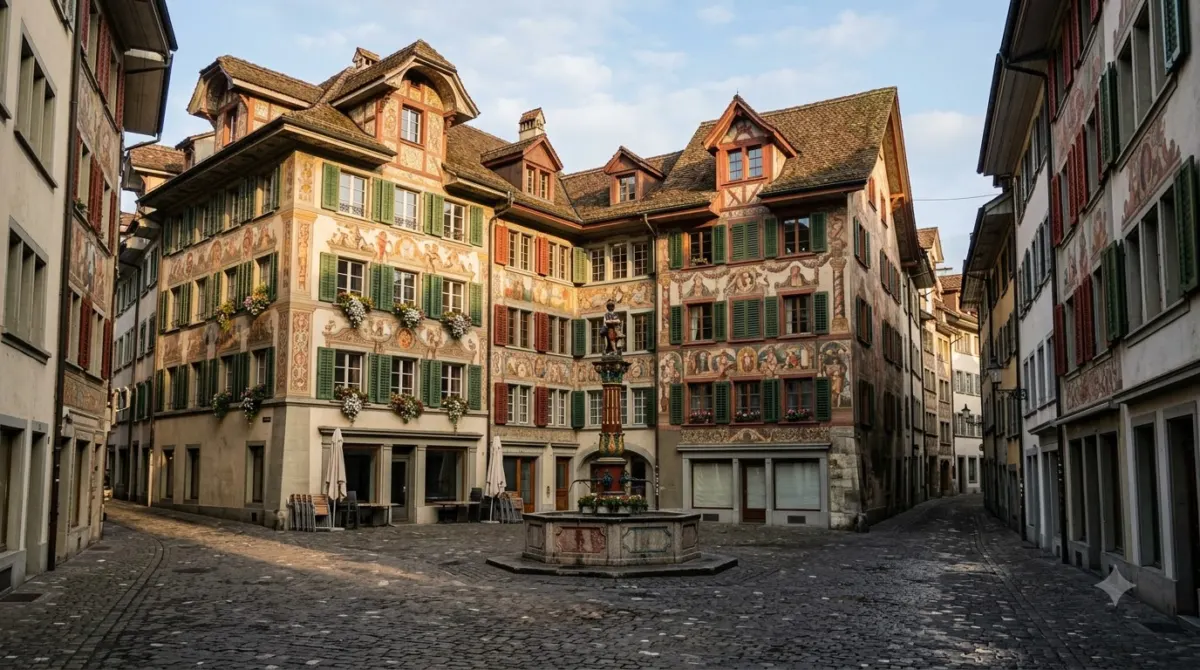
Lucerne’s old town is a compact grid of painted historic buildings on the north side of the river, and it is the reason the city is on anyone’s list.
- The frescoed facades on Weinmarkt, Hirschenplatz and Kornmarkt are the postcard, and the squares are closed to traffic. Swiss cuisine at the restaurants under them is priced for the view.
- The Chapel Bridge, the Kapellbrücke, and its Water Tower cross the Reuss river at the eastern end, and the Spreuer Bridge does the same further west with far fewer people on it.
- The Musegg Wall runs along the ridge behind, with towers you can climb for free in season and the best view over the heart of old Lucerne.
- Staying in the heart of the old town means a hotel in a historic building, often with stairs and no lift.
- This is the heart of the city in every sense except the practical one, and a great location for anyone not catching a 7am train. Hotel des Balances sits directly on the river, Altstadt Hotel Krone Luzern is on Weinmarkt, and Hotel Hofgarten Luzern is a few quiet streets back.
- It is a ten-minute walk from the train station across either bridge, which matters if you are catching an early mountain train.
- Best for a first visit, for historic charm, and for anyone staying two nights or more.
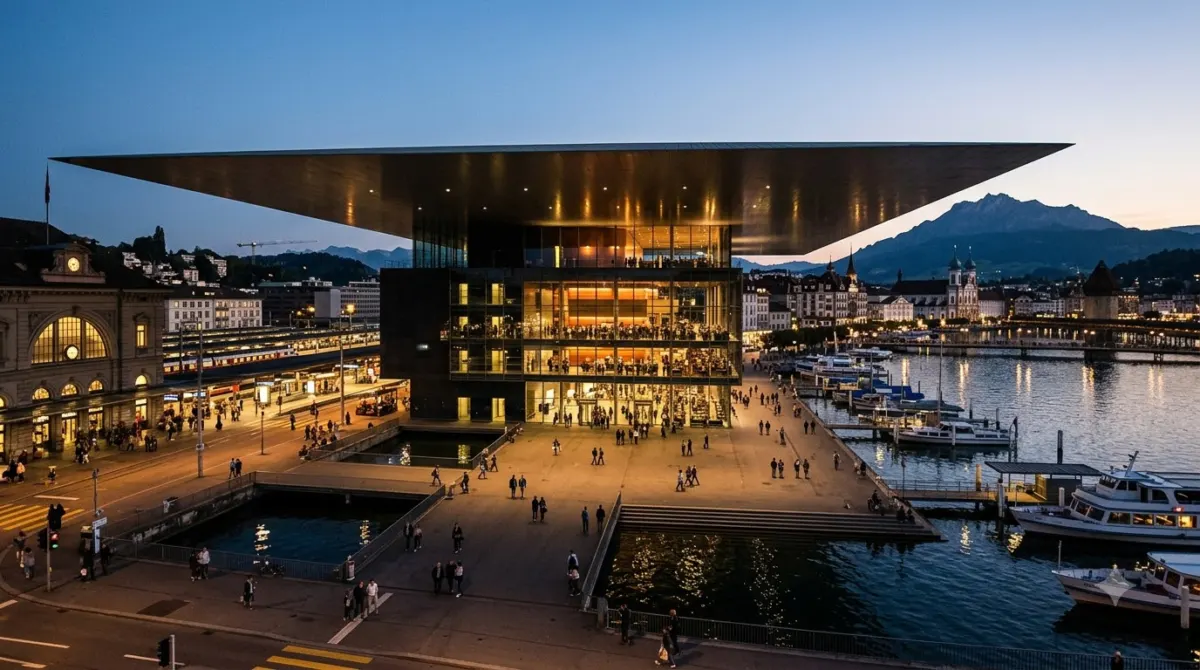
Near the train station and the Culture and Congress Center Lucerne
- This is the practical side. The station, the bus hub, the boat piers and the KKL Culture and Congress Centre Lucerne all sit within two hundred metres of each other.
- The KKL, with its enormous flat overhanging roof, is the modern landmark of the city and the concert hall people travel for.
- Hotel Schweizerhof Luzern is the grand address on this side, on the waterfront a short walk from the station, and Ameron Luzern Hotel Flora is a couple of streets inland.
- You are five minutes from the platform. For a trip built around day trips into the mountains, this is worth more than a view.
- It is less charming than the north bank and it is not unpleasant. The streets here are ordinary Swiss city rather than medieval, and the dining options are wider because of it.
- Best for a short stay, an early train, and anyone with luggage.
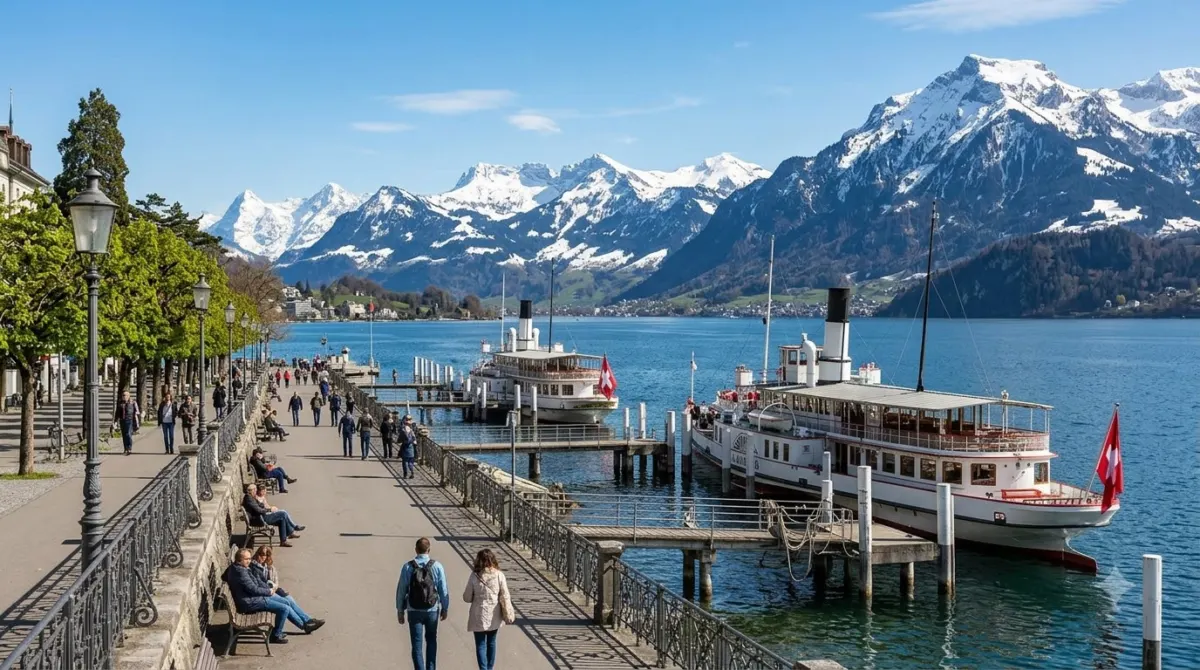
The Lake Lucerne waterfront: the centre of Lucerne with a view
- East of the KKL the promenade runs along the lake under chestnut trees, and this is where the nineteenth-century grand hotels were built.
- Rooms with views of Lake Lucerne and the Alps are genuinely available here, which is not true of most of the city centre.
- The Hermitage Lake Lucerne is further out along the shore with its own small beach, and it is the landmark for that kind of stay.
- You are still walking distance from the station, about ten minutes, so this is the one area that gives you both.
- It costs more, and the premium is entirely for the water in front of you.
- Best for breathtaking views, a splurge, and travellers who want a terrace rather than a square.
Neustadt: budget hotels in Lucerne and the residential area
- Neustadt sits south and west of the station and is where people actually live: apartment blocks, a few good coffeehouses, and no tourists.
- Budget hotels in Lucerne cluster here, along with the hostels and the serviced apartments. Cascada Boutique Hotel and Hotel Anker are the recognisable names.
- It is a 10-minute walk to the old town and less to the platform, so you lose very little.
- The Swiss Museum of Transport is on the other side, east along the lake, and it is the best rainy-day option in the city.
- Best for value, for longer stays, and for anyone who does not need to look at a lake from bed.
On the lake outside the city: Weggis, Horw and Kastanienbaum
- Weggis sits across the water under Rigi, about forty minutes by boat or twenty-five by car, and it is the best known of the villages near Lucerne, a resort with a wellness area in most hotels.
- Horw and Kastanienbaum are on the southern shore, ten to fifteen minutes out, and Seehotel Kastanienbaum is the landmark there.
- The trade is straightforward: you gain natural beauty, quiet and a stunning lake in front of you, and you lose the ability to walk into town after dinner.
- The boats are the point. Arriving into Lucerne by paddle steamer is a better commute than any tram.
- Check the last boat before you book. Evening services thin out sharply outside summer.
- Best for three nights or more, for a car-free week, and for anyone who is not doing a mountain every day.
The best hotels in Lucerne: luxury hotels in Lucerne, boutique and budget
- The top hotels here are mostly nineteenth-century waterfront buildings on the south bank and the quai, with high ceilings, a chateau-like frontage and a terrace. Breakfast on that terrace is what people remember.
- A boutique hotel here usually means a converted house in the Altstadt of twenty to forty rooms, with interior design doing the work that a spa area does elsewhere.
- Budget hotels and hostels sit in Neustadt and around the station edges, and the standard is high by any measure other than Swiss prices.
- A wellness area or spa area is more common in the lake villages than in the city, because there is room for it.
- A 24-hour front desk is not universal in the smaller old town properties. Check if you are arriving late.
- Book hotels early for summer and for the festival weeks, when the city fills completely.
These are listed as landmarks, not recommendations. Nobody here has stayed in them and we do not print rates. Check current prices and availability yourself.
Do you need to stay near the train station?
This is the question the rest of this page hangs on, so here it is directly.
- Every mountain trip starts at the same place. Pilatus, Rigi, Titlis and Burgenstock are all reached by train, boat or bus from the station or the piers beside it.
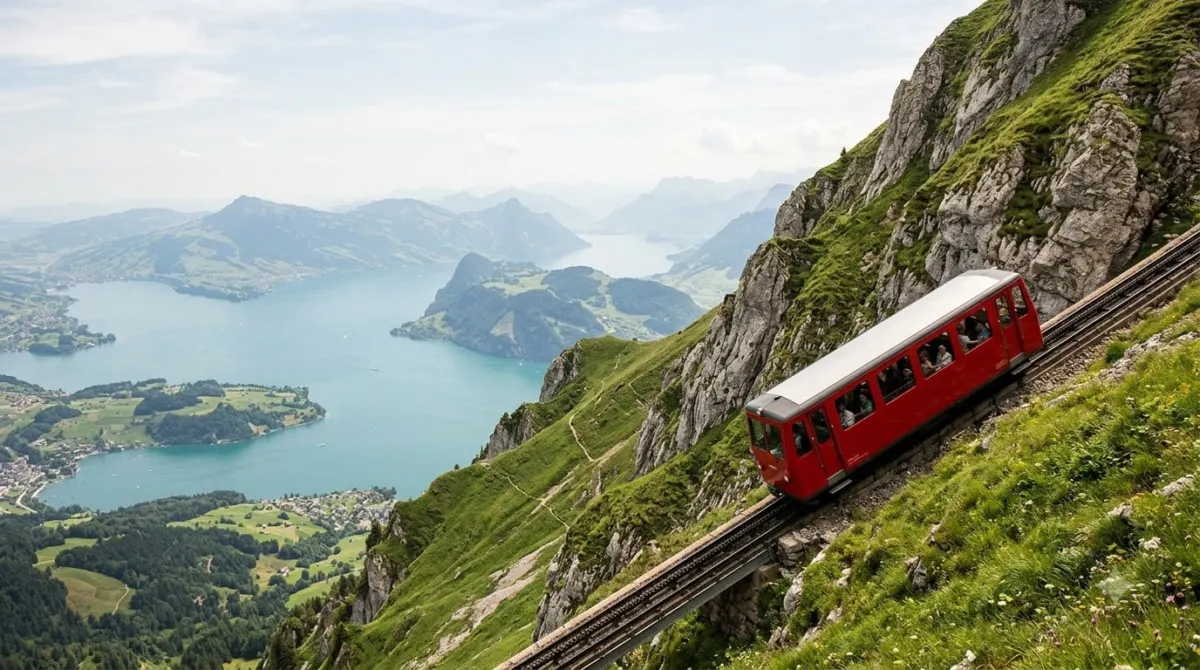
- The summit of Mount Pilatus is the classic golden round trip: boat to Alpnachstad, the steepest cogwheel railway in the world up the mountain, cable cars down to Kriens, bus back. It leaves from the pier.
- Rigi is reached by boat to Vitznau or Weggis and a cogwheel train from there.
- If you are doing two of those in two days, ten minutes each way twice a day is forty minutes of your trip. Stay close.
- If you are staying three nights and doing one mountain, it stops mattering, and the lake villages become the better answer.
- Nobody needs a car. Parking in the centre of Lucerne is expensive and the old town is closed to it anyway.
Switzerland travel: the Swiss Travel Pass, the visitor card and zone 10
- Lucerne is walkable end to end, so public transport inside the city is for luggage and for the museum, not for sightseeing.
- The Lucerne visitor card is given by hotels and covers trains and buses within zone 10, which is the city and its immediate surroundings. Ask for it at check-in.
- The Swiss Travel Pass covers the boats on Lake Lucerne outright and gives a large discount on the mountain railways. If you are doing two mountains it usually pays.
- A train from Lucerne to Zurich takes about 45 minutes, and to Interlaken about two hours on one of the most scenic lines in the country.
- Boats are transport, not a tour. They run to a timetable and stop at villages all round the lake.
- Trains within zone 10 reach Horw and Kastanienbaum in minutes, which is what makes staying out there workable.
Day trips and how they shape a Lucerne trip
- Mount Pilatus is a full day and the one most people pick.
- Rigi is gentler, greener and the better mountain for hiking, with a boat on both ends. Outdoor recreation on Rigi is the point rather than the summit.
- Titlis at Engelberg is the snow one, reachable year round, and about 45 minutes by train.
- Burgenstock is the short version: a boat, a funicular and a cliff path with panoramic views over the lake, doable in half a day.
- A boat trip with no destination is the underrated option, and in shoulder season it is close to empty.
- Two nights gives you one mountain. Three gives you two and a day in the city, which is the shape most people should book when planning your Lucerne itinerary.
Where to book hotels in Lucerne by traveller: a hotel in Lucerne for each trip
- First visit, two nights — the Altstadt on the north bank.
- Doing two mountains — near the train station, and use the extra time.
- On a budget — Neustadt, a 10-minute walk from everything.
- For the view — the waterfront and the quai east of the KKL.
- A quiet week — Weggis or Kastanienbaum, arriving by boat.
- One night in transit — anywhere within ten minutes of the station, and do not overthink it.
Planning the rest of the country? See our Switzerland itinerary, and where to stay in Zurich for the other end of the line.
Working out the rest of the trip? See where to stay in Switzerland — two bases for a week, three for ten days.
Frequently asked questions
What is the best area to stay in Lucerne?
The Altstadt on the north bank of the Reuss, for a first visit. It has the painted facades, the medieval architecture and the pedestrian squares, and it is a ten-minute walk from the train station. If your trip is built around mountain day trips, stay on the south bank near the station instead.
Should you stay near the train station in Lucerne?
Yes if you are going up a mountain. Pilatus, Rigi, Titlis and Burgenstock are all reached from the station or the boat piers immediately beside it, so a ten-minute walk twice a day adds up quickly on a two-night trip. If you are doing one mountain over three nights, it stops mattering.
How many days do you need in Lucerne?
Two nights gives you the old town and one mountain. Three gives you two mountains and a day in the city, which is the shape most people should book. One night works as a stop between Zurich and Interlaken but you will only see the bridges.
Is Lucerne walkable?
Completely. The old town, the lake, the KKL and the station all sit within about fifteen minutes of each other on foot, and the Altstadt is closed to cars. Public transport inside the city is really for luggage and for reaching the Swiss Museum of Transport along the lake.
Where should you stay in Lucerne on a budget?
Neustadt, the residential area south and west of the station. It has the budget hotels, the hostels and the serviced apartments, it is a ten-minute walk to the old town, and it is closer to the platform than the Altstadt is. You give up the view and the frescoes, nothing else.
Is it worth staying outside Lucerne on the lake?
For three nights or more, yes. Weggis, Horw and Kastanienbaum give you quiet, a stunning lake in front of you and often a wellness area, and the boats make the commute a pleasure rather than a chore. Check the last evening sailing before you book, because services thin out outside summer.
Do Lucerne hotels give you free transport?
Most give guests the Lucerne visitor card, which covers trains and buses within zone 10, the city and its immediate surroundings. It does not cover the mountain railways. Ask for it at check-in, because it is not always offered.
Lucerne or Zurich: which is the better base?
Lucerne, if the mountains are the point. It sits on the lake with Pilatus, Rigi and Titlis all within a day, and the whole centre is walkable. Zurich is the bigger city with more restaurants, museums and flights, and it is 45 minutes away by train if you want both.
Keep planning Switzerland
Written and checked by
Triplarks Editorial
An editorial desk, not an invented persona: research, drafting and fact-checking are done by the same small team. Every number here carries the date it was read.