Quick answer where to stay
Book three nights for two full days, and sleep in Venice itself rather than in Mestre. Dorsoduro and Cannaregio stay quiet at night and are walkable to everything.
On this page
- How many days in Venice do you need? The itinerary at a glance
- How to get around Venice, and why it takes so long
- One day in Venice, and whether the day trip is worth it
- The two-day Venice itinerary: the realistic minimum
- Three days in Venice: the three-day Venice itinerary, and day 3 on the lagoon
- Four days and more: art, the Biennale and day trips
- Arriving in Venice: how many nights, and where to sleep
- The best time to visit Venice, and how it changes the number
- A trip to Venice inside a first trip to Italy
- Where to eat and drink in Venice, away from the main tourist streets
- The sights of Venice worth your time, and the ones worth skipping
- Frequently asked questions
The city of Venice looks small on a map, and it is. You could walk end to end in an hour if the walk existed. It does not, because in Venice you cannot go in a straight line.
Some links below are affiliate links. We may earn a commission if you book through them, at no extra cost to you. We do not rank hotels, and any prices on the map come live from the booking sites.
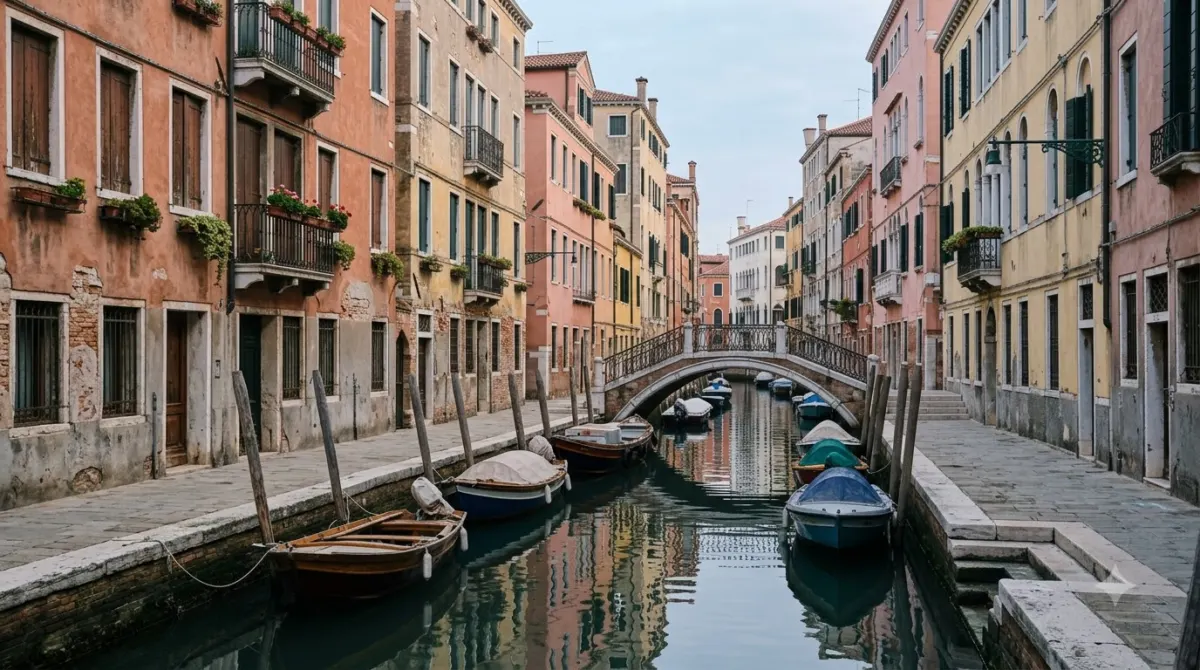
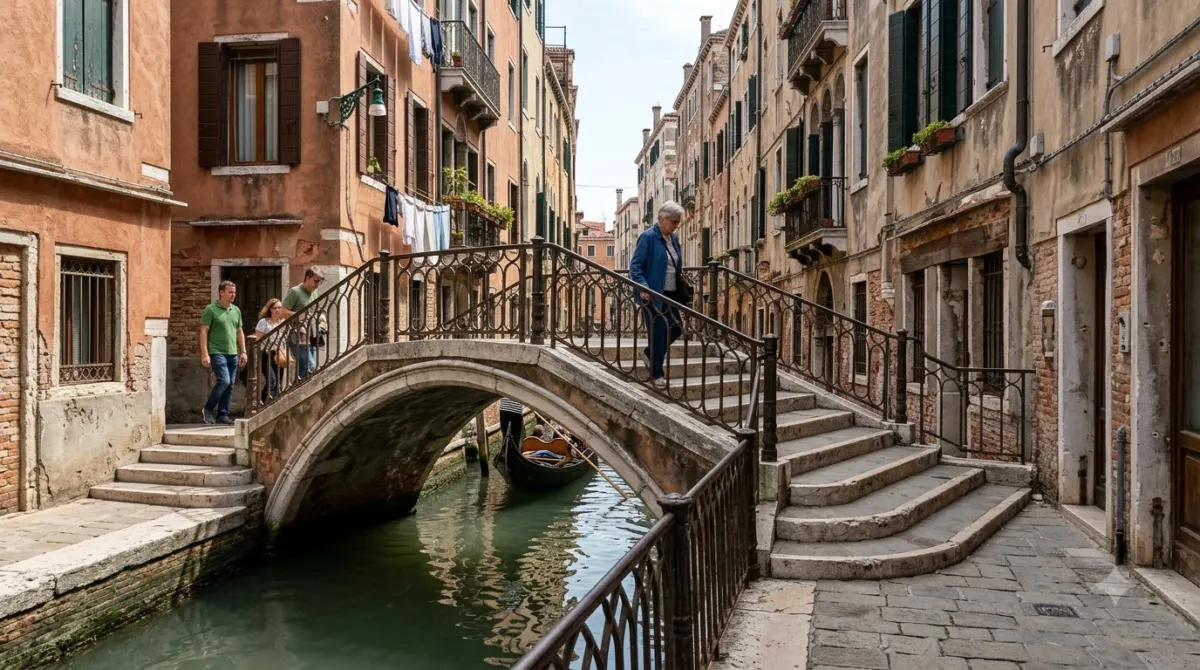
There is no grid, no cars, and roughly 400 bridges, almost all with steps. The canals decide your route, alleys end at water, and the walking directions on your phone are optimistic in a way they are nowhere else. You will cover about twice the distance you expect.
So the number of days to spend in Venice is not set by the number of sights in Venice. It is set by how slowly the city lets you move. A day here covers noticeably less ground than a day in Rome or Florence, and three days is better than two for exactly that reason.
Short answer: two full days for the city, three if you want the lagoon islands. Murano and Burano cost most of a day, and most of that day is spent on a boat. Vaporetto routes, island journey times and opening patterns checked 9 September 2026 — verify current timetables before you travel.
How many days in Venice do you need? The itinerary at a glance
| Length | What it covers | Verdict |
|---|---|---|
| Day trip | Piazza San Marco, Rialto Bridge, a queue | The worst version |
| 1 night, 1 full day | San Marco, the Rialto, one neighbourhood | Enough to want to return |
| 2 nights, 2 full days | The main sights plus Dorsoduro and Cannaregio | The realistic minimum |
| 3 nights, 3 full days | The above plus Murano and Burano | The right answer |
| 4 nights | Adds the galleries, the Frari, the quiet edges | For art lovers |
| 5+ nights | Verona, Padua or the Lido as day trips | Only with a reason |
Most people should spend two full days in Venice and book three nights in Venice. Add a third full day if you want to visit the lagoon islands, and you should. Nobody who plans a return to Venice regrets the extra night.
Where to sleep on this route
How to get around Venice, and why it takes so long
This is the part that makes Venice different from every other Italian city, and it is worth understanding before you plan anything.
- Around 400 bridges cross the canals, and almost every one has steps up and steps down. With a suitcase or a pushchair this is the defining feature of the city.
- Alleys are dead ends. A calle that looks like a shortcut frequently ends at a canal with no bridge, and you walk back.
- Walking apps underestimate Venice badly. Add half again to any estimate, more in the crowded stretch between the Rialto Bridge and Piazza San Marco.
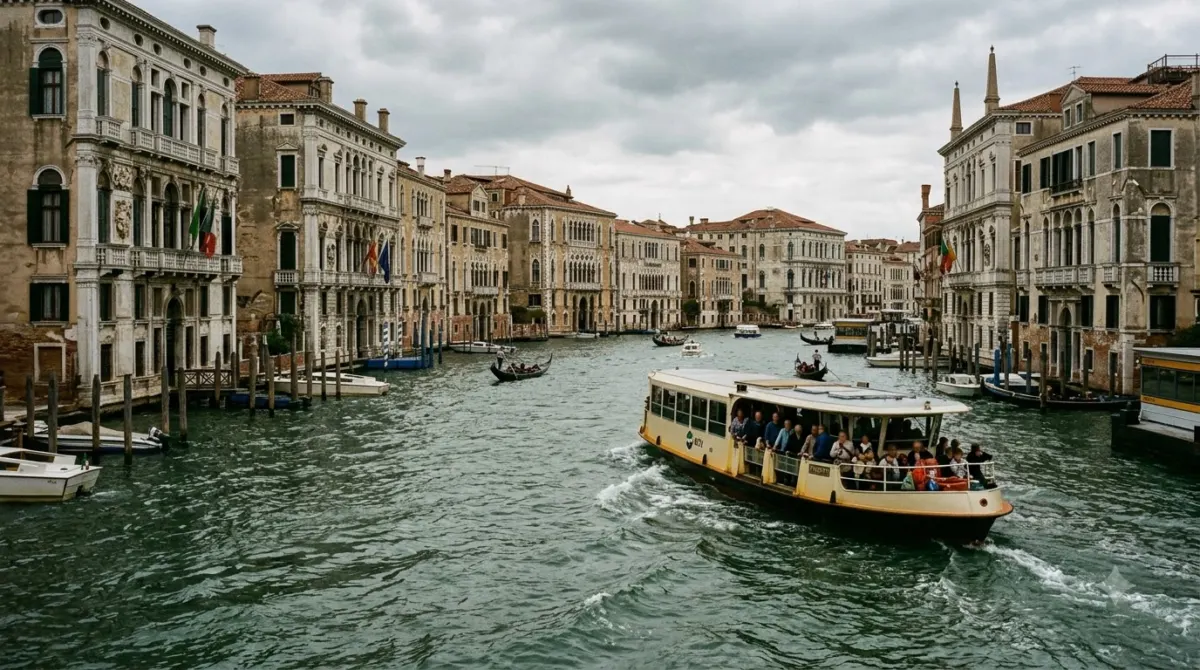
- The vaporetto is a bus that travels at walking pace. Down the Grand Canal it is slower than walking and far more pleasant, but it is not a way to save time.
- A water taxi is fast and expensive, and worth it exactly once, usually with luggage on arrival.
- The city is six neighbourhoods, the sestieri, and to make your way on foot from one part of Venice to another, Cannaregio to Dorsoduro say, is a genuine walk of half an hour.
One day in Venice, and whether the day trip is worth it
Venice takes in a very large number of day trippers and cruise ship passengers, and they all arrive and leave at roughly the same time.
- The crowd lands around ten and clears around five, which means a day tour puts you in the city for precisely its worst hours.
- You will see Piazza San Marco and the Rialto Bridge and very little else, because the queues at St Mark’s Basilica and the Doge’s Palace absorb the rest.
- Venice in a day works if you accept it as a sample: the Grand Canal by vaporetto, the two famous squares, one long aimless walk. That is what you get if you take a day tour from Florence or Milan.
- What you miss is the empty side of Venice, early and late, which is the only time it stops feeling touristy. Tourism here is concentrated into a seven-hour window and you can simply step outside it.
- One night changes everything. Even a single evening and morning is a different experience from a day tour.
The two-day Venice itinerary: the realistic minimum
What the two-day itinerary covers
Two full days covers the city itself without rushing, and this two-day Venice itinerary assumes you sleep in Venice rather than on the mainland.
Day 1: Piazza San Marco and the Grand Canal
- Spend your first day around Piazza San Marco, and start before nine, when the square is nearly empty.
- St Mark’s Basilica and the Doge’s Palace, the residence of the Doge and the seat of the Republic of Venice for a thousand years, are the two ticketed sights that matter. Book timed entry.
- The Bridge of Sighs connects the palace to the old prison and is best seen from the bridge to its south.
- Ride a vaporetto the length of the Grand Canal in the late afternoon. It is the best value hour in the city.
- Finish the day in Cannaregio, away from the main tourist spine, where the bars are for locals and the canals are quiet. This is the best spot for a first visit to end.
Day 2: Dorsoduro, the Accademia and getting lost
- Spend the morning in Dorsoduro, the quietest of the central neighbourhoods, and cross the Ponte dell’Accademia for the view everyone photographs.
- The Gallerie dell’Accademia holds the Venetian paintings, and Ca’ Rezzonico shows what a palace on the Grand Canal was actually like inside.
- Santa Maria Gloriosa dei Frari in San Polo is the church worth the detour, with a Titian above the altar.
- The Venetian Ghetto in Cannaregio, usually called the Jewish Ghetto, is the oldest in Europe and the reason the word exists. It is a quiet town square with unusually tall buildings, and you can spend a few hours there and in the streets around it.
- Then get lost deliberately. Put the phone away and walk. This is the single best thing to do in Venice and it costs nothing.
Three days in Venice: the three-day Venice itinerary, and day 3 on the lagoon
The third day is for the lagoon, and it is a full day because of the boats rather than the islands.
- Murano is about ten minutes by vaporetto from Fondamente Nove and is where the glass furnaces moved in 1291 to keep fires out of the city.
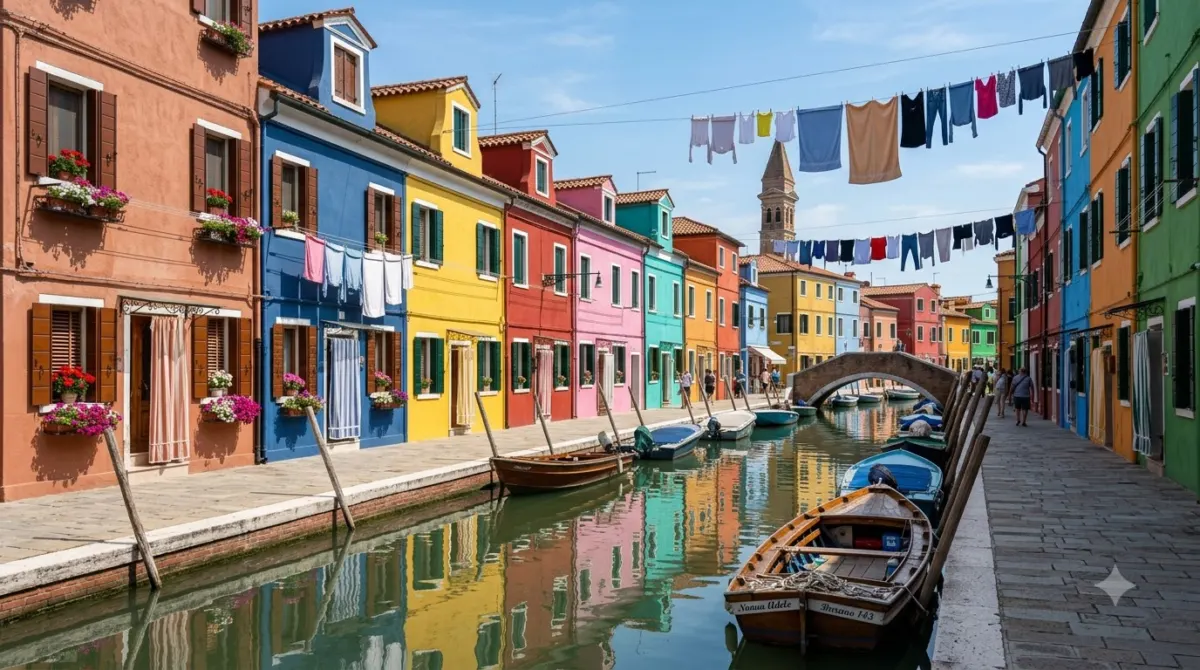
- Burano is another forty minutes further out, a small island of brightly painted fishermen’s houses, and it is the prettiest thing in the lagoon.
- Torcello is five minutes from Burano, nearly empty, and has a cathedral with Byzantine mosaics that predates almost everything in Venice.
- Do them in one trip, in that order, and expect the boat time to eat two hours of the day.
- Go early and spend the day out there. Burano by eleven is a different island from Burano at two.
Four days and more: art, the Biennale and day trips
- An art lover needs four days. The Accademia, the Peggy Guggenheim Collection, the Frari and the Scuola Grande di San Rocco with its Tintorettos do not fit into two.
- The Venice Biennale runs in alternating years from spring to autumn across the Giardini and the Venetian Arsenal, and it is a two-day commitment on its own.
- Verona and Padua make good day trips by train: Padua is about half an hour away, Verona a little over an hour, and Vicenza is between them. Save them for a second trip to Venice rather than squeezing them into your first three days.
- The Venice Lido is the long sandbar with the beaches, twenty minutes by vaporetto, and it is where Venetians go to swim.
- Do not use Venice as a base for the mainland. Getting in and out costs more time than it saves.
Arriving in Venice: how many nights, and where to sleep
- Book three nights for two full days. Arrival and departure each eat part of the day, especially from Marco Polo Airport, where the boat into the city takes over an hour.
- Sleep in Venice itself, not in Mestre on the mainland. The saving is real and so is the loss.
- Dorsoduro and Cannaregio are the two neighbourhoods that stay quiet at night and still put you within walking distance of everything.
- Arriving in Venice with luggage is the hardest part of the trip. Check how many bridges lie between the vaporetto stop and your door.
- A room without a canal view is much cheaper and, in a city this dense, barely different.
The full breakdown of neighbourhoods is in our guide to where to stay in Venice.
Map shows live availability and prices. We may earn a commission on bookings made through it, at no extra cost to you.
The best time to visit Venice, and how it changes the number
- April to early June and late September to October are the best time to visit Venice. Mild, walkable, and the light is the reason painters came.
- July and August are hot, crowded and smell of canal. The same itinerary needs more days because you will want the middle of the day indoors.
- November to February is cold, quiet, frequently beautiful, and prone to acqua alta, the high water that floods the low squares.
- Carnival in February fills the city completely. Go for it or avoid it, but do not arrive unaware.
- Venice charges a day-tripper access fee on peak days. Overnight guests are exempt, which is another small argument for staying.
A trip to Venice inside a first trip to Italy
- Venice sits in the far north-east and is on the fast line to Florence, Bologna and Rome.
- Florence is about two hours by train, Bologna about ninety minutes, Rome under four.
- On a first Italy trip, two full days here inside a Rome, Florence and Venice route is the standard shape and it works.
- Northern Italy pairs better: Verona, Lake Garda and the Dolomites are all close.
- Do Venice first or last, not in the middle, because the arrival and departure logistics are unlike anywhere else.
See our 10 day Italy itinerary for how the cities fit together.
Where to eat and drink in Venice, away from the main tourist streets
Venice has a reputation for bad expensive food, and it is earned entirely along two streets. Step one canal away and it stops being true.
- Avoid any restaurant with a photographic menu on the stretch between the Rialto and San Marco. That corridor is where the reputation comes from.
- A bacaro is the Venetian bar, serving cicchetti, small plates eaten standing up with a glass of wine. It is the cheapest and best way to eat and drink in Venice.
- Cannaregio and San Polo hold most of them, and the crowd standing outside on a small town square in the evening is the sign you have found one.
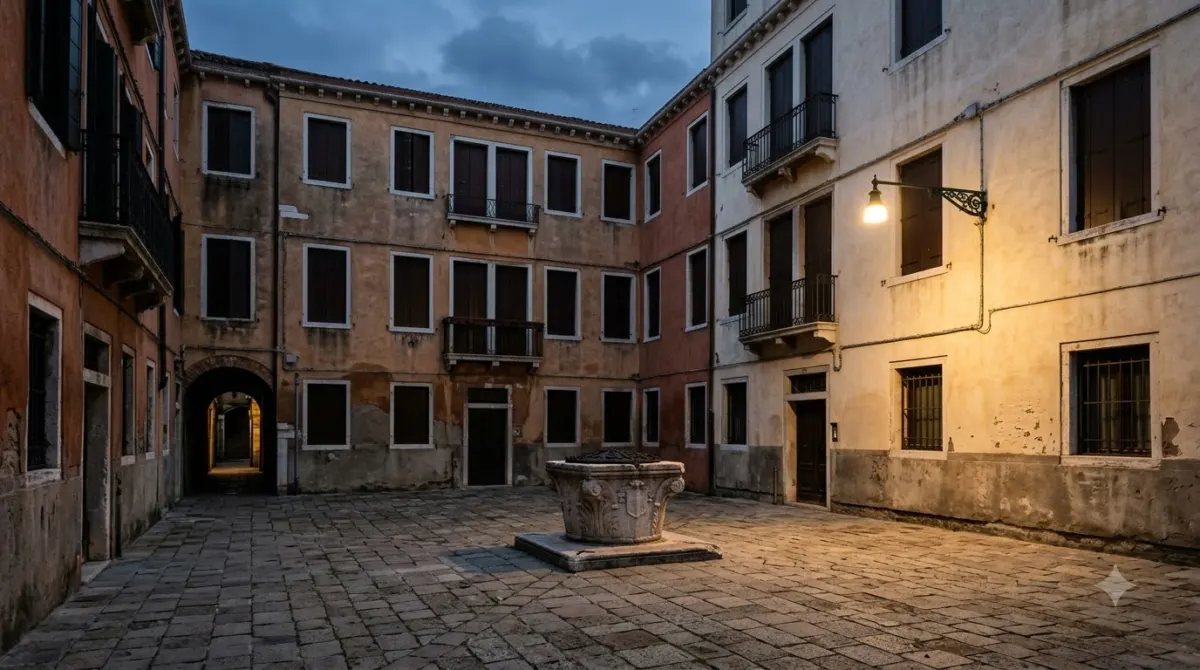
- Eat where the campo is residential. Any square with a well head, laundry overhead and children playing will feed you properly on a budget.
- Spend a few hours doing only this on one evening. It is a better use of part of the day than another museum.
The sights of Venice worth your time, and the ones worth skipping
Not every famous thing in the city of Venice earns its queue, and knowing which is which is how two days becomes enough time to see what matters.
- Worth it: St Mark’s Basilica, the Doge’s Palace, the Gallerie dell’Accademia, and the Scuola Grande di San Rocco, whose ceilings are the reason art historians make the visit to Venice at all.
- Worth it, quietly: the Ca’ Rezzonico museum, with ceilings by Giovanni Battista Tiepolo and his son Giovanni Domenico Tiepolo, and almost no queue.
- Worth the money once: St Mark’s Campanile, for the view over the roofs and the lagoon. Go early.
- Overpriced but memorable: a gondola ride. Fares are fixed and high. If you take one, do it at dusk on the back canals rather than on the Grand Canal.
- Skippable: the glass demonstrations aimed at tour groups, and any queue you join without a timed ticket.
- Free and best: the Venetian Ghetto in Cannaregio, and the walk to it.
Adding a stop on the mainland? See where to stay in Verona — an hour away and a much cheaper city to sleep in.
Not sure which area to book? See where to stay in Lyon.
Frequently asked questions
How many days do you need in Venice?
Two full days for the city and three if you want the lagoon islands. Venice covers less ground per day than any other Italian city because there is no straight line through it: around 400 bridges with steps, alleys that dead-end at canals, and a vaporetto that moves at walking pace. Book three nights for two full days.
Is 2 days enough for Venice?
Yes, for the city itself. Two full days covers Piazza San Marco, St Mark’s Basilica, the Doge’s Palace, the Rialto Bridge, the Grand Canal and a proper wander through Dorsoduro and Cannaregio. What two days does not cover is Murano and Burano, which need most of a third day, largely because of the boat journeys.
Is Venice worth a day trip?
It is the weakest way to see it. Day trippers and cruise ship passengers arrive around ten and leave around five, so a day tour puts you there for the most crowded hours and none of the good ones. Venice empties before nine in the morning and after six in the evening, and one night is enough to get both.
How many days do you need for Murano and Burano?
One full day for both, plus Torcello if you want it. Murano is about ten minutes by vaporetto from Fondamente Nove, Burano is roughly forty minutes further, and Torcello is five minutes beyond that. Do them in that order in a single trip and expect two hours of the day to disappear on the water.
Should I stay in Venice or Mestre?
Venice, if you can. Mestre on the mainland is considerably cheaper and is a normal town with car parks and chain hotels. What it costs you is the early morning and late evening in Venice, which is the whole reason to come. Overnight guests in Venice are also exempt from the day-tripper access fee.
What is the best time to visit Venice?
April to early June and late September through October. The weather suits walking, which matters here more than in most cities, and the crowds are manageable. July and August are hot and very busy. Winter is quiet and often beautiful, but acqua alta can flood the lower squares.
Can you see Venice in one day?
You can see the outline of it. The Grand Canal by vaporetto, Piazza San Marco, the Rialto Bridge and one long walk with no destination is a reasonable single day. You will not get inside the Basilica and the Doge’s Palace without pre-booked timed entry, and you will miss the empty city entirely.
Keep planning Italy
- Best Hotels in Taormina: The Town Is Up, the Sea Is Down
- Best Hotels on the Amalfi Coast: Pick the Town First
- Best Hotels in Positano: Count the Steps Before the Stars
- Best Hotels in Florence: The ZTL Matters More Than the Stars
- Where to Stay in Verona: Inside the River Loop, or Outside It
- Where to Stay in Tuscany: You Are Choosing a Driving Radius
- Where to Stay in Puglia: Pick the Building, Not the Town
- Where to Stay in Cinque Terre: Ask About the Stairs First
Written and checked by
Triplarks Editorial
An editorial desk, not an invented persona: research, drafting and fact-checking are done by the same small team. Every number here carries the date it was read.