Quick answer where to stay in Lyon
The Presqu’île between Place Bellecour and Place des Terreaux: the centre of Lyon, and flat. Vieux Lyon is beautiful, but read the tourist-trap warning before you book there.
On this page
- The 5 best neighbourhoods and places to stay in Lyon at a glance
- Presqu’île: the best place to stay in Lyon
- Vieux Lyon: beautiful, and the tourist trap warning
- Croix-Rousse and the Pentes: the silk weavers’ hill
- East of the Rhône: Brotteaux, Part-Dieu and Confluence
- Hotels in Lyon by arrondissement: what you will actually find
- Places to stay for travellers: which areas to stay in Lyon suit which trip
- The best areas to stay in Lyon: our favourite areas, and where to stay near the centre
- What kind of accommodation Lyon actually has
- Eating in Lyon, and the bouchon question
- Getting around when you visit Lyon: the Lyon City Card
- Checking current rates in Lyon
- Frequently asked questions
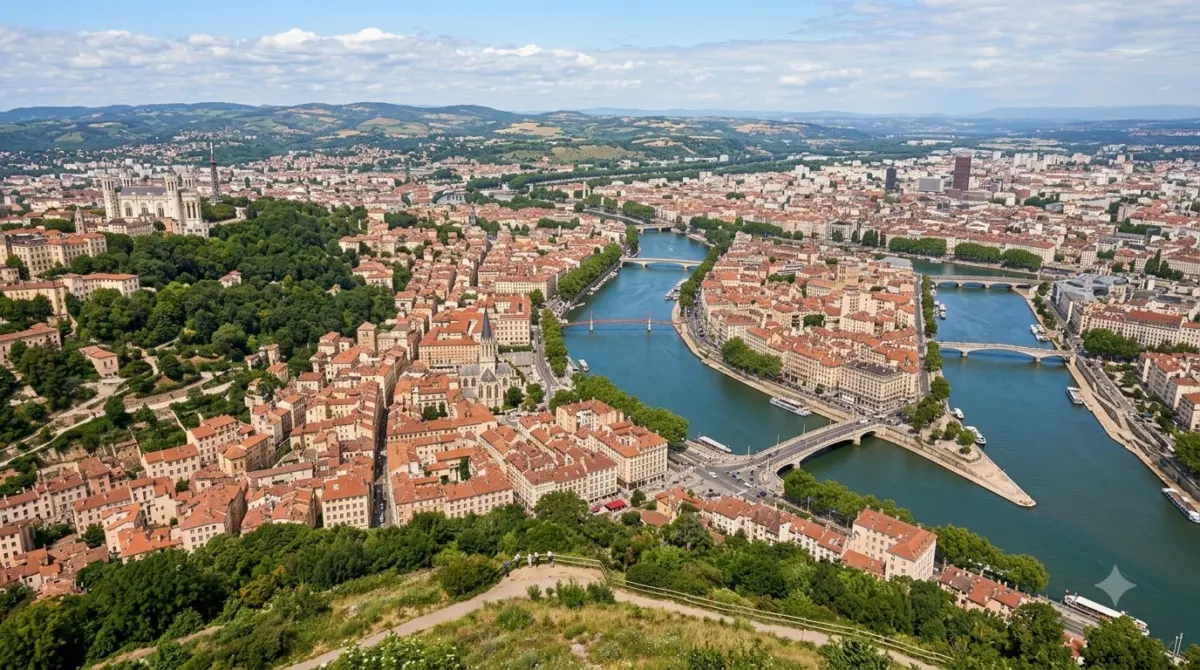
Two rivers run through Lyon and meet at the bottom of it, and between them they cut the city into three strips. Each strip is a different century, a different price and a different walk.
Some links below are affiliate links. We may earn a commission if you book through them, at no extra cost to you. We do not rank hotels, and any prices on the map come live from the booking sites.
- West of the Saône is Vieux Lyon, Renaissance, cobbled, beautiful and the busiest part of town, sitting under the Fourvière hill.
- Between the two rivers is the Presqu’île, the peninsula, built in the 18th and 19th centuries. This is the actual centre of Lyon.
- East of the Rhône are Les Brotteaux and La Part-Dieu, 19th and 20th century, cheaper, and where the fast trains stop.
So the first thing to do is look at a map and work out which side of which river you are on. That single fact tells you the era of the buildings, the level of the prices and how far you will walk. It is a more useful filter than any list of places to stay in Lyon, because every part of Lyon looks appealing in a photograph.
Neighbourhood positions, arrondissements and walking times checked 10 September 2026. Rates change constantly, so check current prices yourself.
The 5 best neighbourhoods and places to stay in Lyon at a glance
| Area | Arrondissement | Best for |
|---|---|---|
| Presqu’île, Bellecour to Terreaux | 1st and 2nd | First visits, everything on foot |
| Vieux Lyon | 5th | Renaissance streets, atmosphere |
| Pentes de la Croix-Rousse | 1st | Bohemian, cheaper, steep |
| La Croix-Rousse, top of the hill | 4th | Village feel, families, quiet |
| Les Brotteaux | 6th | Elegant, residential, good value |
| La Part-Dieu | 3rd | Trains, business, chain hotels |
| Confluence | 2nd | Modern architecture, museums |
| Perrache | 2nd | Budget, the other station |
If you want one answer: the Presqu’île between Place Bellecour and Place des Terreaux. It is the centre of Lyon, it is flat, and both other strips are a bridge away. If you only want to stay in one area of the city, make it this one.
Presqu’île: the best place to stay in Lyon
The peninsula between the Saône and the Rhône, covering the 1st and 2nd arrondissements, and the part of the city where most people should sleep.
- Place Bellecour is the vast open square at its middle and the reference point everyone uses. Rue de la République runs north from it.
- Place des Terreaux, at the northern end, has the city hall and the fine arts museum, and the bars around it are busy every night.
- Les Halles de Lyon Paul Bocuse, the covered food market, sits just across the Rhône and is the single best thing to eat your way through in the city.
- Place des Jacobins and the streets around it hold most of the mid-range choices for a hotel in Lyon, and it is a two minute walk to the city centre.
- It is flat and central, which no other interesting part of the city is.
- Best for a first visit, and for anyone staying two or three nights.
Vieux Lyon: beautiful, and the tourist trap warning
- Old Lyon is the largest Renaissance quarter in France and one of the largest in Europe, a UNESCO old city of tall painted houses on the west bank of the Saône river.
- The traboules are the reason to be here: covered passageways cutting through buildings and courtyards, built so silk could be carried dry. Many are open to the public.
- Fourvière basilica stands on the hill above, reached by a funicular, and the terrace has the best view over the city.
- The main street is touristy in the worst way. Rue Saint-Jean is a tourist trap lined with restaurants advertising Lyonnais food to people who will only eat there once. Walk one street back. Saint-Jean cathedral at the end of it is worth the visit.
- Cour des Loges Lyon, a set of Renaissance houses knocked together around a courtyard, and Villa Florentine up the hill are the landmark hotels here. MiHotel Vieux Lyon is the small-apartment version.
- Best for two nights of atmosphere, and worse for a week. It is the prettiest part of Lyon and the least like the rest of it.
Croix-Rousse and the Pentes: the silk weavers’ hill
- The hill north of the Presqu’île, where the silk industry lived, split into two very different halves.
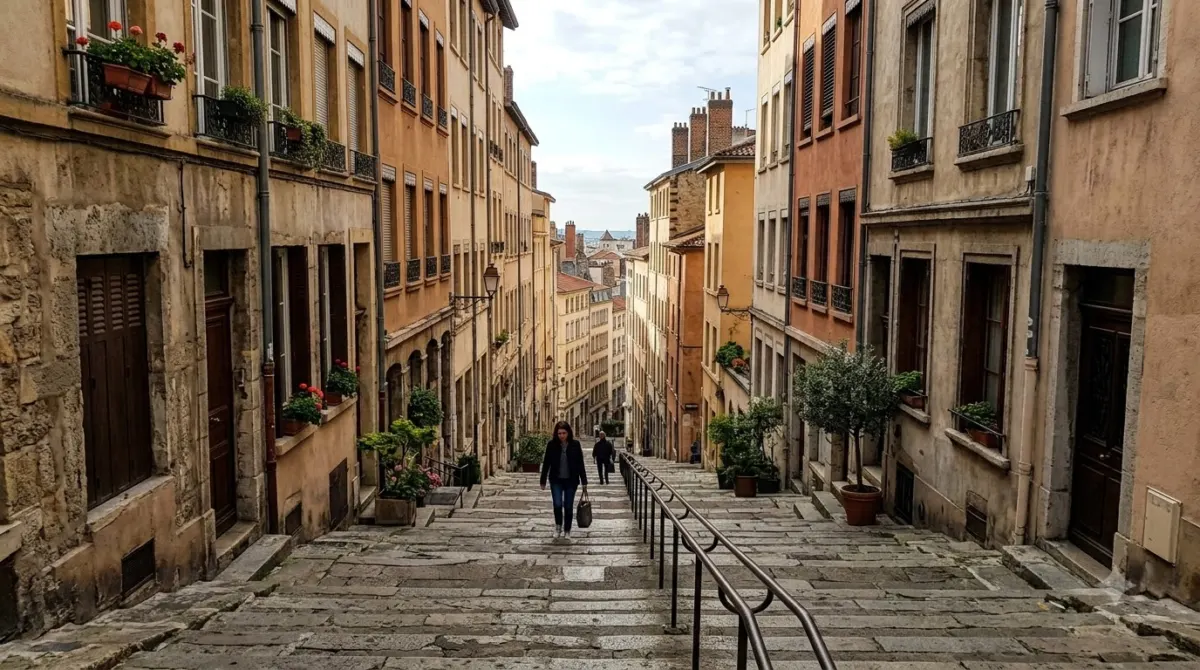
- The Pentes de la Croix-Rousse, the slopes in the 1st arrondissement, are steep, cheap, covered in street art and full of small bars. This is the bohemian part.
- The Plateau, at the top of the hill in the 4th, feels like a village with its own market, and families live there.
- More traboules here than in Vieux Lyon, and more of them still in daily use.
- It is a genuine climb. The metro line C and the funicular help, but a room on the slopes means stairs.
- Best for a longer stay, for a second visit, and for anyone who wants a part of town that is not performing.
East of the Rhône: Brotteaux, Part-Dieu and Confluence
- Les Brotteaux, in the 6th arrondissement, is the elegant residential quarter, with wide streets, good restaurants and the Parc de la Tête d’Or on its edge. It is quiet and reasonably priced.
- La Tête d’Or is one of the largest urban parks in France and the reason the 6th is a pleasant place to sleep.
- Lyon Part-Dieu is the main station for fast trains to Paris and Marseille, surrounded by offices, a shopping centre and chain hotels. Practical, not charming.
- Confluence, at the southern tip of the peninsula where the rivers meet, is the modern redevelopment. The Museum of the Confluence, the Musée des Confluences, is the landmark building and newer hotels sit around it.
- Perrache is the other station, at the north end of Confluence, and the cheapest central option.
- Best for value, for business, and for anyone catching an early train.
Hotels in Lyon by arrondissement: what you will actually find
- Lyon is the third-largest city in France, so the market is broad. Every Lyon hotel category is represented somewhere, which is exactly why the area matters more than the property.
- InterContinental Lyon occupies the old Hôtel-Dieu hospital on the Rhône bank of the Presqu’île, which is the grandest building in the city centre.
- Boscolo Lyon and Le Phénix Hotel sit on the peninsula, and Hotel Vaubecour is the quieter budget option in the 2nd.
- Fourvière Hotel, in a converted convent on the hill, is the landmark on the Fourvière side.
- MiHotel runs small apartment-style rooms across several buildings, which suits a longer stay.
- These are landmarks, not recommendations. Nobody here has stayed in them and we do not print rates. Check current prices yourself.
Map shows live availability and prices. We may earn a commission on bookings made through it, at no extra cost to you.
Places to stay for travellers: which areas to stay in Lyon suit which trip
- First timers — the Presqu’île, near Bellecour or Jacobins. No transport decisions to make.
- Couples — Vieux Lyon for two nights, in a Renaissance building with a courtyard.
- Families — the Croix-Rousse plateau or Les Brotteaux, for space, parks and a normal neighbourhood.
- Budget — the Pentes, Perrache or Part-Dieu. All three are cheaper and none is far.
- Here to eat — anywhere on the Presqu’île, because Les Halles and the good bouchons are within twenty minutes on foot.
- Passing through on a France travel route — stay near Part-Dieu, since Paris is two hours and Marseille ninety minutes by train.
The best areas to stay in Lyon: our favourite areas, and where to stay near the centre
Everything above in one place. If you want a short answer on where to stay near the centre of Lyon, this is it.
- We recommend staying in the area between Bellecour and Terreaux for a first trip. That is the true Lyon centre, and it is the one part of the city where you never need to plan a journey.
- Stay near a metro stop if you pick anywhere on a hill. The funiculars from Vieux Lyon and the metro up to the Croix-Rousse are what make those areas workable.
- If you want to stay along the river, the Rhône bank of the Presqu’île has the wide quays and the Saône river side has the Renaissance views across to Vieux Lyon.
- The best hotel for you depends on the strip, not on the star rating. A four star near the Gare de la Part-Dieu and a four star on the peninsula are completely different holidays.
- Avoid booking purely on price in the 3rd and 8th. They are cheap because they are a long way from the old city, not because they are bad.
What kind of accommodation Lyon actually has
- Chain hotels cluster around the gare at Part-Dieu and Perrache, and they are the reliable, dull, well-priced option.
- A boutique hotel in Lyon usually means a Renaissance or 19th-century building converted into fifteen or twenty rooms, most of them in Vieux Lyon or on the Presqu’île.
- Apartments are common on the Pentes and in the 6th, and are the sensible choice for a week.
- Bed and breakfast rooms exist mostly on the Croix-Rousse plateau, where the buildings are houses rather than blocks.
- Breakfast is rarely included at the cheaper end, and a coffee and a pastry in a café costs less than the hotel charges anyway.
Eating in Lyon, and the bouchon question
Lyon calls itself the gastronomic capital of France and the claim is not baseless, but the food is easy to get wrong as a visitor.
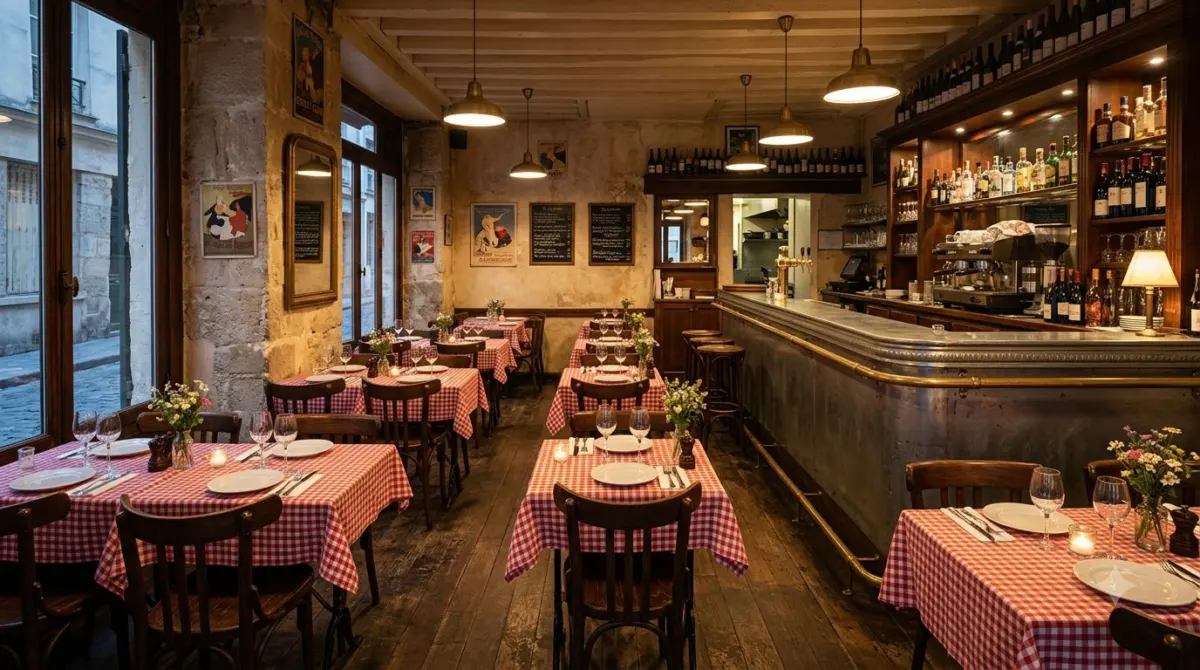
- A bouchon is a specific thing: a small traditional restaurant serving Lyonnais dishes, most of them offal, in a room with paper tablecloths.
- Certified bouchons carry a label, which is worth looking for because a lot of places on Rue Saint-Jean use the word loosely.
- Les Halles de Lyon Paul Bocuse is the covered market where the city buys its cheese, charcuterie and oysters, and you can eat at the counters.
- The best modern restaurants are in the 6th and on the Pentes, away from the old town, and Olympique Lyonnais fans will tell you the same about the bars out east.
- Book for Friday and Saturday. The good bouchons are small and fill early.
Getting around when you visit Lyon: the Lyon City Card
- Four metro lines, two funiculars and a tram network cover the city, and almost nowhere you would want to stay is far from a stop.
- The funiculars from Vieux Lyon go up to Fourvière and to the Roman amphitheatre, and they count as metro tickets.
- The Lyon City Card covers transport plus the museums, including the fine arts museum, the Musée des Confluences and the history museum in Vieux Lyon.
- Walking between the three strips is easy because the bridges are short. Walking up either hill is not.
- Lyon-Saint-Exupéry airport is thirty minutes by the Rhônexpress tram into the Gare de la Part-Dieu.
Planning more of the country? See our southern France itinerary, where to stay in Bordeaux and where to stay in Paris.
Checking current rates in Lyon
Everything above is about position — which area suits which kind of trip. What it deliberately does not do is quote prices, because rates in Lyon move a long way by season, by day of the week and by how far ahead you book, and any figure printed in a guide is out of date the week after it is written.
These searches show live availability and current prices, so you can check them against the areas described above:
These are affiliate links. If you book through one we may earn a commission, at no extra cost to you. It does not affect which areas we recommend above — nobody pays to be listed here.
Not sure which area to book? See where to stay in Nice.
Frequently asked questions
What is the best area to stay in Lyon?
The Presqu’île, the peninsula between the two rivers, ideally between Place Bellecour and Place des Terreaux. It is the centre of Lyon, it is flat, it has the widest choice of hotels, and both Vieux Lyon and the east bank are a short bridge away. The 1st and 2nd arrondissements cover it.
Should I stay in Vieux Lyon?
For two nights, yes. Old Lyon is the largest Renaissance quarter in France, full of traboules, and it is genuinely beautiful. The catch is that Rue Saint-Jean is a tourist trap and the quarter is busy all day. It also sits at the foot of Fourvière hill, so anything above the main streets involves a climb.
What is a traboule?
A covered passageway cutting through a building and its courtyards to the next street. Lyon has hundreds of them, built so that silk could be moved across the city without getting wet. The best known are in Vieux Lyon and on the slopes of the Croix-Rousse, and many are open to the public during the day.
Is Croix-Rousse a good place to stay?
Yes, for a longer stay or a second visit. The slopes in the 1st arrondissement are cheap, bohemian and steep. The plateau in the 4th feels like a separate village with its own market and a family crowd. Both are less polished than the centre, and both involve either a climb or the funicular.
Where should I stay in Lyon near the train station?
La Part-Dieu, in the 3rd arrondissement, is where the fast trains to Paris and Marseille stop, and it is surrounded by chain hotels and a shopping centre. It is practical rather than pleasant. Perrache, at the other station on the peninsula, is closer to the old centre and cheaper.
How many nights do you need in Lyon?
Two nights covers the city: Vieux Lyon and Fourvière on one day, the Presqu’île and Les Halles on the other. Three nights lets you add the Croix-Rousse and eat properly, which is the main reason to come. It is also a good base for a night or two on a wider France travel route.
Is Lyon walkable?
The flat parts are. The Presqu’île is easy to walk end to end and the bridges over both rivers are short. What is not walkable is either hill: Fourvière on one side and the Croix-Rousse on the other are steep enough that the city built funiculars for them, and both are worth using.
Keep planning France
- Where to Stay in Bordeaux: Choose the Tram Line, Not the Street
- Where to Stay in Nice: Count the Streets Back from the Sea
- Where to Stay in Paris: Read the Number and You Have Your Answer
- South of France Itinerary: Coast by Train, Inland by Car
- Best Restaurants in Paris: Where to Eat, Neighbourhood by Neighbourhood
Written and checked by
Triplarks Editorial
An editorial desk, not an invented persona: research, drafting and fact-checking are done by the same small team. Every number here carries the date it was read.