
Nice is easier to read than most cities on the French Riviera. Every place to stay in Nice worth considering sits in a strip about a kilometre and a half long, between the train station and the beach.
The Promenade des Anglais runs along the front, curving round the Baie des Anges. Vieux Nice, the old town, is the wedge at the eastern end. The modern centre — Place Masséna, Jean-Médecin, the Promenade du Paillon gardens — sits behind them, and tram line 1 runs straight through the middle of the lot.
So the real question is not which area to stay in Nice. It is how many streets back from the sea you are willing to be. Prices drop sharply with each row inland while the walk barely changes: from the fourth street back you are still six or seven minutes from the beach, and paying a great deal less for it.
This guide on where to stay works through each area to stay in Nice on that basis, so you can visit Nice knowing which street you want. Walking times, tram routes and neighbourhood boundaries checked 8 September 2026. Rates change constantly, so check current prices yourself.
An overview of the best areas and the best area to stay in Nice
| Area | Walk to beach | Price | Best for |
|---|---|---|---|
| Promenade des Anglais | 0 min | Highest | A sea view, luxury hotels |
| Vieux Nice (Old Nice) | 2–5 min | High | Atmosphere, food, nightlife |
| Carré d’Or | 3–5 min | High | Shopping, central location |
| Nice city center, Jean-Médecin | 8–10 min | Moderate | Best all-round value |
| Near the train station | 12–15 min | Lower | Budget, day trips by rail |
| Le Port | 10 min | Moderate | Quieter, local, restaurants |
| Cimiez | 25 min | Moderate | Families, calm, museums |
If you want one answer: the streets between Place Masséna and Rue de France, three or four rows back from the Promenade. You are five minutes from the beach, five from Vieux Nice, and paying city-centre rather than seafront prices.
Vieux Nice: the best place to stay in Nice old town
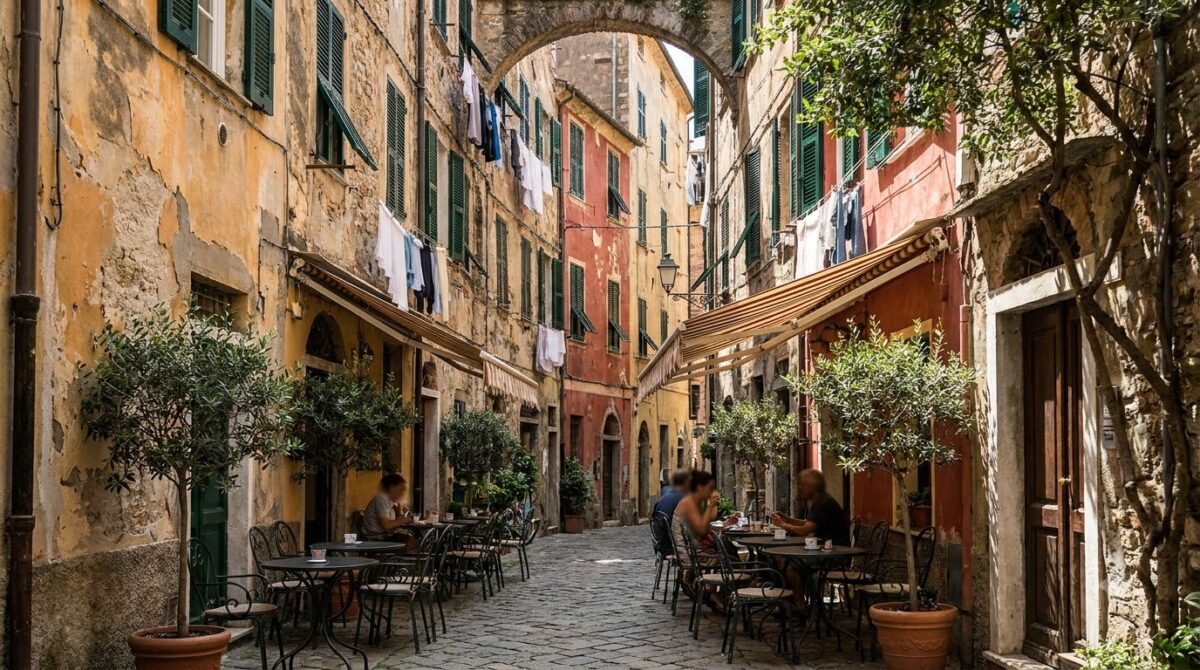
Old Nice is a dense wedge of ochre buildings and shuttered windows between the Promenade and the Colline du Château. It looks and feels more Italian than French, which is what it was until 1860.
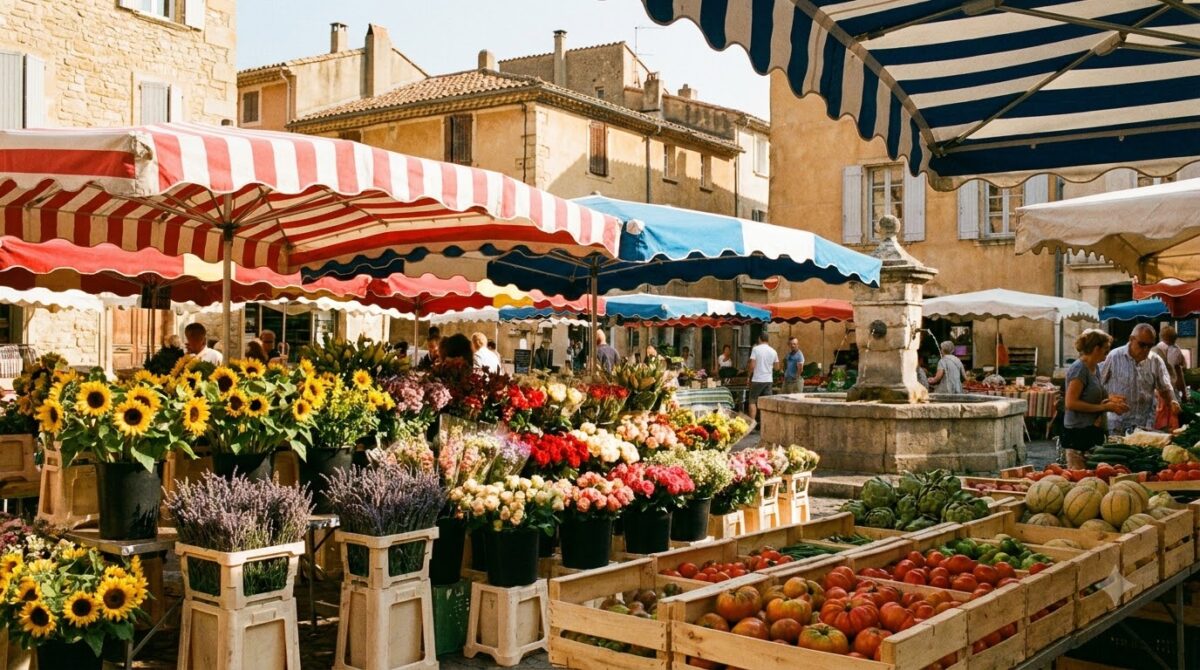
- Cours Saleya runs through it — a flower and produce market most mornings, antiques on Mondays, and a solid line of bar and restaurant terraces in the evening.
- Everything is walkable. Two blocks from the beach, five minutes to Place Masséna, ten to the port.
- It is loud until late. The lanes are narrow, the terraces are busy, and the sound goes straight up. This is the single most common complaint about staying here.
- Buildings are old, so expect small rooms, stairs and often no lift.
- Accommodation is mostly apartments and small guest houses rather than hotels.
Is it better to stay in Old Nice or elsewhere? Old Nice if you are here for two or three nights and want to walk out into it. Anywhere else if you are a light sleeper, because a room on Cours Saleya or Rue Droite is genuinely noisy until two in the morning.
The Promenade des Anglais: the best location for a sea view
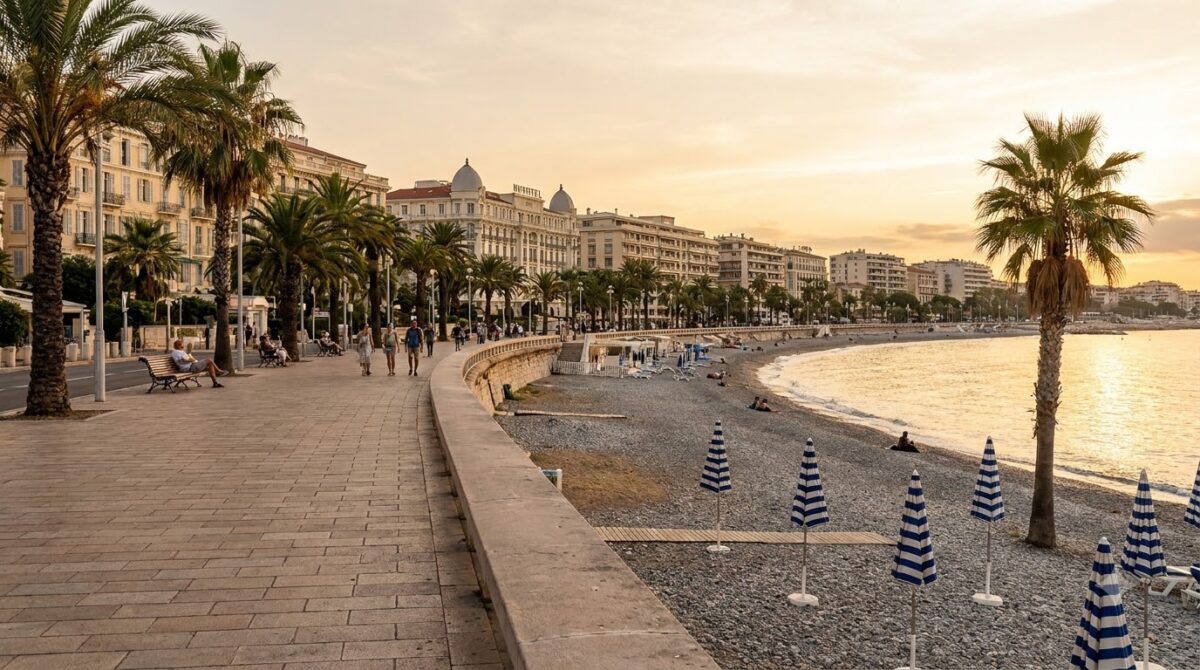
The Promenade de Nice, properly the Promenade des Anglais, is seven kilometres of walkway along the Baie des Anges, built by English winter residents in the 1820s. The stretch worth staying on is the two kilometres between the old town and the Hôtel Negresco.
- A sea view is the entire product here, and it costs a clear premium. A room facing the road behind is the same hotel at a third less.
- Le Negresco, the domed belle époque landmark of 1913, is the reference point for this stretch and a protected piece of architecture in its own right.
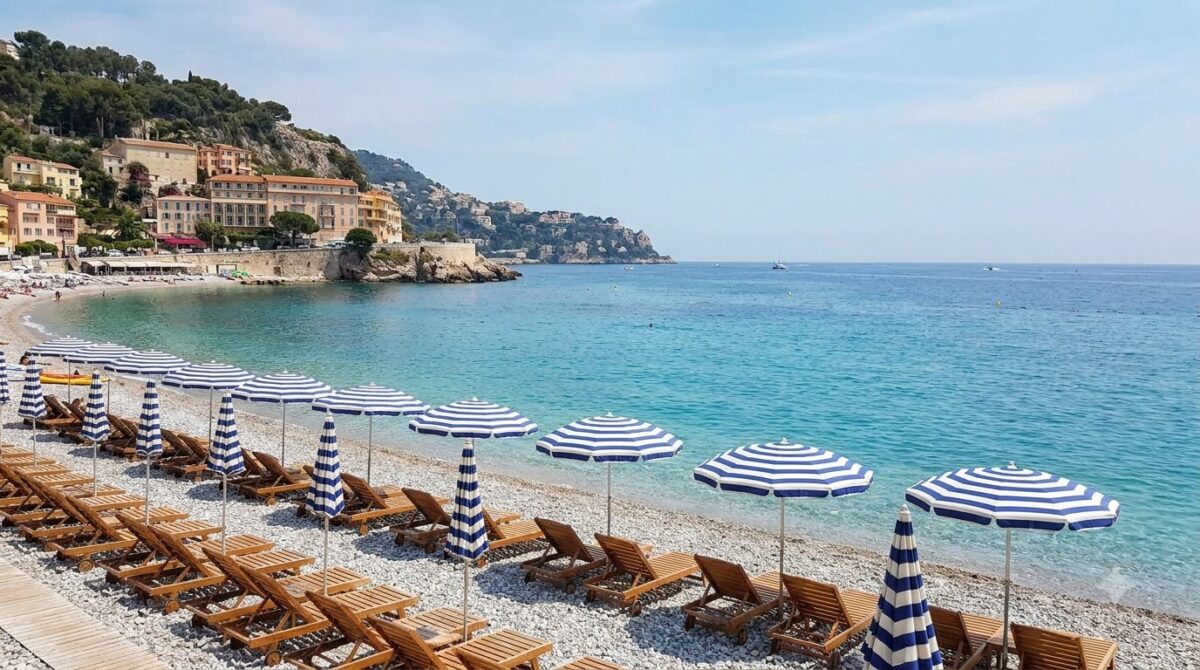
- The beach is pebble, not sand, along the whole bay. Bring shoes you can walk into the water in.
- Traffic runs along the Promenade, so a low sea-view room hears cars as well as waves. Higher floors are worth the difference.
Stay here if waking up to the Mediterranean is the point of the trip. Otherwise walk to it in four minutes from a street behind and spend the difference on dinner.
The center of Nice: Carré d’Or and Jean-Médecin
The modern heart of Nice, and the best value in the city.
- The Carré d’Or, the golden square between Place Masséna and the Promenade, is the shopping district and the most convenient central location in Nice.
- Avenue Jean-Médecin runs north from Place Masséna and is the main commercial street, with tram line 1 along it and the Nice Etoile shopping centre halfway up.
- Promenade du Paillon, the linear park built over the old riverbed, runs beside it and connects the centre to the old town through gardens and fountains.
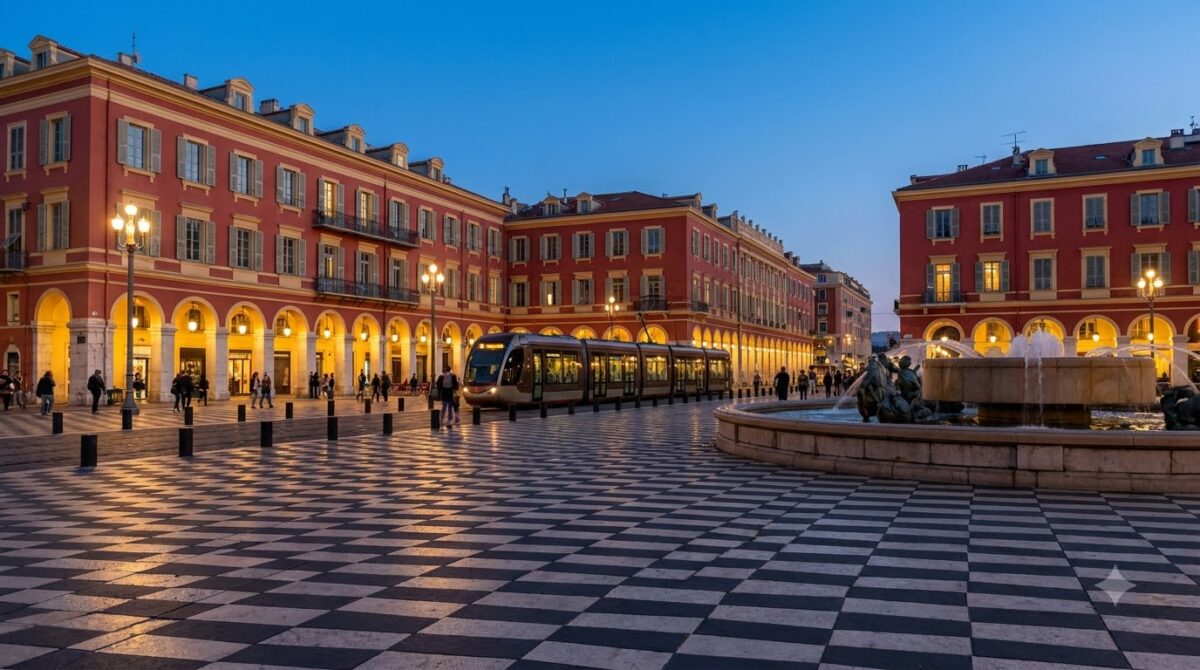
- Place Masséna itself — red arcaded buildings, a chequerboard plaza and the tram passing through the middle.
- Nice hotels here are noticeably cheaper than the seafront for the same standard, and it is a short walk to the beach — under ten minutes from almost anywhere in this part of the city.
Near the train station and Gambetta
Around Nice-Ville station, twelve to fifteen minutes from the sea on foot.
- The cheapest affordable hotels in the city that are still walkable to everything.
- Best if you plan to take day trips, because every train along the coast leaves from here. The walk between the train station and the beach is twelve minutes.
- The immediate station streets are scruffy, though not unsafe. Two or three streets west toward Gambetta is a noticeably nicer area for the same money.
- Tram line 2 runs west from here to the airport in about twenty minutes.
Le Port and Cimiez: east of Nice and up the hill
- Le Port — east of Nice’s old town round the harbour, with fishing boats, ferries to Corsica, and the best concentration of restaurants where locals actually eat. Ten minutes from Vieux Nice on foot and much quieter at night.
- Cimiez — the hill north of the centre, with Roman ruins, the Matisse and Chagall museums, and belle époque villas. Residential and calm, good for families, and a bus or a twenty-five minute walk from the sea.
Recommended hotels: the Palais Lascaris to the Promenade
Listings are hard to place because a Nice address rarely tells you how many blocks from the beach it is. These recommended hotels are landmarks rather than endorsements. These are the properties used as reference points, described by position and type only. Check rates and availability yourself rather than trusting any guide, including this one.
Hôtel Negresco and the seafront landmarks
The Negresco is the pink-domed belle époque hotel of 1913 on the Promenade des Anglais, and it is the building people orient by along the whole seafront. Its position is the point: directly on the Promenade, facing the Baie des Anges, roughly midway along the good stretch.
Hôtel La Pérouse
Hôtel La Pérouse Nice Baie des Anges is built into the rock of the Colline du Château at the eastern end of the Promenade, above Nice old town. The Palais Lascaris museum is a few streets below it. Its terrace looks straight back along the bay, which is a different and arguably better outlook than a seafront room, because you can see the curve.
Boutique hotels and the central cluster
The Carré d’Or and the streets around Place Masséna hold most of the boutique hotel supply — twenty to sixty rooms in converted nineteenth-century buildings, often with a terrace. Palais Saleya Boutique on the edge of the old town, Hôtel Nice Etoile on Jean-Médecin, NH Nice, Hotel Apollinaire and the Boscolo Nice Hotel are all in this central band, and the difference between them is which street and which floor.
Hôtel du Couvent and the newer conversions
Hôtel du Couvent is a former seventeenth-century convent on the hillside above Vieux Nice, converted with its gardens and cloisters intact. It is the clearest example of the recent trend here: historic buildings just above the old town, close to everything without being in the noise.
Chains and budget options
Best Western, ibis and Kyriad operate around the station and along the western Promenade, and they are the reliable way to keep costs down. Hotels and apartments both exist in quantity; an apartment usually wins for stays over four nights or with a family.
Nice as a base: places to explore in the surrounding area
This is the strongest argument for a trip to Nice rather than anywhere else on the Côte d’Azur. Nice and the surrounding area are linked by one rail line, and there are more places to explore within forty minutes than anywhere else in the south of France.
- Villefranche-sur-Mer — six minutes by train, and the prettiest harbour on the coast.
- Monaco — twenty minutes by train.
- Èze — a medieval village 400 metres above the sea, reached by the 82 bus.
- Antibes — twenty-five minutes, for the old town and the Picasso museum.
- Cannes — forty minutes, for the Croisette and the sand.
- Menton — thirty-five minutes, and the quietest of the lot.
If you plan to take day trips most days, stay within ten minutes of Nice-Ville station rather than on the seafront. You will use the train far more than the beach.
For the wider route, see our south of France itinerary, which uses Nice as the base for the whole Riviera.
How much does it cost, and when to go
- Nice is cheaper than Cannes or Monaco and considerably cheaper than Saint-Tropez, which is part of why it works so well as a base for visiting the French Riviera.
- The seafront premium is the biggest single variable — the same standard of room three streets back can cost a third less.
- May, June and September are the best months: warm sea, full ferry and train timetables, and manageable crowds.
- July and August are peak, and prices roughly double. Book months ahead.
- Winter is mild and very cheap, and the Carnival in February fills the city for two weeks.
- The airport is 20 minutes from the centre by tram line 2, which is cheap and simple.
A guide on where to stay in the south of France, by traveller
Nice has many hotels in every band, and the choice is easier once you name what the trip is for. This is the short version of the whole guide.
| You are | Best area to stay in Nice | Why |
|---|---|---|
| Visiting Nice for the first time | Carré d’Or | The location is perfect for everything |
| Here for the old town and beach | Vieux Nice | A short walk to the beach and the market |
| Here for a sea view | Promenade des Anglais | The one part of the city that has one |
| Wanting a budget-friendly stay | Near the train station | Cheapest rooms still walkable to everything |
| Taking day trips daily | Between the train station and the beach | You will use the rail line more than the sand |
| A family | Cimiez or west of the Promenade | Space, quiet and larger apartments |
| Here to eat | Le Port | A neighborhood of Nice where locals eat |
My favorite area to stay is the four or five blocks from the beach behind the Carré d’Or. It is the part of the city that gets you the old town and beach in the same ten minutes, without paying the seafront premium for either.
Beaches, rooftop bars and the Esplanade
A few practical things about the front that change where you might want to sleep.
- The best beaches in Nice itself are the public sections between the private clubs, around Opéra Plage and Castel Plage below the old town. The beach and the Promenade run together the whole way, and all of it is pebble.
- Private beach clubs charge for a lounger and most have a restaurant. They cluster along the central Promenade.
- The Esplanade and the Promenade du Paillon gardens run inland from the sea and are the pleasantest way to cross the city on foot.
- A rooftop bar is the compromise if you want the view without paying for a sea-view room — several central hotels open theirs to non-guests.
- Breakfast and coffee are cheaper one street back from the water, everywhere along the bay, for identical quality.
- The belle époque architecture along the front is the reason the Promenade looks the way it does, and much of it is protected.
Checking current rates in Nice
Everything above is about position — which area suits which kind of trip. What it deliberately does not do is quote prices, because rates in Nice move a long way by season, by day of the week and by how far ahead you book, and any figure printed in a guide is out of date the week after it is written.
These searches show live availability and current prices, so you can check them against the areas described above:
These are affiliate links. If you book through one we may earn a commission, at no extra cost to you. It does not affect which areas we recommend above — nobody pays to be listed here.
Frequently asked questions
What is the best part of Nice to stay in?
The streets three or four rows back from the Promenade des Anglais, between Place Masséna and Rue de France. You are within five to eight minutes of both the beach and Vieux Nice, and paying city-centre rather than seafront prices. Old Nice is the more atmospheric choice and the Promenade is the one to pick if a sea view is the point.
Where should I stay in Nice for the first time?
The Carré d’Or or the streets around Place Masséna. Both put you in the middle of the city with the beach, the old town, the tram and the Promenade du Paillon gardens all within ten minutes on foot. It is also the best-value central area, since the seafront carries a large premium for the view alone.
Is it better to stay in Old Nice or other areas?
Old Nice for atmosphere on a short trip, elsewhere for sleep. Vieux Nice puts you inside the Cours Saleya market and the best evening streets, but the lanes are narrow, the terraces run late and the buildings are old with small rooms and no lifts. Staying a few streets away gives you the same access without the noise.
What are the best hotels in Nice?
The landmarks people orient by are Le Negresco on the Promenade des Anglais, Hôtel La Pérouse built into the rock at the eastern end of the bay, and Hôtel du Couvent in a converted convent above the old town. Most of the boutique supply sits in the Carré d’Or and around Place Masséna. Check current rates directly, since they move a long way by season.
Where can I find budget-friendly accommodation in Nice?
Around Nice-Ville train station and toward Gambetta, twelve to fifteen minutes from the sea. It has the most affordable hotels that are still walkable to everything, and it is the best base if you plan to take day trips along the coast. The immediate station streets are scruffy but not unsafe; two or three streets west is noticeably nicer for the same money.
Which areas in Nice are best for families?
Cimiez on the hill north of the centre, for space, calm, parks and the Matisse and Chagall museums, or the streets behind the western Promenade where apartments are larger and cheaper. Both are quieter than Old Nice, which is difficult with small children because of the stairs and the late-night noise.
Where should I stay to be close to the beach?
Anywhere between the Promenade des Anglais and Rue de France is within a five-minute walk to the beach along the whole central stretch. A room directly on the Promenade costs a clear premium for the sea view, and a low floor there hears traffic as well as waves. Note the beach is pebble along the entire Baie des Anges.