
Every hotel listing in Paris gives you an arrondissement number, and most visitors read straight past it. It is the most useful thing on the page.
The arrondissements spiral. The 1st is the dead centre, at the Louvre. From there they wind outward clockwise like a snail shell — 2, 3, 4 wrapped around the middle, then out through the single digits, and the 20th sits on the eastern edge of the city.
So the number tells you roughly how central a place is before you open a map. Anything in the 1st to the 8th is central Paris. The 9th to the 11th are a short walk or one metro stop out. Double digits above 12 are residential, cheaper, and further than the photographs suggest.
The second half of the code is the river. Rive Droite, the Right Bank, is north of the Seine and holds the Louvre, the Marais and the department stores. Rive Gauche, the Left Bank, is south and holds the Latin Quarter, Saint-Germain and the older, quieter version of the city. That split decides character; the number decides distance.
Read both and you can pick an area to stay in Paris in a couple of minutes, without a spreadsheet. This guide to Paris works through every neighborhood in Paris on that basis. Metro lines, walking times and arrondissement boundaries checked 8 September 2026. Rates change constantly, so check current prices yourself.
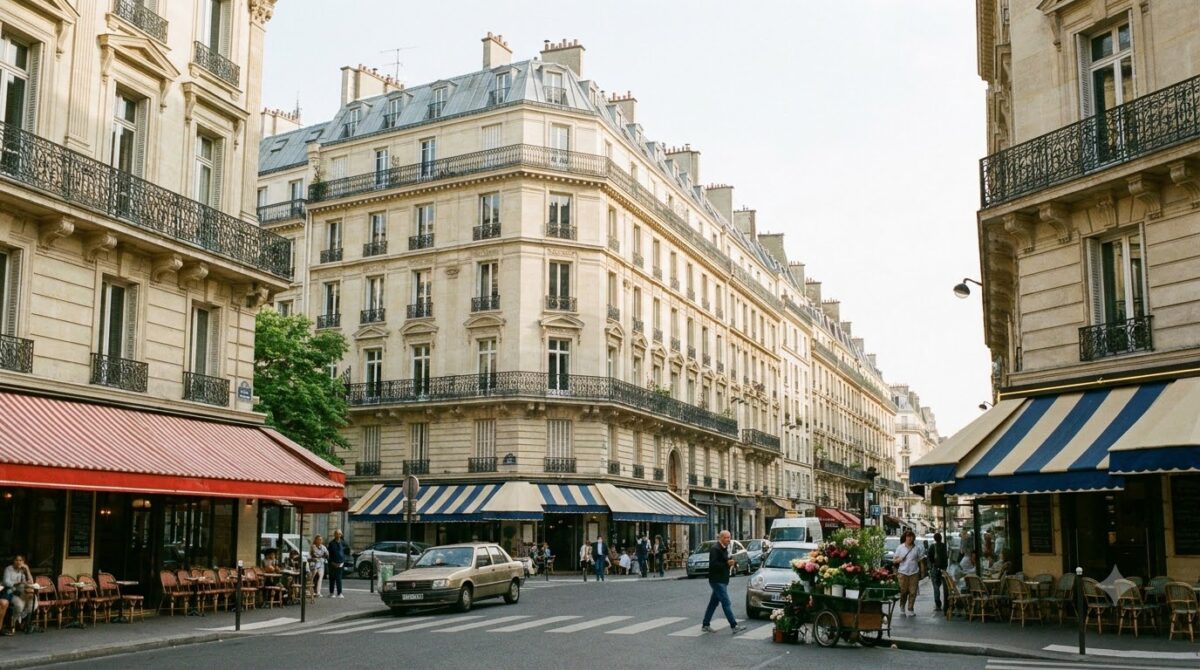
The best area to stay in Paris: every area to stay at a glance
| Arrondissement | Neighborhood | Bank | Price | Best for |
|---|---|---|---|---|
| 1st | Louvre, Palais-Royal | Right | High | First visits, sightseeing |
| 2nd | Bourse, Montorgueil | Right | Moderate | Best value in the centre |
| 3rd & 4th | Le Marais | Right | High | Atmosphere, shops, nightlife |
| 5th | Latin Quarter | Left | Moderate | Students, budget, history |
| 6th | Saint-Germain | Left | Highest | Couples, cafés, elegance |
| 7th | Eiffel Tower, Invalides | Left | High | Families, the tower view |
| 8th | Champs-Élysées | Right | Highest | Luxury hotels, shopping |
| 9th | Opéra, South Pigalle | Right | Moderate | Mid-range, good transport |
| 11th | Bastille, Oberkampf | Right | Lower | Nightlife, local life |
| 18th | Montmartre | Right | Lower | Views, charm, budget |
If you want one answer, it’s the best area in Paris for most people: the 2nd or the 3rd. Both are genuinely central, both are a fraction cheaper than the 1st and 6th, and both are actual neighbourhoods where people live rather than districts you visit.
Stay in the 1st or 2nd: the heart of Paris
The 1st arrondissement of Paris is where the city began, on and around the Île de la Cité and the Louvre.
- You are inside the Paris attractions. The Louvre, the Tuileries Garden, Place de la Concorde, Palais-Royal and Île de la Cité are all a short walk apart.
- Metro lines converge at Châtelet, the largest interchange in the network, which gives you easy access to everywhere and puts most of the city within walking distance or one change.
- It empties at night. Much of the 1st is offices, ministries and museums, so the evening is quieter than you might expect.
- Prices are high for what are often small rooms in old buildings.
The 2nd arrondissement of Paris is the better buy. It is directly north of the 1st, five minutes further from the Louvre, and noticeably cheaper. It also has Rue Montorgueil, the best market street in central Paris for everyday food, and the covered passages — nineteenth-century glass-roofed arcades that most visitors never find.
Staying in the 1st is a good idea if it is your first ever trip to Paris and you want to walk out into the Tuileries. Le Meurice on Rue de Rivoli is the landmark address here. For anything longer than three nights, the 2nd gives you more of a Paris experience for less money, and it is my favorite place to stay in the centre.
Le Marais: the 3rd and 4th
Le Marais is the one part of central Paris that Haussmann never flattened, so the streets are medieval and narrow rather than wide and uniform. It spans the 3rd and 4th arrondissements north of the river.
- Place des Vosges, the oldest planned square in Paris and the best surviving pre-Haussmann architecture in the city, arcaded on all four sides and quiet in the middle of everything. Île St-Louis is five minutes south.
- The Centre Pompidou, the Musée Picasso and the Musée Carnavalet are all inside the district.
- Paris’ best shopping for independent boutiques rather than chains, and the heart of the city’s LGBTQ scene.
- It is busy at night, particularly on Rue Vieille du Temple and around Saint-Paul, and it is one of very few districts where shops open on Sunday.
- Buildings are old, which means small rooms, narrow stairs and frequently no lift. Ask.
Stay in the Marais if you want the most atmospheric part of central Paris and are willing to trade square metres for it. Plenty of people will tell you the Marais is the best neighborhood in the city and it is hard to argue — it is the single most popular answer to where to stay in Paris and the popularity is deserved.
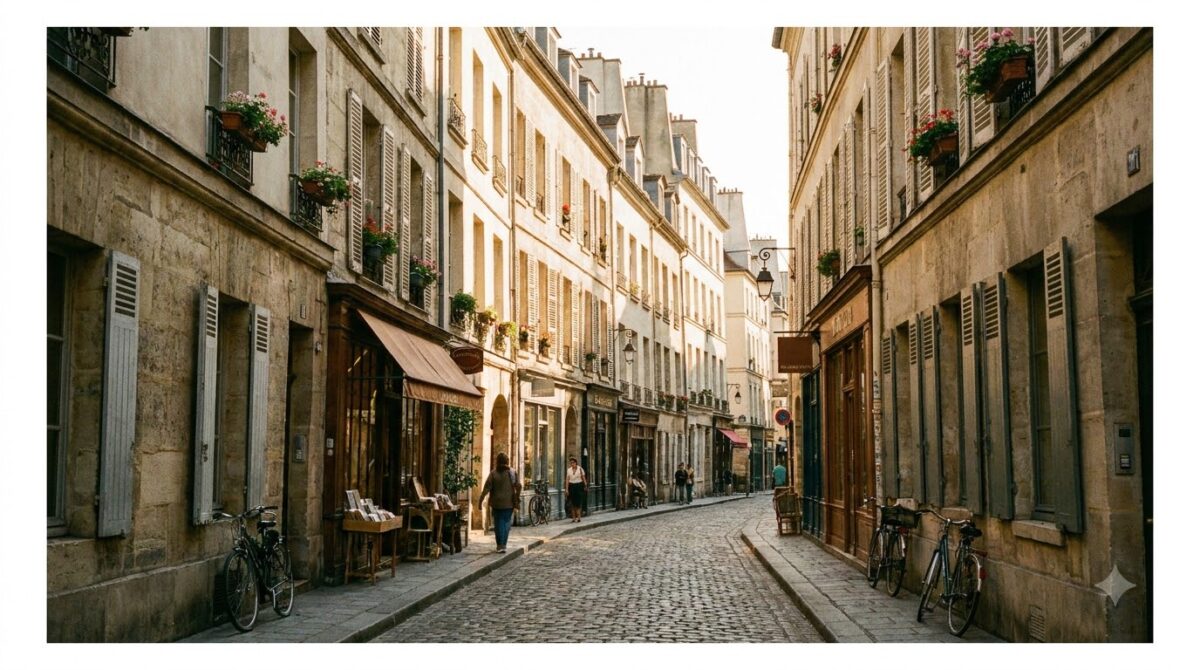
The Latin Quarter, Paris and Saint-Germain: the 5th and 6th
The Left Bank proper, and the older idea of Paris.
The 5th: the Latin Quarter
- The Sorbonne, the Panthéon and the Jardin des Plantes, and a student population that keeps prices sane.
- Rue Mouffetard, a market street with cheap eating, and the best place in central Paris to do Paris on a budget without leaving the middle.
- Shakespeare and Company and the riverside bouquinistes along the quai, plus a coffeehouse on most corners.
- Good budget hotel supply, more than anywhere else this central.
The 6th: Saint-Germain-des-Prés
- The most expensive arrondissement to sleep in, and the one people picture when they picture Paris.
- Café de Flore and Les Deux Magots, the Jardin du Luxembourg, Eglise St-Sulpice, and streets of galleries and antique dealers. Voltaire lived and died a few streets from here.
- Elegant and quiet at night, which suits couples and does not suit anyone under thirty looking for a bar.
- Some of the best restaurants in Paris at every price level.
Rive Gauche or Rive Droite? This is classic Paris either way. The Left Bank is calmer, older and more residential; the Right Bank has more nightlife, more shopping and more happening after ten. For a first trip to Paris the Right Bank is the more practical side; for a return to Paris the Left is the more pleasant one.
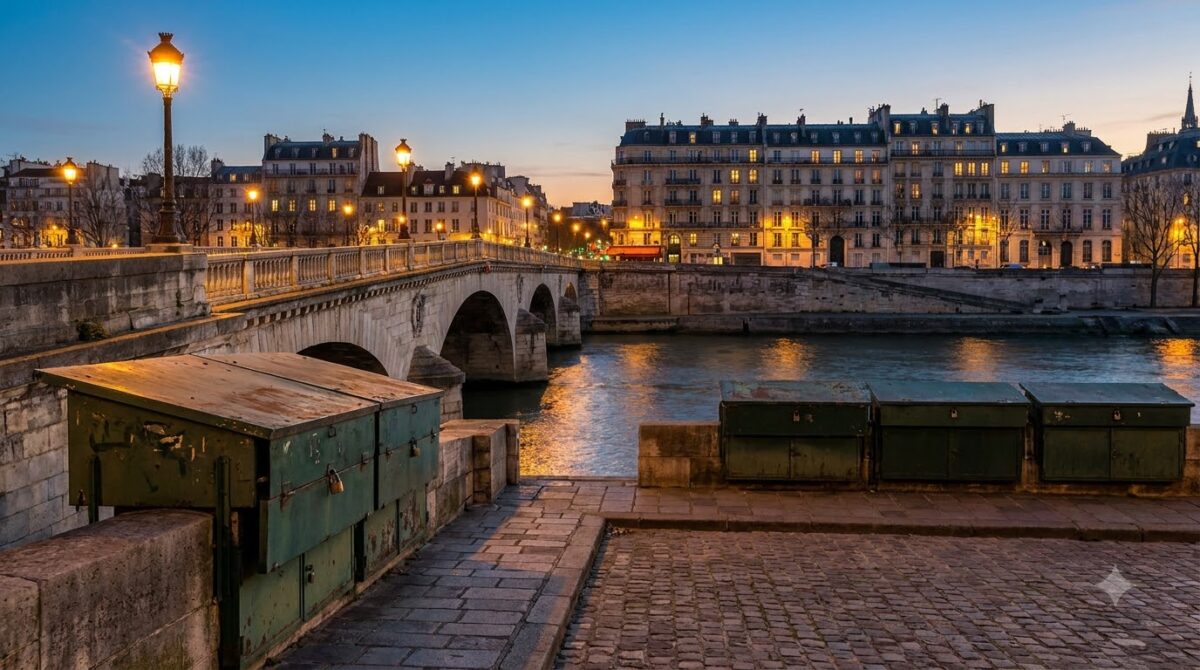
The 7th: staying near the Eiffel Tower
The 7th arrondissement holds the Eiffel Tower, the Musée d’Orsay, Les Invalides and the Rodin museum, and it is the answer for anyone who wants an Eiffel Tower view from the window.
- It is grand and residential, with wide streets, embassies and very little street life.
- Rue Cler is the exception, a pedestrian market street that gives the district a village feel for two blocks. It is the most convenient area to stay near the Eiffel Tower.
- Good for families — safe, quiet, spacious apartments, and the Champ de Mars to run around in.
- A room with a view of the Eiffel Tower costs a clear premium, and many listings claim one on the strength of a sliver visible from a balcony corner. Ask for a photograph taken from the room.
- Fewer restaurants than anywhere central, and they close earlier.
The 8th, 9th and 11th: the best mid-range hotel in Paris territory
- The 8th — the Champs-Élysées, the Arc de Triomphe and the grand palace hotels. This is where the luxury hotels in Paris are concentrated, and where a luxury hotel here means a genuine palace rather than a marketing word. It is also corporate, expensive and short of ordinary places to eat.
- The 9th — around the Paris Opera at the Palais Garnier and South Pigalle. If you are hunting the best mid-range hotel in Paris, this is the arrondissement to search first. Excellent metro links, real neighbourhood restaurants, and prices a third below the 1st for the same standard.
- The 11th — Bastille, Oberkampf and Rue de Charonne. The most alive part of Paris in the evening, full of natural wine bars and young restaurants, and cheaper again. Twenty minutes on the metro from the Louvre.
If you are going to Paris for the third or fourth time, the 9th and 11th are where most people end up, and they are where you find the best restaurants for the money. Some of the best in Paris are in the 11th and cost half what the 6th charges.
Montmartre and the 18th: a Paris neighborhood on a hill
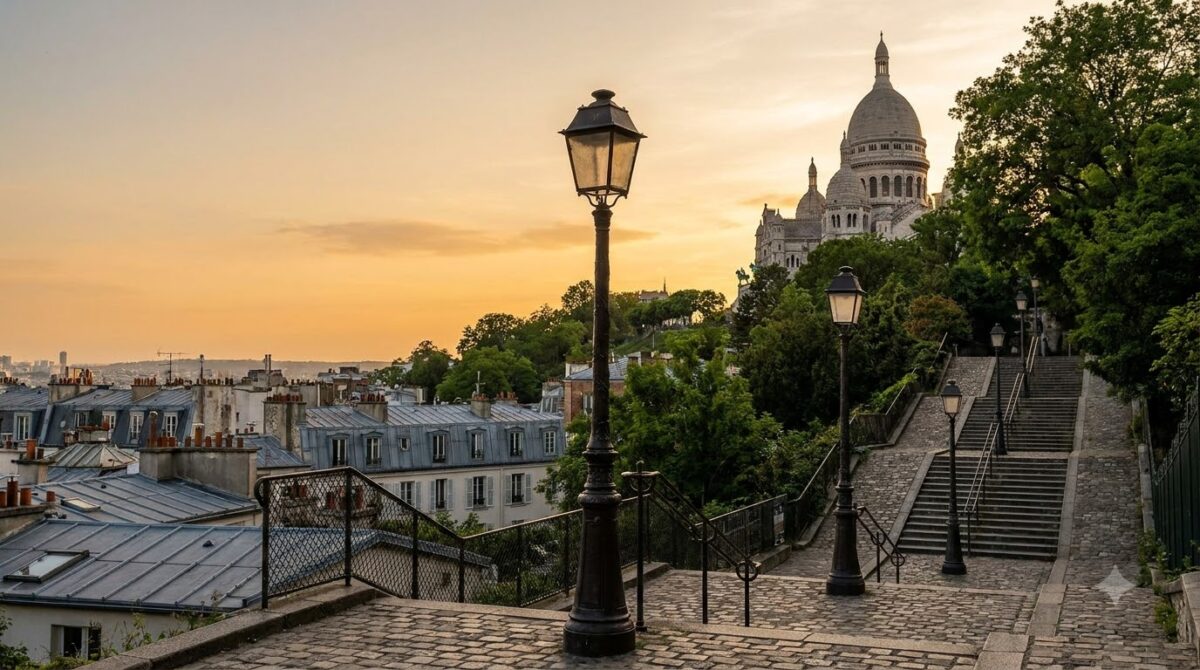
Montmartre sits on the only real hill in Paris, crowned by the Sacré-Cœur basilica, and it is a genuinely separate village that the city absorbed in 1860.
- The best views in Paris from the basilica steps, free and open late.
- Prices are noticeably lower than anywhere central, and for a first time in Paris on a tight budget this is the best budget option that is still pretty.
- It is a long way out. Thirty to forty minutes on the metro to the Latin Quarter, and the hill is steep.
- The area around Place du Tertre is the most touristed few hundred metres in the city; the streets north and west of it are not.
- Avoid the far side of the hill around Barbès and the boulevards below Anvers at night, which is the one part of this district worth being deliberate about.
Places to stay in Paris outside the centre: the 12th, 15th and beyond
Beyond the tourist centre there are districts of Paris that are genuinely pleasant to sleep in and much cheaper. If you stay outside the ring you trade walking for money, and they are worth knowing about if the central prices have put you off.
- The 12th arrondissement of Paris — around Bercy and the Coulée Verte, the elevated park that the New York High Line copied. Residential, well connected, and half the price of the Marais.
- The 15th — the largest arrondissement by population, immediately south of the Eiffel Tower. Nothing to see, everything to eat, and a short walk into the 7th.
- The 13th and Butte-aux-Cailles — a village of low houses and street art inside the city, plus the best Asian food in Paris.
- The 20th around Belleville — the most mixed part of the city and the cheapest that still feels central-ish.
The trade is always the same: you save money and lose walking. If you stay somewhere outside the central ring you will use the metro every day, which is fine — it just means picking a hotel within three minutes of a station rather than three minutes of a monument.
Where to avoid staying in Paris
Visiting Paris is safe and the practical warnings are narrow. Most of what people call unsafe is simply inconvenient. There are few places I wouldn’t stay; there are several I don’t stay in because they waste time.
- Around Gare du Nord and Barbès (10th and 18th edges) — scruffy, busy and unpleasant at night, though not dangerous in daylight.
- The far outer arrondissements, 19th and 20th beyond Belleville, are residential and a long way from anything.
- Anything described as “near Paris” that turns out to be outside the Périphérique. Check the postcode: 75 is Paris, 92/93/94 are not.
- Directly on the Champs-Élysées if you want a residential area feel — it is a shopping boulevard, not a neighbourhood.
- Pickpocketing is the real risk everywhere: Line 1, the Louvre, Montmartre and the Eiffel Tower especially.
Paris hotels: the categories and the best place to stay in each
Paris hotels are hard to compare because the rooms are small by international standards and the categories mean different things. There is no single best hotel in the city, only the best one for a given budget and district. These are the types and the parts of the city they cluster in, described by position and type only. Check rates and availability yourself rather than trusting any guide, including this one.
The best luxury hotels in Paris
Concentrated in the 1st and 8th. The Ritz Paris on Place Vendôme, Le Meurice on Rue de Rivoli and the Hôtel Régina facing the Tuileries are the reference points people use for the best luxury addresses — both are landmark buildings in their own right, and the Régina’s corner rooms are the classic Eiffel Tower view address.
Boutique hotels
The largest category, spread across the 2nd, 3rd, 9th and 11th: twenty to sixty rooms in a converted Haussmann or older building, usually with a small bar and a courtyard, and often called a maison in Paris rather than a hotel. Properties like Hotel Joyce in the 9th, Hotel Malte near the Bourse, Solly Hôtel Paris and Le 123 Sébastopol on the border of the 2nd and 3rd are typical of the type — central, designed, and a third of the price of the palaces.
The best budget hotels, Best Western and the chains
Hôtel de Roubaix in the 3rd is the long-standing example of the genuinely cheap central hotel — plain, old, well located. Chains including Best Western, ibis and Mercure operate throughout the districts of Paris, and near the stations they are the reliable way to keep costs down. Expect small rooms and no view; you are buying the postcode.
Apartments
Apartments in Paris usually win for stays over four nights, for families, or for anyone who wants a kitchen and more than 15 square metres. An Airbnb or a serviced flat costs less per night than a hotel room of the same size. Paris regulates short lets tightly, so book through a platform with a registration number displayed.
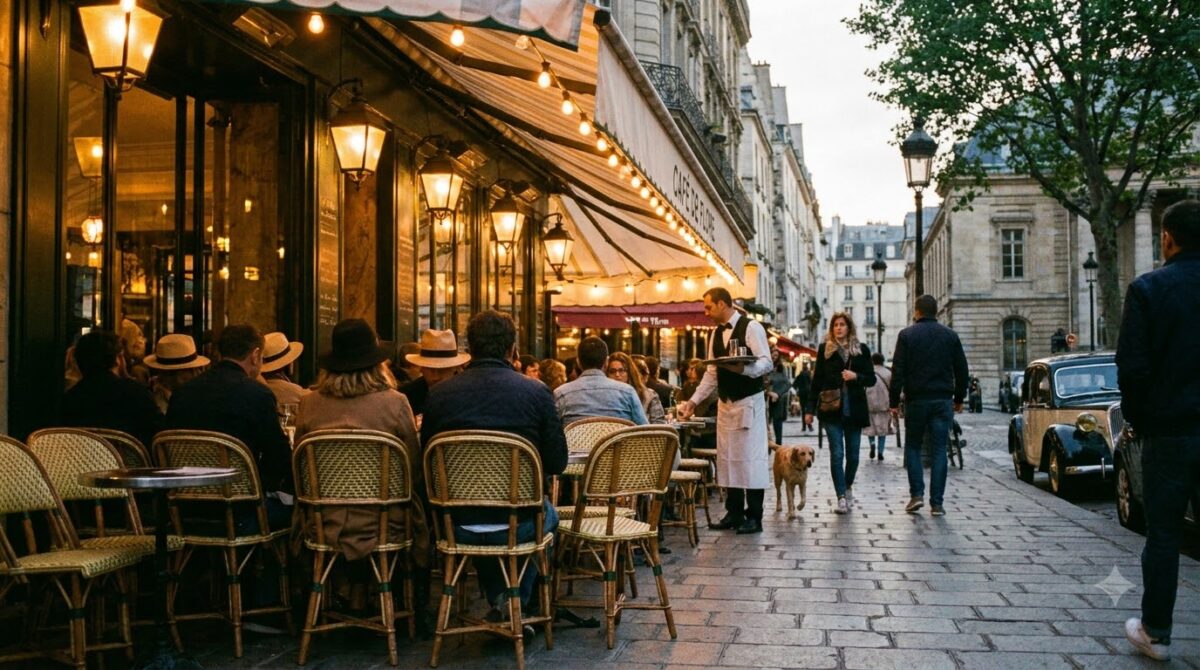
How to decide where to stay: the best places to stay on your trip to Paris
Work through it in this order and you will find the best place to stay for your trip in a minute. There is no single best Paris district — there is only the one that fits what you are doing.
| You are | Stay in | Why |
|---|---|---|
| First timers, 3 nights | 1st, 2nd or 4th | Walk to everything, no metro needed |
| A couple | 6th or 3rd | Saint-Germain and the Marais at their best |
| A family | 7th or 5th | Space, parks, quiet evenings |
| On a budget | 5th, 11th or 18th | Best budget rooms that are still walkable |
| Here for restaurants | 9th or 11th | Where Parisians actually eat |
| Here for luxury | 1st or 8th | The palace hotels and Place Vendôme |
| Here for the Eiffel Tower | 7th | The only district with a genuine tower view |
| Returning visitor | 9th, 11th or 6th | Neighbourhoods rather than sights |
| Here for one night in Paris | 1st or 2nd | Stay in a hotel by Châtelet and walk |
| Unsure | 2nd or 3rd | The safest place to stay if you’re not certain |
The mistake worth naming is optimising for distance to one of the attractions in Paris. Paris has an excellent metro, nothing central is more than twenty minutes from anything else, and you will spend far more time on your own street than at the Louvre. Pick the neighbourhood you want to have breakfast in.
Paris attractions and the arrondissement they are in
Since the number is the key, here is the reverse lookup: the main places in Paris to visit and which arrondissement each sits in. It is quicker than a spreadsheet and it tells you immediately whether a listing is near what you care about.
| Attraction | Arrondissement | Bank |
|---|---|---|
| Louvre, Tuileries | 1st | Right |
| Notre-Dame, Île St-Louis | 4th | Île de la Cité |
| Centre Pompidou | 4th | Right |
| Panthéon, Sorbonne | 5th | Left |
| Jardin du Luxembourg, Eglise St-Sulpice | 6th arrondissement of Paris | Left |
| Eiffel Tower, Musée d’Orsay | 7th arrondissement of Paris | Left |
| Arc de Triomphe, Champs-Élysées | 8th | Right |
| Palais Garnier | 9th | Right |
| Père Lachaise | 20th | Right |
| Sacré-Cœur, Montmartre | 18th | Right |
Note how little the spread is. Almost everything within Paris worth visiting sits between the 1st and the 8th, which is an area you can cross on foot in about forty minutes. That is why exploring Paris works so well and why optimising your hotel around one monument is wasted effort.
The church in Paris most people mean is Notre-Dame on the Île de la Cité, but Sainte-Chapelle a street away has the better interior, and Eglise St-Sulpice in the 6th is the largest after Notre-Dame.
Getting around, and how many nights
- The metro is the best in Europe for coverage — sixteen lines, a station every 500 metres in the centre, and a carnet of tickets is cheap.
- Central Paris is walkable and flat except for Montmartre and Belleville. The Marais to the Latin Quarter is fifteen minutes on foot, and getting around Paris on foot is how you enjoy Paris.
- From Charles de Gaulle, the RER B reaches central Paris in about 35 minutes; from Orly, the Orlyval plus RER, or the new Line 14.
- Three nights minimum, four or five to enjoy it. Time in Paris rewards a slower trip more than almost any other capital, and a Paris itinerary of five days is not too long.
- Book two to three months ahead for May, June, September and October. Paris in September is the single busiest month for city breaks, and supply is large but so is demand.
- Skip-the-line tickets through Klook, GetYourGuide or the museums’ own sites are worth it for the Louvre and the Eiffel Tower, and pointless for everything else.
Heading south afterwards? Our south of France itinerary covers the Riviera and Provence.
Heading to the coast afterwards? Our guide to where to stay in Nice covers the Riviera base.
Checking current rates in Paris
Everything above is about position — which area suits which kind of trip. What it deliberately does not do is quote prices, because rates in Paris move a long way by season, by day of the week and by how far ahead you book, and any figure printed in a guide is out of date the week after it is written.
These searches show live availability and current prices, so you can check them against the areas described above:
These are affiliate links. If you book through one we may earn a commission, at no extra cost to you. It does not affect which areas we recommend above — nobody pays to be listed here.
Two hours south by train: our where to stay in Bordeaux guide.
Frequently asked questions
What is the best area of Paris to stay in?
The 2nd or 3rd arrondissement for most people: genuinely central, walkable to the Louvre and the Marais, and cheaper than the 1st or 6th for the same standard. The 1st is best if it is your first trip and you want to step straight out into the Tuileries. Le Marais in the 3rd and 4th is the most atmospheric.
Is the 1st arrondissement in Paris a good place to stay?
Yes, and it is the most convenient in the city — the Louvre, Tuileries, Palais-Royal and Île de la Cité are all on foot, and Châtelet connects to every metro line. The trade-offs are price, small rooms in old buildings, and a district that empties in the evening because so much of it is offices and museums.
Where should tourists stay in Paris on a budget?
The 5th, the 11th or the 18th. The Latin Quarter in the 5th has the most budget hotel supply of any central district thanks to its student population. The 11th around Oberkampf is cheaper and full of good restaurants. Montmartre in the 18th is the cheapest that is still pretty, though it is a 30 to 40 minute metro ride from the Left Bank.
What is the safest area of Paris to stay in?
The 6th, 7th and 8th are the quietest and most residential, and the 5th is close behind. In practice all the central arrondissements are fine at night. The genuine risk in Paris is pickpocketing rather than anything more serious, concentrated on metro Line 1, at the Louvre, around the Eiffel Tower and in Montmartre.
Where should I avoid staying in Paris?
The streets immediately around Gare du Nord and Barbès are scruffy and unpleasant after dark, though not dangerous by day. The 19th and 20th beyond Belleville are residential and far from the sights. Most importantly, check the postcode — anything starting 92, 93 or 94 is outside the city proper, however the listing describes itself.
Is it better to stay on the Left Bank or the Right Bank?
The Right Bank for a first trip and the Left for a return. Rive Droite has the Louvre, the Marais, the department stores and most of the nightlife. Rive Gauche — the Latin Quarter, Saint-Germain and the 7th — is quieter, older and more residential, with the Musée d’Orsay and the Jardin du Luxembourg.
What are the best areas to stay in Paris near the Eiffel Tower?
The 7th arrondissement, which contains the tower itself, and the 15th and 16th on either side of it. The 7th is grand, quiet and family-friendly but short on restaurants and nightlife. A room with a genuine view of the Eiffel Tower carries a real premium, and many listings overstate it, so ask for a photograph taken from inside the room.