
Choosing where to stay on the Amalfi Coast is usually written up as a beauty contest between Positano and Amalfi. It should be a logistics question, because the coast has one narrow road, seasonal ferries, and towns built vertically into cliffs.
Some links below are affiliate links. We may earn a commission if you book through them, at no extra cost to you. We do not rank hotels, and any prices on the map come live from the booking sites.
Quick answer: where to stay on the Amalfi Coast. Amalfi town: flat, with the ferry pier, central to the whole coast, and a fraction of Positano’s price. Positano for the view, Praiano for quiet, sunsets and value, Sorrento for transport and choice.
The three things that actually matter: whether the town has a ferry pier, whether it is flat, and how many steps sit between the road and your room. Get those right and any of these towns works. Get them wrong and you carry a suitcase up 200 steps in August.
Towns, transport and access details checked 7 September 2026.
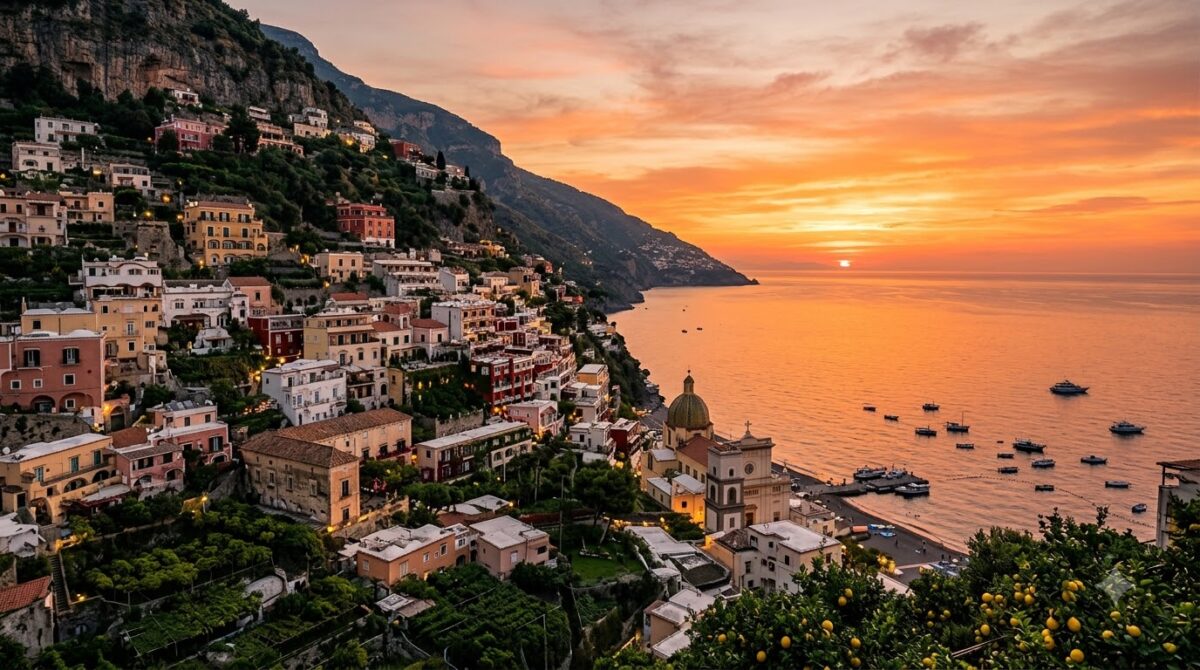
The best towns to stay on the Amalfi Coast, at a glance
| Town | Ferry pier | Terrain | Price | Best for |
|---|---|---|---|---|
| Positano | Yes | Very steep | Highest | The view, honeymoons |
| Amalfi | Yes | Flat | Moderate | Getting around, first visits |
| Praiano | Limited | Steep | Lower | Quiet, sunsets, value |
| Ravello | No, 350m above | Hilltop, flat on top | High | Calm, gardens, romance |
| Atrani | Walk to Amalfi | Flat centre | Lower | Village life, no crowds |
| Minori and Maiori | Yes, seasonal | Flat | Lowest | Beaches, budget, families |
| Sorrento | Yes, major hub | Flat town, cliff above sea | Moderate | Transport, choice, value |
If you want one answer: Amalfi town. It is flat, it has the ferry pier, it is central to the whole coast, and it costs a fraction of Positano. It is not the prettiest and that is the trade.
Positano: the famous one
Positano is the town in every photograph of the Amalfi Coast: pastel houses stacked up a cliff above a small beach.
- The most beautiful town on the coast, and it knows it.
- Ferry pier at the bottom, connecting to Amalfi, Sorrento and Capri in season.
- Boutique hotels with terraces facing the sea, which is what people come for.
- The best beach clubs on the coast, at beach club prices.
The problem is vertical. Positano is built down a cliff and there is essentially one road that loops through it. Everything else is stairs, and there are hundreds of them. Taxis cannot reach most hotels. Porters exist and charge accordingly.
Upper Positano is cheaper and quieter; lower Positano puts you at the beach and costs more. Our guide to where to stay in Positano covers that split in detail, because within the town it matters more than the hotel.
Amalfi town: the practical choice
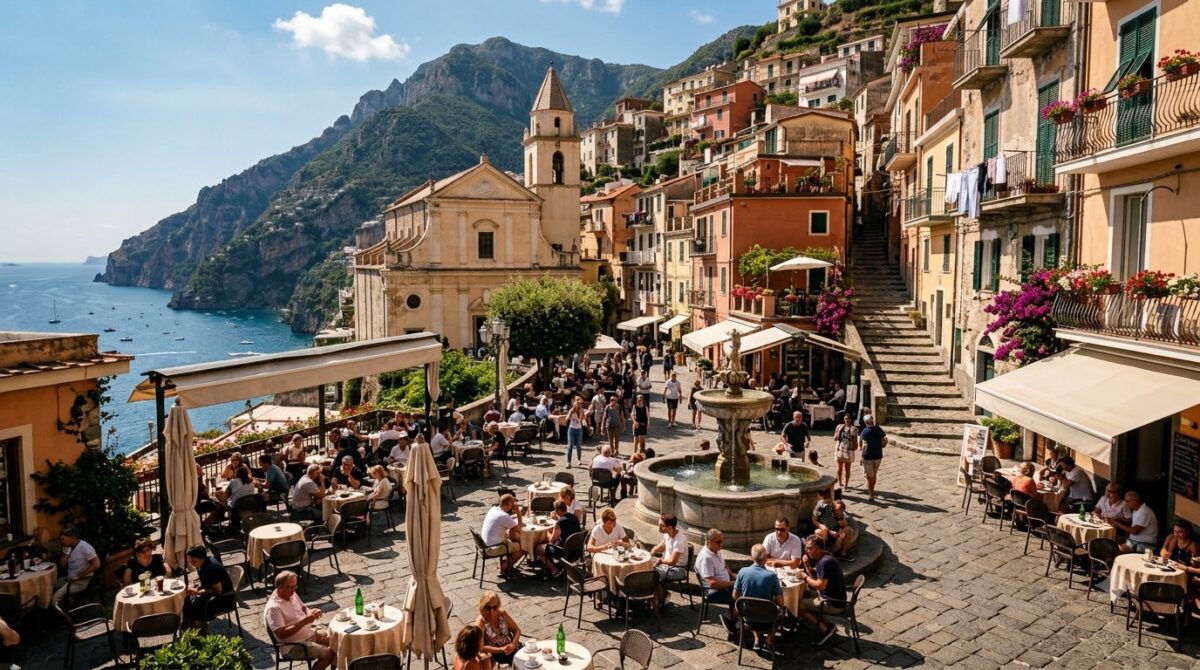
Amalfi gave the coast its name and was a maritime republic when Positano was a fishing village. It sits in a cleft in the cliffs with a flat centre, which on this coast is close to a miracle.
- Flat. You can wheel a suitcase from the ferry to most hotels, which is untrue of almost everywhere else here.
- The main ferry pier and the SITA bus hub. Every route passes through.
- Central — Ravello is 25 minutes above, Positano 25 minutes west, Minori 10 minutes east.
- Noticeably cheaper than Positano for a comparable room.
- The cathedral with its striped facade and long staircase, and a real town centre with shops for residents.
The trade-off: it is a working town rather than a postcard, the beach is small and grey, and the main square fills with day trippers off the ferries between eleven and four.
Map shows live availability and prices. We may earn a commission on bookings made through it, at no extra cost to you.
Praiano: the best value on the coast proper
Praiano sits between Positano and Amalfi and is the town people recommend once they have been twice.
- Prices well below Positano for a similar sea view.
- The best sunsets on the coast, because it faces west while most of the coast faces south.
- Quiet. Almost no day trippers, because there is no famous sight to stop for.
- Halfway between the two big towns, so buses either way are short.
- Path of the Gods access from just above the village.
The catch: it is spread out along the road rather than gathered around a centre, ferry service is limited, and it is steep. There is also less to do in the evening than in Amalfi or Positano, which is either the point or the problem.
Ravello: above it all
Ravello sits 350 metres above Amalfi, reached by 25 minutes of switchbacks. It is not on the water at all, and that is the appeal.
- The best views on the coast, from the terraces at Villa Cimbrone and Villa Rufolo.
- Cool and calm, several degrees below the coast in summer, and quiet at night once the day visitors leave.
- The Ravello Festival puts classical concerts in the gardens through the summer.
- Flat once you are up there, with a pedestrian centre.
The trade-off is the bus. Every trip to the sea is 25 minutes down and 25 back, on a road that makes some people carsick. Ravello suits couples and quiet weeks; it does not suit a first visit built around beaches.
Atrani, Minori and Maiori: where the value is
Three towns immediately east of Amalfi that most itineraries skip entirely.
- Atrani is the smallest town on the coast, a five minute walk around the headland from Amalfi. A single square, a beach, and almost no visitors staying overnight. It is the best of both: village quiet, with Amalfi’s pier a walk away.
- Minori is flat, has a real sandy beach, and is a working town with the coast’s best pastry shop. Ten minutes from Amalfi by bus.
- Maiori has the longest beach on the Amalfi Coast and the lowest prices. It was rebuilt after a flood, so it looks more modern than its neighbours, which is why it is cheap.
These three are the answer for the Amalfi Coast on a budget, and for families who want a beach the children can actually use.
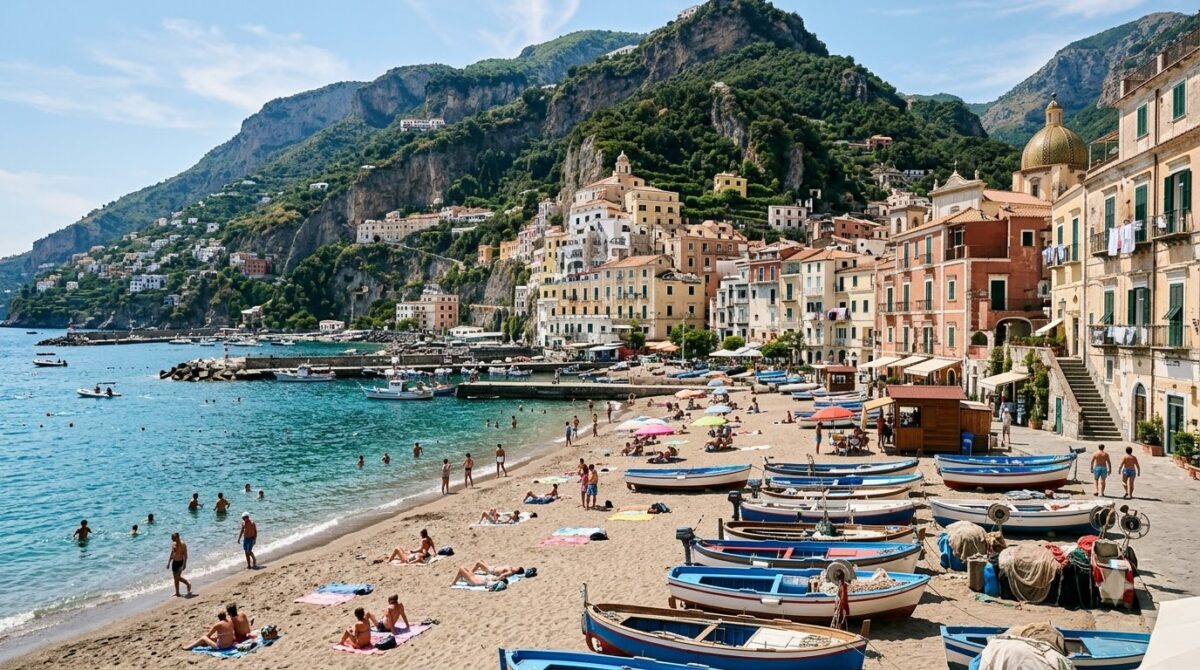
Sorrento: not the Amalfi Coast, and often the right answer
Sorrento is on the other side of the peninsula facing Naples, so it is not technically on the Amalfi Coast at all. It is still where a lot of people should stay.
- The transport hub. The Circumvesuviana train to Naples and Pompeii ends here, and the ferries to Capri and the coast start here.
- Far more hotels at every price, because it is a proper town rather than a village.
- Flat centre, easy walking, and shops and restaurants for residents.
- Cheaper than the coast towns for a comparable room.
What you give up: waking up on the Amalfi Coast. Sorrento faces the bay of Naples, not the coast, and every trip to Positano or Amalfi is a bus or ferry ride.
Choose Sorrento if you are combining the coast with Pompeii and Capri, travelling with children, or on a tighter budget. Choose the coast itself if this is a first visit and the view from the balcony is the point.
Amalfi or Positano?
This is the question most people are really asking, so here it is directly.
| Positano | Amalfi | |
|---|---|---|
| Looks | Spectacular | Handsome |
| Walking | Stairs everywhere | Flat centre |
| Price | Highest on the coast | Moderate |
| Transport | Ferry and bus, steep walk to both | Ferry and bus at the centre |
| Evening | Lively, expensive | Quieter, cheaper |
| Luggage | Hard work or a porter | Manageable |
Positano if it is a special trip and you travel light. Amalfi if you want to explore the whole coast without the logistics fighting you.
The questions to ask before you book
Accommodation on the Amalfi Coast has one variable that matters more than star rating, and hotels rarely volunteer it.
- How many steps from the road to reception? The single most useful question. In Positano the answer can be over a hundred.
- Is there a shuttle or porter service? Many hotels have one and it is worth using on arrival.
- Does the room have a sea view, or does the hotel? These are different things and priced differently.
- Is there parking, if you are renting a car? Without it, a car is a liability here.
- Is there air conditioning? Essential from June to September.
- Is there a private beach or beach club arrangement? Beach access on this coast is mostly paid, and hotel arrangements save money.
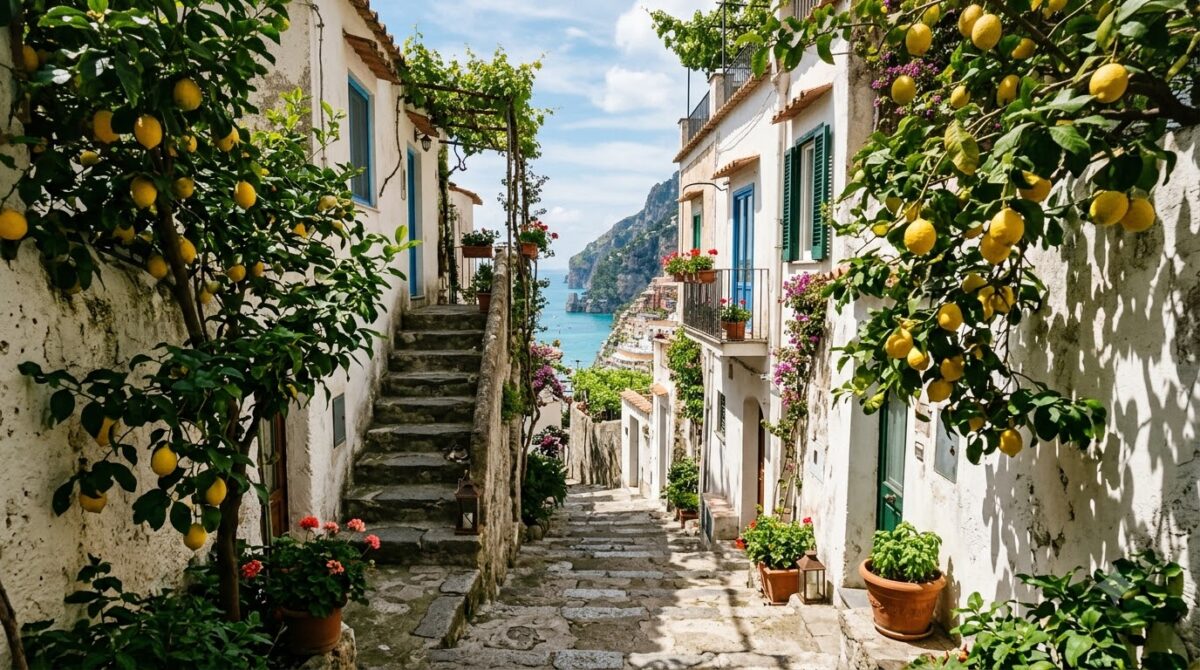
Do you need to rent a car?
No, and on this coast a car is usually worse than useless. The road is two narrow lanes with blind bends, parking is scarce and expensive, and meeting a bus can mean reversing.
Use the ferry between April and October and the SITA bus otherwise. A car only makes sense if you are staying in Praiano or Ravello with hotel parking and plan to leave it there.
Our Amalfi Coast itinerary sets out the ferry and bus times between each town, which is what the choice of base really depends on.
The 5 best towns to stay, and who each one suits
Reduced to the shortlist most people actually choose between, here are the five best towns along the Amalfi Coast and the traveller each one fits.
- Amalfi — the best base on the Amalfi Coast for a first trip. Flat, central, the ferry from Amalfi reaches everywhere, and the town of Amalfi has real restaurants and shops rather than only souvenir stalls.
- Positano — the famous Amalfi postcard. Choose it if the view is the point and you accept narrow streets that are mostly staircases.
- Praiano — the quiet spot on the Amalfi Coast between the two big towns. Best sunsets, lowest prices on the coast proper, least hustle and bustle.
- Ravello — above the coast rather than on it. For couples, gardens and calm.
- Sorrento — not on the coast at all, and the best connected. For anyone who does not have a car and wants to explore the Amalfi Coast plus Pompeii and Capri.
If you are wondering where to stay and cannot decide between the two towns everyone names, the honest answer is that Amalfi and Positano suit different trips rather than different budgets. One is convenient, the other is beautiful.
Getting around the coast without a car
Most visitors do not have a car here, deliberately, so it is worth setting out what the bus and ferry actually let you do from each base.
- From Amalfi — ferries to Positano, Sorrento and Capri, buses west to Positano and east to Minori, Maiori and Salerno, and the local bus up to Ravello. The best connected town on the coast.
- From Positano — ferries and buses both ways, though the pier and the bus stops involve a steep walk from most hotels.
- From Praiano — buses both ways are frequent; ferry service is limited and seasonal.
- From Ravello — the bus down to Amalfi, then everything from there. Add 25 minutes each way to any journey.
- From Minori and Maiori — buses west to Amalfi in ten minutes, and seasonal ferries.
- From Sorrento — the widest choice of all: train to Naples and Pompeii, ferries to Capri and the coast, buses along the coast road.
The pattern is clear once you list it: the further you are from Amalfi, the more of your day goes into moving. That is the practical case for staying somewhere central even if it is not the prettiest town.
Should you stay between two towns?
A common question, because the coast is a line rather than a hub, and the answer is usually no.
Hotels along the road between towns look well placed on a map. In practice you are on a bend of a busy two-lane road with no pavement, a long walk from anywhere with places to eat and drink, and dependent on a bus that may be full when it passes.
Stay in a town, not between two. The exception is Praiano, which is genuinely between Positano and Amalfi and is a village in its own right rather than a stretch of road.
Eating and evenings by town
Where you sleep decides dinner on this coast more than anywhere in Italy, because moving after dark means a bus timetable.
- Amalfi — the widest choice of restaurants and shops, and a proper evening passeggiata once the day trippers leave on the last ferries.
- Positano — the best restaurants on the coast and the highest prices. Beach-level places charge for the setting.
- Praiano — a handful of good places and not much else. Peaceful, or quiet, depending on what you wanted.
- Ravello — a small number of restaurants around the square, and everything closes early.
- Maiori and Minori — where local families eat, at local prices. Minori has the best pastry shop on the coast.
- Sorrento — by far the most choice, because it is a town of 16,000 rather than a village.
Travel tip worth more than it sounds: the last buses along the coast run earlier than you expect, and the ferries stop in the late afternoon. If you plan dinner in another town, check how you are getting back before you book the table.
A note on names and spelling
You will see the coast written as Amalfi, Almafi and a dozen other variants when searching for hotels. The correct spelling is Amalfi, on the Costiera Amalfitana in southern Italy, in the province of Salerno.
It matters only because search results and booking sites sometimes split listings between spellings, and you can miss properties along the coast that way.
Checking current rates in the Amalfi Coast
Everything above is about position — which area suits which kind of trip. What it deliberately does not do is quote prices, because rates in the Amalfi Coast move a long way by season, by day of the week and by how far ahead you book, and any figure printed in a guide is out of date the week after it is written.
These searches show live availability and current prices, so you can check them against the areas described above:
These are affiliate links. If you book through one we may earn a commission, at no extra cost to you. It does not affect which areas we recommend above — nobody pays to be listed here.
Frequently asked questions
What is the best town to stay on the Amalfi Coast?
Amalfi town for most first visits. It is flat, it has the main ferry pier and bus hub, it is central to the whole coast, and it costs far less than Positano. Positano is the most beautiful and the most vertical; Praiano is the best value on the coast proper.
Should I stay in Amalfi or Positano?
Positano if the view is the reason for the trip and you are travelling light, because everything there is stairs and prices are the highest on the coast. Amalfi if you want to explore the whole coast easily: it is flat, the ferry and bus both stop in the centre, and rooms cost noticeably less.
Where should I stay on the Amalfi Coast on a budget?
Minori, Maiori or Atrani, all just east of Amalfi. They are flat, they have real beaches, they are working towns rather than resorts, and they are the cheapest places to stay along the coast. Sorrento, on the other side of the peninsula, is the other budget answer with far more choice.
Is Sorrento a good base for the Amalfi Coast?
Often the smartest one, though it is not on the Amalfi Coast. The Circumvesuviana train to Naples and Pompeii ends there and the ferries to Capri and the coast start there, so it is the best connected town in the region, with more hotels and lower prices. What you give up is waking up on the coast itself.
Do I need a car on the Amalfi Coast?
No, and it is usually a liability. The coast road is two narrow lanes with blind bends, parking is scarce and expensive, and towns like Positano are largely pedestrian. Use the ferries from April to October and the SITA buses otherwise. A car only helps if you are in Praiano or Ravello with hotel parking.
Is Ravello worth staying in?
Yes for a quiet week or a romantic trip. It sits 350 metres above the sea with the best views on the coast from Villa Cimbrone and Villa Rufolo, and it is several degrees cooler in summer. The cost is 25 minutes of switchbacks each way to reach the water, so it does not suit a beach-focused first visit.
What should I ask a hotel before booking on the Amalfi Coast?
How many steps there are from the road to reception, and whether there is a porter or shuttle. In Positano that number can be over a hundred, and no star rating tells you. Also confirm air conditioning, parking if you are driving, and whether the sea view is from your room or only from the terrace.