
Positano is not laid out in neighborhoods. It is a single steep slope with one road looping through it and staircases everywhere else, which means the real decision about where to stay in Positano is vertical: how high up the cliff, and how many steps between your room and the sea.
Some links below are affiliate links. We may earn a commission if you book through them, at no extra cost to you. We do not rank hotels, and any prices on the map come live from the booking sites.
Quick answer: where to stay in Positano. Central Positano on the cliff face, between the road and the beach: you get the terrace view that is the reason to come, and the walk down is manageable. Upper Positano for budget and bus arrivals, lower Positano for beach days and ferries.
That one variable decides your trip. It sets what you pay, how easy the arrival is, whether you can get back for a rest at lunchtime, and how much of the holiday you spend climbing.
Areas, access and transport details checked 7 September 2026.
The short answer
| If you are | Best area |
|---|---|
| Here for the beach and the town | Lower Positano, near Spiaggia Grande |
| Watching the budget | Upper Positano, near the main road |
| Arriving by bus with luggage | Upper Positano |
| Arriving by ferry | Lower Positano |
| Wanting a luxury hotel with a terrace | Central Positano, on the cliff face |
| Travelling with limited mobility | Upper Positano, and confirm access first |
| Staying a week and using the coast | Upper Positano, near the bus stops |
If you want one answer: central Positano on the cliff face, between the road and the beach. You get the terrace view that is the reason to come, and the walk down is manageable.
How the town is arranged
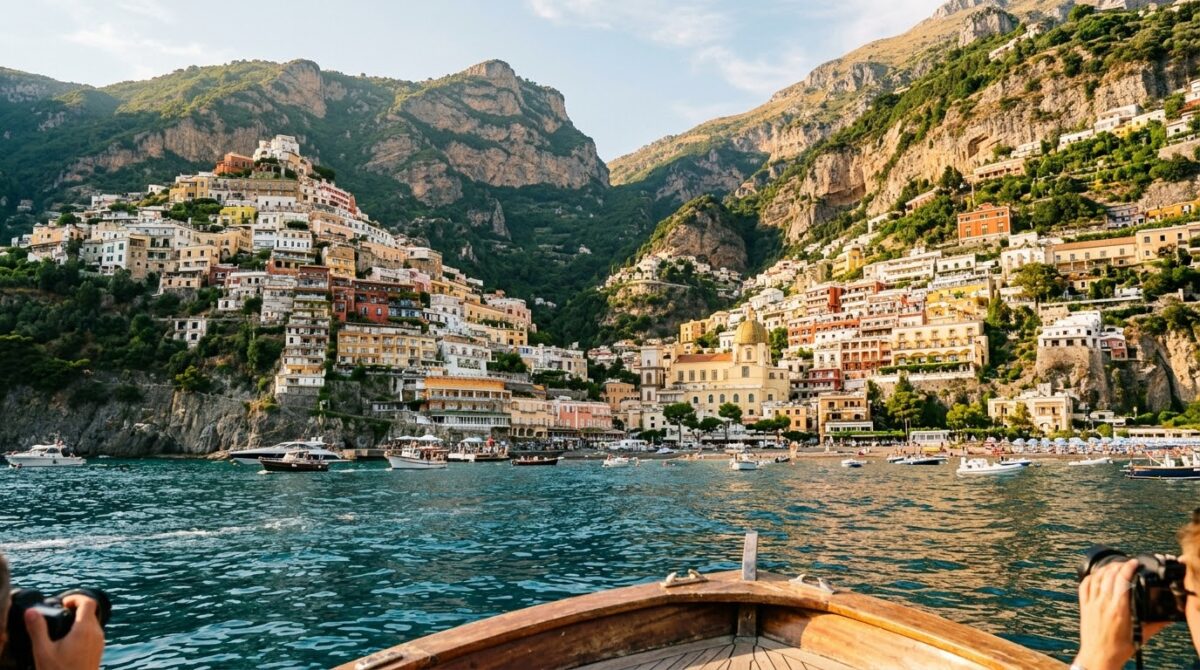
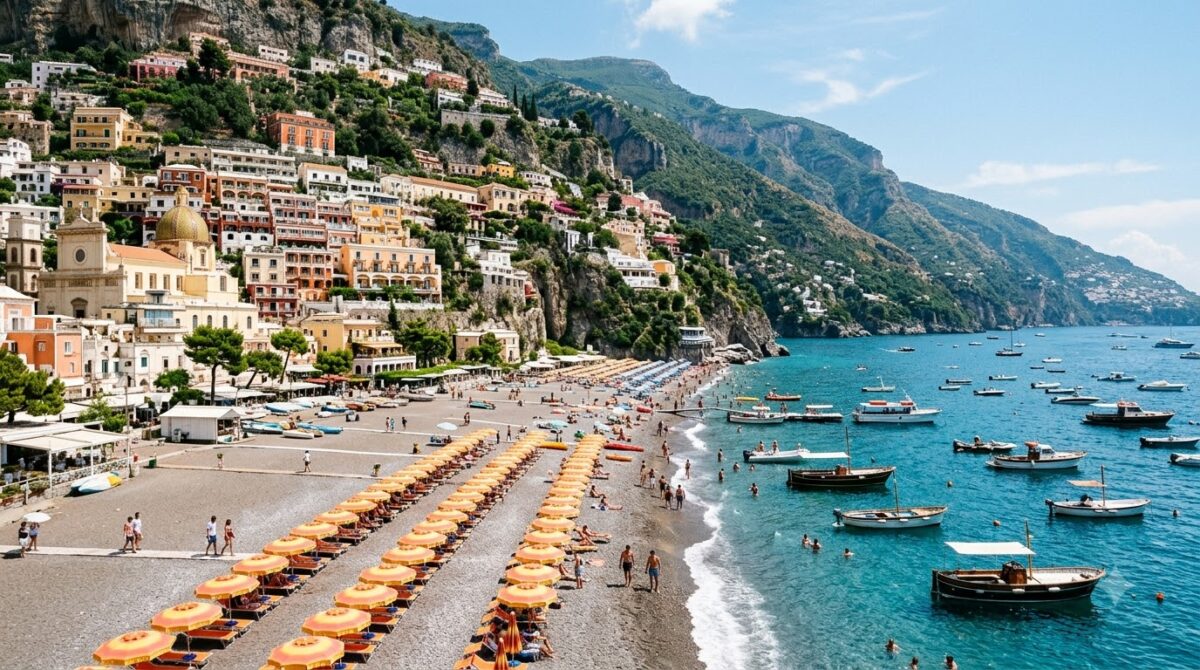
Positano runs from the main coast road at the top down to the beach at the bottom, and the drop is around 100 metres over a short horizontal distance.
- The top — where the SITA bus stops on the coast road, and where the church of Santa Maria Assunta sits slightly below with its majolica dome.
- The middle — the cliff face, where most of the hotels with the famous terraces are.
- The bottom — Spiaggia Grande, the main beach, with the ferry pier at its western end and the restaurants along it.
- Fornillo — a second, quieter beach around the headland west, reached by a footpath.
One internal shuttle bus loops the town, running from the top down through the centre and back. It is small, frequent and cheap, and it is the single most useful thing to know about staying here.
Lower Positano: the beach end
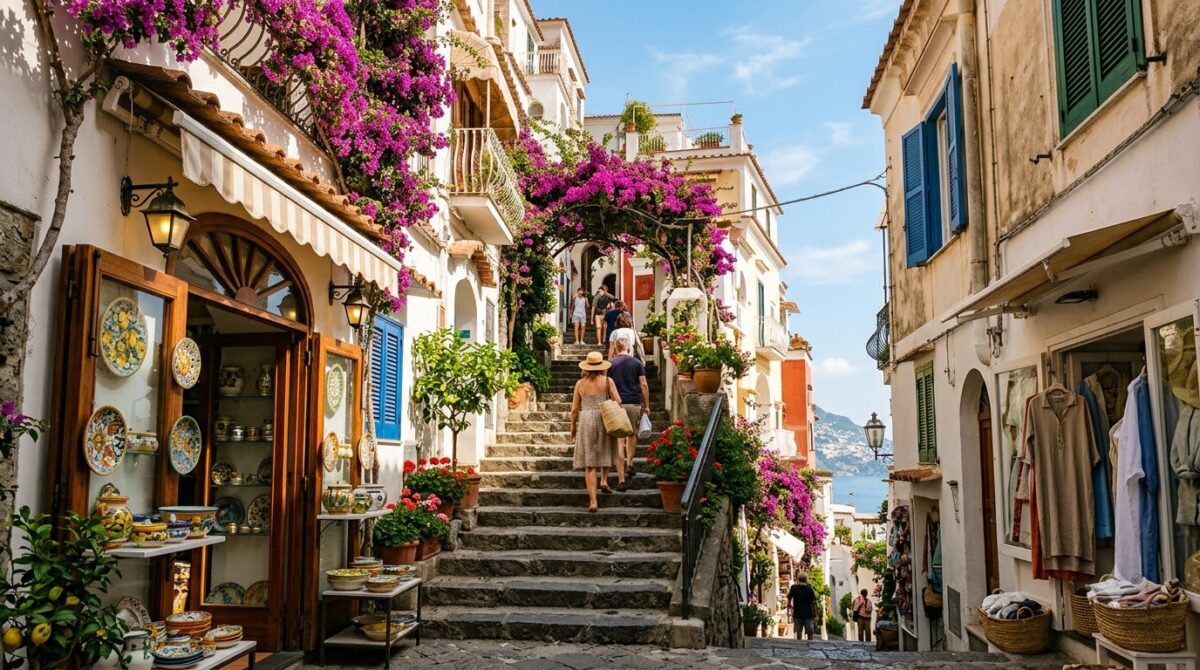
The bottom of the town, around Spiaggia Grande and the streets just above it, is where the shops, the restaurants and the beach clubs are.
- You are in the middle of it. Beach, restaurants and the evening passeggiata are all at your door.
- The ferry pier is here, which makes day trips to Capri and Amalfi easy.
- No climbing to get to dinner, which sounds trivial and is not.
- Landmark hotels including Palazzo Murat sit just back from the beach in the old town.
The trade-offs: it is the most expensive part of the town, the busiest with day visitors between eleven and five, and you still have to get down there from the road with your luggage on arrival. Rooms at the very bottom sometimes look at other buildings rather than the sea.
Central Positano: the cliff face
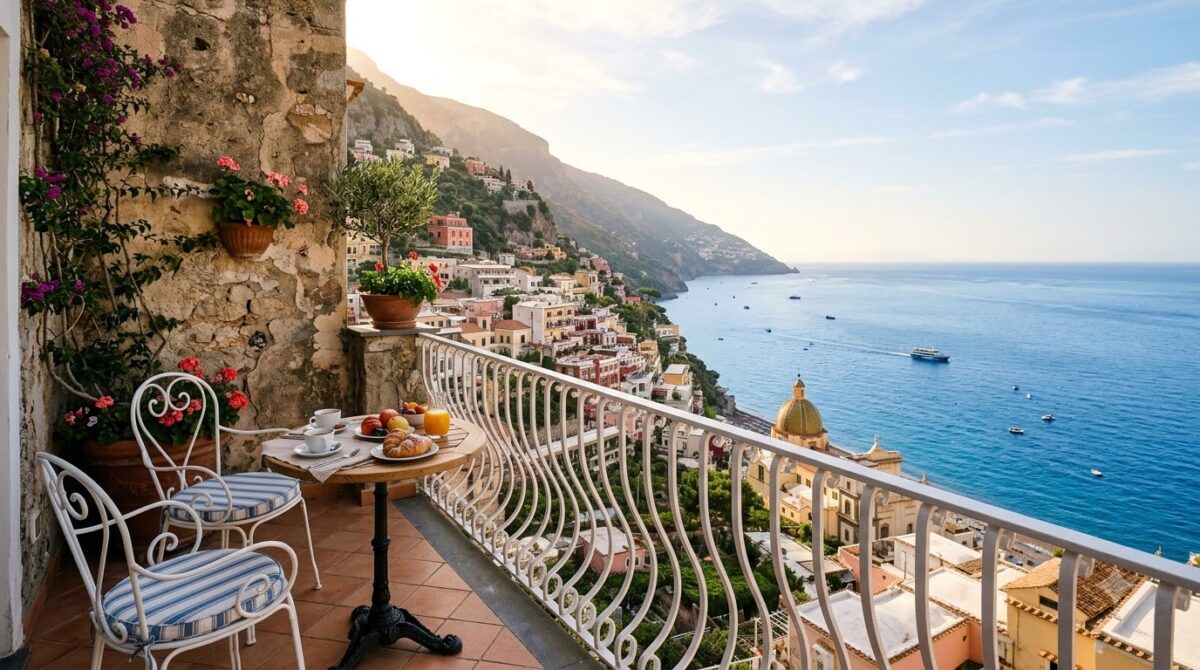
The middle band, on the terraced slope between the road and the beach, is where the hotels people picture actually are.
- The terraces face the sea and the town at once, which is the view Positano is famous for and is only available from here.
- Ten to fifteen minutes down to the beach, and rather longer coming back up.
- The best luxury hotels in Positano are in this band, including Le Sirenuse and Hotel Poseidon, both of which are useful landmarks for placing a listing on the map even if you are not booking them.
- Quieter at night than the beach, and the buildings are set into the rock so rooms are cooler.
This is the answer for most people who are here for a few nights and want the Positano they imagined.
Map shows live availability and prices. We may earn a commission on bookings made through it, at no extra cost to you.
Upper Positano: near the road
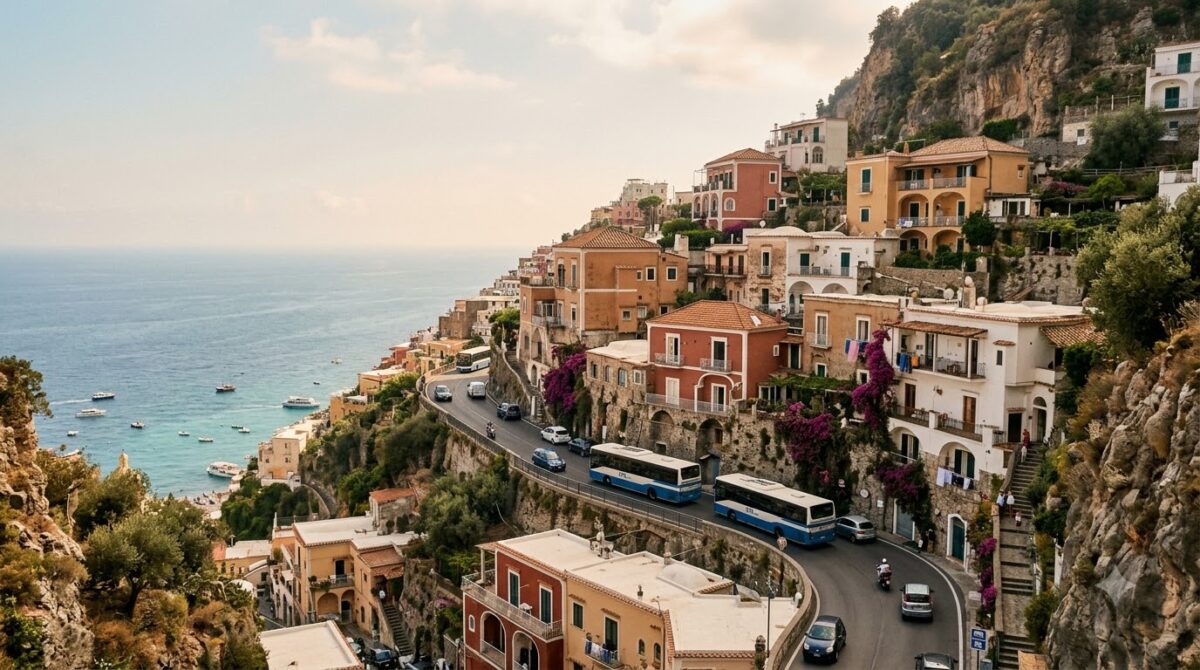
The top of the town, along and just below the main coast road, is where practicality lives.
- The bus stops here, in both directions along the coast. If you are using Positano as a base for the wider coast, that matters daily.
- Cheapest part of the town by a wide margin.
- Fewest steps on arrival. With a suitcase and no porter, this is the difference between a bad first hour and a fine one.
- Parking exists up here, which is not true lower down.
- Views over the whole town rather than along the coast, which some people prefer.
The catch is the climb home. Every evening in the town means walking back up, or catching the internal shuttle, which stops running before the restaurants close. Plan for a taxi or an early night.
Fornillo: the quiet alternative
Fornillo is the second beach, five to ten minutes west of Spiaggia Grande along a cliff footpath. It is smaller, quieter, cheaper and has a handful of hotels above it.
Good for a calmer stay that is still walkable to the town centre. Less good if you want to be in the middle of the evening, because the path back is unlit in places.
What you are actually paying for
Positano is expensive, so it is worth being clear about what the money buys, because it is not usually the room.
- The terrace. A private balcony or terrace with a sea view is the product here. Rooms are frequently small and simple behind it.
- The position on the cliff. Higher up the middle band means a wider view; lower means less walking.
- Beach club access. Some hotels have an arrangement with a club on Spiaggia Grande or Fornillo, which saves real money over a week.
- A pool. Rare in Positano because of the terrain, and priced accordingly.
- Porter service. Genuinely valuable here, and a reason to prefer a hotel that offers it.
The questions to ask before booking
These matter more in Positano than anywhere else in Italy, and hotels answer them readily if you ask.
- How many steps from the road to reception? Answers range from none to over 200.
- Is there a porter, and is it included?
- Does my room have a terrace, and does it face the sea? A hotel with a view does not mean a room with one.
- How far to Spiaggia Grande, and is it downhill both ways? It never is.
- Is there air conditioning? Essential June to September.
- Is there beach club access included?
Getting to Positano, and around it
- By ferry from Sorrento, Amalfi or Capri, roughly April to October. It lands you at the bottom of the town, which is the easiest arrival if your hotel is low down and the hardest if it is high up.
- By SITA bus along the coast road, which stops at the top. The reverse problem.
- By car — possible and awkward. Parking is limited and expensive, and most of the town is unreachable by vehicle.
- The internal shuttle bus loops from the top of town down through the centre. Cheap, frequent in the day, and it stops in the evening.
Match your arrival to your hotel. If you are booked high in the town, come by bus. If you are booked low, come by ferry. That single decision saves the most difficult twenty minutes of the trip.
Is Positano the right base at all?
Worth asking, because a lot of people book it on the photographs and then spend the week climbing.
Stay in Positano if it is a short special trip, you travel light, and waking up to that view is the point.
Stay elsewhere if you are exploring the whole coast, travelling with children or heavy luggage, or watching the budget. Our guide to where to stay on the Amalfi Coast compares Positano against Amalfi, Praiano, Ravello and Sorrento, and Amalfi town is flat and considerably cheaper.
For how the towns fit together across a trip, see our Amalfi Coast itinerary.
A guide to the best areas to stay in Positano
Pulling the three bands together, here is the shortlist of places to stay in Positano and who each side of the town suits.
| Side of Positano | Steps to beach | Price | Best for |
|---|---|---|---|
| Lower, near Spiaggia Grande | Few | Highest | Beach days, ferry arrivals, short stays |
| Central cliff face | 10–15 min down | High | Positano views, couples, terraces |
| Upper, near the road | 20–25 min down | Lowest | Budget, bus arrivals, longer stays |
| Fornillo | 5 min to Fornillo beach | Moderate | Quiet, second visits |
The central cliff face is the choice for couples and for anyone whose picture of the trip involves a terrace overlooking the sea. It is also where the most photographed Positano views come from, because you are looking down over the town and out to the Tyrrhenian Sea at the same time.
Rooms, terraces and what to expect inside
Positano hotels follow a pattern that surprises people paying resort prices for the first time.
- Rooms are simple. Whitewashed walls, tiled floors, a bed and not much else. This is the local style rather than a shortcut, and it is why the terrace matters.
- Not all rooms offer sea views. A hotel can be famous for its outlook and still have half its rooms facing the hillside behind. Confirm your specific room is facing the sea.
- Rooms and suites are often on different levels, connected by outdoor stairs. There is frequently no lift.
- Terraces vary enormously in size and privacy. A shared terrace and a private one are priced differently and photographed identically.
- Book months in advance for May, June and September. The town is small, the good rooms are few, and planning a trip to Positano late means paying more for less.
Eating and the evening in Positano
Where you sleep decides dinner here, because everything involves stairs in Positano in one direction or the other.
- Lower town has the concentration of restaurants, including long-standing places on the beach front such as Buca di Bacco. Prices reflect the setting.
- The central band has a handful of restaurants tucked into the cliff, several of Positano’s best, and most have a terrace facing the sea.
- Upper town has fewer options and simpler ones, and this is where you find something closer to local prices.
- Fornillo has a small number of beach places that are quieter than Spiaggia Grande.
The practical point: if you are staying high and eating low, the walk back up at eleven at night is real. The internal shuttle stops earlier than the restaurants do, so budget for a taxi or plan an earlier dinner.
Beaches: Spiaggia Grande and Fornillo
Positano has two beaches and they are quite different.
- Spiaggia Grande is the main beach below the town, pebbled, with rows of loungers from the beach clubs and a free section at either end. It is also where the ferries dock, so the beach and ferry traffic share the same strip.
- Fornillo, five to ten minutes west along a cliff path, is smaller, quieter and generally considered the best beach for actually swimming rather than being seen.
Beach loungers are paid at both, and in July and August they sell out early. If your hotel has an arrangement with a club, use it; over a week it saves a meaningful amount.
When to visit Positano
- May, June and September are the best months: warm sea, ferries running, and the town busy rather than overwhelmed.
- July and August are the peak. The most expensive hotels are fully booked months ahead, the beach clubs fill by ten, and the coast road crawls.
- April and October are pleasant and cheaper, with a reduced ferry service toward the sea end of the season.
- November to March is largely closed. Most hotels and restaurants shut for the winter.
This is standard for Italy’s Amalfi Coast rather than specific to Positano town, but it bites harder here because the supply of rooms is so small.
Positano hotels: the landmarks and where they sit
Listings for Positano are hard to place on a map, because addresses here mean little on a cliff. These are the properties people use as reference points, described by position and type only. Rates, availability and current condition change constantly, so check those yourself rather than trusting any guide, including this one.
Le Sirenuse
A converted family palazzo on the central cliff face, on Via Cristoforo Colombo, looking straight down over the town to the sea. It is the best known luxury hotel in Positano and its restaurant, La Sponda, is the reference point people use for the upper end of the town.
Il San Pietro di Positano
Il San Pietro sits outside the town proper, on the cliff between Positano and Praiano, built down the rock face with a lift to a private sea platform. It is the most secluded of the well-known properties and the one that requires a shuttle for everything.
Hotel Palazzo Murat
An eighteenth-century palace in lower Positano, a minute from the beach and behind a walled garden in the old town. Its position is the notable thing: it is one of the few properties near Spiaggia Grande that is not up a long staircase.
Hotel Poseidon and Covo dei Saraceni
Hotel Poseidon sits on the central cliff band with a terrace and pool facing the sea. Covo dei Saraceni is at the bottom, on the rocks beside the ferry pier, which makes it the easiest arrival in town by boat and the noisiest during the day.
Hotel Buca di Bacco and Villa Franca
Hotel Buca di Bacco is directly on the beachfront at Spiaggia Grande above the restaurant of the same name, which has been there since the 1950s. Villa Franca is at the opposite extreme, high in upper Positano near the coast road, with a rooftop infinity pool and the widest view over the town.
Smaller guest houses and villas
Beyond the named hotels, Positano has a large number of small guest houses, bed and breakfast rooms and villa apartments scattered across all three bands. Names like Villa Rosa, Villa Magia, Marincanto and Il Moro di Positano come up repeatedly in searches; what they have in common is a handful of rooms, a terrace, and a specific number of steps that you should ask about before booking.
The pattern across all of them: the higher up the cliff, the wider the view and the more stairs. The closer to Spiaggia Grande, the more convenient and the more expensive. There is no property in Positano that gives you both.
How many days are enough in Positano?
Three nights is the sensible answer, and it is what most people book.
- One night — enough to see the town and eat one dinner, and you spend a large part of it moving luggage. Only worth it as a stop.
- Two nights — one full day. Beach in the morning, town in the afternoon, dinner with a view.
- Three nights — two full days, which allows a boat trip along the coast or a day on Capri without cutting the town itself.
- Four or five — adds Amalfi, Ravello and the Path of the Gods, and lets you have a day doing nothing, which in a town this steep is a real luxury.
Longer than five nights and most people move on, because Positano is small and expensive and the rest of Italy’s Amalfi Coast is a short ferry away.
Checking current rates in Positano
Everything above is about position — which area suits which kind of trip. What it deliberately does not do is quote prices, because rates in Positano move a long way by season, by day of the week and by how far ahead you book, and any figure printed in a guide is out of date the week after it is written.
These searches show live availability and current prices, so you can check them against the areas described above:
These are affiliate links. If you book through one we may earn a commission, at no extra cost to you. It does not affect which areas we recommend above — nobody pays to be listed here.
Frequently asked questions
What is the best area to stay in Positano?
Central Positano, on the cliff face between the main road and the beach. That band has the terraces with the famous view, the walk down to Spiaggia Grande is ten to fifteen minutes, and it is quieter at night than the beach. Upper Positano is cheaper and easier with luggage; lower Positano is the most convenient and the most expensive.
Should I stay in upper or lower Positano?
Upper if you are watching the budget, arriving by bus, or using Positano as a base for the wider coast, since the SITA buses stop at the top. Lower if you want the beach and restaurants on your doorstep and are arriving by ferry. The difference is several hundred steps, so match it to your luggage and your knees.
How many steps are there in Positano?
It depends entirely on the hotel, and the honest answer is that some properties are over 200 steps from the nearest road. There is one road looping through the town and everything else is staircases. Always ask a hotel how many steps from the road to reception before booking.
Is Positano expensive to stay in?
It is the most expensive town on the Amalfi Coast. What you pay for is the terrace and the position on the cliff rather than the room, which is often small. Upper Positano costs noticeably less, and Amalfi town or Praiano are cheaper again for a similar sea view.
Do I need a car in Positano?
No, and it is a liability. Parking is limited and expensive, most of the town cannot be reached by vehicle, and the coast road is narrow and busy. Arrive by ferry or SITA bus, and use the internal shuttle within the town.
Should I arrive in Positano by ferry or bus?
Match it to where your hotel is. The ferry lands at the beach at the bottom of the town, so it suits a low hotel. The bus stops on the coast road at the top, so it suits a high one. Choosing wrongly means carrying luggage up or down several hundred steps on arrival.
Is it worth staying in Positano or somewhere cheaper?
Worth it for a short special trip where the view is the point and you travel light. For exploring the whole coast, travelling with children, or a longer stay, Amalfi town is flat, central, has the main ferry pier and costs far less. Praiano sits between the two and is the best value on the coast proper.