Quick answer where to stay in Jaco
The north end of the beach is the usual family choice: quieter, and still walkable to town. Downtown suits surfers and people who want the bars. For resorts and a calm swimming bay away from the nightlife, look at Playa Herradura and Los Sueños.
On this page
- Where Jaco beach is located on the Pacific coast
- Jaco’s beach itself, honestly
- Beaches in Jaco and nearby: Playa Herradura and Hermosa
- What Jaco offers compared with the rest of the coast
- Activities in Jaco: surf lesson, ATV tour and horseback riding
- Day trips from Jaco: Carara, Tortuga Island and Manuel Antonio
- Jaco nightlife, and the honest problem
- Jaco hotels and places to stay, by area
- Food in Jaco and traditional Costa Rican cuisine
- Getting there from San Jose, and whether to rent a car
- Practical tips for a few days in Jaco
- Best time to visit Jaco
- Is Jaco one of Costa Rica’s beach towns worth visiting?
- Frequently asked questions
Jaco is the closest beach to San José, about 1.5 hours from the capital city, and that single fact explains the town completely. It is where Costa Ricans go for the weekend, where cruise passengers get bussed for the afternoon, and where a lot of visitors have their first and sometimes only beach day.
Some links below are affiliate links. We may earn a commission if you book through them, at no extra cost to you. We do not rank hotels, and any prices on the map come live from the booking sites.
It is also one of the more divisive towns in the country. Jaco appeals enormously to some people and puts others off within an hour. This guide covers what Jaco has to offer, the things to do in Jaco and around it, where the beach is actually good, and the honest problems with the place — including one that most guides skip.
Prices and details were read on 16 August 2026.
Where Jaco beach is located on the Pacific coast
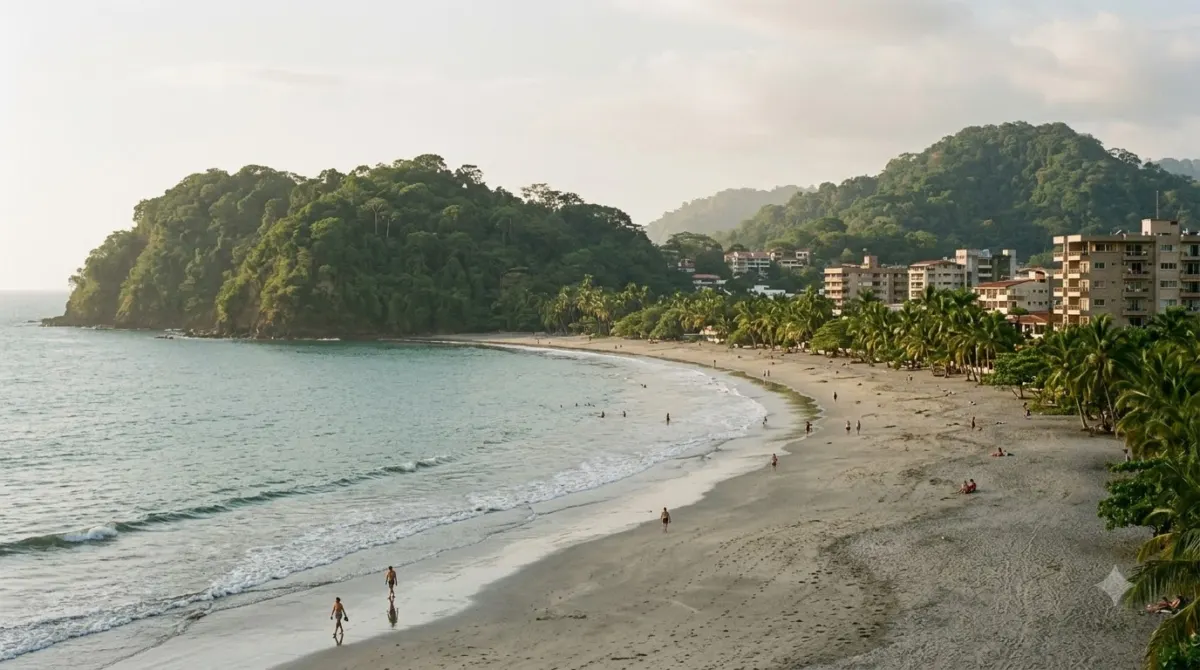
Jaco sits on the central Pacific coast of Costa Rica in Puntarenas province, roughly 100 kilometers from the capital city of San José. The drive from Juan Santamaría international airport takes about 1.5 hours on good road, which makes Jaco the closest proper beach town to the capital by a wide margin.
It is one of the most developed beach towns in Costa Rica — high-rise condos, a walkable downtown Jaco, supermarkets, casinos, dozens of bars and restaurants along the beach. If you want infrastructure, it is here.
Jaco’s beach itself, honestly
Playa Jaco is a four-kilometer grey-brown volcanic sand beach. It is not one of Costa Rica’s beautiful beaches and nobody local claims otherwise. The water is often murky because two rivers empty nearby, and the sand gets painfully hot at midday.
What it is good for is surfing. As a surfing beach it works because the waves are consistent, the bottom is sand and the main beach is long enough to spread out. That is what this beach is known for and it is a fair reputation.
- The north end of Jaco beach is calmer and where most surf lessons happen.
- The south end of the beach has a stronger break and fewer beginners.
- Rip currents are real along this section of the beach, particularly near the river mouths. There are no lifeguards on most of it.
- Do not swim after heavy rain — the rivers carry runoff straight into the bay.
Beaches in Jaco and nearby: Playa Herradura and Hermosa
The best beach in Costa Rica’s central Pacific region is not Jaco itself. Three others sit within twenty minutes and each is better for something.
| Beach | Distance | What it is for |
|---|---|---|
| Playa Hermosa | 5 km south of Jaco | A serious surf beach with a heavy shore break. Experienced surfers only, and not a swimming beach at all |
| Playa Herradura | 7 km north of Jaco | A sheltered bay with calm water, the best swimming in the area and the Los Suenos marina. Dark sand |
| Playa Blanca | Inside the Punta Leona resort, north | Pale sand and clear water, the prettiest beach in the area. Access is through the resort |
| Playa Esterillos | 20 km south | Long, wide and almost empty. Where people go to escape Jaco |
⚠ Which Playa Hermosa?
Playa Hermosa near Jaco is regularly confused with another beach by the same name. Costa Rica has three:
- Hermosa Beach near Jaco, in Puntarenas — the one 5 km south of here. Powerful shore break, dangerous for swimming, excellent for experienced surfers.
- Playa Hermosa, Guanacaste — a calm crescent bay in the north-west, safe for swimming, resort area.
- Playa Hermosa, Santa Teresa — on the Nicoya Peninsula, mellow surf and long empty sand.
They are nothing alike. Booking accommodation at the wrong one is a genuinely common mistake.
Playa Hermosa is also a turtle refuge
The Hermosa south of Jaco is more than a surf beach. It lies inside the Playa Hermosa–Punta Mala National Wildlife Refuge, run by SINAC, the national parks authority, which exists mainly to protect the olive ridley turtles that come ashore to nest here. Nesting is concentrated in the second half of the year, roughly July to December, which overlaps with the biggest surf season.
The refuge has had real problems with nest poaching, and in 2023 Costa Rica’s Constitutional Court ordered the environment ministry and SINAC to put more staff and resources into patrolling it. If you stay at Hermosa during nesting season:
- Keep at least 10 meters from any nesting turtle and never touch eggs or nests.
- Keep flashlights and phone lights off the sand at night, and park only in marked areas.
- Move beach chairs off the sand at the end of the day so turtles and hatchlings can get through.
What Jaco offers compared with the rest of the coast
Jaco offers a diverse mix that no other beach destination on this coast matches, and it is worth being precise about what that mix actually is before deciding whether it suits you.
| What works | What does not |
|---|---|
| The shortest drive from Jaco to San José of any beach town — 1.5 hours | The sand is grey-brown volcanic and the water is often murky |
| Consistent, forgiving waves and dozens of surf schools | Rip currents and no lifeguards on most of the beach |
| Carara, Tárcoles and Manuel Antonio all reachable in a day | The strip after dark is not for everyone |
| Real supermarkets, condos and infrastructure | Nothing resembling a small Costa Rican town remains |
| The widest food range on the central Pacific | Weekends are crowded with visitors from the capital |
Since Jaco built up in the 1990s it has been the town Costa Ricans use rather than the town visitors dream about, and that is the honest frame. Traveling to Jaco for convenience works. Traveling to Jaco expecting one of Costa Rica’s beautiful beaches does not.
Activities in Jaco: surf lesson, ATV tour and horseback riding
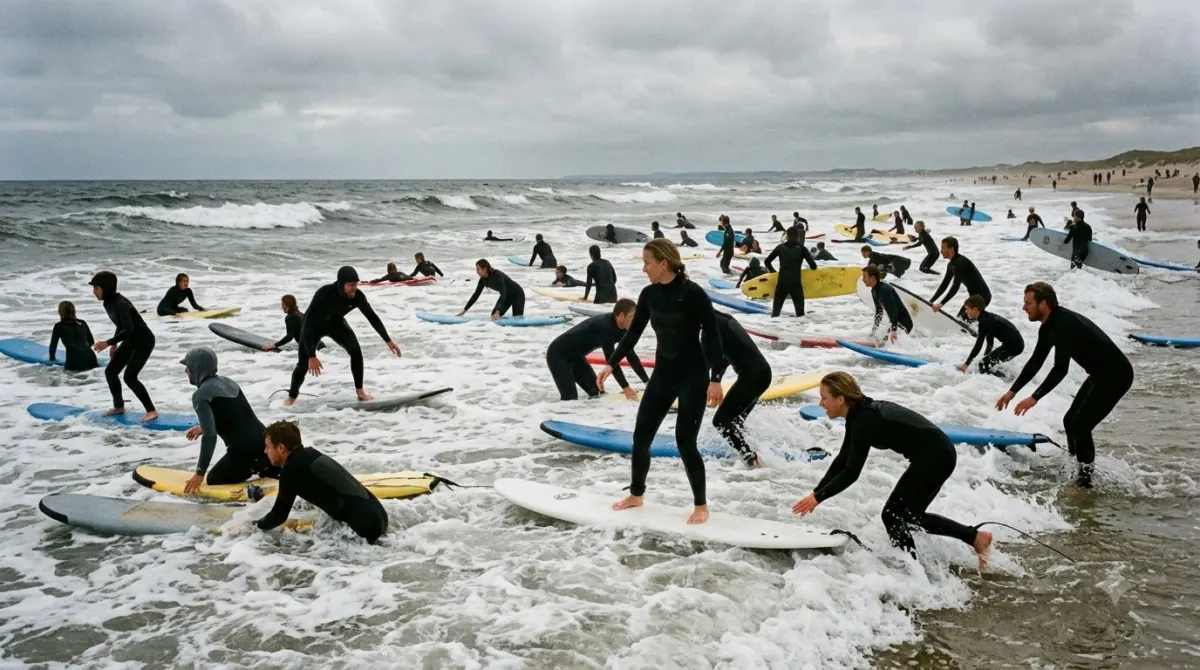
- Take a surf lesson. Jaco is one of the easiest places in the country to learn, with dozens of schools and consistent waves. Group lessons run two hours.
- An ATV tour, the most booked of the Jaco tours, through the hills behind town, usually taking in waterfalls and a viewpoint over the coast. A half day, and one of the pricier ones. ATV tours are one of the things Jaco is best known for.
- Horseback riding on the beach or in the forest, a half-day.
- Zip lining in the rainforest north of town, a half-day.
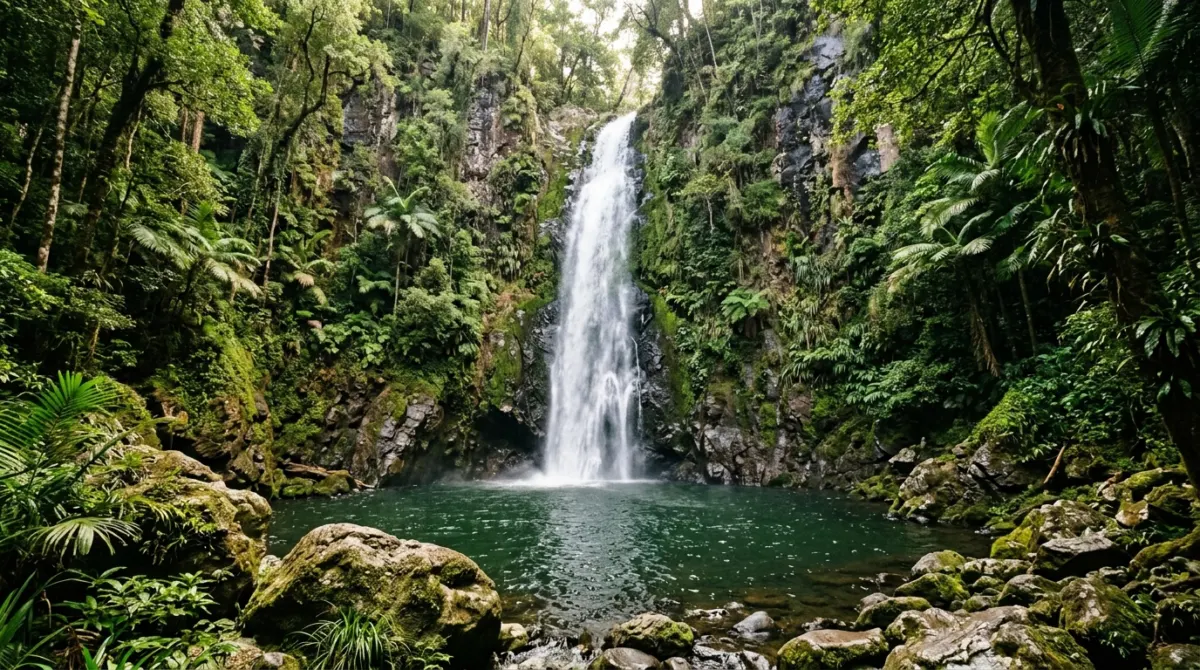
- Waterfall hikes in the hills, several of which you can swim in.
- Sport fishing from Los Suenos Marina at Herradura, which is one of the biggest sport fishing bases in Central America.
- Sunset from the beach, which is the one thing Jaco does as well as anywhere.
Day trips from Jaco: Carara, Tortuga Island and Manuel Antonio
This is where Jaco earns its place. Its central Pacific position puts more within reach than most beach towns manage.
Carara National Park
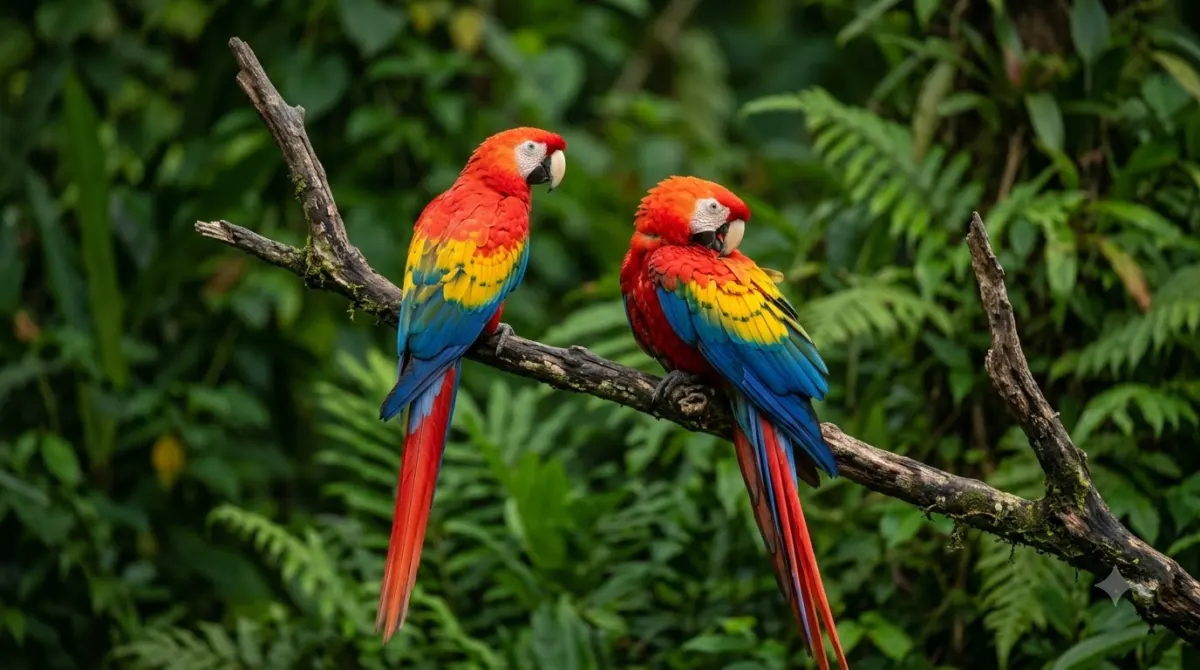
Twenty minutes north of Jaco, Carara National Park sits at a genuine biological boundary — the dry forest of the north-west meets the wet rainforest of the south here. That transition is why the species list is unusually long for a small park.
- Scarlet macaws are the headline. Carara holds one of the largest remaining wild populations in Costa Rica, and seeing them is close to reliable at dawn and dusk.
- There is an entry fee for adults, with a reduced one for under-12s.
- There is a fully wheelchair-accessible universal trail, which is rare among Costa Rican national parks.
- Go early. Birdwatching here is far better before eight in the morning.
The park is small and easy to plan around. Its name is usually traced to the Huetar for “river of crocodiles”, and it sits on the Costanera highway between the cantons of Turrubares and Garabito. The main station is the start of the 1.2-kilometer universal-access trail, which is flat, has rest bays and is signed in Spanish, English and braille, plus a short loop through forest full of aroids. The Laguna Meándrica trail, around two kilometers out to an oxbow lagoon where crocodiles and waterbirds gather, starts from its own small parking area further along the road. Check where to buy your ticket before heading there, as SINAC increasingly sells national park entries online in advance.
The Tarcoles crocodile bridge
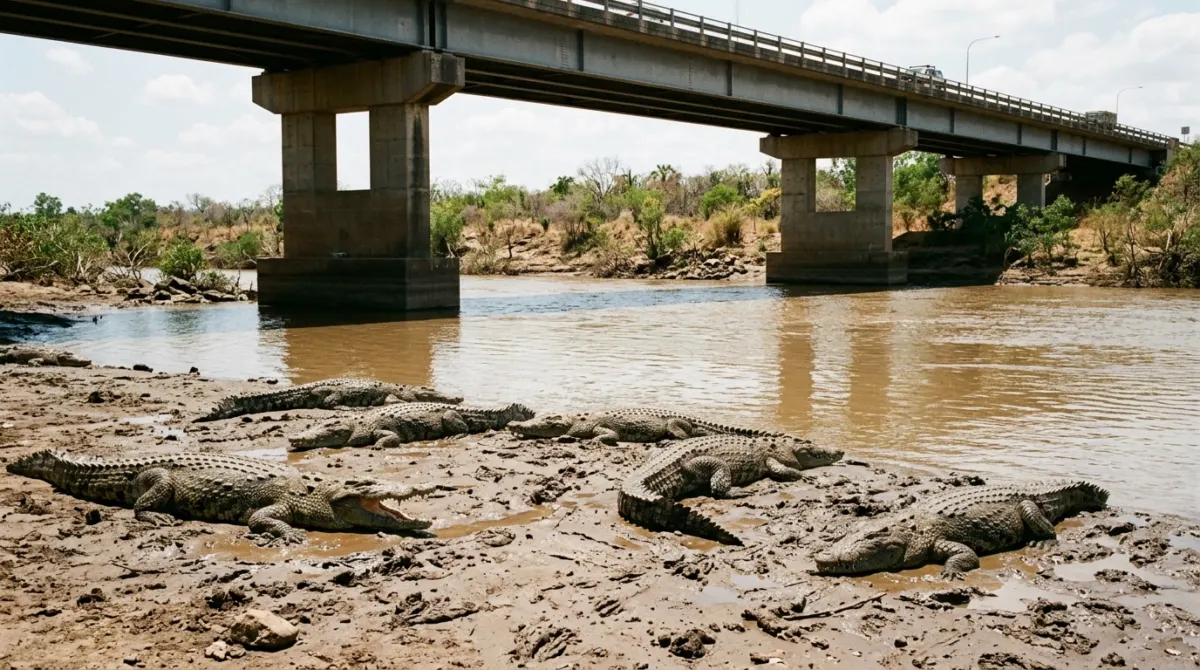
On the road between San José and Jaco, the bridge over the Tárcoles river has dozens of large American crocodiles lying on the mudbanks below it, some of them well over four meters. You park at the end, walk onto the bridge and look down.
It is free, it takes ten minutes and it is one of the better roadside stops in the country. Boat tours on the river will take you closer, though the bridge view is honestly enough.
Other day trips
- Manuel Antonio National Park — about 1.5 hours south. Sloths, monkeys and a beach at the end of a flat trail. There is an entry fee, reduced for children 2 to 12. Doable as a day trip from Jaco, though staying nearer is better.
- Tortuga Island — a full day boat trip from Herradura to white sand and clear water in the Gulf of Nicoya, with snorkeling and lunch. The most expensive day out from here.
- Rafting on the Savegre or Naranjo, a full day.
- Hotel Villa Caletas — the clifftop hotel north of town with a Greek-style amphitheater facing the sunset. Non-guests can go for a drink, and the view is the point.
These are listed as landmarks, not recommendations. Nobody here has stayed in them and we do not print rates. Check current prices and availability yourself.
Jaco nightlife, and the honest problem
Jaco has lively nightlife — beach bars, craft beer places, casinos and clubs, mostly along the main road and the beach end of town. On a Friday it is the busiest nightlife on this coast.
It also has an open prostitution scene on and around the main strip after dark, and this is the thing most guides leave out. It is visible, it is concentrated in a few specific bars and stretches of the main road, and it is the single most common reason people say they did not enjoy Jaco.
Some context that matters for planning:
- It is a night-time and main-road phenomenon. Daytime Jaco, the beach, the surf schools and the residential end are a different town.
- Families do stay here without difficulty, generally by basing themselves at Herradura or the quieter northern end rather than on the strip.
- Nobody will bother you. It is a matter of atmosphere rather than safety.
- If this would spoil the trip for you, Manuel Antonio or Santa Teresa are the obvious alternatives at similar distance from the airport.
Being straight about it is more useful than pretending it is not there. Plenty of people have a good week in Jaco knowing exactly what to expect.
Jaco hotels and places to stay, by area
Jaco hotels and vacation rentals split into three areas, and which one you choose matters more here than in most towns.
| Area | Suits |
|---|---|
| Downtown Jaco / main strip | Surfers and people who want the bars. Noisy, and the strip scene is on your doorstep |
| North end of Jaco beach | Condo towers and quieter hotels, still walkable to town. The usual family choice |
| Playa Herradura / Los Suenos | Marina, resorts, calm swimming bay. Completely separate from Jaco nightlife |
| Playa Hermosa (south) | Surf lodges. Quiet, and you need a car |
Map shows live availability and prices. We may earn a commission on bookings made through it, at no extra cost to you.
Food in Jaco and traditional Costa Rican cuisine
- The strip has the widest range of any central Pacific town — sushi, Italian, burgers, taco places, craft beer, at well above soda prices.
- For traditional Costa Rican food, go one street back from the beach or inland to the sodas near the bus terminal, where a casado costs a fraction of a strip meal and where local Costa Rican cuisine actually is.
- Supermarkets are good here, which is unusual for a beach town and useful if you have a condo.
- Beach bars line the sand at the north end and are the best place to be at sunset.
Getting there from San Jose, and whether to rent a car
- From San José it is 1.5 hours by car on Route 27, a good toll road. This is the closest beach to the capital.
- Public bus from San José takes about two to two and a half hours, costs very little and runs roughly hourly.
- Shuttles cost many times the bus fare per person from San José, and more again from Liberia.
- Rent a car if you want the day trips. The road is paved and no four-wheel drive is needed, though budget for the mandatory insurance on top of the advertised rate.
- Around town everything is walkable. Bicycles and ATVs are widely rented for getting around the Jaco area.
Driving Route 27 and the Costanera
Route 27, the highway from San José to Caldera, is a concession toll road with several toll plazas between the city and the coast. Rates are set and published by the concessionaire, Globalvia, and they change periodically. Keep colones in small notes for the booths: it is the simplest way to pay, and if you hand over dollars the change comes back in colones.
Near the coast you join Route 34, the Costanera Sur, which runs south through Jaco, Hermosa and Esterillos towards Quepos and Manuel Antonio, then on to Dominical and Uvita. Route 27 is heavily used and often congested, worst when weekend visitors head back to the capital, so if you are catching a flight from San José, leave Jaco early rather than cutting it fine. Our guide to driving in Costa Rica covers insurance, road rules and parking.
Practical tips for a few days in Jaco
Jaco is easy to handle once you know how the town works. A few things are worth knowing before you arrive.
- There are no real street addresses. Businesses give directions from landmarks, so pin your hotel or condo on a map before you arrive.
- Money: US dollars and cards are widely accepted along the strip. Carry colones for the bus, the sodas and the Route 27 tolls.
- Plan tours for the morning. In the green season the rain usually arrives in the afternoon, and at Carara the birds are most active early. Mornings are the better bet all year.
- Weekdays beat weekends. The beach, the restaurants and the road from San José are all noticeably quieter Monday to Thursday.
- Heat and sun: the sand gets painfully hot by midday and the sun is strong year round. Wear sandals on the beach and do the long walks early.
- On a rainy day, the waterfalls in the hills are at their fullest. Ask the operator how weather affects a tour before you book, since river and waterfall trips depend on water levels.
Best time to visit Jaco
- December to April — dry season, reliable sun, busiest and most expensive.
- May to July — clear mornings, afternoon rain, green, fewer people.
- August to October — the wet season proper on this coast, biggest surf, cheapest. September and October are wettest.
- Weekends year round are much busier than weekdays because of Costa Ricans coming from San José.
Full detail in our month-by-month guide to when to visit.
Is Jaco one of Costa Rica’s beach towns worth visiting?
On a short Costa Rica vacation, Jaco is worth it if you want a beach within 1.5 hours of San José, if you are learning to surf, if you want a tour from Jaco to Carara and Tárcoles without a long drive, or if you have one night between the airport and somewhere else. On those terms it does the job better than anywhere.
Skip it if you want a beautiful beach, quiet, or anything resembling a small Costa Rican town. Manuel Antonio is 1.5 hours further and better on every count except convenience, and Santa Teresa or Nosara are better still if you have the days for the journey.
Two nights is right for most people. For the wider trip, see our guides to beaches on both coasts, Tamarindo and things to do in Costa Rica.
Frequently asked questions
How far is Jaco from San Jose?
About 100 kilometers, or 1.5 hours by car on Route 27 from Juan Santamaría international airport. A public bus takes two to two and a half hours and costs very little. Jaco is the closest beach town to the capital.
Is Jaco beach good for swimming?
Not especially. Playa Jaco is grey-brown volcanic sand with often murky water and real rip currents, and there are no lifeguards on most of it. For swimming, go to Playa Herradura seven kilometers north, which is a sheltered bay with calm water.
Is Jaco good for beginner surfers?
Yes, it is one of the easiest places in Costa Rica to learn. The waves are consistent, the bottom is sand and the north end of the beach is where most lessons happen. Group lessons are the cheapest way to start.
Is Jaco safe?
Yes in terms of personal safety, with petty theft from beaches and cars the main risk. What catches visitors out is the open prostitution scene on the main strip after dark. It is a night-time and main-road matter rather than a safety one, and staying at the north end or at Herradura avoids it entirely.
What is there to do in Jaco besides surfing?
ATV tours into the hills, horseback riding, zip lining, waterfall hikes, and sport fishing from Los Suenos Marina. The best things are day trips: Carara National Park for scarlet macaws, the free Tárcoles crocodile bridge, Manuel Antonio, and Tortuga Island.
Which Playa Hermosa is near Jaco?
The Puntarenas one, five kilometers south of Jaco, which is a powerful surf beach and not safe for swimming. It is regularly confused with Playa Hermosa in Guanacaste, a calm swimming bay in the north-west, and with Playa Hermosa near Santa Teresa.
How many days do you need in Jaco?
Two nights is right for most people, which covers a surf lesson, Carara and the Tárcoles crocodiles. Longer only if you are surfing daily or using it as a base for the central Pacific.
When do turtles nest at Playa Hermosa near Jaco?
Olive ridley turtles nest at Playa Hermosa, inside the Playa Hermosa–Punta Mala National Wildlife Refuge, mainly from about July to December. Keep at least 10 meters from nesting turtles, never touch eggs or nests, and keep lights off the beach at night.
Park fees, tour prices and transport costs read 16 August 2026. Confirm before booking.
Keep planning Costa Rica
- 5 Day Costa Rica Itinerary: Two Bases, No Wasted Days
- Costa Rica Itinerary: 10 Perfect Days for a First Trip
- 7 Day Costa Rica Itinerary: Volcano, Cloud Forest and Coast
- Things to Do in San José, Costa Rica: One Day Well Spent
- Things to Do in Costa Rica: The Three Regions and What Each Costs
- The Best Time to Visit Costa Rica: A Month-by-Month Guide
- Is Costa Rica Worth Visiting? The Honest Case For and Against
- Costa Rica Packing List: What Actually Matters, and What to Leave
Written and checked by
Triplarks Editorial
An editorial desk, not an invented persona: research, drafting and fact-checking are done by the same small team. Every number here carries the date it was read.