
Most people visiting Bogota arrive from the Caribbean coast wearing shorts, and spend the first afternoon cold, breathless and disappointed. Then they leave after two days and tell everyone the city is not worth it.
Some links below are affiliate links. We may earn a commission if you book through them, at no extra cost to you. We do not rank hotels, and any prices on the map come live from the booking sites.
Quick answer: where to stay in Bogotá. For a two or three day visit, La Candelaria or Chapinero. La Candelaria puts you within walking distance of nearly everything in this guide; Chapinero is more comfortable in the evenings.
Two facts fix that. Bogotá sits at 2,640 metres — higher than any city in Europe — and it averages about 14°C all year. The capital of Colombia is a cold, grey, high-altitude city, not a tropical one. Once you stop expecting Cartagena, it becomes one of the more interesting cities in South America.
Prices and opening details checked 20 August 2026.
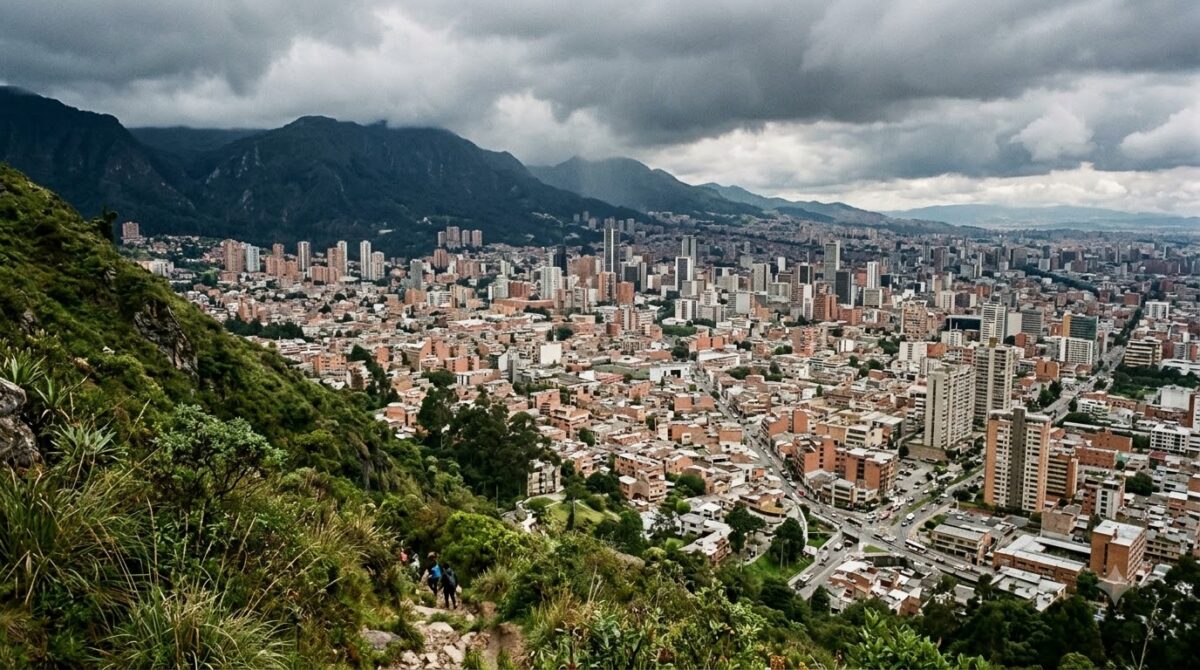
Is Bogota, Colombia worth visiting?
Yes, for two or three days. Not as a beach city, not as a pretty city, and not as somewhere to base a whole trip.
Any list of the best things to do here starts with museums. What Colombia’s capital has is depth: the best museums in Latin America outside Mexico City, a serious food and coffee scene, colonial streets stacked against a mountain, and a day trip to an underground cathedral carved out of a salt mine. Three days in Bogota covers all of it. What it does not have is charm at first glance. It is big, grey and messy, and it does not try to please you.
- Come for: the Gold Museum, La Candelaria, Monserrate, the food, Sunday Ciclovía, and the Salt Cathedral.
- Do not come for: warm weather, beaches, or a postcard old town on the scale of Cartagena.
First: the altitude, and what to wear
This is the part that ruins first days, and almost every guide buries it at the bottom.
At 2,640 metres, mild altitude effects are normal. Shortness of breath climbing stairs, a headache, poor sleep the first night, and alcohol hitting harder than expected. It is not dangerous at this height for most people, but it is real, and it is worse if you have flown in from sea level that morning.
- Take the first afternoon slowly. Do not schedule Monserrate on arrival day.
- Drink more water than feels necessary, and go easy on alcohol for 24 hours.
- Coca tea is sold everywhere and is the local answer. It is legal in Colombia.
On clothing: pack for a European autumn. Days run 12–19°C, nights drop towards 7°C, and it rains often. Bring long trousers, a jumper and a light waterproof. There is no summer here — the temperature is roughly the same in January and July, because the city sits almost on the equator and altitude does the work instead of season.
Top things to do in Bogota
Museo del Oro, the Gold Museum of Bogota
Start here. The Gold Museum holds around 34,000 pieces of pre-Hispanic goldwork and is, by a wide margin, the best museum in Colombia and one of the best in the Americas.
Run by the Banco de la República, el Museo del Oro holds precious metal work from across the pre-Columbian era, made by the indigenous peoples of what is now Colombia. The centrepiece is the Muisca raft — a small gold model of the ceremony that produced the El Dorado legend, found in a cave south of the city. The final room, where hundreds of pieces are displayed in the dark and then lit at once, is genuinely theatrical.
Entry is around COP 5,000, roughly a dollar, and it is free on Sundays. Closed Mondays. Two hours is right.
La Candelaria neighborhood and the free walking tour
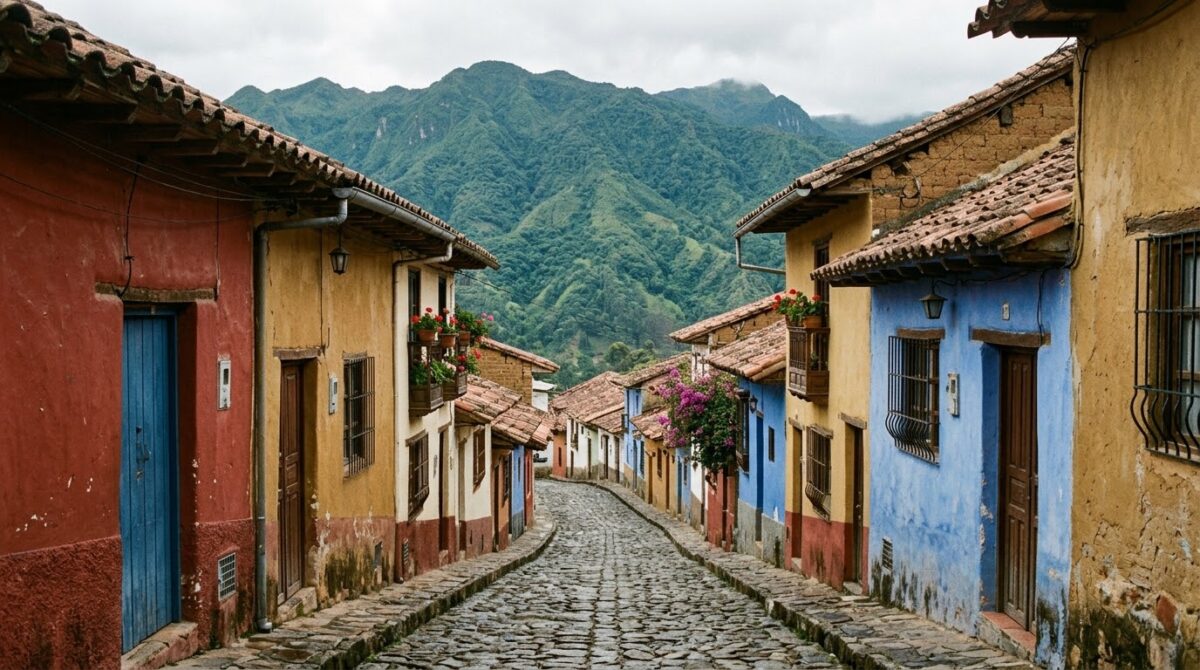
La Candelaria, Bogota is the historic center, built into the base of the mountains, and where you will spend most of your walking time. Narrow cobblestone streets, houses painted deep red and ochre, university students, graffiti on almost every wall, and the best free tours in the city. Chorro de Quevedo, the plaza where Bogotá was supposedly founded, is at the top of it.
Unlike the old town of Cartagena, Colombia, this is a working neighbourhood rather than a preserved showpiece. Some blocks are beautiful and some are shabby, often the same block. Take a walking tour on your first morning; the street art tours in particular explain a political history you would otherwise walk straight past.
Plaza Bolívar
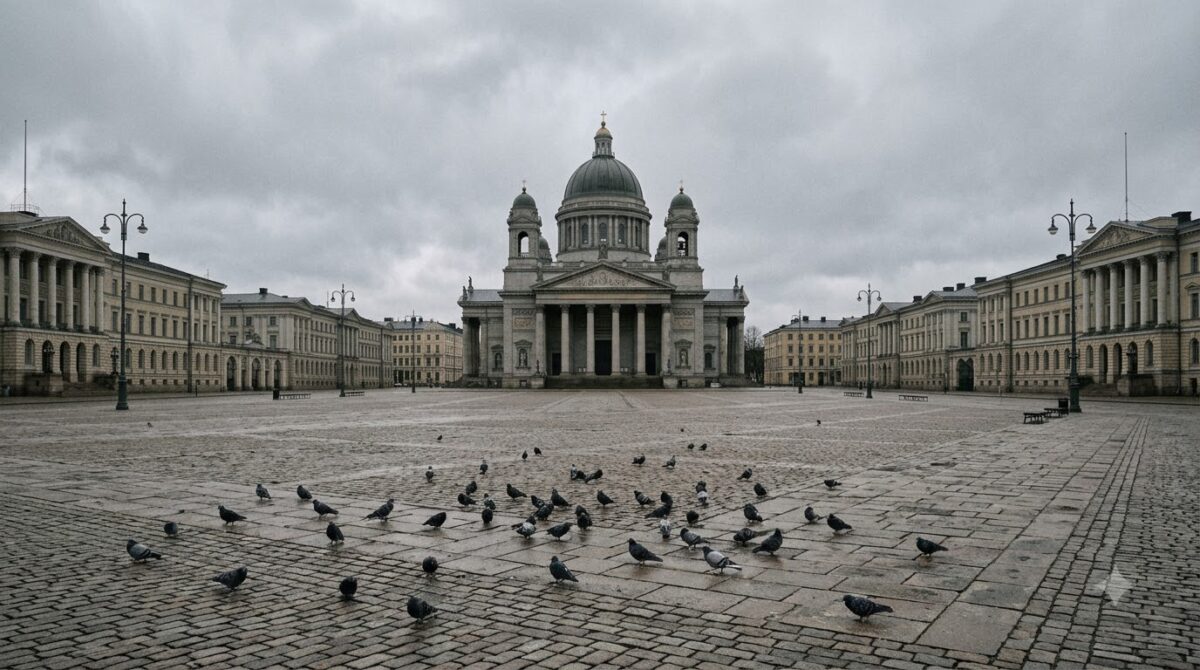
Plaza de Bolivar is the main square and sits in the heart of Bogota. Not to be confused with the Bolívar Square in Caracas. The Cathedral of Bogota occupies one side, with Congress, the Palace of Justice and the mayor’s office on the others.
Architecturally it is a mismatch, because the Palace of Justice was rebuilt after being destroyed in 1985 during the M-19 siege and the army assault that followed. Over a hundred people died. It is worth knowing that before you stand in the square, because nobody puts a sign up about it.
Cerro de Monserrate
The mountain directly behind the city, at 3,152 metres, topped by a white church — a unique religious site that doubles as the best viewpoint outside of Bogota’s centre. The view over Bogotá from up there is the one photograph everyone takes, and it is genuinely striking — the city runs flat to the horizon in every direction.
- Funicular or cable car to the top — around COP 27,000–30,000 return, ten minutes to get to the top.
- Walking up — roughly 1,500 steps, an hour and a half, and hard at this altitude. Free, and open early. Do it on day three, not day one.
- Go on a clear morning. Cloud closes in most afternoons and you will see nothing.
Museo Botero, the free Botero Museum
Fernando Botero, Colombia’s most famous artist, donated his personal collection to the country on condition it stayed free. So this is a free museum containing works by Picasso, Dalí, Monet, Renoir and Chagall, alongside Botero’s own inflated painting and sculpture. It is one of the best things in the city and it costs nothing.
It sits in a colonial mansion in La Candelaria, ten minutes from the Museo del Oro, and forms part of the Banco de la República complex. Free, closed Tuesdays, and rarely crowded.
Paloquemao market
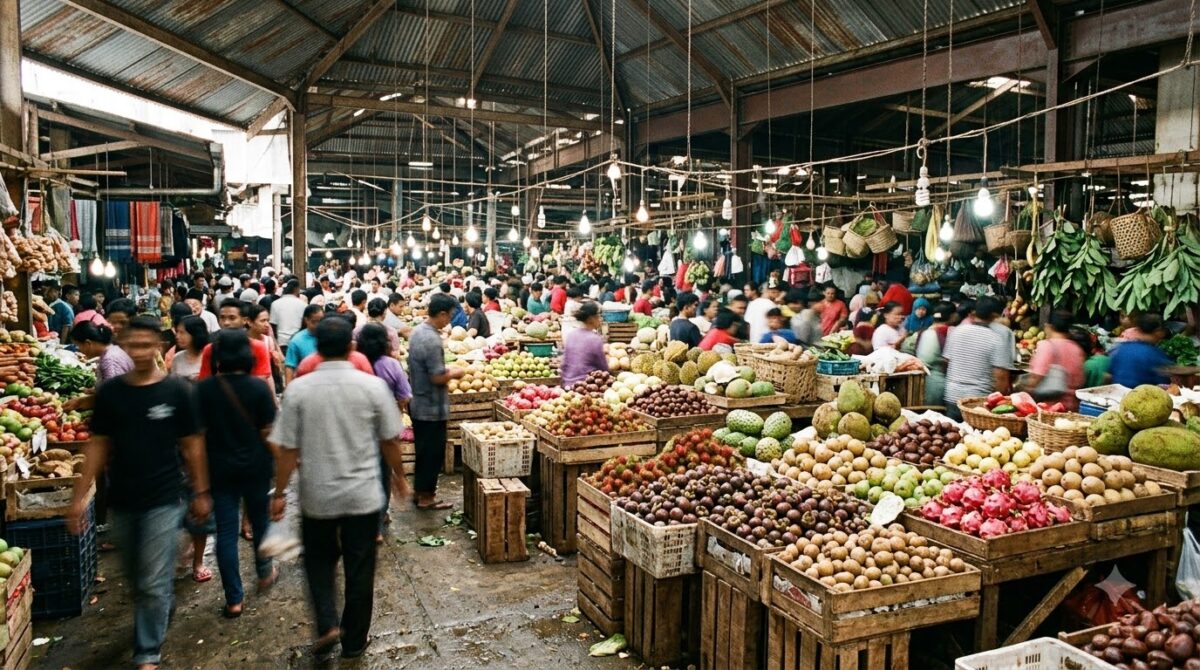
A working wholesale market rather than a tourist one, and the best place in the city to understand how much fruit Colombia has that the rest of the world has never heard of — lulo, guanabana, curuba, mangostino, granadilla, zapote.
Go early, before 9am, and preferably with a guide who will make the stallholders cut things open for you. The flower section on a Sunday morning is separately worth seeing.
Ciclovía, if you are here on a Sunday
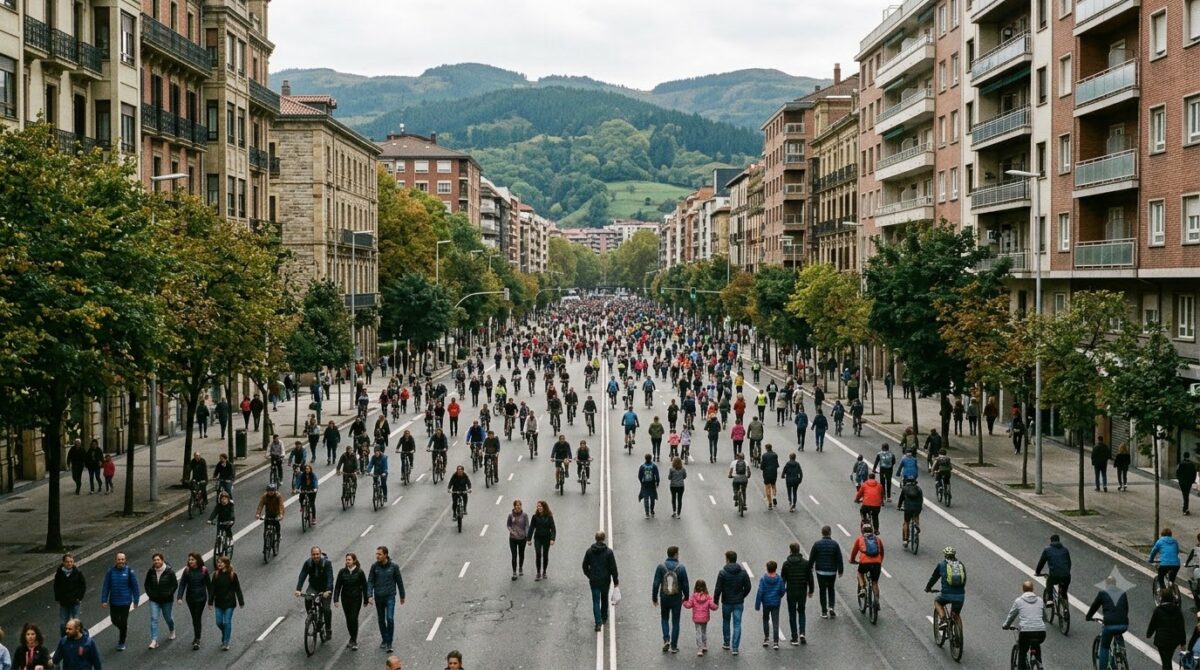
Every Sunday and public holiday, Bogotá closes about 120 kilometres of main roads to cars from 7am to 2pm, and roughly a million people walk, run, cycle and skate on them.
Ciclovía started here in the 1970s and has since been copied by cities worldwide. Rent a bike for a few dollars and ride the Carrera Séptima. It is the single best way to see how the city actually lives, and it costs almost nothing.
Usaquén on a Sunday
A former village swallowed by the city in the north, with a colonial square, a large Sunday flea market and the best concentration of restaurants in Bogotá. Pair it with Ciclovía and you have a full Sunday.
Traditional Colombian food and where to eat
- Ajiaco — the traditional Colombian dish of Bogotá. A thick chicken and potato soup with three kinds of potato, corn on the cob, capers and cream, flavoured with the herb guascas. Best in cold weather, which is every day.
- La Puerta Falsa — a tiny place near Plaza Bolívar, running since 1816, serving tamales and chocolate completo: hot chocolate with cheese dropped in it. Try it before you judge it.
- Coffee — Colombia historically exported its best beans and drank the rest. That has changed, and Bogotá now has a serious specialty scene, mostly in Chapinero and La Candelaria.
- Zona G and Parque de la 93 — where the ambitious restaurants are, in the wealthier north. Andino Mall nearby is where the city shops.
- A free food tour or a paid market tour is the fastest way to get a taste of Colombian cooking beyond the obvious.
Free things to do in Bogota: free tours and free attractions in Bogota
Bogota is unusually generous for a capital city. A day at the main attractions in Bogota can cost almost nothing, and several of the best places are always free.
- Free walking tours of La Candelaria run several times daily, in English and Spanish, on a tip basis. Operators like Beyond Colombia and Gran Colombia Tours are the ones you will see recommended most. The graffiti tour is the better of the two on offer.
- Museo Botero — entrance is free every day, closed Tuesdays.
- The Gold Museum, Bogota — admission is free on Sundays. The Gold Museum is one of the best museums in South America at any price.
- Most museums run by the Banco de la Republica, the Bank of the Republic of Colombia, are free, including the Quimbaya Museum collection and the library complex next to Museo Botero.
- Bogotá Botanical Garden — low cost, and free on some public holidays.
- Ciclovía — free, and the best Sunday in the city.
- Walking up Cerro de Monserrate — free entry if you climb rather than take the funicular.
Free tours are tip-based, not actually free. Budget the equivalent of US$5–10 per person.
The best day trip from Bogota: Salt Cathedral and Guatavita
The Salt Cathedral of Zipaquirá is the one to do. A working Catholic cathedral carved 180 metres underground inside a salt mine, lit in blue and violet, with a cross cut into the rock face. It is strange and impressive in a way photographs do not convey.
The Salt Cathedral of Zipaquira is about an hour and a half north, and tours in Bogota for it run every day. Entry runs around COP 100,000 for foreigners including the guided route. Organised tours from Bogotá cost roughly US$50–70 and usually combine it with Laguna Guatavita, the sacred lake that produced the El Dorado story. Tours in Bogotá for this run daily.
| Day trip | Time from Bogotá | Worth it for |
|---|---|---|
| Salt Cathedral, Zipaquirá | 1.5 hr | The single best day trip |
| Lake Guatavita | 2 hr | The actual El Dorado lagoon |
| Villa de Leyva | 3.5 hr | Colonial town, huge square. Better as an overnight |
| Chingaza National Park | 2 hr | Páramo highland, spectacled bears, needs a permit |
| Chorrera waterfall | 2 hr | Colombia’s tallest waterfall, a proper hike |
Where to stay in Bogotá
The neighbourhood matters more here than in most cities, because Bogotá is large and the good areas are not adjacent.
| Area | Suits | Trade-off |
|---|---|---|
| La Candelaria | First visit, museums, budget | Empties and feels edgy after dark |
| Chapinero / Zona G | Food, coffee, nightlife, mid-range | 20 minutes from the museums |
| Zona Rosa / Parque 93 | Comfort, restaurants, safety | Expensive, corporate feel |
| Usaquén | Quiet, colonial, good eating | Far north, long trips in |
For a two or three day visit, La Candelaria or Chapinero. La Candelaria puts you within walking distance of nearly everything on this list; Chapinero is more comfortable in the evenings.
Map shows live availability and prices. We may earn a commission on bookings made through it, at no extra cost to you.
Tours in Bogota for local culture and unique things to see
The obvious attractions in Bogota are museums. The interesting ones are habits.
- Chicha at Chorro de Quevedo. Chicha is a fermented maize alcoholic beverage that predates the Spanish, was banned for decades, and is now served in a cluster of bars around the tiny plaza where the city was supposedly founded. It is cheap, cloudy and an acquired taste. Get a taste of it once.
- Tejo. The national sport: you throw a metal disc at a target packed with gunpowder, and it explodes. Played in halls where the beer is the entry fee. Nothing else in Latin America is quite like it.
- Teatro Colon. A 19th-century opera house built when Spain had long gone but its architecture had not, on a colonial street, restored, with guided tours when nothing is staged.
- Coffee. Colombia exported its best beans for a century and kept the rest. That reversed about fifteen years ago, and Bogotá now has roasters as serious as anywhere. Coffee production in Colombia is worth a tasting session rather than just a cup.
- Graffiti. Street art here is quasi-legal and openly political. A graffiti tour explains a history of Colombia that the museums present more carefully.
Bogota travel tips: getting around the city
- Walk La Candelaria. Everything historic is within about fifteen minutes on foot.
- TransMilenio, the bus rapid transit system, is fast, cheap and covers the city on dedicated lanes. It is also extremely crowded at peak times and known for pickpocketing. Avoid it with luggage.
- Ride-hailing apps are a great way to get anywhere further. Cheap by European or North American standards.
- Do not hail taxis on the street. Book through an app.
- Traffic in Bogota is severe. Allow far more time than distance suggests, especially 6–9am and 4–8pm.
Bogotá’s first metro line is under construction and not open. Do not plan around it.
Outdoor activities around Bogota
The city sits against the Andes, so the outdoors starts at the edge of it.
- Hiking Monserrate — about 1,500 steps and an hour and a half. Hard at this altitude, and the panoramic views at the top are the payoff.
- Quebrada La Vieja — a short cloud forest trail on the eastern hills inside the city, open early mornings only.
- Chingaza National Park — páramo highland two hours out, spectacled bears, and a permit system that means you go with a guide.
- Bird watching — Colombia has more bird species than any country on earth, and Bogota Birding day trips into the eastern hills and the Chingaza area are a genuine specialty here.
- Cycling — beyond Ciclovía, the climb up Alto de Patios is a well-known road ride out of the city.
Is Bogota safe for tourists?
Bogotá is safer than its reputation and less safe than a Western European capital. The realistic risk is theft, not violence against tourists.
The Spanish language is essential outside the tourist areas, and English is rare. Colombians have a phrase for the safety rule: no dar papaya — do not hand someone the opportunity. In practice:
- Do not walk La Candelaria after dark. The area empties out and street robbery is common. Take a car the four blocks.
- Phone out of sight on the street and on TransMilenio.
- Book cars through an app rather than flagging them down.
- Avoid Ciudad Bolívar and the far south unless you are on an organised tour.
- Do not accept drinks or cigarettes from strangers. Scopolamine robberies are rare but real.
- Carry a little cash to hand over, and leave the rest at the hotel.
Our Cartagena safety guide covers the same ground for the coast, where the risks are different.
How many days do you need in Bogotá?
Two full days, three if you want a day trip.
- Day 1 — La Candelaria walking tour, Gold Museum, Botero Museum. Nothing strenuous while you adjust to the altitude.
- Day 2 — Monserrate early on a clear morning, Paloquemao market, an afternoon in Chapinero.
- Day 3 — the Salt Cathedral at Zipaquirá, or Ciclovía and Usaquén if it is a Sunday.
Try to have a Sunday in the city. Ciclovía, the free Gold Museum and the Usaquén market all land on the same day.
Bogotá, Medellín or Cartagena?
Bogota, Medellin and Cartagena are the three cities in Colombia most first trips include two of, and a trip to Colombia usually means choosing between them on climate as much as anything. They are genuinely different places rather than variations on one, and Medellin in particular is nothing like the capital. Spend a few days in each and they feel like different countries.
| Bogotá | Medellín | Cartagena | |
|---|---|---|---|
| Altitude | 2,640 m | 1,495 m | Sea level |
| Climate | Cold, grey, 14°C | Mild, 22°C year round | Hot and humid, 31°C |
| Best for | Museums, food, history | Living there, nightlife, climate | Colonial beauty, the Caribbean |
| Give it | 2–3 days | 3–4 days | 3–4 days |
If you only have time for two, most people should pick Cartagena and Medellín, and give Bogotá the day either side of the international flight, since that is where most long-haul routes land anyway. Our Medellín vs Cartagena comparison covers that choice in detail.
Bogotá rewards the traveller who was going to pass through anyway and decided to stay two extra days. It does not reward a special trip.
Frequently asked questions
Is Bogota worth visiting?
Yes, for two or three days. It has the best museums in Colombia, a serious food and coffee scene, colonial La Candelaria and the Salt Cathedral day trip. It is not a beach city or a postcard one, and visitors who expect Cartagena are usually disappointed.
What are the best things to do in Bogota?
The Gold Museum, walking La Candelaria, Plaza Bolivar, Monserrate on a clear morning, the free Botero Museum, Paloquemao market early, and Ciclovia if you are there on a Sunday. The best day trip is the Salt Cathedral at Zipaquira.
Does Bogota have altitude sickness?
Mild effects are common. At 2,640 metres expect shortness of breath on stairs, possible headache, poor sleep the first night and alcohol hitting harder. Take the first afternoon slowly, drink plenty of water, and do not climb Monserrate on arrival day. Coca tea is the local remedy and is legal in Colombia.
What should I wear in Bogota?
Pack for a European autumn. Days run 12 to 19 degrees Celsius, nights drop towards 7, and it rains often. Bring long trousers, a jumper and a light waterproof. Temperatures barely change through the year because the city sits near the equator and altitude, not season, sets the climate.
How many days do you need in Bogota?
Two full days covers the museums, La Candelaria and Monserrate. Add a third for the Salt Cathedral at Zipaquira. Try to include a Sunday, when Ciclovia closes 120 kilometres of road to cars, the Gold Museum is free and the Usaquen flea market runs.
Is Bogota safe for tourists?
Safer than its reputation, less safe than a Western European capital. The realistic risk is theft rather than violence. Do not walk La Candelaria after dark, keep your phone out of sight on the street and on TransMilenio, book cars through an app rather than hailing them, and carry only a little cash.
How much does the Gold Museum cost?
Around 5,000 Colombian pesos, roughly one US dollar, and it is free on Sundays. It closes on Mondays. Allow about two hours. The Botero Museum nearby is free every day and closes on Tuesdays.
Should I visit Bogota or Cartagena?
They are different cities rather than alternatives. Cartagena is hot, coastal and beautiful; Bogota is cold, high and interesting. If you have time for only one and want a holiday, choose Cartagena. Bogota suits travellers who are already transiting through it, since most long-haul flights land there.
Museum prices, opening days and transport details read 20 August 2026. Colombian peso prices move with the exchange rate, and museum closing days change — confirm before a special trip.