
Go to Medellín for the weather and the value; go to Cartagena for the architecture and the sea. That is the whole comparison in one line. Cartagena is hot and humid year-round and costs noticeably more; Medellín sits at altitude, stays 20–27°C all year, and your money goes roughly twice as far. Most people who do both should give Medellín the longer stay and use Cartagena as the short, beautiful end of the trip.
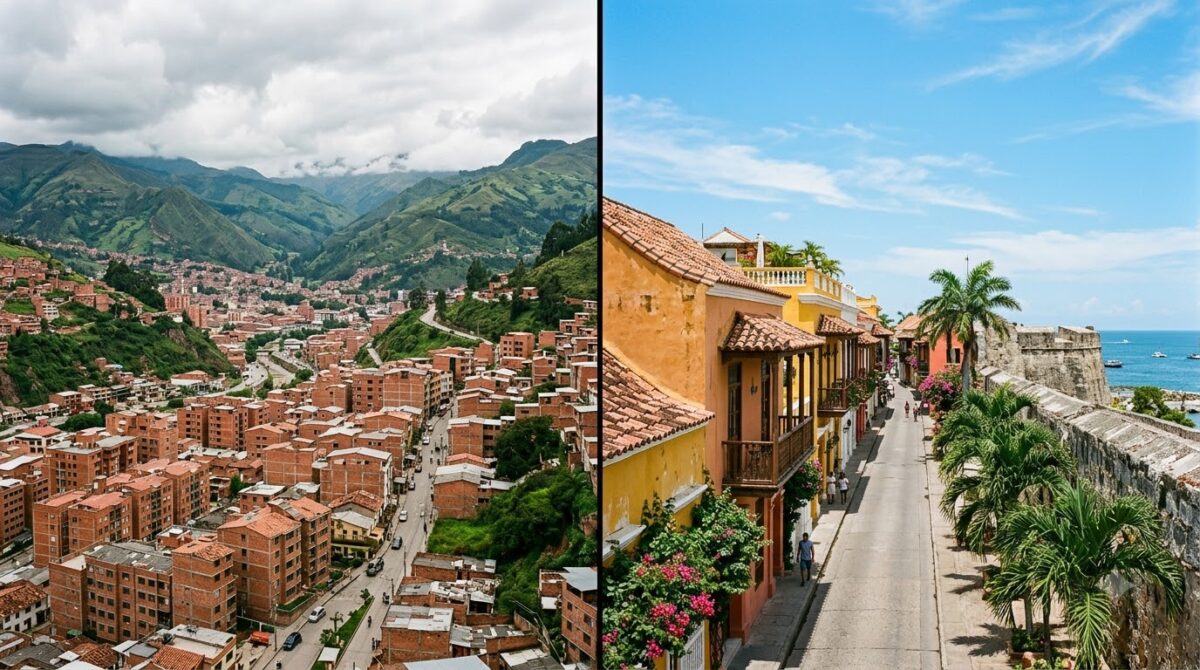
- Cheaper: Medellín, clearly. A meal that costs US$10–18 in the walled city runs US$4–6 in Medellín.
- Better weather: Medellín. It is the City of Eternal Spring; Cartagena is 30–35°C and humid every day of the year.
- Prettier: Cartagena wins on architecture — a UNESCO World Heritage site and one of the oldest cities in the Americas.
- Safer for tourists: close, and it depends how you measure. Medellín has the lower city-wide homicide rate; Cartagena keeps its crime further from where visitors go.
- How long: 4–5 nights in Medellín, 3 in Cartagena if you are doing both.
Where these numbers come from. Cost and connectivity comparisons were read from published 2026 expat and travel guides on 13 August 2026. Homicide figures are secondary-source estimates for 2024, not official 2026 statistics, and are labelled as such below. We have not lived in either city — see our editorial policy. Prices move; treat these as orders of magnitude.
Cartagena or Medellín at a glance
Both are worth a trip and the Cartagena vs Medellin question only gets sharp when you have to pick one. Each is a major city in Colombia with a completely different personality, so the honest answer depends on what you want from the week rather than on which Colombian city is objectively better.
| Medellín | Cartagena | Winner | |
|---|---|---|---|
| Climate | 20–27°C all year, dry air | 30–35°C, humid, year-round | Medellín |
| Cost | Meal US$4–6 | Meal US$10–18 in the walled city | Medellín |
| Architecture | Red-brick, modern, functional | UNESCO colonial old town | Cartagena |
| Sea and beaches | None — it is inland | Islands an hour out by boat | Cartagena |
| Nightlife | Denser, cheaper, more varied | Caribbean, outdoors, pricier | Tie, different |
| Long stay / remote work | Fibre 100–600 Mbps, big nomad scene | 50–200 Mbps, less reliable | Medellín |
| Days needed | 4–5 | 3 | — |
The short version: Medellín wins on living, Cartagena wins on looking. If you only have a week and want one, pick by whether you want a city to be in or a city to look at.
Weather: the difference nobody warns you about
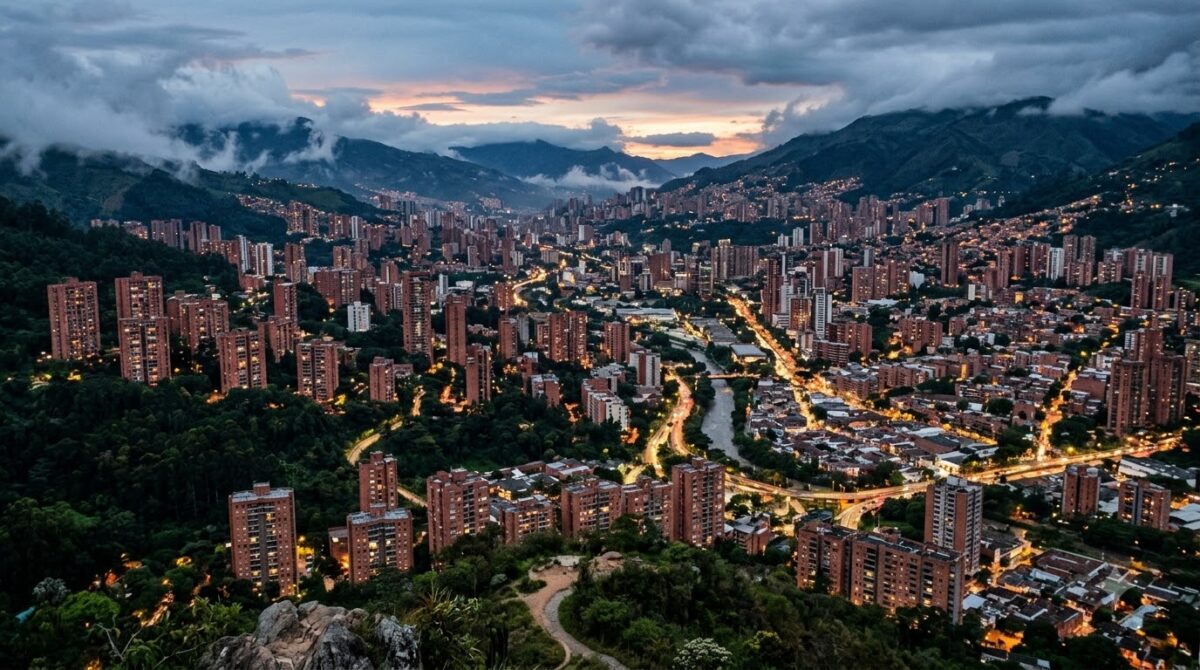
This is the biggest practical difference between the two cities, and the one that surprises people most.
- Medellín sits at roughly 1,500 metres in the Aburrá valley, which gives it 20–27°C almost every day of the year and cool nights. That is why it is called the City of Eternal Spring.
- Cartagena is hot and humid year-round — 30–35°C with humidity near 80%. You will change clothes twice a day and plan your walking around the middle of the day.
- Cartagena has a dry season (December to April) and a wet one, but no cool season. Medellín has no real season at all, just wetter and drier months.
- Cartagena is on the coast at sea level, which is why there is no escape from the humidity; Medellín is known for the opposite, and locals treat air conditioning as unnecessary.
- If heat drains you, this decides the question on its own. Detail on Cartagena’s months is in our best time to visit guide.
Is Medellín or Cartagena cheaper?
Medellín, and not slightly. Cartagena carries a tourist markup that Medellín does not, concentrated exactly where visitors spend: the walled city and Bocagrande.
| What | Medellín | Cartagena |
|---|---|---|
| Restaurant meal | US$4–6 | US$10–18 |
| Hotels and rentals | baseline | 30–50% higher |
| A night out per person | US$30–60 | US$60–120 |
- The markup is geographic. Eat one street outside the walls in Getsemaní and the gap narrows sharply.
- Cost of living for a longer stay follows the same pattern, with the added detail that electricity costs in Cartagena are materially higher because air conditioning runs constantly.
- Cartagena is a tourist city first. Medellín is a working city that tourists visit, and its prices reflect that.
- Figures read 13 August 2026.
Which city is safer for tourists?
Closer than the reputations suggest, and the answer flips depending on which question you are asking.
- By city-wide homicide rate, Medellín is lower: roughly 15 per 100,000 against about 18 for Cartagena on 2024 estimates.
- By visitor exposure, Cartagena is better. Its serious crime sits in districts tourists never enter, and the walled city has among the lowest rates in the municipality.
- Medellín concentrates its visitor-facing crime in the district visitors actually use. Reporting on El Poblado puts phone thefts around Parque Lleras at roughly 12 to 15 a week.
- Both cities appear in the same warnings about drink spiking and dating-app robbery aimed at foreigners. Neither has an advantage there.
- Taxi drivers in Cartagena work without meters, so agree the fare first; licensed cars are yellow with white plates. Medellín has metered taxis and a metro.
Figures above are secondary-source estimates for 2024, not official 2026 statistics. The full picture for one city is in our Cartagena safety guide.
Which city is prettier?
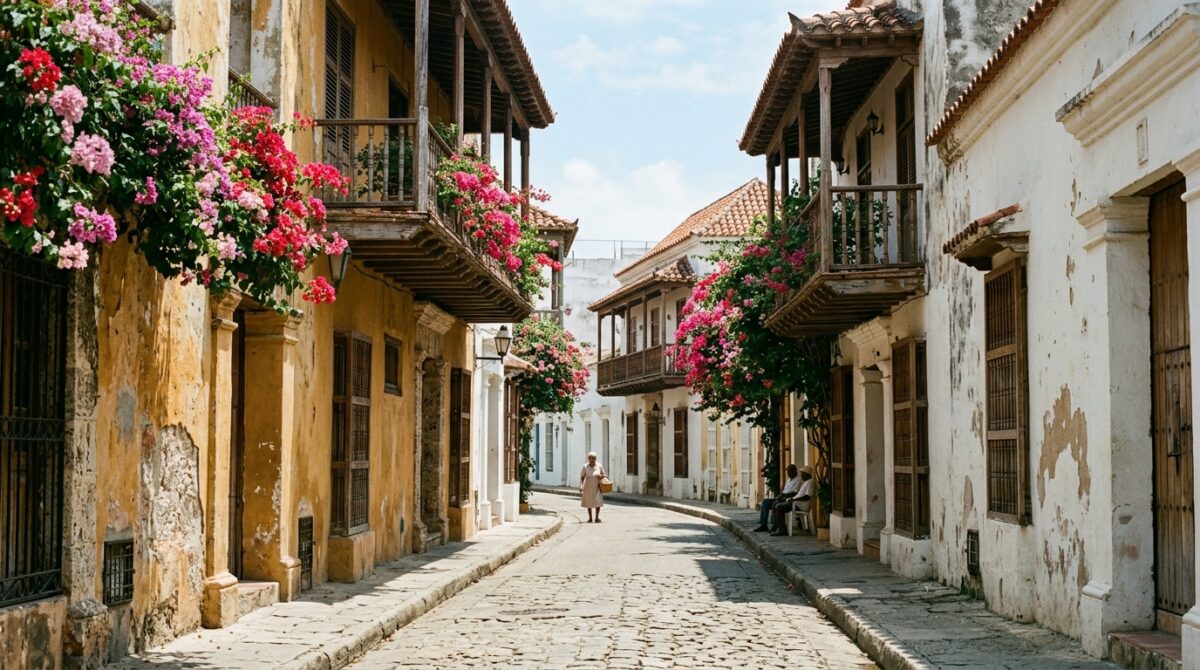
Cartagena, comfortably. This is the one category where the answer is not really contested.
- Cartagena is one of the oldest cities in the Americas, founded in 1533, and its walled centre is a UNESCO World Heritage site. Ochre facades, wooden balconies, bougainvillea, and the Castillo San Felipe de Barajas above it.
- Unlike Cartagena, Medellín is not a beautiful city at street level. It is red brick, functional, and built for living rather than looking at.
- Cartagena also has many historical buildings beyond the obvious ones — churches, convents and the walled city and Castillo San Felipe together make up one of the largest colonial ensembles in the Americas. A local guide is worth it here in a way it is not in Medellín.
- What Medellín has instead is the setting — a city inside a green valley with mountains on both sides, best seen from the metrocable at dusk.
- Medellín’s visual draw is Comuna 13: escalators up a hillside barrio covered in murals, and one of the more remarkable urban turnaround stories anywhere.
Which has more to do?
Different rather than more. Cartagena offers a compact set of very good things; Medellín offers a base for a wider region.
- Cartagena: the historic neighbourhood inside the walls on foot, the fort, boat trips to the Rosario Islands, and San Basilio de Palenque inland. Two to three days fills properly — see things to do in Cartagena.
- Medellín: Comuna 13, the metrocable, coffee farms, and Guatapé with its rock and painted village as the standard day trip.
- Beaches: only Cartagena, and even there the good water is a boat trip away rather than in the city. Medellín has none at all — it is landlocked.
- Adventure and nature: Medellín, because of what surrounds it. Paragliding, hiking and the coffee region are all within reach.
Nightlife and food
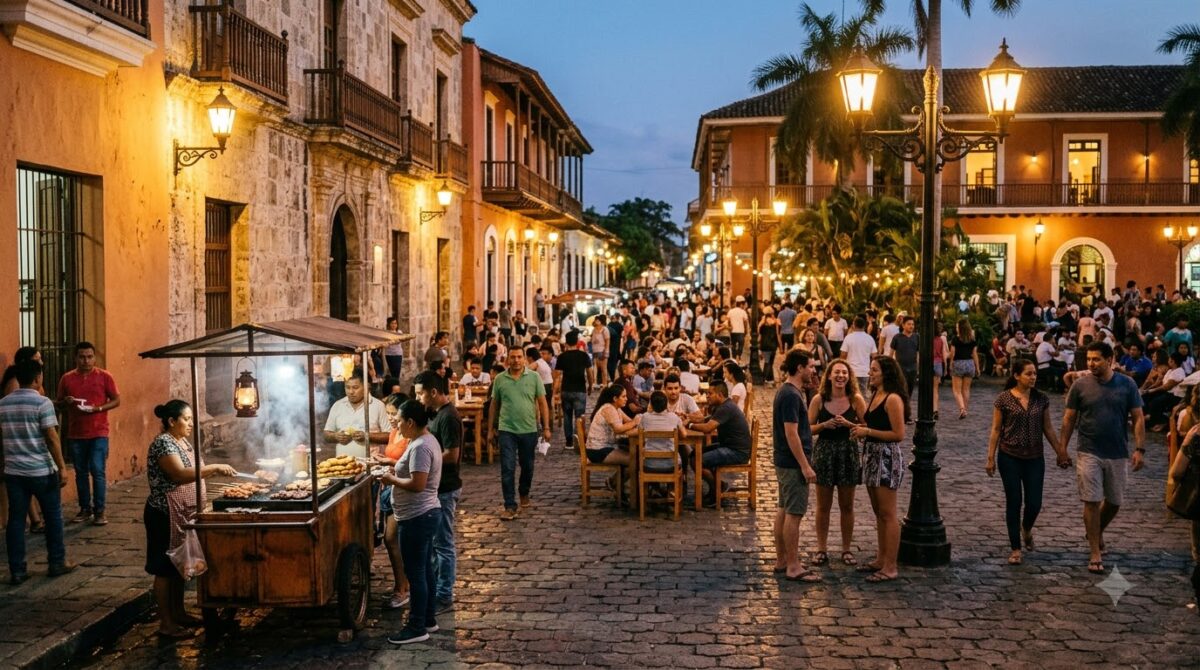
- Nightlife in Medellín is denser and cheaper, concentrated around El Poblado and Parque Lleras, with the widest range of restaurant and nightlife options in the country.
- Cartagena’s version is outdoors and Caribbean: rooftops on the walls, salsa in Getsemaní, and Plaza de la Trinidad filling up nightly for free.
- Food: Cartagena for seafood and Afro-Colombian Caribbean cooking — ceviche, coconut rice, arepa de huevo. See our restaurants guide.
- Medellín for range and value: Antioquian food, an international scene, and better coffee culture given the coffee region next door.
- On pure cooking, Cartagena has the stronger single cuisine. On choice per peso, Medellín.
How many days in each?
- Medellín: 4–5 nights. The city itself takes two, and Guatapé or a coffee farm takes another.
- Cartagena: 3 nights. Two days for the walled city on foot, one for an island or Palenque.
- Doing both in a week? Medellín first, Cartagena second. Ending on the coast works better than starting there, and the heat is easier to take when you are winding down.
- Only one city, only a few days? Cartagena, because it is compact and the airport is fifteen minutes from the centre. Even one day in Cartagena covers the walled city on foot.
- Whichever way you go, you will enjoy Cartagena more in the cooler half of the day — plan to visit Cartagena’s streets early or after 16:00.
For a long stay or remote work

Medellín, and it is not close. This is the category where the gap is widest.
- Internet: fibre at 100–600 Mbps in Medellín against 50–200 Mbps and less reliable in Cartagena.
- Coworking and community: Medellín has a large established remote-work scene; Cartagena does not.
- Climate again: months of 30–35°C and humidity is a different proposition from a week of it.
- Jobs available in Medellín span tech, services and manufacturing; job opportunities in both cities favour Medellín heavily — it is Colombia’s second city and a real economy. Cartagena’s is tourism, ports and not much else.
- Cartagena works for a week of working from the coast. For months, Medellín.
How to decide between Cartagena and Medellín
Four questions determine which city is best for your trip, and they take about a minute to answer.
- Does heat bother you? If yes, Medellín. This overrides everything else.
- Do you want to look at something old? If yes, Cartagena. Nothing in Medellín competes.
- Is the budget tight? Medellín, by roughly a factor of two on food and nights out.
- Do you want the sea? Only Cartagena has it, and even then it is a boat trip. Cartagena is located on the Caribbean; Medellín is landlocked in the Andes.
If you can do both, do both — they are a one-hour flight apart and they are so different that neither repeats the other. Give Medellín the days and Cartagena the postcard.
Frequently asked questions
Is it better to visit Medellín or Cartagena?
Medellín if you want comfortable weather, lower prices and a city to spend time in. Cartagena if you want colonial architecture and the Caribbean. Doing both, give Medellín 4–5 nights and Cartagena 3, in that order.
Is Medellín or Cartagena cheaper?
Medellín, clearly. A restaurant meal runs about US$4–6 there against US$10–18 in Cartagena’s walled city, hotels and rentals are 30–50% higher in Cartagena, and a night out is US$30–60 against US$60–120. Cartagena carries a tourist markup that Medellín does not.
Which city is safer, Medellín or Cartagena?
It depends on the question. Medellín has the lower city-wide homicide rate on 2024 estimates, roughly 15 per 100,000 against about 18. But Cartagena keeps its serious crime away from the districts visitors use, while Medellín’s visitor-facing theft is concentrated in El Poblado, where reporting puts phone thefts near Parque Lleras at 12 to 15 a week.
Which city is prettier?
Cartagena, comfortably. It is one of the oldest cities in the Americas and its walled centre is a UNESCO World Heritage site. Medellín’s appeal is its valley setting and Comuna 13 rather than its streets.
Which has better weather?
Medellín. At about 1,500 metres it holds 20–27°C all year, which is why it is called the City of Eternal Spring. Cartagena is hot and humid year-round at 30–35°C with no cool season.
Which is better for digital nomads?
Medellín. Fibre runs 100–600 Mbps against 50–200 Mbps in Cartagena, there is an established coworking scene, and the climate is sustainable over months rather than days.
Can you visit both Medellín and Cartagena in one week?
Yes. They are about an hour apart by plane. Four nights in Medellín and three in Cartagena works, and doing Medellín first means you finish on the coast rather than starting in the heat.