
Colombia sits at Level 3, “Reconsider Travel”, in the United States advisory updated 31 March 2026 — but that headline is not the answer to the question you are asking. The Level 4 “Do Not Travel” designations apply to four departments and the Venezuelan border strip, and Bolívar, the department Cartagena sits in, is not among them. For visitors who stay in the tourist areas, the realistic risk in Cartagena is theft, not violence.
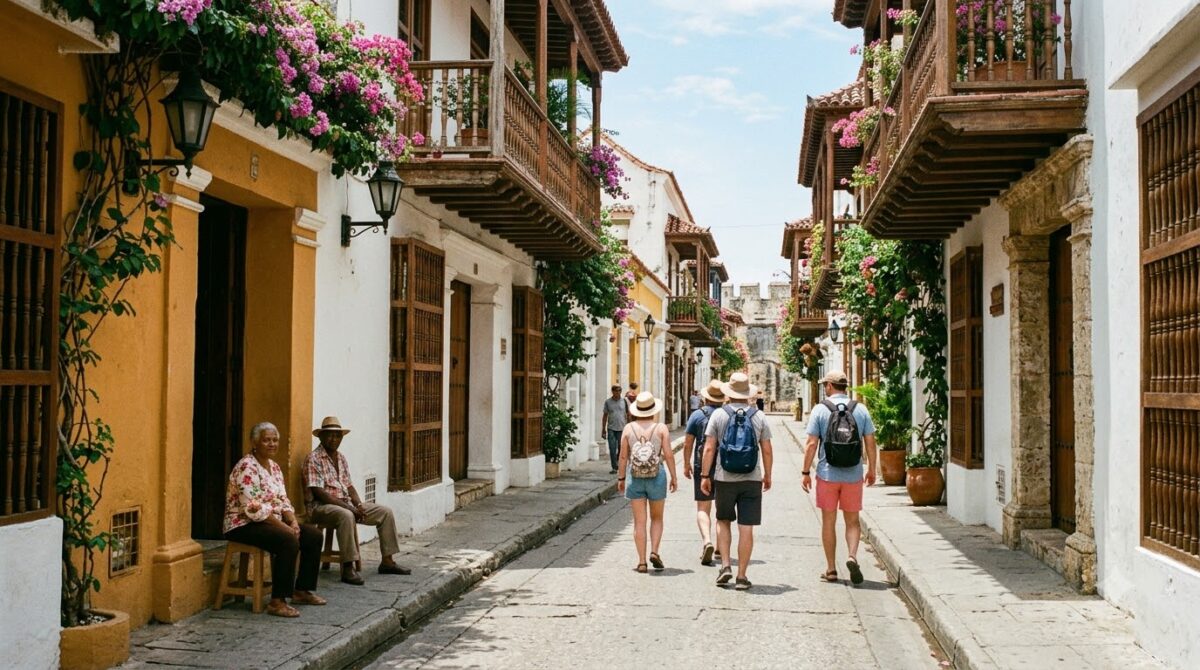
- Colombia is Level 3 nationally (US advisory, updated 31 March 2026). Level 4 covers Arauca, Cauca, Valle del Cauca, Norte de Santander and the Venezuelan border — not Bolívar.
- Petty theft is the realistic risk for visitors: pickpocketing, phone snatching and bag grabs, concentrated where crowds are.
- The three named dangers are drink spiking, dating-app robbery and unlicensed taxis — all three are avoidable by behaviour, not by luck.
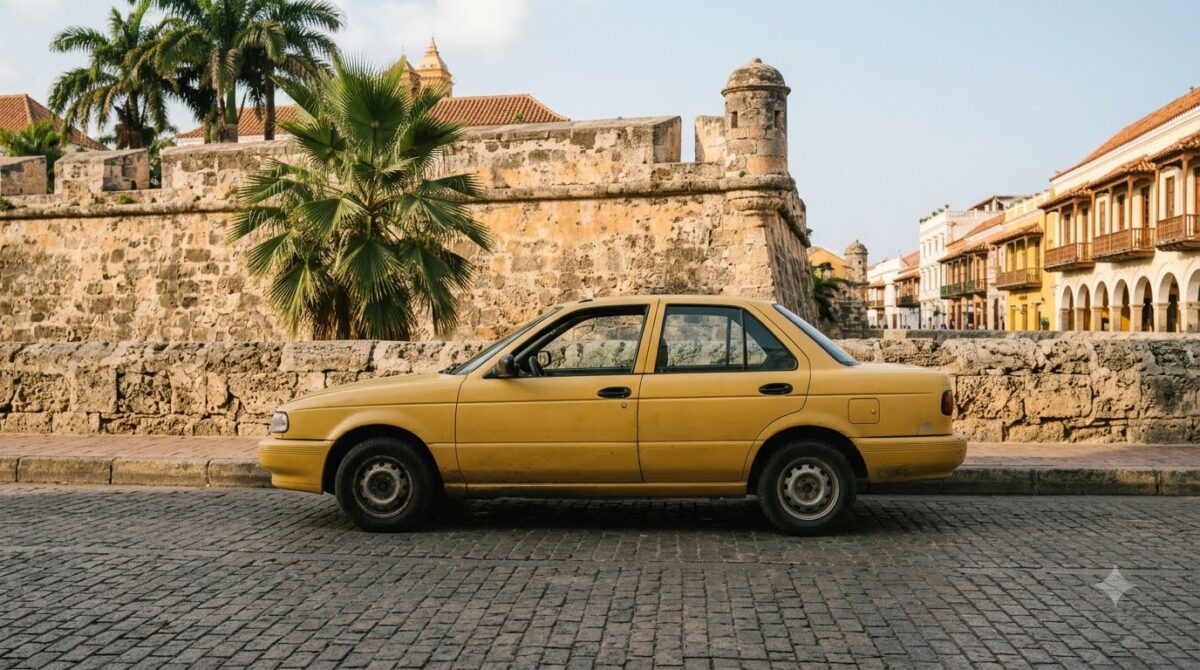
- Licensed taxis in Cartagena are yellow with white number plates (UK Foreign Office). Ride-hailing apps work here and leave a record.
Where this comes from, and its limits. Crime types, drink-spiking, express kidnapping, dating-app robbery and the yellow-taxi rule are taken from the UK Foreign, Commonwealth and Development Office advice for Colombia, read 13 August 2026. The United States advisory level and the Level 4 list are as reported on 31 March 2026 by outlets summarising the State Department update — we were unable to load travel.state.gov directly and have not quoted it as if we had. Homicide figures are secondary-source estimates for 2024, not official 2026 statistics, and are labelled as such below. We have not visited Cartagena ourselves — see our editorial policy. Travel advisories change without notice. Check your own government’s current page before you book and again before you fly.
Is Cartagena safe for American tourists?
Yes, with the qualification that the country-level advisory and the city-level reality are different things. Governments rate countries and, at most, departments. They do not certify individual cities, so no advisory anywhere says “Cartagena is safe”. What the advisories do tell you is which parts of Colombia are considered off-limits, and Cartagena is not one of them.
| Source | Rating for Colombia | Dated | Is Bolívar / Cartagena restricted? |
|---|---|---|---|
| US State Department advisory | Level 3 — Reconsider Travel | 31 Mar 2026 | No — Bolívar is not on the Level 4 list |
| UK Foreign Office | Warnings against travel to specific regions only | read 13 August 2026 | No — no Cartagena-specific warning |
- The reasons given for the Level 3 rating are crime, terrorism, civil unrest and kidnapping, with natural disasters added in the 2026 update.
- Those risks are not evenly spread. They are what drive the Level 4 designations in specific departments, most of which are hundreds of kilometres from the Caribbean coast.
- A Level 3 rating is advice, not a prohibition. Travel insurance normally still applies; a Level 4 area is where cover typically fails.
- Check your policy wording anyway. Some insurers key their exclusions to the advisory level of the specific region rather than the country.
Is it safe for US citizens to visit Cartagena and Colombia right now?
The useful version of this question is narrower: which parts of Colombia are you actually being told to avoid? As of the 31 March 2026 update, the Level 4 “Do Not Travel” list is short and specific.
- Arauca department.
- Cauca department, excluding the city of Popayán.
- Valle del Cauca department, excluding the city of Cali.
- Norte de Santander department.
- Within 10 km of the Colombia–Venezuela border, because of crime, kidnapping, armed-group conflict and the risk of detention.
Bolívar, the department containing Cartagena, appears on none of these lists. Neither do the departments holding Bogotá or Medellín. If your itinerary is Cartagena and the Caribbean coast, the Level 4 areas are not on your route.
What tourists should avoid in Cartagena
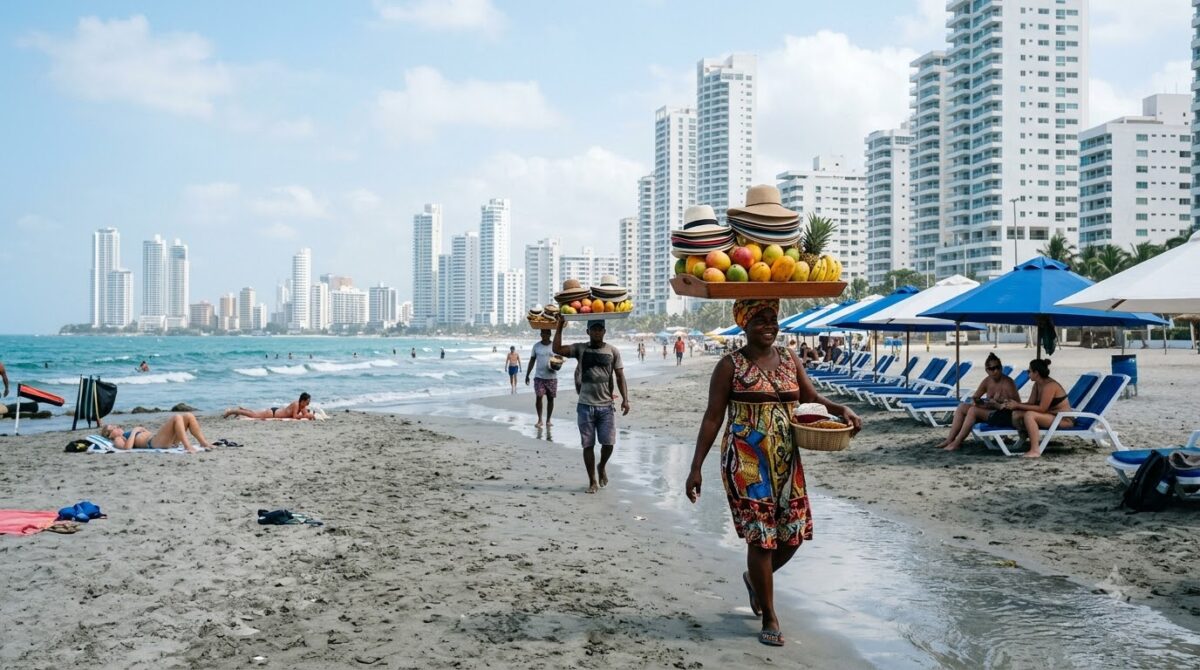
Almost every incident that happens to a visitor here falls into a small number of categories, and most of them are situational.
- Do not accept drinks you did not watch being poured. This is the single most repeated warning in official advice, and it applies to bars, clubs and private invitations alike.
- Do not hail a taxi off the street at night. Use your hotel, a booked driver or an app instead.
- Do not carry your passport around. Carry a photo or a copy and leave the document in the room safe.
- Do not display a phone on the pavement edge. Snatching from moving motorcycles is the classic version of petty theft in Colombian cities.
- Do not wear obvious jewellery or a visible watch. The UK advice is explicit about not carrying large sums or wearing expensive items.
- Do not walk on unlit beach stretches after dark, including the sand at Bocagrande, which empties out and has no natural surveillance at night.
- Do not buy anything sold as emeralds, cocaine or discounted tours on the street. The first two are how visitors get robbed or arrested; the third is how they lose a deposit.
The full side-by-side on cost, climate and nightlife is in Medellín vs Cartagena.
Cartagena or Medellín: which Colombian city is safer?
This comparison gets a lazy answer almost everywhere, usually “both are fine now”. The honest answer is that the two cities swap places depending on which question you are really asking.
| Measure | Medellín | Cartagena | Which looks better |
|---|---|---|---|
| Homicide rate, city-wide (2024 estimates) | ~15 / 100k | ~18 / 100k | Medellín |
| Where serious crime sits relative to visitors | Closer to the visitor districts | Concentrated away from the tourist areas | Cartagena |
| Dominant risk to a visitor | Theft, plus drink spiking in nightlife zones | Theft, plus drink spiking in nightlife zones | Tie |
- By raw city-wide statistics, Medellín records the lower homicide rate of the two.
- By visitor experience, Cartagena has the clearer advantage: violent crime is concentrated in districts tourists never enter, and the walled city has among the lowest homicide rates in the municipality.
- Medellín concentrates its visitor-facing crime in the district visitors actually use. Reporting on El Poblado puts phone thefts around Parque Lleras at roughly 12 to 15 a week.
- Both cities appear in the same warnings about dating-app robbery aimed at foreigners, so neither has an advantage there.
Figures above are secondary-source estimates for 2024 and are not official 2026 statistics. Read them as orders of magnitude, not decimals.
The safest neighbourhoods in Cartagena: the walled city and Getsemaní
Where you sleep changes your exposure more than anything else you decide. In short: the walled city and its immediate neighbours are the low-risk options, and they are also where you want to be anyway.
- El Centro, inside the walls — busy and lit into the evening, and the most heavily policed part of the city.
- San Diego, the quieter corner inside the same walls — residential, with local families still living there.
- Getsemaní, immediately outside the walls — lively and popular, with the standard advice to stay on the busy streets after dark and avoid isolated alleys.
- Bocagrande, the high-rise beach strip — among the safer districts, with the beach itself best avoided once it is dark.
The detail on each area, what a room costs and how far it is to walk sits in our guide to where to stay in Cartagena. This page stays on the safety question.
Is Cartagena safe for solo female travellers?
Broadly yes, with two risks that deserve naming rather than hinting at. Neither is unique to Cartagena, and both are behavioural rather than geographic.
- Drink spiking. The UK Foreign Office describes criminals using drugs including scopolamine administered through food, drinks or cigarettes, leaving victims disoriented and vulnerable to robbery and sexual assault.
- Dating-app setups. The same advice describes organised groups — often including women — building trust before drugging and robbing targets in bars, restaurants, taxis and on the street. Do not assume a female contact means a safe meeting.
- Meet first dates in daylight, in a place you chose, and tell someone where you are going.
- Street harassment is common enough to expect and is usually verbal. Colombians on the street will generally intervene if something escalates in a busy area.
- Book the return leg of a night out before you go out, so tiredness never turns into hailing an unmarked car.
Going out? The venue-by-venue picture is in our nightlife guide.
Common scams and crimes in Cartagena
Unlicensed taxis and express kidnapping
- The UK Foreign Office warns of express kidnappings: criminals posing as taxi drivers who take victims to cash machines and force withdrawals.
- Victims are usually released quickly, but some have been hurt when they resisted. Comply and lose the money.
- Authorised taxis in Cartagena are yellow with white number plates. Treat that as a hard filter.
- Street taxis have no meters, so agree the fare before the doors close or you will be negotiating from the back seat.
Drink spiking
- Scopolamine is the drug named in official advice, and it can be administered in food, in a drink or on a cigarette.
- The practical rule is narrow and easy: watch it poured, keep it in your hand, abandon it if you lose sight of it.
- Take a spiking seriously as a medical event, not just a theft. Get the person to a hospital rather than to bed.
Dating-app robbery
- The pattern reported repeatedly is consistent: a match, a meeting, a drink, unconsciousness, then a room emptied of phone, laptop and passport.
- Meet in public and stay in public. Do not give a first date your room number or building.
Fake police and street approaches
- A recurring scam involves men presenting themselves as police and asking to inspect your cash or passport for counterfeits. Real officers do not need to hold your money.
- Ask to walk to a police station or a hotel lobby to do the check. Genuine officers agree; the others leave.
- Street sellers on the beach and in the plazas are persistent rather than criminal. A clear no, repeated once, ends it.
Is it safe to walk around Cartagena at night?
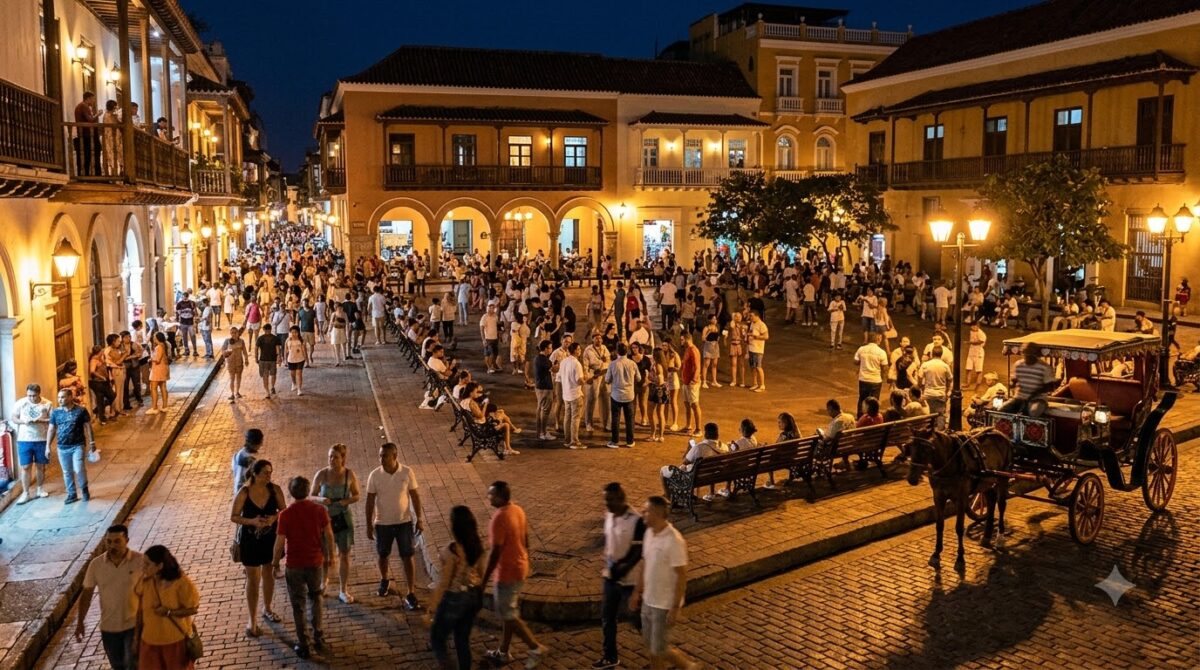
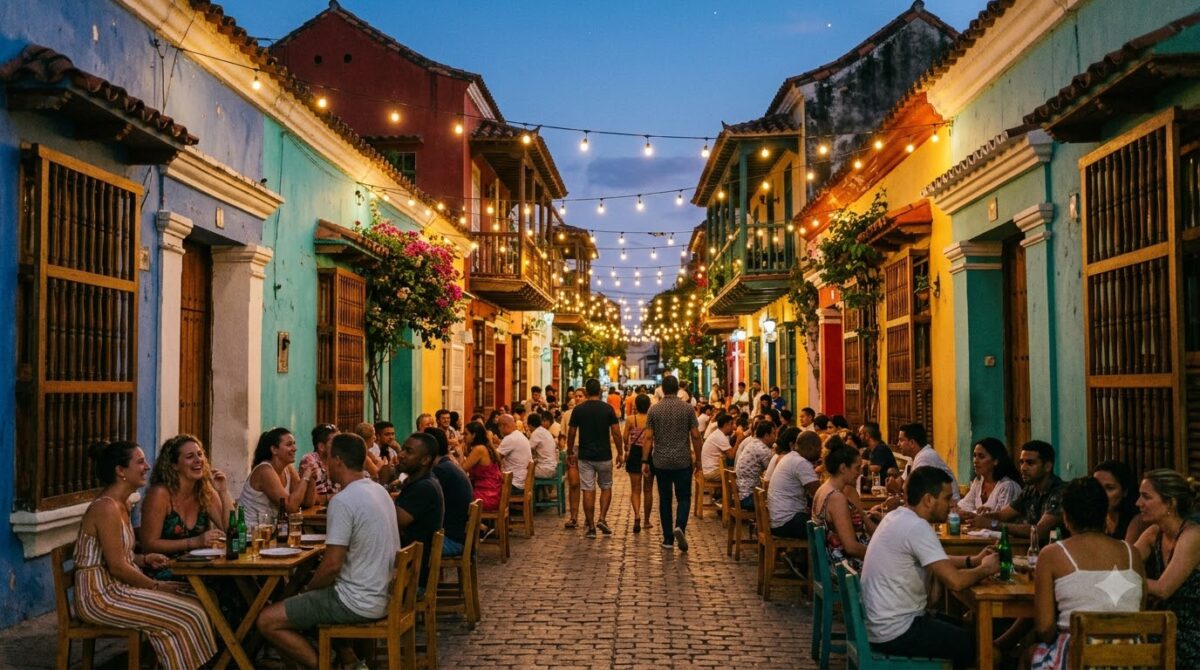
Inside the walls and in the busy parts of Getsemaní, yes, and plenty of visitors do it nightly. The distinction that matters after dark is not district but foot traffic.
- Busy and lit is fine. The main plazas and restaurant streets inside the walled city stay populated late.
- Empty is not, even one street away from somewhere busy, and even inside the walls.
- The beaches at night are the clearest no — Bocagrande sand included.
- Walking back at 02:00 from a district you do not know is where most avoidable trouble starts. A ride costs a few dollars.
- If you have been drinking, stop making the walk-or-ride decision on the night and set the rule before you go out.
Getting around: taxis, Uber and ride-hailing apps
Transport is where the largest, cheapest safety gain is available, and it costs almost nothing to take.
- Uber, DiDi, Cabify and inDrive all operate in Cartagena as of 13 August 2026.
- The advantage of an app is not price but record: a named driver, a plate number and a tracked route, which a street taxi gives you none of.
- The legal position of ride-hailing in Colombia is described inconsistently across sources, so we will not state one. What is not in dispute is that the apps work and are widely used.
- Check the plate against the app before you get in. This is the step that actually prevents the unlicensed-car problem.
- For a street taxi, use the yellow-with-white-plates rule and agree the fare first.
- Hotels will call a known driver, which is the simplest option late at night and usually the cheapest form of peace of mind.
Are the beaches in Cartagena and the Rosario Islands safe?
The water is not the issue; the arrangements are. Day trips out of Cartagena are routine and sold everywhere, and the problems that arise are commercial rather than criminal.
- Book boats through your hotel or an established operator rather than from someone approaching you at the dock.
- Confirm what the price includes before you pay. Lunch, the island entry fee and the port tax are frequently separate.
- Confirm the return time and the last boat, and get it in writing if you can. Being left on an island is the common version of a bad day in the Rosario Islands.
- On the beach, take only what you can hold. Bags left on sand while you swim are the easiest theft in the city.
- Vendors and masseuses on the sand will quote a price after the service rather than before. Agree it first, or decline.
For the trip itself rather than the risks, see our guide to things to do in Cartagena.
Safety in Cartagena: practical tips for your trip
- Carry a decoy amount of cash in a pocket and keep the rest elsewhere. If you are robbed, handing something over ends it faster.
- Use the room safe for the passport and carry a photo of the data page.
- Take out cash inside a bank or a shopping centre, in daylight, not from a street machine at night.
- Keep one card separate from your wallet so a theft does not end your access to money.
- Travel insurance is worth having here specifically because phone theft is the most likely claim you will ever make.
- Save the emergency number 123, which covers police, fire and ambulance nationally in Colombia.
- Learn two sentences of Spanish. Being obviously unable to communicate marks you out more than a camera does.
- Trust the discomfort. If a street feels wrong, it is free to turn around, and no one is watching.
Frequently asked questions
Is Cartagena safe for tourists in 2026?
Yes for the tourist areas, with theft as the realistic risk rather than violence. Colombia carries a Level 3 “Reconsider Travel” rating from the United States as of 31 March 2026, but the Level 4 “Do Not Travel” designations cover four departments and the Venezuelan border strip, and Bolívar, where Cartagena sits, is not one of them.
What is the most dangerous thing for visitors in Cartagena?
Drink spiking, because it turns a theft into something far worse and it defeats ordinary caution. Official UK advice names scopolamine administered through food, drinks or cigarettes. The countermeasure is narrow: watch your drink poured and never leave it unattended.
Which is safer, Cartagena or Medellín?
It depends on the question. Medellín has the lower city-wide homicide rate of the two on 2024 estimates, roughly 15 per 100,000 against about 18. But Cartagena keeps its serious crime further from the districts visitors use, so for a tourist staying in the walled city or Getsemaní, Cartagena is the lower-exposure choice.
Are taxis safe in Cartagena?
Licensed ones are. They are yellow with white number plates, per UK Foreign Office guidance. Unlicensed cars are the vehicle for express kidnappings, where victims are driven to cash machines. Ride-hailing apps including Uber, DiDi, Cabify and inDrive operate in the city and leave a record of driver and route.
Is it safe to walk around Cartagena at night?
On busy, lit streets inside the walls and in central Getsemaní, yes. Empty streets are the problem rather than particular districts, and the beaches after dark are the clearest thing to avoid.
Is Cartagena safe for solo female travellers?
Broadly yes, with two specific risks: drink spiking, and dating-app setups run by groups that often include women. Meet first dates in public and in daylight, and arrange your ride home before the evening starts.
Do I need travel insurance for Cartagena?
Yes, and the likeliest claim is a stolen phone rather than anything dramatic. Check the wording against the advisory level for the region you are visiting: some policies limit cover by region rather than by country, and Level 4 areas are where cover typically stops.