Quick answer where to stay, whatever the month
El Centro inside the walls for a first visit, San Diego for the same walkability without the crowds, Getsemaní for value and nightlife.
On this page
- The best time to visit Cartagena, month by month
- Dry season and wet season: what they mean for a trip
- Cartagena de Indias weather through the year
- Why people come to this Colombian destination
- High season, shoulder season and prices
- Festivals in the walled city worth timing a trip around
- Does Cartagena get hurricanes?
- Humidity, heat and sea temperature at the beach
- What to do in Cartagena on a rainy day, May to November
- Fitting the city of Cartagena into wider Colombia travel
- Choosing when to go to Cartagena by what you care about
- Frequently asked questions
The best time to visit Cartagena is December to April, and February above all. Cartagena is hot every day of the year — 30 to 32°C, barely moving between seasons — so the choice is not about temperature. It is about rain. Cartagena has two distinct seasons, and picking the right one is most of what makes an ideal trip here. February averages under 1 mm of rain. October averages about 230 mm. That is the whole decision.
Some links below are affiliate links. We may earn a commission if you book through them, at no extra cost to you. We do not rank hotels, and any prices on the map come live from the booking sites.
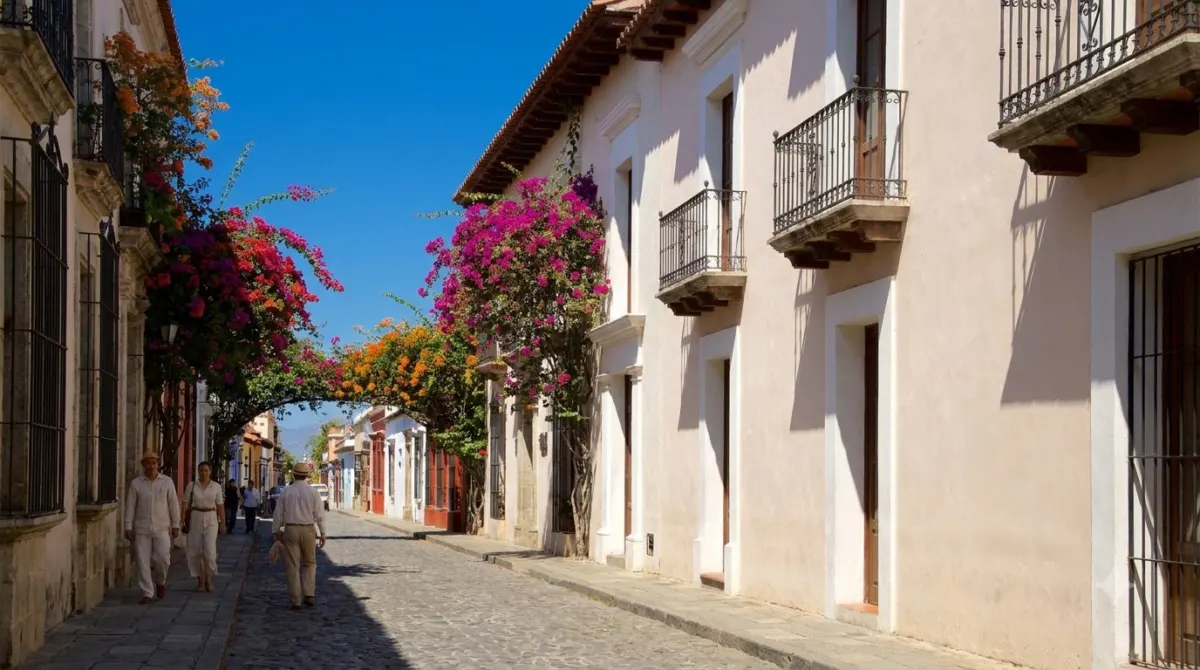
- Temperature barely changes: 30–32°C all year.
- Driest month: February — under 1 mm of rain and almost no rainy days.
- Wettest month: October — about 230 mm of rain.
- Annual rainfall is around 1,000–1,100 mm, almost all of it in the second half of the year.
- Dry season runs December to April; the wet months are May, June, August, September, October and November.
Where these numbers come from. Monthly rainfall, rainy-day counts and temperature averages were read on 12 August 2026 from published climate records for Cartagena de Indias, including Weather & Climate and Climates to Travel. These are long-run averages, not a forecast for your dates.
The best time to visit Cartagena, month by month
| Month | Season | Rain | Verdict |
|---|---|---|---|
| January | Dry | Very low | Excellent — peak season prices |
| February | Dry | <1 mm | Driest month of the year |
| March | Dry | Low | Excellent |
| April | Dry, ending | Low | Good; rain begins late in the month |
| May | Wet | High | Showers; quieter and cheaper |
| June | Wet | High | Showers |
| July | Drier break | Moderate | A gap in the wet season |
| August | Wet | High | Showers |
| September | Wet | High | Heavy |
| October | Wet | ~230 mm | Wettest month — avoid |
| November | Wet, ending | High | Improves late in the month |
| December | Dry | Low | Excellent — busiest and priciest |
Dry season and wet season: what they mean for a trip
- Dry season, December to April. Cloudless, hot, and busy. Hotel rates roughly double against the wet months, and the best restaurants need booking a week ahead.
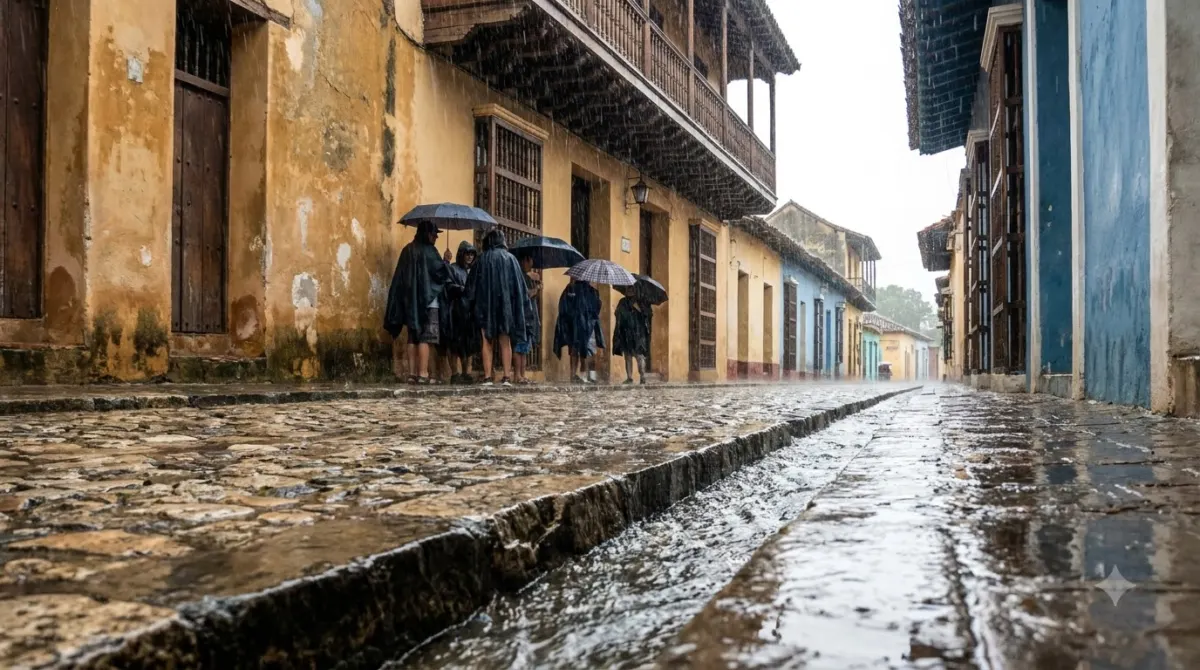
- Wet season, May to November. Rain usually comes as a heavy afternoon downpour, not an all-day grey. Mornings are often clear. Prices drop noticeably.
- October is the one to avoid if the beach is the point — sixteen rainy days means boat trips get cancelled.
- July is a real gap in the wet season and often overlooked.
- Heat is constant. There is no cool month, and very little shade inside the walls between 11:00 and 15:00.

Cartagena de Indias weather through the year
The short answer to what the typical weather in Cartagena is like: hot, humid and stable, with the rain doing all the varying. The weather patterns here are simple enough that you can plan your trip around them with confidence. Its proximity to the equator is why the temperature in Cartagena barely moves — a tropical climate this close to the line does not have summer and winter, it has wet and dry.
- The dry season in Cartagena runs December to April: sunny days, low humidity by local standards, and as close to perfect weather as this destination gets. This is the ideal time to visit if the weather is your priority.
- Shoulder season is mid-January to April and again July. Pleasant weather, softer prices, and the best time to visit Cartagena Colombia if you want both.
- The wet months are May, June, and then August to November. September and October are the wettest of the year.
- Even in the wet season, rain is concentrated in heavy afternoon bursts. Mornings are frequently clear, so a wet-season trip still gives you usable days.
- There is no cold month and no cool month. If you are comparing this with the rest of Colombia, remember Bogota sits at altitude and is far cooler year round, so the best time to visit Colombia as a whole depends on which part of it you mean.
Why people come to this Colombian destination
What you plan to do decides how much the rain matters. Someone here for the old town can work around a shower; someone here for the islands cannot.
- The walled old town and the colourful streets — workable in any month. Rain here means an hour indoors, not a lost day.
- Castillo de San Felipe de Barajas — better in the dry season, and better early. There is no shade on the fort in any month.
- The Rosario Islands and the beaches — this is the part that decides your dates. Boat trips get cancelled in rough weather, and the wet months produce it.
- Festivals — if a specific one is the reason you are going, the date picks itself and the weather is whatever it is.
- If your trip is city-only, June and September are perfectly usable and much cheaper. If it is island-first, hold out for the dry season.
High season, shoulder season and prices
Rain tells you which months are comfortable. Prices tell you which months are affordable, and on this stretch of the Caribbean coast of Colombia the two do not line up neatly — the driest months are also the most expensive.
| Period | Season | Weather | Prices & crowds |
|---|---|---|---|
| Mid-Dec – mid-Jan | High season | Dry, excellent | Peak — Christmas and New Year’s push rates 60–80% above baseline |
| Mid-Jan – April | Shoulder | Still dry | Falling; the sweet spot |
| May – June | Low season | Showers, mostly afternoon | Cheapest, quietest |
| July | Shoulder | A drier break | Moderate |
| Aug – Nov | Low season | Wettest, October worst | Cheap, except around 11 November |
- Mid-January to April is the value answer, and the ideal time for most people. The dry season is still running but the Christmas and New Year crowd has gone home, and rates fall with them.
- In high season the well-known restaurants need booking a week or more ahead. In low season you can walk in almost anywhere.
- Semana Santa, Holy Week, is a national holiday and behaves like a second peak even though it falls inside the dry season. Book early or avoid it.
- Room rates by area and tier are in our guide to where to stay in Cartagena.
Festivals in the walled city worth timing a trip around
Cartagena de Indias runs a dense cultural calendar, and most of it sits inside the dry season. Two of these will change what a room costs.
- Cartagena International Music Festival — early January. Classical concerts in the colonial churches, the plazas and the Teatro Adolfo Mejía, with many performances free to attend.
- Hay Festival Cartagena — late January into the first days of February. A literature and ideas festival that draws writers and audiences from across the Americas and Europe.
- FICCI, the Cartagena International Film Festival — the oldest film festival in Latin America, founded in 1960. It moves between March and April depending on the year, so check the dates for yours.
- Fiestas de Independencia, Cartagena’s Independence Day festival — the November celebration, running roughly 6 to 12 November with November 11 as the central day. It marks Cartagena’s declaration of independence in 1811 and has been recognised as national cultural heritage.
- The November fiestas are the one time the wet season fills the city. Parades, gaita music and street parties, and rooms priced accordingly.
- Dates read 13 August 2026. Festival dates shift year to year — confirm before you book flights around one.
Map shows live availability and prices. We may earn a commission on bookings made through it, at no extra cost to you.
Does Cartagena get hurricanes?
Rarely, and this is the reassuring part of the rainy season. Cartagena sits at the southern edge of the hurricane belt, far enough down the Caribbean that tropical systems mostly pass north of it.
- Direct effects are uncommon rather than unheard of. The storms that have reached the area include Joan in October 1988, Cesar in July 1996, Matthew in September 2016 and Iota in November 2020.
- That is four notable events across roughly three decades, which is a different risk profile from the islands further north.
- What the wet season actually delivers is heavy afternoon downpours rather than storms — usually an hour or two, then it clears.
- The practical effect on a trip is boat trips to the Rosario Islands being cancelled, not flights. Build a spare day into an island plan if you travel to Cartagena between August and November.
Humidity, heat and sea temperature at the beach
The thermometer is misleading here. Cartagena reads 30 to 32°C all year, but what you feel is set by humidity.
- Relative humidity averages around 80%, which is why 31°C in Cartagena feels heavier than 31°C somewhere dry.
- The humidity is highest in the wet months, when the air is closest to saturated. Dry-season heat is the more bearable version of the same temperature.
- Sea temperature never drops below swimming comfort. It averages about 27.8°C (82°F) in January and peaks near 29.8°C (85.6°F) in August.
- There is no month when the water is too cold. The sea is not a reason to pick a date.
- Pack an umbrella or a light rain shell from May onwards; you will use it most afternoons. Plan the walking for early morning or after 16:00 in any month. Midday in the walled city is punishing regardless of season.
- Figures read 13 August 2026 from published long-run climate records.
What to do in Cartagena on a rainy day, May to November
A wet-season afternoon is an hour or two indoors, not a write-off. Plan your trip with two or three of these held in reserve and the rain stops mattering.
- The Palace of the Inquisition on Plaza de Bolivar — the historical museum of the city of Cartagena, and the obvious indoor hour.
- The Museo del Oro Zenu is free and takes about forty minutes. Both are covered in our guide to the old town.
- A long lunch. Cartagena is a good place to be stuck at a table — see where to eat.
- Colombian coffee and a bookshop, or a cooking class, both of which run regardless of weather patterns.
- Travel insurance is worth having if you are travelling in the wet months, purely because cancelled boat trips and changed plans are normal here between August and November.
Choosing between the two cities rather than doing both? See Medellín vs Cartagena.
Fitting the city of Cartagena into wider Colombia travel
Most people do not fly in for Cartagena alone, and the best time to visit Colombia as a whole is not the same answer as the best time to go to Cartagena. The country runs several climates at once.
- Cartagena and the Caribbean coast — December to April. Hot and dry, and the time to enjoy the islands.
- Bogota and the highlands — cooler year round because of altitude, with December to March the driest stretch. Colombia in January suits both at once, which is why that month is the classic route.
- The coffee region and Medellin — pleasant weather most of the year. December to February and July to August are the driest.
- A two-week itinerary that takes in Bogota, Medellin and Cartagena works best between December and March, when all three are in their drier months at the same time.
- If you can only travel in the wet half, front-load the highlands and leave the coast for the end — April in Colombia is still workable on the coast, and September in Colombia is not.
- Three to four nights is the usual time to explore Cartagena properly. Longer than that and it becomes a base for the islands rather than a city trip.
Get the month right and the rest is easy; that single choice does more for a perfect trip here than anything else you decide.
Once you have your month, our things to do guide covers what to fill the days with.
Choosing when to go to Cartagena by what you care about
| You want | Go in |
|---|---|
| The driest possible weather | February |
| Beach and boat days | January–March |
| Lower prices | May, June, September |
| Fewest crowds | May and September |
| A dry gap in low season | July |

Once you have your month, where to stay in Cartagena covers how much high season adds to a room, and the beaches guide covers what boat trips cost.
More on this destination: Beachfront Hotels Cartagena.
Frequently asked questions
What is the cheapest time to visit Cartagena?
May and June, and again from August to early November. These are the low season months: showers most afternoons, but the quietest streets and the lowest rates. The exception is the week around 11 November, when the Fiestas de Independencia fill the city.
Does Cartagena get hurricanes?
Rarely. Cartagena sits at the southern edge of the hurricane belt and most systems pass north of it. Notable exceptions were Joan in October 1988, Cesar in July 1996, Matthew in September 2016 and Iota in November 2020. The wet season here means heavy afternoon downpours rather than storms.
How humid is Cartagena?
Around 80% relative humidity on average, which is why the heat feels heavier than the 30–32°C reading suggests. Humidity peaks in the wet months. Sea temperature runs about 27.8°C in January and 29.8°C in August, so the water is swimmable year round.
What is the best month to visit Cartagena?
February. It is the driest month of the year, averaging under 1 mm of rain, with temperatures the same 30–32°C as every other month.
What is the rainy season in Cartagena?
May, June, August, September, October and November. October is the wettest, averaging around 230 mm of rain.
Is it worth visiting Cartagena in the wet season?
Often yes. Rain tends to come as a heavy afternoon downpour rather than all day, mornings are frequently clear, and prices drop sharply. October is the exception.
How hot is Cartagena?
30 to 32°C almost every day of the year, with high humidity. There is no cool season.
Keep planning Cartagena de Indias
- Beachfront Hotels in Cartagena: The Good Beaches Are Not in the City
- Best Hotels in Cartagena: The Colonial Buildings Worth Booking
- Where to Stay in Cartagena: Best Areas and What They Cost
- Things to Do in Cartagena: What Each One Costs and How Long It Takes
- Getting Married in Cartagena: Venues, Real Costs and the Legal Catch
- Cartagena Cruise Port: Getting to the Old Town and What a Day Ashore Costs
- Cartagena Nightlife: Where to Go, What It Costs, What Moved
- Best Beaches in Cartagena: What the Boat Trip Actually Costs
Written and checked by
Triplarks Editorial
An editorial desk, not an invented persona: research, drafting and fact-checking are done by the same small team. Every number here carries the date it was read.