
Cartagena has two historic centres, and people constantly confuse them. The walled city is the postcard: colonial mansions, carriages, and prices to match. Getsemaní is the neighbourhood immediately outside the walls — ten minutes on foot, thirty to fifty per cent cheaper, and where the city actually goes out at night. Which one you should base yourself in depends on one question: are you here for three nights, or for a week?
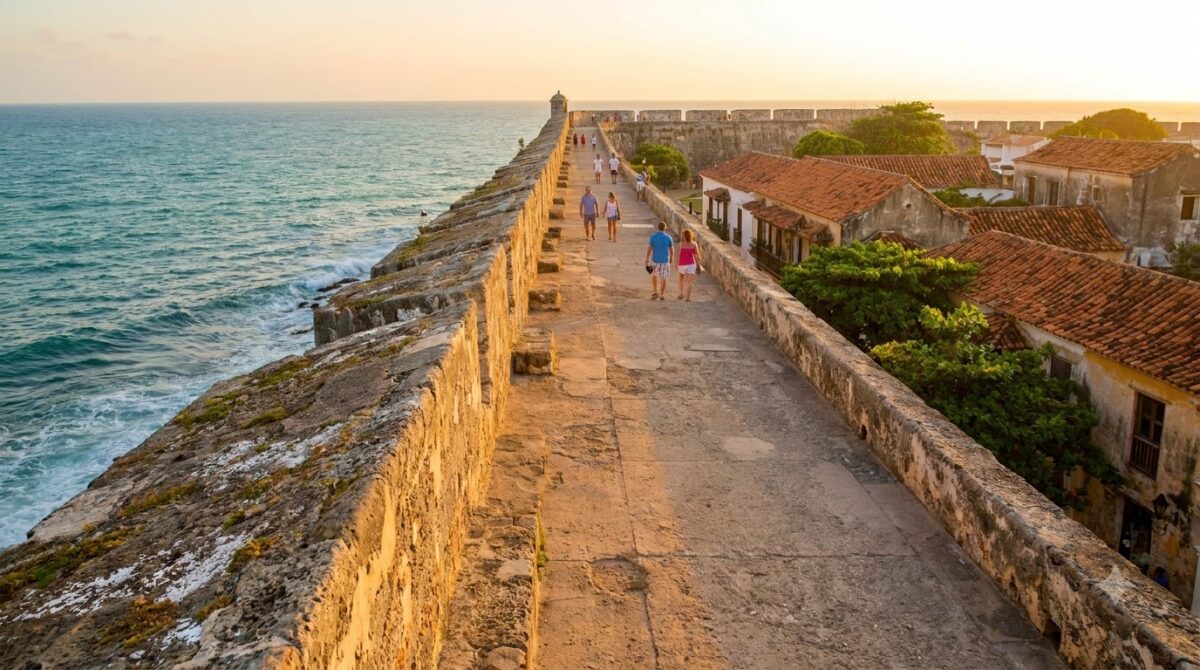
- Getsemaní to the old city is a 10–15 minute walk.
- Getsemaní runs 30–50% cheaper than inside the walls for comparable rooms and food.
- Castillo de San Felipe costs about US$9, roughly COP 30,000–40,000, and is free for Colombians on Sundays.
- The fort has almost no shade — go before 09:00 or late afternoon, and allow 1.5–2 hours.
- La Matuna, the strip between the two neighbourhoods, empties out and is poorly lit after dark.
Where these numbers come from. Fees, walking times and opening guidance were read from published 2026 guides on 12 August 2026, including Cartagena Explorer and My Cartagena Trip. We have not walked these streets ourselves — see our editorial policy. Entry fees change without notice; check on the day.
What is the Old Town of Cartagena?
The old town — the old city of Cartagena, and the reason most people visit Cartagena at all — is the walled historic core of Cartagena de Indias — the full name of the city, and the one you will see on maps and museum labels. It is roughly a kilometre across, and you can cross it on foot in twenty minutes.
- The city was founded on 1 June 1533 by the Spaniard Pedro de Heredia, and became one of the main naval and merchant bases of the Spanish empire in the Americas.
- The city walls went up between the 16th and 18th centuries, specifically to stop pirate and privateer raids, and were not finished until 1796 — a building project that ran for nearly two hundred years.
- UNESCO listed the port, fortresses and monuments of this port city as a UNESCO World Heritage site on 2 November 1984. It was the first place in Colombia to make the list.
- The fortifications here are described by UNESCO as the most extensive and complete in South America, which is why the walls and the fort are the two things nobody skips.
- When people say “the old city”, “the walled city of Cartagena” or “El Centro”, they usually mean the same place. Getsemaní is the separate neighbourhood just outside the gate.
The walled city (El Centro and San Diego)
Inside the walls the city splits into two halves that feel different from each other.
- El Centro — the grand half, and the densest run of Spanish colonial buildings in the country. Plazas, cathedrals, boutique hotels, the most expensive restaurants, and the carriages. Busiest between 16:00 and 20:00.
- San Diego — the northern corner. Same architecture, fewer tour groups, local families still living in the houses. Quieter and usually cheaper.
- Walking the old city walls is free and open at any hour. The stretch facing the Caribbean Sea is where people gather for sunset.
- Everything inside the walls is walkable in under fifteen minutes. You will not need a taxi.
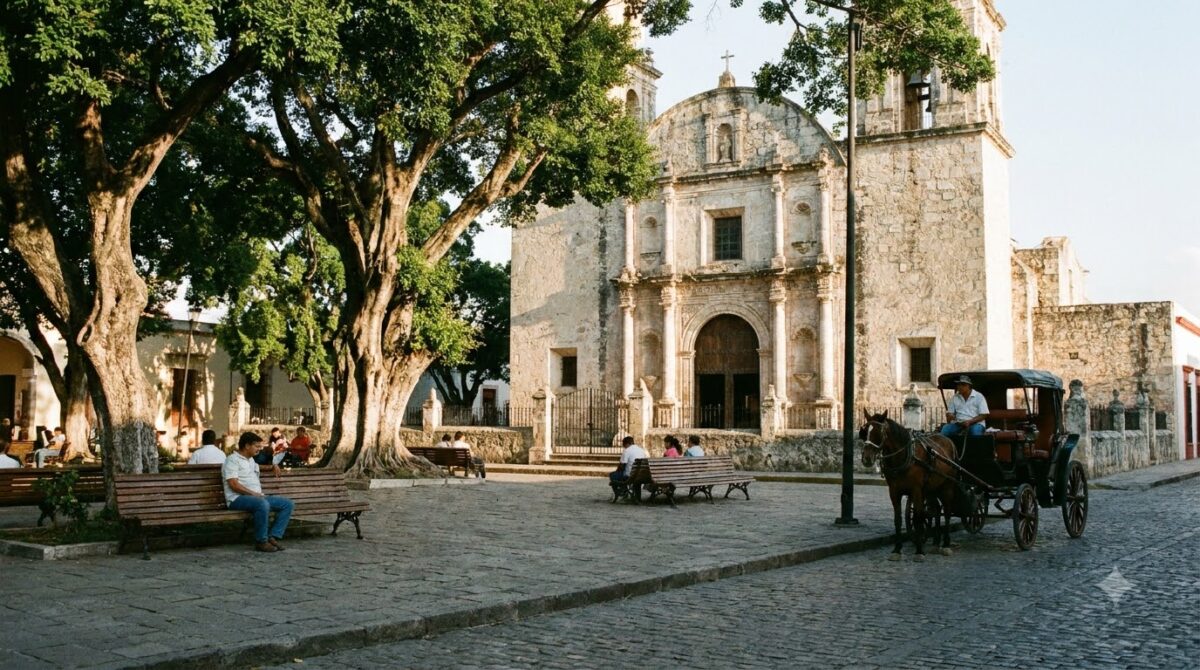
What to see inside the walls of the old city
Most of the things to do in Cartagena sit within a few blocks of the main gate, which makes the city of Cartagena unusually easy to sightsee without a plan. Two days is enough to walk the streets of the old city properly.
- Torre del Reloj, also signposted as the Puerta del Reloj — the clock tower gate, and the original entrance to the colonial walled city. The clock that gave it the name was added at the start of the 18th century. Every walking tour starts here.
- Plaza de los Coches — the first square you reach once through the gate, with a statue of Pedro de Heredia in the middle. Busy, and the sweets stalls under the arcade are a fixture.
- Plaza de Bolívar — the shaded square two minutes further in, and the most comfortable place in the centre to sit down in the middle of the day.
- Iglesia de San Pedro Claver — the church and convent on its own plaza, named in English for Saint Peter Claver, named for the Jesuit who ministered to enslaved Africans arriving at the port. The plaza outside holds a set of metal sculptures of everyday Cartagena life.
- The ramparts themselves — free, open, and walkable in sections. Sunset is the busy hour and the reason to time it.
- Plaza Santo Domingo — the square beside the oldest church in the city, and the one with the reclining Botero sculpture that everybody photographs. It is the busiest part of the old city at night.
- The Cathedral of Cartagena — the coral-stone bell tower you keep seeing above the rooftops. It anchors the city centre skyline from almost every angle, and the streets of the old city are laid out around it.
- Las Bóvedas — 18th-century military vaults built into the wall at the northern end, now about 20 to 25 craft shops.
Museums in the old city
Two are worth the time, and one of them costs nothing.
| Museum | What is in it | Entry | Hours |
|---|---|---|---|
| Museo del Oro Zenú | Over 600 gold, silver and ceramic pieces from the Zenú culture | Free | Check on the day |
| Palacio de la Inquisición | The city’s historical museum as well as an Inquisition museum: founding, colonial period, independence | COP 15,000 adults COP 9,000 children |
Mon–Sat 09:00–18:00 Sun & holidays 10:00–16:00 |
- The Gold Museum is small and takes about forty minutes. Being free, it is the easiest thing to do when the afternoon heat makes walking unpleasant.
- The Palace of the Inquisition sits a minute away on Plaza de Bolivar, so the pair work as one stop.
- Fees and hours read 13 August 2026. Entry prices change without notice — check on the day.
Shopping inside the walls
- Plaza Santo Domingo — the square beside the oldest church in the city, and the one with the reclining Botero sculpture that everybody photographs. It is the busiest part of the old city at night.
- The Cathedral of Cartagena — the coral-stone bell tower you keep seeing above the rooftops. It anchors the city centre skyline from almost every angle, and the streets of the old city are laid out around it.
- Las Bóvedas is the obvious stop: handicrafts, textiles, hammocks and jewellery in the old vaults. Bargaining is expected, so the first price is not the price.
- Street sellers inside the walls are persistent rather than aggressive. A clear no, repeated once, ends the conversation.
- Do not buy emeralds on the street, whatever the story attached. If you want stones, buy them from a shop with a fixed address you could return to. More on this in our guide to safety in Cartagena.
Getsemaní
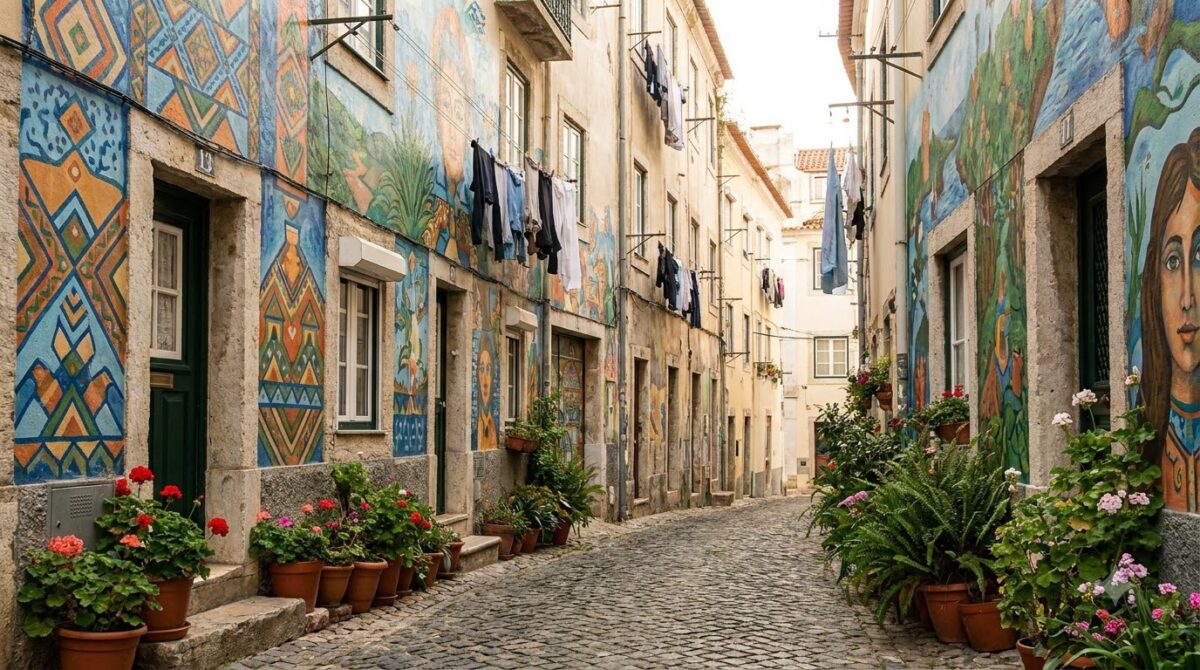
- 10–15 minutes on foot to the Torre del Reloj and El Centro.
- Plaza de la Trinidad is the centre of gravity after dark — street food, buskers, people sitting on the church steps.
- Rooms and meals run 30–50% below equivalent quality inside the walls.
- Street art on nearly every block, and the murals change.
- Noisier. If you sleep lightly, ask for a room off the street.
For where to book in each area, see where to stay in Cartagena. For where to eat in both, see the best restaurants in Cartagena.
Castillo de San Felipe
- Entry about US$9 for foreign visitors, roughly COP 30,000–40,000. Free for Colombians on Sundays.
- 20–25 minutes on foot from Getsemaní, about five minutes by taxi.
- Allow 1.5–2 hours to see it without rushing, including the tunnels.
- There is no shade. The published advice is to arrive before 09:00; the alternative is late afternoon, when the light is better anyway.
- Carry water. There is little sold inside.
Where to eat in El Centro and Getsemaní
The short version: the walled city has the grand rooms and the higher prices, and Getsemaní has better value for comparable cooking. Both are ten minutes apart, so you are not committing to one.
- Inside the walls, a main course at a well-known restaurant runs roughly COP 75,000–140,000 (about US$18–34).
- A neighbourhood menú del día — soup, a main and a juice — is COP 28,000–35,000 (about US$7–8.50), and is the best value in either neighbourhood.
- Ceviche counters and street carts are walk-in. The sit-down places with a reputation need booking about a week ahead in high season.
Fourteen specific kitchens, with prices, opening hours and which need booking, are in our guide to the best restaurants in Cartagena.
The full list of attractions with costs and timings is in our things to do in Cartagena guide.
Day trips from Cartagena
- Convento de la Popa — the monastery on the hill above the city, and the only place you get the whole layout of Cartagena in one view. Go by taxi rather than on foot.
- The Rosario Islands, the Islas del Rosario on Spanish signage — the clear-water day trip, an hour or more out by boat. Book through your hotel rather than at the dock, and confirm the return time before you pay.
- Tierra Bomba — the near island, 10 to 15 minutes by boat, and the easier half-day if you do not want to lose a whole one. We compare both in our guide to where to stay in Cartagena.
What to be careful of after dark
- La Matuna, the strip of modern buildings between El Centro and Getsemaní, empties out after dark and is poorly lit. It is a five-minute walk you should make by day or by taxi.
- Busy and lit is fine at night; empty is not, even one street from somewhere busy and even inside the walls.
- Phone snatching is the common petty theft here, and the pavement edge is where it happens.
- The full picture — advisories, named scams and the neighbourhood breakdown — is in is Cartagena safe?
Which area to base yourself in
| You are | Stay in | Why |
|---|---|---|
| Here 2–3 nights | El Centro or San Diego | No commuting; the walled city is the reason you came |
| Here a week | Getsemaní | The price gap compounds over seven nights |
| Travelling with children | El Centro or Bocagrande | Quieter at night, closer to pools |
| Out late most nights | Getsemaní | You will be walking home, not taxiing |
| Second visit | San Diego | Old city without the crowds |
Frequently asked questions
What is the Old Town of Cartagena?
The walled historic core of Cartagena de Indias, founded on 1 June 1533 by Pedro de Heredia. The walls around it were built between the 16th and 18th centuries against pirate raids and were finished in 1796. UNESCO listed it as a World Heritage site on 2 November 1984, the first place in Colombia to be listed.
Which museums in Cartagena are worth it?
Two. The Museo del Oro Zenú holds over 600 gold, silver and ceramic pieces and is free, taking about forty minutes. The Palacio de la Inquisición doubles as the city’s historical museum and costs COP 15,000 for adults, COP 9,000 for children, open Monday to Saturday 09:00–18:00 and Sunday 10:00–16:00. Checked 13 August 2026.
Is the old town of Cartagena safe to walk at night?
On the busy, lit streets inside the walls, yes. The exception worth naming is La Matuna, the strip between El Centro and Getsemaní, which empties out and is poorly lit after dark. Take a taxi across it at night rather than walking.
Is Getsemaní inside the walled city?
No. Getsemaní sits immediately outside the walls, about a ten to fifteen minute walk from the clock tower. It was historically the working-class district outside the fortifications.
Is it worth staying in Getsemaní instead of the old town?
For value, yes — rooms and meals run 30–50% cheaper for comparable quality, and the walk is short. For a two-night first visit, staying inside the walls saves you the commuting.
How much is Castillo San Felipe?
About US$9 for foreign visitors, roughly COP 30,000–40,000, with free entry for Colombians on Sundays. Figures read 12 August 2026.
Can you walk on the city walls?
Yes, free of charge and at any hour. The seaward stretch is where people gather for sunset.