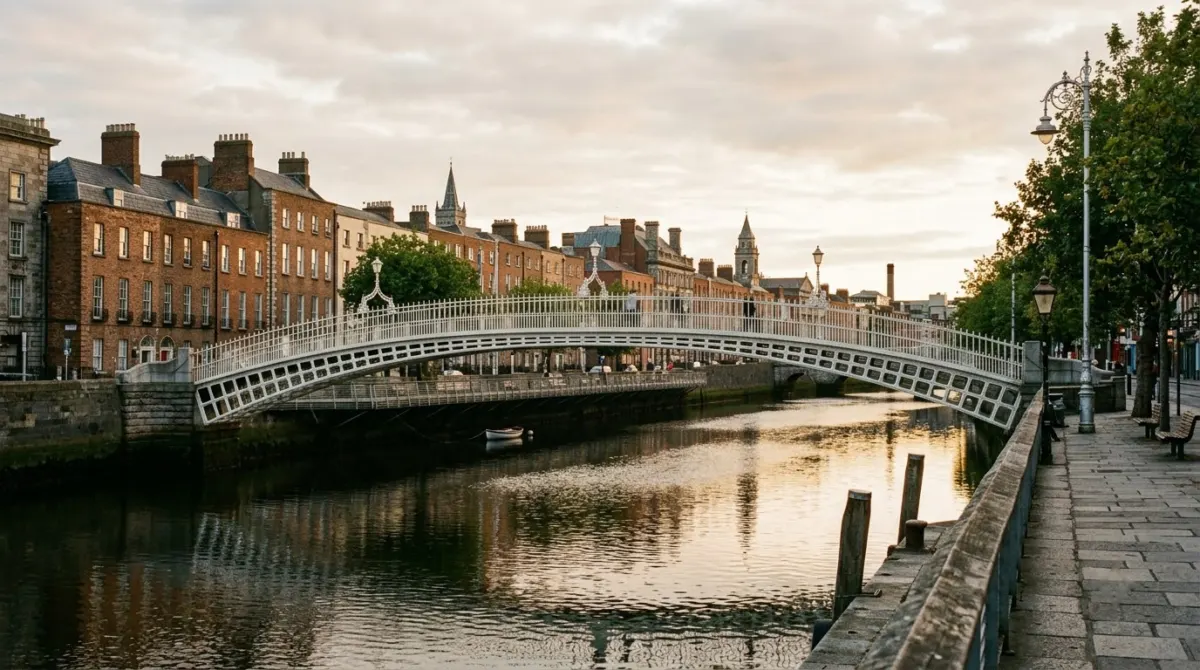
Quick answer where to stay in Dublin
South of the river between Grafton Street and Dame Street for a first visit: you walk out into the part of the city you came for. Merrion Square and the Georgian core if you want central and quiet. Stay near Temple Bar rather than inside it.
On this page
- The short answer
- Understanding the map: the river decides everything
- Temple Bar: what you are actually booking
- Grafton Street and St Stephen’s Green
- Merrion Square and the Georgian core
- The Docklands and the IFSC
- O’Connell Street and the north inner city
- Smithfield and Stoneybatter
- Portobello and the canal
- Ballsbridge and Donnybrook
- Heuston and Kilmainham
- ⚠ The airport problem nobody mentions
- The Luas, and what it does not do
- What a Dublin hotel room is actually like
- The weeks when everything fills
- Where not to stay
- Frequently asked questions
Dublin’s centre is small. From St Stephen’s Green to the top of O’Connell Street is about twenty-five minutes on foot, and most of what you came for sits inside that rectangle. That makes the usual question — which neighbourhood? — less important here than in Rome or Paris, and it hides the question that actually matters.
Some links below are affiliate links. We may earn a commission if you book through them, at no extra cost to you. We do not rank hotels, and any prices on the map come live from the booking sites.
There is no train from Dublin Airport. There has never been one, and the metro that will eventually run there is still years from opening. Every arrival is a coach or a taxi, and the coaches stop in specific places. Where you sleep decides whether your transfer ends with a five-minute walk or a second journey across the city with your bags. To plan the days around the bed, see our 3-day Dublin itinerary, how many days in Dublin and our pick of the best hotels in Dublin.
The short answer
| If you are | Stay in | Walk to Trinity College |
|---|---|---|
| A first-time visitor, two or three nights | South of the river, between Grafton Street and Dame Street | 0–5 min |
| Here for pubs and live music, and a light sleeper | Near Temple Bar, not in it | 5 min |
| Wanting quiet and Georgian streets | Merrion Square and Baggot Street | 10 min |
| Arriving late or leaving early by coach | O’Connell Street or the north quays | 10 min |
| Travelling on a budget | The north inner city, or Smithfield | 15–20 min |
| Here for a concert at the 3Arena | The Docklands | 15 min |
| Here for rugby at the Aviva | Ballsbridge | 25 min or one DART stop |
| Catching an early train west or south | Heuston | Tram, not walkable |
If you want one answer with no caveats: the south side between Grafton Street and Dame Street. You walk out of the door into the part of the city people fly here to see, and you are within ten minutes of a coach stop in both directions.
Understanding the map: the river decides everything
The Liffey runs west to east through the middle of Dublin and splits it into two halves that feel different and price differently.
South of the river holds Trinity College, Grafton Street, St Stephen’s Green, the Georgian squares, the National Gallery and most of the restaurants people cross the city for. It is the more expensive half, and on a short trip it is the one worth paying for.
North of the river holds O’Connell Street, the Spire, the GPO, Croke Park and the Docklands. Rooms are generally cheaper for the same distance to Trinity, the streets are wider and busier, and the stretch around the top of O’Connell Street is rougher at night than anywhere on the south side.
The two halves are joined by a dozen bridges, and crossing takes two minutes. Nobody staying centrally is cut off from anything. What changes is the character of the street you walk out onto.
Map shows live availability and prices. We may earn a commission on bookings made through it, at no extra cost to you.
Temple Bar: what you are actually booking
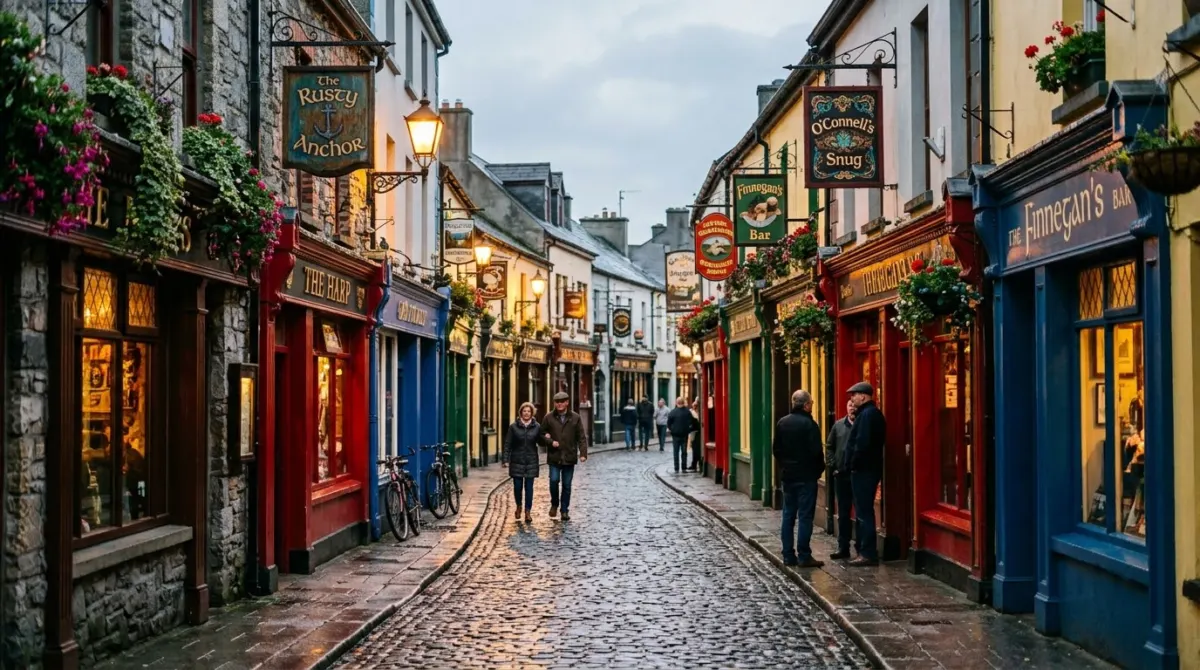
Temple Bar is the lane network between Dame Street and the south quays, east of Christ Church. It is the most photographed part of Dublin and the most consistently regretted hotel decision in the city.
The problem is not safety and it is not quality. It is that the quarter is a nightlife district with hotels inside it. Music runs late, the lanes are stone and they echo, and groups move through them until closing and after. A room with a window onto one of those lanes is a room you will not sleep in before one in the morning.
The sensible version of the same idea is to stay a few streets back — around Dame Street, Exchequer Street or South Great George’s Street. You are three minutes from the same pubs, and the noise stops at your door rather than under your window.
Grafton Street and St Stephen’s Green
This is the centre of the south side: a pedestrian shopping street running from Trinity College down to the top corner of St Stephen’s Green, with a dense web of smaller streets either side.
Everything is walkable from here, including the parts of the city most visitors never reach on foot. It is also where the Luas Green Line runs, which matters if you are heading out to the suburbs or down to the south of the city. The trade-off is price: this is the most expensive square kilometre in Ireland for a hotel room, and the rooms in it are often small, because the buildings are old.
Merrion Square and the Georgian core
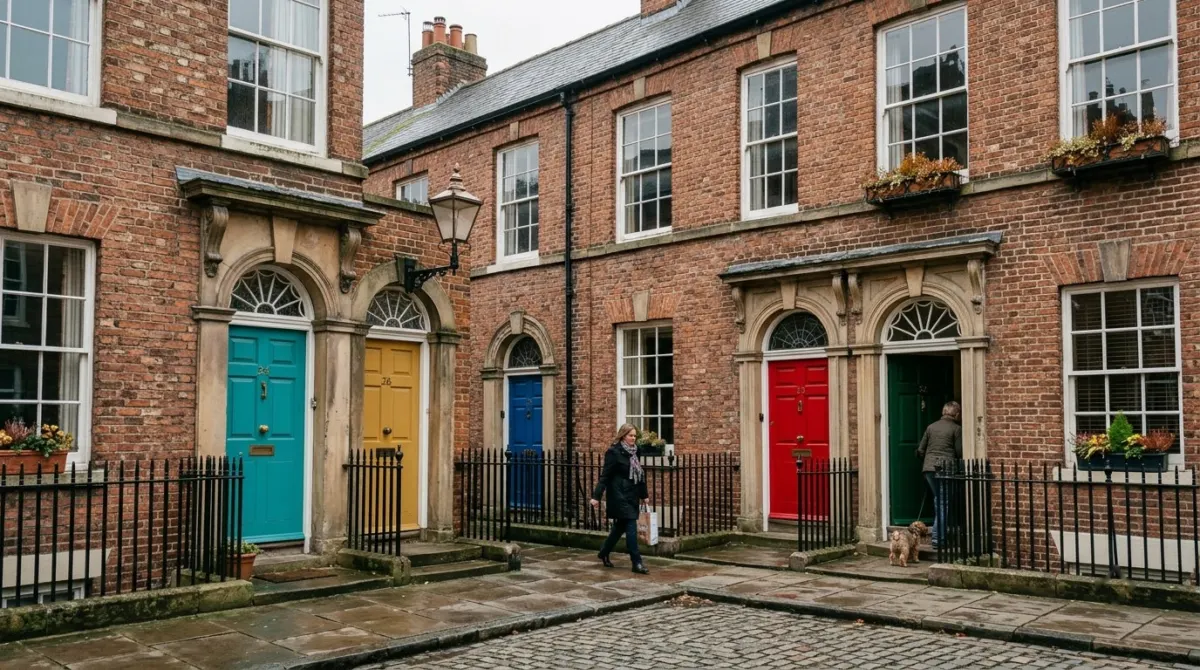
East of Grafton Street the city changes character. Merrion Square, Fitzwilliam Square and the streets around Baggot Street are the Georgian Dublin that appears on postcards: brick terraces, fanlights, painted doors, iron railings.
It is residential and government territory rather than nightlife territory, which makes it quiet in the evening in a way the area around Grafton Street is not. The National Gallery and the Natural History Museum are on its edge. You pay roughly what you pay around Grafton Street, and you get silence instead of convenience to the pubs.
This is the best choice in the city for anyone who wants to be central and still sleep.
The Docklands and the IFSC
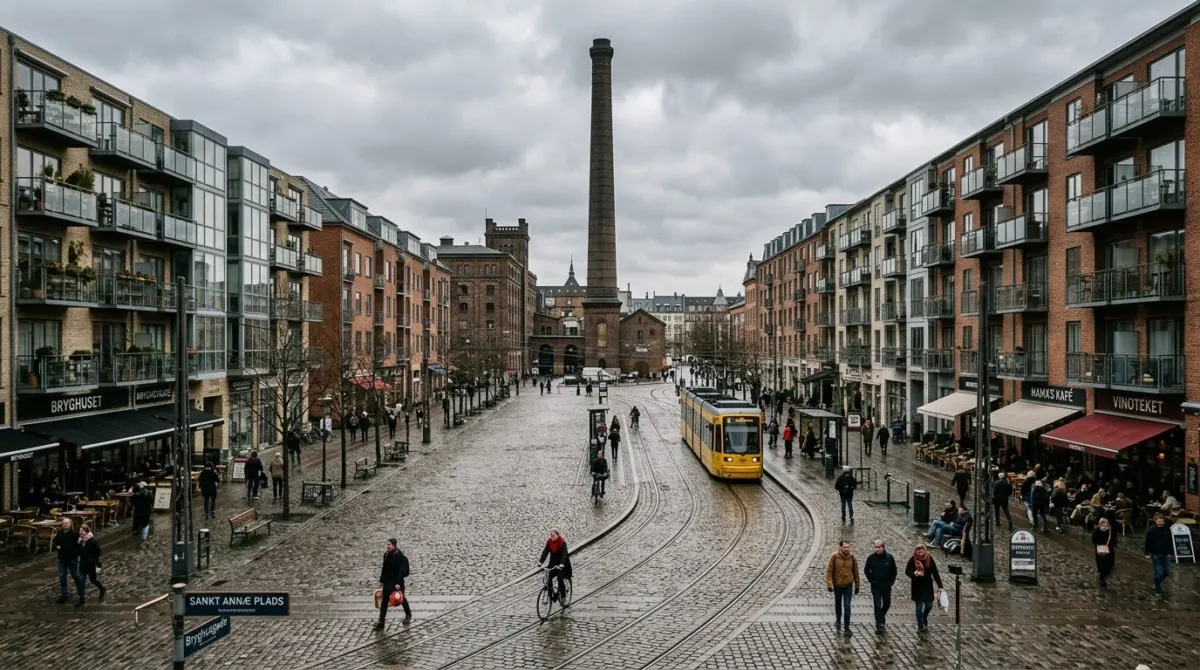
East of the centre on both banks, the Docklands is the newest part of Dublin: glass offices, the Convention Centre, the Samuel Beckett Bridge, and the 3Arena at the far end.
Hotels here are modern, which in Dublin terms means lifts that work, rooms that are a normal size, and reliable heating — none of which is guaranteed in a Georgian conversion. Evenings are quiet because the area empties when the offices close. It suits a concert at the 3Arena, a conference, or anyone who values a comfortable room over a historic one. It is fifteen to twenty minutes’ walk to Trinity, or a few stops on the Luas Red Line.
O’Connell Street and the north inner city
The main boulevard of the north side, running from the river to Parnell Square. The GPO and the Spire are on it, the Abbey Theatre is just off it on Abbey Street, and most airport coaches stop on it or within a block of it.
This is where the cheapest genuinely central rooms are, and the reason they are cheaper is honest: the upper end of O’Connell Street and the streets off it are busy and visibly rougher after dark than anywhere on the south side. The lower end, nearer the river, is a different proposition and perfectly comfortable.
If budget is deciding and you want to be able to walk everywhere, this is the trade to make. Book near the river end rather than the Parnell Square end.
Smithfield and Stoneybatter
North-west of the centre, around a long cobbled square, Smithfield and the streets of Stoneybatter behind it are where a lot of Dubliners actually live. Old pubs, independent coffee places, terraced houses, and the Jameson distillery building on the square.
The Luas Red Line stops in Smithfield and runs into the centre in a few minutes, and Phoenix Park — one of the largest enclosed city parks in Europe — starts a short walk west. Rooms cost less than the south side and the area is residential rather than touristic. It suits a longer stay, or a second visit.
Portobello and the canal
South of St Stephen’s Green, past the end of Camden Street, the city turns into brick terraces along the Grand Canal. Portobello is a fifteen-minute walk from Trinity and feels nothing like the centre: canal locks, swans, small restaurants, and streets that are quiet by eleven.
Camden Street and Wexford Street, which lead back into town, hold a long run of bars and restaurants that Dubliners use more than visitors do. For a stay of four nights or more this is a better base than the centre, for the simple reason that you get a neighbourhood rather than a destination.
Ballsbridge and Donnybrook
South-east of the centre, across the canal, Ballsbridge is the embassy belt: wide roads, large red-brick houses, the RDS and the Aviva Stadium. It is calm, green and residential.
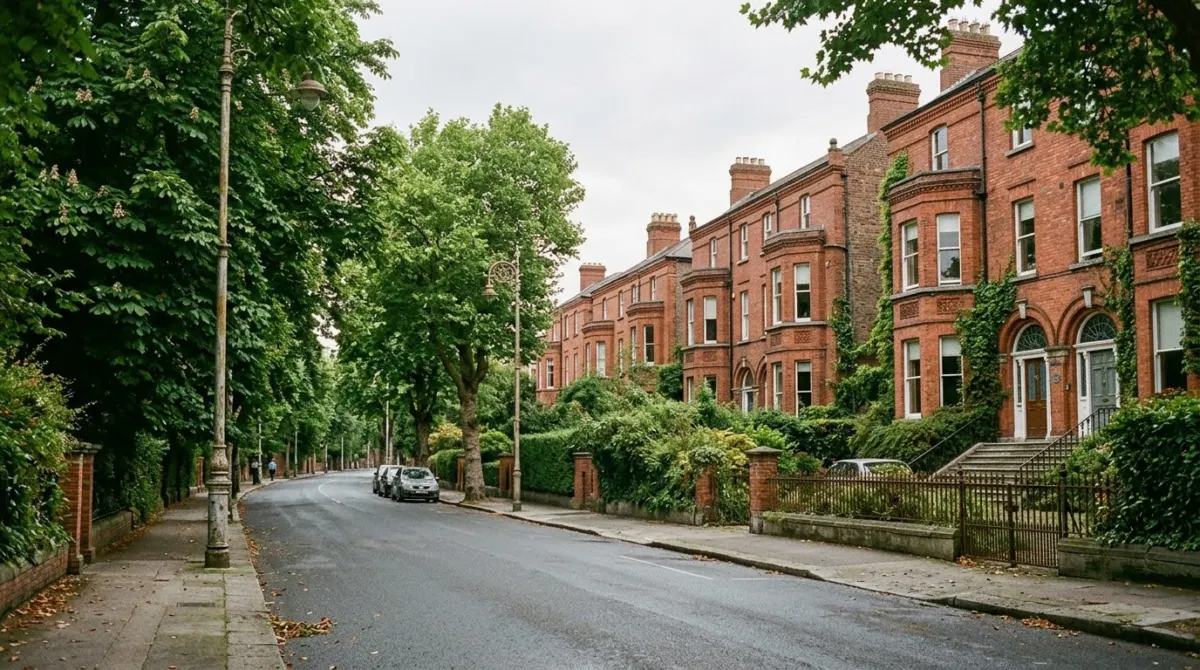
It is also about twenty-five minutes’ walk from Trinity, or a short DART or bus ride. That distance is the whole decision. If you are here for a match at the Aviva or a show at the RDS, staying here removes the one journey you will make twice. For general sightseeing it adds a commute to every day.
Heuston and Kilmainham
West of the centre, Heuston is the station for trains to Cork, Galway, Limerick and the west. Kilmainham Gaol and the Irish Museum of Modern Art are nearby, and the Guinness Storehouse sits between here and the centre.
As a base it only makes sense for one reason: an early train west. The walk into town along the quays is twenty-five minutes and dull, and the Luas Red Line does the job faster. Trains to Belfast, Sligo and the north-east leave from Connolly on the other side of the city, so check which station your ticket names before you book a hotel beside the wrong one.
⚠ The airport problem nobody mentions
This is the part that changes where you should book, and most guides still get it wrong.
There is no rail link between Dublin Airport and the city. MetroLink, the underground line that will eventually connect them, received its Railway Order in October 2025 and is still at the procurement stage; construction is expected to start around 2027 and the line is not expected to carry passengers until the mid-to-late 2030s. Plan for a bus or a taxi, this trip and the next several.
The Airlink 747 is not running. The green double-deckers that ran between the airport and the city were suspended during the pandemic and have not come back. A surprising number of articles and forum posts still tell you to look for it at the terminal. You will not find it.
What runs instead:
- Dublin Express — the 782 runs along the north quays, stopping near the 3Arena, the Convention Centre, the IFSC, O’Connell Street, Aston Quay, Christ Church and on to Heuston Station.
- Aircoach — runs non-stop from the airport into the centre, with stops including upper O’Connell Street and O’Connell Bridge.
- Dublin Bus routes 16 and 41 — ordinary city buses, cheaper and slower, stopping through Santry and Drumcondra on the way in.
Read that list as a map. Both express services put you on or beside O’Connell Street, and the 782 continues along the quays to Heuston. If you are staying on the north quays, around O’Connell Street, or near Christ Church, your transfer ends at your hotel. If you are staying in Ballsbridge or Portobello, it ends in the city centre and you still have a bus, a tram or a taxi to go.
That is not a reason to avoid those areas. It is a reason to know, before you book, which of the two you are choosing.
The Luas, and what it does not do
Dublin’s tram system has two lines that are useful to visitors and one gap that surprises people.
The Green Line runs north-south through St Stephen’s Green and out to the southern suburbs. The Red Line runs east-west through Abbey Street, Smithfield and Heuston, and out to the Docklands at the other end. The two cross in the city centre but do not share a station in the way a metro would.
Neither line goes to the airport. Neither line replaces walking in the centre, because the centre is smaller than the tram network suggests. What the Luas is genuinely good for is reaching Smithfield, Heuston and the Docklands without a twenty-five-minute walk.
For the coast — Howth, Dún Laoghaire, Dalkey — the DART is the train you want, from Connolly, Tara Street or Pearse.
What a Dublin hotel room is actually like
Worth setting expectations, because the building stock explains most complaints.
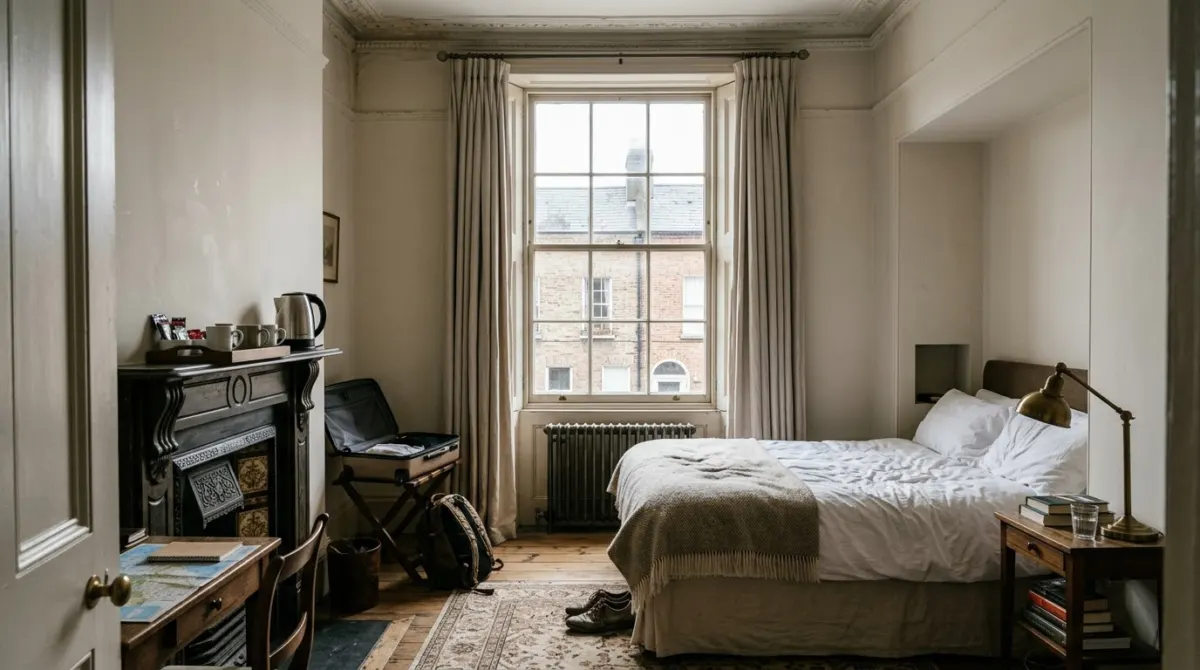
Central Dublin is largely Georgian and Victorian, and hotels in those buildings have small rooms, narrow stairs, and sometimes no lift. Air conditioning is uncommon and rarely needed. Rooms described as compact are compact. Guesthouses and townhouse hotels — a converted terraced house with a dozen rooms — are a Dublin speciality and usually better value than a chain for the same money.
If you need a lift, a large room or reliable climate control, the modern stock is in the Docklands and around the edges of the centre, not in the Georgian core.
The weeks when everything fills
Dublin has a small hotel supply for the number of people who want to be in it, and a handful of dates empty it completely:
- St Patrick’s weekend in March, when the city is the destination rather than a stop.
- International rugby at the Aviva and championship days at Croke Park, which fill rooms across the whole city, not just near the grounds.
- Large concerts at the 3Arena, Croke Park or Marlay Park.
- Graduation and conference weeks, which are less visible from outside but have the same effect.
If your dates are fixed and they fall on one of these, book early and widen your search area before you widen your budget.
Where not to stay
Three honest exclusions:
Airport hotels, unless your flight leaves before seven. They are a twenty-minute drive from a city you came to see.
Anywhere chosen only because the map looks close. Dublin’s suburbs start quickly, and a hotel three kilometres out on a main road is a bus journey from everything, with nothing around it in the evening.
The top of O’Connell Street and the streets immediately off it, if arriving late at night with luggage is part of your plan. The lower end of the same street is fine.
Frequently asked questions
Is Temple Bar a bad place to stay?
It is not unsafe or low quality, but it is a nightlife quarter with hotels inside it. The lanes are stone, they echo, and music and groups run late. Staying three or four streets back — Dame Street, Exchequer Street, South Great George's Street — puts you three minutes from the same pubs with none of the noise.
Should I stay north or south of the river?
South for a first visit: Trinity College, Grafton Street, St Stephen's Green and the Georgian squares are all on that side, and the streets are calmer at night. North is cheaper for the same walking distance and is where most airport coaches stop. Crossing the river takes two minutes, so neither side cuts you off from anything.
Is there a train from Dublin Airport to the city centre?
No. There is no rail or metro link. MetroLink is at the procurement stage after receiving its Railway Order in October 2025, with construction expected to start around 2027 and services not expected until the mid-to-late 2030s. Arrivals use Dublin Express, Aircoach, Dublin Bus routes 16 and 41, or a taxi.
Does the Airlink 747 still run?
No. The Airlink 747 was suspended during the pandemic and has not come back, although many older guides still mention it. Dublin Express and Aircoach now cover the same ground, and Dublin Bus 16 and 41 are the cheaper, slower option.
How many nights do you need in Dublin?
Two full days covers the centre comfortably: Trinity and the Book of Kells, the Georgian squares and a museum on one day, Kilmainham or the Guinness Storehouse and an evening in the pubs on the other. A third night buys a coastal trip to Howth or Dún Laoghaire on the DART without rushing.
Is Dublin walkable?
The centre is, and that is its main advantage. St Stephen's Green to the top of O'Connell Street is about twenty-five minutes, and most sights sit inside that area. The tram is for Smithfield, Heuston and the Docklands rather than for the core.
Keep planning Ireland
- Where to Stay in Kilkenny: On the Mile, or Beside the Station
- Where to Stay in Doolin: Book a Room You Can Walk Home To
- Where to Stay in Belfast: Four Quarters, Four Different Trips
- Where to Stay in Killarney: The Town, or the Lakes
- Where to Stay in Dingle: In Town, or Out Where the View Is
- Where to Stay in Ireland: Pick Three Bases, Not Seven
- Where to Stay in Galway: The Noise Decides It, Not the Distance
- Best Hotels in Dublin: What Each Kind of Building Gives You
Written and checked by
Triplarks Editorial
An editorial desk, not an invented persona: research, drafting and fact-checking are done by the same small team. Every number here carries the date it was read.