
Quick answer
All three days work from a room between the Liffey and St Stephen’s Green, on foot. Book Kilmainham Gaol weeks ahead — it is the only sight in Dublin that reliably sells out, and the one people regret missing.
On this page
- 3 day Dublin itinerary at a glance
- Day 1 — the old city
- Day 2 — history, and the brewery
- Day 3 — out of the centre
- Variant: three days for history
- Variant: three days with children
- Variant: three days in winter
- Getting around in three days
- What to book, and what not to
- Where to stay for this plan
- Deciding the third day on the morning
- What makes the third day worth having
- Other coastal days along the DART
- Eating across three days
- A literary morning, if that is why you came
- Three days without walking everywhere
- A fourth day, if the trip stretches
- Three days in Dublin without the big two
- Dates to check before you book three days
- Three days with an awkward flight
- What three days does not stretch to
- The short version
- Frequently asked questions
Three days is the length at which Dublin stops being a checklist. Two days cover the sights; the third gets you out of the centre, which is where the city becomes more than its museums.
Some links below are affiliate links. We may earn a commission if you book through them, at no extra cost to you. We do not rank hotels, and any prices on the map come live from the booking sites.
This is a three-day plan with the hours filled in, plus three variants depending on who you are. If you want the reasoning behind the order rather than the schedule, our Dublin itinerary covers that, and how many days in Dublin answers the question underneath it.
3 day Dublin itinerary at a glance
| Day | Morning | Afternoon | Evening |
|---|---|---|---|
| 1 | Trinity, Book of Kells | National Museum, cathedrals | Dinner off Temple Bar |
| 2 | Kilmainham Gaol | Guinness Storehouse | Traditional music session |
| 3 | DART to Howth | Cliff walk and harbour | Back in the city |
Map shows live availability and prices. We may earn a commission on bookings made through it, at no extra cost to you.
Day 1 — the old city
Morning. Start at Trinity College, with a timed ticket for the Book of Kells, an illuminated gospel manuscript from around 800 AD, and the Long Room library above it. Early entry is the difference between the room and the queue.
Expect the Long Room to look different from the famous photographs. Nearly all of its books have been removed for the Old Library Redevelopment Project, and only the first few bays at the entrance are still full. The manuscript and the room are both still part of the visit. Trinity recommends 90 minutes for the full Book of Kells Experience, which adds digital galleries in a second building. On a three-day plan that fits.
Walk Grafton Street to St Stephen’s Green, then into Merrion Square and Fitzwilliam Square for the Georgian terraces and painted doors.
Afternoon. The National Museum of Ireland – Archaeology on Kildare Street is free and holds the bog bodies and Iron Age gold. Then Dublin Castle, Christ Church Cathedral and St Patrick’s Cathedral, all within fifteen minutes of each other.
Evening. Walk through Temple Bar and eat one street away from it — Dame Street, South William Street or Camden Street.
Day 2 — history, and the brewery
Morning. Kilmainham Gaol, booked weeks ahead. The guided tour of the prison where the leaders of the 1916 Rising were executed is the clearest hour of Irish history you will get anywhere.
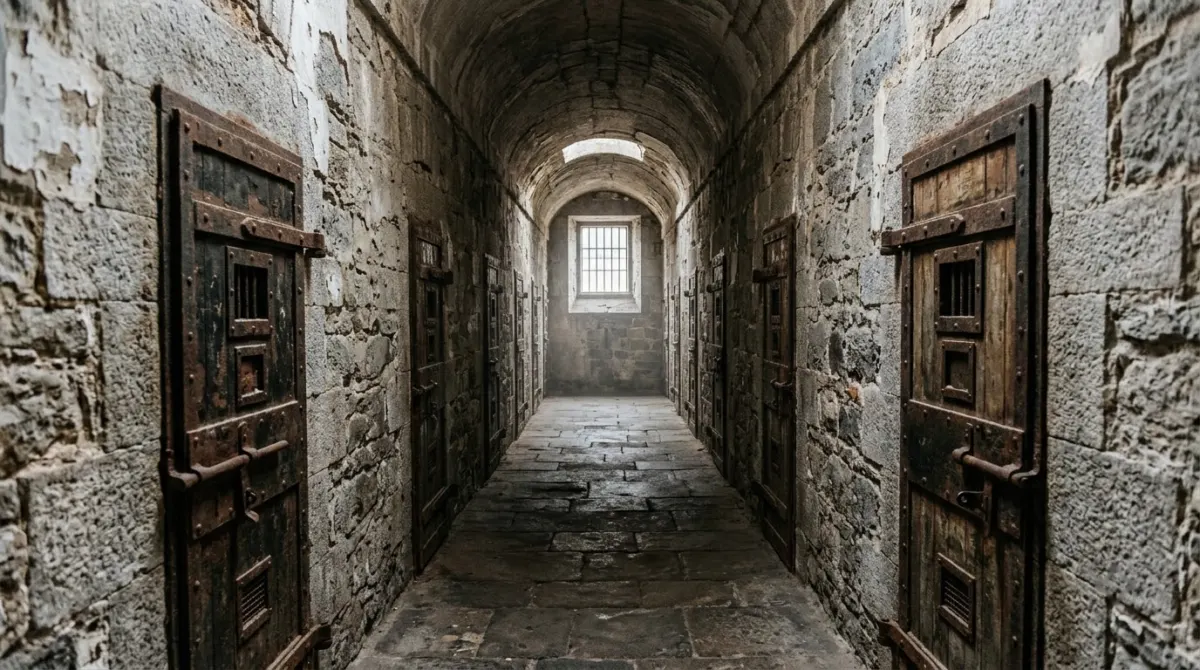
Afternoon. The Guinness Storehouse, a little over twenty minutes’ walk away: seven floors in the old fermentation plant, ending at a top-floor bar with the city below. If beer is not the point, swap it for EPIC The Irish Emigration Museum and the Jeanie Johnston famine ship on the quays.
Evening. A traditional session. They start late and are not advertised; look around Capel Street and Smithfield rather than the pubs with signs promising music at seven.
Day 3 — out of the centre
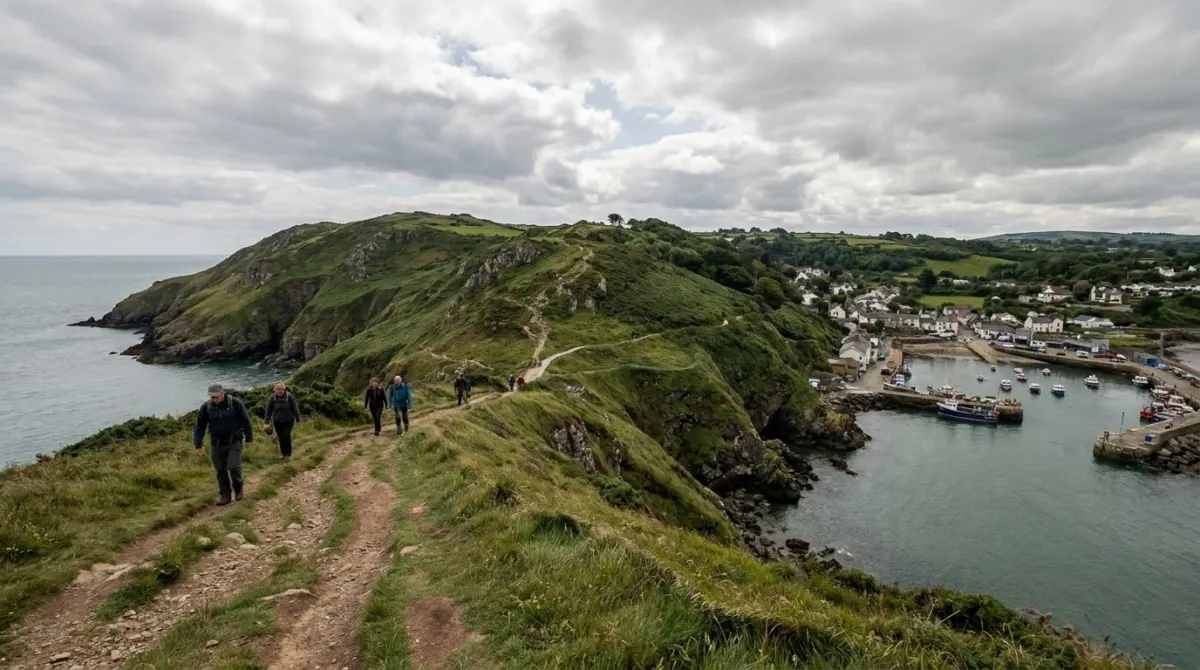
If it is dry, take the DART north to Howth, twenty-five minutes from the city. The cliff loop runs about six kilometres with the sea beside you the whole way, and the pier at the bottom sells what came in that morning. Dún Laoghaire, the same distance south, is the flat alternative: two long piers and a seafront.
If it is wet, go west instead: Phoenix Park, one of the largest enclosed city parks in Europe, with a herd of fallow deer, Dublin Zoo and the President’s residence inside it — paired with the museum at Collins Barracks on the way back.
Choosing a Howth loop
Howth Head has four waymarked loops, and all of them start at Howth DART station, so you can step off the train and follow the arrows. The Cliff Path Loop (green) goes out along the cliffs to the Summit and comes back on a parallel path. It is the one most visitors walk. The Tramline Loop (blue) and the Black Linn Loop (red) also follow the cliffs and then come back inland, along the old tramline or around the Ben of Howth. The Bog of Frogs Loop (purple) is the long one: about 12 kilometres and three hours, with roughly 240 metres of climbing. It passes the Baily Lighthouse and gives views of Lambay Island, Ireland’s Eye and Dublin Bay, and you may see gray seals below the cliffs.
On a three-day trip the green loop is the right size. It leaves time for lunch at the harbour and an unhurried train back.
Variant: three days for history
Swap the third day for the deeper version of the second.
Glasnevin Cemetery in the morning, where most of the names from Irish history are buried and the guided tour is as good as the one at Kilmainham. 14 Henrietta Street in the afternoon — a single Georgian house that went from aristocratic home to tenement housing a hundred people, told honestly. Finish at the Chester Beatty Library in the Dublin Castle gardens.
If you want the Rising in order rather than in pieces, start the history version at the GPO on O’Connell Street. The rebels held it as their headquarters in 1916, and the museum inside tells the story of the Rising and the years that followed. It opens Monday to Saturday and is closed on Sundays. Tickets are cheaper online than at the door. From there, Glasnevin shows where the leaders are buried, and Kilmainham on day two shows where the Rising ended. Taken in that order, the three sites tell one story.
Variant: three days with children
Day 1 as above but shorter: Trinity, then the Natural History Museum, a Victorian museum preserved almost unchanged and known locally as the Dead Zoo.
Day 2: Dublin Zoo in Phoenix Park, which is a full day with small children.
Day 3: the DART to Howth for the harbour, the seals and the cliff path.
Kilmainham Gaol works for older children and not for small ones.
Variant: three days in winter
From November to February it is dark by half past four, which removes the coastal day. Replace it with the free indoor list: the National Gallery of Ireland on Merrion Square, the Chester Beatty Library, and the Natural History Museum.
Three winter days cover roughly what two summer days cover, which is worth knowing before you book.
Getting around in three days
You will walk most of it. The Luas tram is useful for Collins Barracks and the trip towards Kilmainham; the DART is the only way you need for Howth or Dún Laoghaire.
A Leap Card covers all three and caps your daily spend. From the airport, coaches run to the centre in about half an hour; there is no rail link.
For three days, look at the TFI Leap Visitor Card as well. The 72-hour version matches this plan almost exactly. It gives unlimited travel on Dublin city buses, the Luas, the DART and commuter rail, and it is sold at the airport terminals. The private airport coaches are not included and are ticketed separately. On a third day spent on the coast, it saves you working out fares.
What to book, and what not to
Book Kilmainham Gaol first — it sells out weeks ahead and it is the thing people regret missing. Book timed entry for the Book of Kells, and the Guinness Storehouse online.
Three practical details on that first reservation. Kilmainham releases some tickets 28 days ahead, at midnight Irish time. If your date is full, its website lists cancellations and extra tickets from 9.15am on the day. Tickets bought on resale sites are not valid. If you take the history variant, add the two smaller reservations: Glasnevin’s guided tours, which run daily, and 14 Henrietta Street, which is seen by guided tour only from Wednesday to Sunday and closed on Mondays and Tuesdays.

Do not book a hop-on bus for three days in a city this small, and do not book a day trip to the Cliffs of Moher, which is about three hours of driving each way.
Where to stay for this plan
Anywhere between the Liffey and St Stephen’s Green puts all three days on foot. If you are arriving late or leaving early, the streets served by the airport coaches save a taxi at each end — our guide to where to stay in Dublin works through which those are.
Deciding the third day on the morning
The advantage of the third day is that nothing on it needs reserving weeks ahead. So leave it open and choose when you see the sky.
Clear and dry: Howth, and the green cliff loop from the DART station. Gray but dry: Malahide, where the castle and gardens open daily from 9.30am and much of the visit is indoors. Wet: Phoenix Park only if the rain is light; otherwise the Chester Beatty Library and the National Museum at Collins Barracks, both free and both indoors.
Check the forecast the night before, buy nothing in advance, and keep a Leap card topped up so the choice costs you nothing either way. It is the only day in Dublin you can plan this loosely, so take advantage of it.
What makes the third day worth having
Two days in Dublin is a list of buildings. The third day is the one where the city stops being a sequence of tickets, and it does that by taking you out of the centre.
Howth and Dún Laoghaire are twenty-five minutes away on a train that runs along the sea, and both are places Dubliners go on a Sunday rather than places built for visitors. Phoenix Park is a different kind of escape — large enough that you lose the city inside it.
If you are only going to add one day to a two-day visit, this is the one to add, and it is worth protecting from the temptation to spend it on a fifth museum.
Other coastal days along the DART
Howth is the classic third day, but the DART runs the length of Dublin Bay, and two other stops make an equally good day out.
Malahide. This is on the northern branch of the line, so check the destination on the platform board, because trains from the centre split between Howth and Malahide. Malahide Castle was home to the Talbot family for more than 800 years. The house is seen on a tour, and the grounds include a walled garden, botanic gardens and a butterfly house. The castle is about ten minutes’ walk from the village, and the site suggests allowing at least two hours. It is the better choice on a dull day, because much of the visit is indoors.
Dalkey and Killiney. These are south of Dún Laoghaire, on the same line. Dalkey is a small harbour village, and from there a walk uphill brings you to Killiney Hill and the view over Killiney Bay. It is the quieter of the three coastal days.
One walk to leave off the list is the Bray to Greystones cliff walk, which many older guides recommend. It has been closed since landslides in 2021. As of the council’s most recent update, in July 2026, work towards reopening it was still under way, so do not build a day around it.
Eating across three days
The pattern that works is simple: eat near where you are at lunch, and walk away from the centre in the evening.
Around Trinity and Grafton Street the lunch options are plentiful and aimed at office workers, which keeps them honest. In the evening, the streets with the restaurants Dubliners use are a short walk from Temple Bar rather than in it — South William Street, Camden Street, Capel Street across the river.
On day three, eat where you went: the pier at Howth sells what came in that morning.
A literary morning, if that is why you came
Dublin has more literature to see than one morning can hold, and three days leaves room for a morning of it. Put it on day one, because everything is within ten minutes of Trinity.
Start at the Museum of Literature Ireland, known as MoLI, on the south side of St Stephen’s Green. It covers Irish writers through immersive rooms rather than glass cases, and it holds the first copy of James Joyce’s Ulysses. It is open daily, with last admission an hour before closing, and a self-guided visit takes one to two hours.
Then cross to the Liberties for Marsh’s Library, beside St Patrick’s Cathedral. It opened to the public in 1707 and its reading rooms have barely changed since. It is open Tuesday to Saturday, so plan around it.
Go in mid-June and you overlap with Bloomsday on 16 June, when the city marks the day on which Ulysses is set with readings, walks and people in Edwardian costume. In 2026 the festival around it ran for most of a week.
Three days without walking everywhere
The plan above assumes you are happy to walk twenty-five minutes at a time. If that is not the case, the city still works.
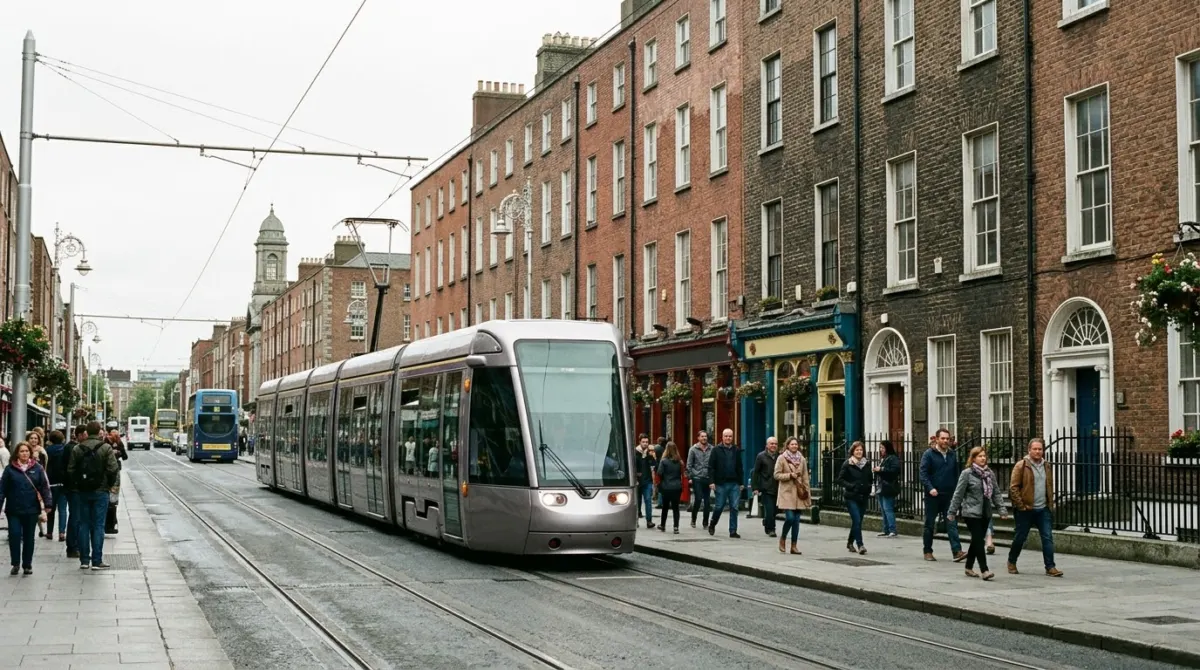
The Luas tram covers the north–south and east–west axes and reaches Collins Barracks and the direction of Kilmainham. The DART runs along the coast for day three. Buses fill the gaps, and a Leap Card works on all of them with a daily cap.
Taxis are plentiful in the centre and the distances are short, which makes them a reasonable way to shorten the longer links — particularly the run out to Kilmainham Gaol for a morning slot.
A fourth day, if the trip stretches
If three days becomes four, do not add another day in the centre. Add a day out of it.
Glendalough, about an hour south in the Wicklow Mountains, is a sixth-century monastic settlement in a glacial valley with two lakes and a round tower. Coach tours run daily if you have no car.
Brú na Bóinne, forty-five minutes north, holds the passage tombs at Newgrange and Knowth, built around 3200 BC. Access is by guided tour from the visitor centre only, so check before you go.
For Brú na Bóinne, book the tour ticket before anything else. Every visit to Newgrange and Knowth starts at the visitor centre, and a shuttle bus takes you on to the tombs. Advance tickets are essential, and every visitor needs a ticket, including children. From April to the start of November, tickets go on sale online 30 days ahead, at midnight Irish time. In January and February the window is only seven days. Cancelled tickets go back on sale, so a full date is worth checking again.
Both are full days. Neither combines with anything else.
Three days in Dublin without the big two
Kilmainham Gaol sells out, and not everyone wants the Guinness Storehouse. If both are off the table, three days still works and arguably improves.
Replace day two with Glasnevin Cemetery in the morning, where the guided tour covers most of the names in modern Irish history, and 14 Henrietta Street in the afternoon, which tells the story of one Georgian house that became a tenement for a hundred people.
Add EPIC The Irish Emigration Museum on the quays if you want the wider story of the ten million people who left. Together these cover the same ground as the gaol, with smaller crowds and no booking race.
Dates to check before you book three days
A three-day visit is long enough that an event in the city will usually fall inside it. Some events improve the trip and some just fill the hotels, so check the calendar before you fix the dates.
St Patrick’s Festival. In 2027 the festival runs from Saturday 13 March to Wednesday 17 March, with the parade on the 17th. The city is full, the parade route closes to traffic, and some places close for the day: MoLI, for one, shuts on 17 March. Come for the festival or come another week, but do not land by accident.
The Dublin Marathon. This is held in late October. In 2027 it falls on Sunday 24 October. Roads along the route close for most of the day, which slows coaches and taxis into the centre.
Match and concert weekends. Big fixtures at Croke Park and the Aviva Stadium, and the larger concerts, fill central hotels on their own. Check the stadium calendars before you choose a weekend.
Bloomsday in June is the gentle one. It adds to the city rather than crowding it out.
Three days with an awkward flight
The plan assumes three clear days. Flights rarely allow that, and the days need reordering around them.
Landing at midday on day one. Drop the cathedrals and the Georgian squares, and keep Trinity and the National Museum. Day one shrinks to an afternoon, which is fine, because the evening is the same either way.
Flying out on the afternoon of day three. Swap Howth for Malahide. The village is on the DART, and route 102 runs from Malahide to the airport. That lets you spend the morning at the castle and go straight to your flight without coming back into the centre.
Flying out on the morning of day three. You have two days, not three. Our Dublin 2 day itinerary is built for exactly that.
Whatever the flights, keep Kilmainham on the morning you booked it and move everything else around it. It is the only fixed point in the plan.
What three days does not stretch to
Two things that look tempting on a map and are not worth a day from this plan.
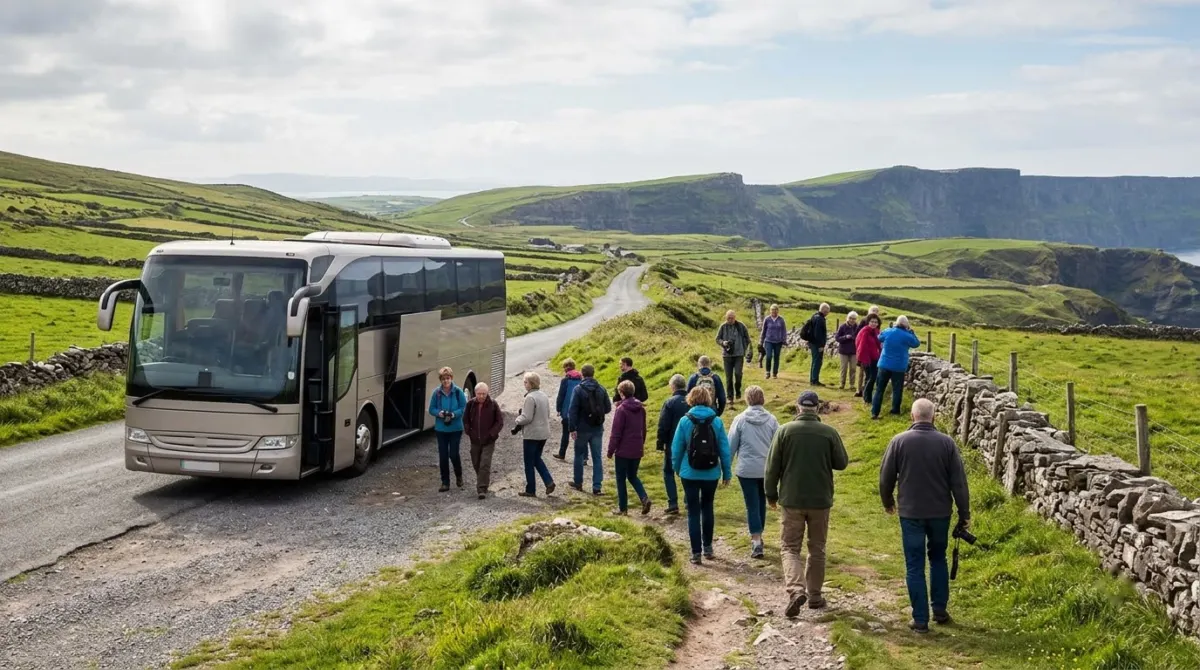
The Cliffs of Moher are about three hours of driving each way, sold as a long coach day. You would spend one of three days mostly on a bus.
Belfast and the Giant’s Causeway is further still: Belfast alone is two hours each way, and the Causeway is another hour beyond that.
Both deserve their own base rather than a day trip from Dublin.
The short version
Two days of sights and one day out of the centre. Trinity and the old city on day one, Kilmainham Gaol and the Guinness Storehouse on day two, the coast at Howth on day three. Book the gaol weeks ahead, walk everywhere, and keep the third day for leaving the centre rather than adding a fifth museum.
Frequently asked questions
Is 3 days enough for Dublin?
More than enough for the centre, and the right length if the third day leaves the city — Howth or Dún Laoghaire on the coast, or Phoenix Park if it rains. Three days spent only in the centre starts to feel long.
What should I do on 3 days in Dublin?
Day one for Trinity, the Book of Kells, the National Museum and the cathedrals. Day two for Kilmainham Gaol and the Guinness Storehouse. Day three on the coast at Howth, or inland at Phoenix Park if the weather is poor.
What is the best order to see Dublin in 3 days?
Old city first, because it is all walkable and sets the context. The harder history at Kilmainham on day two, when you have booked a morning slot. The coast last, when you can judge the weather.
Is Dublin worth 3 days with kids?
Yes, with a different plan: Trinity and the Natural History Museum, a full day at Dublin Zoo in Phoenix Park, and the DART to Howth for the harbour and the cliff path. Kilmainham Gaol suits older children only.
How much does 3 days in Dublin cost?
It depends entirely on the season and how far ahead you book, so treat any single figure with suspicion. What is reliable is that several of the best things — the National Museum, the National Gallery, the Chester Beatty Library and Phoenix Park — are free.
Do I need to book anything for 3 days in Dublin?
Kilmainham Gaol, weeks ahead. Timed entry for the Book of Kells, and the Guinness Storehouse online. Nothing else on a three-day plan needs reserving.
Is Howth or Malahide better for the third day?
Howth, if the weather is dry and you want to walk: the cliff loops start at the DART station. Malahide, if it is gray or your flight leaves that afternoon. Much of the castle visit is indoors, and route 102 runs from the village to the airport.
What is the best rainy third day in Dublin?
Stay indoors and stay free. The Chester Beatty Library and the National Museum at Collins Barracks fill a wet day without a ticket. Malahide Castle is the better choice if the rain is light, because the house tour and the butterfly house are both indoors.
Keep planning Ireland
- Where to Stay in Kilkenny: On the Mile, or Beside the Station
- Where to Stay in Doolin: Book a Room You Can Walk Home To
- Where to Stay in Belfast: Four Quarters, Four Different Trips
- Where to Stay in Killarney: The Town, or the Lakes
- Where to Stay in Dingle: In Town, or Out Where the View Is
- Where to Stay in Ireland: Pick Three Bases, Not Seven
- Where to Stay in Galway: The Noise Decides It, Not the Distance
- Best Hotels in Dublin: What Each Kind of Building Gives You
Written and checked by
Triplarks Editorial
An editorial desk, not an invented persona: research, drafting and fact-checking are done by the same small team. Every number here carries the date it was read.